

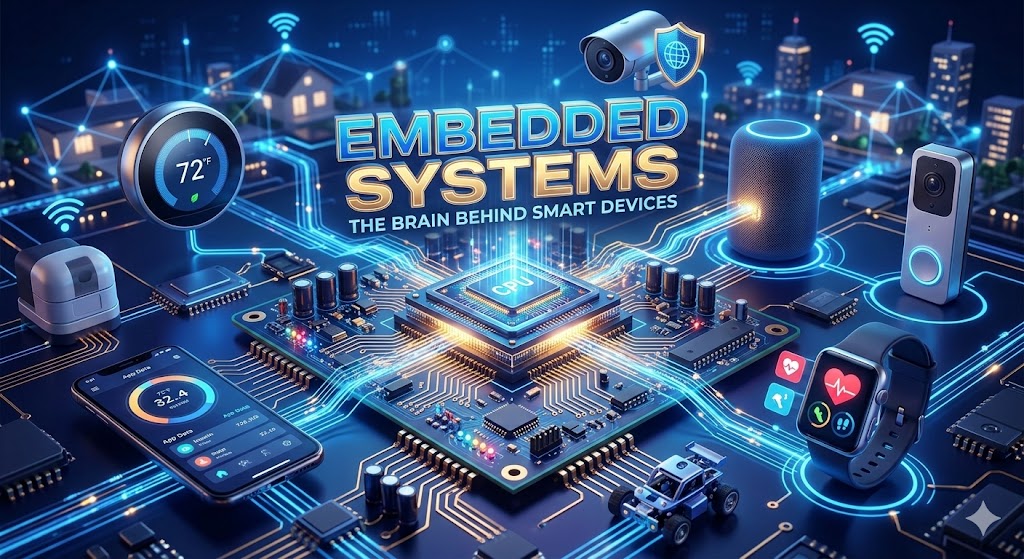
Embedded Systems: The Brain Behind Smart Devices
Navigate through this article using the table of contents below
Table of Contents
No headings found in this article.
Embedded systems are the hidden intelligence powering the modern world, quietly controlling the smart devices we rely on every day. From smartphones and smartwatches to automobiles, home automation systems, and medical equipment, embedded systems act as the “brain” that enables these devices to function efficiently and intelligently. An embedded system is a specialized computing system designed to perform a specific task within a larger device, often combining hardware and software to deliver real-time performance. As technologies like the Internet of Things (IoT), artificial intelligence, and smart electronics continue to evolve, embedded systems are becoming the backbone of innovation in modern technology.
In today’s digital era, the demand for embedded systems in smart devices is rapidly growing across industries such as automotive, healthcare, consumer electronics, and industrial automation. These systems are designed to be reliable, energy-efficient, and capable of handling complex tasks with minimal resources. Engineers use microcontrollers, sensors, firmware, and communication protocols to build embedded solutions that power everything from smart thermostats to advanced driver assistance systems in cars. Understanding embedded systems design and development is becoming increasingly important for engineers and technology enthusiasts who want to contribute to the future of smart and connected devices.
Introduction to Embedded Systems and Their Importance
Embedded systems are the specialized computing units that power modern electronic devices, enabling them to perform dedicated functions efficiently and reliably. Unlike general-purpose computers, an embedded system is designed to execute a specific task within a larger system, combining hardware components such as microcontrollers, sensors, and memory with optimized software or firmware. These systems operate in real time and are engineered to deliver high performance with minimal power consumption and limited resources. Today, embedded systems are the foundation of many smart technologies, playing a crucial role in devices like smartphones, smart home appliances, medical equipment, automotive control systems, and industrial machines.
The importance of embedded systems in modern technology continues to grow as industries move toward automation, connectivity, and intelligent devices. Embedded systems enable features such as real-time monitoring, data processing, wireless communication, and automated control, making everyday devices smarter and more efficient. From managing engine performance in vehicles to controlling temperature in smart thermostats and monitoring patient health in medical devices, embedded systems are at the core of innovation across multiple sectors. As the demand for IoT devices, artificial intelligence, and smart electronics increases, embedded systems are becoming an essential technology driving the development of the next generation of connected and intelligent systems.
Embedded System Architecture and Design Basics
Embedded system architecture refers to the structural design and organization of hardware and software components that enable an embedded system to perform a specific function within a device. Unlike general-purpose computers, embedded systems are designed for dedicated tasks and are optimized for performance, power efficiency, and reliability. The architecture typically includes key hardware components such as microcontrollers or microprocessors, memory units (RAM and ROM), input/output interfaces, sensors, and actuators. These components work together to collect data from the environment, process it through embedded software, and generate the appropriate response in real time.
A crucial aspect of embedded system design is the integration of hardware and software to ensure smooth and efficient operation. The hardware layer provides the physical components, while the software layer includes firmware and device drivers that control how the system interacts with hardware. Many embedded systems also use a Real-Time Operating System (RTOS) to manage tasks, scheduling, and resource allocation, ensuring that time-critical operations are executed within strict deadlines. Proper architecture design allows engineers to optimize system performance while minimizing power consumption, memory usage, and system complexity.
Designing an efficient embedded system also involves considerations such as system reliability, scalability, security, and cost efficiency. Engineers must carefully choose the right microcontroller, communication protocols, and development tools to meet the requirements of the target application. Additionally, factors like power management, thermal control, and fault tolerance play an important role in ensuring long-term system stability. A well-designed embedded system architecture not only improves device performance but also enables the development of smart, connected devices used in industries such as automotive, healthcare, consumer electronics, and industrial automation.
Types of Embedded Systems
Embedded systems can be categorized into different types based on their functionality, complexity, and operational requirements. One common classification includes standalone embedded systems, real-time embedded systems, networked embedded systems, and mobile embedded systems. Standalone embedded systems operate independently and perform specific tasks without requiring a host system, such as microwave ovens, washing machines, and digital cameras. Real-time embedded systems are designed to process data and respond within strict time constraints, making them essential for applications like automotive control systems, medical monitoring devices, and industrial automation where timing and reliability are critical.
Another category includes networked embedded systems, which are connected to other systems or networks to exchange data and enable smart functionality. These systems are commonly used in Internet of Things (IoT) devices, smart home automation, and industrial monitoring systems where communication between devices is required. Mobile embedded systems are compact and portable, commonly found in smartphones, wearable devices, and handheld gadgets. Understanding the different types of embedded systems helps engineers design efficient solutions tailored to specific applications, ensuring optimal performance, connectivity, and functionality in modern smart devices.
Role of Embedded Systems in Smart Devices
Embedded systems play a crucial role in powering smart devices, acting as the central control unit that enables these devices to perform intelligent and automated functions. These specialized computing systems integrate hardware components such as microcontrollers, sensors, and communication modules with optimized software to process data and execute specific tasks. In smart devices like smartphones, smart thermostats, wearable fitness trackers, and home automation systems, embedded systems continuously monitor inputs, process information, and control outputs to deliver seamless and efficient user experiences.
One of the key advantages of embedded systems in smart devices is their ability to support real-time processing and connectivity. Embedded systems allow devices to collect data from sensors, analyze it instantly, and respond accordingly. For example, in smart home systems, embedded controllers manage lighting, temperature, and security by communicating with other connected devices through wireless technologies such as Wi-Fi or Bluetooth. Similarly, in wearable devices, embedded systems process health-related data such as heart rate, step count, and sleep patterns, providing users with valuable insights about their health and lifestyle.
As the demand for Internet of Things (IoT) and connected technologies continues to grow, embedded systems are becoming the foundation of modern smart ecosystems. They enable devices to communicate with cloud platforms, mobile applications, and other smart systems, creating an interconnected network of intelligent devices. From automotive electronics and healthcare equipment to industrial automation and consumer gadgets, embedded systems drive innovation by making devices smarter, more efficient, and capable of delivering advanced features that improve everyday life.
Programming Languages Used in Embedded Systems Development
Programming languages play a vital role in embedded systems development, as they determine how efficiently software can interact with hardware components. The most widely used language in embedded programming is C, primarily because it provides low-level access to memory and hardware while maintaining high performance and portability. Many embedded systems rely on C to write firmware that directly controls microcontrollers, sensors, and peripheral devices. In addition to C, C++ is also commonly used in modern embedded development because it supports object-oriented programming, which helps developers build modular, reusable, and scalable code for complex embedded applications.
Apart from C and C++, other languages such as Python and Assembly language are also used in specific embedded system scenarios. Assembly language is used when developers need precise control over hardware operations and maximum optimization for performance-critical applications. Python, on the other hand, is increasingly used for rapid prototyping, testing, and developing applications on platforms like Raspberry Pi. The choice of programming language for embedded systems depends on factors such as hardware constraints, system complexity, memory usage, and real-time performance requirements. Selecting the right language helps engineers build efficient, reliable, and scalable embedded solutions for smart devices and IoT applications.
Embedded Systems in IoT and Smart Technology
Embedded systems play a fundamental role in enabling the growth of Internet of Things (IoT) and smart technology, serving as the core processing units within connected devices. In IoT ecosystems, embedded systems are responsible for collecting data from sensors, processing that information, and communicating with other devices or cloud platforms through wireless communication technologies such as Wi-Fi, Bluetooth, or Zigbee. These systems combine hardware components like microcontrollers and communication modules with embedded software to perform dedicated tasks efficiently. As a result, embedded systems allow everyday devices to become intelligent, connected, and capable of interacting with users and other systems.
In smart technology applications, embedded systems help automate processes and improve efficiency across different environments. For example, in smart homes, embedded systems control lighting, temperature, security cameras, and home appliances by processing real-time data and responding to user commands through mobile apps or voice assistants. Similarly, in healthcare, embedded IoT devices monitor patient health metrics such as heart rate, blood pressure, and activity levels, enabling remote monitoring and early detection of medical issues. These capabilities demonstrate how embedded systems make modern technology more responsive, automated, and user-centric.
The integration of embedded systems with IoT is also transforming industries such as manufacturing, agriculture, transportation, and energy management. In industrial IoT environments, embedded devices monitor machine performance, detect faults, and optimize production processes through real-time analytics. In smart cities, embedded systems power traffic management systems, environmental sensors, and connected infrastructure that improve urban efficiency and sustainability. As IoT technology continues to expand, embedded systems will remain the backbone of smart, connected ecosystems, driving innovation and enabling the next generation of intelligent devices.
Challenges in Embedded Systems Design and Development
Designing and developing embedded systems comes with several technical challenges because these systems must operate efficiently within limited hardware resources and strict performance requirements. One of the primary challenges is managing constraints such as limited memory, low processing power, and restricted energy consumption. Embedded devices are often designed to run on small microcontrollers with minimal storage and battery capacity, which requires developers to write highly optimized and efficient code. In addition, ensuring real-time performance is critical in many applications, such as automotive control systems, medical devices, and industrial automation, where delays or system failures can lead to serious consequences.
Another significant challenge in embedded systems development is ensuring system reliability, security, and seamless hardware–software integration. Since embedded systems are widely used in connected devices and IoT applications, they can become targets for cybersecurity threats if not properly protected. Engineers must implement secure communication protocols, robust firmware, and regular system updates to prevent vulnerabilities. Additionally, debugging and testing embedded systems can be complex because developers often need specialized tools to analyze both hardware and software behavior simultaneously. Overcoming these challenges requires careful system design, efficient programming practices, and thorough testing to build reliable and secure embedded solutions for modern smart devices.
Real-World Applications of Embedded Systems
Embedded systems are widely used in real-world applications across multiple industries, powering many of the devices and technologies people rely on every day. In the automotive industry, embedded systems control critical functions such as engine management, anti-lock braking systems (ABS), airbag deployment, and advanced driver assistance systems (ADAS). These systems process real-time data from sensors and ensure that vehicles operate safely and efficiently. Similarly, in consumer electronics, embedded systems are the core components behind devices like smartphones, smart televisions, washing machines, and digital cameras, enabling them to perform complex operations while maintaining compact and energy-efficient designs.
In the healthcare sector, embedded systems play a vital role in medical devices that monitor and support patient health. Equipment such as heart rate monitors, insulin pumps, pacemakers, and medical imaging systems rely on embedded technology to deliver accurate and reliable results. These systems process real-time medical data and help healthcare professionals monitor patient conditions more effectively. Embedded systems also support remote healthcare solutions by enabling connected medical devices that allow doctors to track patient health from a distance.
Embedded systems are also transforming industrial automation, robotics, and smart infrastructure. In manufacturing environments, embedded controllers manage machinery, monitor production lines, and improve operational efficiency through automation. In robotics, embedded systems control movement, sensing, and decision-making processes, allowing robots to perform complex tasks with precision. Additionally, smart city technologies such as traffic management systems, environmental monitoring sensors, and smart energy meters rely on embedded systems to collect data and optimize urban operations. These real-world applications demonstrate how embedded systems serve as the foundation of modern technological innovation.
Career Opportunities in Embedded Systems Engineering
The field of embedded systems engineering offers diverse and high-demand career opportunities across industries such as consumer electronics, automotive, healthcare, telecommunications, and industrial automation. As smart devices and connected technologies continue to grow, companies are actively seeking skilled professionals who can design and develop efficient embedded solutions. Common job roles in this domain include Embedded Software Engineer, Firmware Developer, Embedded Hardware Engineer, IoT Engineer, and Robotics Engineer. These professionals work on designing microcontroller-based systems, developing firmware, integrating hardware with software, and optimizing system performance for real-time applications.
To build a successful career in embedded systems engineering, individuals need strong knowledge of microcontrollers, programming languages like C and C++, hardware interfacing, and embedded operating systems. Skills in areas such as circuit design, debugging, communication protocols, and IoT technologies are also highly valuable in the industry. With the increasing adoption of smart devices, autonomous systems, and connected infrastructure, the demand for embedded systems engineers is expected to grow significantly in the coming years. This makes embedded systems a promising and rewarding career path for engineers interested in working at the intersection of hardware and software development.
Future Trends in Embedded Systems and Smart Devices
The future of embedded systems is closely linked with the rapid advancement of smart devices, artificial intelligence, and connected technologies. One of the most significant trends is the integration of Artificial Intelligence (AI) and Machine Learning (ML) into embedded systems, enabling devices to process data locally and make intelligent decisions without relying heavily on cloud computing. This concept, often referred to as edge computing, allows smart devices to analyze data in real time, improving speed, efficiency, and privacy. As a result, embedded systems are becoming more capable of supporting advanced features such as predictive maintenance, intelligent automation, and adaptive system behavior.
Another important trend shaping the future of embedded systems is the expansion of the Internet of Things (IoT) and connected ecosystems. With billions of devices expected to be connected in the coming years, embedded systems will play a critical role in enabling communication between smart devices, sensors, and cloud platforms. Technologies such as 5G connectivity, low-power wireless communication, and advanced microcontrollers are making it possible to design highly efficient and scalable embedded solutions. These advancements are driving the development of smart homes, smart cities, connected healthcare systems, and intelligent industrial automation.
In addition, future embedded systems will focus heavily on energy efficiency, security, and miniaturization. As devices become smaller and more powerful, engineers must design systems that consume less power while maintaining high performance. Security will also become a major priority as more embedded devices connect to networks and exchange sensitive data. Innovations in semiconductor technology, system-on-chip (SoC) design, and embedded software optimization will continue to push the boundaries of what embedded systems can achieve, making them a key technology behind the next generation of smart and intelligent devices.
How to Start Learning Embedded Systems (Beginner Roadmap)
Starting a journey in embedded systems requires building a strong foundation in both electronics and programming. Beginners should first understand the basics of digital electronics, microcontrollers, and computer architecture, as these concepts form the core of embedded system design. Learning programming languages such as C and C++ is essential because they are widely used for developing firmware that interacts directly with hardware. It is also helpful to gain knowledge of microcontroller platforms and development environments that allow beginners to write, compile, and test embedded programs. Understanding concepts like memory management, input/output interfacing, and basic circuit design will help learners grasp how embedded systems operate inside real devices.
Practical experience is equally important when learning embedded systems, so beginners should work with popular development boards such as Arduino or similar microcontroller-based platforms to build small projects. These projects may include controlling LEDs, reading sensor data, or developing simple automation systems, which help in understanding how hardware and software interact. As skills improve, learners can explore advanced topics such as Real-Time Operating Systems (RTOS), communication protocols like UART, SPI, and I2C, and IoT integration. Following a structured learning roadmap that combines theoretical knowledge with hands-on experimentation will help beginners gradually develop the expertise required to design and develop efficient embedded systems for modern smart devices.
Conclusion
Embedded systems are the core technology behind modern smart devices, enabling them to perform specific tasks efficiently, reliably, and in real time. From consumer electronics and automotive systems to healthcare devices and industrial automation, embedded systems play a crucial role in making technology smarter and more responsive. By combining specialized hardware components with optimized software, these systems allow devices to process data, interact with their environment, and deliver advanced functionality. As the demand for intelligent and connected devices continues to grow, embedded systems remain at the center of innovation in modern electronics.
Looking ahead, the importance of embedded systems in IoT, artificial intelligence, and smart technology will continue to expand across multiple industries. Engineers and developers who build expertise in embedded system design, programming, and hardware integration will be well positioned to contribute to the next generation of technological advancements. With continuous improvements in microcontrollers, communication technologies, and semiconductor design, embedded systems will drive the development of more efficient, secure, and intelligent devices that shape the future of digital transformation.