

Master Semiconductor Skills and Unlock High-Paying Future career
Navigate through this article using the table of contents below
Table of Contents
No headings found in this article.
The global semiconductor industry is powering the future of technology—from smartphones and electric vehicles to artificial intelligence and advanced computing. As demand for smarter and faster electronics continues to grow, the need for skilled semiconductor professionals is rising rapidly across the world. If you want to build a high-paying and future-proof career, mastering semiconductor skills can open doors to some of the most exciting opportunities in technology. From chip design and VLSI development to fabrication and testing, the semiconductor field offers diverse career paths for engineers who are ready to innovate and solve complex technological challenges.
Learning semiconductor skills today means positioning yourself at the center of the modern digital revolution. Companies across the globe are actively searching for professionals skilled in VLSI design, chip architecture, embedded systems, and semiconductor manufacturing. By gaining expertise in these areas, you can access high-salary roles in industries such as consumer electronics, automotive technology, telecommunications, and artificial intelligence. This guide will help you understand how mastering semiconductor skills can unlock a high-paying future career, the essential knowledge you need to develop, and the opportunities waiting in this rapidly expanding industry.
Introduction to the Semiconductor Industry
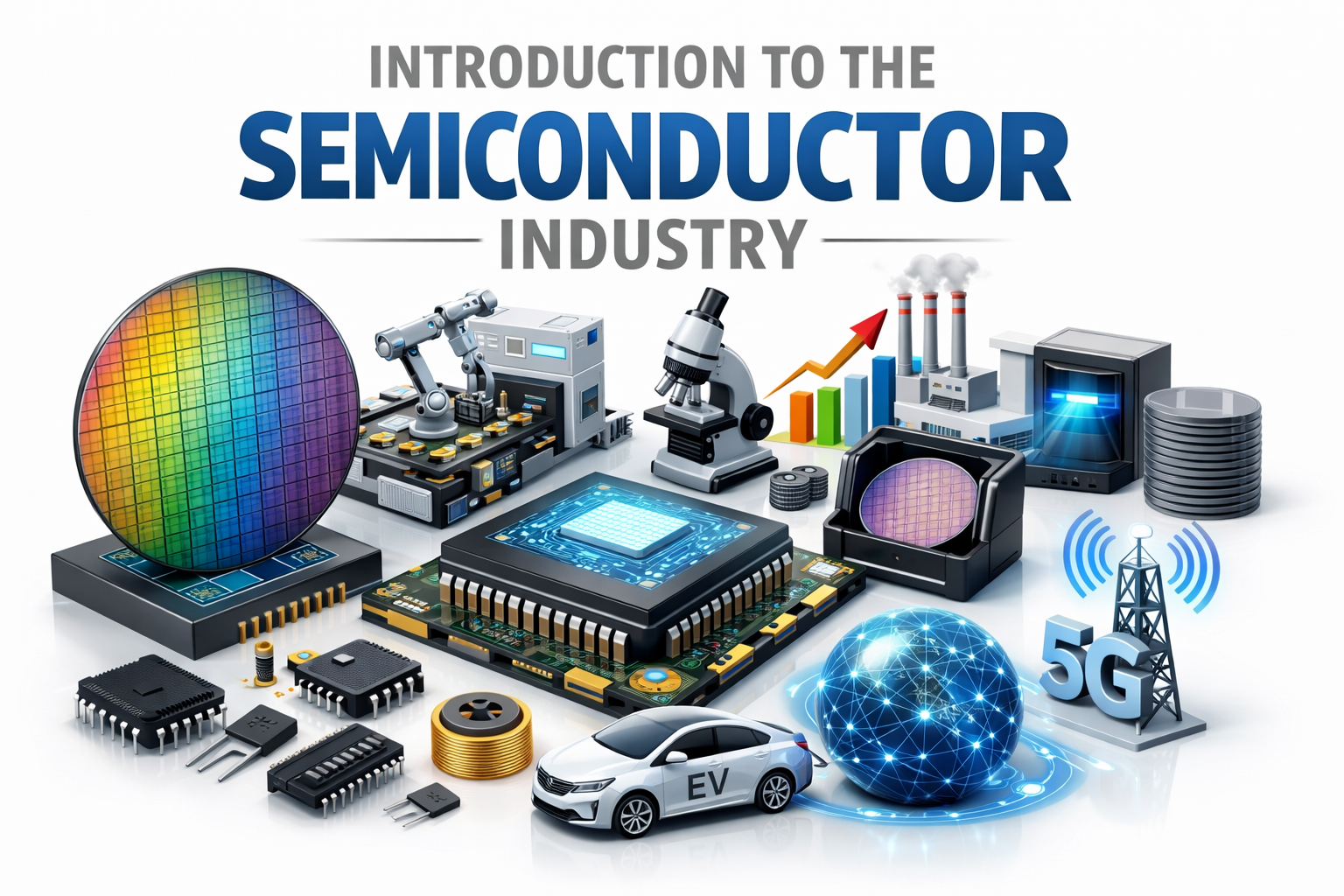
The semiconductor industry forms the backbone of modern electronics, powering everything from smartphones and laptops to electric vehicles, medical devices, and advanced artificial intelligence systems. Semiconductors are materials—most commonly silicon—that have electrical conductivity between conductors and insulators, making them ideal for controlling electrical signals in electronic circuits. These materials are used to manufacture integrated circuits (ICs) and microchips, which are the essential components that enable electronic devices to process, store, and transmit information efficiently.
Over the past few decades, the semiconductor industry has experienced rapid growth due to the increasing demand for high-performance computing, 5G communication, Internet of Things (IoT) devices, and smart technologies. Major semiconductor companies design and manufacture billions of chips every year to support industries such as consumer electronics, automotive, aerospace, telecommunications, and healthcare. With advancements in chip design, fabrication technology, and miniaturization, modern semiconductors are becoming faster, smaller, and more energy-efficient, enabling the development of powerful and innovative digital solutions.
The global semiconductor ecosystem involves several key stages, including chip design, wafer fabrication, testing, and packaging. Engineers and researchers work across various domains such as VLSI design, embedded systems, semiconductor manufacturing, and chip verification to develop reliable and high-performance chips. As technology continues to evolve and digital transformation accelerates worldwide, the semiconductor industry is expected to play an even more critical role in shaping the future of computing, automation, and intelligent systems.
Why Semiconductor Skills Are in High Demand
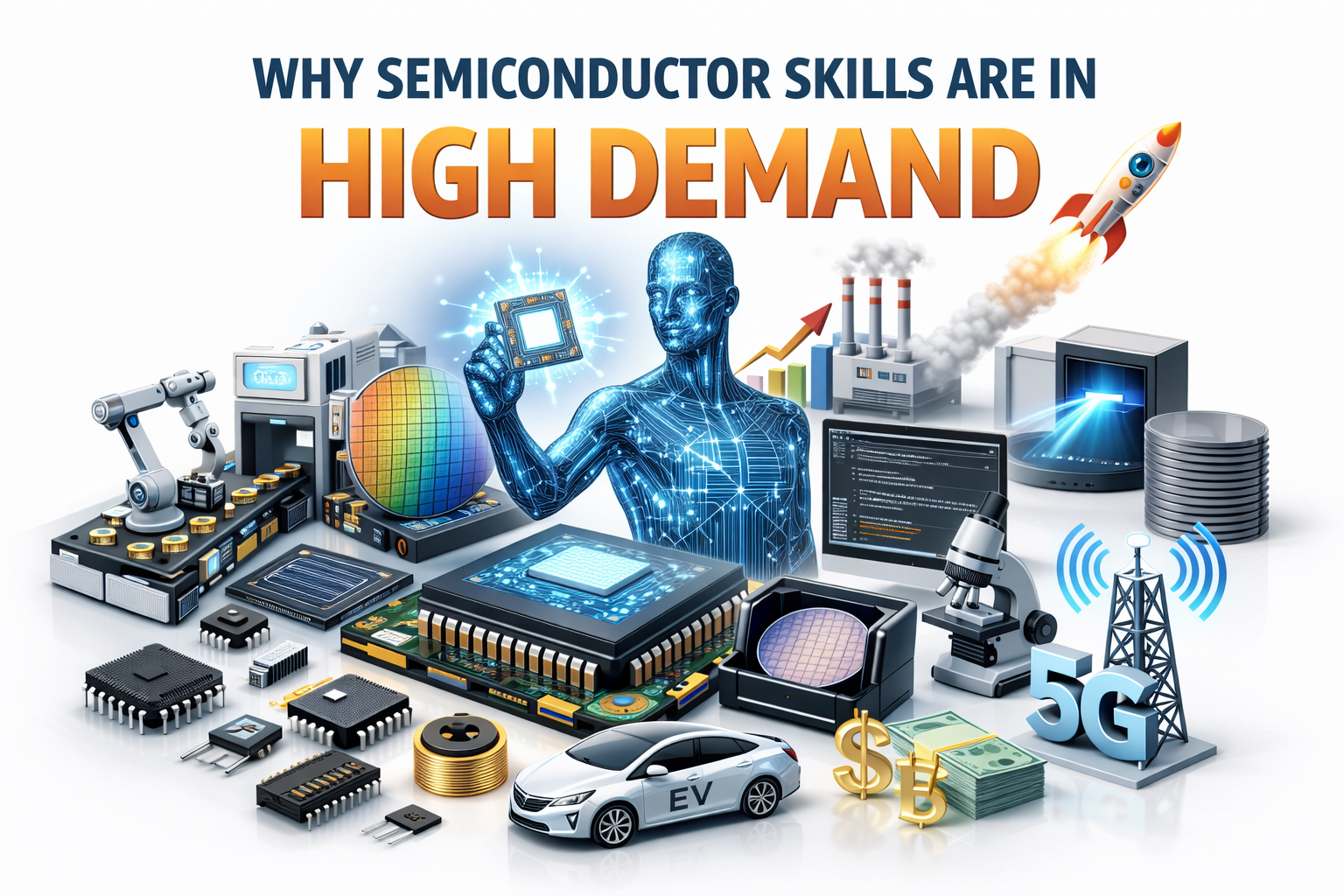
Semiconductor skills are in high demand because modern technology relies heavily on microchips and integrated circuits. From smartphones, laptops, and smart home devices to electric vehicles and advanced medical equipment, almost every electronic system depends on semiconductor components. As technologies such as artificial intelligence, 5G communication, cloud computing, and the Internet of Things continue to expand, companies require highly skilled engineers who can design, develop, and optimize semiconductor chips. This growing dependence on digital systems has significantly increased the demand for professionals with expertise in VLSI design, chip architecture, semiconductor fabrication, and verification.
Another major reason for the rising demand is the global push toward technological innovation and digital transformation. Governments and technology companies worldwide are investing billions of dollars to strengthen semiconductor manufacturing and research capabilities. Industries such as automotive, robotics, aerospace, and consumer electronics are continuously integrating advanced chips to improve performance and efficiency. As a result, organizations are actively searching for engineers with strong semiconductor skills who can contribute to next-generation chip development, making it one of the most promising and high-paying career paths in the technology sector.
Core Semiconductor Skills You Need to Master
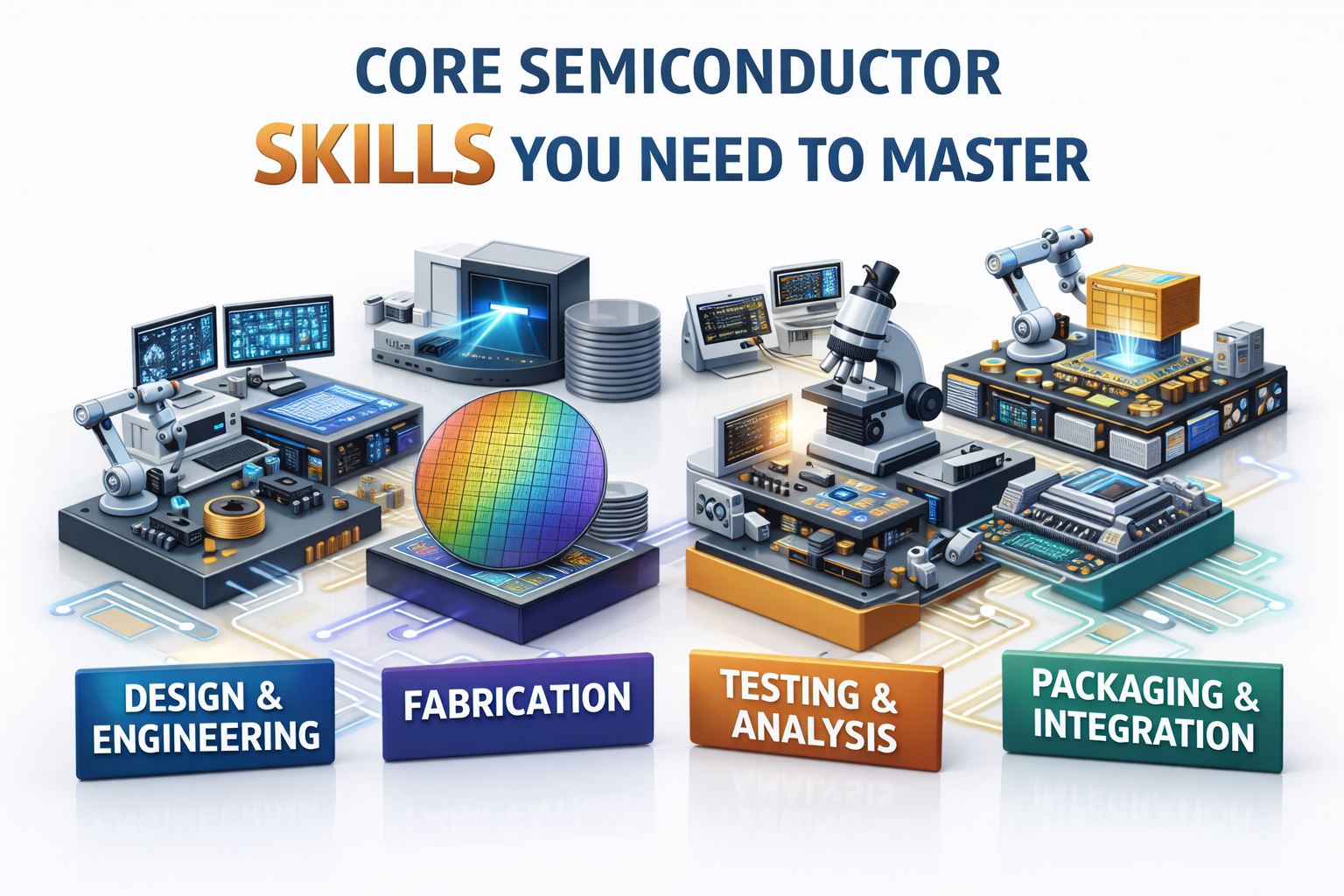
To build a successful career in the semiconductor industry, mastering core technical skills related to chip design, development, and testing is essential. One of the most important areas is VLSI (Very Large Scale Integration) design, which focuses on creating complex integrated circuits by combining millions or even billions of transistors on a single chip. Engineers must understand digital electronics, logic design, and hardware description languages such as Verilog and VHDL to design and simulate efficient semiconductor circuits. Knowledge of RTL (Register Transfer Level) design is also crucial, as it helps engineers describe and optimize how data flows through digital systems before physical implementation.
Another key skill involves semiconductor verification and testing, which ensures that chips function correctly before they are manufactured and deployed in electronic devices. Verification engineers use advanced simulation techniques and tools to identify design errors and validate chip functionality under different conditions. Understanding SystemVerilog, UVM (Universal Verification Methodology), and simulation tools is highly valuable in this domain. In addition, knowledge of FPGA development helps engineers prototype and test chip designs quickly, making it easier to validate concepts before moving to full-scale semiconductor fabrication.
Engineers should also develop expertise in physical design and semiconductor manufacturing concepts. Physical design focuses on transforming a logical circuit design into a physical chip layout that can be fabricated on silicon wafers. This process involves steps such as floorplanning, placement, routing, timing analysis, and power optimization using industry tools like Cadence, Synopsys, and Mentor Graphics. Along with technical knowledge, problem-solving ability, analytical thinking, and familiarity with emerging technologies such as AI chips and advanced process nodes are essential for mastering semiconductor skills and building a high-paying career in this rapidly evolving industry.
Top Programming Languages for Semiconductor Engineers
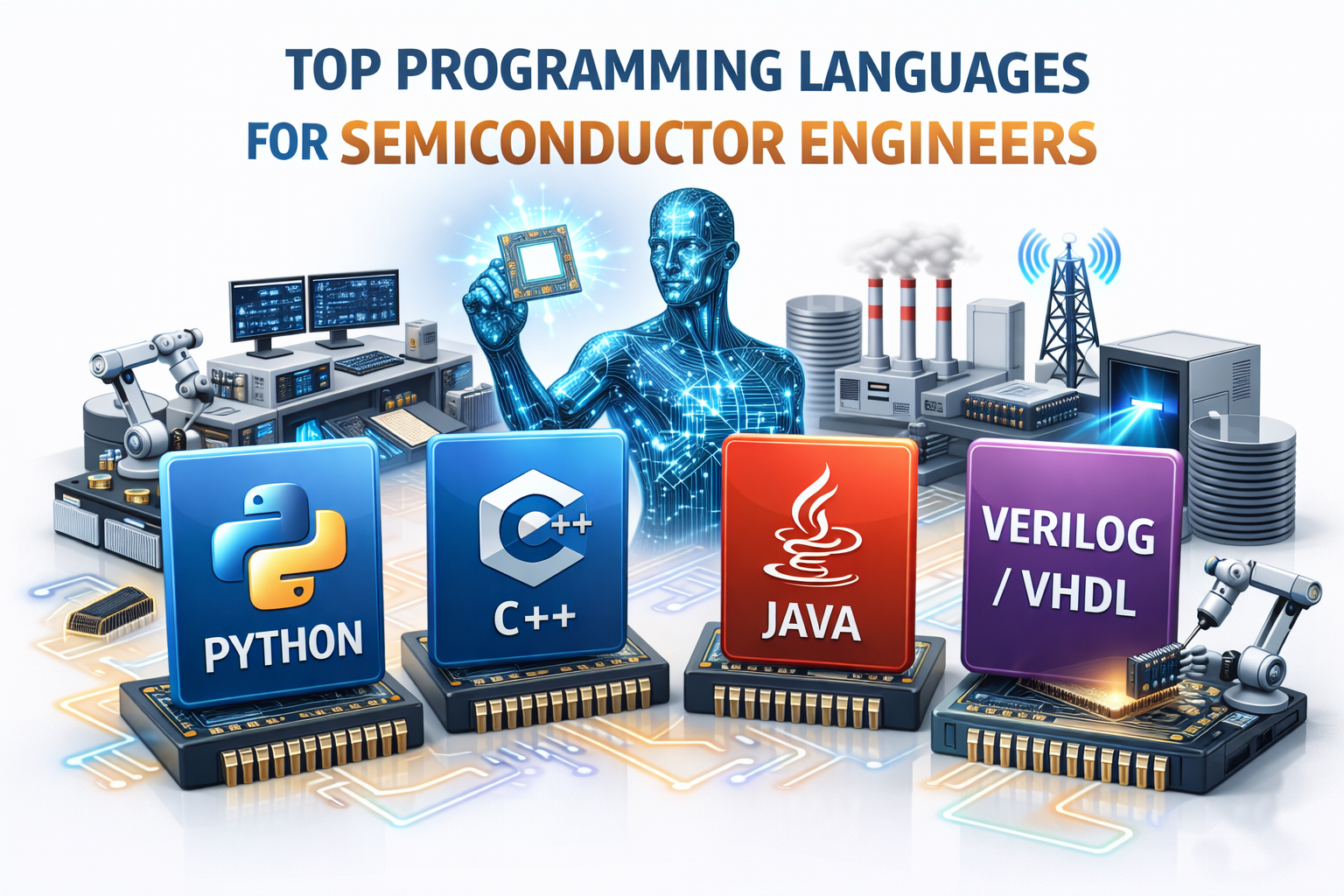
Programming languages play a crucial role in semiconductor design and development, as they help engineers describe, simulate, and verify complex chip architectures. One of the most important languages used in the semiconductor industry is Verilog, a hardware description language widely used for RTL (Register Transfer Level) design and digital circuit modeling. Another widely used language is VHDL (Very High-Speed Integrated Circuit Hardware Description Language), which is commonly applied in FPGA development and complex digital system design. These languages allow engineers to design and simulate integrated circuits before they are physically manufactured, helping reduce design errors and development costs.
In addition to hardware description languages, semiconductor engineers often use programming languages such as SystemVerilog, C/C++, and Python to improve design verification, automation, and system-level development. SystemVerilog is particularly important for advanced chip verification using methodologies like UVM, while C/C++ is used for embedded system development and hardware-software integration. Python has also become popular in semiconductor workflows for scripting, automation, and data analysis in design and verification processes. Mastering these programming languages enables engineers to work efficiently with complex chip architectures and contributes significantly to building a successful career in the semiconductor industry.
Career Paths in the Semiconductor Industry
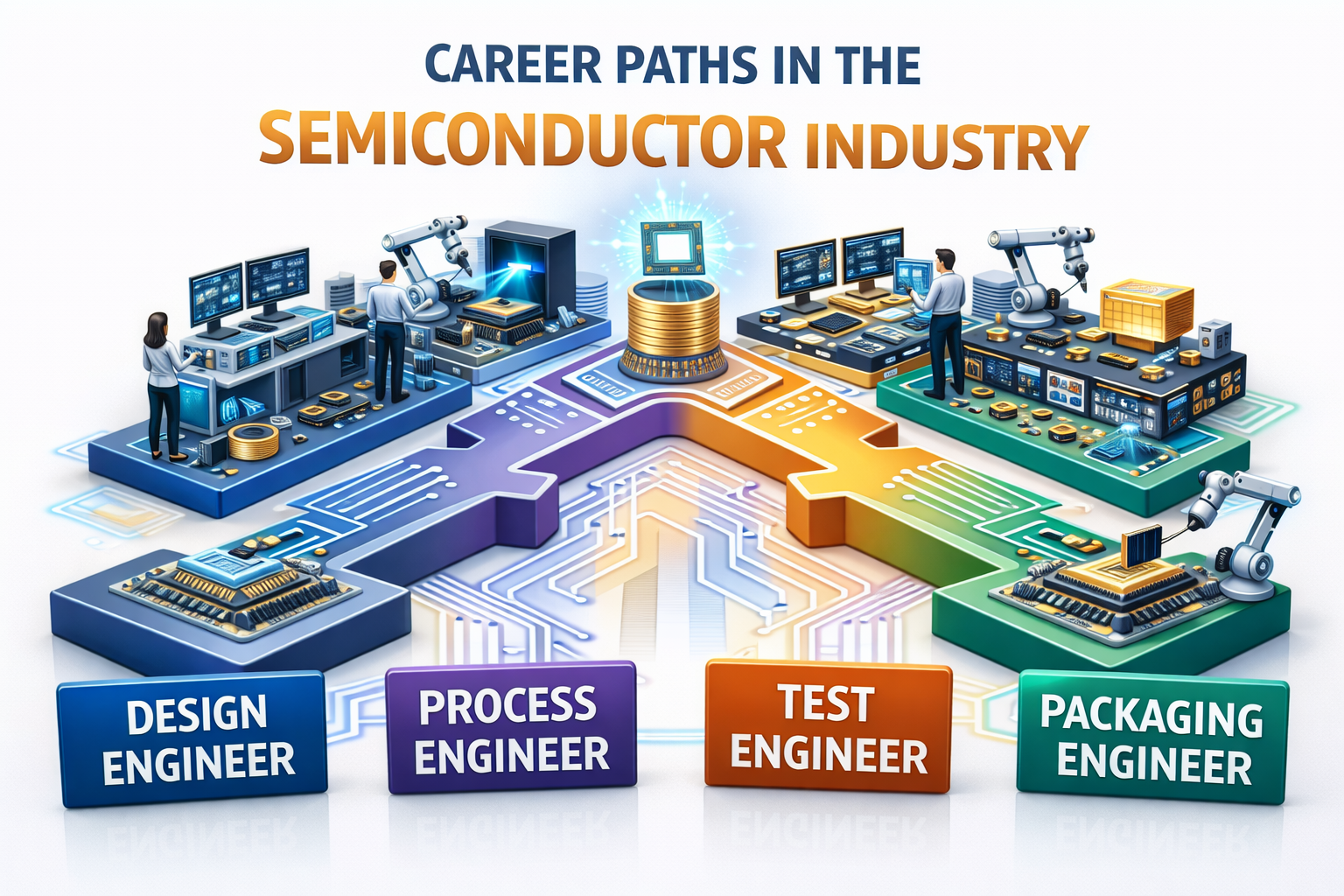
The semiconductor industry offers a wide range of career paths for engineers interested in chip design, development, and manufacturing. One of the most popular roles is that of an RTL Design Engineer, who focuses on designing digital circuits using hardware description languages such as Verilog or VHDL. These engineers work on creating the logical architecture of integrated circuits that power devices like smartphones, processors, and embedded systems. Another important role is the Verification Engineer, who ensures that chip designs function correctly by performing extensive testing and simulation before the chip moves to the manufacturing stage.
Another promising career path is Physical Design Engineering, which involves converting the logical circuit design into a physical layout that can be fabricated on a silicon wafer. Physical design engineers work on processes such as floorplanning, placement, routing, timing analysis, and power optimization to ensure the chip meets performance and power requirements. In addition, Analog and Mixed-Signal Design Engineers specialize in designing circuits that handle real-world signals such as audio, radio frequency, and sensor data, making their role essential for applications like communication systems and consumer electronics.
Beyond design roles, the semiconductor industry also offers opportunities in semiconductor manufacturing, testing, and research and development. Engineers in fabrication facilities focus on producing chips using advanced manufacturing processes, while DFT (Design for Test) Engineers develop techniques to test chips efficiently during production. With the rapid growth of technologies such as artificial intelligence, electric vehicles, and IoT devices, the semiconductor industry continues to create diverse and high-paying career opportunities for professionals with specialized technical skills.
How to Start a Career in Semiconductor Engineering
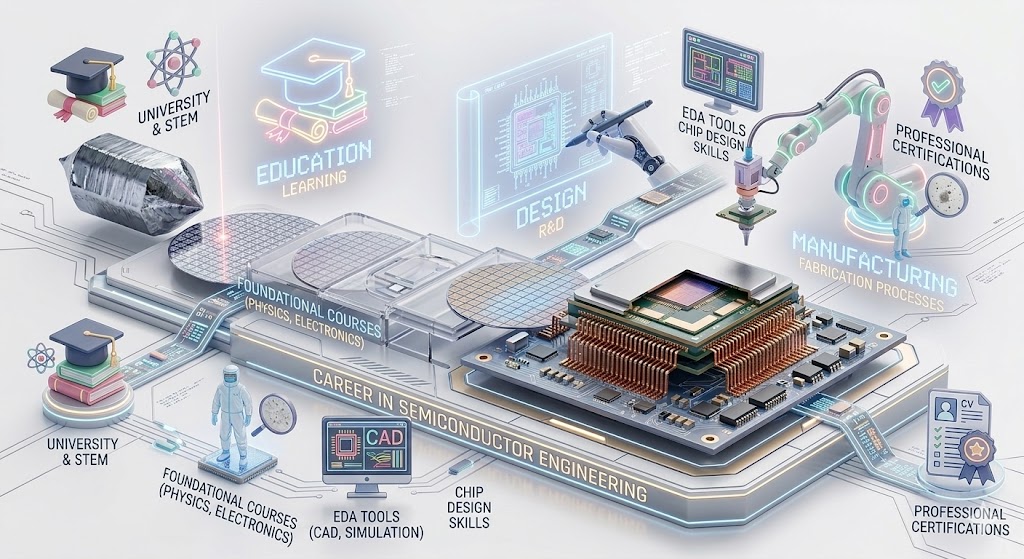
Starting a career in semiconductor engineering begins with building a strong foundation in electronics and digital system design. Most professionals enter this field with a degree in Electronics and Communication Engineering (ECE), Electrical Engineering, or related disciplines. During your studies, it is important to focus on subjects such as digital electronics, microprocessors, semiconductor devices, and VLSI design. Learning hardware description languages like Verilog and VHDL, along with understanding RTL design concepts, helps students gain the practical knowledge required for chip design and development. In addition, gaining hands-on experience through internships, online courses, and academic projects can significantly improve your technical skills and industry readiness.
To further strengthen your career prospects, aspiring semiconductor engineers should develop expertise in EDA (Electronic Design Automation) tools and participate in real-world projects related to FPGA development, chip verification, or embedded systems. Building a strong portfolio of practical projects and certifications can make your profile more attractive to semiconductor companies. Networking with industry professionals, attending technology seminars, and staying updated with the latest trends in chip design and semiconductor manufacturing can also help you find better opportunities. With the right combination of technical knowledge, practical experience, and continuous learning, starting a career in semiconductor engineering can lead to high-paying and rewarding roles in the global technology industry.
Best Tools and Technologies Used in Semiconductor Design
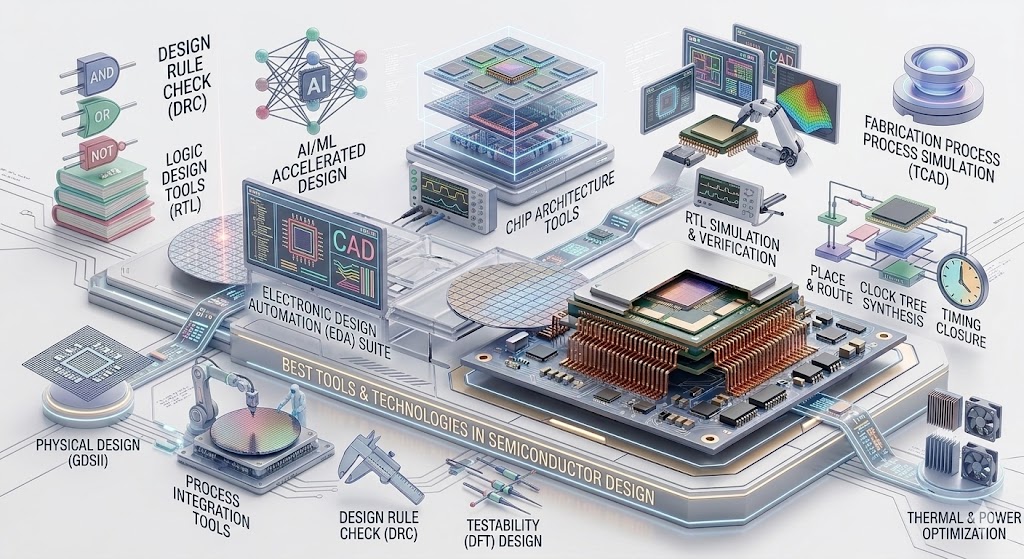
Semiconductor design relies heavily on advanced Electronic Design Automation (EDA) tools that help engineers design, simulate, and verify complex integrated circuits. These tools allow designers to model digital and analog circuits, perform functional simulations, and analyze performance before the chip is physically manufactured. Popular EDA platforms such as Cadence, Synopsys, and Mentor Graphics are widely used across the semiconductor industry for tasks like RTL design, synthesis, verification, and physical implementation. By using these tools, engineers can detect design errors early, optimize circuit performance, and significantly reduce development time and cost.
Another important technology used in semiconductor design is hardware description languages (HDLs) such as Verilog, VHDL, and SystemVerilog. These languages allow engineers to describe the behavior and structure of digital circuits at the Register Transfer Level (RTL), making it easier to design and test complex chip architectures. In addition, FPGA platforms are commonly used for prototyping semiconductor designs before they are sent for fabrication. FPGA-based development helps engineers validate functionality, test performance, and experiment with design modifications without the high cost associated with manufacturing a physical chip.
Semiconductor engineers also rely on specialized technologies for physical design and verification, including tools for timing analysis, power optimization, and layout generation. Processes such as floorplanning, placement, routing, and design rule checking ensure that the final chip layout meets manufacturing requirements and performs efficiently. Emerging technologies such as AI-assisted chip design, advanced process nodes, and 3D semiconductor packaging are also transforming the way chips are developed. Mastering these tools and technologies is essential for engineers who want to work on next-generation semiconductor innovations and build a successful career in chip design and development.
High-Paying Job Opportunities in the Semiconductor Industry
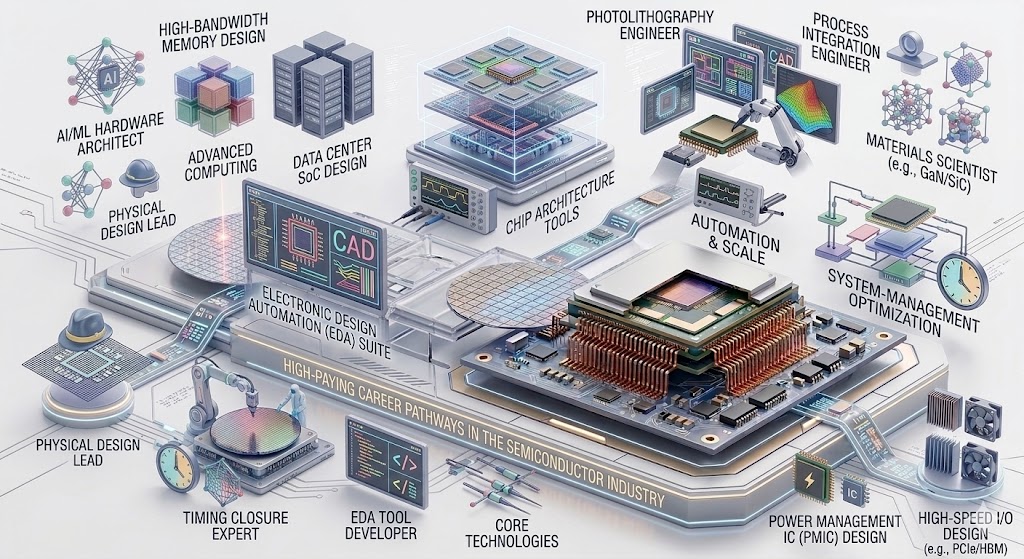
The semiconductor industry offers some of the highest-paying job opportunities in the technology sector due to the specialized skills required for chip design, verification, and manufacturing. Roles such as RTL Design Engineer, Verification Engineer, Physical Design Engineer, Analog Design Engineer, and FPGA Engineer are in strong demand across semiconductor companies and technology firms. These professionals work on developing integrated circuits that power modern devices like smartphones, artificial intelligence systems, automotive electronics, and data centers. Because semiconductor design requires deep technical knowledge and precision, companies are willing to offer competitive salaries and attractive career growth opportunities to skilled engineers.
In India and globally, semiconductor professionals often receive lucrative compensation packages, especially as they gain experience and expertise in advanced chip design technologies. Entry-level engineers can earn competitive starting salaries, while experienced professionals working with advanced process nodes, high-speed chip architectures, and complex verification systems can earn significantly higher packages. Major technology companies and semiconductor firms are continuously investing in research and development, creating a steady demand for skilled engineers. As the global demand for electronics and smart technologies continues to grow, high-paying opportunities in the semiconductor industry are expected to expand even further.
Real-World Applications of Semiconductor Technology
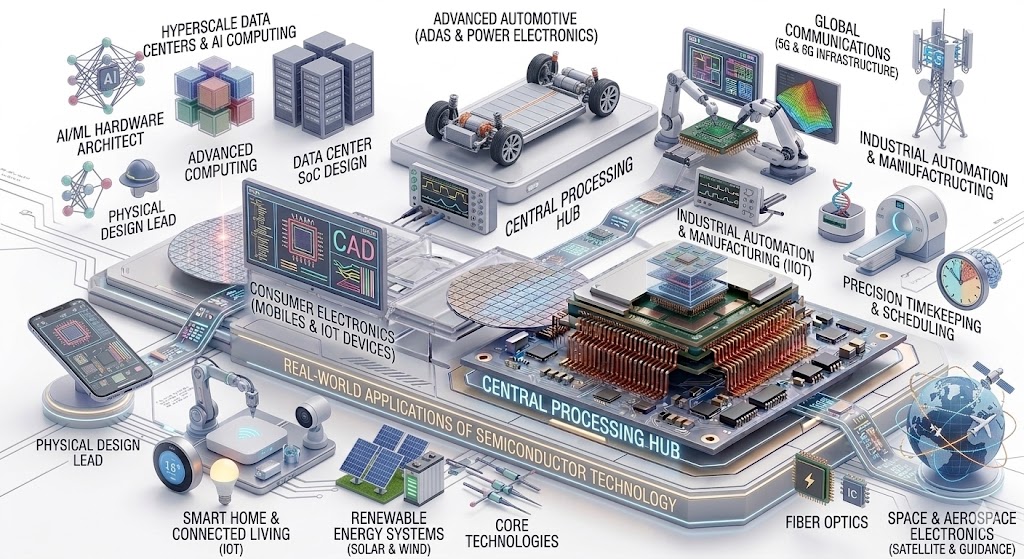
Semiconductor technology plays a critical role in powering modern electronic devices and enabling advanced technological innovations. Microchips and integrated circuits are used in everyday products such as smartphones, laptops, smart televisions, and wearable devices, allowing these systems to process data, store information, and perform complex computations efficiently. In addition, semiconductors are essential in communication technologies like 5G networks, satellite systems, and wireless connectivity, where high-speed data processing and reliable signal transmission are required. Without semiconductor components, most of the digital technologies that people rely on daily would not be possible.
Beyond consumer electronics, semiconductor technology is also widely used in industries such as automotive, healthcare, and artificial intelligence. Modern vehicles use semiconductor chips in systems like advanced driver-assistance systems (ADAS), electric vehicle power management, and autonomous driving technologies. In healthcare, semiconductors power medical imaging equipment, wearable health monitors, and diagnostic devices that improve patient care and medical research. Additionally, semiconductors are fundamental to AI and cloud computing infrastructure, enabling powerful processors and data centers to handle massive amounts of information. These real-world applications demonstrate how semiconductor technology continues to drive innovation across multiple industries worldwide.
Future Scope of the Semiconductor Industry
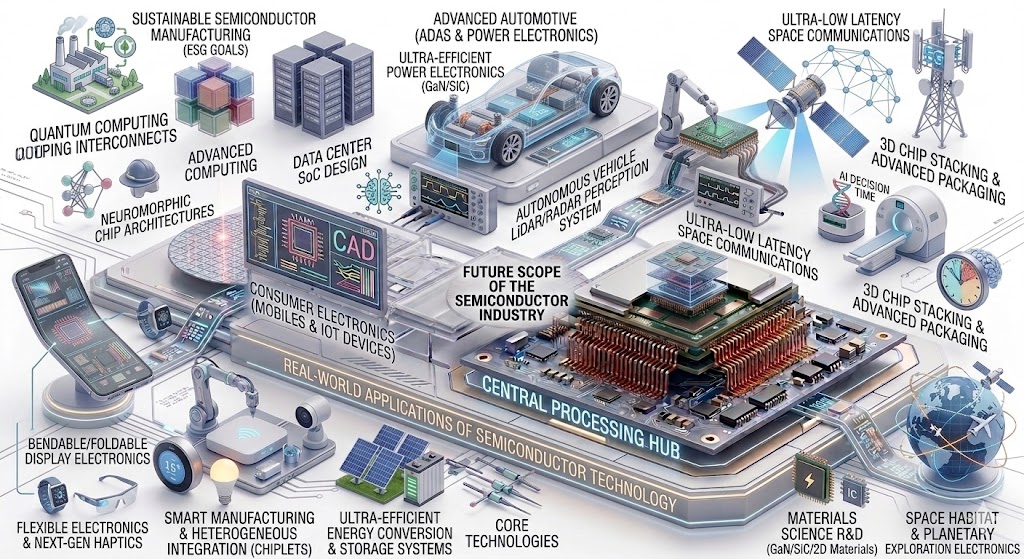
The future of the semiconductor industry looks extremely promising as global demand for advanced electronics continues to grow rapidly. Semiconductors are at the core of emerging technologies such as artificial intelligence (AI), 5G communication, electric vehicles (EVs), and the Internet of Things (IoT). As these technologies expand, the need for faster, smaller, and more energy-efficient chips is increasing. Semiconductor companies are continuously investing in research and development to create advanced chip architectures and smaller process nodes, enabling more powerful and efficient electronic devices.
Another major factor driving the future growth of the semiconductor industry is the increasing digital transformation across industries. Sectors such as automotive, healthcare, telecommunications, robotics, and smart infrastructure are heavily relying on semiconductor technology to improve performance and automation. For example, electric vehicles require specialized power semiconductors and battery management chips, while smart cities and IoT devices rely on advanced sensors and microcontrollers. Governments around the world are also investing heavily in semiconductor manufacturing and supply chains to reduce dependency and strengthen their technological capabilities.
Looking ahead, innovations such as AI-powered chips, quantum computing, advanced semiconductor packaging, and 3D chip architectures are expected to reshape the industry. These advancements will not only improve computing performance but also open new opportunities for engineers, researchers, and technology professionals. As global demand for smart and connected devices continues to increase, the semiconductor industry will remain one of the most important and rapidly growing sectors, offering strong career opportunities and long-term technological impact.
Tips to Master Semiconductor Skills Faster
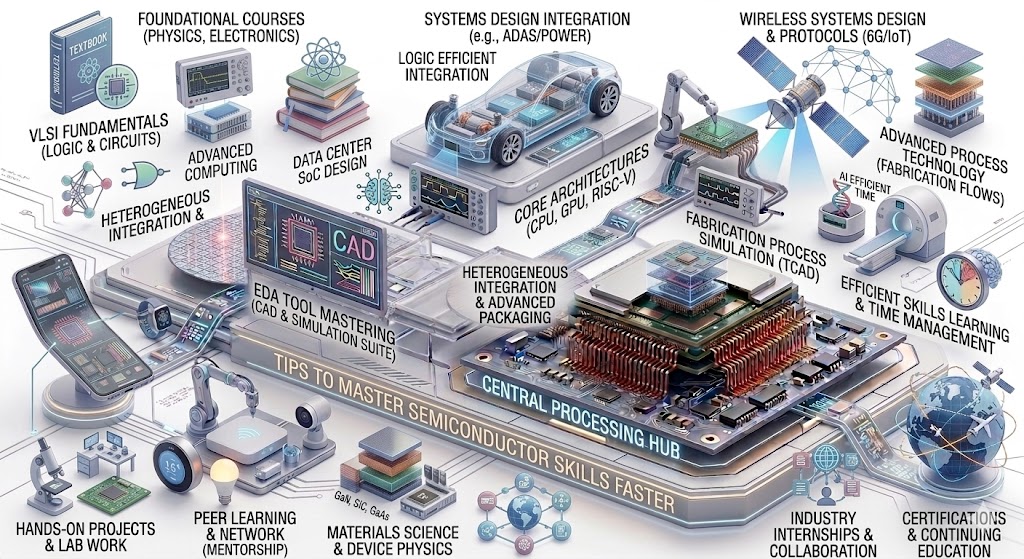
Mastering semiconductor skills faster requires a strong combination of theoretical knowledge and practical experience. Start by building a solid foundation in subjects such as digital electronics, semiconductor devices, microprocessors, and VLSI design. Learning hardware description languages like Verilog, VHDL, and SystemVerilog is essential for understanding how digital circuits are designed and verified. Along with theory, practicing with simulation tools and working on small design projects can help you understand real-world semiconductor workflows. Online courses, technical documentation, and industry tutorials can also accelerate your learning process and help you stay updated with current semiconductor technologies.
Another effective way to develop semiconductor expertise quickly is by working on hands-on projects and industry-relevant tools. Practicing with FPGA development boards, learning Electronic Design Automation (EDA) tools, and building small chip design or verification projects can significantly improve your technical skills. Participating in internships, technical communities, and semiconductor forums also helps you gain insights from experienced professionals. Consistent learning, experimenting with new technologies, and staying updated with industry trends such as AI chips and advanced fabrication processes will help you master semiconductor skills more efficiently and prepare for high-paying career opportunities in the semiconductor industry.
Conclusion
The semiconductor industry has become one of the most important pillars of modern technology, powering everything from smartphones and cloud computing to artificial intelligence and electric vehicles. As the demand for faster, smarter, and more energy-efficient devices continues to grow, the need for skilled semiconductor professionals is increasing rapidly across the globe. By understanding the fundamentals of semiconductor technology, learning key programming languages, and mastering tools used in chip design and verification, aspiring engineers can build a strong foundation for a successful and rewarding career in this dynamic field.
Mastering semiconductor skills not only opens doors to exciting technological innovation but also provides access to high-paying and future-proof career opportunities. With continuous advancements in areas such as AI chips, advanced manufacturing processes, and next-generation computing systems, the semiconductor industry will continue to expand in the coming years. By staying committed to learning, gaining hands-on experience, and keeping up with industry trends, individuals can position themselves for long-term success and play a vital role in shaping the future of global technology.