

Post-Silicon Validation Engineer: Career Guide, Skills, and Tools
Navigate through this article using the table of contents below
Table of Contents
No headings found in this article.
The semiconductor industry is evolving rapidly, and one of the most critical roles in ensuring chip reliability is that of a Post-Silicon Validation Engineer. After a chip is manufactured, it must be thoroughly tested and validated to confirm that it works exactly as intended in real-world conditions. This stage, known as post-silicon validation, is where engineers analyze chip behavior, identify hidden bugs, and ensure the design meets performance, power, and functionality requirements. As modern processors, AI chips, and system-on-chip (SoC) designs become more complex, the demand for skilled post-silicon validation engineers is increasing across the global semiconductor industry.
A Post-Silicon Validation Engineer works at the intersection of hardware testing, debugging, and system-level validation. These engineers use advanced testing platforms, lab equipment, and debugging tools to verify chip functionality after fabrication. Their responsibilities often include running validation tests, analyzing hardware signals, debugging firmware issues, and collaborating with design and verification teams to resolve silicon-level problems. For students and professionals looking to build a career in VLSI validation, semiconductor testing, or chip debugging, this role offers strong career growth, competitive salaries, and opportunities to work on cutting-edge technologies such as AI processors, automotive chips, and high-performance computing systems.
Introduction to Post-Silicon Validation in the Semiconductor Industry

Post-silicon validation is a critical phase in the semiconductor development process that occurs after a chip has been fabricated and manufactured. At this stage, engineers test the physical silicon to ensure that the chip functions correctly under real-world operating conditions. While pre-silicon verification uses simulations and models to predict design behavior, post-silicon validation confirms that the actual hardware performs as expected when integrated with firmware, software, and system components. This step is essential for identifying hidden bugs, performance issues, or hardware mismatches that may not appear during earlier design simulations.
In the modern semiconductor industry, where chips power technologies such as artificial intelligence, smartphones, automotive systems, and high-performance computing, post-silicon validation plays a vital role in guaranteeing product reliability and quality. Validation engineers use specialized lab equipment, debugging tools, and validation platforms to run functional tests, analyze signal behavior, and troubleshoot silicon-level issues. By ensuring that chips meet performance, power, and functional specifications before mass production, post-silicon validation helps semiconductor companies reduce costly product failures and deliver robust, high-quality integrated circuits to the market.
What Does a Post-Silicon Validation Engineer Do? Roles and Responsibilities
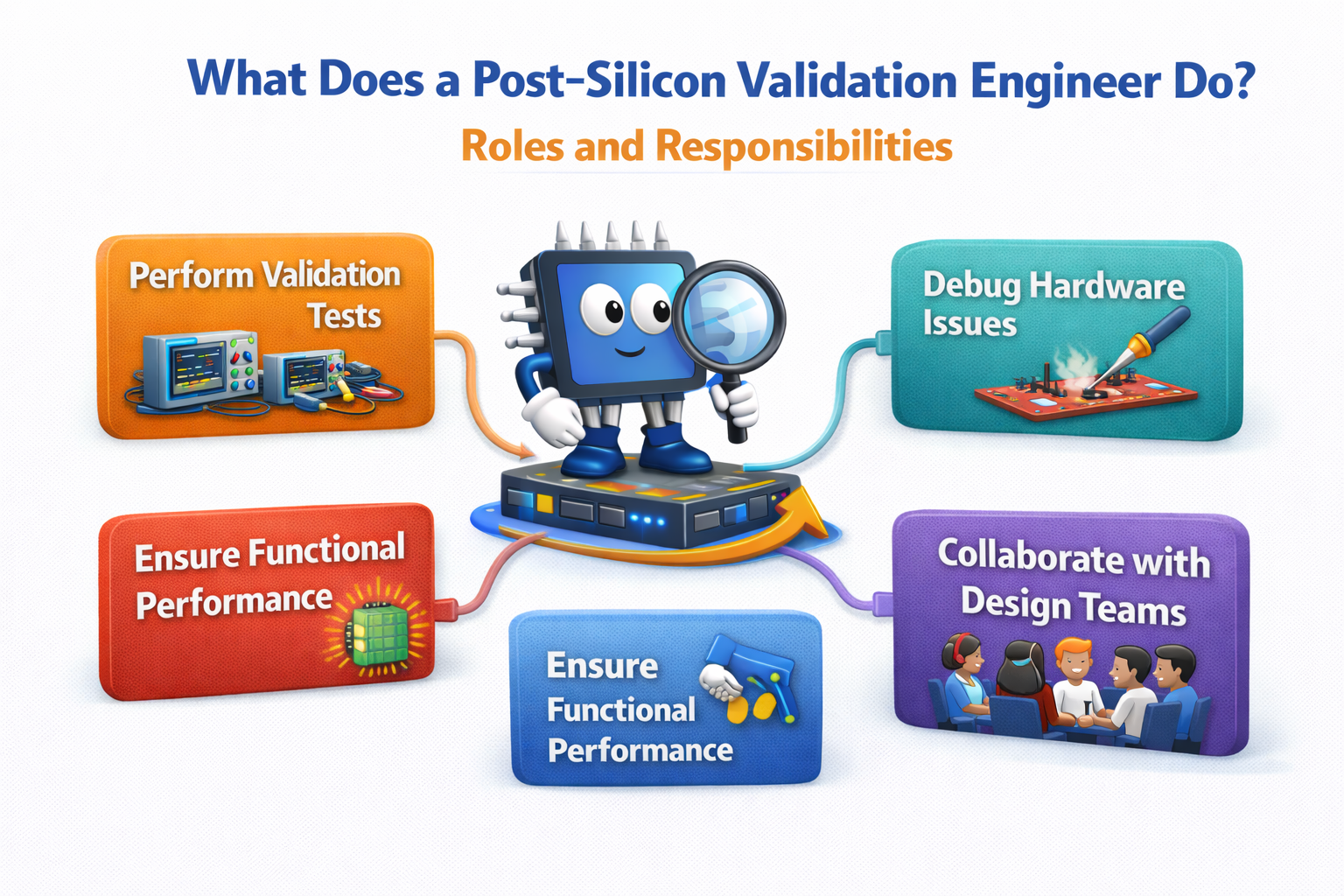
A Post-Silicon Validation Engineer is responsible for testing and validating semiconductor chips after they have been fabricated in silicon. Once a chip is manufactured, it must be thoroughly evaluated to ensure it functions according to the original design specifications. Validation engineers work in lab environments where they run functional tests on the hardware, analyze system behavior, and verify that the chip performs correctly under different operating conditions such as voltage, temperature, and workload. Their primary goal is to identify and debug issues that may not have been detected during pre-silicon verification or simulation stages.
One of the core responsibilities of a post-silicon validation engineer is hardware and system-level debugging. Engineers use advanced laboratory equipment such as oscilloscopes, logic analyzers, protocol analyzers, and JTAG debuggers to monitor signals and detect functional errors in the chip. They also develop validation test plans, create automated test scripts, and run various workloads to evaluate chip performance and stability. Collaboration is a key part of the role, as validation engineers work closely with design, verification, firmware, and software teams to diagnose problems and determine whether issues originate from the hardware design, firmware, or system integration.
In addition to testing and debugging, post-silicon validation engineers play an important role in ensuring product quality before mass production. They analyze test results, document validation findings, and help improve chip reliability by identifying design flaws early in the production cycle. Their work helps semiconductor companies reduce costly product recalls and ensures that processors, system-on-chip (SoC) devices, and integrated circuits meet performance and functionality requirements. As chip complexity continues to grow with technologies like AI processors and advanced computing systems, the role of post-silicon validation engineers has become increasingly important in the semiconductor industry.
Importance of Post-Silicon Validation in the VLSI Design Flow
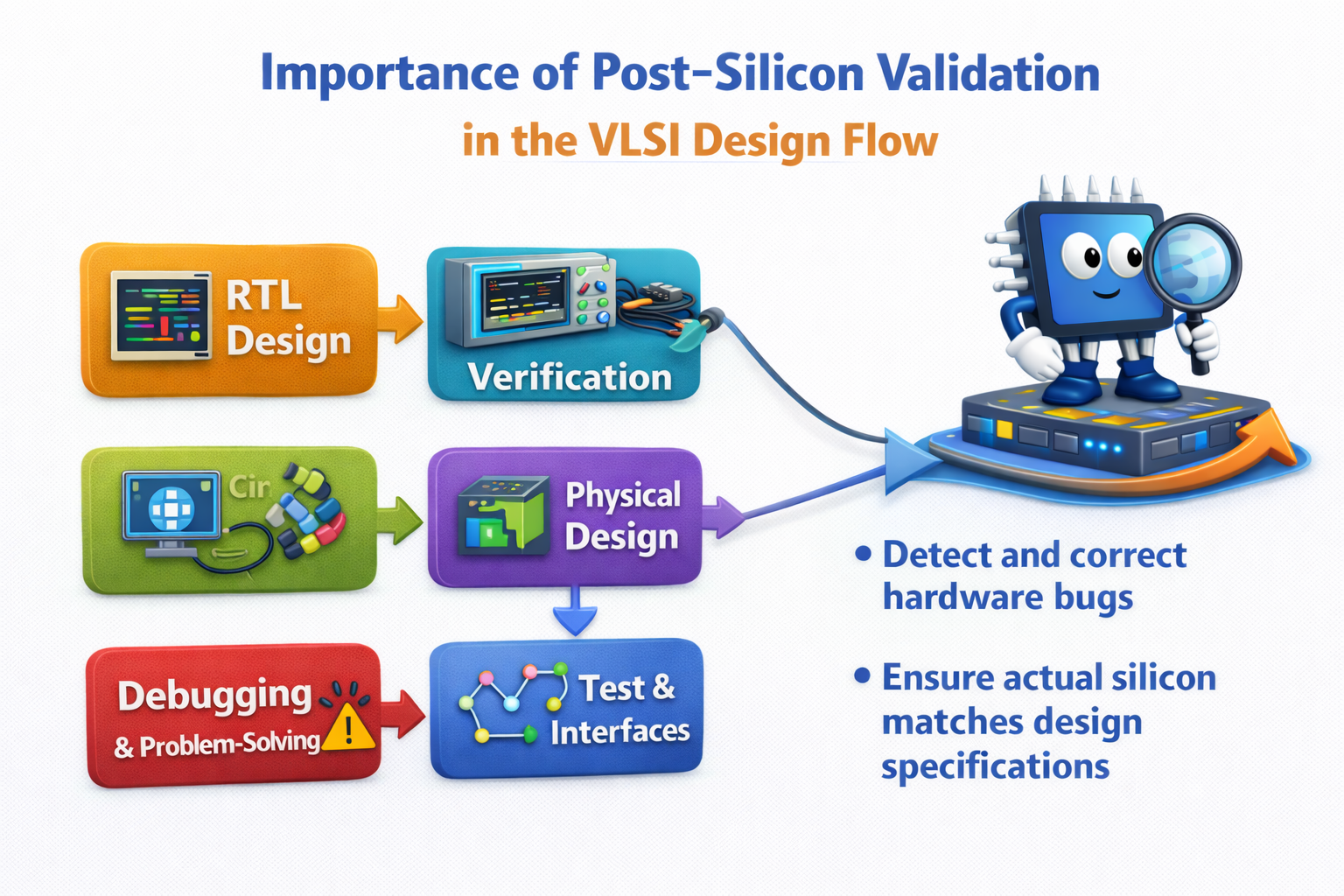
Post-silicon validation is a crucial stage in the VLSI design flow because it verifies that a fabricated chip functions correctly in real hardware environments. While pre-silicon verification relies on simulations, models, and test benches to predict circuit behavior, real silicon can sometimes behave differently due to manufacturing variations, timing issues, or integration complexities. Post-silicon validation ensures that the chip meets its functional, performance, and power specifications after fabrication. Engineers test the chip on validation platforms and development boards to confirm that all hardware modules operate as expected under real operating conditions.
This phase is also important for detecting silicon bugs and system-level issues that may not appear during earlier design stages. Validation engineers run various workloads, stress tests, and hardware debugging procedures to analyze signal behavior and system performance. By identifying problems early in the product lifecycle, post-silicon validation helps semiconductor companies avoid costly redesigns, delays, or product failures in the market. Ultimately, this process ensures the reliability, stability, and quality of complex integrated circuits used in devices such as smartphones, automotive systems, data centers, and AI processors.
Key Skills Required to Become a Post-Silicon Validation Engineer
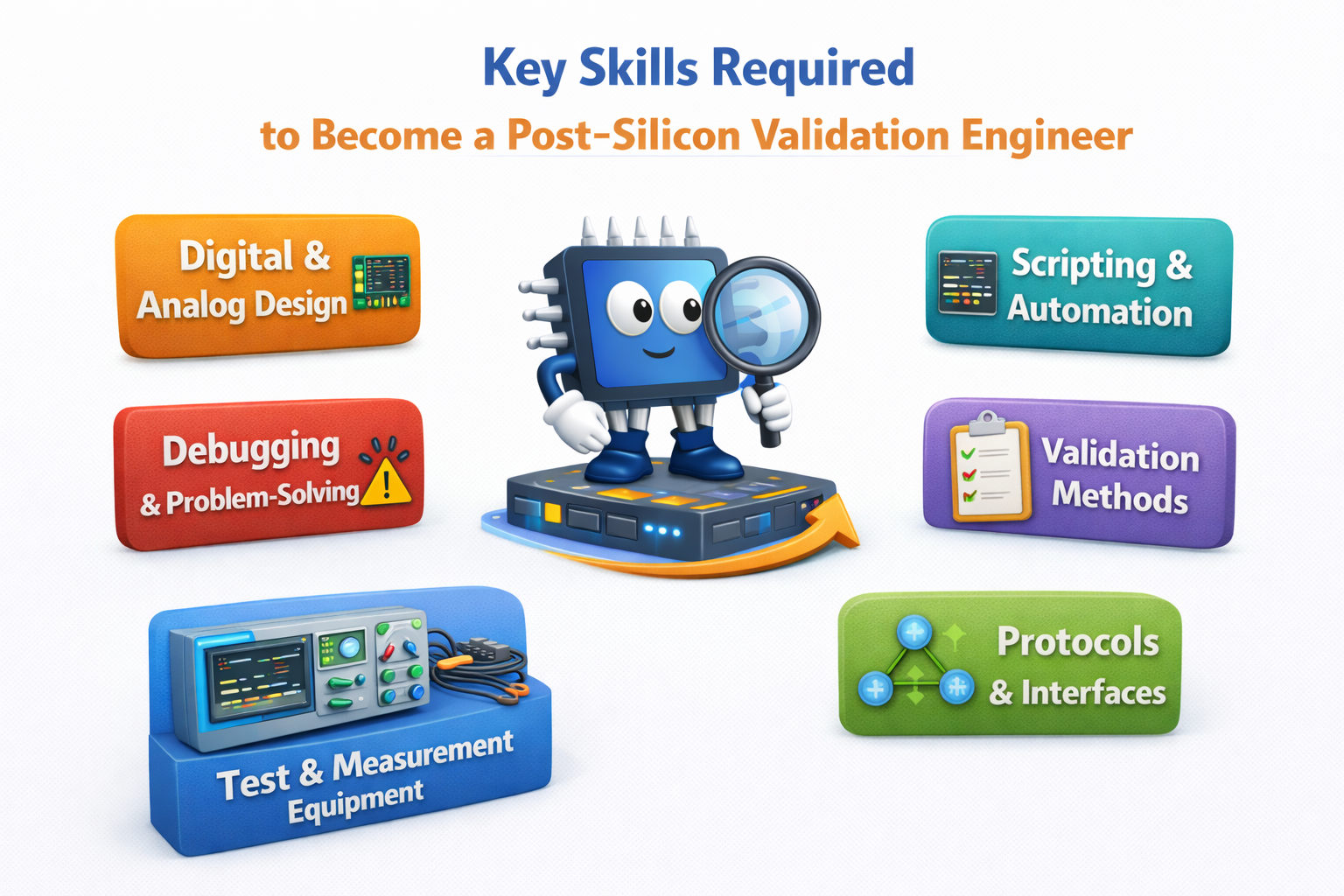
To become a successful Post-Silicon Validation Engineer, a strong foundation in digital electronics, computer architecture, and VLSI design concepts is essential. Engineers must understand how integrated circuits, processors, and system-on-chip (SoC) architectures function in real hardware environments. Knowledge of signal behavior, timing analysis, power management, and hardware interfaces helps validation engineers effectively test and analyze chip performance. A solid grasp of debugging methodologies and system-level architecture is also important because validation often involves identifying issues that occur when hardware interacts with firmware and software.
Programming and scripting skills are equally important in post-silicon validation. Engineers frequently use languages such as Python, C, C++, and shell scripting to automate test procedures, develop validation frameworks, and analyze large volumes of test data. Automation helps improve efficiency in running repeated validation tests across different operating conditions. In addition, familiarity with hardware debugging tools and interfaces such as JTAG, logic analyzers, oscilloscopes, and protocol analyzers allows engineers to monitor hardware signals and troubleshoot functional issues directly on silicon.
Another key skill for post-silicon validation engineers is problem-solving and cross-team collaboration. Debugging silicon-level issues can be complex and requires analytical thinking, attention to detail, and the ability to isolate root causes quickly. Validation engineers often work closely with design, verification, firmware, and software teams to resolve hardware problems and improve product quality. Strong communication skills and a systematic approach to debugging help engineers document issues, propose solutions, and ensure that chips meet performance and reliability requirements before they move into large-scale production.
Programming Languages and Scripting Skills for Validation Engineers
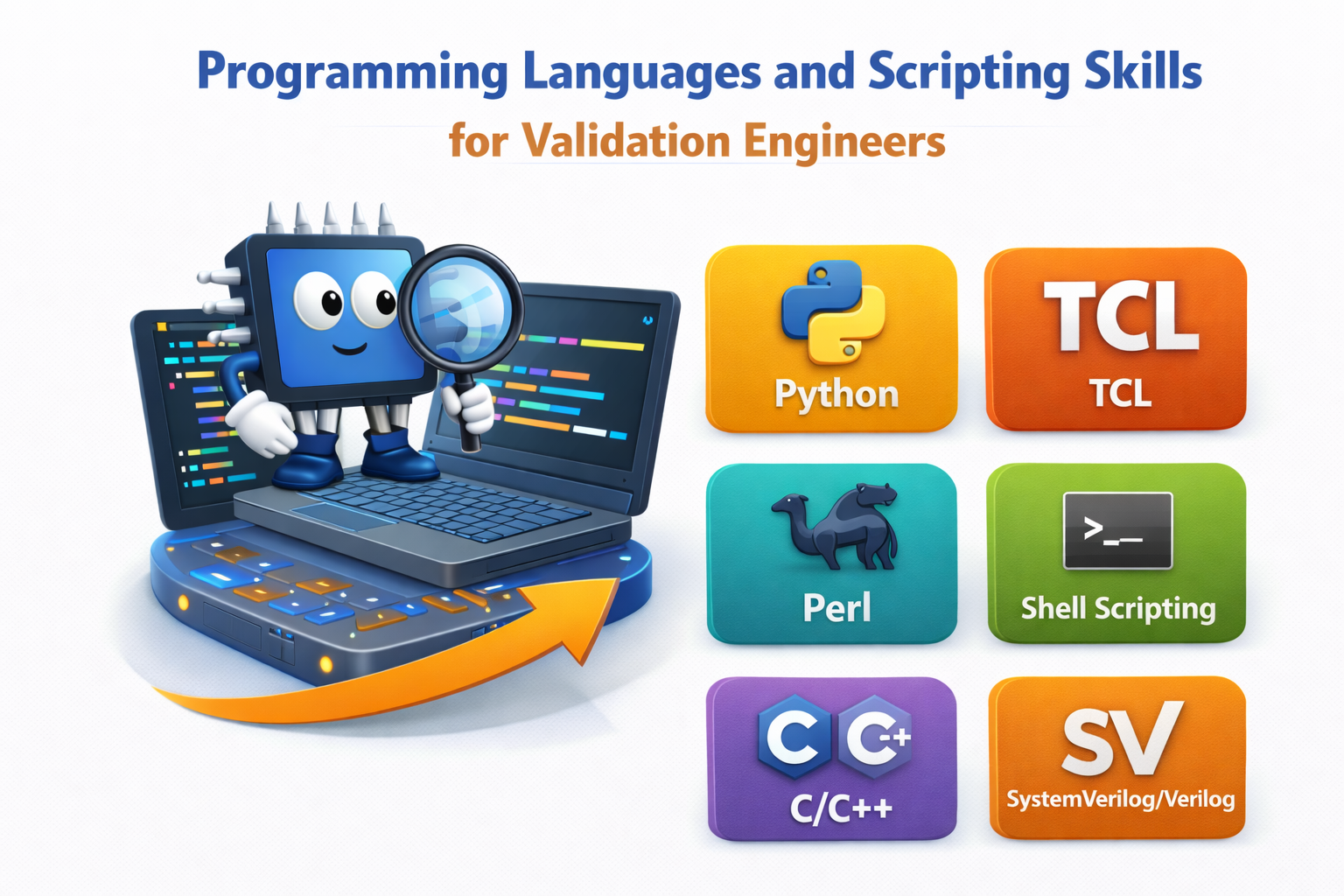
Programming and scripting skills are essential for validation engineers because they help automate testing processes and analyze large volumes of hardware data during post-silicon validation. Languages such as Python, C, and C++ are widely used in the semiconductor industry for developing validation frameworks, running automated test scripts, and interacting with hardware platforms. Python, in particular, is popular due to its powerful libraries, ease of scripting, and ability to quickly build automation tools for debugging and test execution. These programming skills allow engineers to efficiently control hardware setups, collect validation data, and streamline repetitive testing tasks.
In addition to programming languages, validation engineers often use scripting languages like Shell scripting, Perl, or TCL to manage testing environments, run validation sequences, and integrate with hardware debugging tools. These scripts help automate test execution across multiple test cases and operating conditions, reducing manual effort and improving validation efficiency. Strong scripting knowledge also enables engineers to analyze log files, identify system-level issues, and generate performance reports. By combining programming, scripting, and debugging skills, validation engineers can significantly improve the accuracy and speed of the chip validation process.
Career Path of a Post-Silicon Validation Engineer (Entry-Level to Senior Roles)
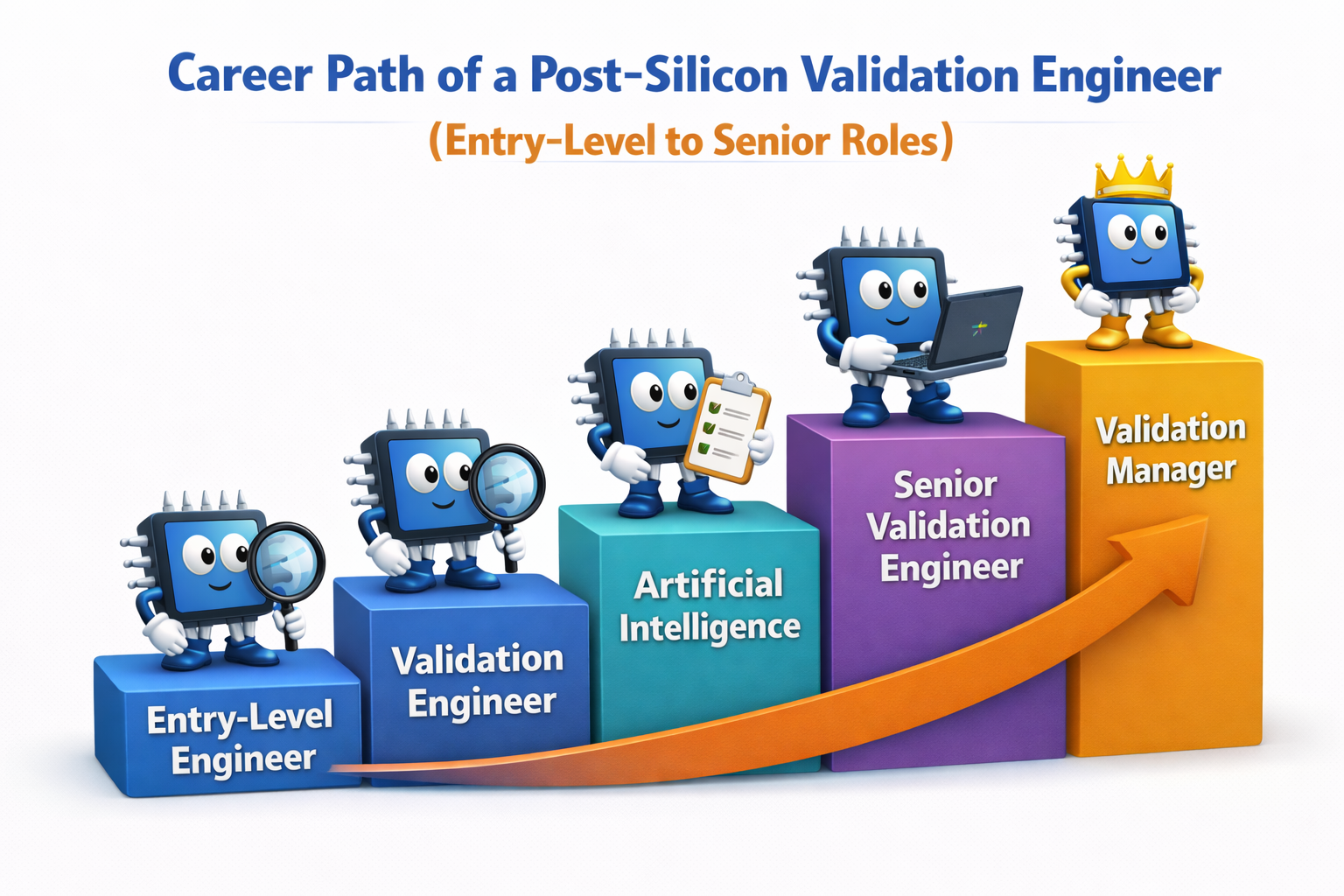
The career path of a Post-Silicon Validation Engineer typically begins with an entry-level role such as Validation Engineer, Silicon Validation Engineer, or Hardware Test Engineer. At this stage, engineers focus on executing predefined validation test plans, running hardware tests on development boards, and collecting performance and functional data from the chip. They work closely with senior engineers to learn debugging techniques, analyze test logs, and understand system-level behavior of processors or system-on-chip (SoC) devices. Entry-level engineers also gain hands-on experience with lab equipment, validation platforms, and automation scripts used to test silicon chips.
With a few years of experience, engineers can progress to Senior Post-Silicon Validation Engineer or Lead Validation Engineer roles. At this level, professionals take on greater responsibilities such as designing validation strategies, developing automated test frameworks, and leading debugging efforts for complex silicon issues. They collaborate more closely with design, verification, and firmware teams to identify root causes of hardware failures and ensure the chip meets performance, power, and functionality targets. Senior validation engineers are also involved in optimizing validation processes and mentoring junior engineers in debugging and testing methodologies.
As engineers gain deeper expertise in chip architecture and system-level debugging, they can move into advanced roles such as Validation Architect, Silicon Debug Lead, or Engineering Manager. These positions involve defining validation methodologies for new semiconductor products, managing validation teams, and coordinating cross-functional efforts across hardware, firmware, and software groups. Some professionals also transition into specialized roles in system architecture, chip design, or technical leadership within semiconductor companies. With the growing complexity of modern processors, AI accelerators, and high-performance computing chips, experienced post-silicon validation engineers have strong long-term career opportunities in the global semiconductor industry.
Future Scope of Post-Silicon Validation in the Semiconductor Industry

The future scope of post-silicon validation in the semiconductor industry is expected to grow significantly as chip designs become more complex and integrated. Modern processors, system-on-chip (SoC) architectures, AI accelerators, and automotive semiconductor solutions require extensive validation to ensure they operate reliably in real-world environments. As semiconductor technologies move toward smaller process nodes and advanced packaging techniques, the chances of silicon-level issues increase. This makes post-silicon validation a critical step in verifying functionality, performance, and power efficiency before products reach the market. As a result, semiconductor companies continue to invest heavily in skilled validation engineers and advanced testing infrastructure.
In the coming years, the demand for post-silicon validation engineers will expand across industries such as artificial intelligence hardware, data center processors, automotive electronics, 5G communication systems, and IoT devices. Emerging technologies like chiplet architectures, heterogeneous computing, and high-speed interfaces will require even more advanced validation strategies and debugging techniques. Engineers with strong expertise in hardware debugging, validation automation, and system-level analysis will have excellent career opportunities. As the global semiconductor industry continues to grow, post-silicon validation will remain a vital domain for ensuring reliable, high-performance chips in next-generation electronic systems.
Industries Hiring Post-Silicon Validation Engineers
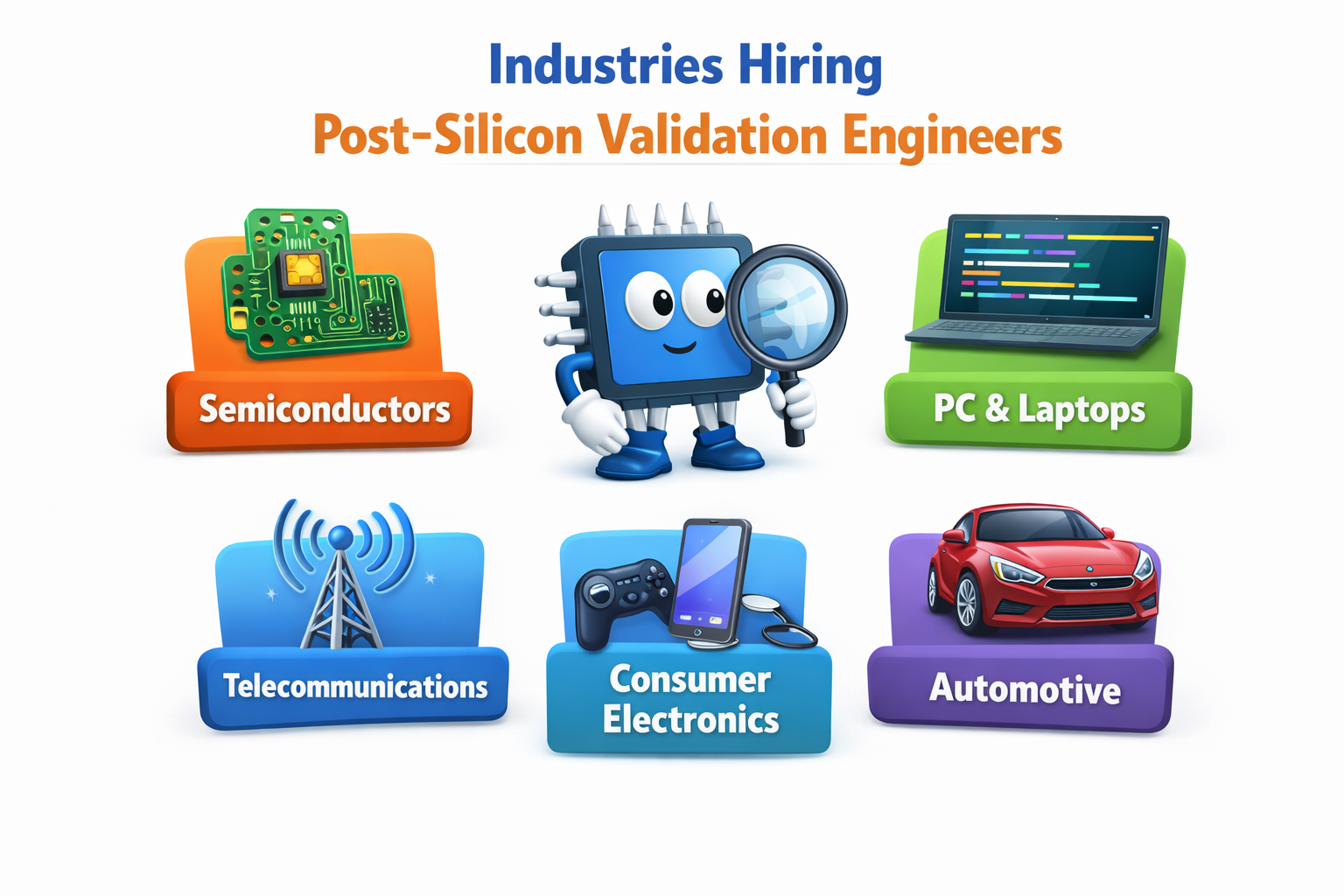
Several industries actively hire Post-Silicon Validation Engineers because modern electronic products rely heavily on reliable semiconductor chips. The semiconductor manufacturing industry is the primary employer, where companies design and produce processors, system-on-chip (SoC) devices, GPUs, and other integrated circuits. Leading semiconductor companies require validation engineers to test newly fabricated chips, identify silicon-level issues, and ensure that the hardware functions correctly before it enters mass production. These engineers play a key role in improving chip reliability, performance, and overall product quality.
Another major sector employing post-silicon validation engineers is the consumer electronics and computing industry. Companies that develop smartphones, laptops, gaming devices, and high-performance computing systems depend on validated processors and chipsets to deliver stable and efficient products. Validation engineers help ensure that chips used in these devices perform properly under different workloads, operating conditions, and system environments. Their work is critical in verifying compatibility between hardware, firmware, and software before products are released to the market.
The automotive and communication technology industries are also increasingly hiring post-silicon validation engineers. With the rise of electric vehicles, advanced driver-assistance systems (ADAS), and connected car technologies, automotive companies require highly reliable semiconductor components. Similarly, industries working on 5G communication, networking equipment, and IoT devices rely on validated chips for high-speed data processing and connectivity. As these sectors continue to grow, the demand for skilled post-silicon validation engineers will remain strong across multiple technology-driven industries.
Post-Silicon Validation Engineer Salary in India and Globally
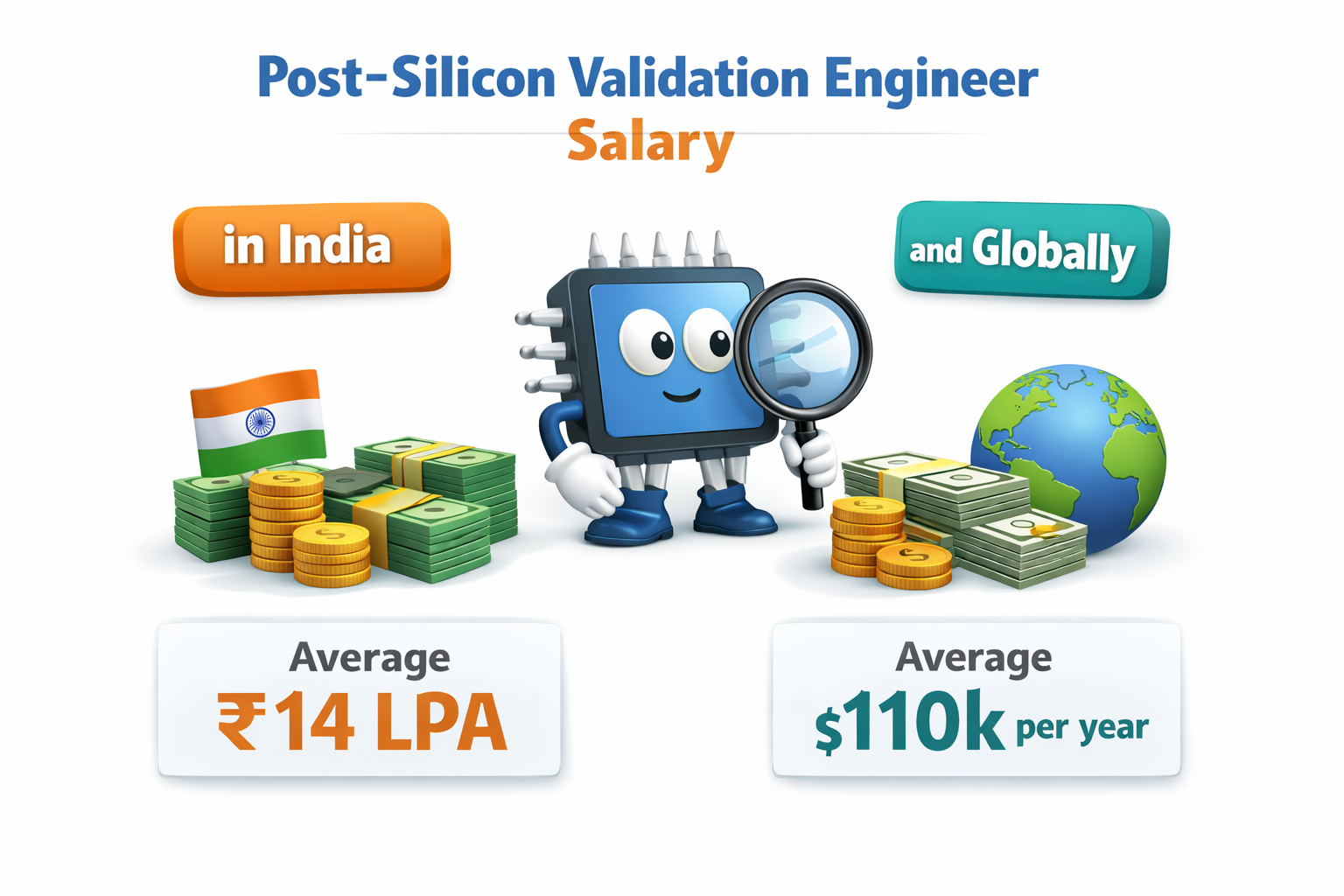
The salary of a Post-Silicon Validation Engineer varies depending on factors such as experience, company, and geographic location, but it is generally considered a well-paid role within the semiconductor industry. In India, entry-level validation engineers typically earn around ₹6–12 lakh per year, while the average salary for a post-silicon validation engineer is about ₹8–9 lakh annually according to recent salary reports. Experienced professionals working in major semiconductor hubs such as Bengaluru or Hyderabad can earn significantly more, with salaries ranging from ₹18 lakh to over ₹25 lakh per year for senior-level engineers.
Globally, the compensation for post-silicon validation engineers is much higher due to strong demand for semiconductor talent. In the United States, the average salary for this role is roughly $109,000 to $187,000 per year, with senior engineers and specialists earning over $200,000 annually in major semiconductor regions like Silicon Valley. These competitive salaries reflect the high level of expertise required in chip debugging, hardware validation, and system-level testing. As semiconductor companies continue to design more complex processors, the demand for skilled post-silicon validation engineers is expected to keep salaries competitive worldwide.
Tips for Students to Start a Career in Post-Silicon Validation
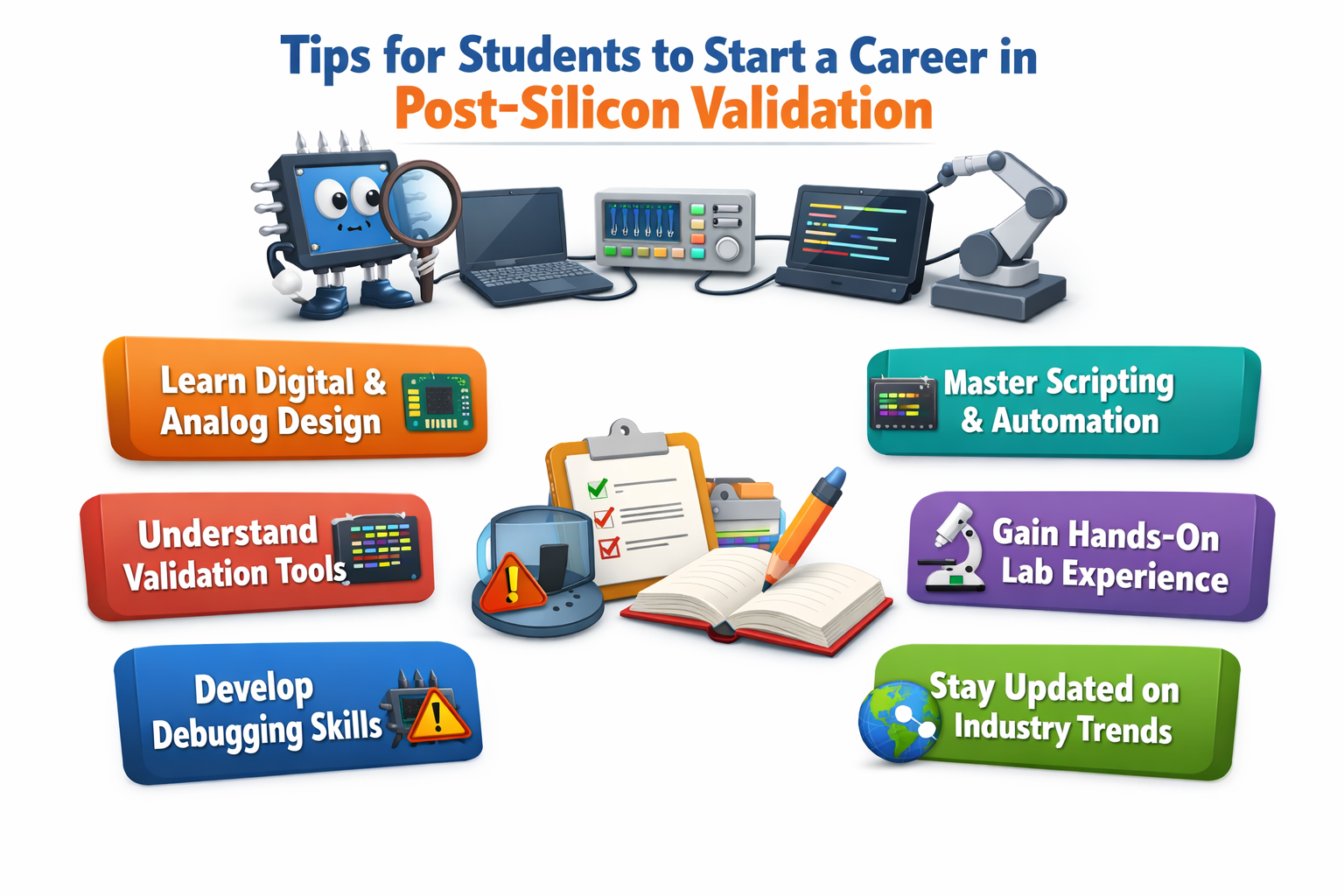
Students who want to build a career as a Post-Silicon Validation Engineer should start by developing a strong foundation in digital electronics, computer architecture, and VLSI design fundamentals. Understanding how processors, system-on-chip (SoC) architectures, and hardware interfaces work is essential for effective chip validation and debugging. During their academic studies, students should focus on subjects such as microprocessors, embedded systems, semiconductor devices, and hardware design concepts. Building a solid theoretical understanding will help them analyze hardware behavior and identify issues when working with real silicon.
Gaining hands-on experience with hardware testing and programming is equally important for entering the post-silicon validation field. Students should learn programming languages such as Python, C, or C++, which are commonly used for writing validation scripts and automating test procedures. Familiarity with hardware debugging tools, development boards, and embedded systems can also be very beneficial. Working on practical projects related to processor testing, FPGA-based systems, or hardware debugging can help students develop the technical skills required for validation roles and strengthen their resumes when applying for semiconductor jobs.
Another important step is to stay updated with semiconductor industry trends and build practical experience through internships or training programs. Many semiconductor companies offer internships where students can learn about validation workflows, debugging techniques, and chip testing environments. Networking with professionals in the semiconductor field, participating in technical communities, and learning industry-standard tools can also improve career opportunities. By combining strong technical knowledge, practical experience, and continuous learning, students can successfully start a rewarding career in post-silicon validation engineering.
Conclusion
Post-silicon validation plays a vital role in the semiconductor development lifecycle by ensuring that a fabricated chip functions correctly in real-world conditions. A Post-Silicon Validation Engineer is responsible for testing, debugging, and analyzing silicon chips to verify performance, power efficiency, and system-level functionality before products reach the market. With the growing complexity of modern processors, AI chips, and system-on-chip architectures, the importance of validation has increased significantly. This makes post-silicon validation an essential domain within the VLSI industry that directly impacts the reliability and quality of semiconductor products.
For students and professionals interested in the semiconductor field, pursuing a career in post-silicon validation offers strong growth opportunities, competitive salaries, and the chance to work on cutting-edge technologies. By developing skills in hardware debugging, programming, system-level testing, and validation tools, aspiring engineers can build a successful career in this field. As industries such as artificial intelligence, automotive electronics, 5G communication, and IoT continue to expand, the demand for skilled post-silicon validation engineers will remain strong, making it a promising and future-ready career path in the global semiconductor industry.