


Why RTL Design Skills Are in High Demand in the Semiconductor Industry
Navigate through this article using the table of contents below
Table of Contents
No headings found in this article.
The modern digital world runs on semiconductor chips that power smartphones, data centers, artificial intelligence systems, automotive electronics, and IoT devices. Behind the performance and efficiency of these chips lies a critical stage in chip development known as Register Transfer Level (RTL) design. RTL design is the process where engineers describe the behavior and architecture of digital circuits using hardware description languages such as Verilog and SystemVerilog. It acts as the bridge between system-level architecture and the physical implementation of an integrated circuit. Because every semiconductor chip must pass through this stage, RTL design plays a foundational role in the overall VLSI design flow.
In recent years, the demand for RTL design engineers in the semiconductor industry has grown significantly due to rapid advancements in technologies like artificial intelligence, 5G communication, high-performance computing, and automotive electronics. Companies developing advanced processors, AI accelerators, and custom chips require highly skilled engineers who can design efficient digital architectures at the RTL level. As the global semiconductor market continues to expand, the need for professionals with strong RTL design skills, digital logic knowledge, and experience with hardware description languages is becoming increasingly important. This growing demand has made RTL design one of the most valuable and sought-after skills in modern semiconductor engineering.
What is Register Transfer Level (RTL) Design? Its Role in Digital IC Development
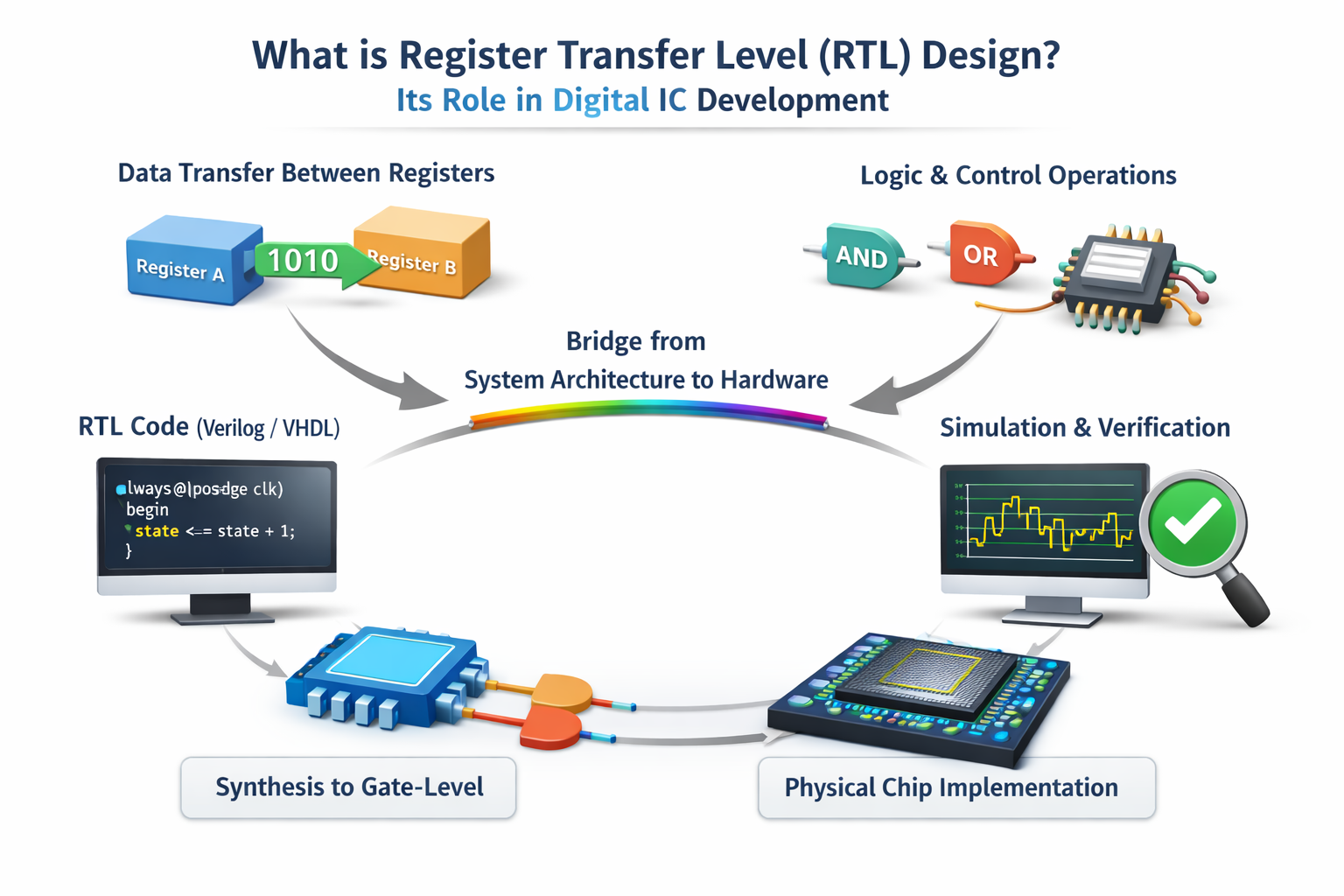
Register Transfer Level (RTL) design is a fundamental stage in digital integrated circuit (IC) development where engineers describe how data moves between registers and how logical operations are performed within a digital system. At this level of abstraction, the behavior of the circuit is represented using hardware description languages (HDLs) such as Verilog, SystemVerilog, or VHDL. Instead of focusing on the physical layout of transistors, RTL design focuses on defining the flow of data, control logic, and timing between different hardware components. This approach allows designers to model complex digital systems like processors, controllers, and communication modules in a structured and efficient way.
In the VLSI design flow, RTL design acts as the bridge between high-level system architecture and the lower-level implementation stages such as synthesis, verification, and physical design. Once the system architecture is defined, RTL engineers convert the design specifications into synthesizable code that represents the digital logic of the chip. This RTL code is then simulated and verified to ensure that the functionality of the design meets the required specifications. After successful verification, synthesis tools convert the RTL code into gate-level representations, which are later used for physical chip implementation.
The role of RTL design in digital IC development is critical because it directly influences the performance, power efficiency, and overall functionality of the semiconductor chip. A well-designed RTL architecture can optimize resource utilization, improve processing speed, and reduce power consumption. Since errors at this stage can propagate to later stages of chip development and become costly to fix, RTL design requires strong expertise in digital logic, computer architecture, and hardware design principles. As semiconductor technologies continue to evolve, RTL design remains one of the most important skills in modern VLSI and semiconductor engineering.
What Does an RTL Design Engineer Do?
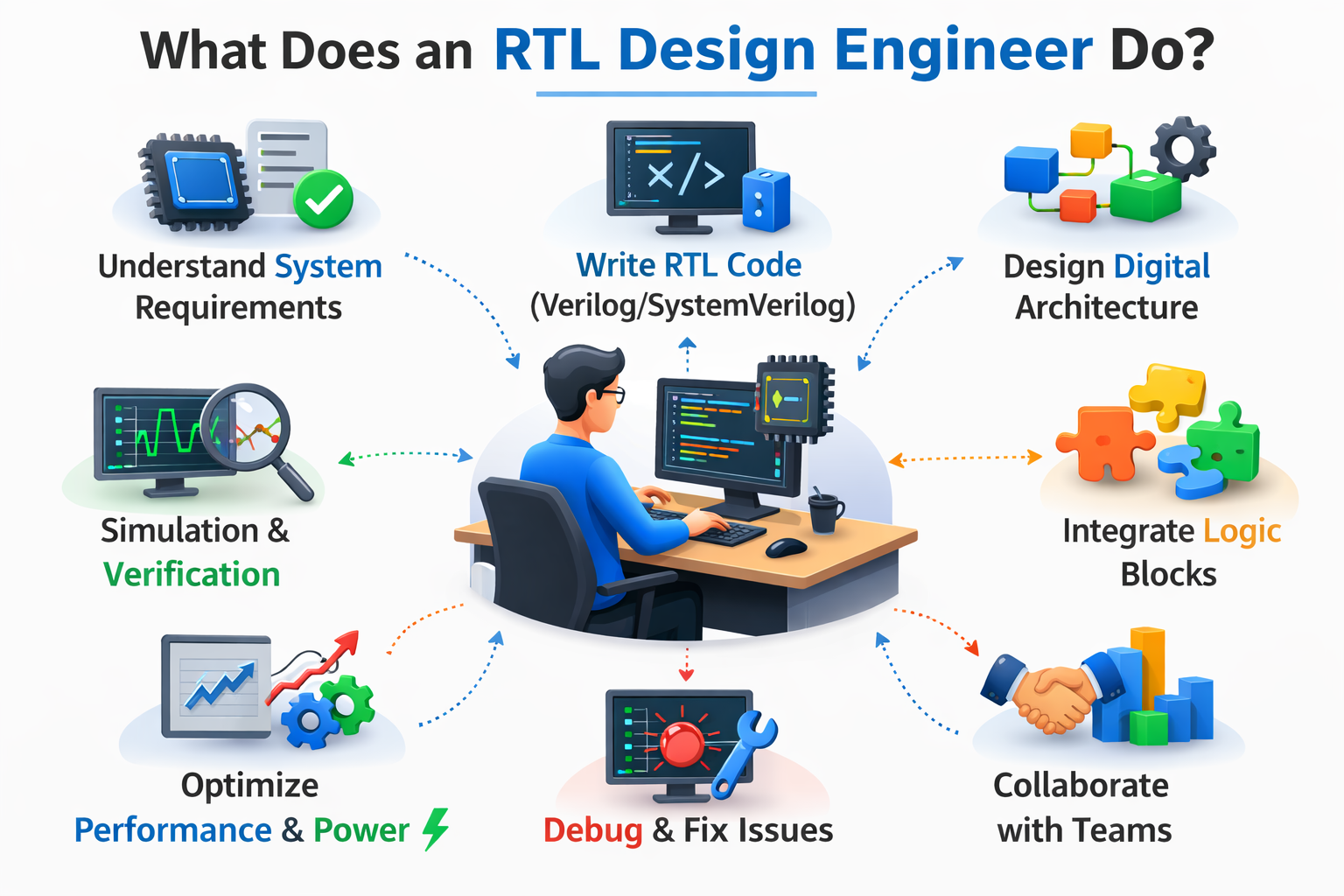
An RTL design engineer plays a crucial role in the development of digital integrated circuits by translating system-level requirements into hardware designs at the Register Transfer Level (RTL). At this stage, the engineer defines how data moves between registers and how different logic blocks interact within a digital system. RTL engineers use hardware description languages such as Verilog and SystemVerilog to model and implement digital logic that can later be synthesized into actual hardware. Their work forms the foundation of modern semiconductor products including processors, communication chips, and embedded systems.
In addition to writing RTL code, RTL design engineers are responsible for designing efficient digital architectures that meet performance, power, and area requirements. They collaborate closely with system architects, verification engineers, and physical design teams to ensure the design functions correctly and can be successfully implemented in silicon. A well-designed RTL architecture improves chip performance and reduces development risks, making RTL engineers an essential part of the semiconductor design process.
Key Responsibilities of an RTL Design Engineer
Convert system specifications into RTL design using hardware description languages
Write and optimize RTL code using Verilog or SystemVerilog
Design efficient digital architectures for processors, controllers, and hardware modules
Develop and integrate different logic blocks within a chip design
Work with verification engineers to validate RTL functionality through simulation
Optimize designs for performance, power consumption, and silicon area
Collaborate with synthesis and physical design teams during chip implementation
Debug and resolve design issues during the development cycle
Why RTL is the foundation of chip design ?
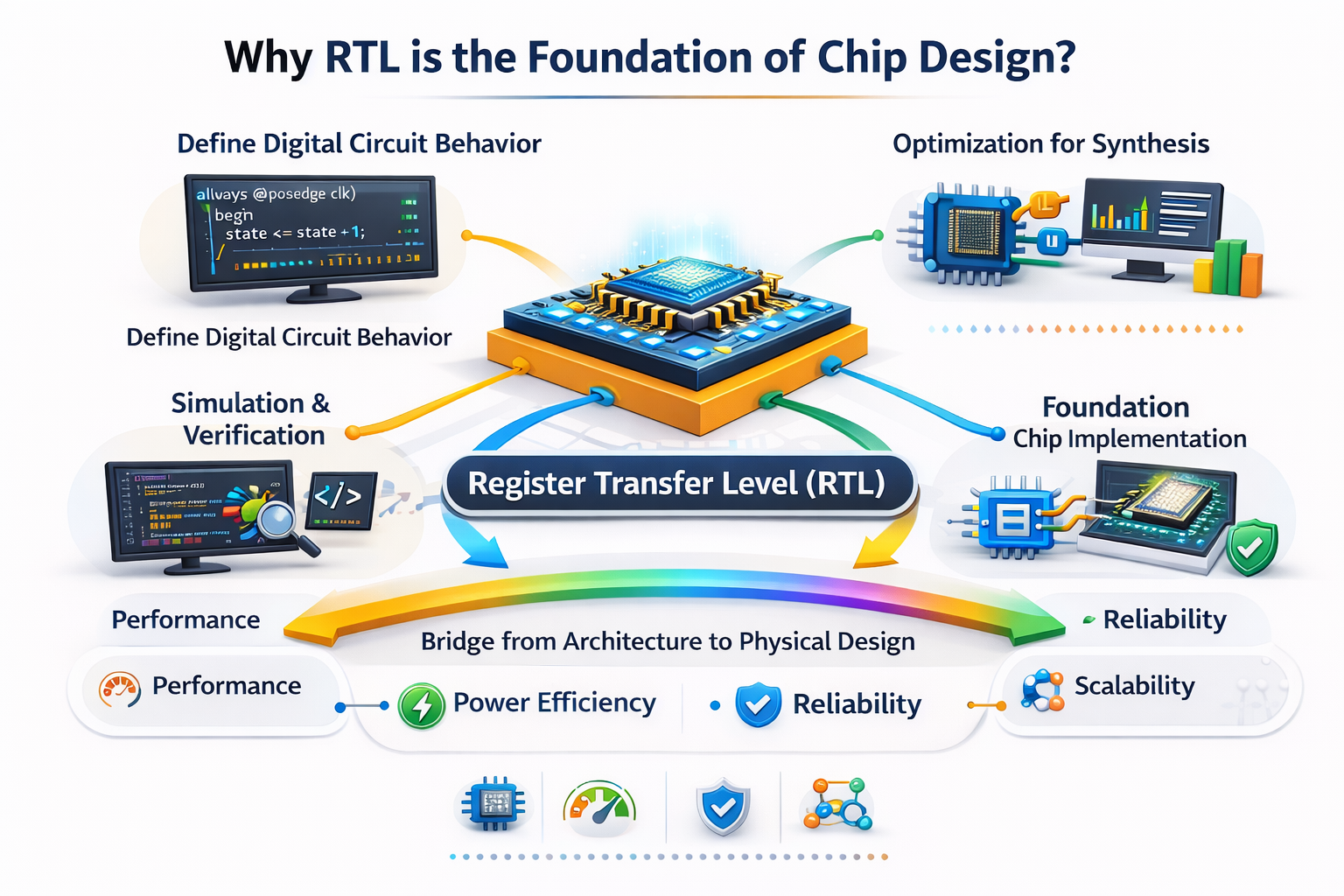
RTL design is considered the foundation of chip design because it defines how a digital system will function before it is physically implemented on silicon. At the Register Transfer Level, engineers describe how data moves between registers, how logical operations are performed, and how different hardware modules interact within the chip. Using hardware description languages such as Verilog, SystemVerilog, or VHDL, RTL designers create a functional representation of the digital circuit. This stage acts as the blueprint for the entire semiconductor development process, allowing designers to model and test the behavior of the chip long before it is manufactured.
The quality of the RTL design directly impacts the performance, power efficiency, and reliability of the final semiconductor chip. A well-structured RTL architecture ensures that the design can be efficiently synthesized into logic gates and later implemented through physical design processes. Since errors at the RTL stage can lead to costly redesigns later in the chip development cycle, this phase is critical for ensuring correct functionality and optimization. For this reason, RTL design serves as the core building block in the VLSI design flow and plays a vital role in the successful development of modern digital integrated circuits.
Why RTL Design Skills Are Critical for Future Semiconductor Innovation
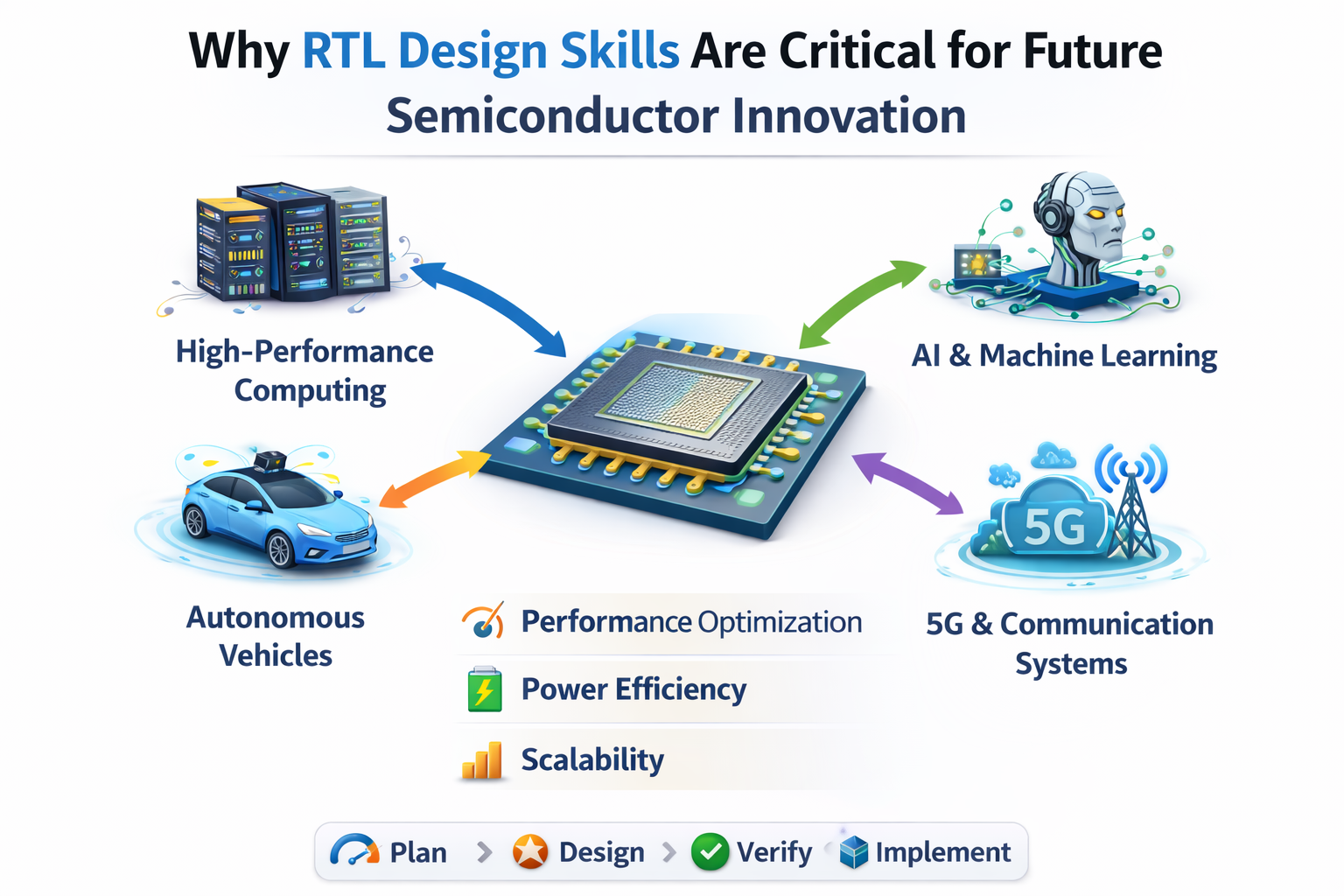
RTL design skills are critical for future semiconductor innovation because they form the foundation for developing advanced digital chips used in emerging technologies. As industries increasingly rely on high-performance computing, artificial intelligence, autonomous vehicles, and 5G communication systems, the complexity of semiconductor devices continues to grow. RTL design enables engineers to define the architecture and behavior of digital circuits before they are physically implemented on silicon. By writing efficient RTL code using hardware description languages such as Verilog and SystemVerilog, designers can create optimized chip architectures that meet strict requirements for performance, power efficiency, and scalability.
In addition, the rapid growth of custom silicon and specialized processors has increased the importance of strong RTL design expertise. Technology companies are now developing dedicated chips for AI acceleration, data centers, edge computing, and consumer electronics, all of which require carefully designed digital architectures at the RTL level. Since RTL design directly impacts the functionality, reliability, and efficiency of semiconductor products, engineers with advanced RTL design skills play a key role in driving innovation across the semiconductor industry. As chip technologies continue to evolve and demand for more powerful computing increases, RTL design will remain a critical skill for shaping the future of semiconductor development.
How Students Can Start a Career in RTL Design
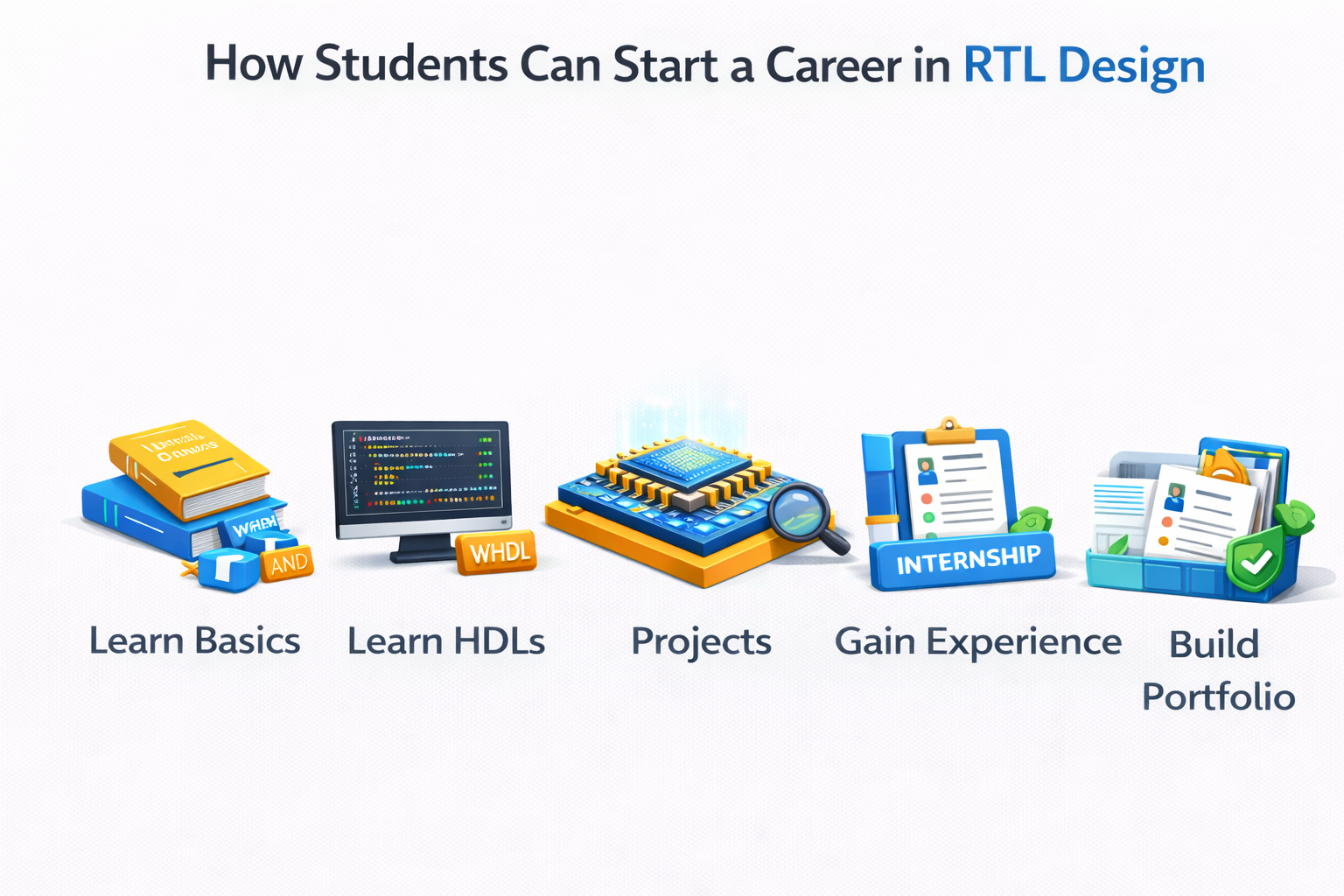
Students who want to build a career in RTL design should start by developing a strong foundation in digital electronics and computer architecture. Understanding concepts such as logic gates, finite state machines, combinational and sequential circuits, and memory design is essential for working in the semiconductor industry. In addition to theoretical knowledge, students should learn hardware description languages like Verilog, SystemVerilog, or VHDL, which are used to describe and implement digital circuits at the Register Transfer Level. Learning these programming languages allows students to design and simulate digital modules that form the building blocks of modern integrated circuits.
To improve their career prospects, students should also gain practical experience through hands-on projects, internships, and online training programs related to VLSI and RTL design. Working on projects such as designing simple processors, communication interfaces, or digital controllers helps students understand real-world chip design challenges. Familiarity with industry tools for simulation, synthesis, and verification can also give candidates an advantage when applying for semiconductor jobs. By building strong technical skills, creating project portfolios, and staying updated with semiconductor industry trends, students can successfully start a career as RTL design engineers in the growing VLSI and semiconductor sector.
Top Semiconductor Companies Hiring RTL Design Engineers
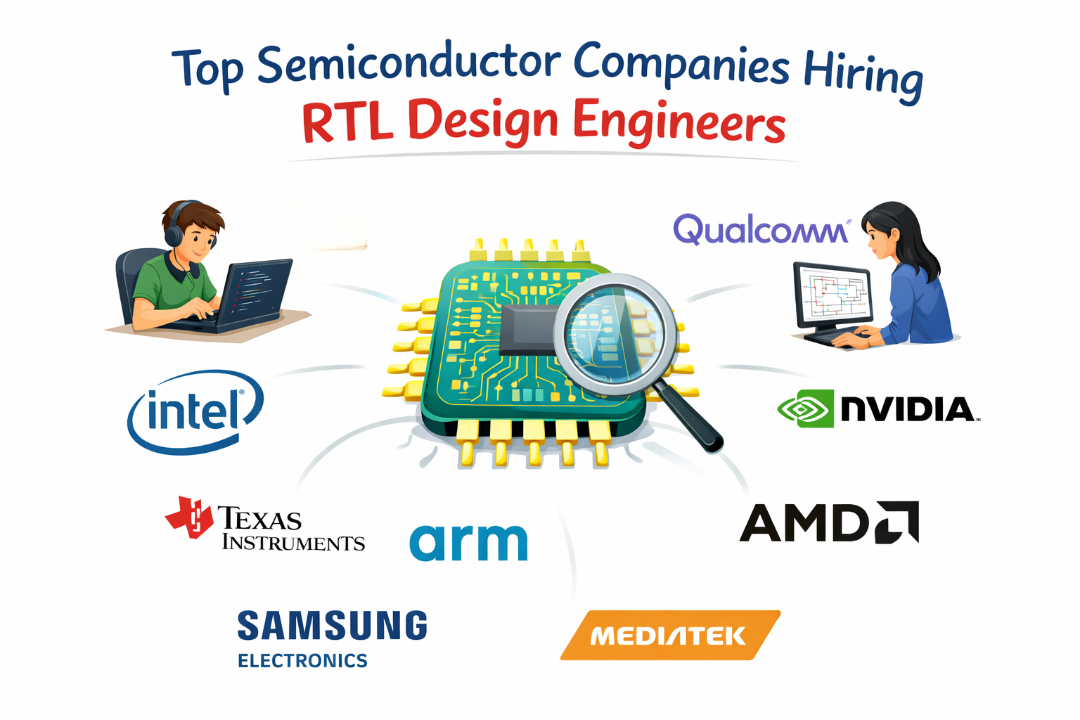
The demand for RTL design engineers is increasing rapidly as semiconductor companies continue to develop advanced processors, AI accelerators, communication chips, and automotive electronics. Many global technology companies require skilled RTL designers who can develop efficient digital architectures using hardware description languages such as Verilog and SystemVerilog. These engineers play a key role in designing high-performance chips used in smartphones, data centers, networking equipment, and embedded systems. As the semiconductor industry continues to grow, leading companies across the world are actively hiring RTL design engineers to support the development of next-generation semiconductor technologies.
Companies Hiring RTL Design Engineers
Intel
NVIDIA
AMD (Advanced Micro Devices)
Qualcomm
Texas Instruments
Samsung Semiconductor
Broadcom
Apple (Silicon Engineering Teams)
Synopsys
Cadence Design Systems
IBM
MediaTek
Renesas Electronics
ARM
Larsen & Toubro Technology Services (LTTS)
Popular Tools Used in RTL Design
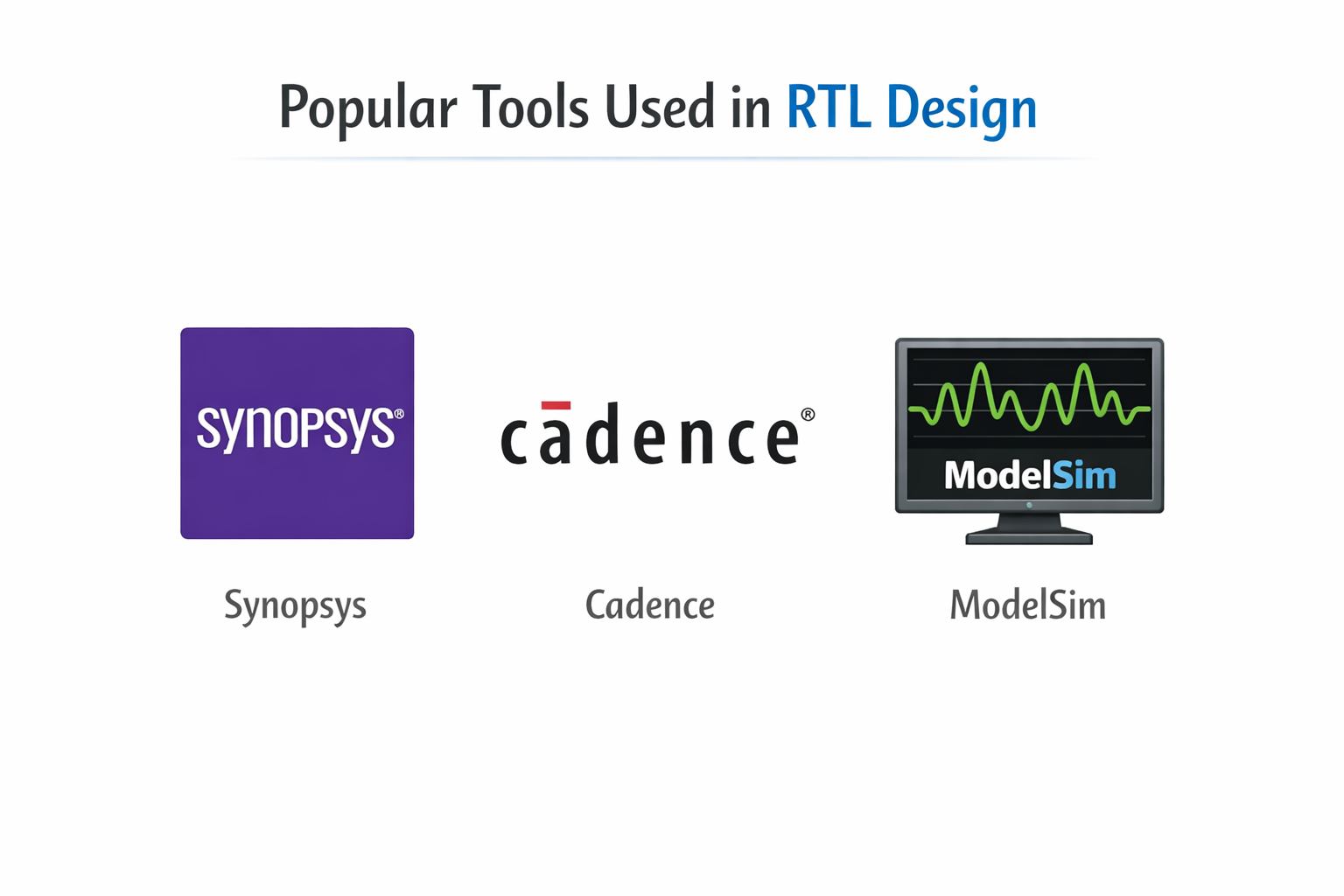
RTL design relies on a variety of specialized Electronic Design Automation (EDA) tools that help engineers create, simulate, and optimize digital circuits before they are implemented in silicon. These tools allow designers to write and test RTL code using hardware description languages such as Verilog, SystemVerilog, and VHDL. Simulation tools are used to verify the functional correctness of the design, while synthesis tools convert RTL code into gate-level representations that can later be used in the physical design stage. The use of advanced RTL design tools helps engineers detect design errors early, improve productivity, and ensure that the final chip meets performance and power requirements.
In modern semiconductor development, RTL designers work with a combination of simulation, synthesis, debugging, and verification tools to build reliable and efficient digital systems. These tools play a crucial role in validating the design, optimizing hardware resources, and ensuring compatibility with the complete VLSI design flow. Leading semiconductor companies rely on industry-standard EDA tools to handle the increasing complexity of modern chips used in processors, AI accelerators, communication devices, and automotive electronics.
Popular Tools Used in RTL Design
Synopsys Design Compiler – Used for synthesizing RTL code into gate-level netlists
Cadence Genus Synthesis Solution – A powerful synthesis tool for digital IC design
Mentor Graphics ModelSim / QuestaSim – Popular tools for RTL simulation and debugging
Synopsys VCS (Verilog Compiler Simulator) – High-performance simulator for verifying RTL designs
Cadence Xcelium – Advanced simulation platform for SystemVerilog and mixed-language designs
Synopsys SpyGlass – Used for RTL linting, design rule checking, and early bug detection
Cadence JasperGold – Formal verification tool used to validate RTL design behavior
Vivado Design Suite – Used for RTL design and synthesis in FPGA development
Quartus Prime – Intel FPGA design software for RTL coding, synthesis, and debugging
Conclusion
RTL design plays a fundamental role in the semiconductor industry as it forms the foundation of digital integrated circuit development. From defining chip architecture to enabling efficient implementation of complex digital systems, RTL design ensures that modern semiconductor devices meet performance, power, and reliability requirements. With the rapid advancement of technologies such as artificial intelligence, 5G communication, high-performance computing, and automotive electronics, the demand for skilled RTL design engineers continues to grow. Professionals with strong knowledge of digital logic, hardware description languages, and VLSI design tools are becoming essential for building next-generation semiconductor solutions. As the semiconductor industry continues to evolve and innovate, RTL design skills will remain a critical requirement for engineers who want to contribute to the development of advanced and efficient chip technologies.