

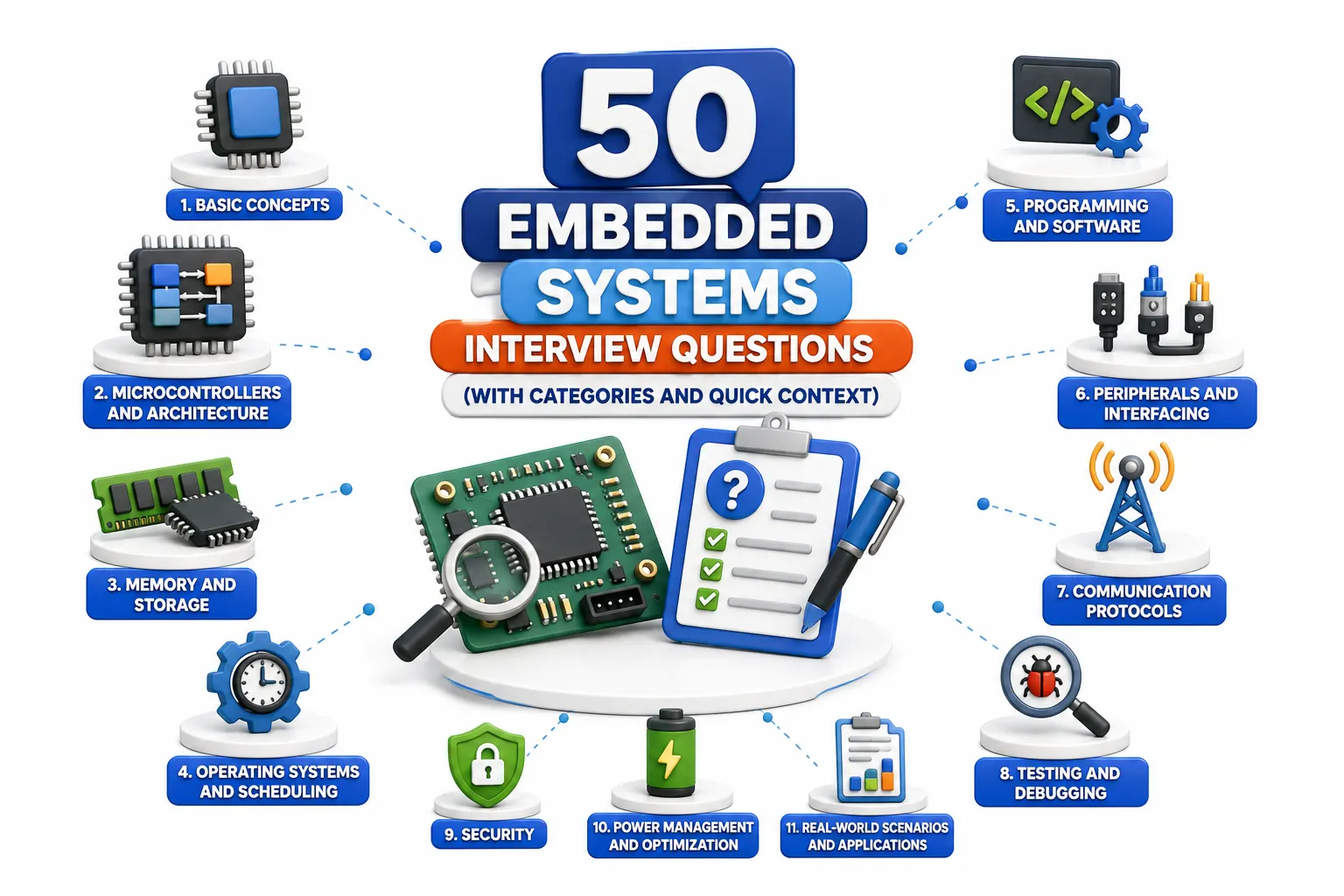
50 Embedded Systems Interview Questions (With Categories and Quick Context)
Navigate through this article using the table of contents below
Table of Contents
No headings found in this article.
Walking into an embedded systems interview without knowing what's coming is a bit like debugging firmware without a datasheet — technically possible, but painful. This list breaks down the questions companies actually ask, organized the way real interviews tend to flow: fundamentals first, then RTOS, protocols, and debugging.
Use it to test yourself honestly. If a question makes you pause for more than a few seconds, that's your cue to go build something small around that concept instead of just reading the answer.
C Programming Fundamentals
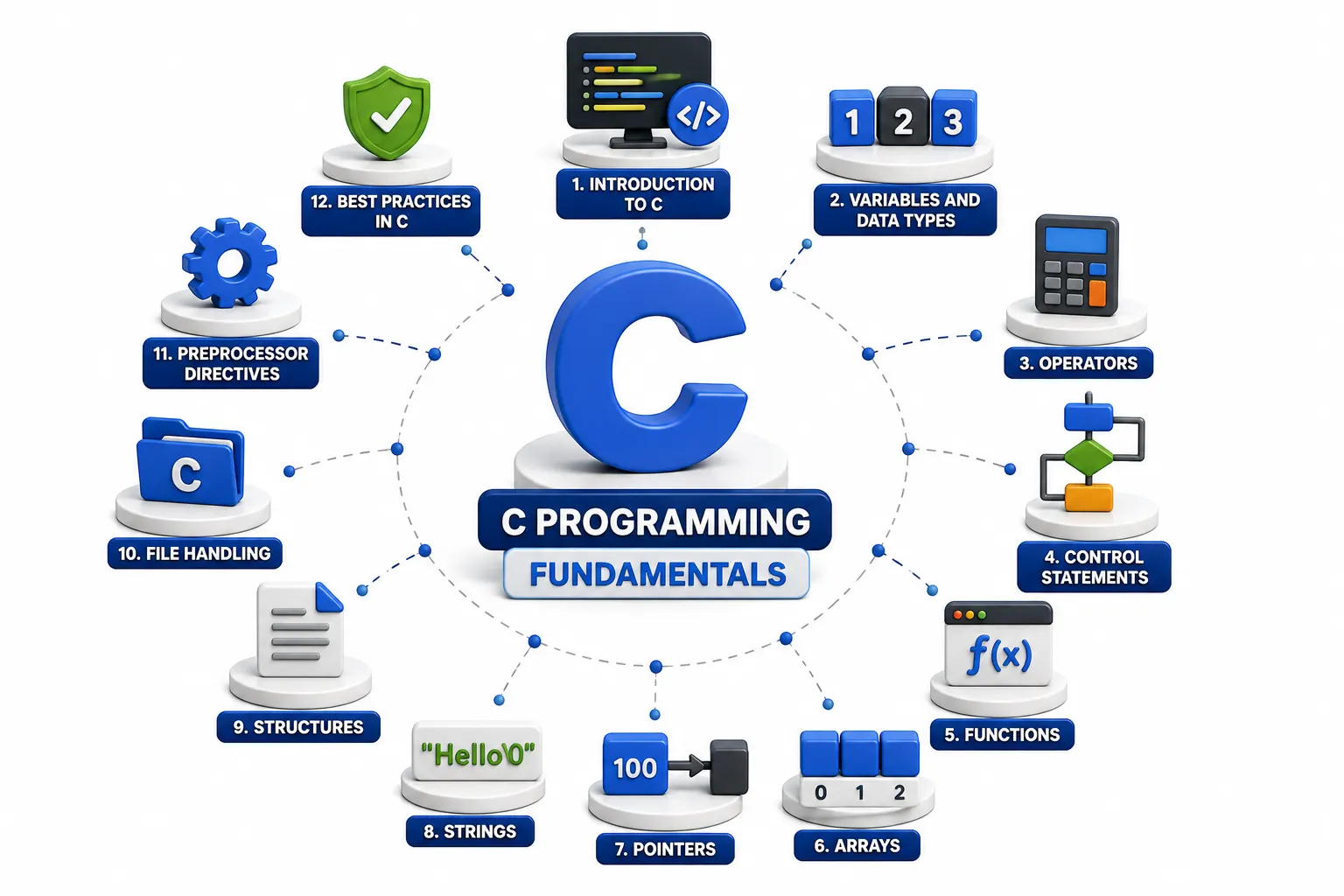
These questions show up in almost every embedded interview, regardless of experience level, because C is where memory bugs are born.
What is the difference between
const int *ptrandint *const ptr?Explain the
volatilekeyword and when you'd use it.What does the
statickeyword do when applied to a variable inside a function?What is a dangling pointer, and how do you avoid one?
Explain structure padding and why it happens.
How do you swap two variables without using a temporary variable?
What's the difference between a union and a structure?
Write code to set, clear, and toggle a specific bit in a register.
What is the difference between
malloc()andcalloc()?Why is dynamic memory allocation often avoided in embedded systems?
Explain pointer arithmetic with an array example.
What happens if you dereference a NULL pointer?
What's the difference between
#defineandconst?Explain function pointers and give a practical use case.
What is memory alignment, and why does it matter?
RTOS and Multitasking
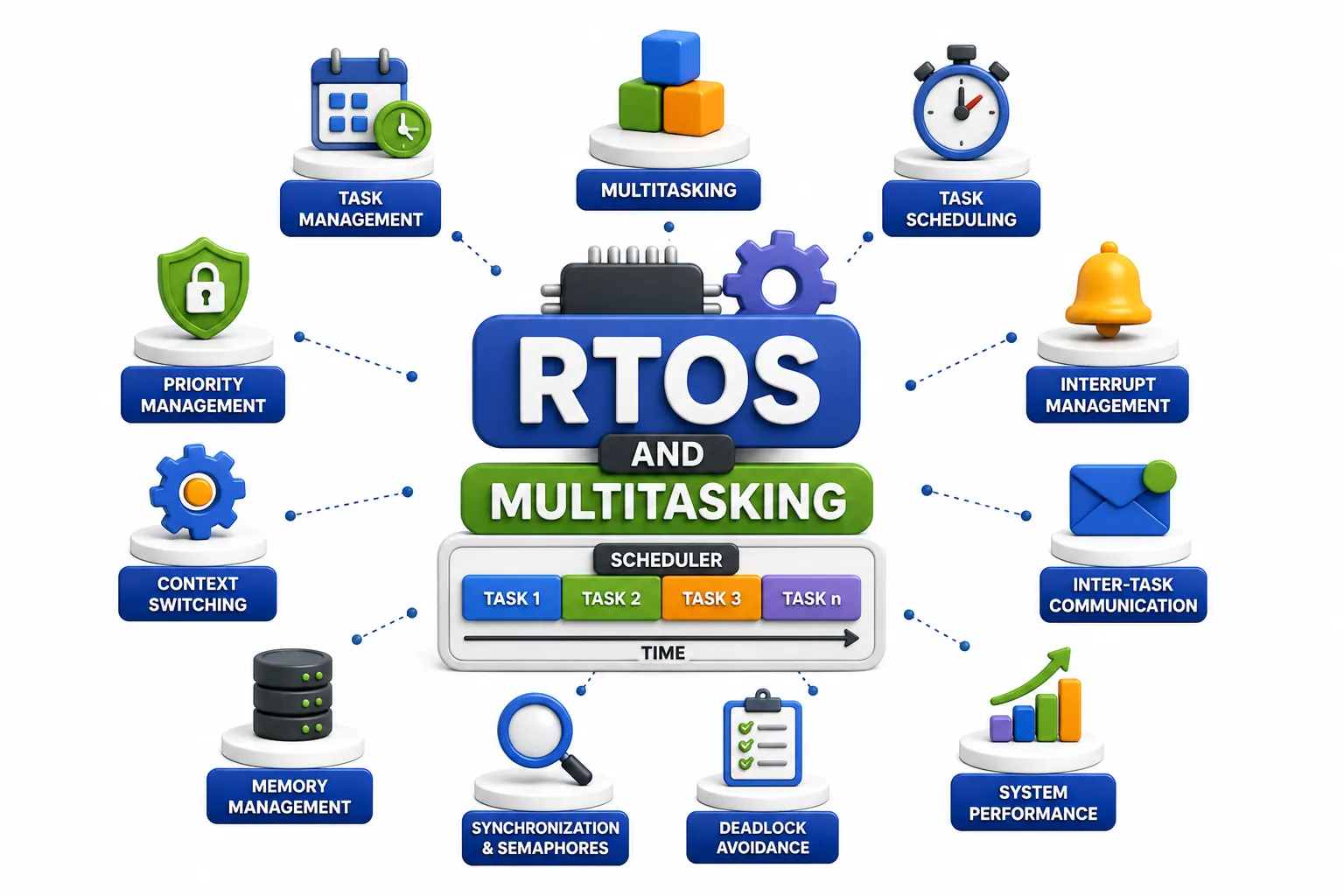
Once fundamentals are covered, interviewers move into how you think about scheduling, shared resources, and system reliability under real-time constraints.
What's the difference between preemptive and cooperative scheduling?
Explain the difference between a mutex and a semaphore.
What is priority inversion, and how is it resolved?
Describe priority inheritance in an RTOS.
What is a deadlock, and how can it be prevented?
How would you design a task structure for a system polling a sensor every 10ms?
What is a watchdog timer, and how do you "feed" it correctly?
Explain the difference between a binary semaphore and a counting semaphore.
What is task starvation, and how do you avoid it?
How does context switching work in an RTOS?
What is a race condition, and how do you prevent one in shared data?
Explain the producer-consumer problem in the context of embedded tasks.
Communication Protocols
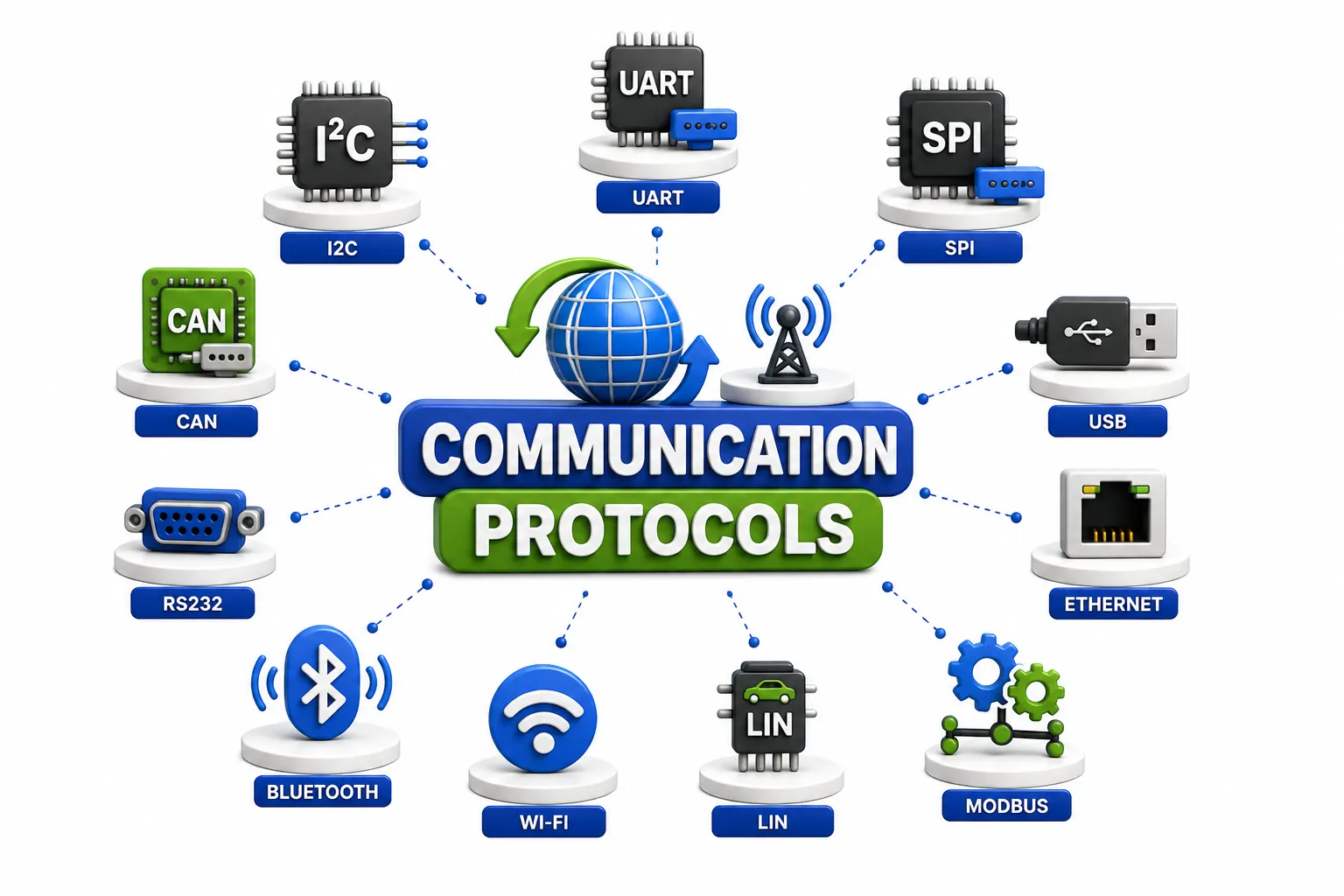
Almost every embedded project involves a sensor, display, or module talking to a microcontroller, so protocol questions are close to guaranteed.
Compare I2C, SPI, and UART.
What happens if two devices on an I2C bus share the same address?
Why would you choose SPI over I2C for a high-speed sensor?
What is the role of the chip select (CS) line in SPI?
How does UART synchronize data without a shared clock?
What is a baud rate mismatch, and what problems does it cause?
Explain pull-up resistors and their role in I2C communication.
What is CAN protocol, and where is it commonly used?
How do you interpret a datasheet's register map to configure a peripheral?
What is the difference between synchronous and asynchronous communication?
Debugging and Problem-Solving
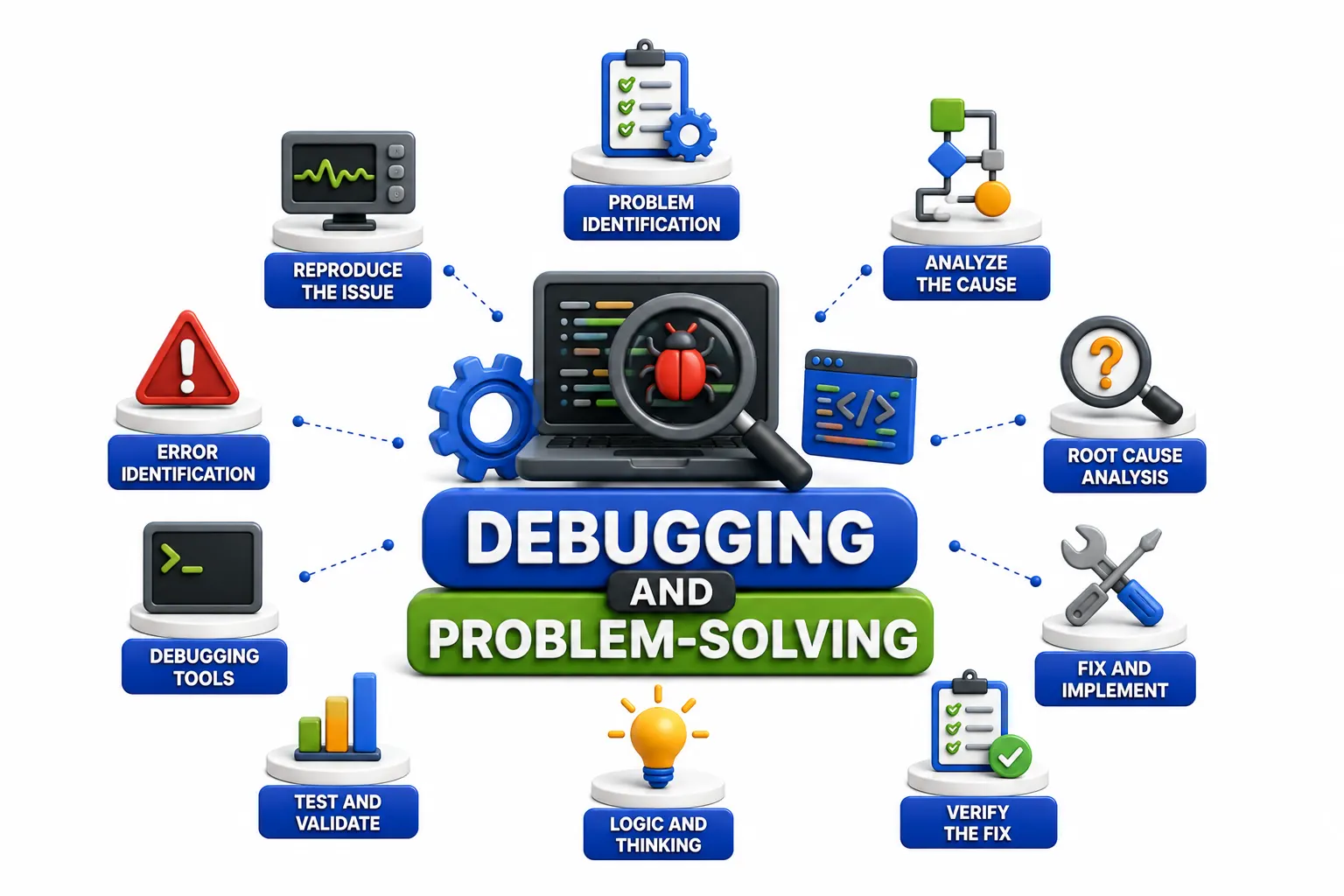
This is where interviewers separate candidates who understand theory from those who've actually shipped hardware.
How do you debug a system that works on the bench but fails intermittently in the field?
How do you use a logic analyzer to trace a communication failure?
What is a buffer overflow, and how can it silently corrupt memory?
How do you identify a stack overflow in an embedded application?
Walk through your approach to debugging a hard fault on a microcontroller.
How do you use an oscilloscope to diagnose a timing issue?
What tools would you use to detect memory leaks in a system without an OS?
How would you approach debugging code live if asked to find a bug on the spot?
General and Experience-Based Questions

These wrap up most interviews, giving you a chance to demonstrate judgment rather than just recall.
Explain the power modes of a microcontroller you've worked with.
Describe a project where you had to optimize code for memory or power constraints.
What trade-offs did you consider in a past embedded design decision?
How do interrupts work, and what is an Interrupt Service Routine (ISR)?
What is the difference between a microcontroller and a microprocessor?
Conclusion
Knowing these 50 questions won't guarantee an offer, but knowing why each one is asked will change how you prepare. Build small projects around the topics that trip you up, revisit the fundamentals often, and let real hands-on experience do the talking in the room.