

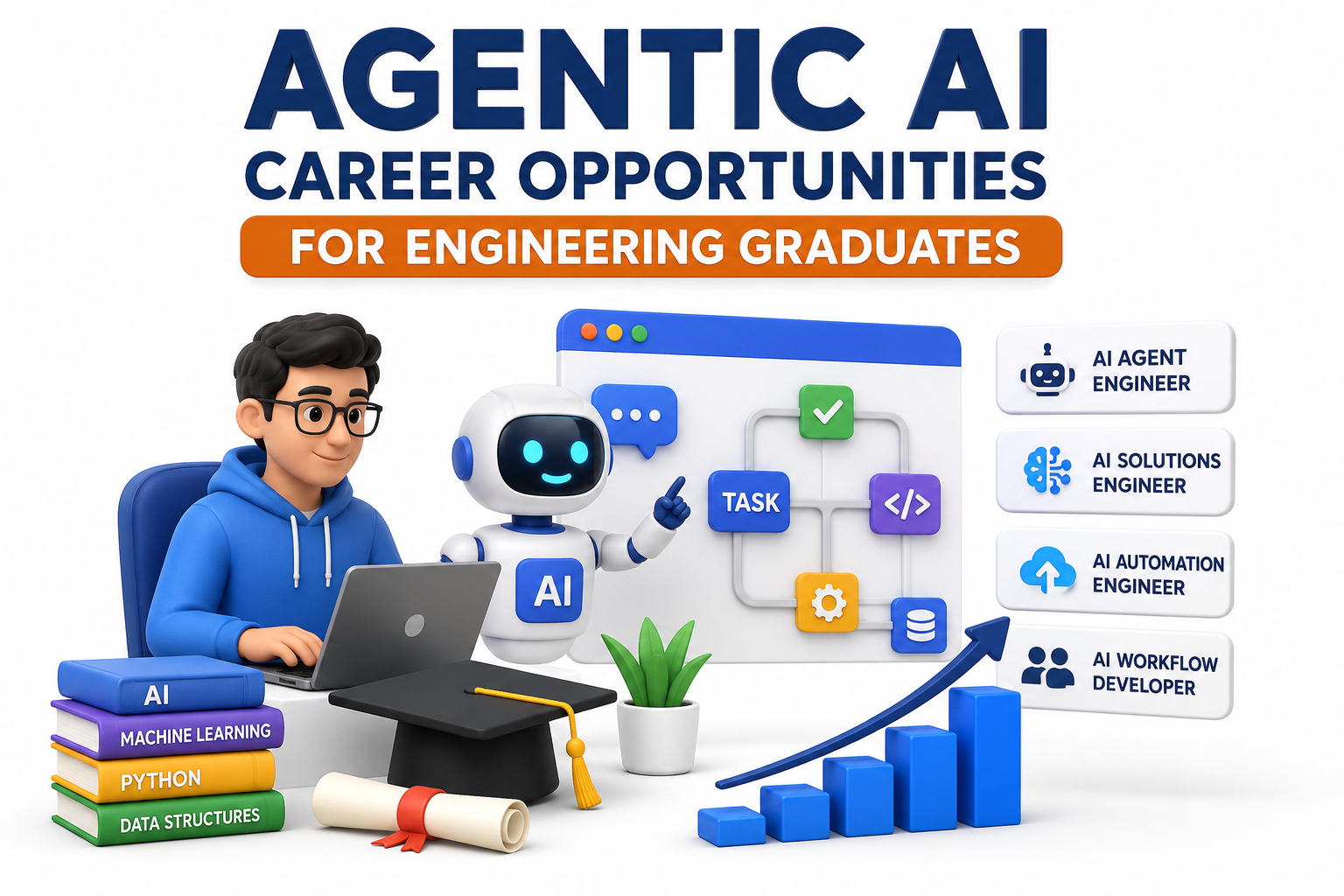
Agentic AI Career Opportunities for Engineering Graduates
Navigate through this article using the table of contents below
Table of Contents
No headings found in this article.
Engineering graduates entering the job market today are witnessing one of the biggest technology shifts since cloud computing. While Generative AI introduced intelligent assistants, Agentic AI is transforming them into autonomous systems capable of planning, reasoning, using tools, and completing complex business workflows. Companies are now looking beyond traditional software developers for engineers who can build, deploy, and supervise these intelligent agents.
This evolution creates exciting opportunities for graduates from Computer Science, Information Technology, Electronics, Electrical, Mechanical, Artificial Intelligence, and related engineering disciplines. Instead of replacing engineers, Agentic AI is creating entirely new career paths that combine software engineering, automation, cloud computing, data engineering, and AI system design. Institutions like JastTech are responding by offering practical training that focuses on real-world AI agent development rather than theory alone.
Why Agentic AI Is Creating a New Wave of Engineering Careers
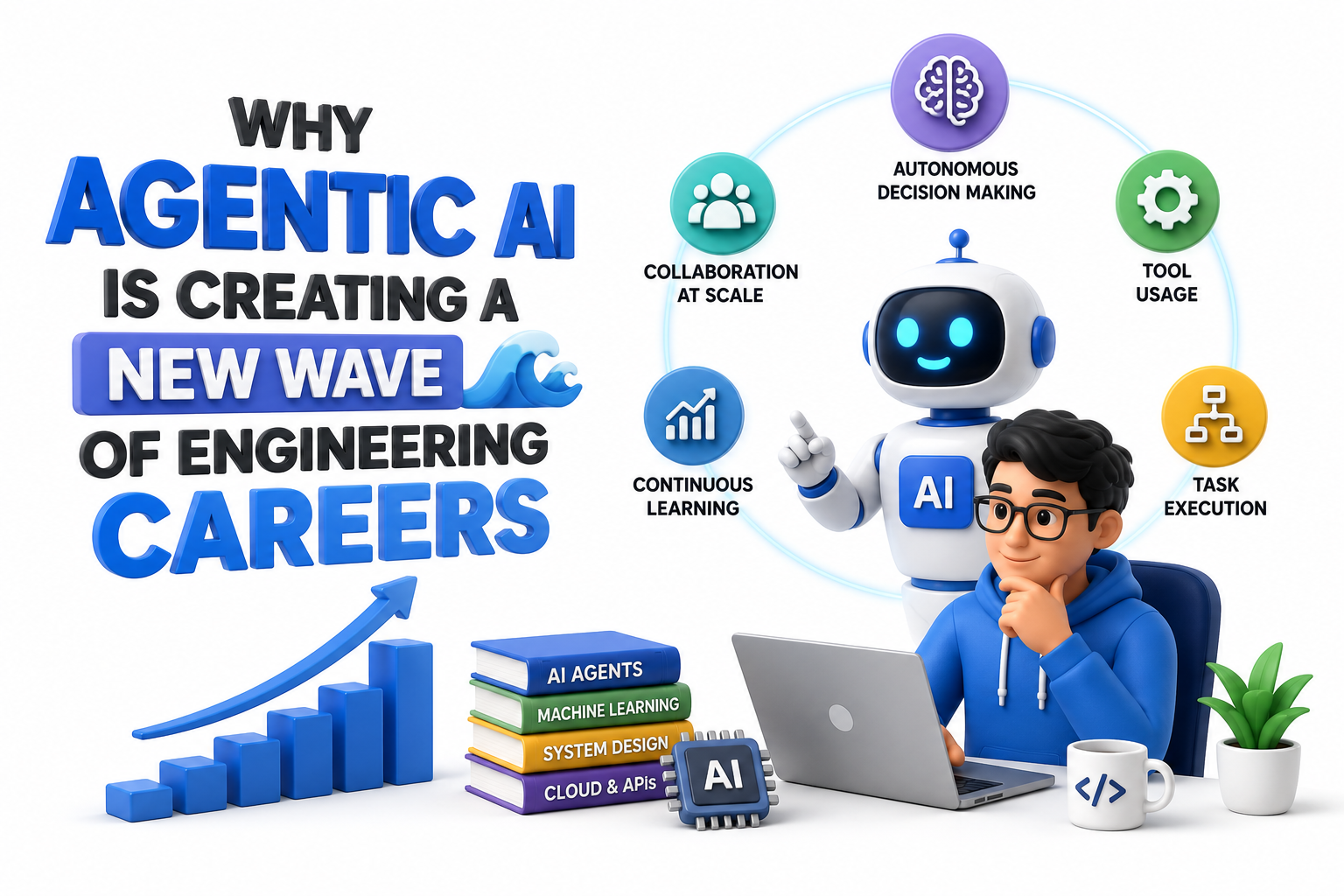
Unlike traditional AI applications that generate responses, Agentic AI systems can make decisions, call APIs, access databases, collaborate with multiple tools, and complete business objectives with minimal human intervention. Enterprises are rapidly adopting these systems to automate customer support, software development, cybersecurity, healthcare operations, finance, and manufacturing workflows.
For engineering graduates, this means companies are hiring professionals who understand both engineering fundamentals and intelligent automation. Rather than needing years of machine learning research experience, many organizations value candidates who can integrate Large Language Models with enterprise applications and cloud infrastructure.
The growing demand spans several responsibilities:
Designing autonomous AI workflows
Building tool integrations and APIs
Creating multi-agent systems
Monitoring AI performance
Implementing safety guardrails
Evaluating AI decision quality
This combination of software engineering and AI orchestration has opened doors to careers that barely existed a few years ago.
Top Agentic AI Career Opportunities for Engineering Graduates
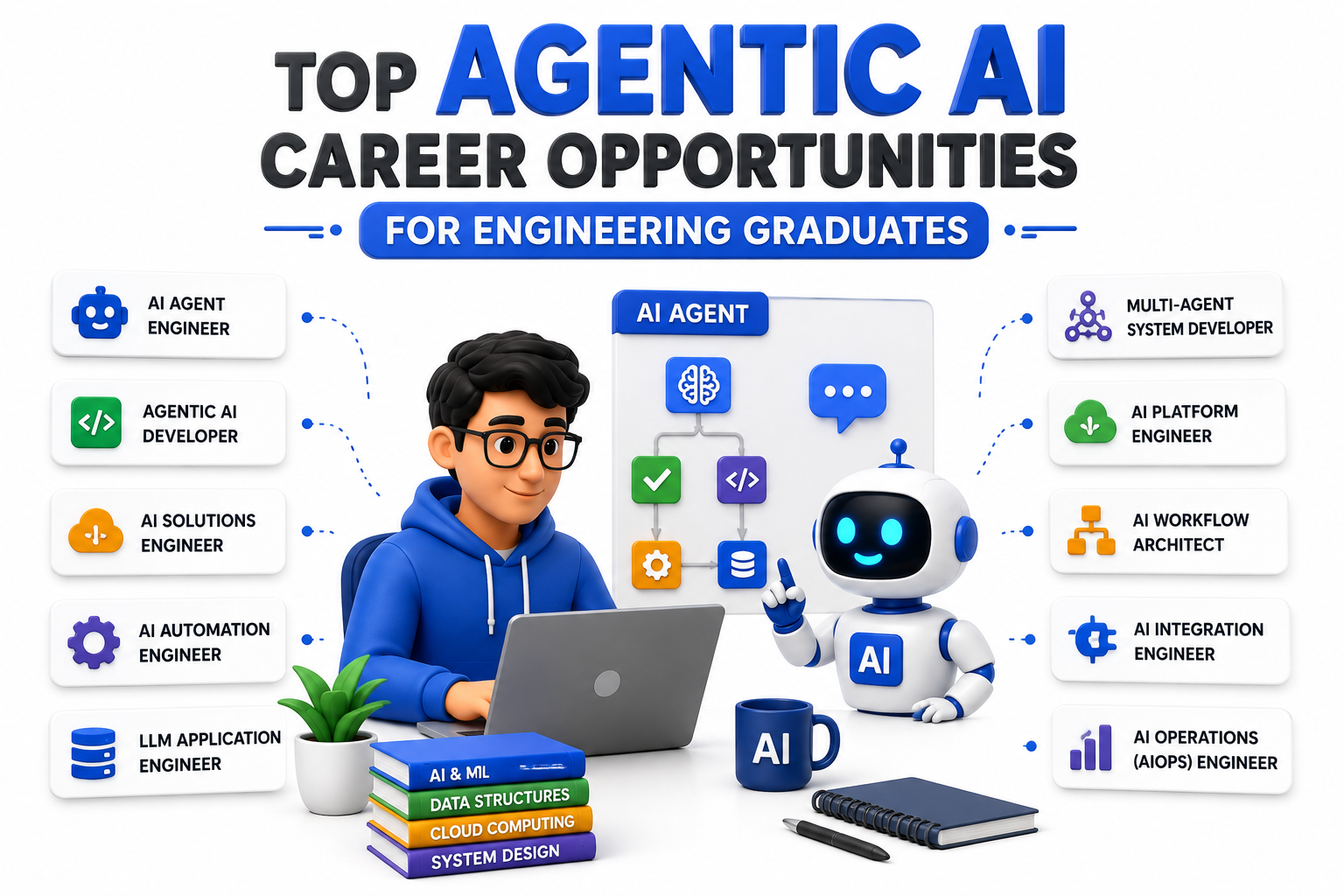
Agentic AI has expanded the AI job market far beyond traditional Machine Learning Engineer positions. Engineering graduates can specialize in multiple domains depending on their interests and technical strengths.
Popular career opportunities include:
AI Agent Engineer
Agentic AI Developer
AI Solutions Engineer
AI Automation Engineer
LLM Application Engineer
Multi-Agent System Developer
AI Platform Engineer
AI Workflow Architect
AI Integration Engineer
AI Operations (AIOps) Engineer
Each role combines programming with intelligent automation rather than focusing only on model training. Engineers spend much of their time designing workflows, integrating enterprise software, testing AI agents, improving reliability, and optimizing production performance.
Graduates with strong problem-solving skills often transition into these positions faster than expected because companies increasingly prioritize practical implementation over purely academic AI research.
Essential Skills Every Engineering Graduate Should Learn
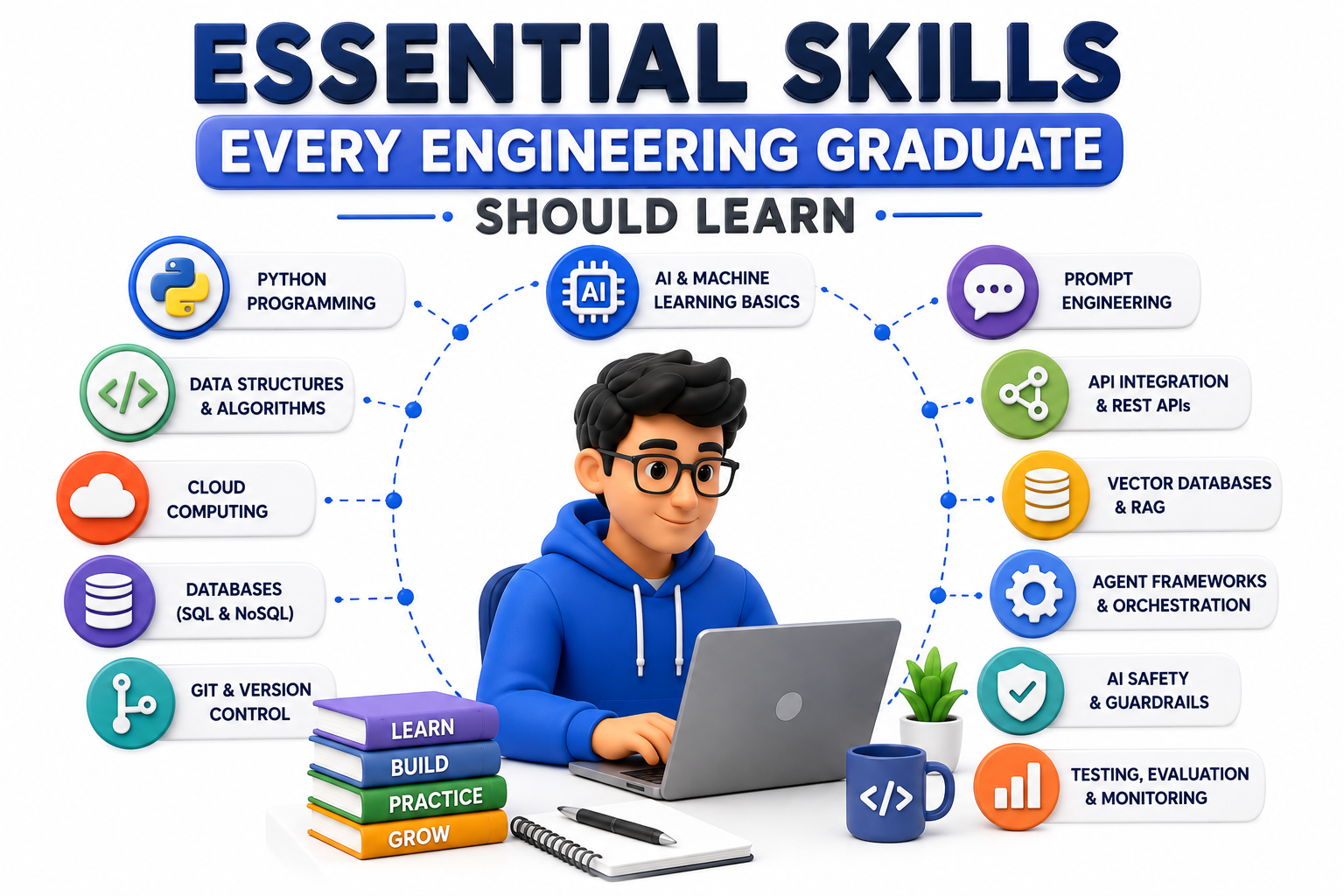
Success in Agentic AI requires a balanced combination of programming, AI concepts, software engineering, and cloud technologies. Employers are searching for engineers who can build complete AI systems rather than simply write prompts.
Core technical skills include:
Python programming
Data structures and algorithms
REST APIs
Git and version control
SQL and NoSQL databases
Cloud platforms
Docker
Vector databases
Retrieval-Augmented Generation (RAG)
AI agent orchestration frameworks
Prompt engineering
Model evaluation
Workflow automation
AI security and guardrails
Beyond technical knowledge, engineers should strengthen communication, analytical thinking, debugging, system design, and documentation skills. These capabilities become increasingly important when deploying AI agents into production environments where reliability and accountability matter.
Building these competencies through structured, project-based learning at JastTech can significantly improve job readiness and confidence during technical interviews.
Projects That Make Your Agentic AI Resume Stand Out
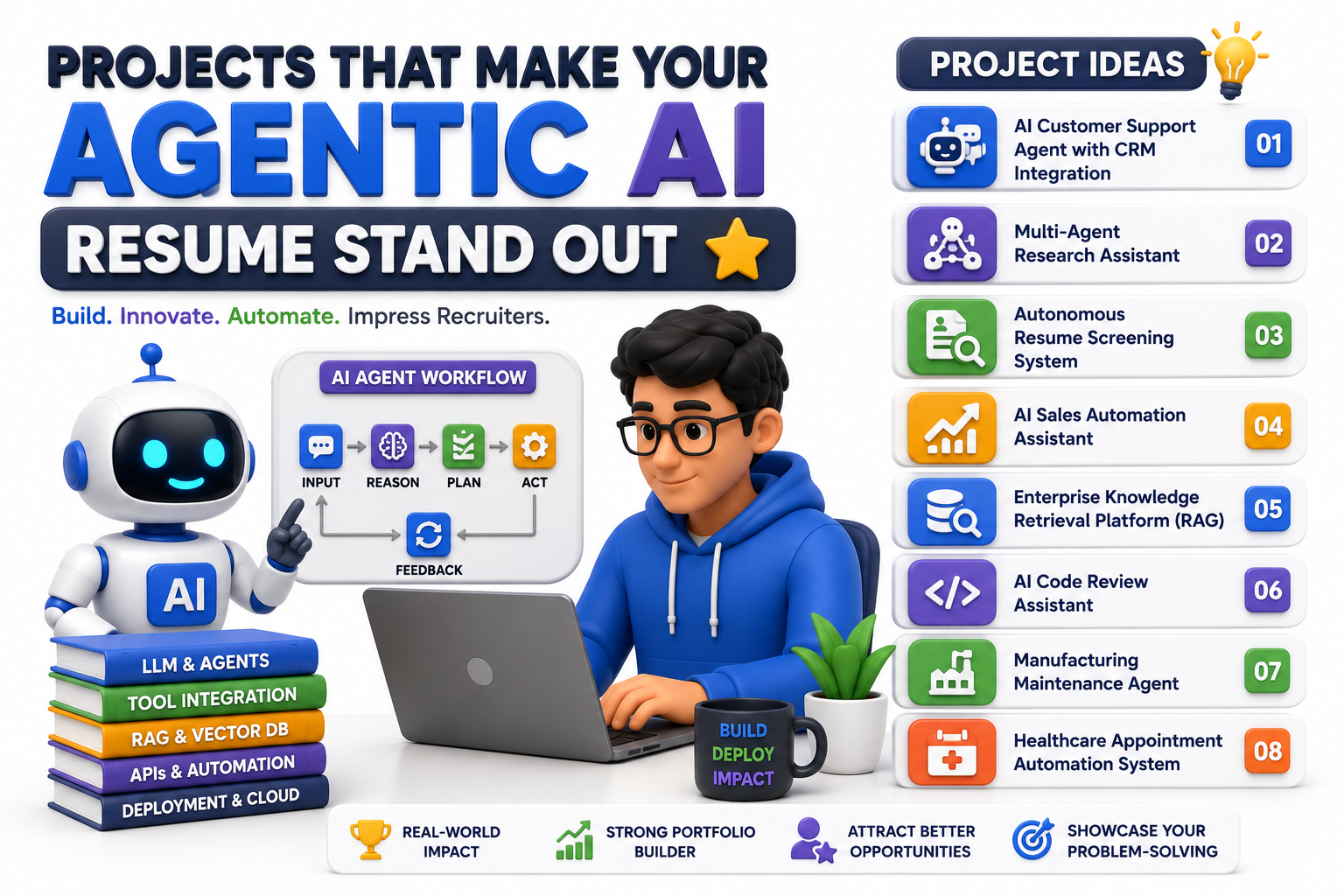
Recruiters consistently prefer candidates who demonstrate practical engineering ability through real-world projects instead of relying only on certifications. Well-designed projects showcase architecture, debugging, deployment, scalability, and problem-solving skills.
Strong portfolio ideas include:
AI Customer Support Agent with CRM integration
Multi-Agent Research Assistant
Autonomous Resume Screening System
AI Sales Automation Assistant
Enterprise Knowledge Retrieval Platform
AI Code Review Assistant
Manufacturing Maintenance Agent
Healthcare Appointment Automation System
Each project should include documentation, GitHub repositories, deployment demonstrations, API integrations, monitoring dashboards, and performance evaluation reports.
A portfolio featuring three to five production-quality projects often carries more weight than numerous online certificates because it demonstrates practical engineering capability.
Industries Hiring Agentic AI Engineers in 2026
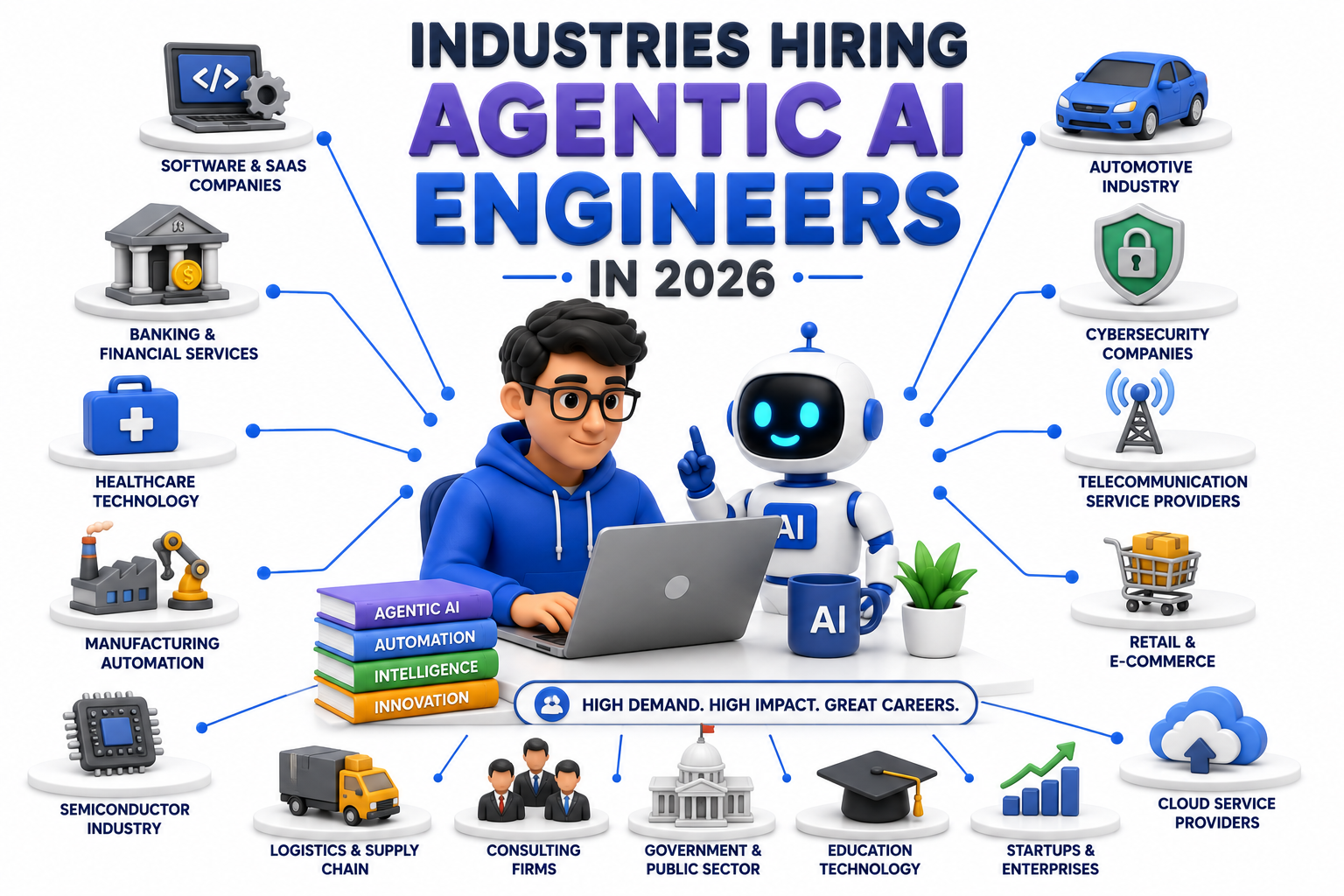
Agentic AI adoption is no longer limited to technology companies. Organizations across nearly every industry are integrating autonomous AI systems into business operations, creating strong demand for engineering graduates with relevant expertise.
Major hiring industries include:
Software and SaaS companies
Banking and financial services
Healthcare technology
Manufacturing automation
Semiconductor companies
Automotive engineering
Cybersecurity firms
Telecommunications
Retail and e-commerce
Logistics and supply chain
Cloud service providers
Consulting organizations
Engineering graduates with Electronics or Electrical backgrounds can also contribute to AI-enabled embedded systems, robotics, industrial automation, and intelligent manufacturing, making Agentic AI a multidisciplinary career opportunity rather than a software-only field.
As businesses continue investing in digital transformation, professionals capable of designing autonomous AI workflows are expected to remain in high demand.
How Engineering Graduates Can Start Their Agentic AI Journey
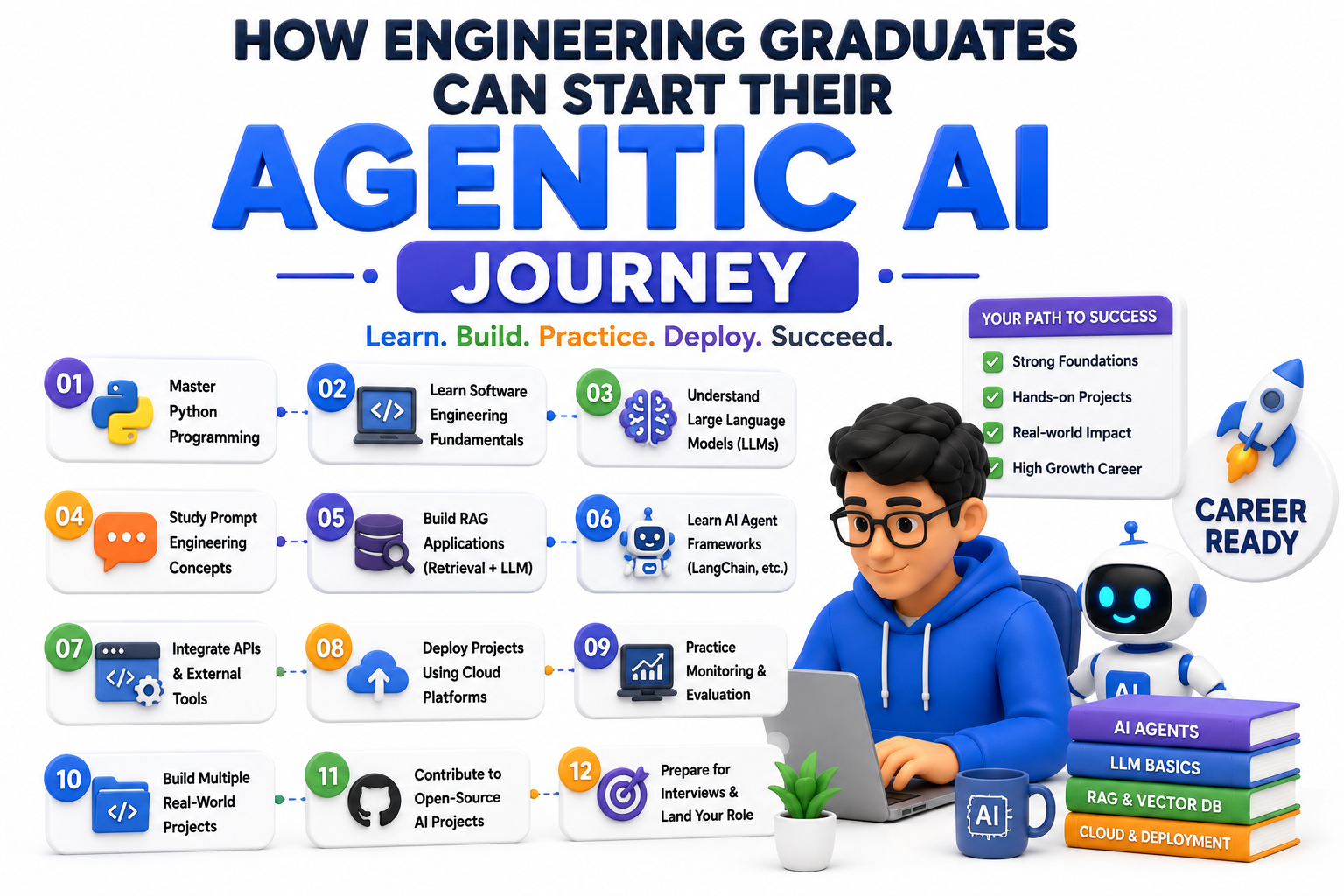
Beginning an Agentic AI career does not require becoming a machine learning researcher first. A structured roadmap helps graduates build practical expertise step by step while developing a portfolio that employers value.
A recommended learning path is:
Master Python programming
Learn software engineering fundamentals
Understand Large Language Models
Study prompt engineering concepts
Build Retrieval-Augmented Generation applications
Learn AI agent frameworks
Integrate APIs and external tools
Deploy projects using cloud platforms
Practice monitoring and evaluation
Build multiple production-ready projects
Contribute to open-source AI projects
Prepare for technical interviews
Consistency is more important than speed. Engineers who continuously improve their projects, document their learning, and stay updated with emerging AI frameworks position themselves strongly for future opportunities.
Practical learning environments such as JastTech help accelerate this journey by combining expert guidance, industry projects, and hands-on implementation experience that reflects enterprise requirements.
Conclusion
Agentic AI is reshaping the future of engineering careers by shifting the focus from building isolated AI models to creating intelligent systems capable of reasoning, planning, and executing complex tasks. This transformation is generating exciting opportunities for engineering graduates across multiple disciplines, not just computer science. Organizations increasingly need professionals who can combine software engineering, cloud technologies, APIs, automation, and AI into reliable business solutions.
For graduates entering the workforce in 2026, the best strategy is to invest in practical skills rather than chasing every new AI trend. Building strong programming foundations, mastering modern AI frameworks, developing production-ready projects, and gaining hands-on experience through industry-focused training at JastTech can create a competitive advantage. As Agentic AI continues to evolve, engineers who understand both traditional engineering principles and autonomous AI systems will be well positioned to lead the next generation of intelligent technology solutions.