

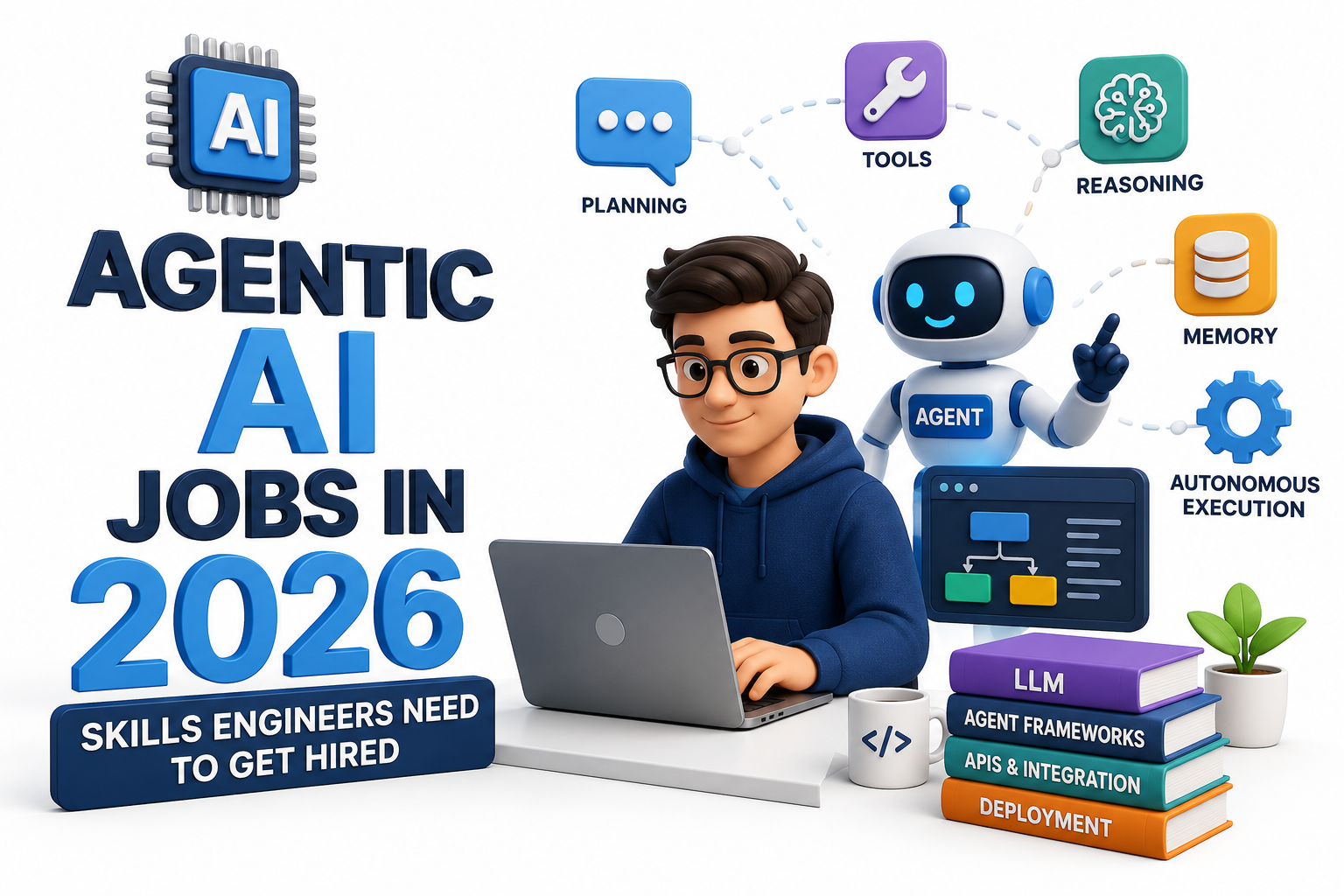
Agentic AI Jobs in 2026: Skills Engineers Need to Get Hired
Navigate through this article using the table of contents below
Table of Contents
No headings found in this article.
Artificial Intelligence is entering a new era where software doesn't simply answer questions—it plans, reasons, uses tools, and completes complex tasks independently. This evolution is creating one of the fastest-growing engineering career opportunities of 2026: Agentic AI Engineering.
Companies are no longer searching for developers who can only integrate an LLM API. They need engineers capable of designing reliable autonomous AI systems that solve real business problems. For engineering graduates and working professionals, this shift represents a significant opportunity to build a future-proof career.
Why Agentic AI Hiring Is Growing Faster Than Traditional AI Roles
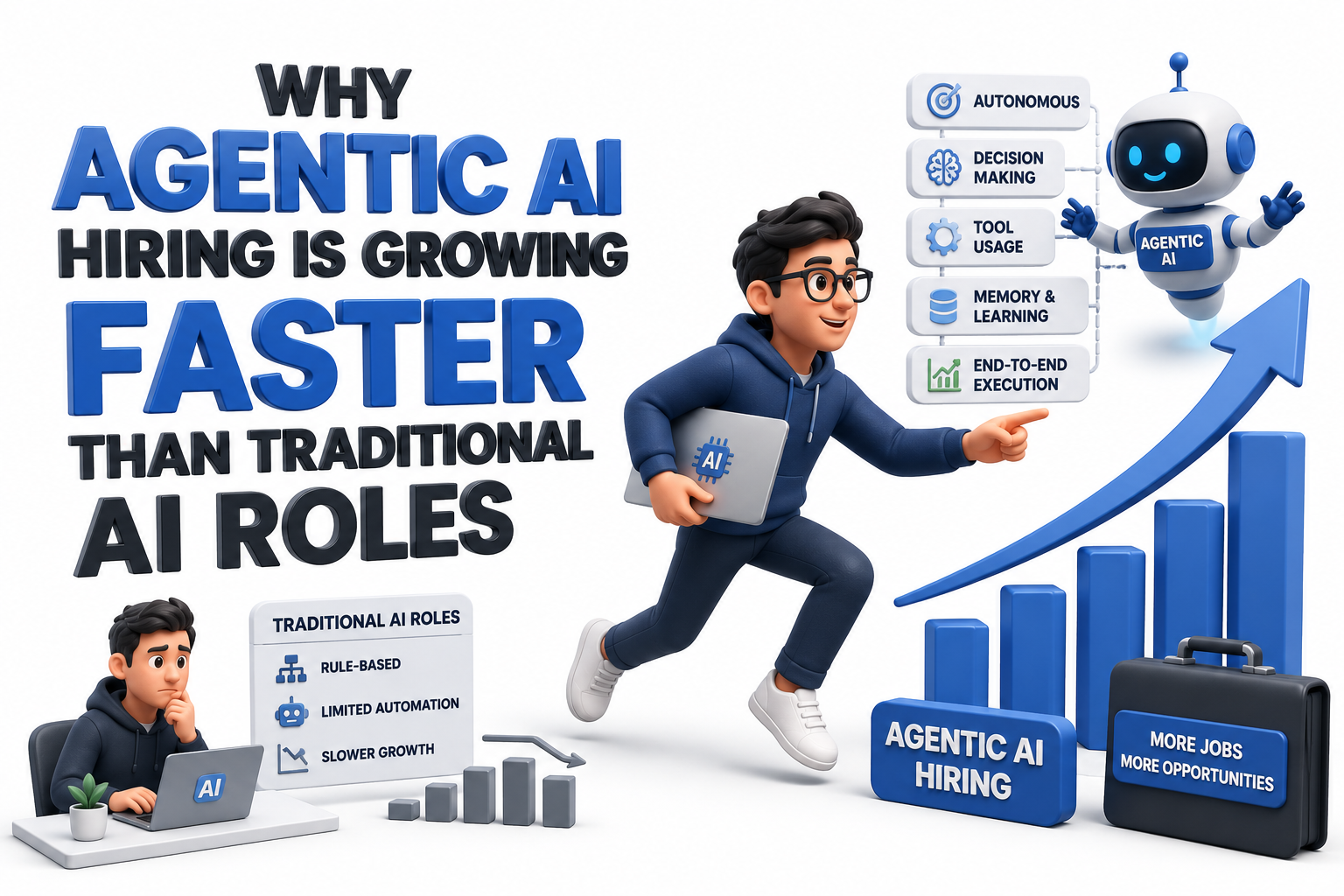
The first wave of AI adoption focused on chatbots and content generation. Today's organizations want AI systems that can perform complete workflows with minimal human intervention.
Businesses are deploying AI agents to automate customer support, software development, cybersecurity, finance, logistics, healthcare, and enterprise operations.
As a result, demand is increasing for professionals who understand autonomous AI architectures instead of simple prompt-based applications.
Industries actively recruiting include:
Software product companies
Healthcare technology
Banking and financial services
Manufacturing
Retail automation
Cloud computing
Cybersecurity
Semiconductor and electronics companies
Global Capability Centers (GCCs)
Rather than replacing engineers, Agentic AI is changing engineering roles. Engineers now supervise intelligent systems, integrate enterprise tools, and ensure reliable AI decision-making.
Core Technical Skills Every Agentic AI Engineer Needs
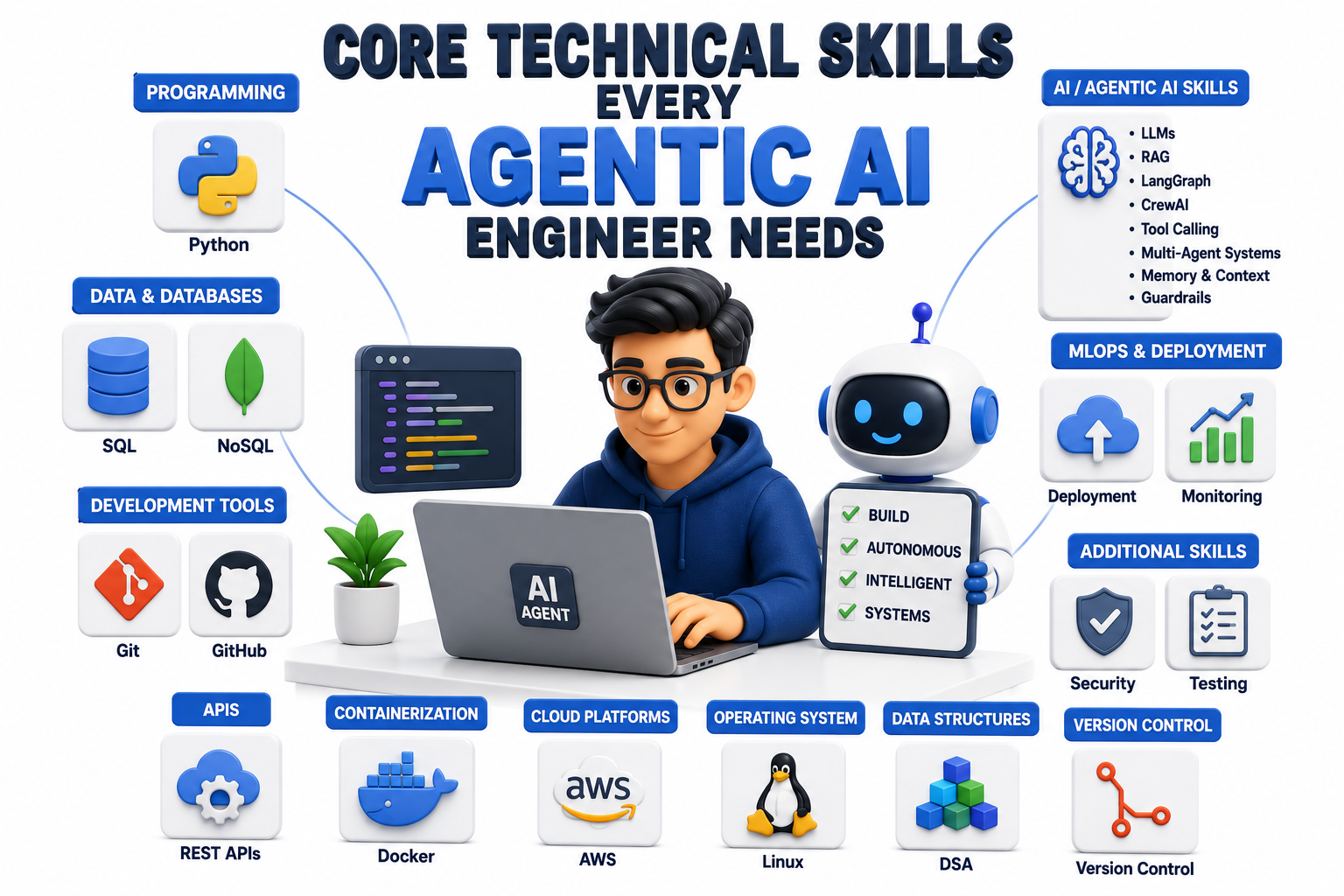
Hiring managers increasingly evaluate practical engineering capability rather than theoretical AI knowledge.
The strongest candidates combine traditional software engineering with modern AI technologies.
Essential technical skills include:
Python programming
Data structures and algorithms
REST APIs
Git and version control
SQL and NoSQL databases
Docker and containerization
Cloud platforms
Linux fundamentals
Agentic AI-specific skills include:
Large Language Models
Retrieval-Augmented Generation (RAG)
LangGraph
CrewAI
AutoGen
OpenAI Agents SDK
MCP integration
Tool calling
Memory architectures
Multi-agent workflows
AI evaluation frameworks
Guardrails
Observability
Prompt engineering
Context engineering
Companies increasingly value engineers who understand system architecture rather than individual AI tools.
Practical Projects That Impress Recruiters
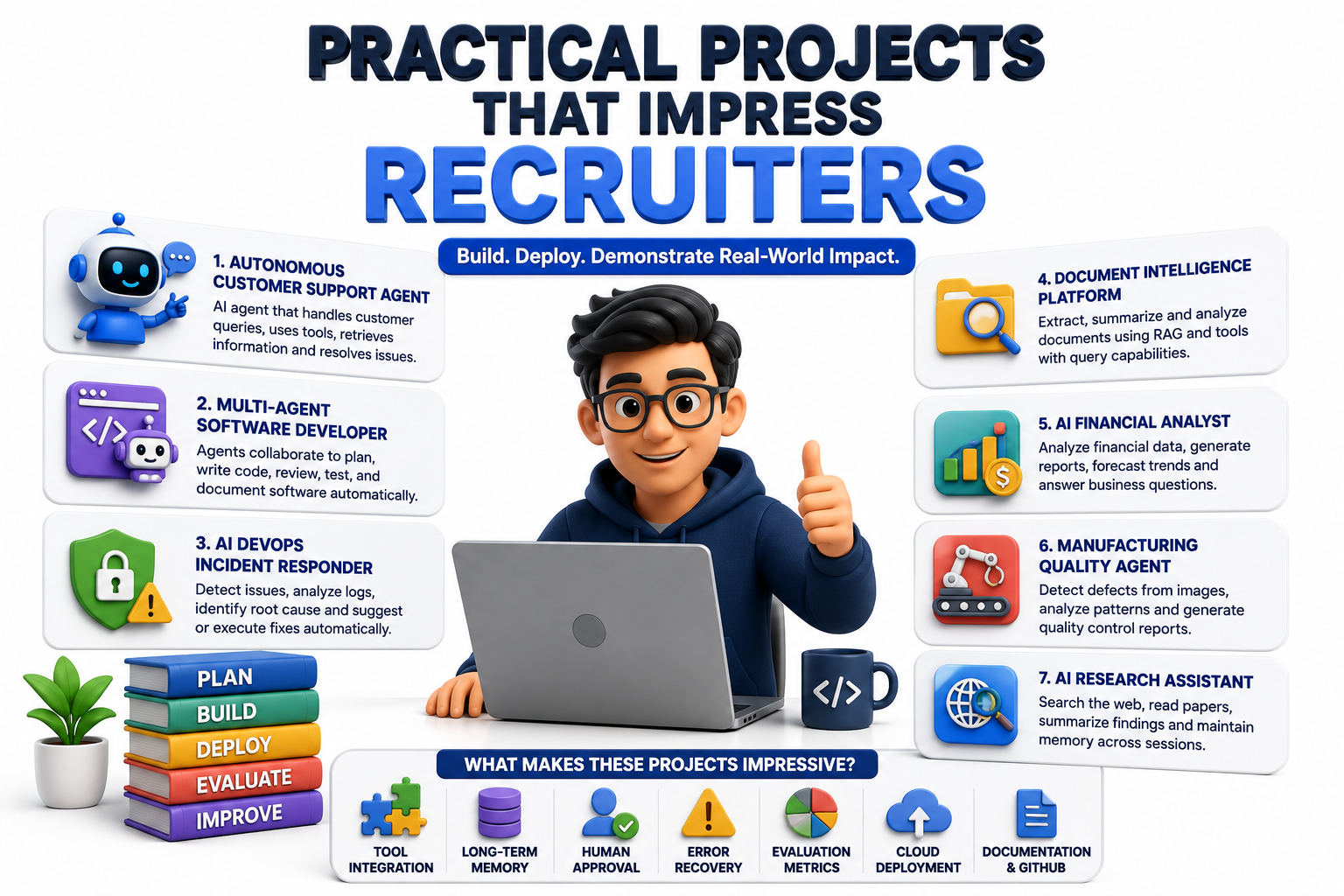
One of the biggest hiring mistakes candidates make is building another chatbot.
Recruiters want production-style applications demonstrating engineering maturity.
Strong portfolio projects include:
Autonomous customer support platform
Multi-agent software development assistant
AI DevOps incident responder
Enterprise document intelligence platform
AI financial analyst
Manufacturing quality inspection agent
Healthcare workflow automation assistant
AI research assistant with web search and memory
Every project should demonstrate:
Tool integration
API communication
Long-term memory
Human approval workflows
Error recovery
Logging
Evaluation metrics
Cloud deployment
Documentation
GitHub repository
At JastTech, students should focus on building industry-oriented projects rather than tutorial-based demos, helping recruiters evaluate real engineering capability.
What Companies Actually Look for During Hiring
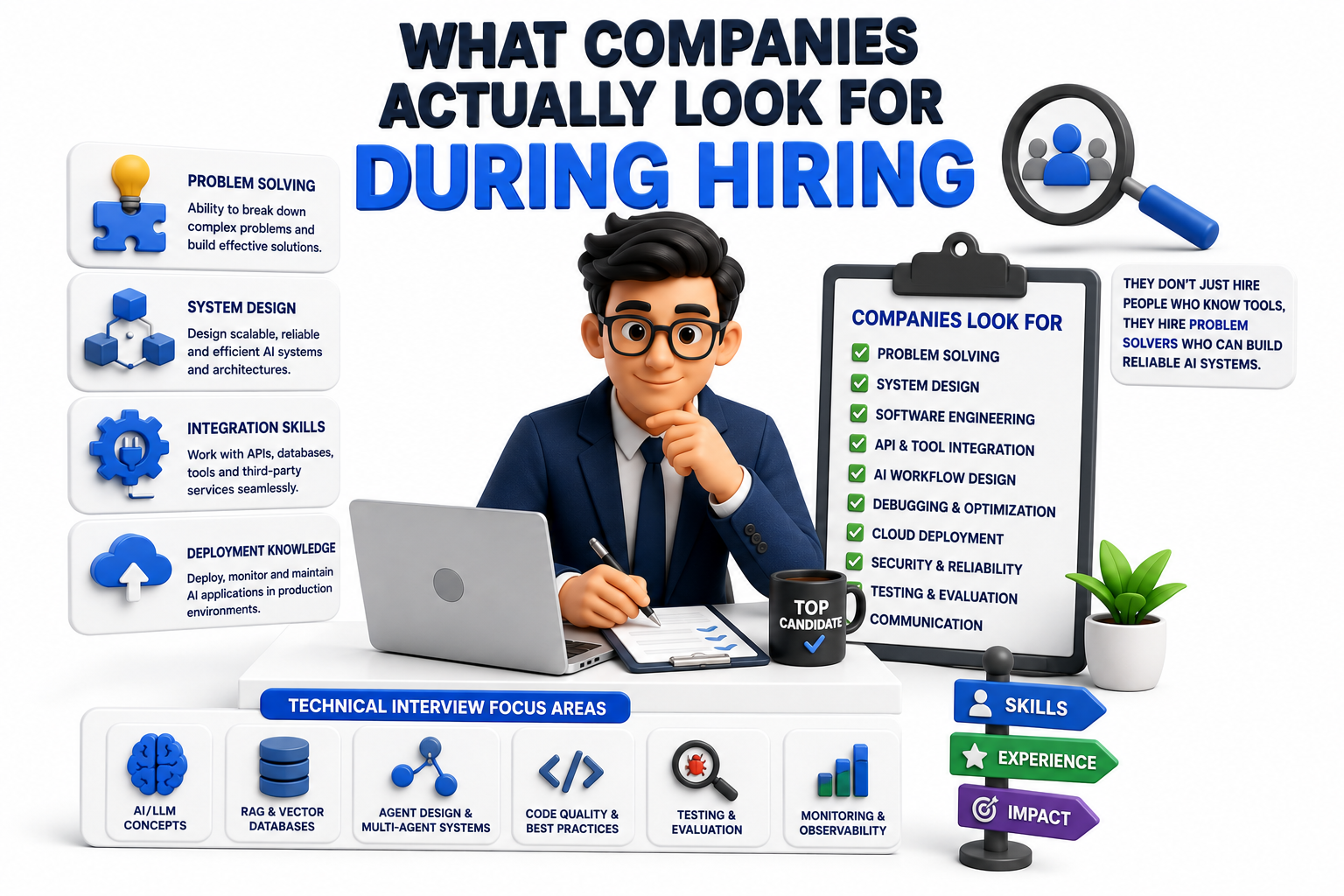
Many candidates believe knowing popular frameworks guarantees interviews. In reality, employers assess engineering thinking first.
Interviewers often evaluate whether a candidate can design reliable AI systems rather than simply generate responses from an LLM.
Recruiters commonly assess:
Problem-solving ability
Software architecture
API integration
System design
Debugging
Cloud deployment
AI workflow optimization
Cost awareness
Security practices
Testing methodologies
Technical interviews may include:
Designing an autonomous AI workflow
Building multi-agent communication
Creating retrieval pipelines
Evaluating hallucination handling
Managing memory efficiently
Monitoring production AI systems
Candidates who understand the entire engineering lifecycle consistently outperform those focused only on prompts.
Learning Roadmap for Engineering Students and Professionals
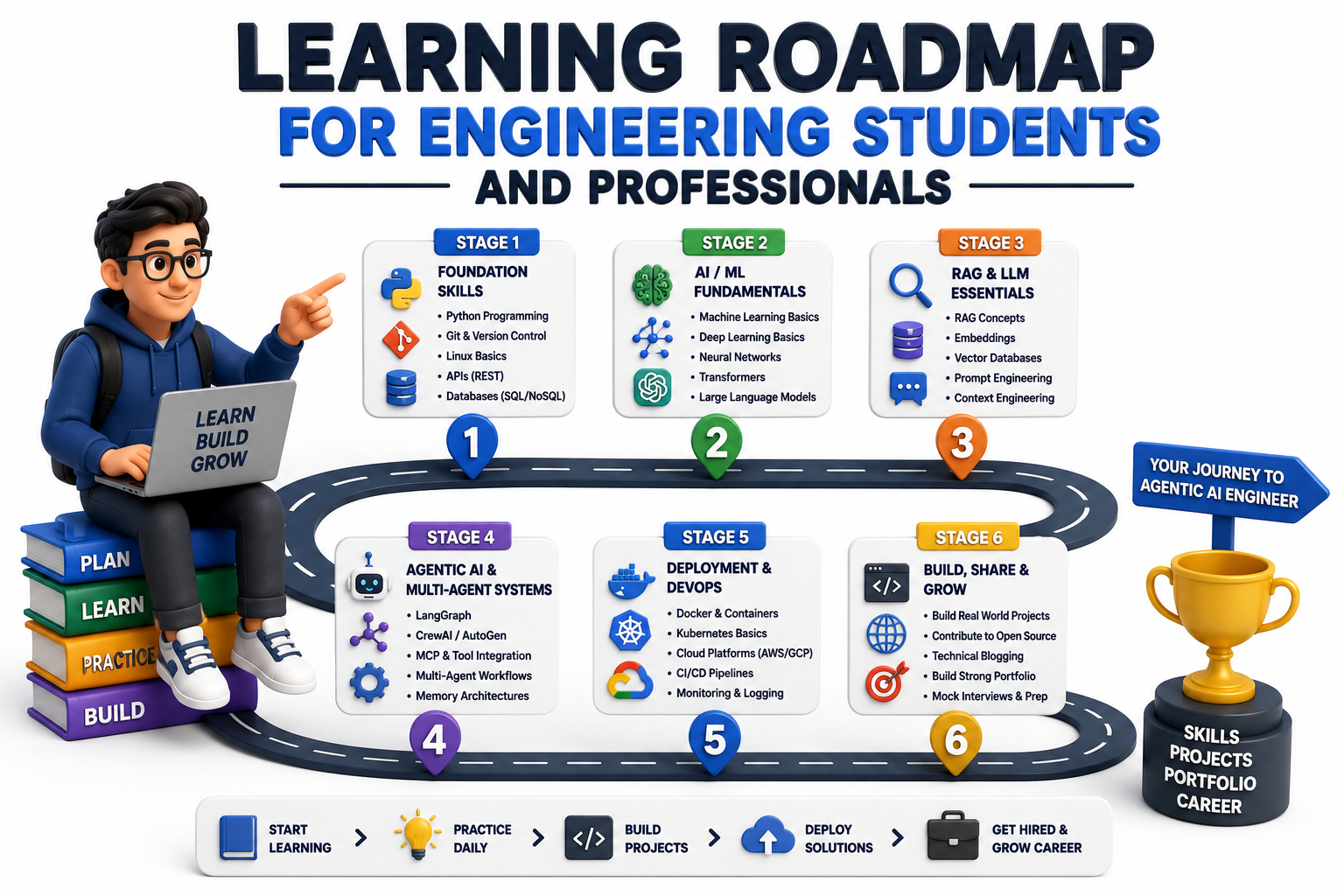
Transitioning into Agentic AI does not require abandoning your engineering background. Instead, it builds upon existing programming and system design knowledge.
A practical roadmap includes:
Stage 1
Python
Git
Linux
APIs
Databases
Stage 2
Machine Learning basics
Deep Learning fundamentals
Transformers
Large Language Models
Stage 3
RAG
Vector databases
Embeddings
Prompt engineering
Stage 4
LangGraph
CrewAI
MCP
Multi-agent systems
Tool orchestration
Stage 5
Docker
Kubernetes
Cloud deployment
CI/CD
Monitoring
Stage 6
Production projects
Open-source contributions
Technical blogging
Portfolio development
Mock interviews
This progression helps both fresh graduates and experienced engineers become job-ready.
Career Opportunities and Future Growth in Agentic AI
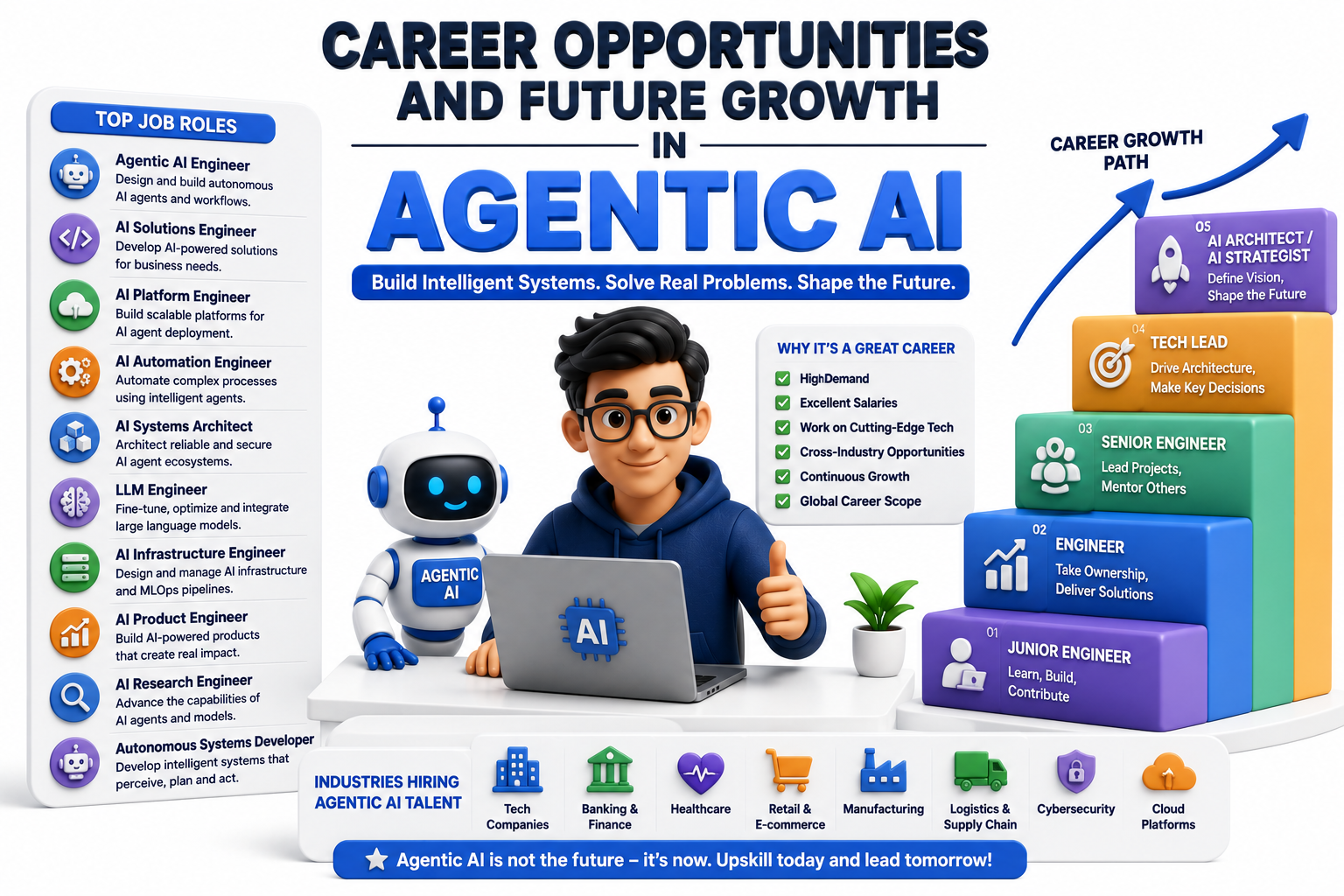
The demand for Agentic AI professionals is expanding across startups, enterprises, consulting firms, and product companies.
Popular job roles include:
Agentic AI Engineer
AI Solutions Engineer
AI Platform Engineer
AI Automation Engineer
AI Systems Architect
LLM Engineer
AI Infrastructure Engineer
AI Product Engineer
AI Research Engineer
Autonomous Systems Developer
Career growth typically progresses from implementation to architecture, platform ownership, technical leadership, and AI strategy roles.
Engineers who continuously improve their skills in distributed systems, cloud computing, software engineering, and AI orchestration will remain highly competitive as enterprises deploy increasingly autonomous workflows.
Conclusion
Agentic AI is redefining what it means to be an engineer. Instead of writing isolated software components, professionals are now designing intelligent systems capable of reasoning, planning, using tools, and completing complex workflows with minimal supervision. This evolution is creating exciting career opportunities for software, electronics, embedded, VLSI, and computer engineering graduates who are ready to embrace the next generation of AI development.
Success in this field depends on much more than learning the latest framework. Employers seek engineers with strong programming fundamentals, production deployment experience, system design expertise, and hands-on projects that demonstrate real-world problem-solving. By following a structured learning roadmap and gaining practical experience through industry-focused training at JastTech, aspiring professionals can build the skills needed to stand out in the rapidly growing Agentic AI job market and secure rewarding careers in 2026 and beyond.