

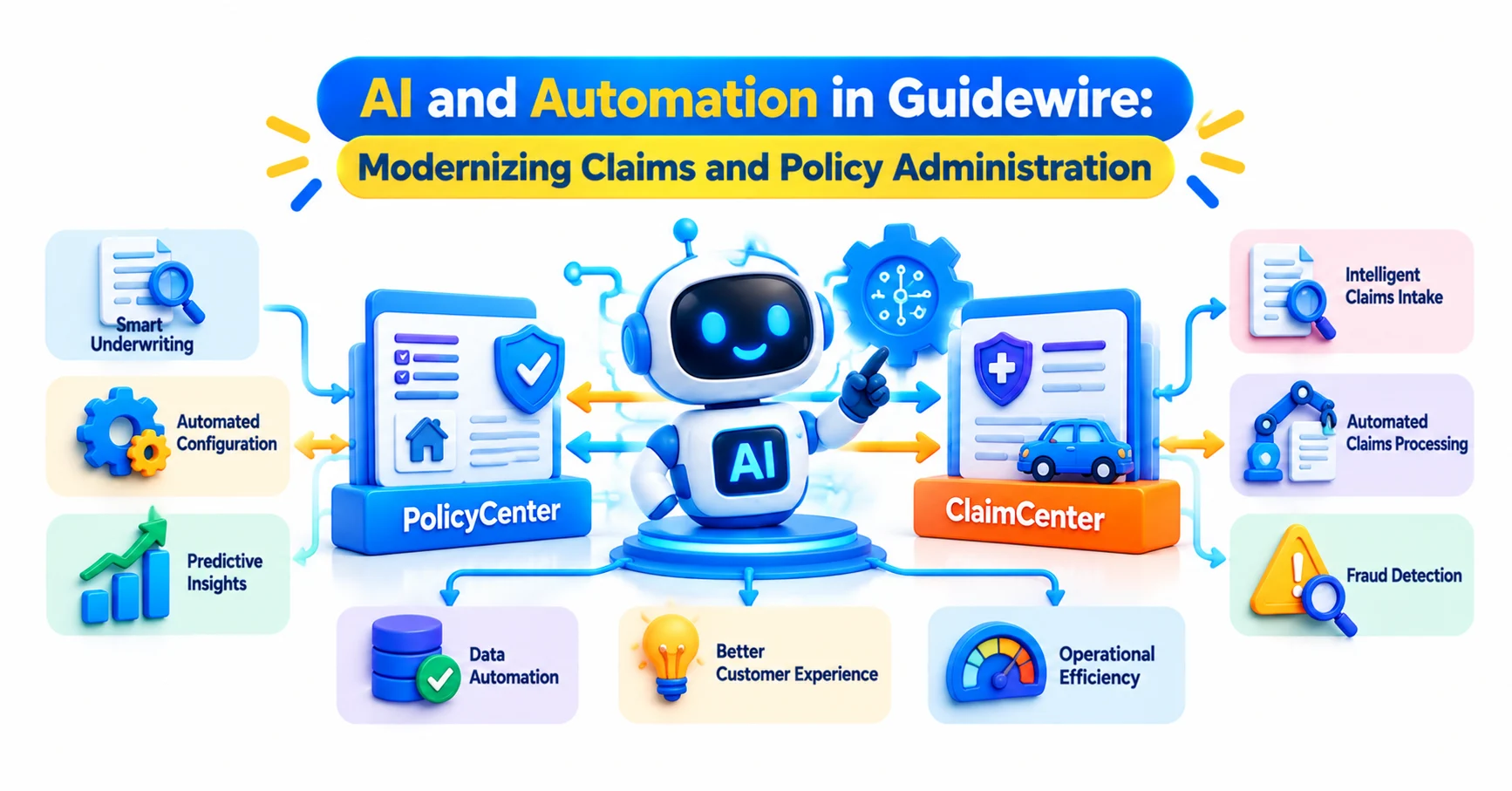
AI and Automation in Guidewire: Modernizing Claims and Policy Administration
Navigate through this article using the table of contents below
Table of Contents
No headings found in this article.
A claims adjuster opens a new loss notice and spends the first twenty minutes copying details from an email into five different screens. Nothing in that task needs human judgment. That gap is where AI and automation in Guidewire projects usually begin, and it is a topic learners in Guidewire training in Chennai run into early.
The word “AI” is loose in insurance IT, though. Some of it is a business rule, some is machine learning, and some is just good integration work. Knowing which is which decides what you build and what you can honestly promise.
Where Manual Work Still Hides in Claims and Policy Administration
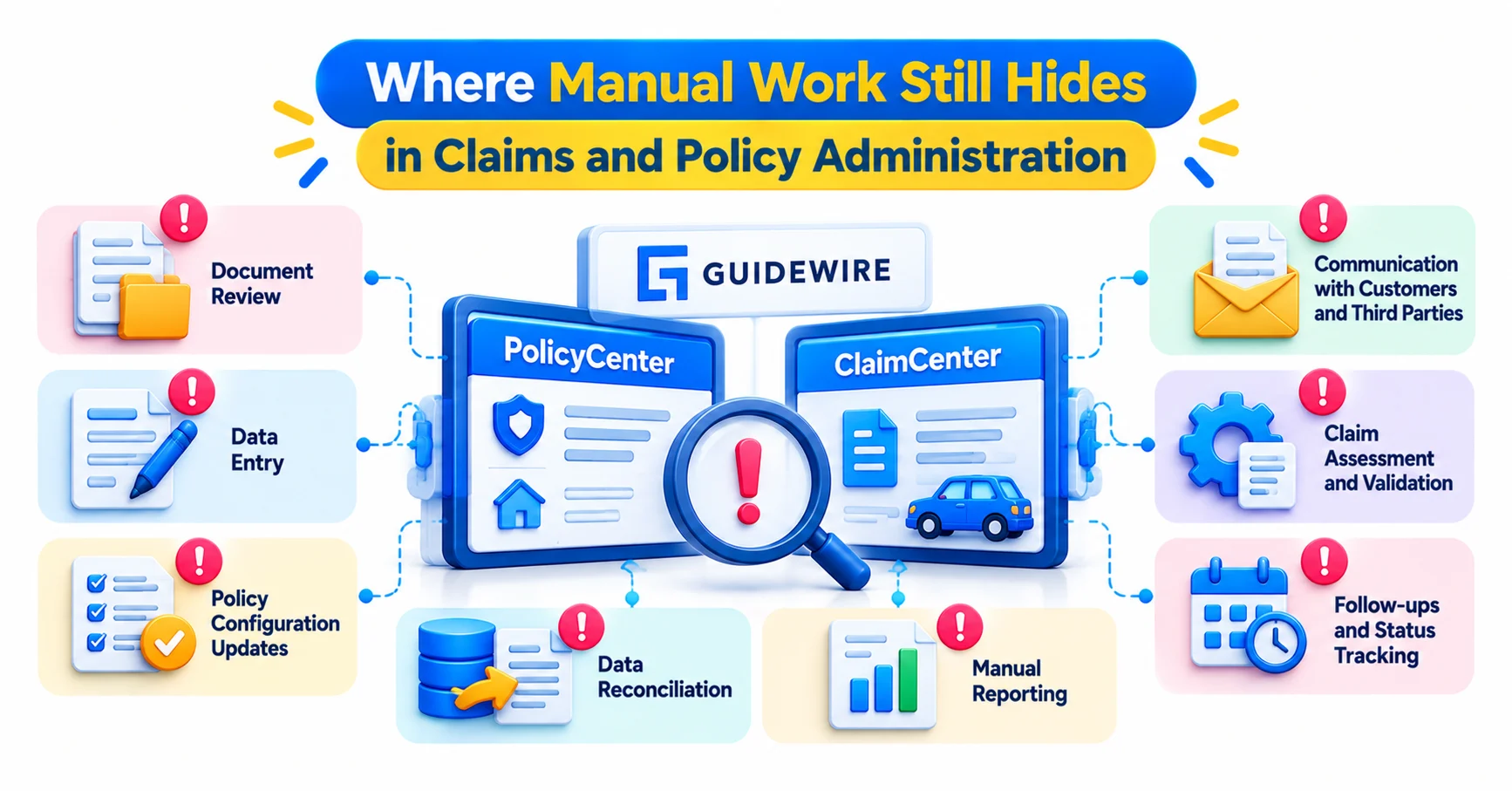
Most insurers do not lose time on the hard decisions. They lose it on the small, repeated steps around those decisions: re-keying data, chasing missing documents, routing work to the right desk, and checking the same eligibility rule by hand.
In claims, the pattern is easy to spot. A first notice of loss arrives by phone, email, or app. Someone reads it, creates the claim, assigns an adjuster, and orders a few follow-ups. Each step is small, but multiplied across thousands of claims a month, the delay adds up and the customer feels it.
Policy administration has its own version. A broker submits a commercial quote with an attached spreadsheet. An underwriting assistant checks it for completeness, enters the data, and flags anything unusual for review. At renewal, the same team repeats much of that work.
Automation and AI are not the same thing here, and the difference matters. Automation follows rules a person wrote: if the loss type is glass breakage and the amount is under a set limit, route it to a fast-track queue. AI estimates or predicts: how likely this claim is to become complicated, or which fields on an uploaded form look wrong.
Rules are predictable and easy to audit. Predictions are more flexible but need monitoring, because they can be wrong in ways nobody wrote down in advance. A sensible project usually starts by removing the obvious manual steps with rules, then adds predictive models only where rules stop being enough.
There is also a quieter cost. When staff spend their day on copying and checking, experienced adjusters and underwriters have less time for the cases that need them. Modernization is partly about giving that time back.
Customers notice the same gaps from the outside. They repeat their story to a second agent, wait days for a simple document request, or call to ask where their renewal stands. Each of those moments is a sign that information is stuck between systems or people, and that is exactly what automation is good at fixing.
That raises a practical question: what does Guidewire actually provide to make any of this possible, and what has to be built around it?
How the Guidewire Platform Makes Automation Possible
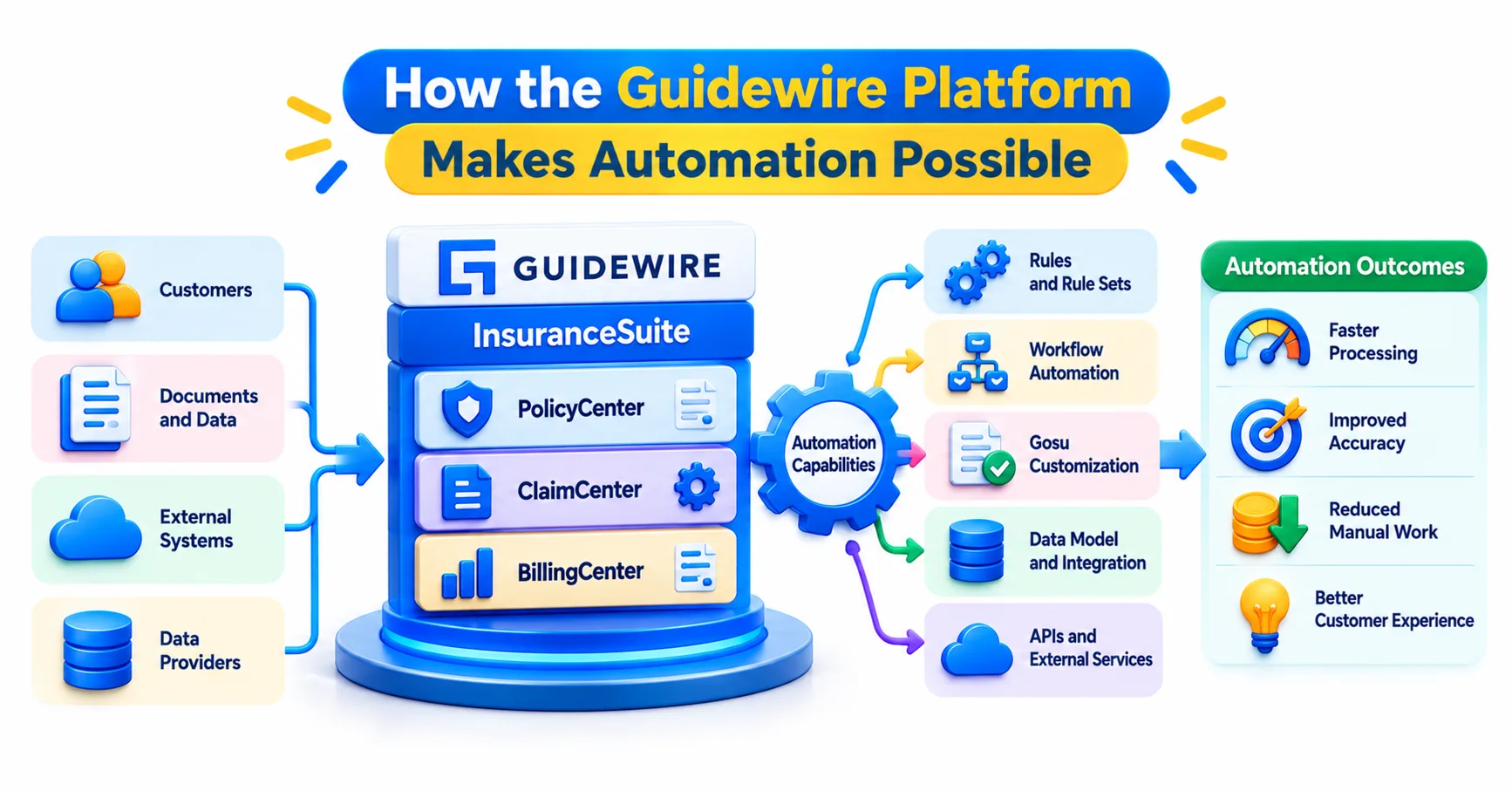
Guidewire InsuranceSuite is built around three core applications: PolicyCenter for policies, ClaimCenter for claims, and BillingCenter for billing. Each exposes its data and processes in ways other systems can use, and that openness is what automation depends on.
Four building blocks show up again and again in projects.
Gosu business rules and workflows. Gosu is Guidewire’s own programming language. Validation rules, assignment logic, and workflow steps are written in it, which makes it the natural home for rules-based automation.
Cloud APIs. Modern Guidewire Cloud environments offer REST-style APIs so outside tools can read data, create records, or trigger actions without touching the database directly.
Integration layers. Messaging and integration components let Guidewire exchange events with document systems, payment services, and data providers. Choosing between messaging and web services is one of the first design decisions in any integration.
Jutro. Jutro is Guidewire’s digital front-end framework, used to build portals and apps for customers, agents, and brokers.
Notice what is missing from that list: a button labelled “add AI.” Machine learning models rarely live inside the core application. They usually run as separate services, and Guidewire calls them or receives their output through the APIs and integration layers above.
That design is a strength. The core system stays stable and auditable, while the model can be updated, tested, or replaced on its own schedule. It also means the people who understand both sides, the insurance process and the integration, are the ones who make these projects work.
Data matters just as much. A model is only as useful as the history behind it, and insurers often need to bring claim, policy, and billing data together before any prediction is trustworthy.
This is why many insurers invest in data work before they invest in models. Clean, well-labelled history from all three applications gives a model something reliable to learn from, and it gives analysts a clearer picture of where delays and errors actually occur today.
AI and Automation in Guidewire ClaimCenter: From First Notice to Settlement
Claims is where most insurers look first, because the volume is high and the customer is waiting.
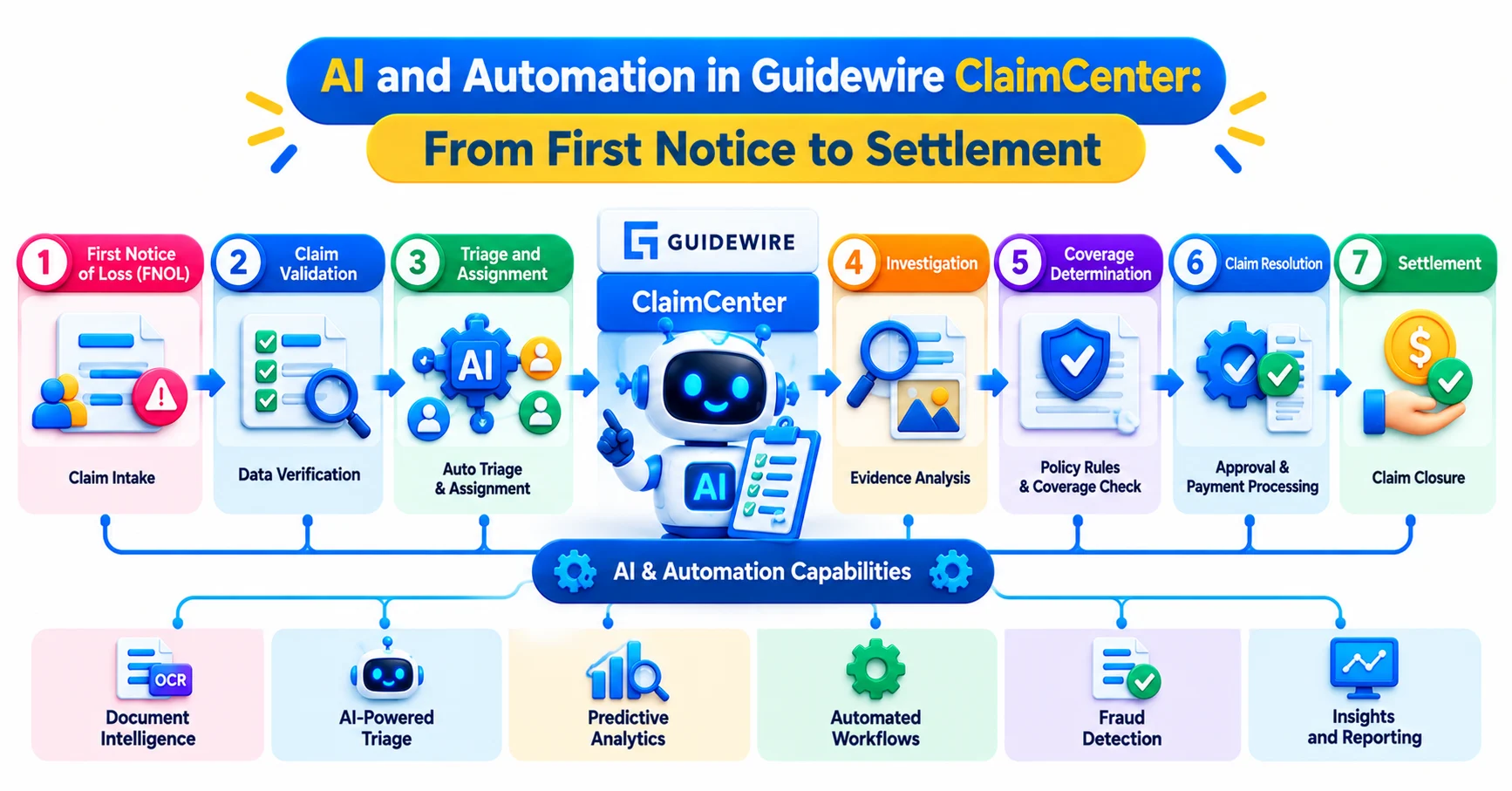
Take a hypothetical example. A homeowner reports water damage through a mobile app. The intake form captures the address, date, and a few photos. Rules in ClaimCenter check that the policy was active on the loss date, match the claim to the right coverage, and assign it to an adjuster based on region and workload. None of that requires a person.
Where AI enters is the next layer. A separate service might review the photos and description and suggest a severity level. Another might flag patterns that deserve a closer look from a special investigations team. The key word is suggest. In well-run implementations, a human still reviews anything that affects payment or denial.
Several tasks tend to be good candidates for automation in claims:
Creating the claim from structured intake data
Assigning work based on skills, location, and workload
Sending routine status updates to the claimant
Ordering standard documents or third-party reports
Closing small, simple claims that meet clear rules
Several should stay under close human control: coverage disputes, injury claims, large losses, and anything involving suspected fraud. A model that raises a flag is useful. A model that quietly denies a claim is a regulatory and reputational risk.
Settlement is the final test. Automated payments can speed things up for low-value claims, but only if the rules are tested thoroughly. A single wrong condition can send the same incorrect payment hundreds of times before anyone notices, so testing against realistic claim scenarios is not optional.
A useful test set mixes ordinary claims with awkward ones: a loss reported after the policy changed, a claimant with two open claims, a repair estimate that arrives in pieces. Teams that only test the happy path tend to meet the awkward cases in production, when real money is moving.
Each of these decisions starts as a requirement written by someone who understands the claims desk, which is why analysts are involved long before a developer opens Guidewire Studio.
Automating PolicyCenter and BillingCenter: Submissions, Renewals, and Billing Exceptions
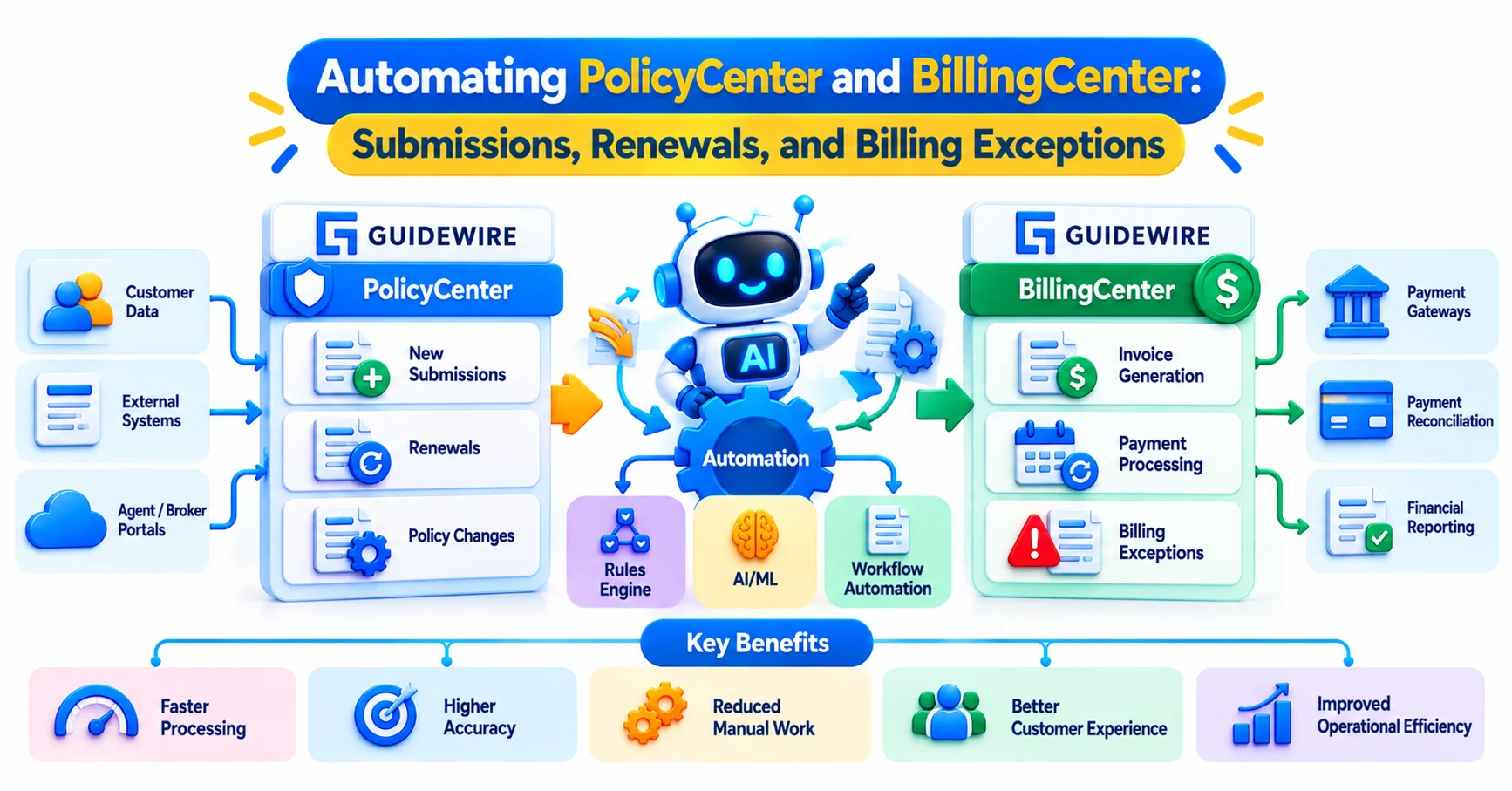
Policy administration does not get as much attention as claims, but the savings are just as real, and the risks are different. A wrong claim payment affects one customer. A wrong rating or coverage rule can affect every policy written that month.
Start with submissions. When a broker sends a quote request, automation can check that required fields are present, pull in external data such as property or vehicle details, and run the risk through underwriting rules. Straightforward risks can move forward quickly. Unusual ones go to an underwriter with the relevant information already attached.
Renewals are a natural second target. Many renewals are routine: same risk, small rate change, no new issues. Rules can identify those and process them in bulk, leaving underwriters to review the policies where something has changed, such as a new claim, a modified property, or an unusual premium shift.
AI can help in two realistic places. One is document handling, where a model extracts data from submitted forms or loss runs so staff do not have to retype it. The other is risk scoring, where a model compares a submission with historical patterns and flags what looks unusual. Both support underwriters rather than replace them.
Underwriters also gain from consistent referral rules. When the same trigger always sends a risk to review, the decision no longer depends on who happened to open the file, and the reasons are easy to explain to a broker who asks why a quote took longer than expected.
BillingCenter benefits more quietly. Payment matching, late-payment reminders, and installment changes after a mid-term policy change are all rules-driven tasks. Exceptions, such as a payment that does not match any invoice, are where people still add the most value.
One thing that surprises newcomers is effective dating. Policy data changes over time, and automation must respect the effective date of each change. A rule that ignores this can produce a correct-looking answer for the wrong period, which is far harder to catch than an obvious error.
The same discipline applies across all three applications: define the business outcome first, then decide whether a rule, an integration, or a model is the right tool.
What Goes Wrong When Teams Add AI to Core Insurance Systems
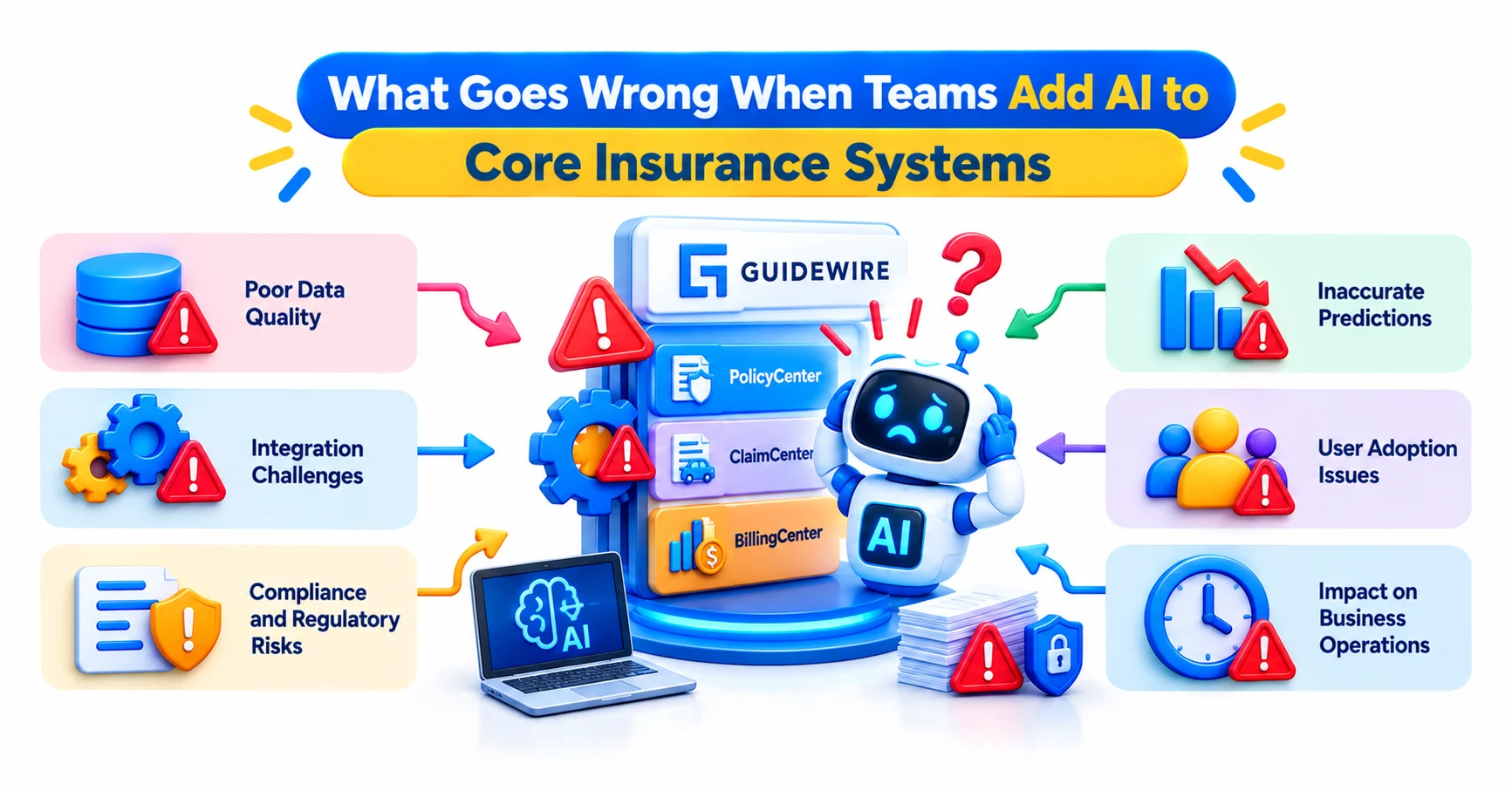
The technology is rarely the main reason projects stall. Most problems come from a handful of repeated mistakes.
Starting with the model instead of the process. A team buys or builds a clever prediction tool and then looks for somewhere to use it. Projects that start from a painful, measurable step, such as the time between first notice and first contact, tend to land better.
Automating a broken process. If the underlying workflow has unclear ownership or contradictory rules, automation makes the confusion run faster. Cleaning up the process first is slower at the start and cheaper overall.
Ignoring explainability. Adjusters and underwriters need to understand why a claim was flagged or a policy was routed for review. If the answer is “the model said so,” people stop trusting the tool, or worse, trust it blindly. Regulators in many regions also expect insurers to explain decisions that affect customers.
Weak data. Models trained on inconsistent or incomplete records produce inconsistent results. Missing loss causes, free-text fields used differently by each team, and duplicate customer records are common culprits.
No fallback path. Integrations fail. A document service goes down, an API times out, or a model returns nothing. Good designs decide in advance what happens next, usually a clear route to a human work queue.
Skipping change management. Staff who were not involved in the design may work around the new system. Including adjusters and underwriters early gives the team better requirements and builds trust.
A short feedback loop helps here. Let a few experienced users try the automated step in a test environment, listen to where they hesitate, and adjust the rules before wider release. Small corrections early are far cheaper than rebuilding confidence after a poor launch.
A useful habit is to measure before and after. Track handling time, error rates, and rework for a specific process so you can show what changed. Without that baseline, it is difficult to tell whether the project helped or just added a new tool to maintain.
It also helps to start small. A narrow pilot on one line of business, with clear success measures, teaches a team more than a large rollout planned in the abstract.
Skills That Matter for People Building These Systems
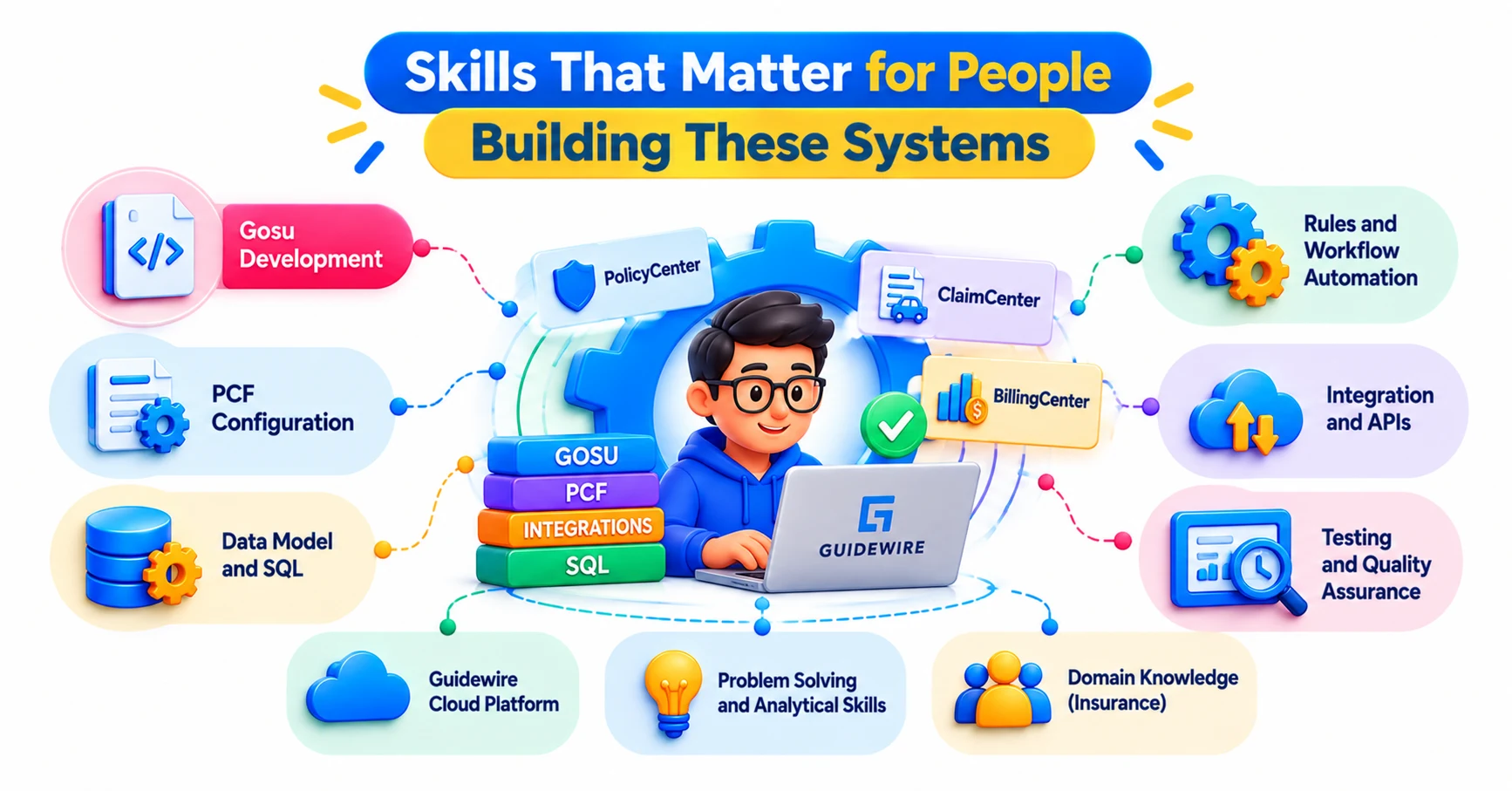
If you are thinking about a career in this space, the good news is that you do not need to be a data scientist. Most Guidewire automation work is about understanding insurance processes and connecting systems sensibly.
Developers benefit from solid Gosu skills, an understanding of the data model, and comfort with APIs and integration patterns. Knowing how to write testable rules and how to handle errors is worth more than knowing the latest AI vocabulary.
Business analysts have a different but equally important role. They translate how a claims team or underwriting desk really works into requirements that developers can build. They also help decide which steps are safe to automate, where human review must remain, and how success will be measured. For anyone coming from an insurance or operations background, a structured Guidewire business analyst course is a practical way to learn that bridge between business and technology.
Testers matter too, perhaps more than people expect. Automated rules need scenario-based testing across policy types, dates, and edge cases, because small errors repeat at scale.
Testers who understand insurance can read a requirement, spot the missing scenario, and ask what should happen when two rules collide. That questioning habit prevents more production issues than any single tool.
For anyone, a few habits are worth building early:
Learn the basic lifecycle of a policy and a claim before touching tools
Practice reading business rules and spotting gaps or conflicts
Understand how data moves between systems, not only inside one
Get comfortable explaining technical choices in plain language
A candidate who can describe a real workflow, say how a claim is assigned, where a rule would help, and where a person must stay involved, stands out in interviews. That is the kind of applied thinking JastTech encourages in its Guidewire programs, because project teams hire people who can reason about the process, not just recite feature names.
Conclusion
The real value of AI and automation in Guidewire is not replacing people. It is removing repeated, low-judgment work so claims and underwriting teams can spend their time on the cases that need real expertise. Start with the process, pick the right tool for each step, and keep a human involved wherever a decision affects a customer.