

Complete Guide to ServiceNow GRC/IRM & AI Governance for Beginners
Navigate through this article using the table of contents below
Table of Contents
No headings found in this article.
In the modern enterprise landscape, navigating digital transformation while maintaining strict regulatory compliance and robust risk management has become a paramount priority. Organizations across the globe are abandoning legacy, fragmented spreadsheet models in favor of unified platform solutions that offer real-time visibility into operational exposures. ServiceNow Governance, Risk, and Compliance (GRC), which has evolved into Integrated Risk Management (IRM), stands at the forefront of this shift. It offers an automated, data-driven approach to tracking enterprise risks, evaluating internal controls, managing audit cycles, and maintaining alignment with dynamic regulatory environments. Understanding these core capabilities gives organizations a distinct strategic edge.
As artificial intelligence systems rapidly become integrated into core operational workflows, traditional risk frameworks must adapt to address unprecedented challenges. Modern enterprise governance now requires managing standard operational, financial, and cybersecurity risks alongside ethical AI considerations, algorithmic bias, model transparency, and strict data privacy mandates. This ultimate beginner guide explores the foundation of ServiceNow GRC/IRM and its evolution into AI Governance. You will gain a clear roadmap for understanding key modules, structural architectures, implementation best practices, and the emerging strategies required to govern intelligent enterprise systems safely and effectively.
1. Understanding the Essentials of ServiceNow GRC and IRM
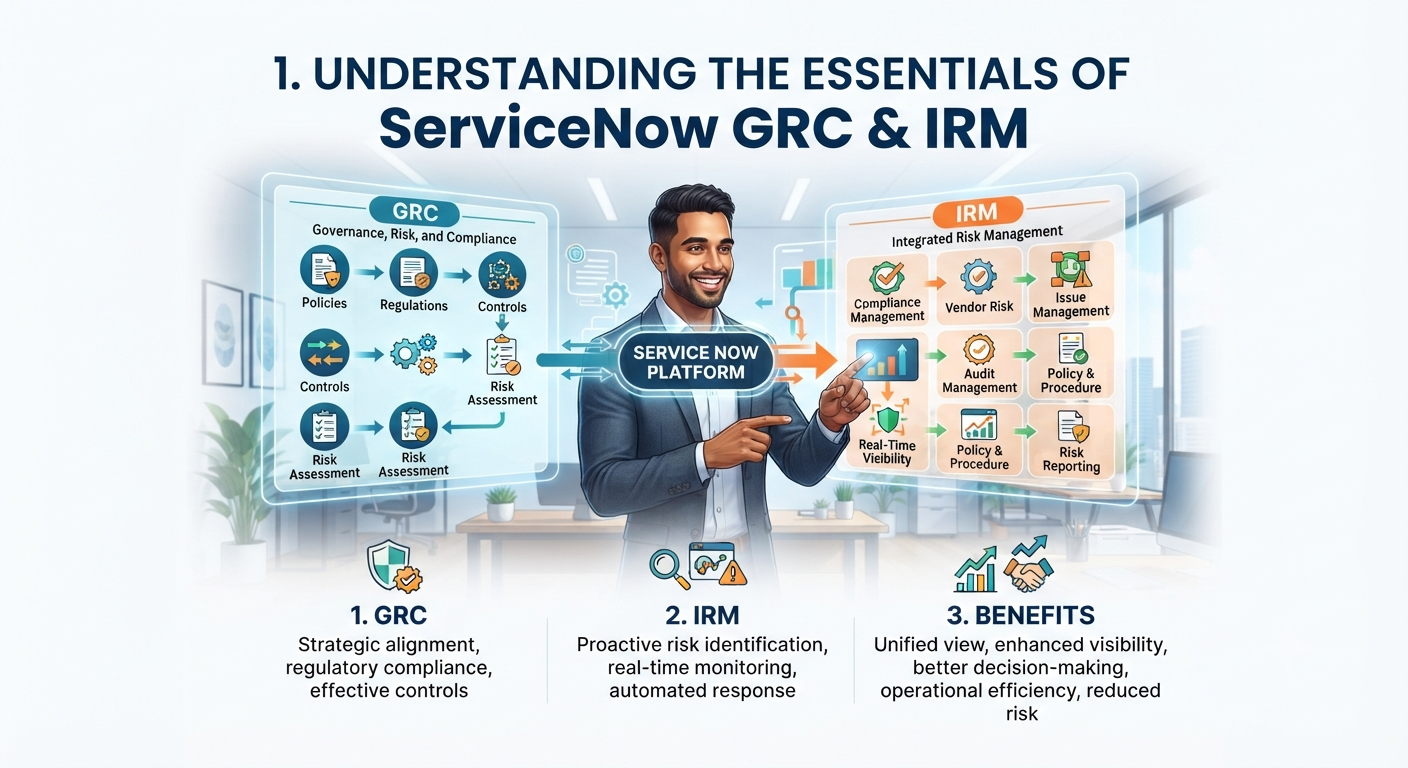
Governance, Risk, and Compliance (GRC) traditionally refers to an organization's umbrella strategy for managing corporate governance, addressing enterprise risks, and complying with industry regulations. However, traditional GRC often suffered from operational silos, where risk teams worked independently from IT and security departments. ServiceNow transformed this approach by introducing Integrated Risk Management (IRM). IRM moves risk management out of isolated compliance departments and embeds real-time risk intelligence directly into everyday operational workflows, operational databases, and service management pipelines across the entire enterprise ecosystem seamlessly.
The primary difference between traditional GRC and ServiceNow IRM lies in continuous automation and context awareness. By leveraging the Configuration Management Database (CMDB), ServiceNow IRM links risks and controls directly to business services, hardware assets, software applications, and vendor relationships. When an IT outage occurs or a software vulnerability is detected, the platform automatically recalculates business risk scores and updates compliance postures in real time. Beginners looking to build expertise in this ecosystem should explore structured training through a complete ServiceNow IRM GRC implementation course to master real-world platform configurations.
2. Core Modules of ServiceNow Integrated Risk Management (IRM)
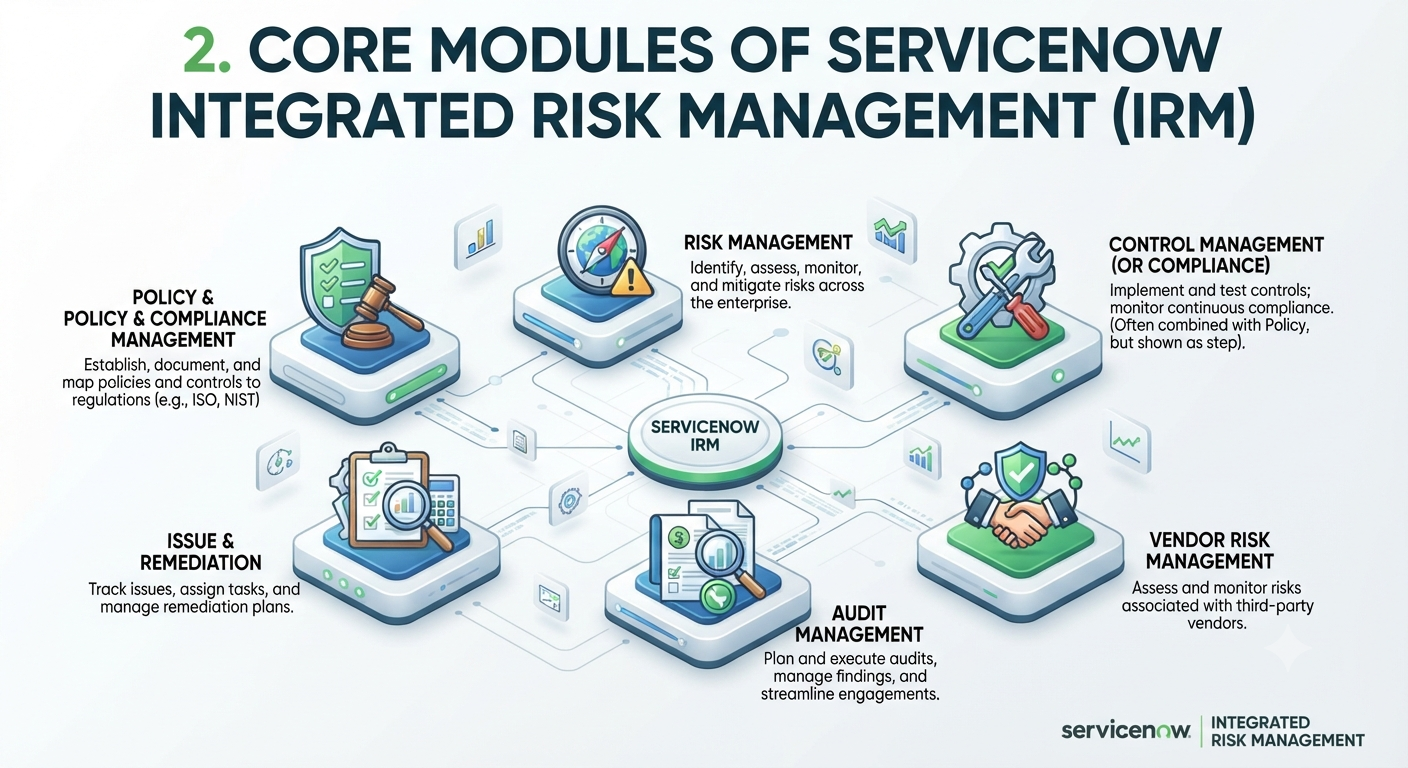
ServiceNow IRM consists of several interconnected modules designed to handle specific operational compliance needs. The core suite includes Policy and Compliance Management, Risk Management, Vendor Risk Management (VRM), and Audit Management. Policy and Compliance Management allows organizations to digitize regulatory frameworks like ISO 27001, NIST, or GDPR, converting authority documents into actionable internal policies and control objectives. Meanwhile, the Risk Management module enables teams to identify, assess, respond to, and continuously monitor operational exposures using standardized quantitative and qualitative assessment scoring methodologies.
Vendor Risk Management expands this perimeter by automating third-party risk assessments, tracking vendor security postures, and integrating audit findings. Audit Management streamlines engagement planning, evidence collection, and reporting to ensure internal and external audits occur efficiently with minimal business disruption. Together, these modules share a unified data engine, ensuring that a control failure noted during an audit automatically updates the enterprise risk registry. Mastering the configuration and interdependencies of these core modules is essential for professionals leading successful risk transformations across complex corporate structures.
3. The Emergence of AI Governance in Modern Enterprises
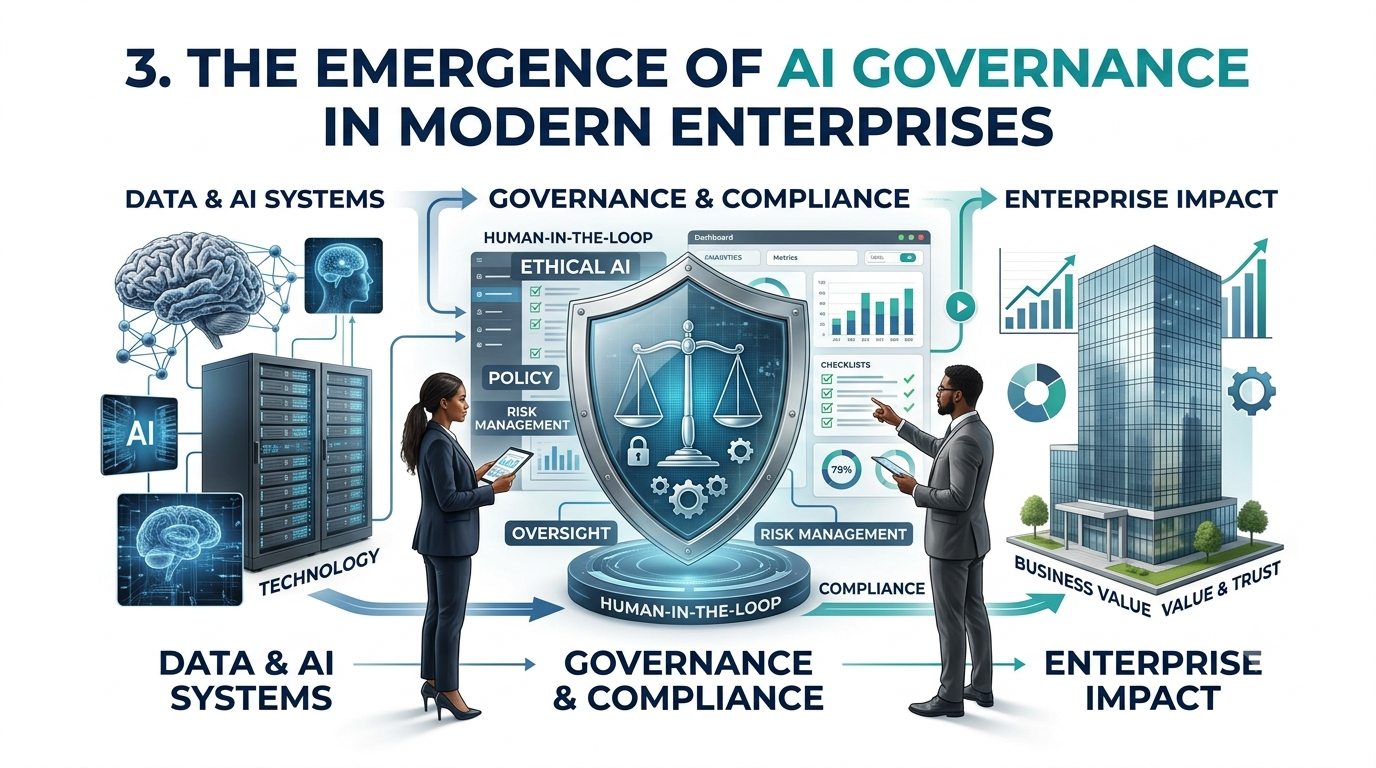
The exponential growth of machine learning models, large language models (LLMs), and generative AI technologies across corporate workflows has introduced complex new operational risks. AI Governance is the strategic framework of policies, procedures, and technical controls established to ensure artificial intelligence technologies are deployed ethically, transparently, securely, and in strict alignment with emerging worldwide regulatory requirements. Enterprise leaders must now address risks such as algorithmic hallucination, trained data contamination, intellectual property exposure, operational bias, and non-compliance with regulations like the European Union AI Act.
Integrating AI Governance into standard risk frameworks ensures that artificial intelligence initiatives undergo the same rigorous oversight as critical software infrastructure. ServiceNow GRC/IRM provides the central backbone needed to document AI model inventories, map algorithms to underlying business processes, execute automated impact assessments, and enforce continuous ethical compliance monitoring. Without a structured platform approach to AI Governance, organizations face significant reputational damage, heavy regulatory fines, and unmitigated security vulnerabilities resulting from rogue or unmonitored artificial intelligence implementations across business units.
4. Key Components of a ServiceNow AI Governance Framework
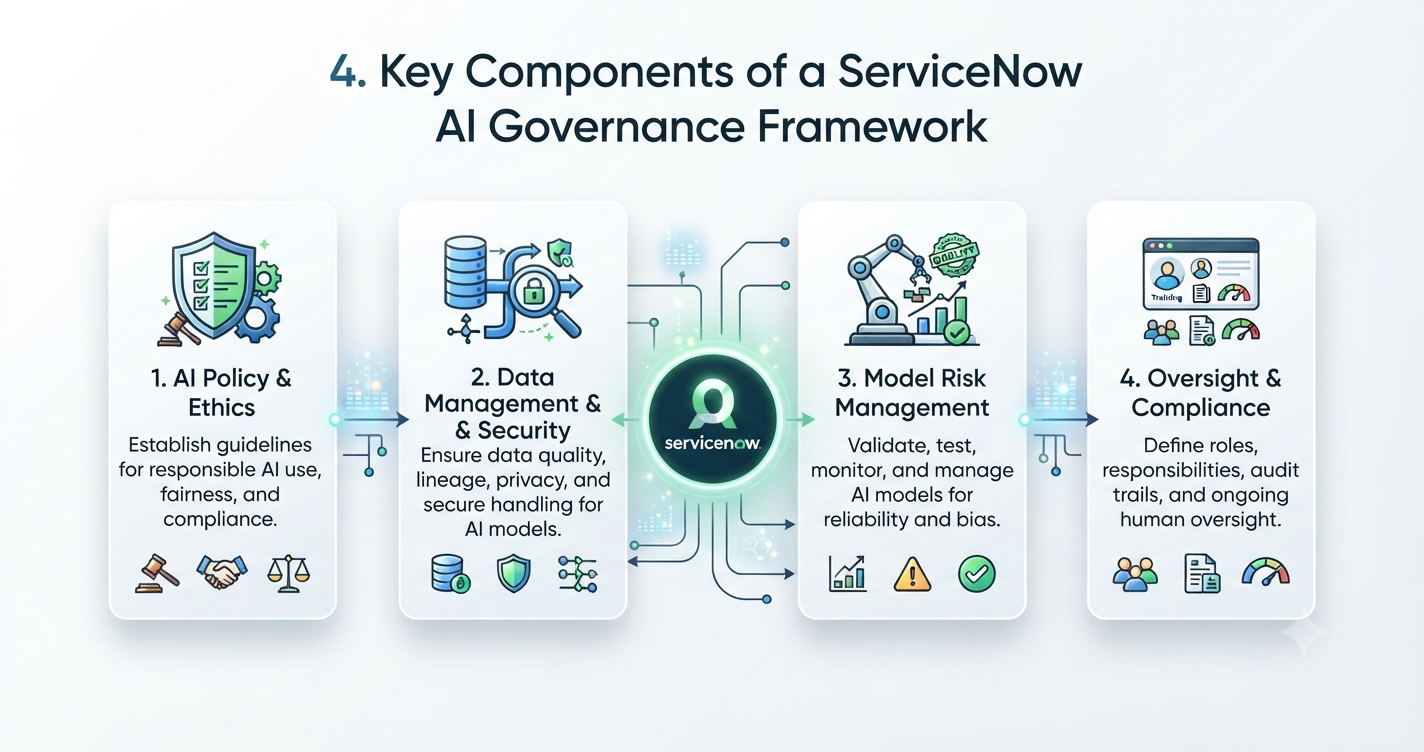
Building an effective AI Governance framework within ServiceNow requires establishing four foundational pillars: Model Inventory Management, Risk Assessment Workflows, Policy Enforcement, and Continuous Performance Monitoring. Model Inventory Management serves as the single source of truth, registering every artificial intelligence asset, algorithm, and third-party API used across the business. Each AI asset is mapped directly to its data inputs, business context, and owner within the ServiceNow CMDB, ensuring complete organizational visibility over where and how algorithms impact operations.
Risk Assessment Workflows evaluate each AI asset's impact regarding bias, security vulnerability, data privacy, and decision explainability before deployment. Automated Policy Enforcement then cross-references AI workflows against legal standards and internal ethical guidelines, generating automated compliance tasks whenever non-compliant behaviors are detected. Finally, Continuous Performance Monitoring tracks model drift, data updates, and operational performance over time. Implementing these interconnected pillars inside ServiceNow ensures that innovation remains fast-paced while operating firmly within established risk tolerances and compliance boundaries.
5. Step-by-Step Implementation Strategy for ServiceNow GRC/IRM
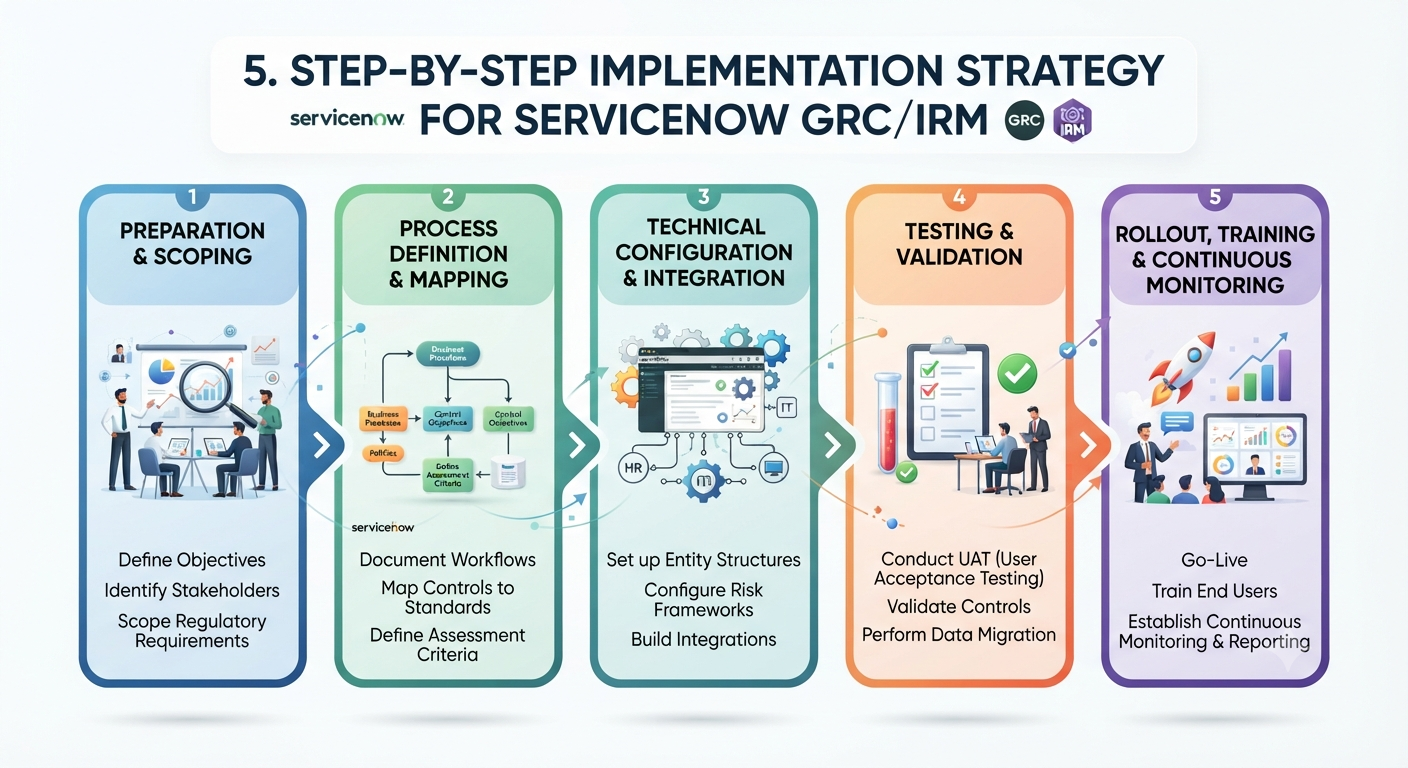
Executing a successful ServiceNow IRM rollout requires a structured, phased implementation strategy that prioritizes business alignment over technical complexity. The first phase focuses on Foundation and Entity Scoping, defining core organizational structures, business services, CMDB relationships, and risk taxonomy within the platform. Setting up a robust entity architecture ensures that policies, controls, and risk scoring models map accurately to the correct business units, technical assets, and operational owners throughout the enterprise setup.
The second phase involves Policy, Control, and Risk Engine Setup, where compliance frameworks are imported, baseline controls are designed, and assessment workflows are configured. Organizations looking to accelerate this stage often enroll teams in dedicated ServiceNow IRM training to gain practical experience with platform best practices. The final phase focuses on Automation, Continuous Monitoring, and Reporting, integrating platform indicator tasks, automated evidence collection, executive dashboards, and AI Governance extensions to achieve continuous, real-time risk visibility.
6. Overcoming Common Implementation Challenges and Pitfalls
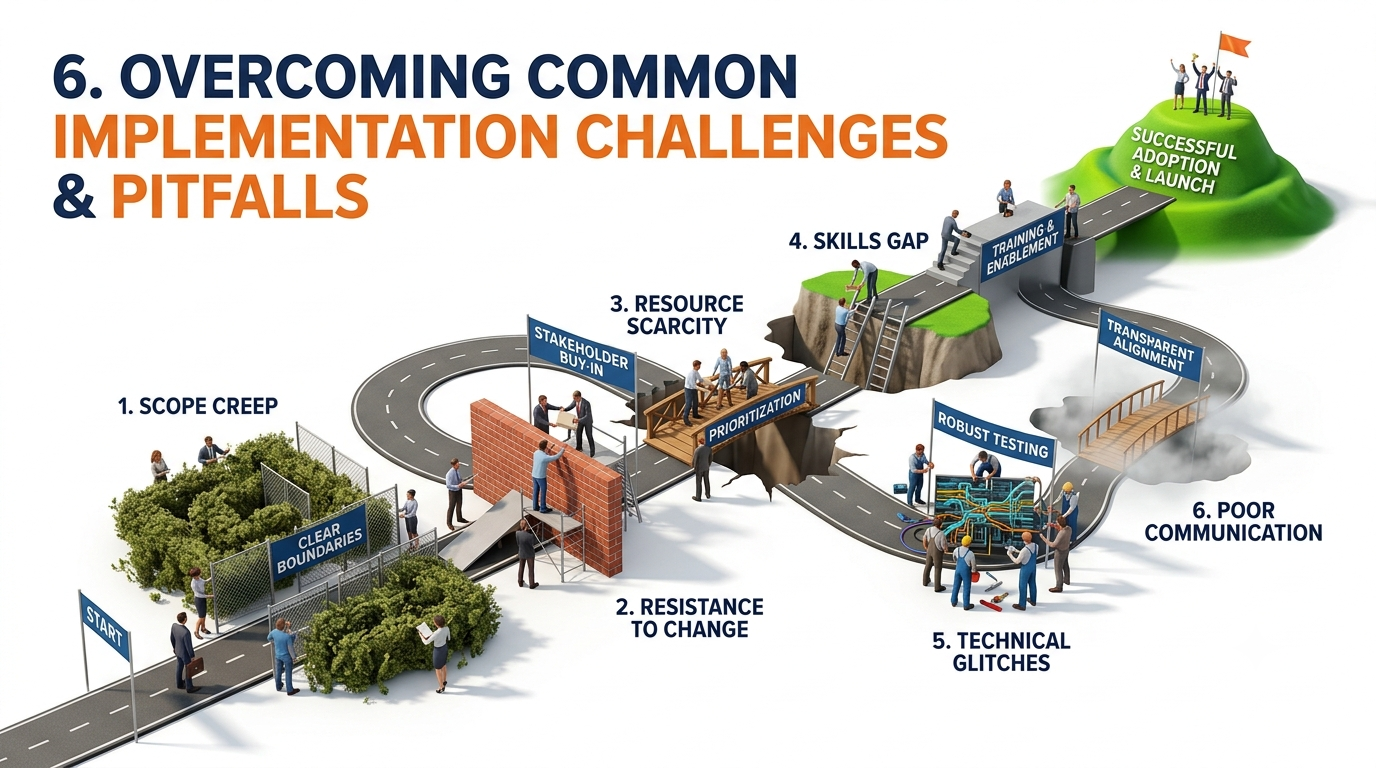
Organizations undertaking ServiceNow IRM implementations often encounter common hurdles that can delay project timelines or reduce user adoption. One major pitfall is attempting to digitize inefficient, legacy manual processes without optimizing them first. Transitioning overly complex, manual spreadsheet workflows directly into ServiceNow leads to platform clutter, confusing risk matrices, and user fatigue. Organizations should streamline risk definitions and standardize assessment scoring models before executing technical platform configurations.
Another critical challenge is poor CMDB health and lack of organizational change management. Because ServiceNow IRM relies heavily on the CMDB to map entities, inaccurate or outdated configuration item (CI) data severely compromises risk visibility and automated indicator performance. Furthermore, failing to train compliance officers, audit teams, and operational risk managers on the platform leads to resistance and low adoption. Overcoming these hurdles requires rigorous data hygiene, executive sponsorship, clear governance roles, and practical hands-on training for all platform stakeholders.
7. The Future of AI-Driven Risk Management in ServiceNow
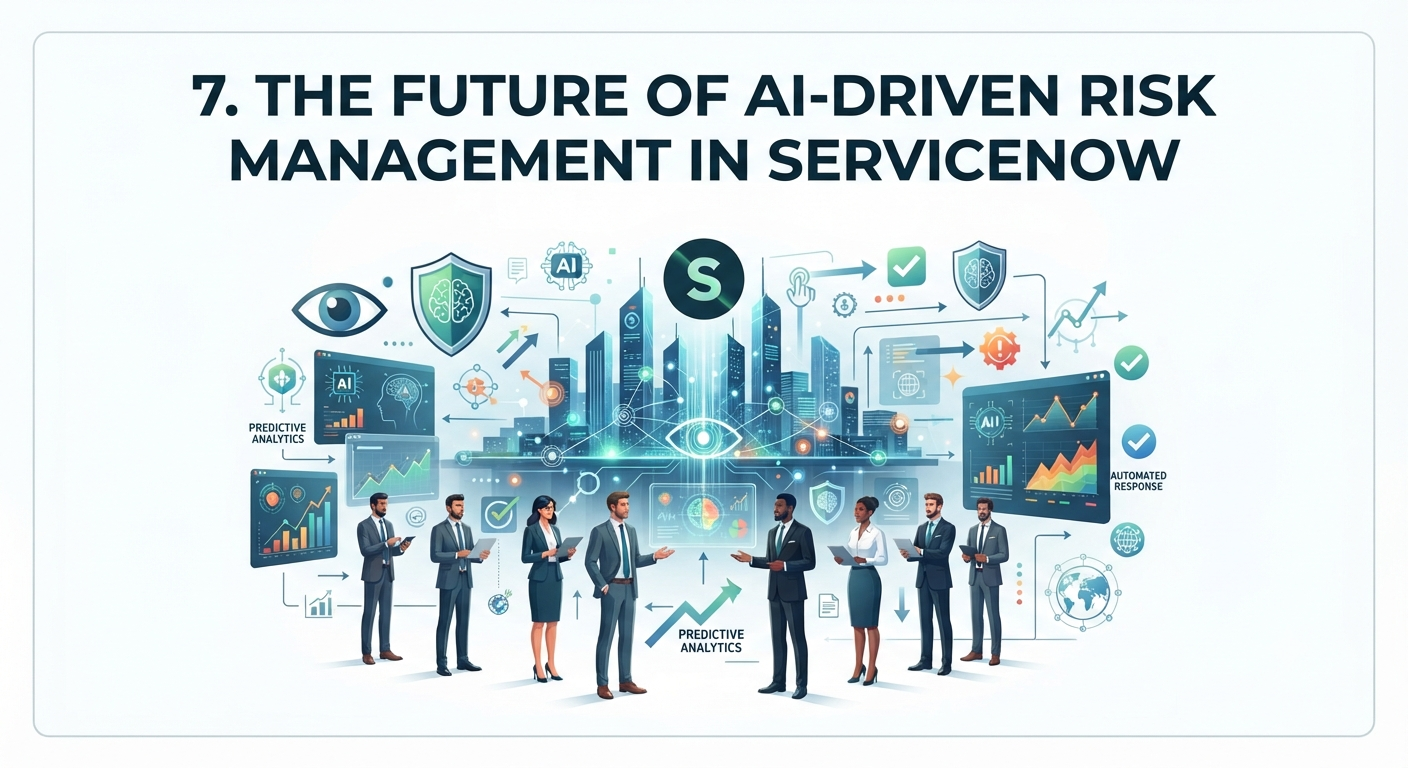
The future of Integrated Risk Management lies in the convergence of automated platform workflows and predictive artificial intelligence capabilities. ServiceNow continues to embed native AI intelligence—such as generative AI assistants, natural language processing, and predictive analytics—directly into its GRC/IRM architecture. Future risk platforms will not merely record past incidents or track static compliance checkpoints; they will proactively forecast emerging risk exposures, suggest optimal control designs, and dynamically generate audit documentation based on continuous real-time data feeds.
Predictive risk management allows enterprises to shift from reactive mitigation to proactive prevention. AI models inside ServiceNow can analyze external regulatory changes, cross-reference internal operational metrics, and instantly alert compliance officers to potential gaps before regulatory breaches occur. As AI algorithms become both the tools for managing risk and subjects of governance themselves, professionals proficient in ServiceNow IRM and AI Governance will remain at the forefront of modern enterprise risk management and digital transformation strategies.
Conclusion: Securing the Future of Enterprise Risk Management
The convergence of Integrated Risk Management and AI Governance marks a critical turning point for modern enterprises. As businesses accelerate their digital transformations and rely more heavily on autonomous systems, traditional, siloed compliance methods are no longer sufficient. ServiceNow IRM bridges this gap by unifying policy enforcement, continuous risk monitoring, and vendor oversight directly into operational workflows. By integrating dedicated AI Governance frameworks into this architecture, organizations can confidently innovate with artificial intelligence while safeguarding against algorithmic bias, compliance breaches, and operational disruptions.
Building a resilient, future-proof risk posture requires moving beyond theoretical frameworks and taking decisive action. Whether you are aiming to modernize legacy compliance processes, automate audit evidence collection, or establish robust oversight for emerging AI technologies, mastering platform capabilities is the essential first step. To translate these concepts into practical enterprise solutions, explore a hands-on ServiceNow IRM GRC implementation course and equip yourself with the skills needed to lead successful risk management transformations.