

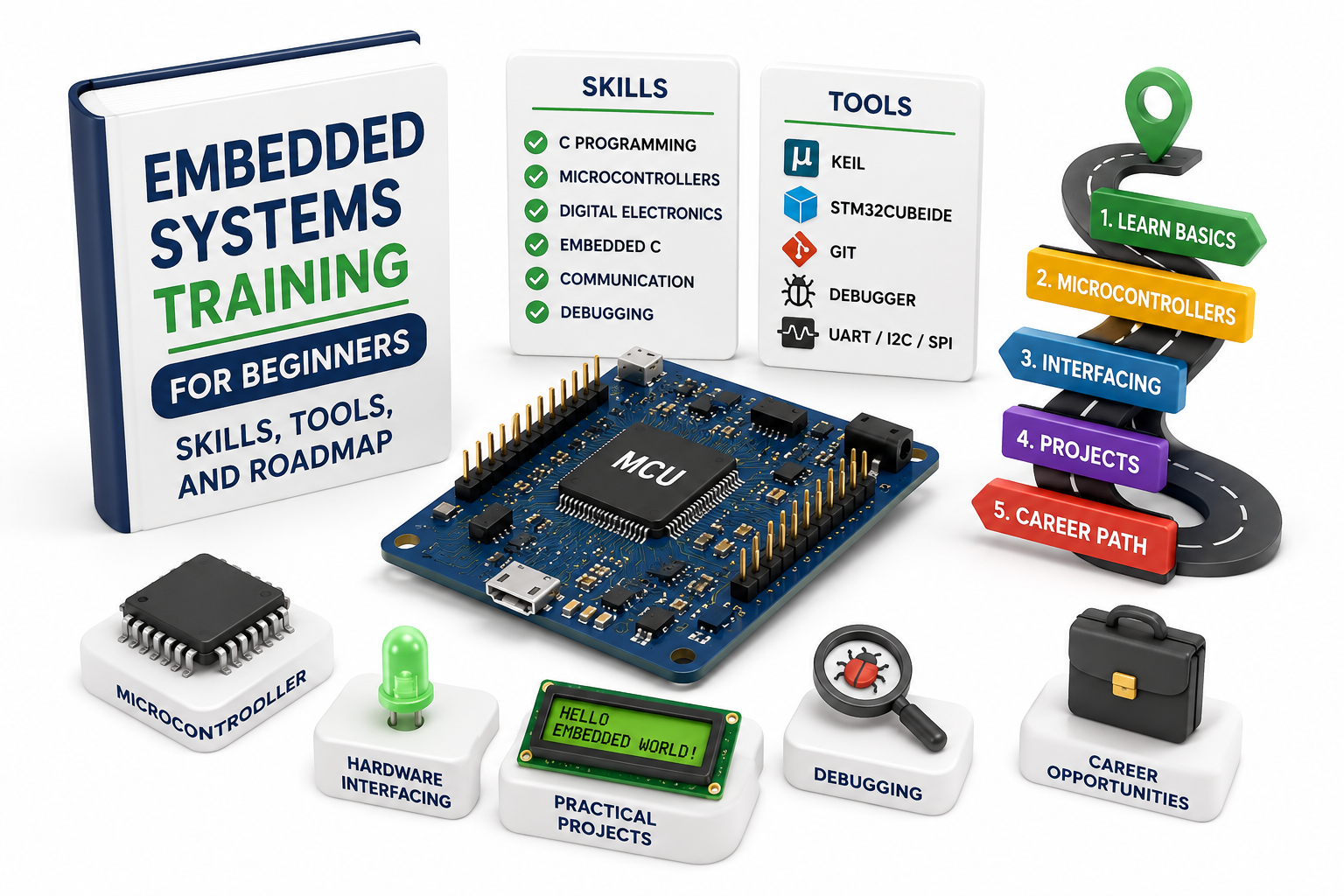
Embedded Systems Training for Beginners: Skills, Tools, and Roadmap
Navigate through this article using the table of contents below
Table of Contents
No headings found in this article.
Embedded technology powers almost every modern electronic device, yet many aspiring engineers don't know where to begin. With semiconductor innovation accelerating, choosing the right learning path has become more important than ever.
The difference between getting a job and struggling in the market often comes down to practical skills rather than academic knowledge. This guide explains exactly what beginners should learn, which tools matter, and how JASTTech helps students build an industry-ready career through embedded systems training in India.
Why Embedded Systems Remain One of the Strongest Career Choices
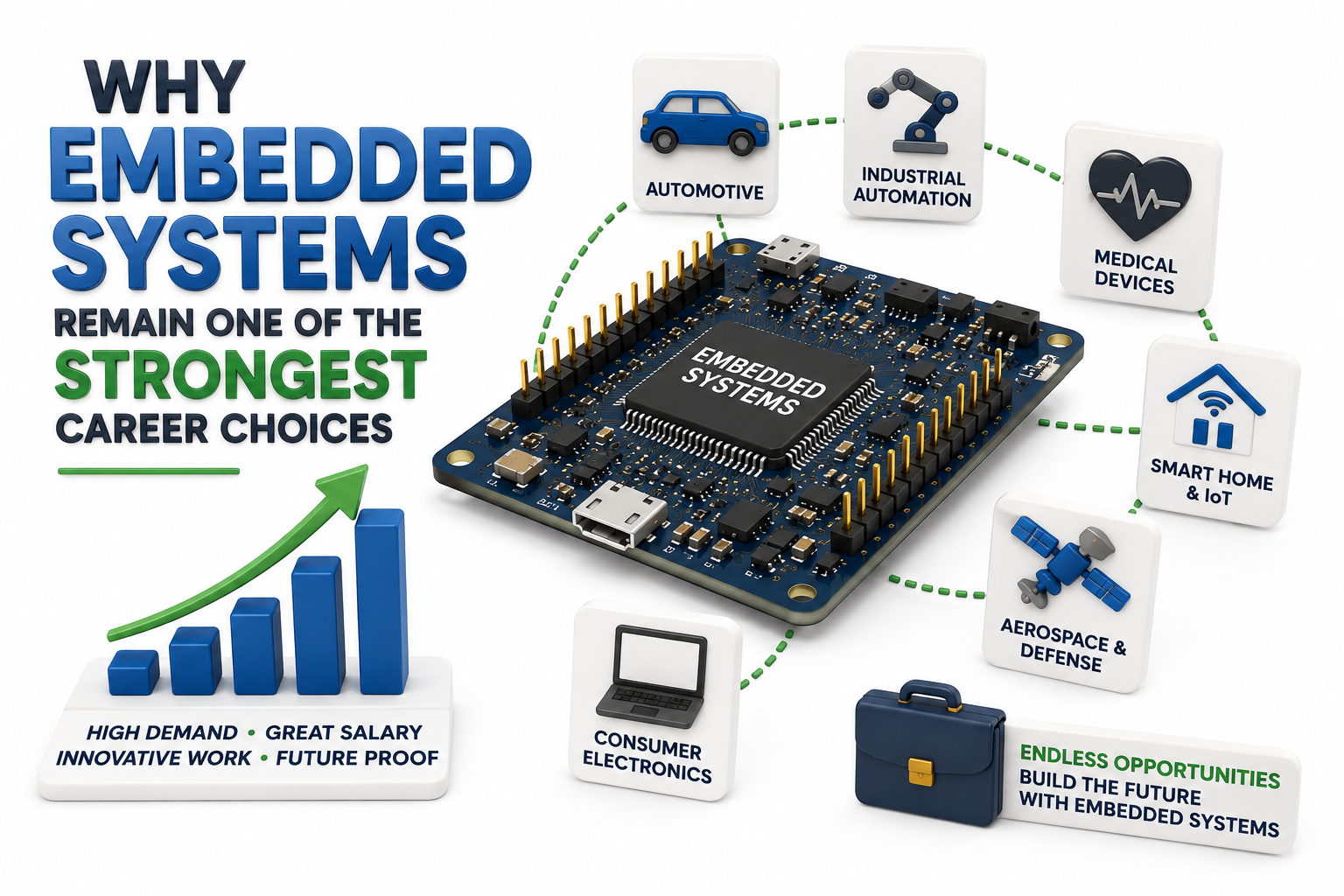
Embedded systems combine electronics and programming to create intelligent devices that perform dedicated functions. Unlike general-purpose computers, embedded systems are designed for specific applications such as automotive electronics, healthcare devices, industrial automation, consumer electronics, aerospace, robotics, and IoT.
The rapid growth of semiconductor manufacturing, electric vehicles, smart factories, and connected devices has significantly increased demand for engineers who understand embedded hardware and software. Companies no longer seek graduates with only theoretical knowledge—they prefer professionals who can develop, debug, and optimize real embedded applications.
A beginner entering this field should understand that embedded engineering is multidisciplinary. It requires learning hardware fundamentals alongside programming concepts instead of focusing on only one area.
Some of the major industries hiring embedded engineers include:
Automotive and EV manufacturers
Semiconductor companies
Consumer electronics brands
Industrial automation firms
Medical device manufacturers
IoT product companies
Aerospace and defense organizations
Essential Skills Every Beginner Should Build First
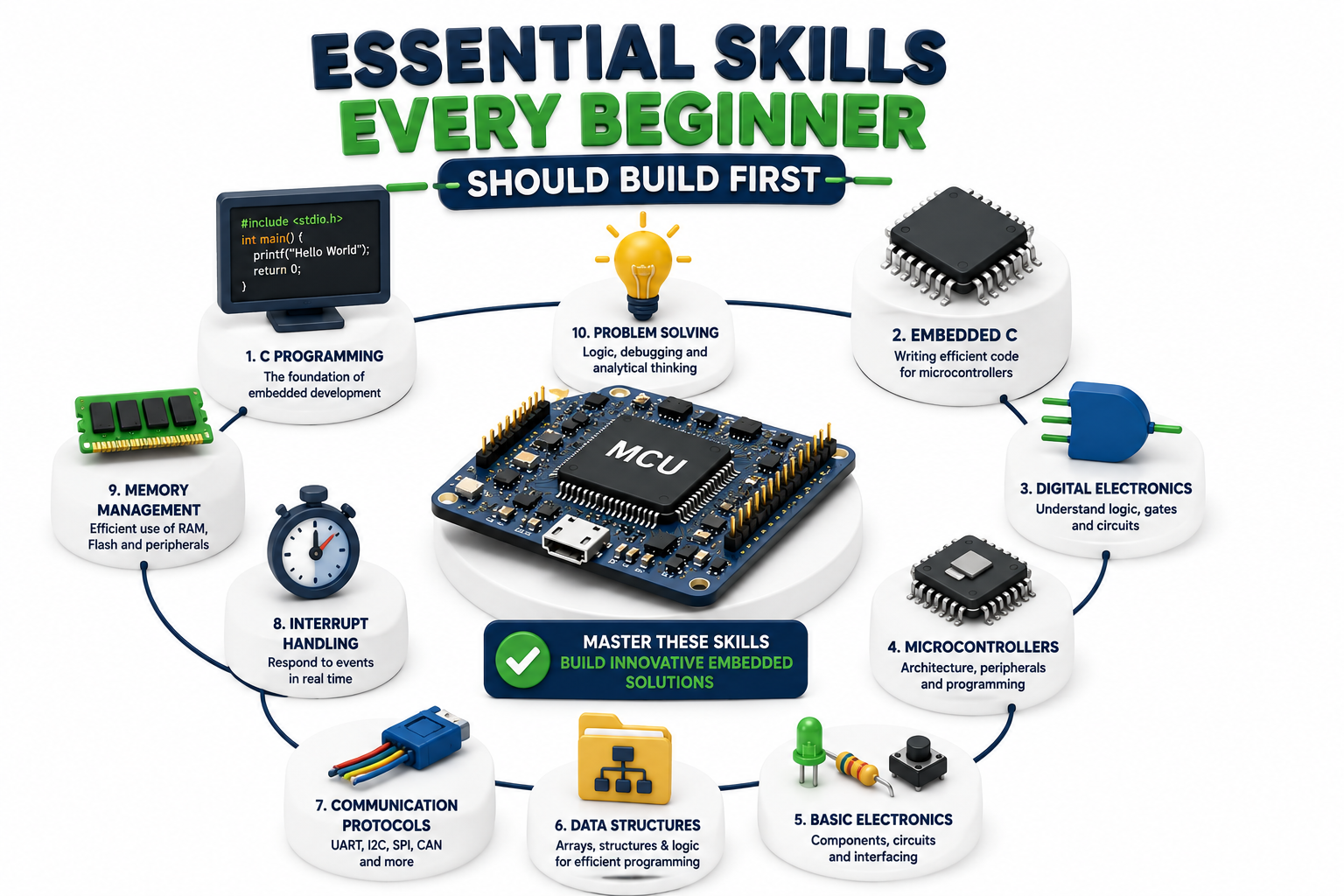
Many students jump directly into advanced processors without mastering the basics. A structured learning path creates a stronger foundation and makes advanced concepts much easier to understand.
Start by building programming skills because software controls every embedded device. The C programming language remains the industry standard, while basic C++ knowledge becomes useful for larger embedded applications.
Important technical skills include:
C Programming
Embedded C
Data Structures fundamentals
Digital Electronics
Microcontrollers
Basic Electronics
Communication Protocols
Interrupt Handling
Memory Management
Real-Time Programming
Understanding communication protocols is equally important because modern devices constantly exchange information. Beginners should gradually learn:
UART
SPI
I2C
CAN
USB fundamentals
GPIO interfacing
Apart from technical expertise, employers also value debugging ability, logical thinking, documentation, teamwork, and problem-solving. These practical skills often differentiate successful candidates during technical interviews.
Industry Tools That Every Embedded Engineer Should Learn
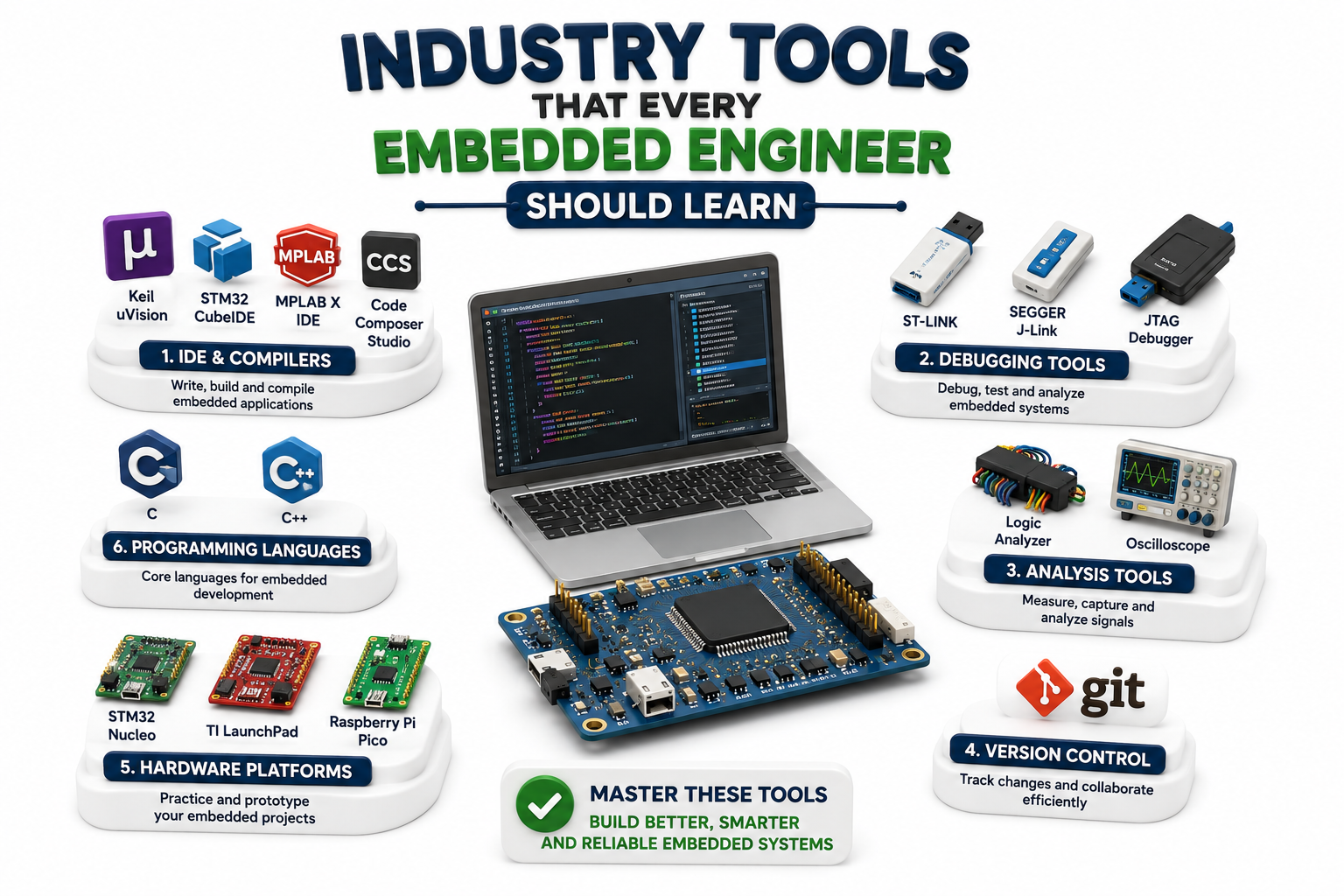
Knowing concepts alone is rarely enough in today's hiring environment. Recruiters increasingly evaluate candidates based on their familiarity with professional development tools.
Development begins with selecting the right Integrated Development Environment (IDE), compiler, debugger, and hardware platform. Beginners should focus on understanding how software interacts with hardware instead of memorizing commands.
Important software tools include:
Keil uVision
STM32CubeIDE
MPLAB X IDE
Code Composer Studio
Eclipse-based IDEs
Visual Studio Code
Essential debugging tools include:
JTAG Debugger
ST-Link
Segger J-Link
Logic Analyzer
Oscilloscope basics
Version control has also become an essential industry requirement. Learning Git helps engineers collaborate efficiently within development teams while maintaining project history.
At JASTTech, students gain practical exposure to industry-relevant software, debugging environments, hardware kits, and workflow practices that closely resemble professional embedded development environments.
A Practical Learning Roadmap from Beginner to Job Ready
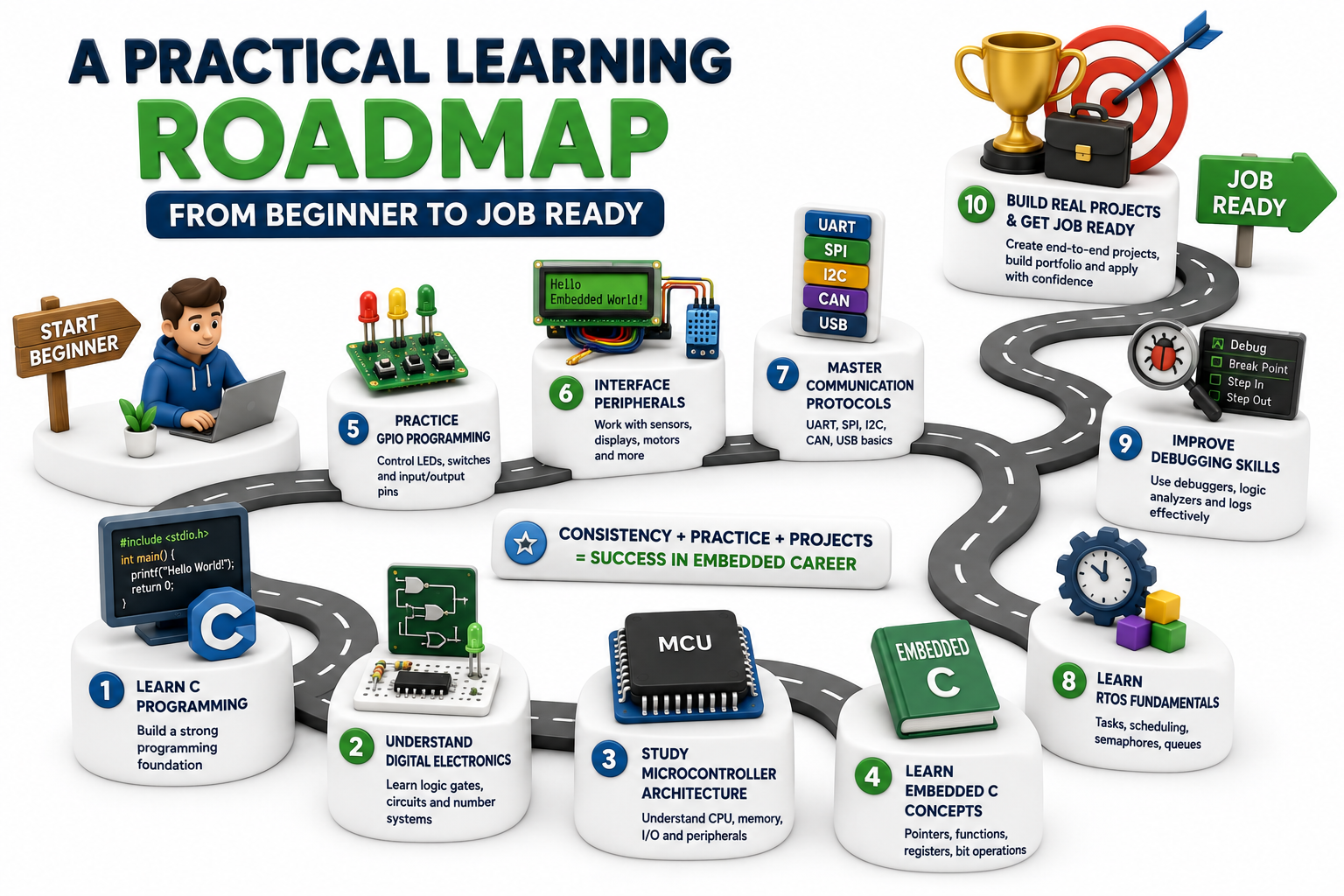
Learning embedded systems becomes much easier when divided into achievable milestones. Instead of attempting everything simultaneously, students should gradually build their expertise through practical implementation.
A recommended roadmap includes:
Learn C Programming thoroughly
Understand digital electronics fundamentals
Study microcontroller architecture
Learn Embedded C concepts
Practice GPIO programming
Interface LEDs, switches, sensors, and displays
Master communication protocols
Build RTOS fundamentals
Learn debugging techniques
Develop complete embedded projects
Every stage should include hands-on implementation because practical experience reinforces theoretical understanding. Reading documentation, solving hardware issues, and debugging real code develops engineering confidence far more effectively than passive learning.
Students should also become comfortable reading datasheets. Every embedded engineer spends significant time understanding processor manuals, peripheral documentation, and hardware specifications before writing production-quality firmware.
Consistent practice over several months produces much better long-term results than attempting advanced topics without a strong foundation.
Projects That Help Beginners Stand Out During Interviews
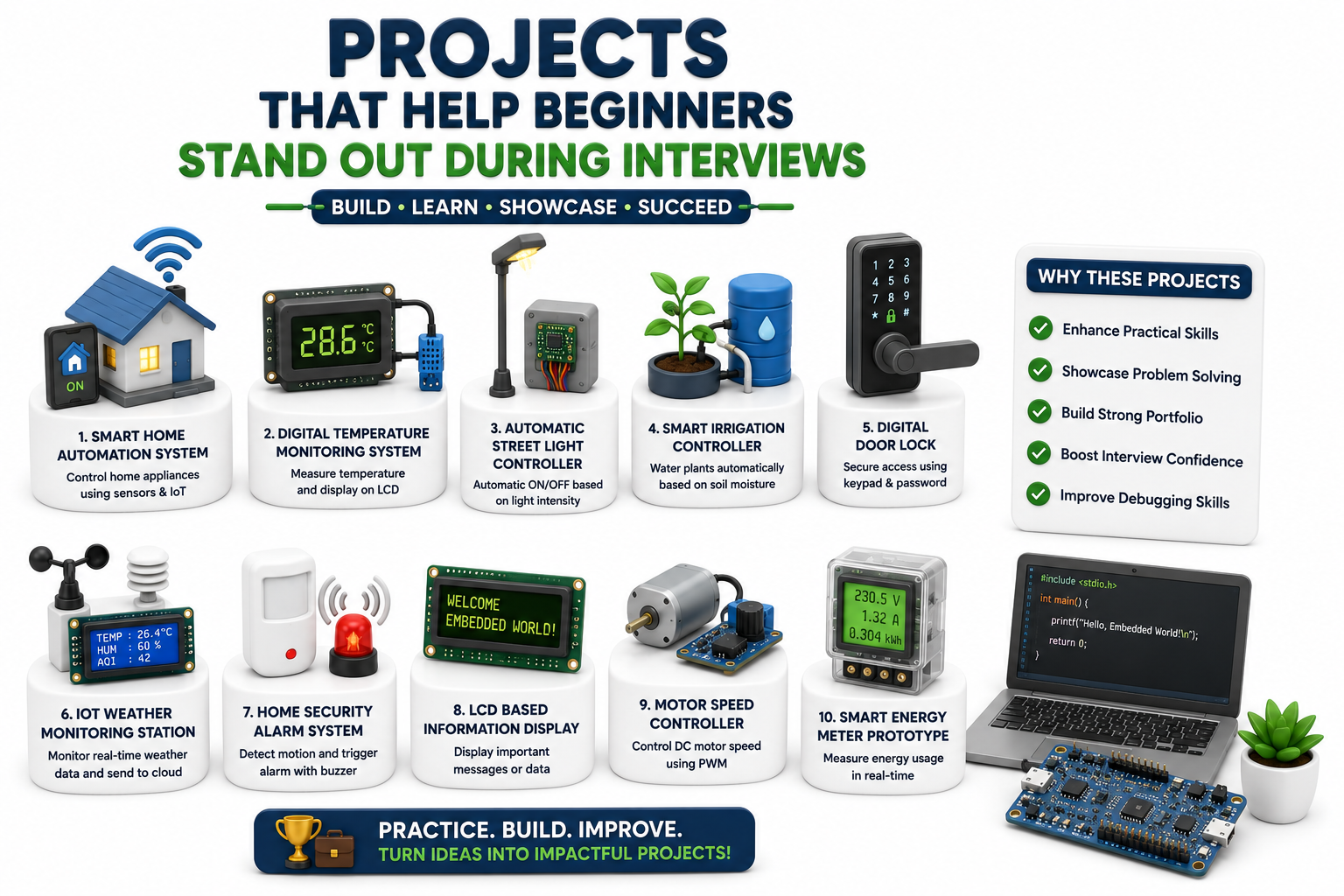
Employers frequently ask candidates to explain projects because they reveal practical understanding better than certificates alone. Well-documented projects demonstrate problem-solving ability, coding practices, debugging experience, and hardware integration skills.
Beginner-friendly projects include:
Smart Home Automation System
Digital Temperature Monitoring System
Automatic Street Light Controller
Smart Irrigation Controller
Digital Door Lock
IoT Weather Monitoring Station
Home Security Alarm
LCD-Based Information Display
Motor Speed Controller
Smart Energy Meter Prototype
While developing projects, students should focus on:
Clean code structure
Modular programming
Hardware interfacing
Error handling
Documentation
Version control using Git
Recruiters appreciate candidates who can clearly explain why they selected specific components, how communication protocols work, what challenges they faced during debugging, and how they optimized system performance.
Hands-on projects completed during embedded systems training in India significantly improve confidence during technical interviews while building an impressive engineering portfolio.
Career Opportunities and How to Prepare for Recruitment
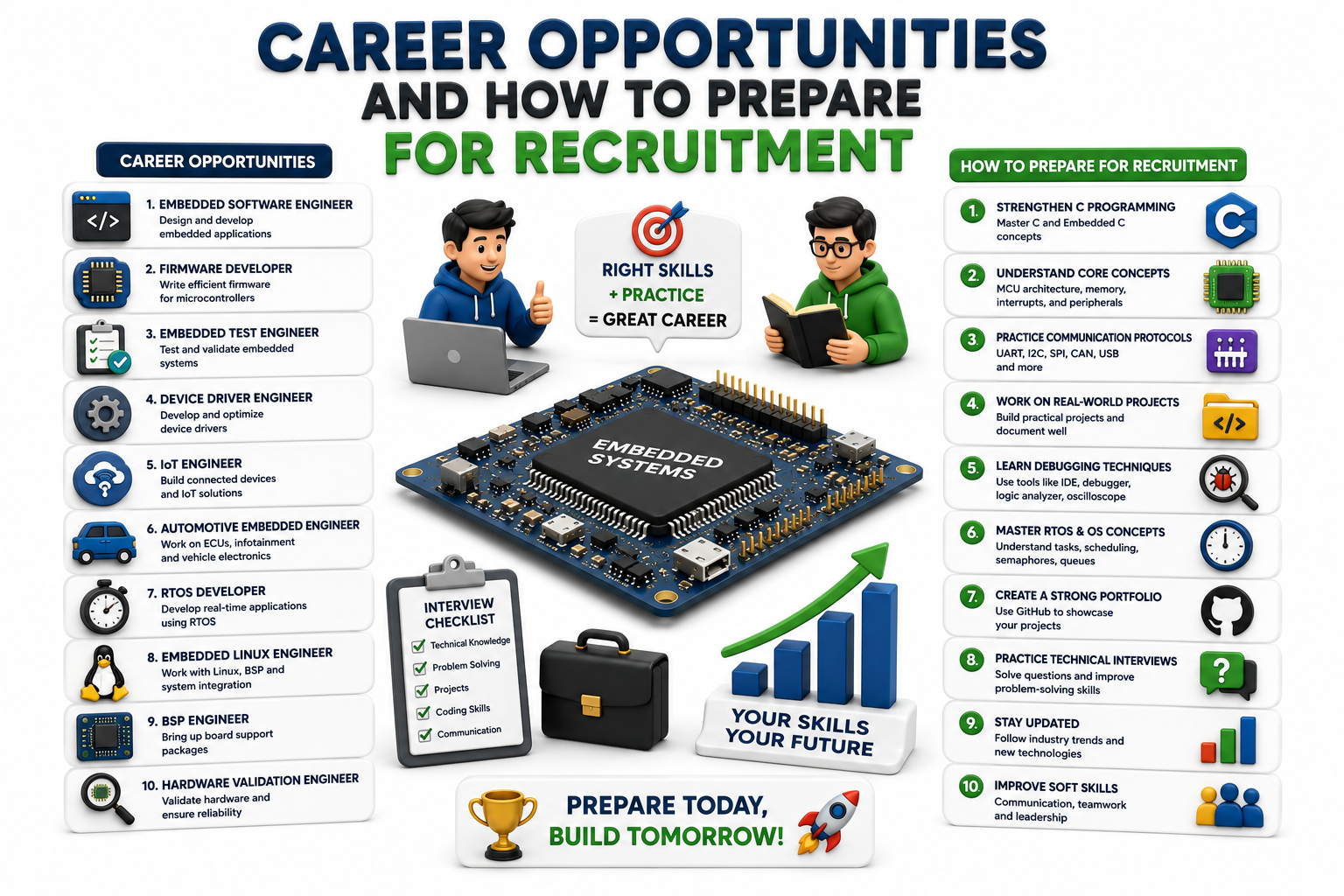
The embedded industry offers numerous career paths beyond traditional firmware development. As technology evolves, specialized roles continue expanding across multiple sectors.
Popular job roles include:
Embedded Software Engineer
Firmware Developer
Embedded Test Engineer
Device Driver Engineer
IoT Engineer
Automotive Embedded Engineer
RTOS Developer
BSP Engineer
Embedded Linux Engineer
Hardware Validation Engineer
Preparing for recruitment requires more than completing a course. Candidates should continuously improve their technical knowledge while strengthening interview performance.
Preparation strategies include:
Practice C programming regularly
Revise communication protocols
Solve embedded debugging scenarios
Understand memory organization
Learn operating system basics
Build multiple practical projects
Create a professional Git portfolio
Practice technical interview questions
Improve problem-solving speed
Stay updated with semiconductor industry trends
Organizations increasingly prioritize candidates who demonstrate practical implementation skills rather than relying solely on academic qualifications. Continuous learning remains essential because embedded technologies evolve alongside advancements in AI, automotive electronics, robotics, industrial automation, and connected devices.
Conclusion
Building a successful career in embedded engineering does not require mastering every technology immediately. It requires following a structured roadmap, learning industry-relevant tools, practicing consistently, and developing projects that demonstrate real technical capability. Beginners who focus on strong programming fundamentals, hardware understanding, communication protocols, and debugging gradually build the confidence needed for professional engineering roles.
Choosing the right learning platform can significantly accelerate this journey. JASTTech provides practical, industry-oriented learning designed to help aspiring engineers gain hands-on experience with modern tools, real-world projects, and interview preparation. With the growing demand for skilled professionals, investing in quality embedded systems training in India today can create strong career opportunities across semiconductor, automotive, IoT, consumer electronics, and industrial automation industries.