

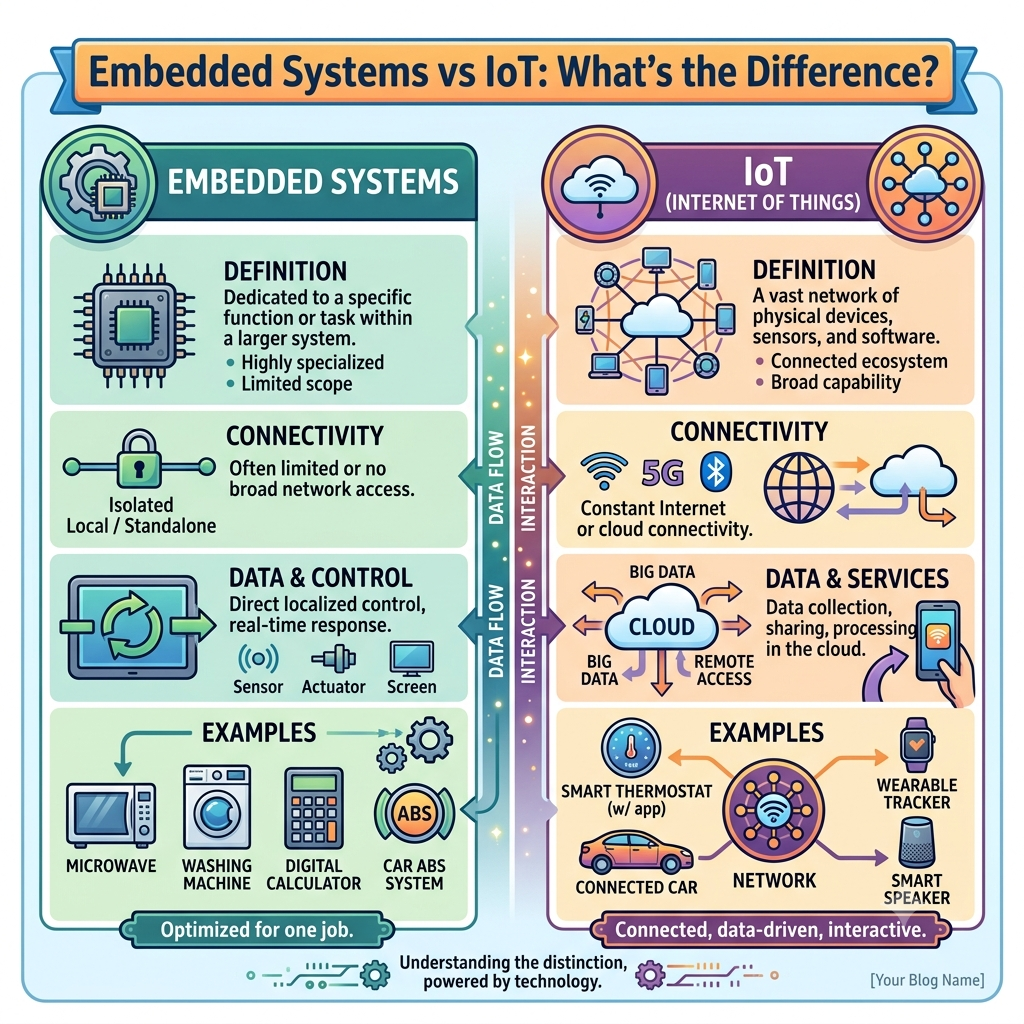
Embedded Systems vs IoT: What's the Difference?
Navigate through this article using the table of contents below
Table of Contents
No headings found in this article.
Picture a smart thermostat quietly adjusting your room temperature, a fitness band buzzing on your wrist, and a washing machine that just knows when the load is unbalanced. All three feel like magic, but under the hood they rely on two very different — yet deeply connected — worlds of technology: embedded systems and IoT. Most people use these terms interchangeably, and that's exactly where the confusion begins.
If you've ever wondered why your smartwatch talks to your phone but your microwave doesn't, or why one gadget needs the internet to function while another works perfectly fine offline, you're really asking about the line between embedded systems and IoT. This blog breaks that line down in plain language, so you walk away knowing exactly what separates the two — and how they actually work together.
1.What Is an Embedded System?
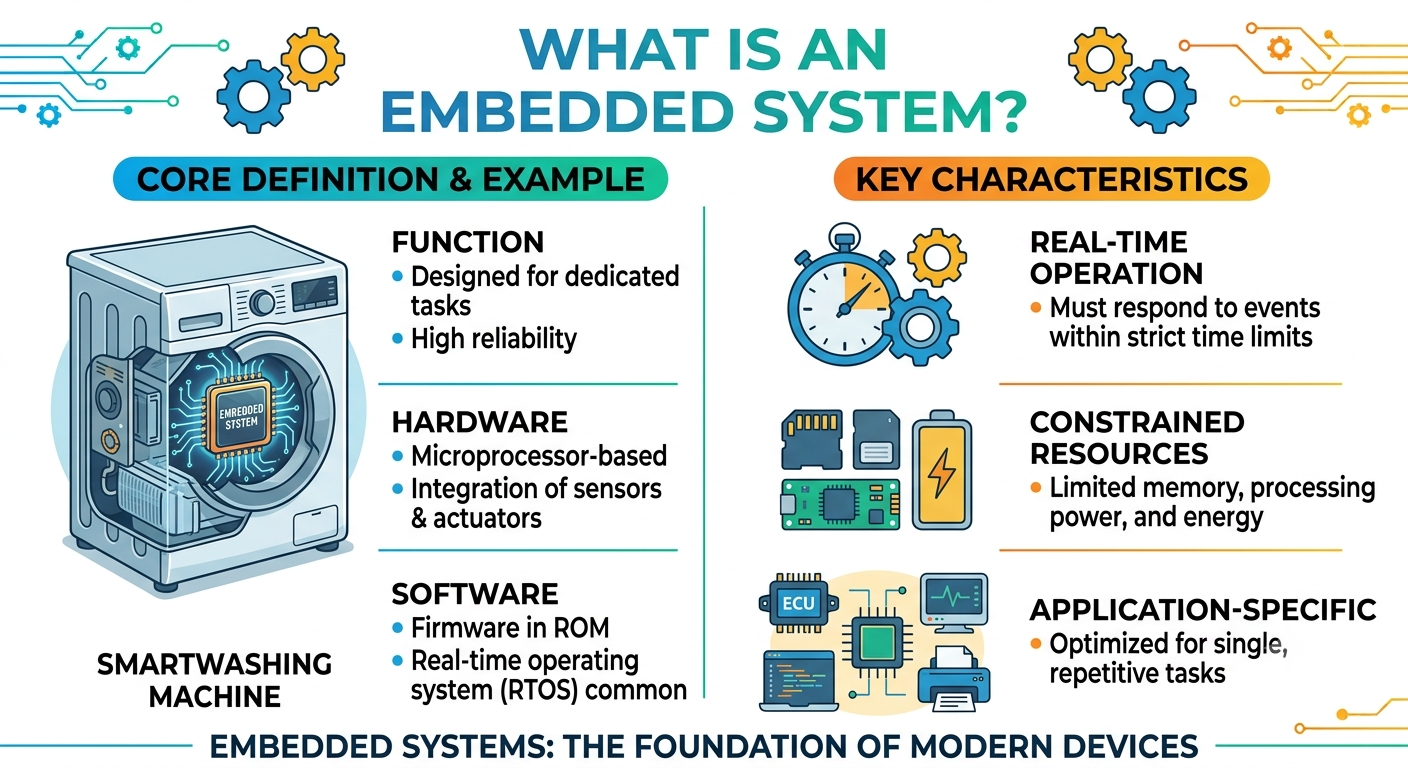
An embedded system is a small, dedicated computer built to perform one specific job inside a larger device. Unlike your laptop, which can run a browser, a game, and a spreadsheet all at once, an embedded system is purpose-built. It runs a fixed set of instructions to control something specific — like regulating engine temperature in a car or managing the wash cycle in a washing machine.
These systems combine hardware (a microcontroller or microprocessor, sensors, and actuators) with software written specifically for that hardware. They're everywhere: in traffic signals, ATMs, elevators, medical monitors, and kitchen appliances. Most of them don't need an internet connection at all — they just need to do their one job reliably, day after day, often for years without a restart.
2.What Is IoT (Internet of Things)?
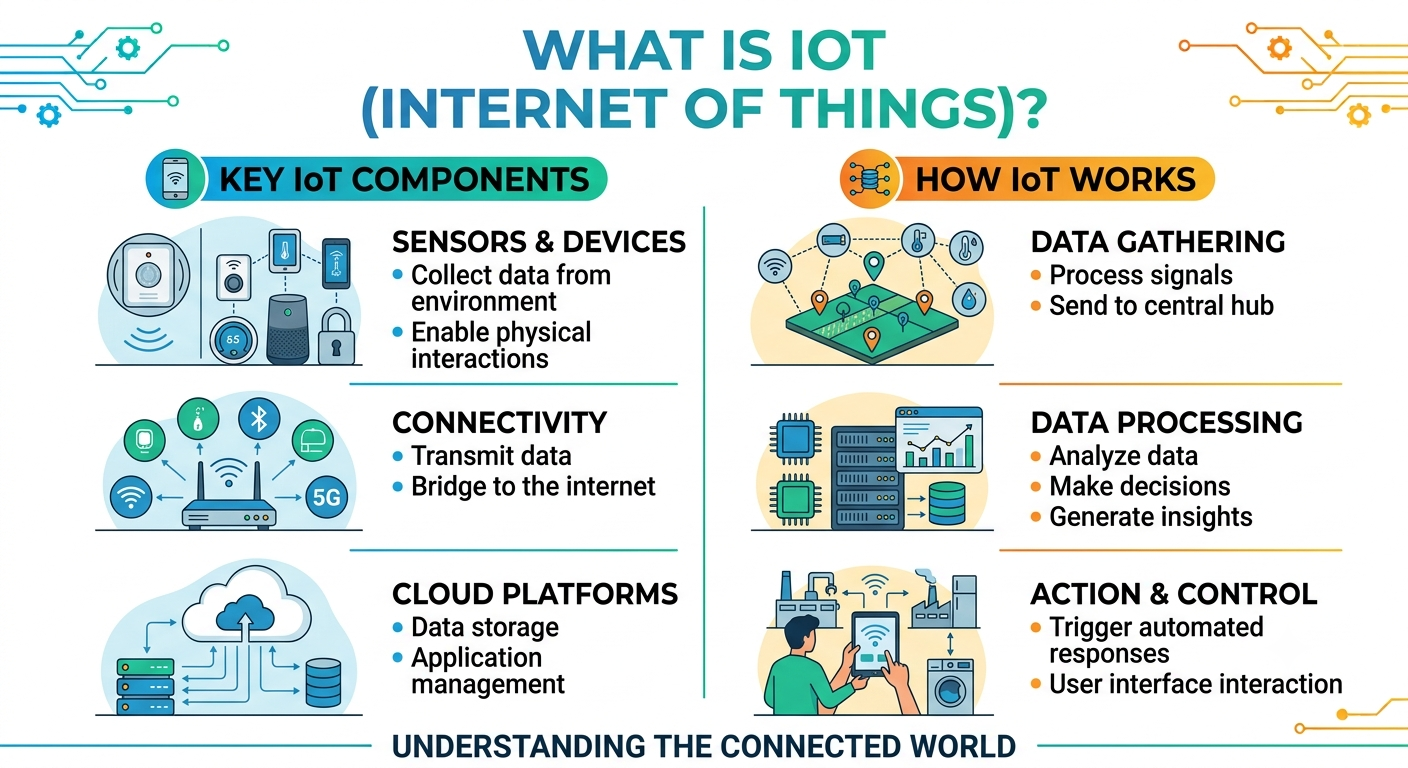
IoT stands for the Internet of Things, and it refers to a network of physical devices that connect to the internet to share data with each other or with a central system. Think of a smart doorbell that sends a video alert to your phone, or a warehouse sensor that tracks temperature and uploads readings to a cloud dashboard in real time.
IoT isn't really a single technology — it's a concept built on top of connected devices, cloud platforms, data analytics, and communication protocols like Wi-Fi, Bluetooth, or cellular networks. The goal of IoT is to make devices "smart" by allowing them to collect data, communicate, and sometimes even make decisions based on patterns without direct human input.
3.The Core Difference Between Embedded Systems and IoT
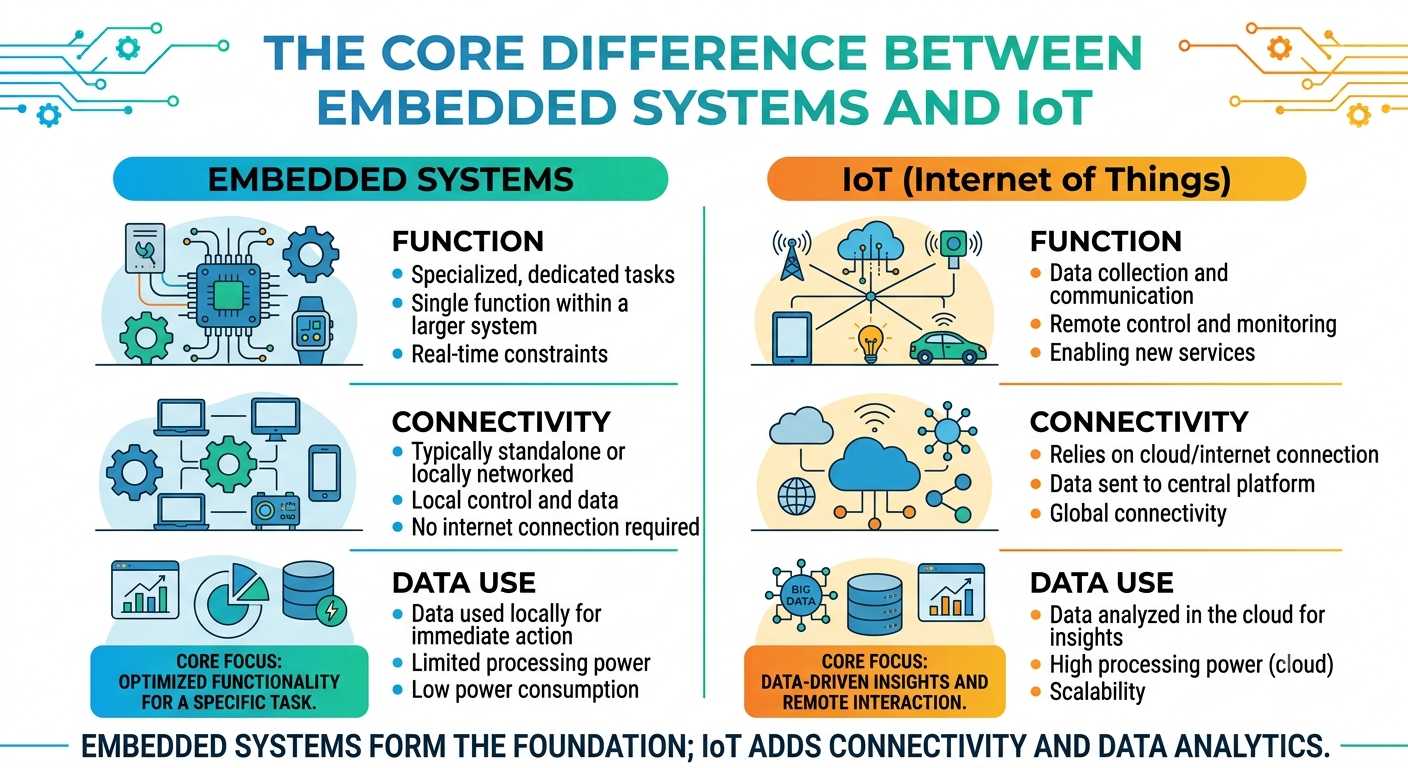
Here's the simplest way to think about it: an embedded system is the brain of a single device, while IoT is the nervous system connecting many devices together. An embedded system can exist completely on its own, with no internet access, and still function perfectly. IoT, on the other hand, cannot exist without embedded systems — every connected device needs an embedded system inside it to process sensor data and act on it.
In short, embedded systems focus on control and functionality within one device, while IoT focuses on connectivity and communication across multiple devices. A smart bulb, for example, has an embedded system managing the light output and a separate IoT layer that lets you control it remotely from an app.
4.How Embedded Systems and IoT Work Together in Real Products
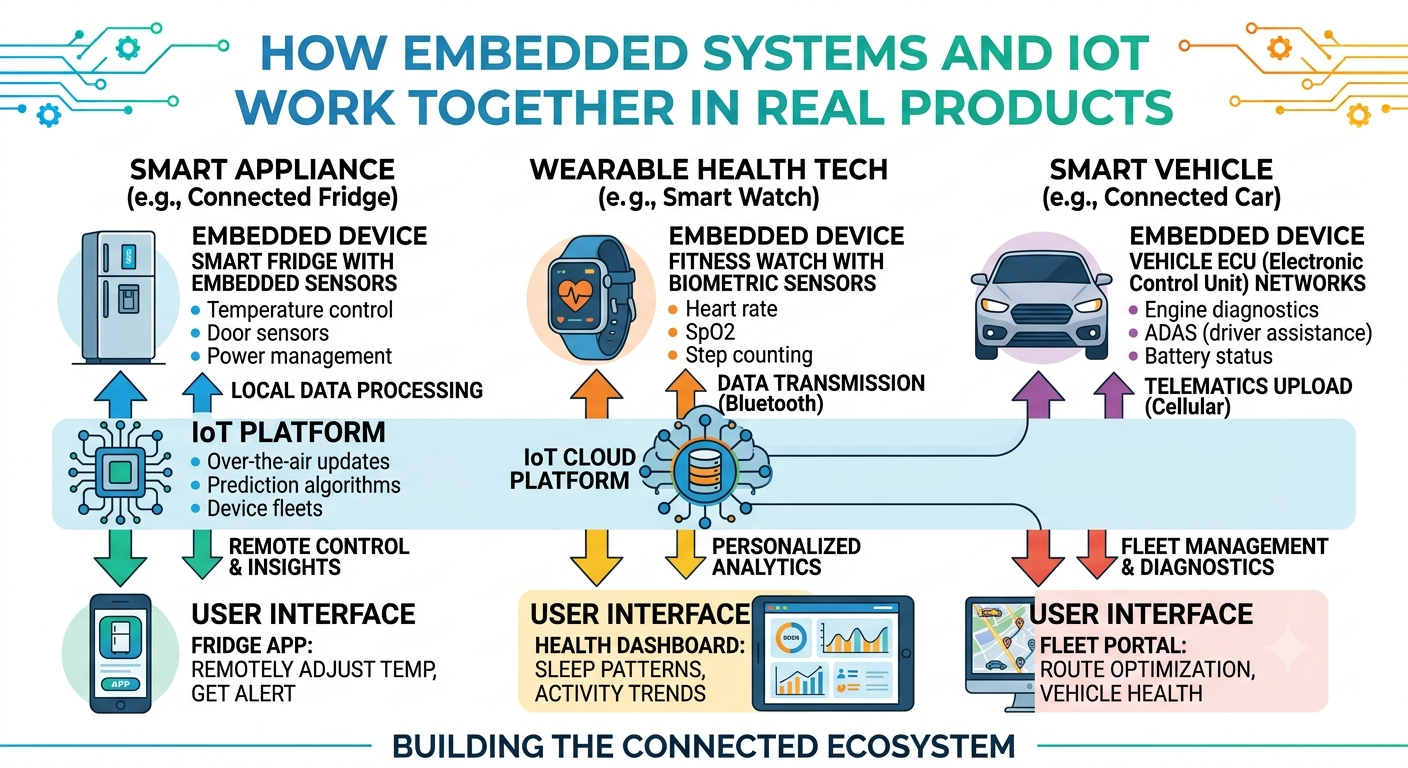
Modern products rarely use just one or the other — they blend both. Take a smart security camera: the embedded system handles motion detection, image capture, and local storage, while the IoT layer pushes alerts to your phone and stores footage on the cloud. Remove the embedded system, and the camera can't function at all. Remove the IoT layer, and the camera still records, just without remote access.
This layered approach is common in home automation, industrial machinery, healthcare devices, and connected vehicles. Engineers design the embedded layer for speed, efficiency, and reliability, then add IoT capabilities on top for remote monitoring, data logging, and smarter automation. Understanding both layers is what separates a basic gadget from a genuinely smart product.
5.Embedded Systems Engineer: Roles, Responsibilities, and Required Skills
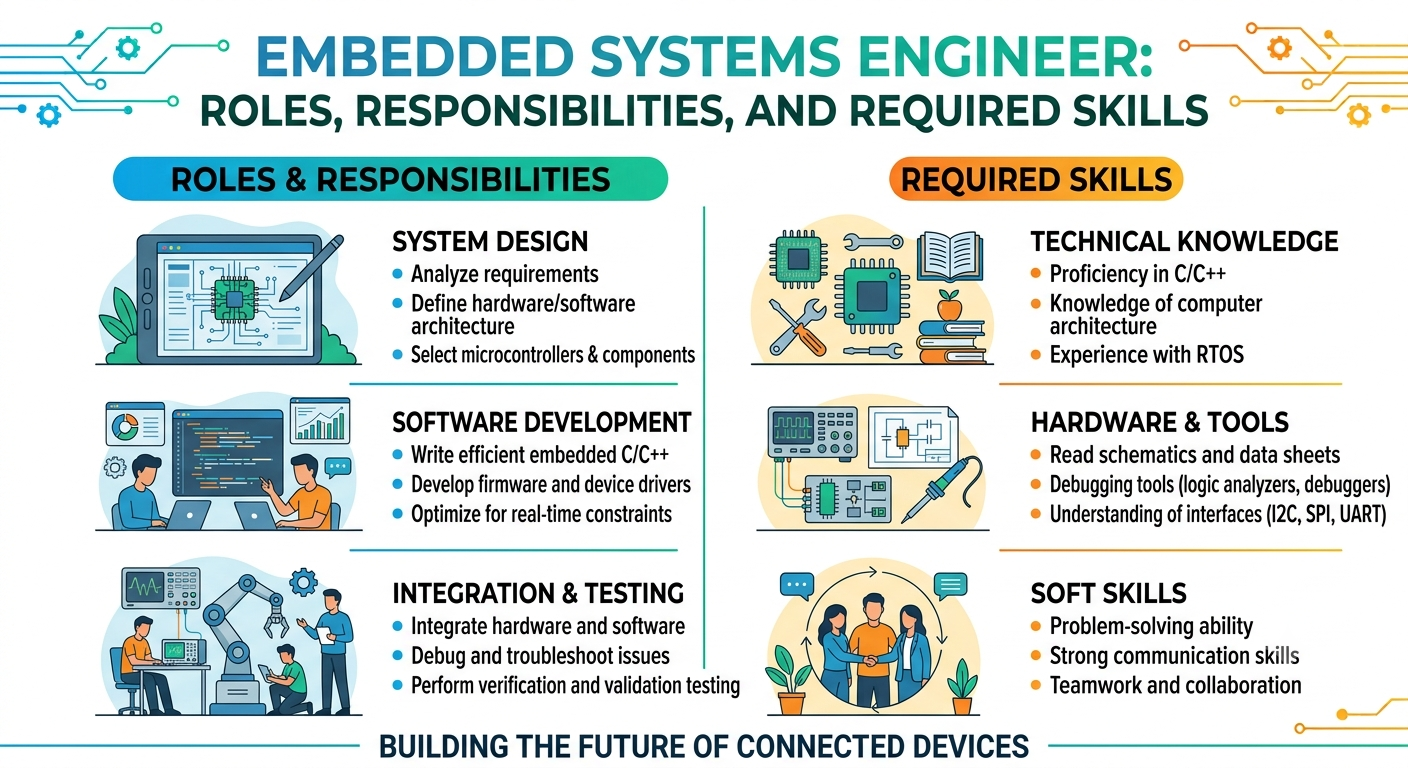
Behind every embedded product is an embedded systems engineer — the person who designs, codes, and tests the hardware-software combination that makes a device work. Their day-to-day responsibilities include writing firmware, selecting the right microcontroller for a project, debugging hardware issues, optimizing code for limited memory and power, and ensuring the device performs reliably under real-world conditions.
To do this well, an embedded systems engineer typically needs strong command over C and C++, a solid understanding of microcontroller architecture, hands-on experience with circuit design and debugging tools like oscilloscopes, and familiarity with real-time operating systems. As IoT adoption grows, many engineers are also expected to understand basic networking protocols and cloud integration, since embedded devices increasingly need to talk to the outside world.
Because this field blends hardware and software so tightly, hands-on practice matters more than theory alone. This is exactly why structured embedded system training has become so valuable — it gives learners real exposure to microcontrollers, sensors, debugging tools, and live projects instead of just reading concepts on paper. Good training programs simulate actual industry problems, helping learners build the practical confidence needed to design and troubleshoot real embedded products.
Conclusion
Embedded systems and IoT aren't competing technologies — they're partners. One gives a device its core intelligence and control; the other gives it a voice to communicate with the world. Knowing the difference isn't just useful trivia — it helps you understand how the smart devices around you actually work, and why some gadgets need Wi-Fi while others simply don't.
Whether you're building your next home automation project, exploring a career shift, or simply curious about the tech powering your everyday gadgets, understanding this distinction is the first real step toward mastering how connected devices are designed and built.