

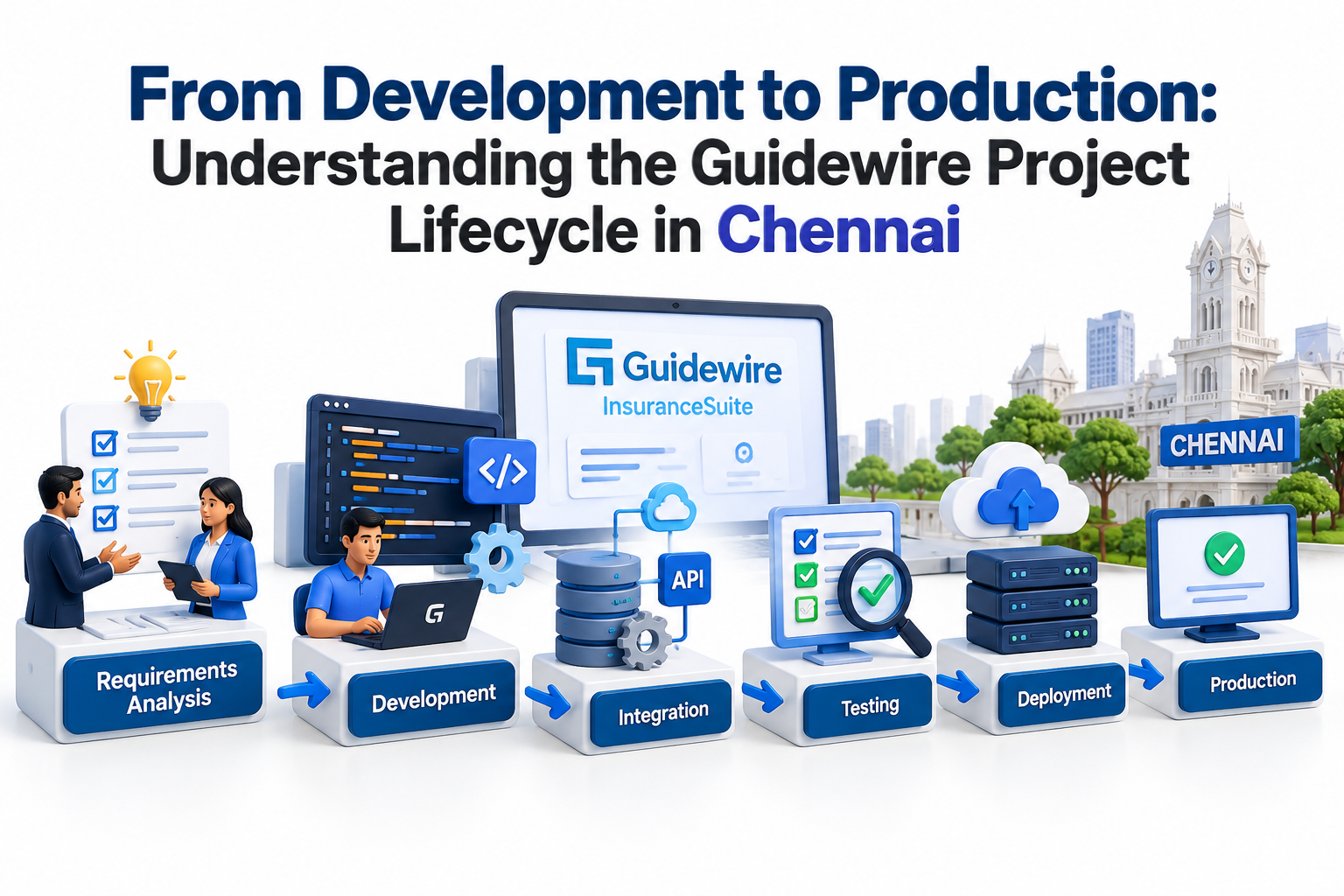
From Development to Production: Understanding the Guidewire Project Lifecycle in Chennai
Navigate through this article using the table of contents below
Table of Contents
No headings found in this article.
A Guidewire application may work perfectly during development but still encounter serious challenges when deployed into a live insurance environment. What happens between writing the first line of code and successfully launching an insurance platform? The answer lies in understanding the complete Guidewire project lifecycle.
As insurance organizations modernize their operations, Guidewire implementation projects require coordinated development, testing, integration, and deployment activities. For technology professionals in Chennai, understanding these stages provides valuable insight into how enterprise insurance solutions are built and maintained.
Understanding Business Requirements Before Guidewire Development Begins
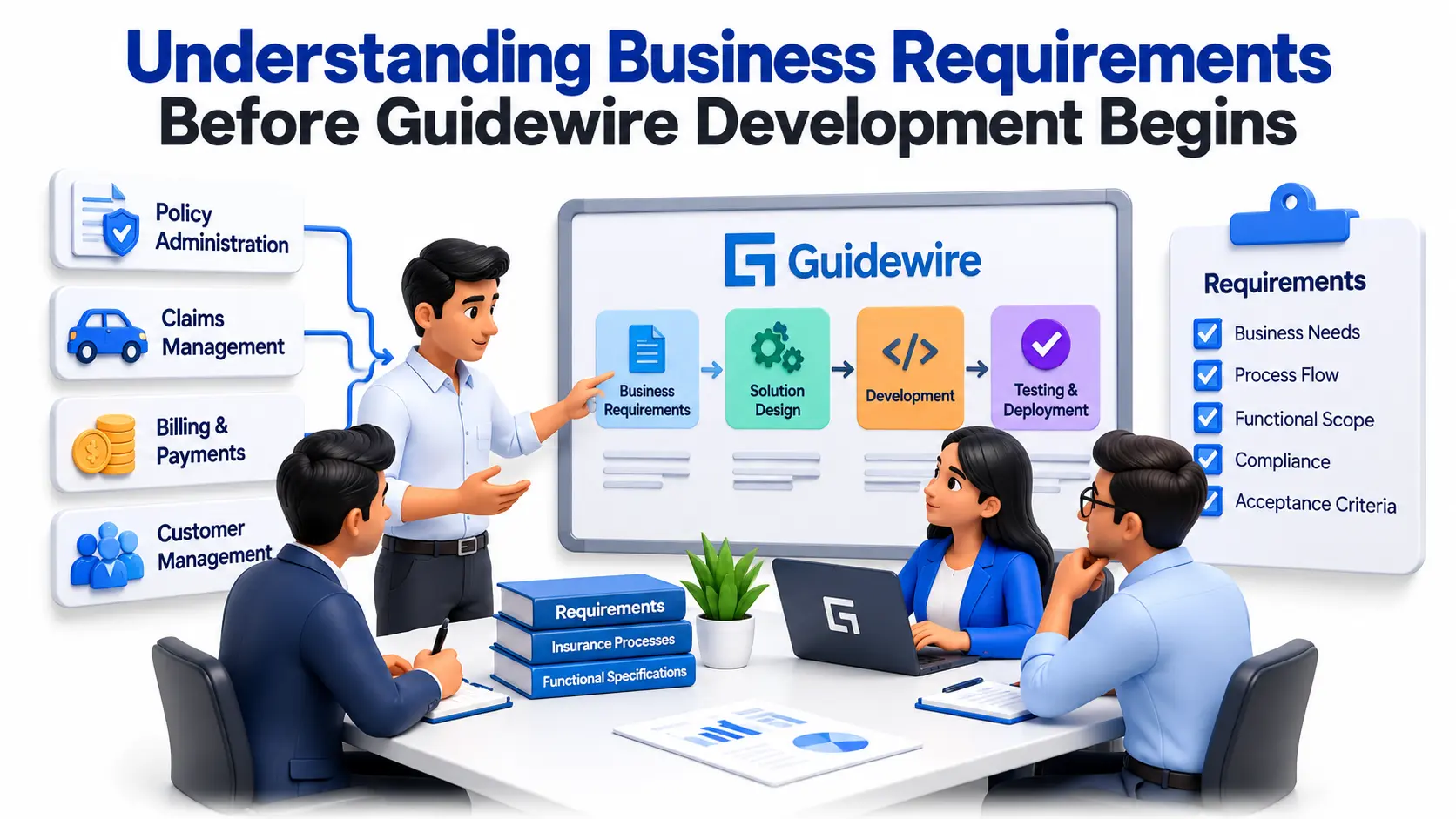
Every successful Guidewire project begins with understanding the insurance business rather than immediately writing application code. Insurance companies manage complex processes involving policy administration, premium collection, claims handling, customer information, and regulatory requirements. These business activities determine how Guidewire applications must function.
During requirement gathering, business analysts collaborate with insurance stakeholders to identify operational challenges and define expected system behavior. For example, an insurer may want to automate motor insurance policy renewals, improve claims processing, or introduce digital payment capabilities. Each requirement must be translated into functional specifications that development teams can implement.
The initial project activities generally include:
Business requirement analysis: Identifying insurance processes, operational challenges, and expected outcomes.
Application selection: Determining whether PolicyCenter, ClaimCenter, or BillingCenter supports the required functionality.
Gap analysis: Comparing standard Guidewire capabilities with business requirements.
Solution planning: Defining configuration changes, integrations, data requirements, and implementation priorities.
Acceptance criteria: Establishing measurable conditions for successful functionality.
For Guidewire implementation teams in Chennai, understanding insurance terminology is particularly important. Developers who understand underwriting, policy issuance, claims settlement, and billing operations can communicate effectively with business analysts and avoid unnecessary customization.
A clearly defined requirement also improves estimation, testing, and delivery planning. Without this foundation, development teams risk implementing technically correct features that fail to solve the insurer's actual business problem.
Moving From Solution Design to Guidewire Configuration and Development
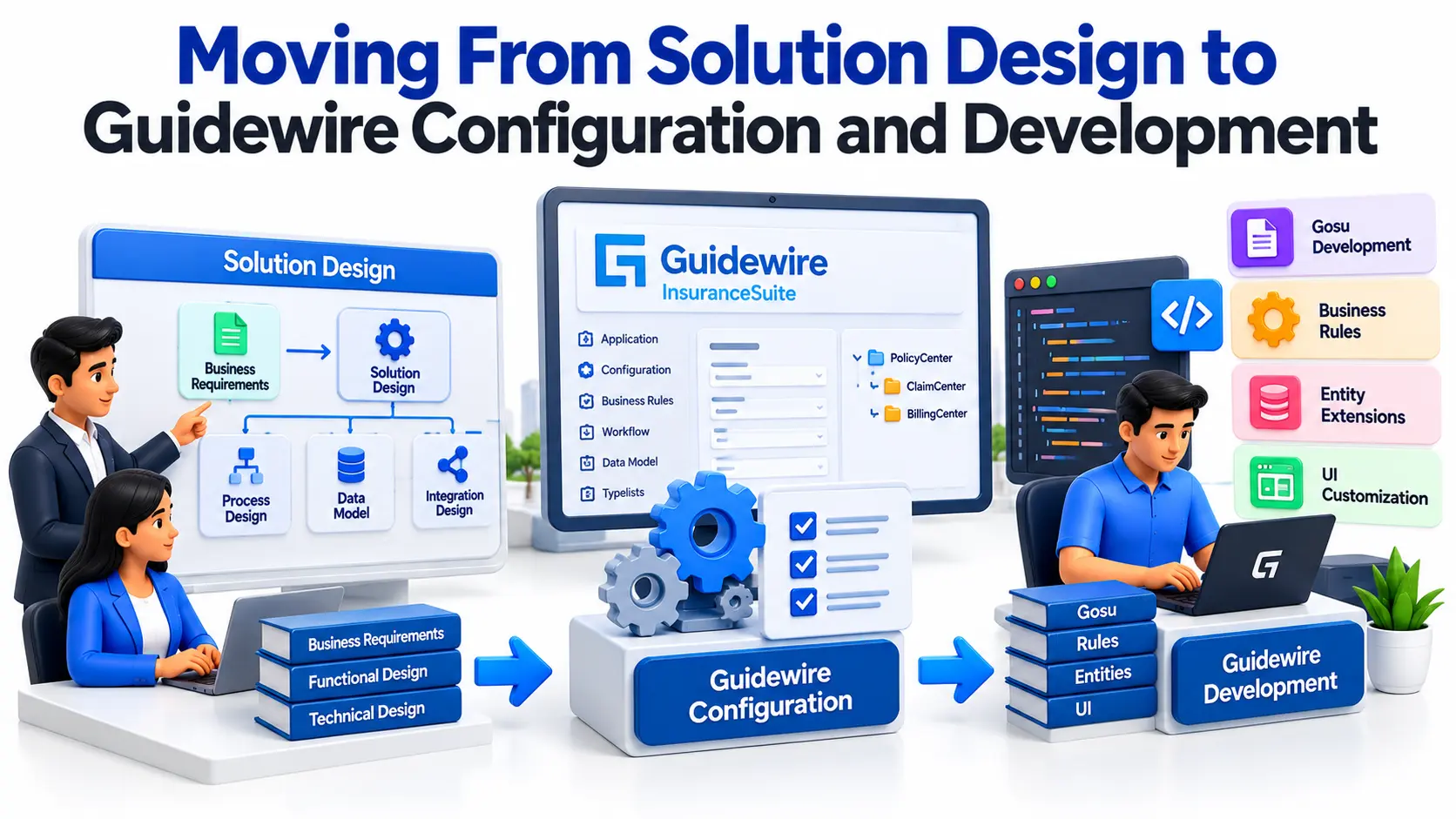
Once requirements are approved, the project enters solution design and development. Architects and technical leads determine how the required functionality should be implemented using Guidewire's existing capabilities while maintaining application performance, security, and maintainability.
Guidewire InsuranceSuite includes PolicyCenter for policy administration, ClaimCenter for claims management, and BillingCenter for billing operations. Developers customize supported application behavior through configuration, Gosu programming, business rules, data model extensions, and user interface modifications.
Consider an insurance company introducing automated claim assignment. Developers may configure assignment rules based on claim type, location, or adjuster availability. The implementation must also consider authorization, exception handling, and the effect on existing claims workflows.
Important development responsibilities include:
Configuring business rules and application behavior.
Writing Gosu code for supported business logic.
Extending entities and typelists when necessary.
Modifying user interface components and validation rules.
Implementing application-level security and permissions.
Reviewing code and maintaining changes through version control.
Development teams should prefer supported configuration and extension mechanisms over unnecessary modifications to core functionality. This approach reduces maintenance complexity and makes future application upgrades easier.
For professionals exploring guidewire training in chennai, practical exposure to Gosu, Guidewire Studio, configuration concepts, and insurance workflows helps connect classroom learning with enterprise project responsibilities.
Building Integrations and Managing Insurance Data Across Systems
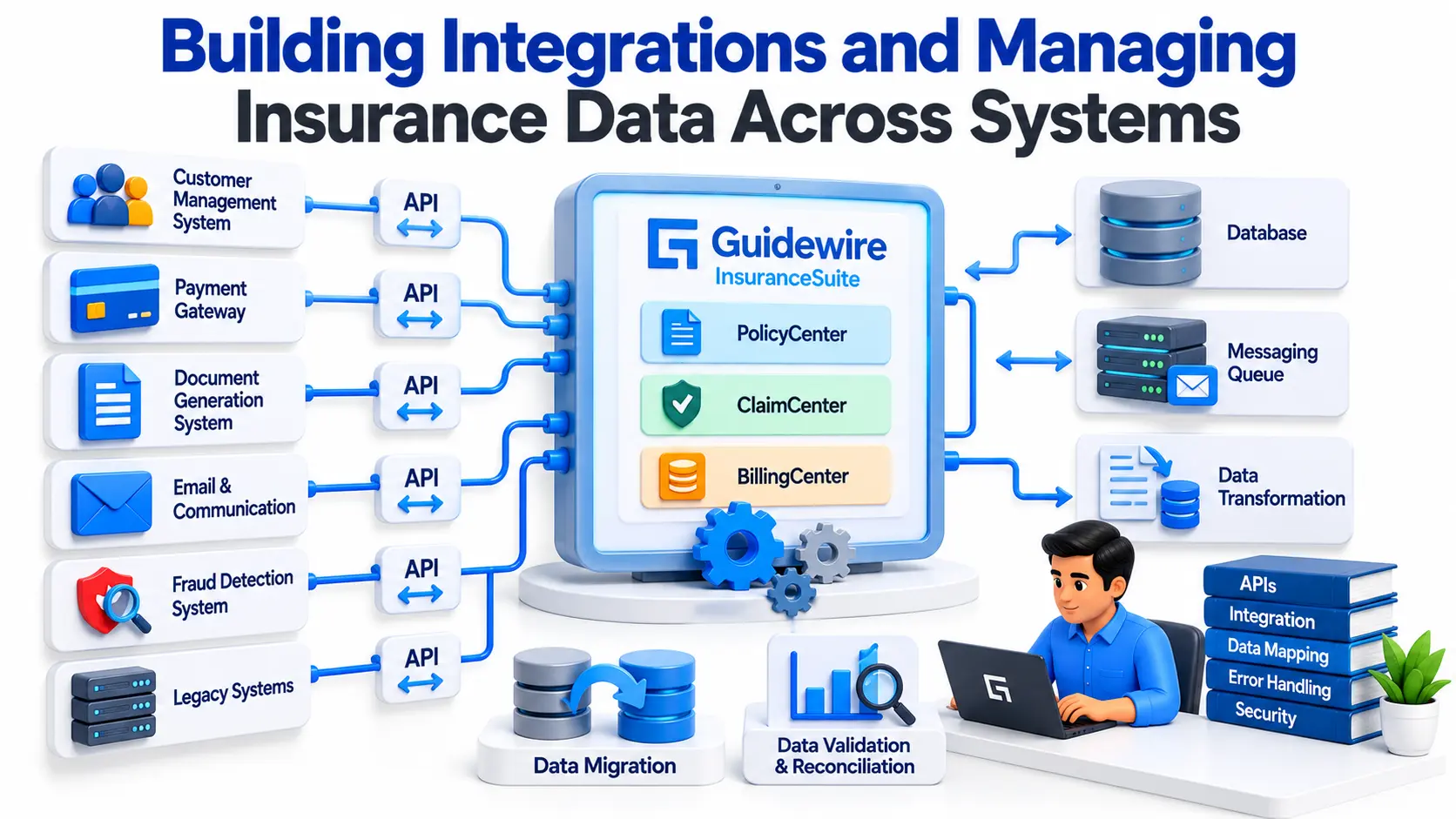
A Guidewire application rarely operates independently. Insurance companies typically maintain external systems for customer management, payments, document generation, fraud detection, reporting, and communication services. Integration development connects these systems with core insurance operations.
During this lifecycle stage, integration engineers design reliable communication between Guidewire applications and external platforms. Depending on the architecture, projects may use REST APIs, SOAP services, messaging mechanisms, plugins, and asynchronous processing.
For example, when a customer purchases an insurance policy, PolicyCenter may exchange information with payment services, document generation systems, and customer communication platforms. These interactions require accurate data mapping, authentication, error handling, and transaction management.
Integration development commonly involves:
API integration: Exchanging information with external applications through supported interfaces.
Messaging: Supporting asynchronous communication between enterprise systems.
Data transformation: Converting information into formats required by connected applications.
Error handling: Managing failed requests, retries, and duplicate transactions.
Security: Protecting sensitive insurance information during communication.
Data migration is another critical responsibility, particularly when insurers replace legacy platforms. Teams must map existing customer, policy, claims, and billing records into the target Guidewire data model.
Migration activities require data cleansing, validation, reconciliation, and carefully planned execution. Incorrect mappings can affect financial calculations, historical records, and business reporting.
Professionals considering guidewire training in india should understand that integration knowledge extends beyond writing APIs. Enterprise projects also demand familiarity with data consistency, security controls, monitoring, and recovery procedures.
Validating Guidewire Applications Through Testing and Quality Assurance
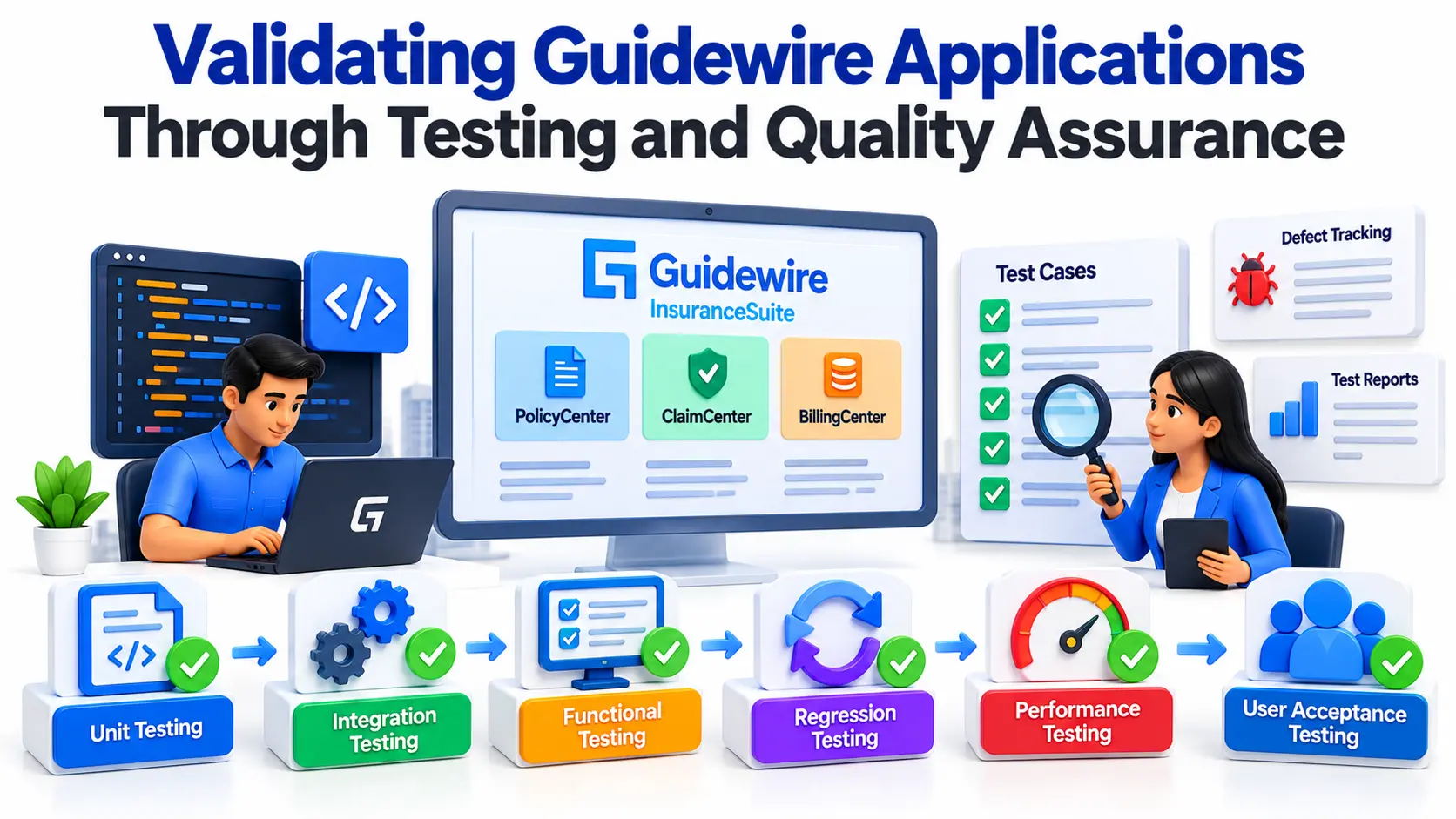
After development and integration activities, testing verifies whether the application satisfies business requirements and behaves reliably under expected operating conditions. Guidewire projects require multiple testing approaches because insurance workflows often involve interconnected applications and external services.
Unit testing checks individual components, while integration testing verifies communication between systems. System testing examines complete business processes, and user acceptance testing allows business stakeholders to confirm that the solution supports their operational needs.
Consider a motor insurance claim involving registration, coverage verification, adjuster assignment, payment approval, and settlement. Testing must validate the complete workflow rather than checking each screen independently.
Common testing activities include:
Unit testing: Validating individual methods, rules, and application components.
Integration testing: Checking APIs, messaging, and external system communication.
Functional testing: Confirming that business requirements work as expected.
Regression testing: Ensuring new changes do not disrupt existing functionality.
Performance testing: Evaluating application behavior under representative workloads.
User acceptance testing: Confirming business readiness before production deployment.
Automated testing can improve consistency across repeated releases. Guidewire's testing capabilities support API and UI testing, while continuous integration pipelines help identify defects earlier.
Testing teams also maintain defect reports, test evidence, and traceability between requirements and validation scenarios. These records support release decisions and help developers investigate failures efficiently.
For Chennai-based project teams working with distributed stakeholders, clear defect documentation and coordinated testing schedules are essential for maintaining delivery quality.
Preparing Guidewire Applications for Production Deployment
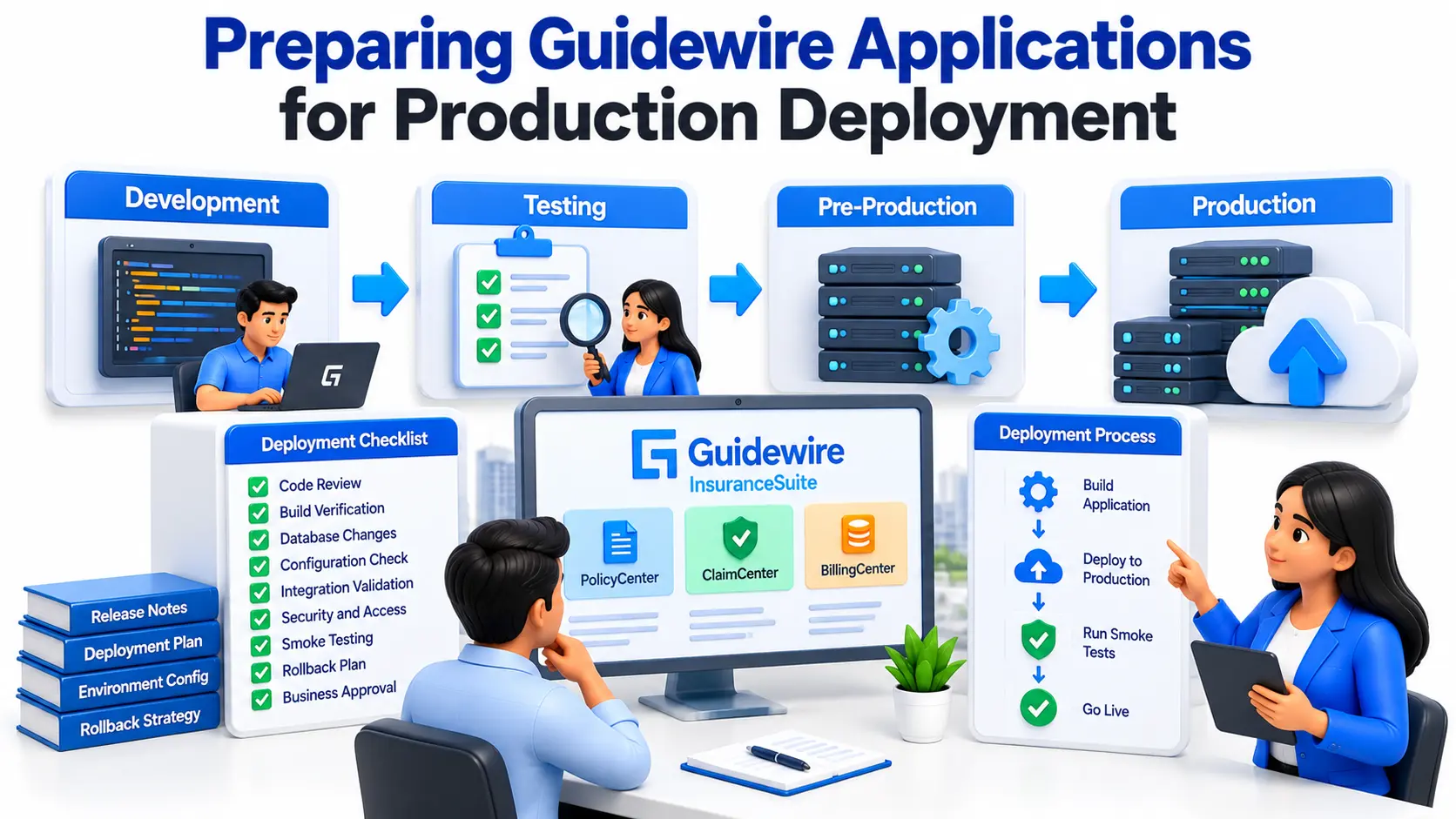
Production deployment represents a major transition in the Guidewire project lifecycle. At this stage, approved application changes move from controlled development and testing environments into systems used by insurance employees, customers, and business partners.
In Guidewire Cloud implementations, application builds progress through development, testing, pre-production, and production environments. Build pipelines, deployment permissions, configuration management, and release approvals help maintain consistency throughout this process.
Before deployment, teams verify application compatibility, database changes, integration connectivity, environment settings, and operational readiness.
A typical production release checklist includes:
Confirming successful testing and business approval.
Verifying application builds and release documentation.
Reviewing database changes and migration requirements.
Validating environment-specific configurations and credentials.
Preparing deployment and recovery procedures.
Coordinating release windows with business stakeholders.
Completing smoke tests after deployment.
Guidewire Cloud supports different deployment approaches, including full, selective, and compatible blue/green deployments. The appropriate method depends on application changes, environment configuration, and compatibility requirements.
Production preparation may also include a dry run using a restored production database in a controlled pre-production environment. Sensitive information must be handled according to applicable security and data protection policies.
Successful deployment is not simply confirmation that application servers are running. Teams must verify important business transactions, integrations, user access, and application health before declaring the release operationally successful.
Managing Production Support and Building Long-Term Guidewire Expertise
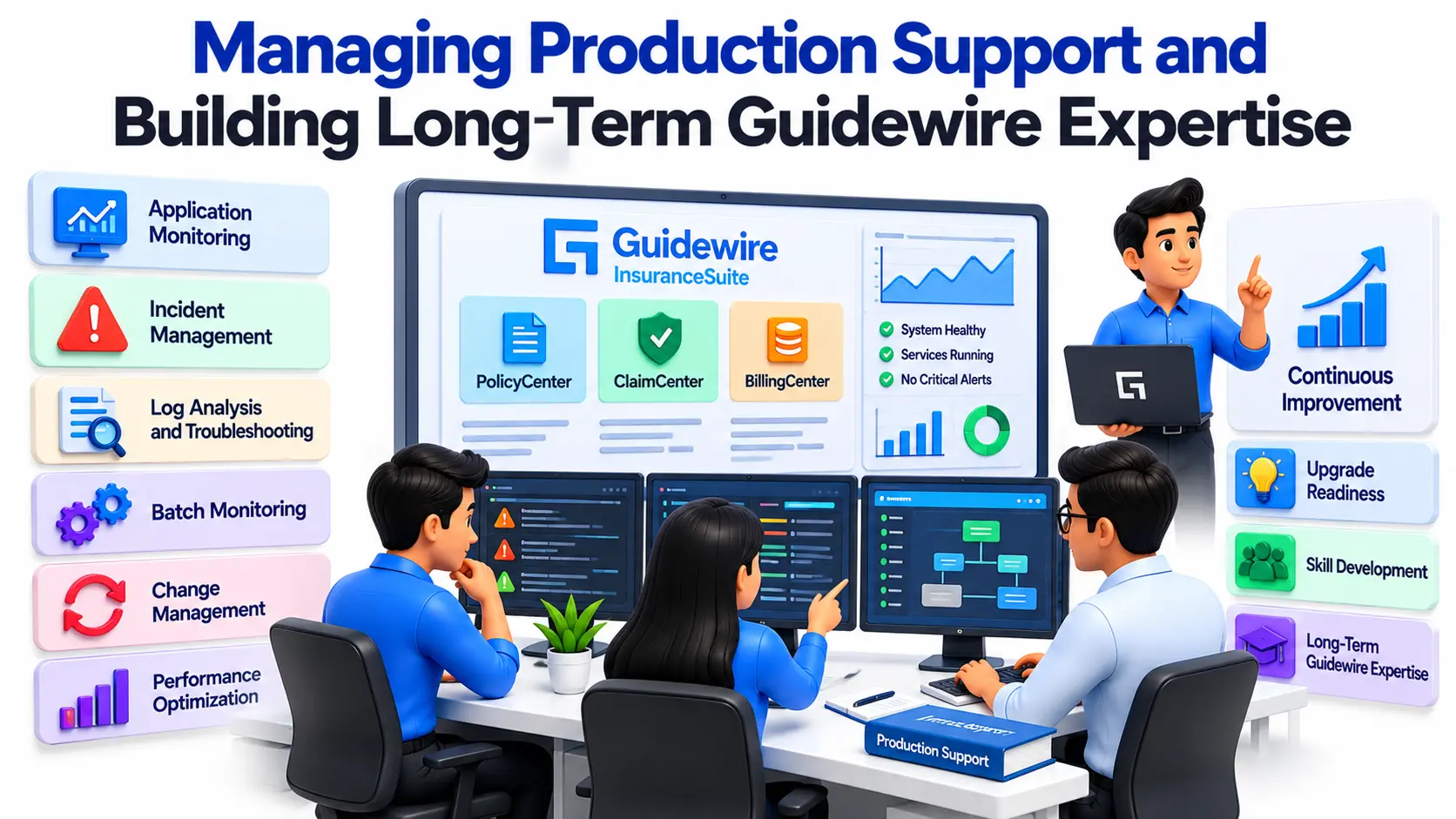
The Guidewire project lifecycle continues after production deployment. Insurance platforms process important business transactions every day, making application availability, data accuracy, and operational reliability essential.
Production support teams monitor application performance, investigate incidents, analyze logs, and resolve integration failures. They also coordinate scheduled maintenance, security updates, and improvements requested by business users.
For example, a payment integration failure may prevent premium transactions from completing successfully. Support engineers must identify whether the problem originates in Guidewire configuration, external service availability, authentication, or data validation.
Typical production responsibilities include incident prioritization, root-cause analysis, batch monitoring, performance investigation, and change management. Teams should document recurring problems and introduce preventive improvements rather than repeatedly applying temporary fixes.
This operational perspective creates several career opportunities within Guidewire projects, including configuration development, integration engineering, quality assurance, DevOps, business analysis, and application support.
JastTech emphasizes practical, project-oriented learning that connects Guidewire technical concepts with implementation activities. Understanding the complete lifecycle helps aspiring professionals recognize how individual development tasks contribute to enterprise insurance delivery.
For technology graduates and software professionals in Chennai, combining Guidewire fundamentals with programming, API integration, testing, and production troubleshooting can support career preparation. Practical projects and demonstrable problem-solving skills remain important when pursuing opportunities in this specialized technology domain.
Conclusion
Understanding the Guidewire project lifecycle provides a complete perspective on how insurance technology solutions progress from business requirements to production operations. Every stage, including solution design, configuration, integration, testing, deployment, and support, contributes to application reliability and business success. Professionals who understand these interconnected responsibilities can make better technical decisions and collaborate more effectively across enterprise implementation teams.
For aspiring Guidewire professionals in Chennai, technical knowledge becomes more valuable when supported by realistic project experience. Learning Gosu, InsuranceSuite configuration, integrations, automated testing, and deployment practices provides a foundation for participating in enterprise insurance projects. As insurers continue modernizing their technology platforms, professionals who can connect development activities with business outcomes will be better prepared for evolving project responsibilities.