

Guidewire BillingCenter Career Guide: Skills, Salary & Job Opportunities
Navigate through this article using the table of contents below
Table of Contents
No headings found in this article.
A single billing error at a mid-sized insurer can quietly cost lakhs in reconciliation work, delayed payments, and frustrated customers — which is exactly why insurers are scrambling to hire people who actually understand how billing systems work under the hood.
That's where Guidewire BillingCenter comes in. It's the engine running premium billing for hundreds of P&C insurers worldwide, and mastering its fundamentals has quietly become one of the more dependable ways to build a long-term career in insurance technology. Here's what that path really looks like.
For professionals looking to build practical expertise, learning BillingCenter can provide a strong foundation in areas such as policy billing, invoicing, payments, account management, and financial transactions. A Guidewire online Training can also help learners validate their platform knowledge while building skills that align with real-world insurance technology roles.
What Does a Guidewire BillingCenter Professional Actually Do All Day?
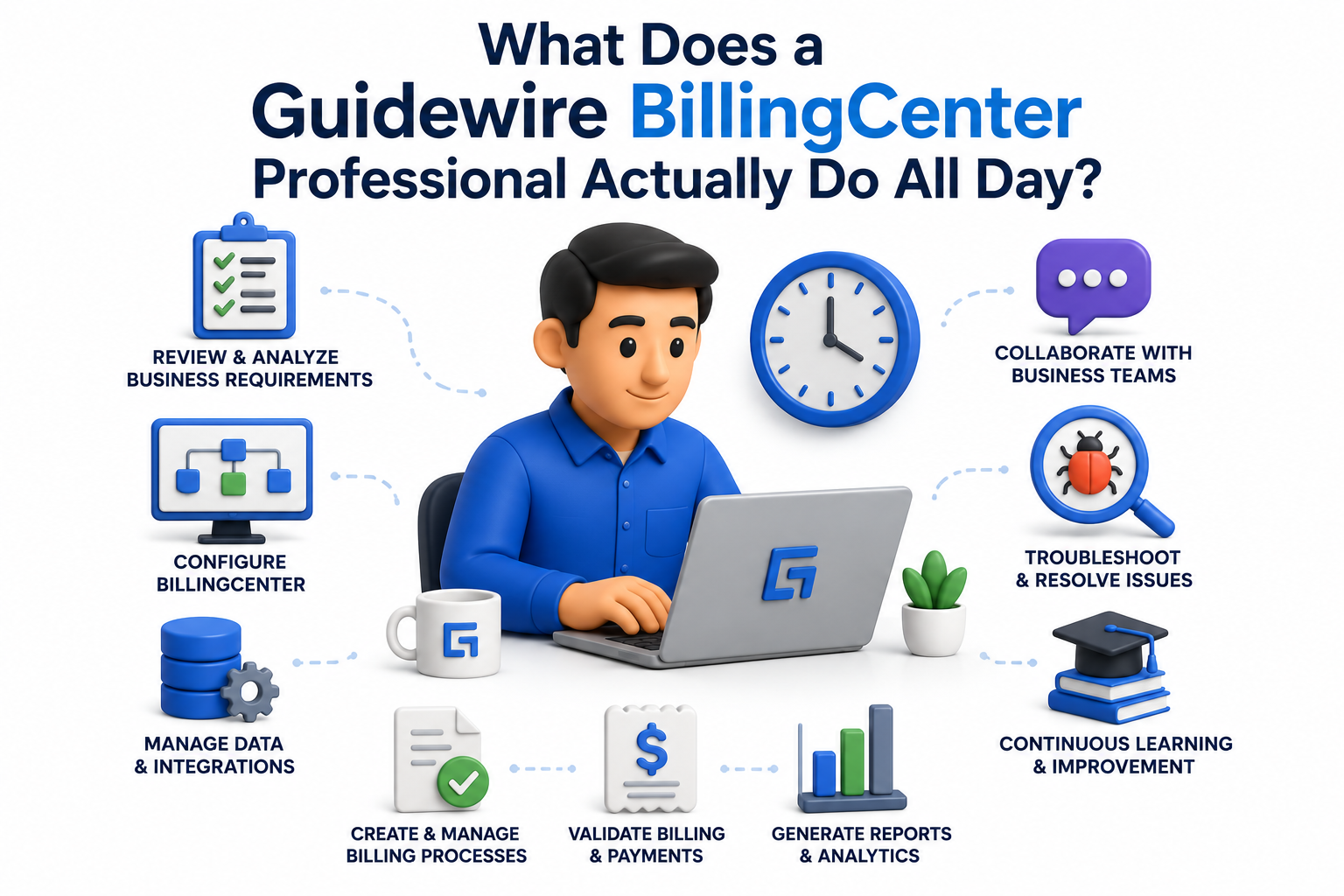
It's easy to assume this is just "billing software support," but the day-to-day is far more layered. Guidewire BillingCenter professionals sit at the intersection of insurance operations and software engineering. On any given day, you might configure a new billing plan, debug why an invoice stream generated the wrong due date, or map out how a payment refund should flow back through the system.
The role also involves heavy collaboration — with business analysts who define billing rules, QA teams validating payment workflows, and architects planning integrations with PolicyCenter and ClaimCenter. Add in delinquency management, write-offs, and regulatory compliance checks, and you start to see why this isn't an entry-level "click around a UI" job. It's a genuine blend of technical configuration and financial-process thinking, and that combination is exactly why it pays well.
There's also a project rhythm to the work that most outsiders don't expect. A single implementation cycle might run for months, moving through requirement gathering, configuration, integration testing, and go-live support. You could spend one sprint deep in Gosu rules and the next sitting in a workshop with underwriters explaining why a particular billing plan behaves the way it does. That variety is part of what keeps experienced professionals in this niche for years rather than treating it as a stepping stone.
The Guidewire BillingCenter Fundamentals You Can't Skip
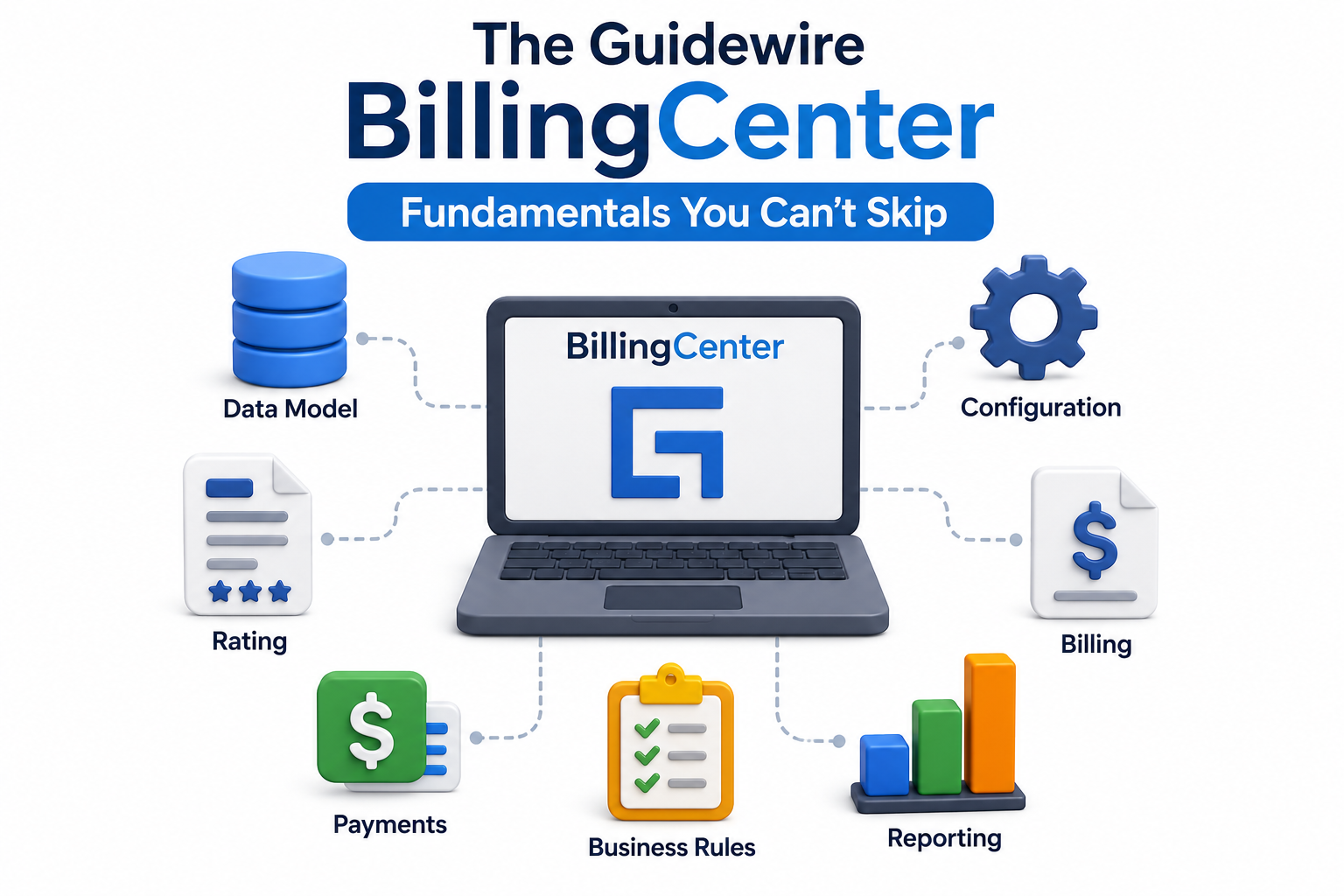
Before touching advanced customization, every serious BillingCenter professional needs a firm grip on the fundamentals — the billing lifecycle itself. That means understanding how an invoice is generated, how it moves through payment processing, what happens when a customer misses a due date, and how collections and write-offs eventually get reconciled.
Fundamentals also cover the system's architecture: how accounts, contacts, and policies link together, how billing plans and invoice streams determine when and how much someone gets billed, and how BillingCenter talks to PolicyCenter and ClaimCenter behind the scenes. Skip this layer and jump straight into Gosu scripting, and you'll end up writing code that "works" but breaks business logic nobody explained to you. Recruiters can tell the difference almost immediately in interviews — which is exactly why Guidewire BillingCenter fundamentals first learning tends to produce more confident, more hireable candidates.
Think of fundamentals as the mental model you carry into every configuration decision. Once you understand why an installment plan generates bills on certain dates, or why a suspense account exists to hold unallocated payments, the advanced customization work stops feeling like memorized syntax and starts feeling like problem-solving. That shift is usually what separates someone who can pass a certification exam from someone who can actually be trusted on a live client project.
Skills That Separate Job-Ready Candidates From the Rest
| Skill Area | What to Know | Why It Matters for Job-Readiness |
|---|---|---|
| Gosu Programming | Gosu syntax, business rules, enhancements, queries, and scripting patterns used within Guidewire applications. | Strong Gosu fundamentals help developers customize Guidewire behavior and solve implementation problems beyond basic configuration. |
| Guidewire Configuration | PCF screens, data model concepts, product configuration, rules, typelists, and application configuration. | Configuration knowledge allows developers to translate business requirements into maintainable Guidewire solutions. |
| Java & Backend Development | Java fundamentals, object-oriented programming, APIs, backend logic, exception handling, and integration concepts. | Java becomes particularly important when projects require custom services, extensions, integrations, or deeper backend development. |
| SQL & Data Handling | SQL queries, joins, filtering, data relationships, troubleshooting, and understanding how application data is structured. | Database skills help developers investigate defects, validate business data, troubleshoot issues, and work effectively with technical teams. |
| Guidewire Integration | REST APIs, SOAP where applicable, Integration Gateway, messaging, web services, and external-system communication. | Insurance platforms rarely operate in isolation. Integration knowledge is essential for connecting Guidewire with surrounding enterprise systems. |
| Insurance Domain Knowledge | P&C insurance concepts such as policies, billing, claims, underwriting, rating, payments, and business workflows. | Domain understanding helps developers interpret requirements correctly and build solutions that match real insurance processes. |
| Testing & Communication | Functional testing, debugging, defect analysis, documentation, requirement discussions, and explaining technical issues clearly. | Job-ready professionals need more than coding ability. Testing and communication skills are critical for working across developers, QA teams, business analysts, and clients. |
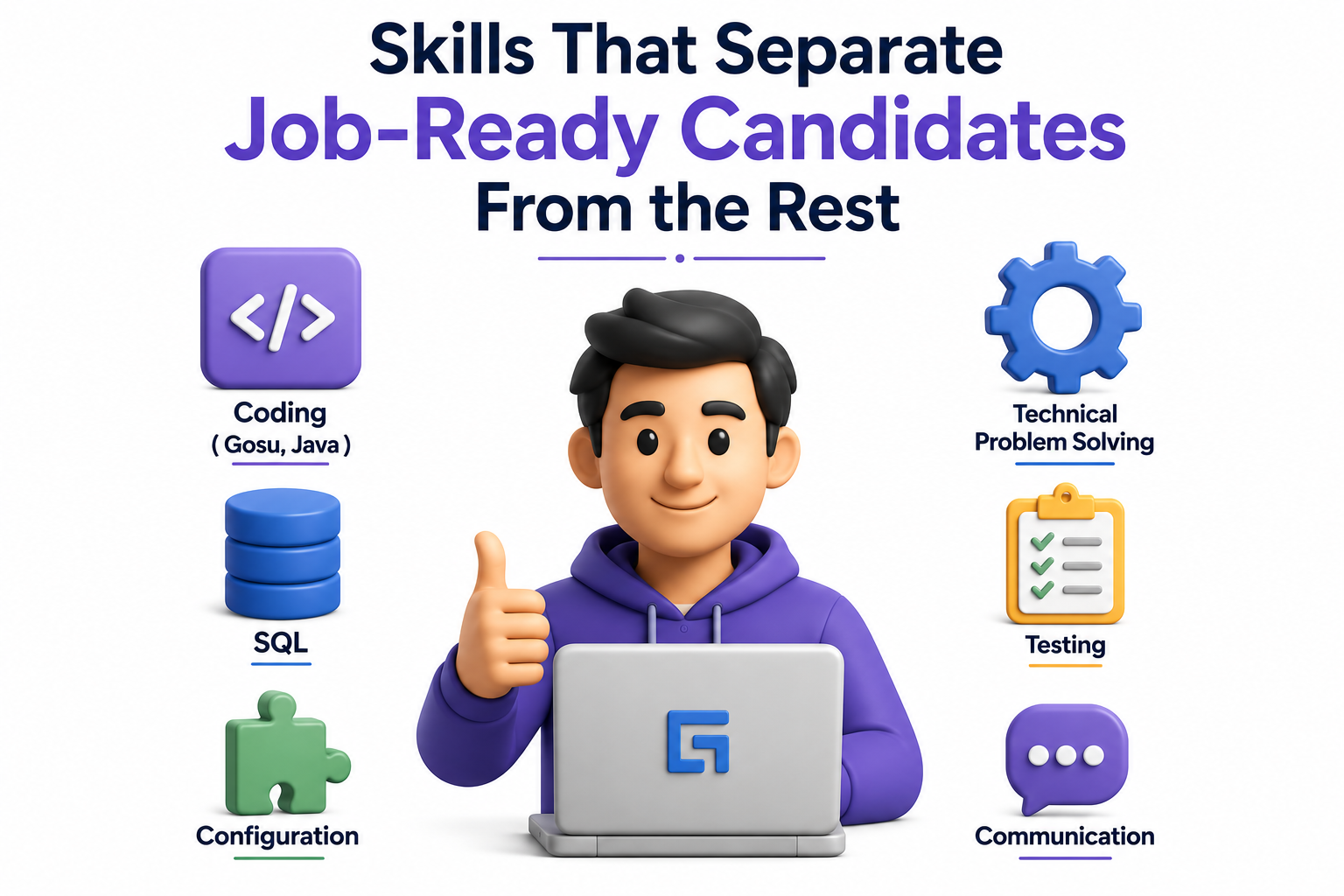
Technical skills get you shortlisted; the right combination gets you hired. On the technical side, you'll want Gosu (Guidewire's scripting language), Java for backend logic, PCF for UI configuration, and SQL for handling billing data. As more insurers shift to the Guidewire Cloud Platform, familiarity with Cloud APIs, Integration Gateway, and App Events has gone from "nice to have" to "expected."
But the candidates who really stand out pair that with insurance-domain fluency — understanding P&C billing regulations, delinquency plans, and receivable management — plus soft skills like clear client communication and methodical debugging. A Guidewire BillingCenter Associate certification helps validate this on paper, but interviewers consistently probe for whether you actually understand the "why" behind billing workflows, not just the "how" of the code.
It also helps to be comfortable in a testing-adjacent mindset even if QA isn't your primary role. Being able to walk through Postman calls, read a SQL query against billing tables, or explain a REST integration in plain language makes you far easier to slot into cross-functional teams — and that flexibility often decides who gets picked for the next project rotation.
How Much Can You Actually Earn in This Career?

Numbers vary depending on where you look, but a realistic picture is starting to emerge across 2026 job market data. Entry-level and QA-adjacent roles typically fall between $65,000 and $85,000 annually in the US. Mid-level developers with a few years of hands-on BillingCenter experience move into the $85,000–$135,000 range, while senior developers and cloud specialists often land between $135,000 and $195,000.
At the top end, lead and principal-level implementation specialists — the people running full Guidewire Cloud migrations for enterprise clients — can cross $195,000, with some senior roles reported north of $250,000. Contract work follows a similar curve, with hourly rates commonly between $40 and $72. The clearest pattern across every source: cloud migration experience is the single biggest salary lever right now, since most insurers are actively moving off older on-premise BillingCenter installs.
Geography still plays a role too — professionals in major tech and insurance hubs, or remote roles tied to those markets, tend to sit noticeably above the national average. But unlike a decade ago, remote-friendly consulting work has narrowed that gap considerably, so where you live matters less than the certifications and cloud exposure you can put on your resume.
Where the Jobs Are Hiding (and How to Find Them)

Guidewire BillingCenter roles don't always show up under obvious job titles, which is part of why so many capable candidates miss them. Beyond "BillingCenter Developer," look for titles like Guidewire Integration Developer, Cloud Billing Lead, Business Systems Analyst (Billing-focused), and Implementation Specialist. Insurance carriers hire directly, but a large share of openings come through consulting firms — Capgemini, CGI, and boutique Guidewire implementation partners are consistently active on this front.
Most postings ask for 3–5 years of experience at the mid-level and 7–10 years for senior integration or lead roles, though junior openings do exist, especially through consulting firms willing to train talent onto live client projects. Remote and hybrid arrangements are now common, so location is less of a barrier than it used to be — the real filter is whether your fundamentals and certifications hold up under a technical interview.
A practical tip: don't limit your search to job boards alone. Guidewire's own partner directory lists certified implementation firms, many of which run active hiring pipelines you won't see on Indeed or LinkedIn. Following a handful of these partners, plus a few Guidewire-focused recruiters, often surfaces openings weeks before they hit the mainstream boards.
Your Roadmap: From Fundamentals to First Job
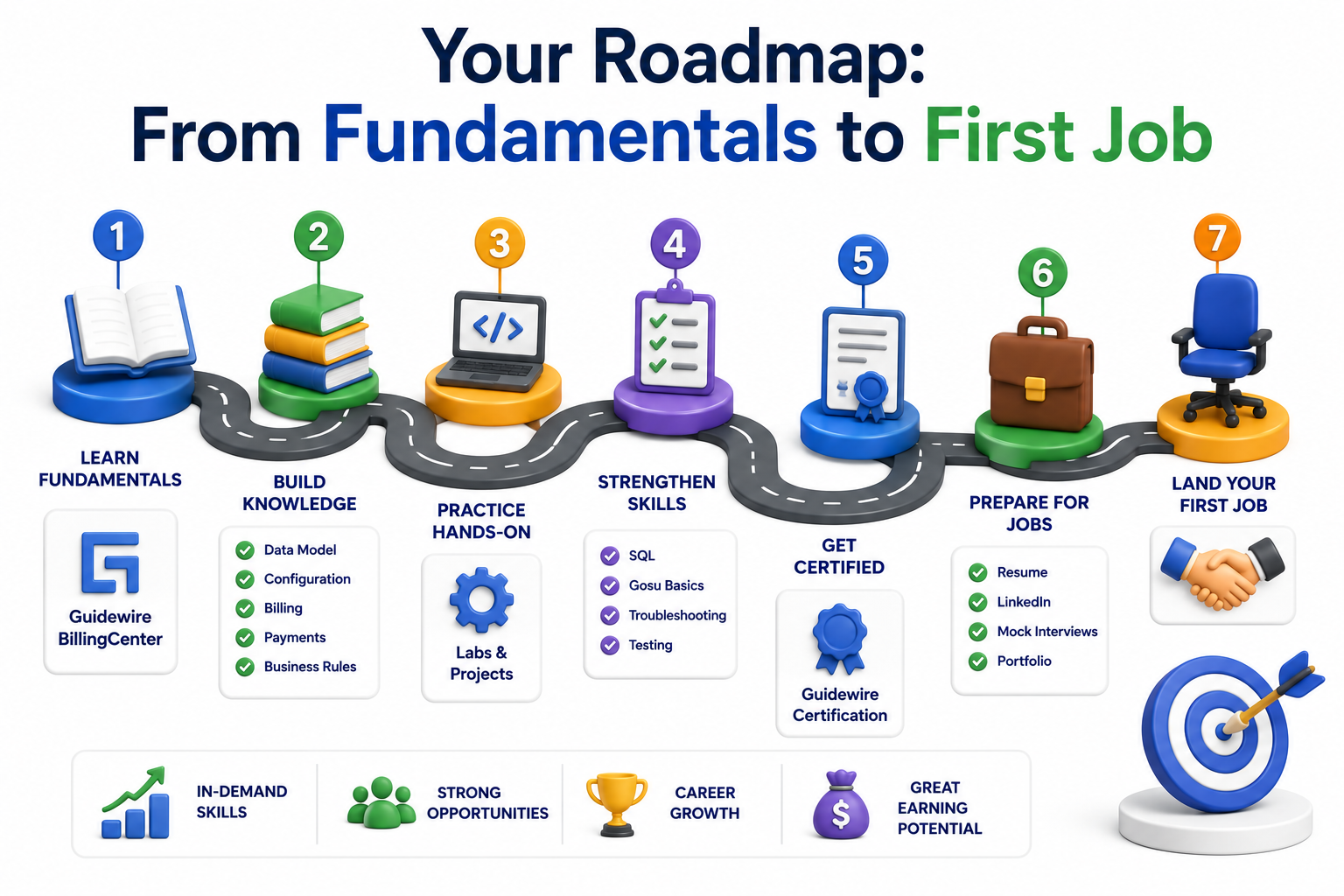
If you're starting from scratch, sequence matters more than speed. Begin with the billing lifecycle and system architecture fundamentals before touching Gosu or PCF configuration — this is where most self-taught candidates lose credibility in interviews. For learners considering a Guidewire course in Pune, it is worth checking whether the curriculum follows this progression rather than jumping directly into configuration topics.
From there, layer in certification preparation, since a Guidewire BillingCenter Associate credential can be an important requirement in some job postings rather than simply a bonus line on your resume.
Once the fundamentals and certification preparation are solid, build practical exposure through real scenarios: configuring a billing plan end-to-end, processing and allocating a payment, or setting up a delinquency workflow. Projects such as an invoicing system, payment allocation system, or collections management system are useful because they give you concrete situations to discuss in interviews and demonstrate that you understand how BillingCenter works beyond textbook concepts.
None of this needs to happen in isolation, either. Structured, mentor-led learning can make the learning process more organized than piecing together scattered documentation and forum discussions. When evaluating a Guidewire course in Pune, look for programs that combine technical concepts with hands-on projects, realistic BillingCenter scenarios, certification preparation, and interview-focused practice rather than focusing only on completing the syllabus.
Conclusion
Guidewire BillingCenter rewards people who master fundamentals before shortcuts. With insurers modernizing fast, professionals who combine strong basics, cloud skills, and domain knowledge are set up for real, lasting career growth.