

Guidewire BillingCenter Interview Questions and Answers with Real Scenario-Based Prep Guide
Navigate through this article using the table of contents below
Table of Contents
No headings found in this article.
You memorized every menu item in the BillingCenter data model. Then the interviewer asks what actually happens the moment a policyholder's payment bounces — and the room goes quiet.
That gap between textbook knowledge and real-world reasoning is exactly where most Guidewire BillingCenter interview questions are designed to trip candidates up. This guide breaks the most common questions into six levels, from fundamentals to scenario-based reasoning, so you know exactly where you stand.
Level 1: Fundamental Questions Every Beginner Gets Asked
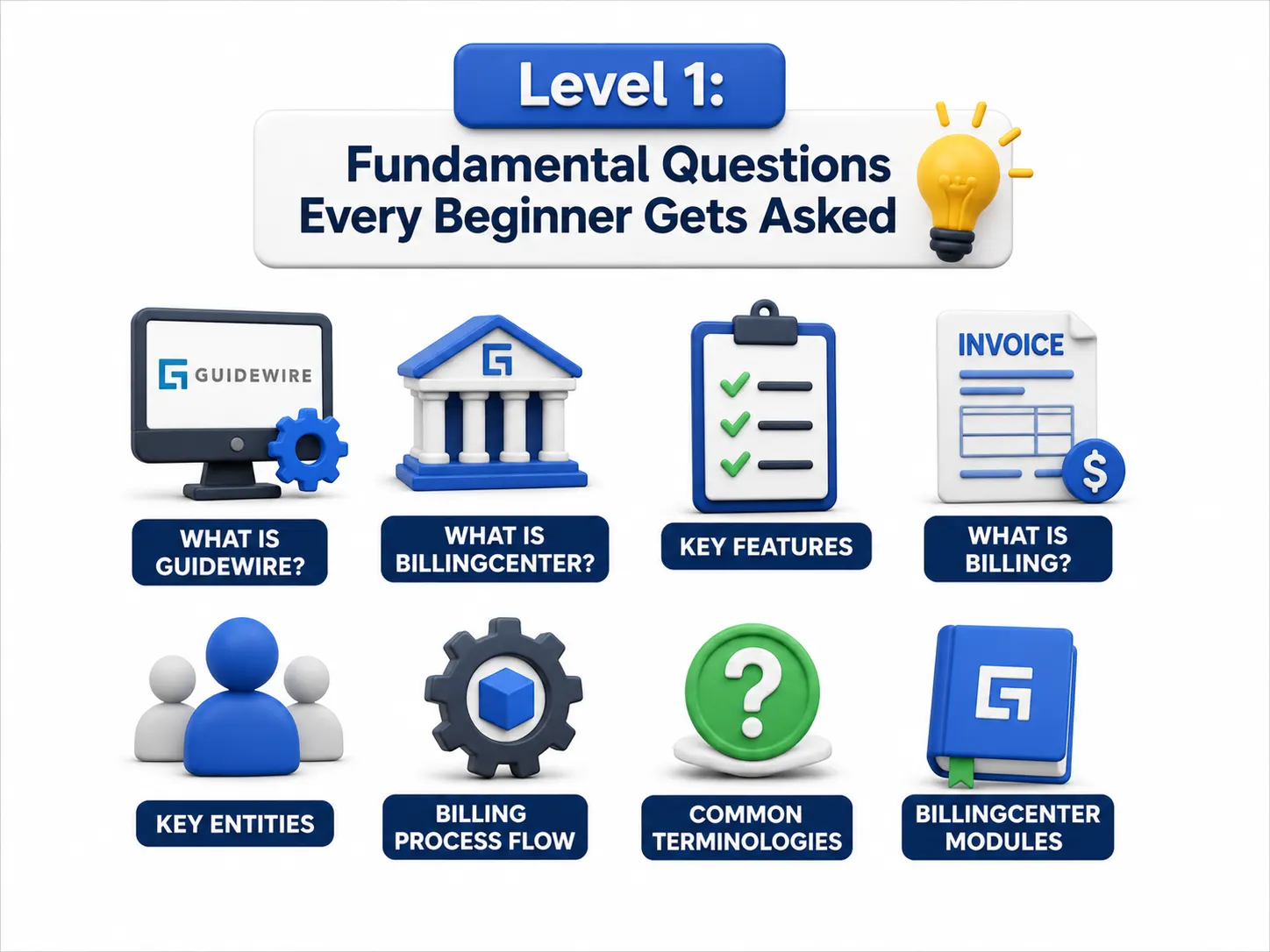
These questions confirm you understand what BillingCenter actually does before anything else gets discussed.
Q: What is Guidewire BillingCenter used for? A: It manages the full financial lifecycle of a policy — generating charges, creating invoices, processing payments, handling disbursements, and running delinquency workflows for property and casualty insurers.
Q: What's the difference between an Account and a Policy in BillingCenter? A: An account can hold multiple policies, and billing decisions — like payment plans and delinquency status — often apply at the account level rather than to a single policy.
Q: What is an Invoice Item? A: It's the building block of an invoice, generated from an underlying charge such as premium, a fee, or a tax.
Q: What is a Payment Plan? A: A template defining installment schedules, down payment requirements, and any associated fees for how a policyholder pays over time.
Interviewers use these to filter candidates fast — hesitation here signals you haven't spent real time in the system.
Level 2: Intermediate Configuration Questions
Once fundamentals are confirmed, interviewers shift toward how pieces connect and configure.
Q: How does BillingCenter generate an invoice stream? A: Based on the policy's payment plan and billing instructions, the system calculates due dates and amounts, then produces a series of linked invoices covering the policy term.
Q: What happens to the invoice stream if a policy is endorsed mid-term? A: The system recalculates remaining charges and regenerates affected invoices, which can shift due dates and installment amounts for the rest of the term.
Q: What is a suspense payment? A: A payment received but not yet matched to a specific invoice or charge — it sits in suspense until someone resolves the mismatch.
Q: How would you handle a refund for a canceled policy? A: Refunds route through disbursement rules and approval thresholds; larger or unusual refund amounts typically require manual review before release.
These questions test whether you understand cause and effect — not just definitions, but what a single change triggers elsewhere.
Level 3: Scenario-Based Delinquency and Payment Questions
This is where interviews get real. Expect a walkthrough, not a one-line answer.
Q: Walk me through what happens when a policyholder misses a payment. A: The missed due date triggers a delinquency process. A grace period applies first, often set by state regulation or the payment plan. If payment still doesn't arrive, the system issues a cancellation notice with a mandated notice period built in.
Q: Do all accounts follow the same delinquency timeline? A: No. Grace periods vary by state and line of business, and some accounts — nonprofit clients, government contracts, disputed accounts — carry exceptions that pause automatic cancellation.
Q: What would you check first if a policy canceled incorrectly for non-payment? A: Whether a payment was sitting unmatched in suspense, whether a manual exception should have applied, or whether the payment plan's grace period was misconfigured.
Interviewers use these questions specifically to weed out candidates who only know the "happy path" and haven't dealt with real exceptions.
Level 4: Integration Questions (PolicyCenter and ClaimCenter)
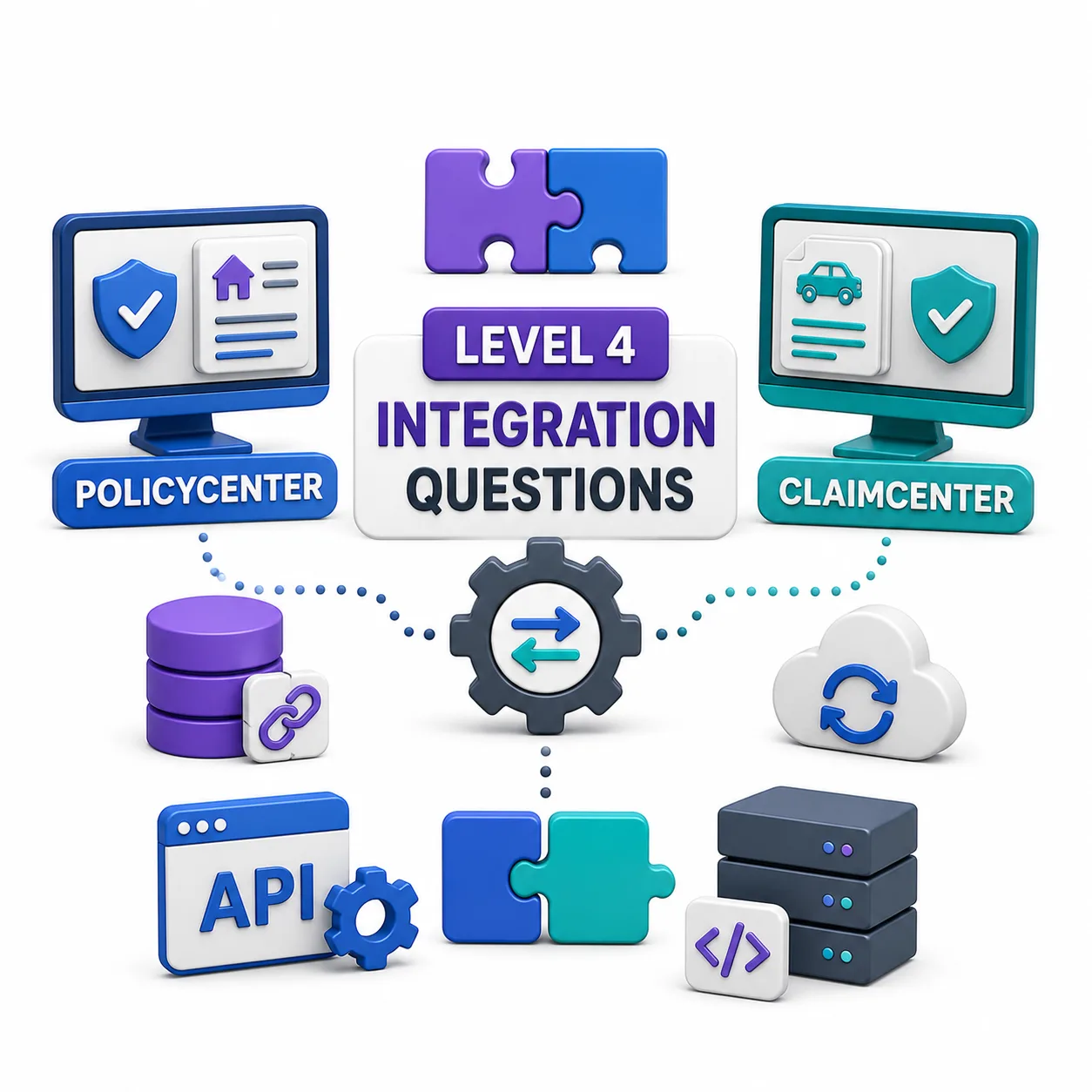
BillingCenter doesn't work alone, and interviewers want to know you understand it as part of a bigger system.
Q: How does BillingCenter interact with PolicyCenter? A: When a policy endorsement changes coverage or premium, PolicyCenter sends that update to BillingCenter, which adjusts charges and regenerates any affected invoices.
Q: What happens if a policy update fails to sync with BillingCenter? A: The mismatch typically lands in an error queue for reconciliation, and it needs resolving quickly before it produces an incorrect invoice downstream.
Q: How does ClaimCenter connect to billing? A: Mainly through subrogation recoveries and deductible billing, where a claim outcome can trigger a new billing transaction on the account.
Q: Why do interviewers ask about integrations at all? A: Because senior roles need systems-level thinking — understanding your own module in isolation isn't enough once real production issues span multiple Guidewire applications.
Level 5: Advanced and Technical Questions
These separate configuration-level knowledge from deeper technical fluency.
Q: What role does Gosu play in BillingCenter? A: Gosu is the scripting language behind BillingCenter's business rules — plugins, PCFs, and custom logic like fee calculations or delinquency exceptions are typically written in it.
Q: How would you customize a delinquency process for a specific line of business? A: By configuring a distinct delinquency plan tied to that line's billing instructions, adjusting grace periods, notice templates, and escalation steps independently of other lines.
Q: What's a batch process, and where does it matter in BillingCenter? A: Scheduled jobs that run recurring tasks — generating invoices, running delinquency checks, processing disbursements — without manual triggering, critical for accounts at scale.
Q: How do you approach debugging an incorrect charge calculation? A: Trace it back through the rating and billing instruction logic first, then check for recent configuration or rule changes before assuming a data error.
Technical depth here shows you can be trusted with production configuration, not just navigation.
Level 6: Behavioral and Experience-Based Questions
Technical skill only gets you halfway — interviewers also probe how you think and communicate.
Q: Tell me about a billing configuration challenge you've solved. A: Strong answers are specific and structured — the trigger, the diagnosis, the fix, and the outcome — not a vague description of "fixing issues."
Q: Describe a time you had to explain a billing discrepancy to a non-technical stakeholder. A: This tests communication, not just competence. Interviewers want evidence you can translate system logic into plain language.
Q: How do you stay current with Guidewire InsuranceSuite updates? A: Mentioning release notes, sandbox testing, or hands-on exploration of new features signals genuine engagement rather than passive familiarity.
Q: What questions do you have for us? A: Asking about their billing architecture or common pain points shows confidence and curiosity — qualities no rehearsed answer can substitute for.
Final Thoughts
Mastering Guidewire BillingCenter interview questions means moving through all six levels — fundamentals, configuration, scenarios, integrations, technical depth, and communication. Prepare across every level, and you'll walk in sounding like someone who's already done the job.