

Guidewire BillingCenter Refunds vs Reversals Explained with Real Scenarios
Navigate through this article using the table of contents below
Table of Contents
No headings found in this article.
Guidewire BillingCenter serves as a critical engine within modern property and casualty insurance accounting, managing complex billing lifecycle operations ranging from invoicing and disbursements to payment adjustments. Within this robust architecture, transaction corrections require a clear conceptual distinction between issuing a refund and executing a payment reversal. Understanding how financial workflows process these two options ensures that general ledger feeds remain fully balanced, policy administration records stay accurate, and customer ledger entries retain precise transaction histories.
Insurance carriers regularly handle mid-term policy cancellations, endorsement premium adjustments, overpayments, and uncollected bad debt checks. Misidentifying when to initiate a refund versus when to trigger a reversal can cause serious posting imbalances, incorrect commission payouts to agents, and compliance audit discrepancies. Mastering the functional difference between disbursements and posting rollbacks is essential for core billing operations. For professionals interested in building end-to-end expertise in insurance billing architectures, exploring specialized Guidewire training in Chennai provides structured hands-on experience with core configuration standards and billing workflows.
Core Financial Definitions in Guidewire BillingCenter
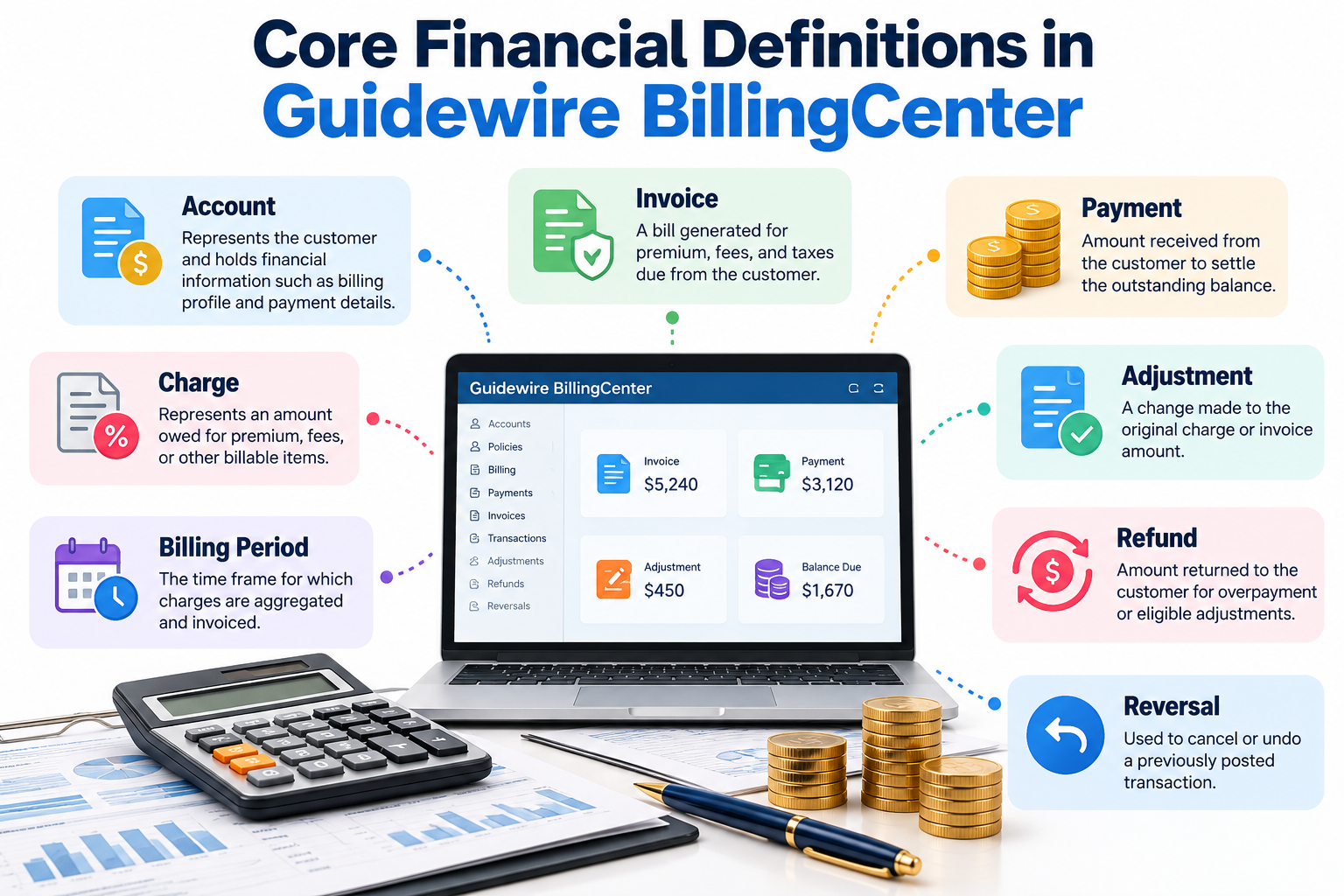
In Guidewire BillingCenter, financial transactions follow strict double-entry ledger mechanics designed specifically for insurance billing lifecycle operations. A refund represents an explicit outgoing monetary disbursement executed when a policyholder or account holds an unapplied credit balance or an overpayment. Instead of keeping credit amounts resting on the account balance to offset future premium invoices, BillingCenter initiates an outward payment request, issuing money back through a check, automated clearing house transfer, or electronic funds transfer.
Conversely, a payment reversal is an administrative ledger action that entirely voids or unwinds a previously posted payment transaction. Rather than moving external capital out of the insurance carrier’s account, a reversal negates the original credit entry posted to an invoice. This adjustment restores the account’s open billed balance to its prior unpaid state, backing out applied funds and reversing associated general ledger entries.
Technical Mechanics Behind BillingCenter Refunds
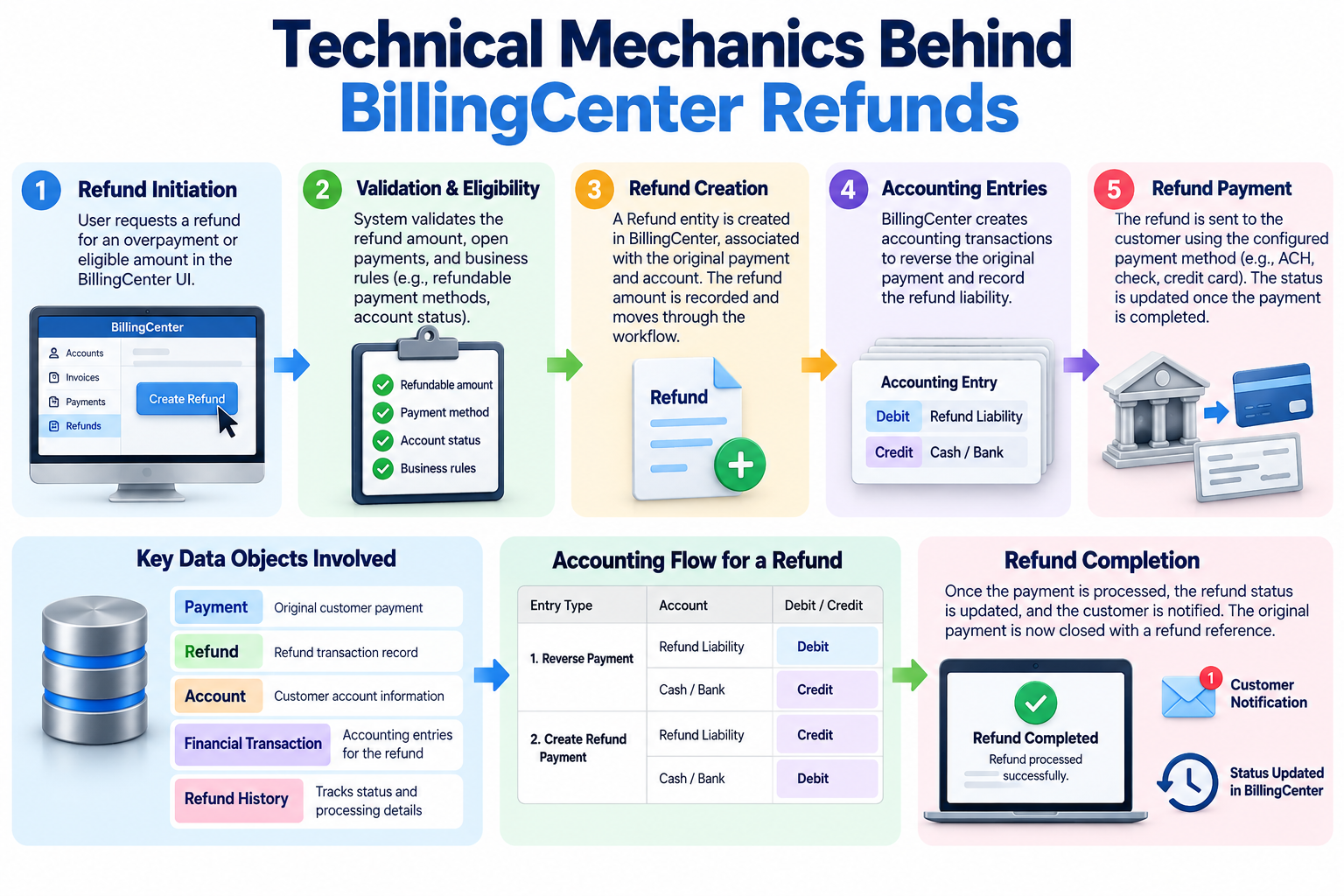
Executing a refund within BillingCenter starts by evaluating the account's unapplied fund containers and credit distributions. When an account holds excess cash due to an overpayment or a mid-term policy reduction, BillingCenter creates a negative balance line item. The system evaluates automated disbursement rules to check whether the credit should automatically trigger a refund instruction or wait for manual billing operations approval.
Once approved, BillingCenter constructs a disbursement record containing payout details, payment gateway protocols, and destination banking instructions. This transaction updates the internal ledgers by debiting the unapplied credit balance account and crediting the cash/outbound disbursement general ledger account. It then communicates directly with external financial systems or disbursement gateways to release the physical funds to the policyholder. Learners eager to configure these automated disbursement thresholds, batch processes, and integration points can consult comprehensive Guidewire BillingCenter training to master system-level functional setups.
Operational Workflow of Payment Reversals
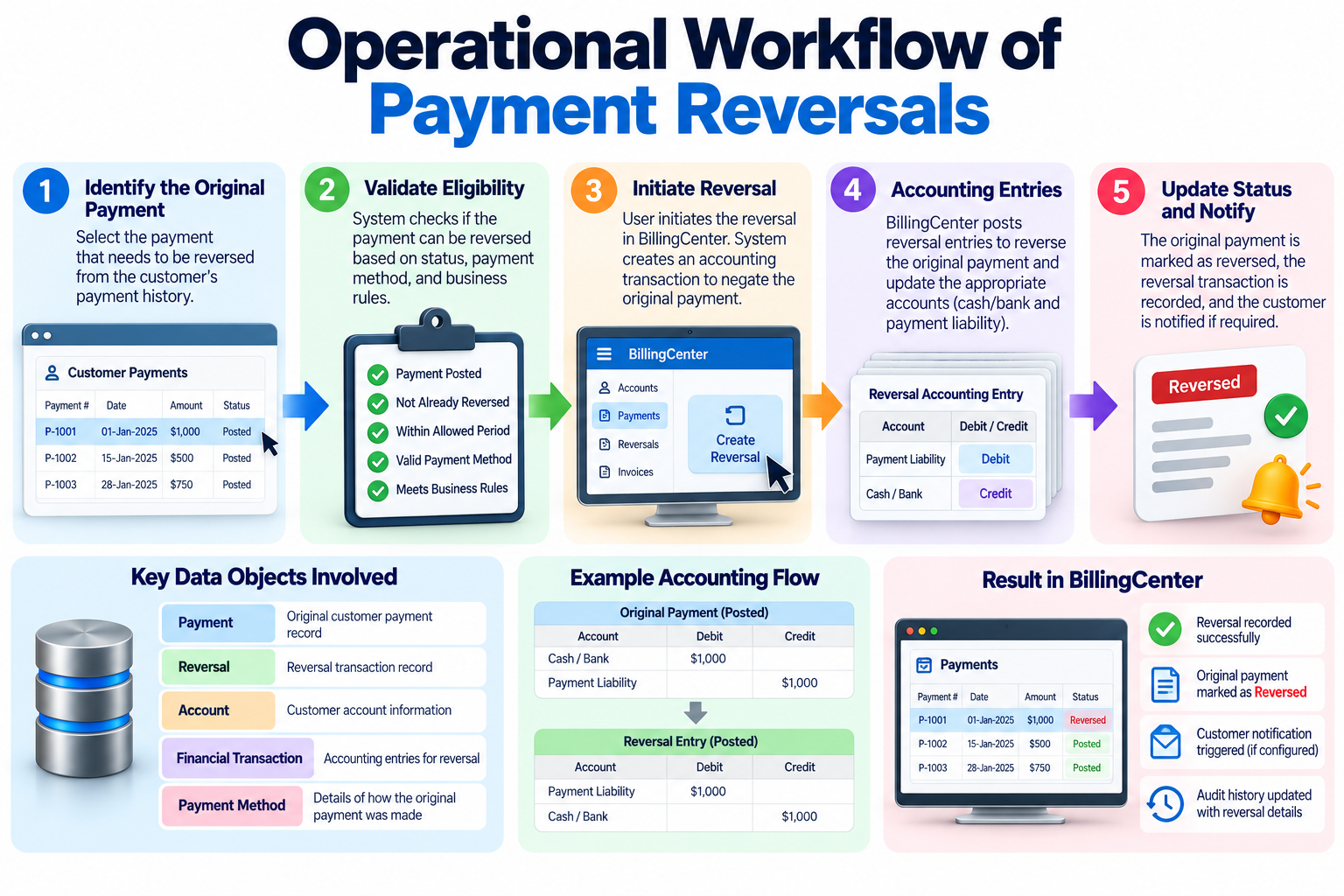
A payment reversal in BillingCenter functions as an accounting rollback mechanism designed to handle invalid payment inputs, returned electronic checks, or dishonored banking transactions. When an insurance carrier receives notification from a banking partner that a payment failed due to insufficient funds, closed bank accounts, or incorrect routing details, billing operators do not process a new outbound payment. Instead, they execute a payment reversal directly against the original receipt record.
When a reversal is processed, BillingCenter identifies the exact line-item allocations associated with the initial payment. It reverses those credit allocations across active invoices, restores the unpaid principal balances on open receivables, and posts offsetting debit entries to the cash account while re-crediting account receivables. Furthermore, any agent commission distributions calculated from the original payment are automatically adjusted or flagged for clawback during the next producer commission evaluation cycle.
Key Accounting Differences and General Ledger Impact
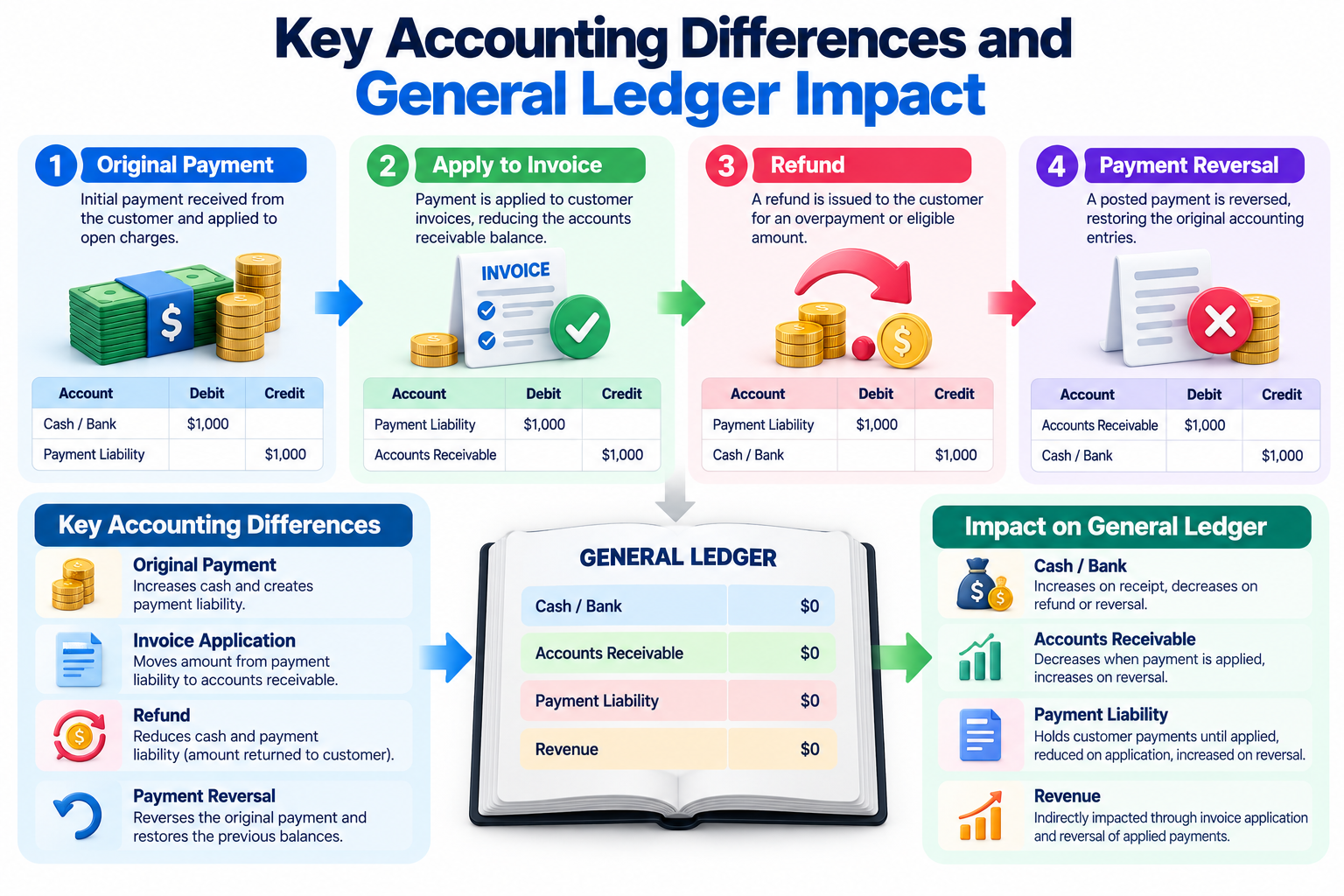
Analyzing refunds and reversals across specific financial metrics highlights how each operation distinctly alters internal ledger states and external banking flows within Guidewire BillingCenter.
Primary Financial Goal: A refund focuses on returning surplus equity or credit balances directly to the policyholder. A reversal aims to nullify or void an erroneous, failed, or invalid payment entry previously posted to the ledger.
Cash Account Movement: A refund decreases cash assets via an external outbound disbursement. A reversal reduces the cash balance strictly by backing out the original payment entry from internal general ledger records.
Accounts Receivable Status: When a refund is processed, the unapplied credit balance drops while open billed invoices remain completely unchanged. When a reversal occurs, the billed receivables balance increases back to its unpaid status.
Initiation Source: Refunds are triggered by account credit overages, mid-term policy cancellations, or premium-reducing endorsements. Reversals are initiated due to bounced checks, dishonored electronic payments, or manual posting corrections.
Agent Commission Impact: Refunds cause no change to earned commissions if the original premium was rightfully earned. Reversals automatically claw back or reverse unearned commissions previously credited to producers.
Transaction Line Items: A refund generates a distinct disbursement record and physical check or electronic transfer transaction. A reversal creates an offsetting negative receipt ledger entry directly linked to the original receipt ID.
Lifecycle Point: Refunds are applied to settled accounts carrying negative equity balances. Reversals are applied directly against processed payment receipts that require immediate administrative correction.
Real Scenario: Handling Overpayments and Policy Cancellations
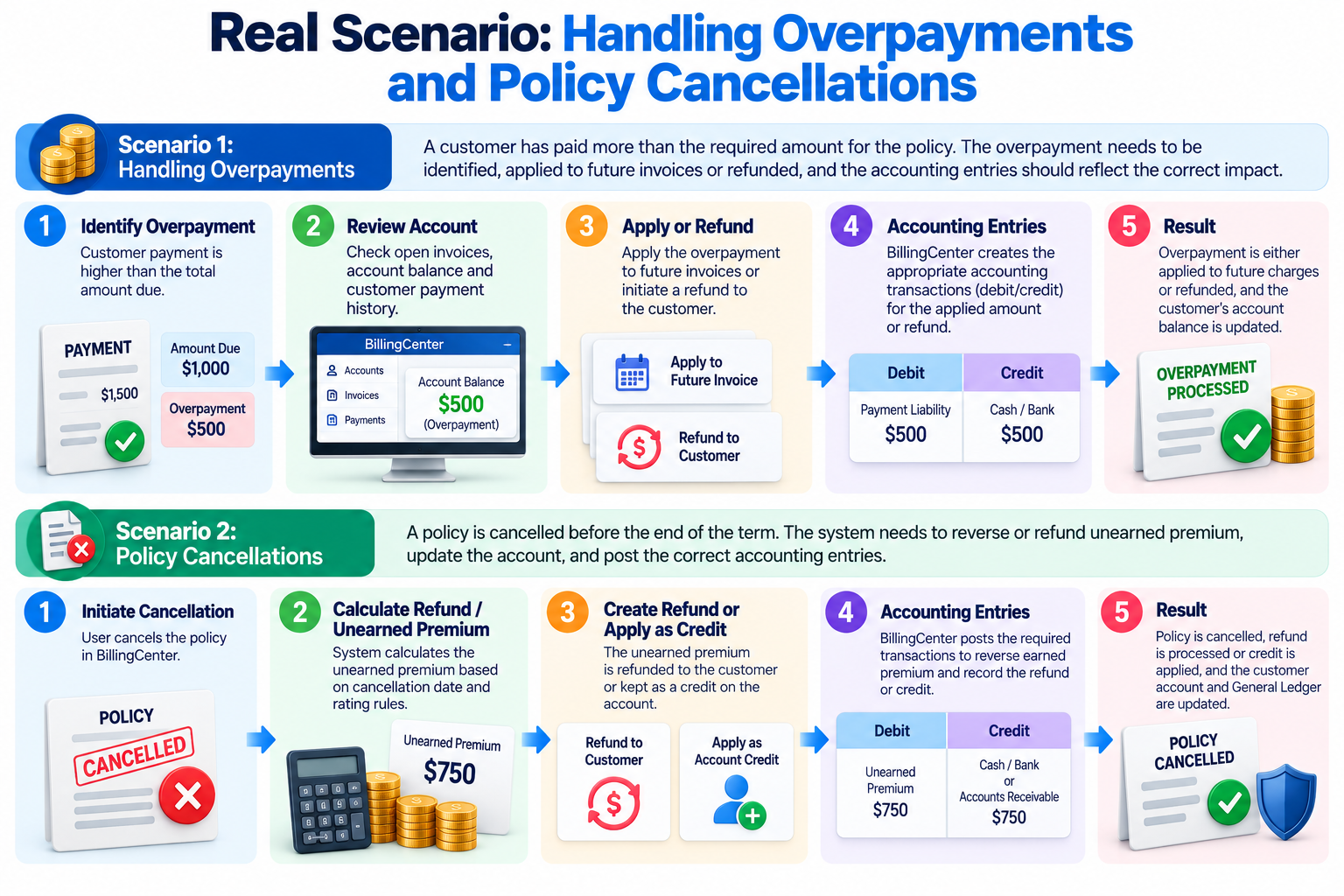
Consider an insurance policyholder who holds an annual commercial property policy with a $12,000 annual premium, billed in monthly installments of $1,000. During month four, the policyholder accidentally submits an electronic payment of $2,000 instead of $1,000. BillingCenter accepts the $2,000 receipt, applies $1,000 to clear the month four invoice, and places the remaining $1,000 into the account’s unapplied credit container.
Because the customer requests the excess money back rather than holding it for future invoices, the billing specialist selects the $1,000 unapplied credit balance and initiates a manual refund. BillingCenter validates the request against policy thresholds, generates an outbound electronic payment instruction, debits the unapplied credit account, and credits the cash disbursement account.
Now consider a second scenario: midway through month six, the policyholder cancels their policy due to selling the property. BillingCenter calculates an unearned pro-rata premium credit of $1,500. The system posts this premium reduction, creating a credit balance on the account ledger. Because the policy is canceled and no future invoices will be issued, BillingCenter’s automated batch process flags the unapplied credit and generates a refund check sent directly to the former policyholder, cleanly closing the account ledger.
Real Scenario: Processing Returned Payments and Bounced Checks
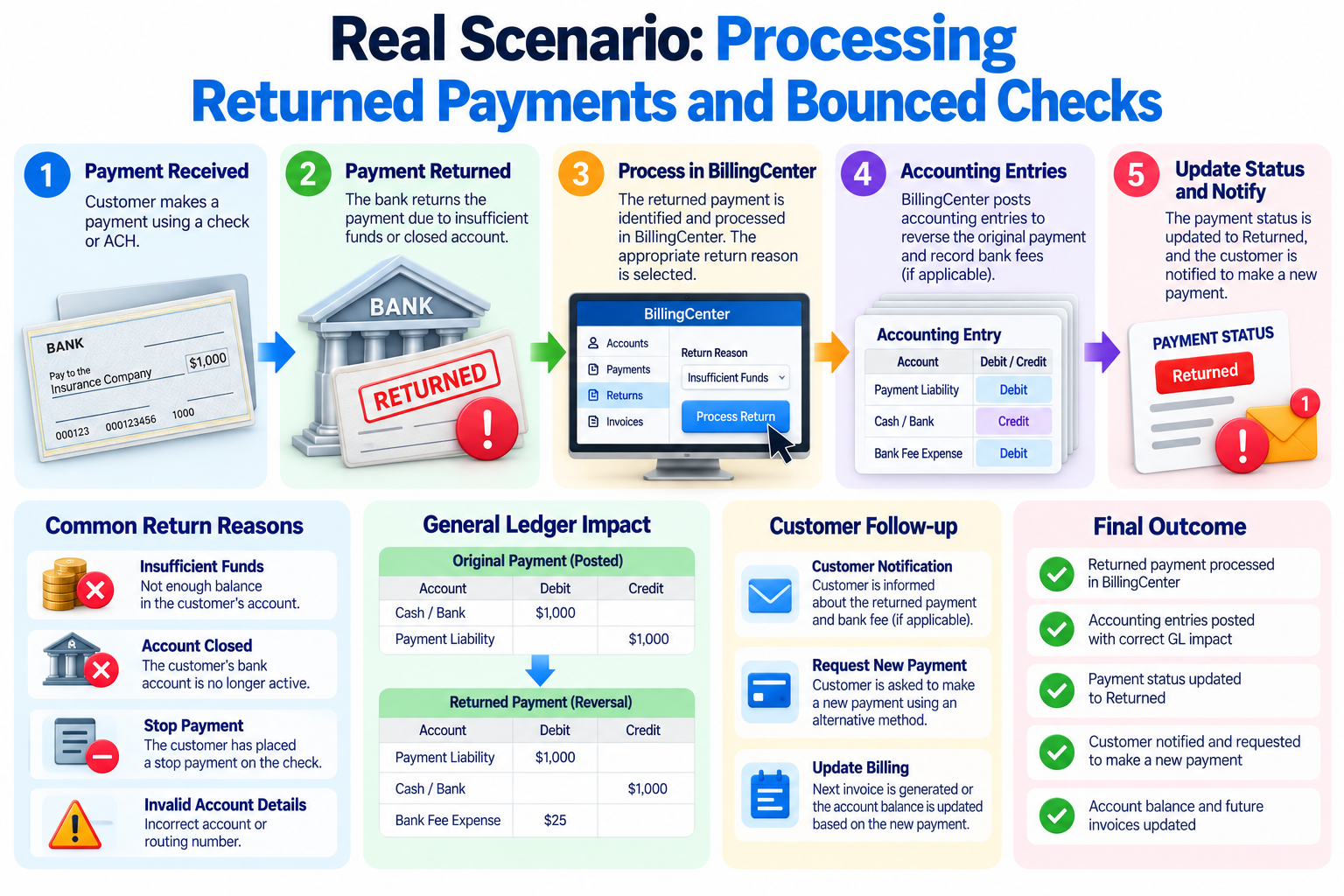
Imagine a scenario where a policyholder attempts to pay a $500 monthly auto insurance invoice using an electronic check. Upon receipt submission, BillingCenter immediately posts a $500 payment entry, marks the monthly invoice as fully paid, and updates the policy status to active and good standing.
Three days later, the carrier’s bank sends an automated return file indicating that the electronic check bounced due to non-sufficient funds. A billing specialist opens the recorded payment receipt in BillingCenter and selects the Payment Reversal option, specifying non-sufficient funds as the primary reason code.
BillingCenter instantly unapplies the $500 credit from the month’s invoice, restoring the open receivable balance to $500 unpaid. It logs a negative payment entry against the cash ledger and generates a payment failure notice sent to the policyholder. Because the invoice is now past due, BillingCenter’s automated delinquency management engine initiates a cancellation notice workflow, giving the customer a set period to submit valid funds before the policy lapses.
Best Practices for BillingCenter Configuration and Audit Tracking
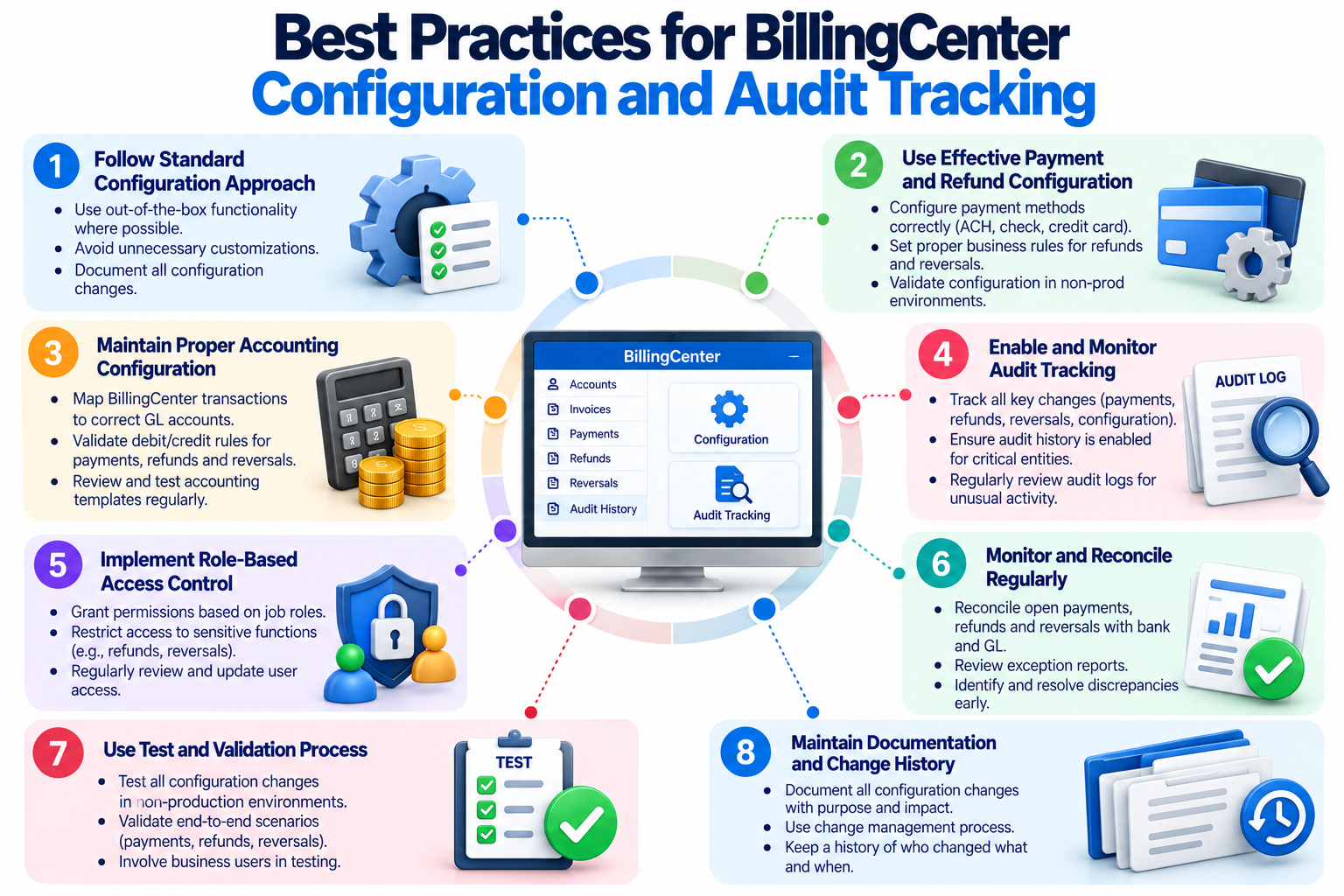
Maintaining accurate financial records within Guidewire BillingCenter requires setting up strict system permissions, automated operational controls, and audit trails. System administrators must establish clear role-based access rules to limit who can approve manual refunds and execute payment reversals. High-value refunds should always require multi-level approval workflows to prevent unauthorized disbursements and financial fraud.
In addition, billing system teams should establish precise reason codes for both refunds and reversals. Reversal reason codes—such as non-sufficient funds, incorrect account details, or duplicate entries—help accounting teams identify systemic payment gateway errors and track customer payment reliability. Automated night batch routines should regularly audit unapplied credit balances, flagging old credits for review or automated refund dispatch based on state insurance department guidelines. Establishing these operational rules ensures compliant reporting, smooth bank reconciliations, and clean general ledger tracking across all policy accounts.
Conclusion
Understanding the distinct roles of refunds and reversals within Guidewire BillingCenter is fundamental to managing insurance accounting and billing lifecycle operations. While refunds handle the physical payout of surplus equity and unapplied credit balances to policyholders, reversals provide the necessary financial mechanisms to void invalid, failed, or dishonored payment receipts. By enforcing structured approval rules, accurate reason codes, and automated delinquency controls, insurance carriers can maintain balanced general ledgers, prevent audit discrepancies, and deliver transparent financial services to their policyholders.