

Guidewire Career in Bangalore with Complete Roadmap for Freshers and Professionals
Navigate through this article using the table of contents below
Table of Contents
No headings found in this article.
Bangalore's IT job boards are flooded with generic tech postings, yet a small category consistently pulls higher salaries and faster callbacks: Guidewire roles. Candidates who understand why are already ahead of the curve.
If you're wondering whether a Guidewire course in Bangalore is worth your time and money, the answer depends on understanding exactly where this ecosystem is headed.
Why Is Bangalore Becoming a Guidewire Hiring Hotspot?

Bangalore has always been India's technology capital, but its role in the insurance software space deserves separate attention. Several global insurance carriers and IT consulting firms run their core platform teams out of this city, and Guidewire implementations sit right at the center of that work.
Companies delivering PolicyCenter, BillingCenter, and ClaimCenter projects for international clients need local talent who understand both the technology and the business context of insurance. That combination is harder to find than raw coding skill alone, which keeps demand consistently strong.
What makes Bangalore particularly attractive is the concentration of IT services giants alongside smaller specialized insurtech consultancies. This mix creates variety in career paths, from large enterprise projects to nimble product-focused teams. Professionals aren't stuck with a single type of employer or work culture.
The current demand of Guidewire in Bangalore also reflects a broader industry trend. As insurers globally modernize legacy systems, implementation partners headquartered or operating out of Bangalore win a significant share of that work. Every new client engagement translates into hiring, whether for configuration, integration, testing, or business analysis roles connected to Guidewire products.
What Does the Real Job Market Look Like for Freshers?
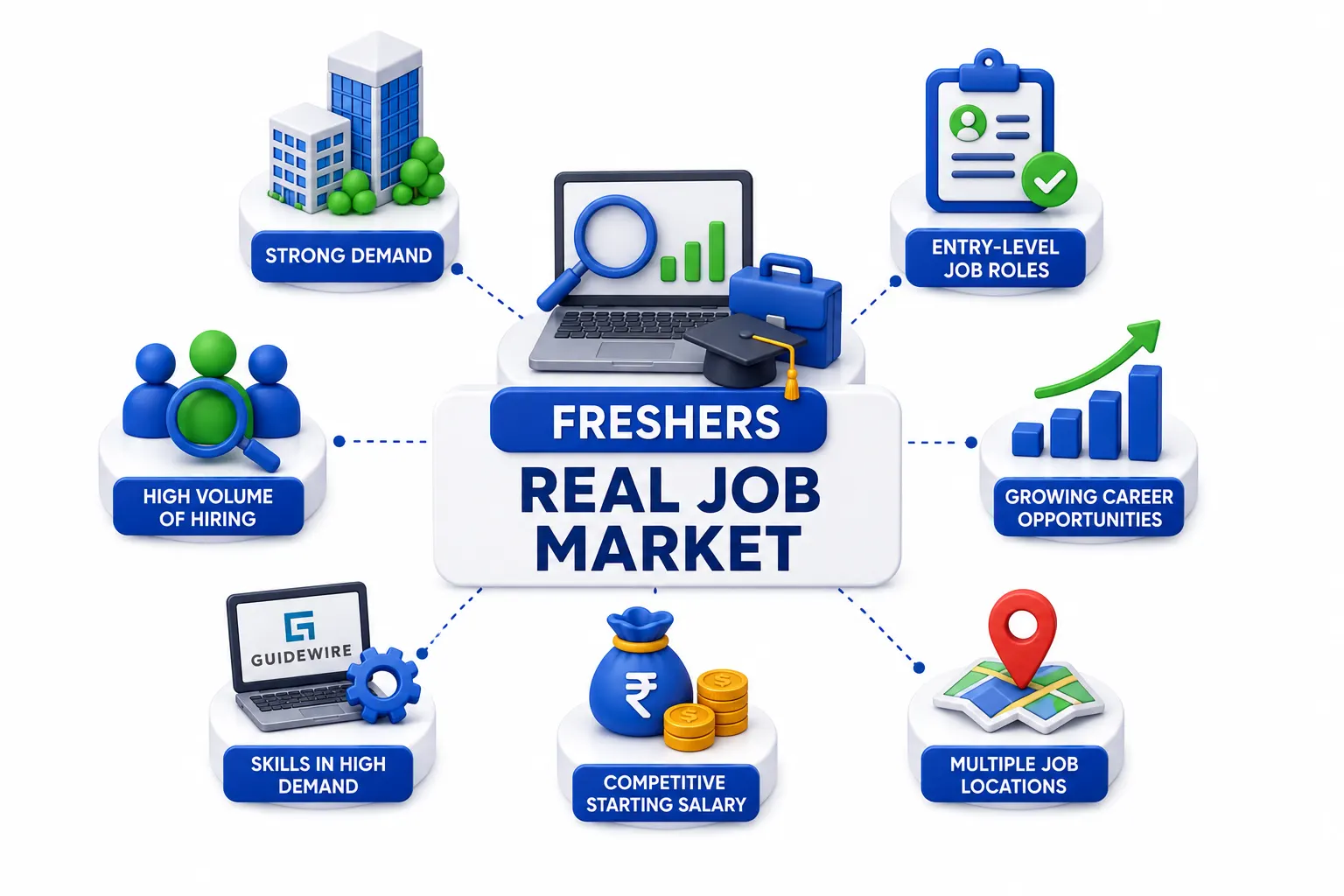
Freshers often assume Guidewire careers are reserved for experienced developers, but that's not entirely accurate. Many implementation partners actively hire freshers into structured training programs, then place them on live projects after a few months of internal upskilling.
The catch is that companies expect some baseline familiarity with Guidewire concepts before they'll even shortlist a fresher resume. Simply mentioning Java or general programming skills on a resume rarely stands out anymore in this specific niche.
This is exactly where targeted preparation changes outcomes. A fresher who has completed hands-on coursework covering PolicyCenter or ClaimCenter fundamentals looks far more employable than one relying purely on a computer science degree. Recruiters notice the difference immediately during technical screening rounds.
Guidewire job opportunity in Bangalore listings for freshers typically fall into roles like configuration analyst, quality assurance engineer, or associate developer. These positions are deliberately structured to build skills gradually rather than expecting instant expertise.
It's also worth mentioning that freshers who combine Guidewire knowledge with basic understanding of insurance workflows, like underwriting or claims processing, tend to progress faster. Technical skill alone isn't the complete picture; domain context matters just as much in interviews and on the job.
How Do Experienced Professionals Pivot Into Guidewire Roles?
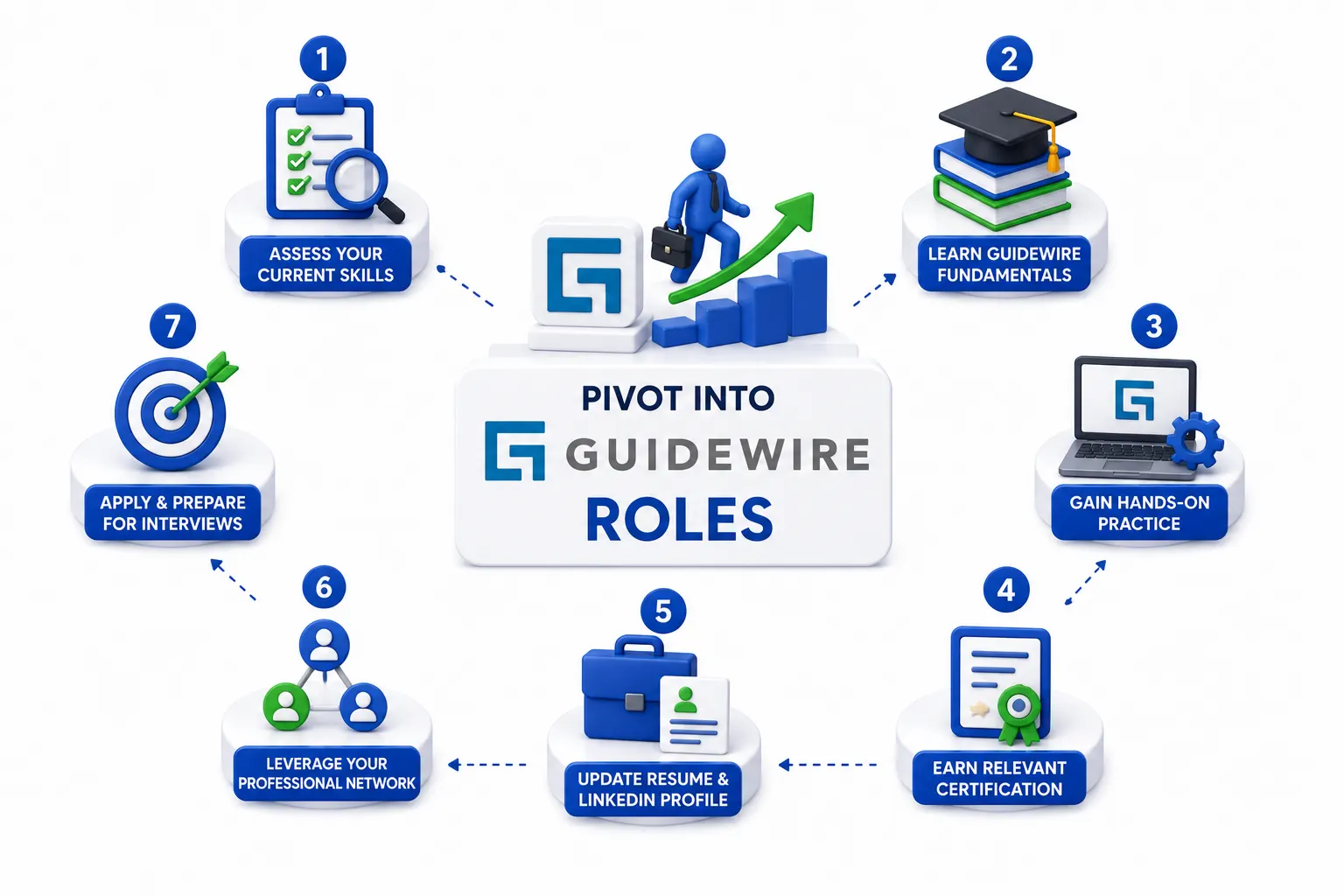
Professionals already working in Java, testing, or business analysis often feel stuck deciding whether switching to Guidewire is worth restarting parts of their career. In most cases, it's less of a restart and more of a specialization.
Someone with five years of Java development experience, for instance, doesn't need to relearn programming basics. They need focused training on Guidewire's specific architecture, configuration approach, and product suite. That's a matter of weeks, not years.
This is where experience becomes a genuine advantage rather than a liability. Senior professionals moving into Guidewire roles often skip junior-level positions entirely, landing directly into configuration lead or senior developer roles because their existing technical maturity transfers well.
Business analysts and QA professionals follow a similar pattern. Their process knowledge and testing discipline apply directly, with Guidewire-specific training filling the remaining gap. Many professionals report describing this transition as refreshingly fast compared to switching into entirely unrelated tech domains.
Salary growth after this pivot tends to be noticeable too, particularly for professionals who move into implementation or configuration specialist roles. Niche platform expertise generally commands a premium over generic development skills, and Guidewire's relatively smaller talent pool amplifies that effect further in a market like Bangalore.
Which Guidewire Modules Should You Actually Learn First?
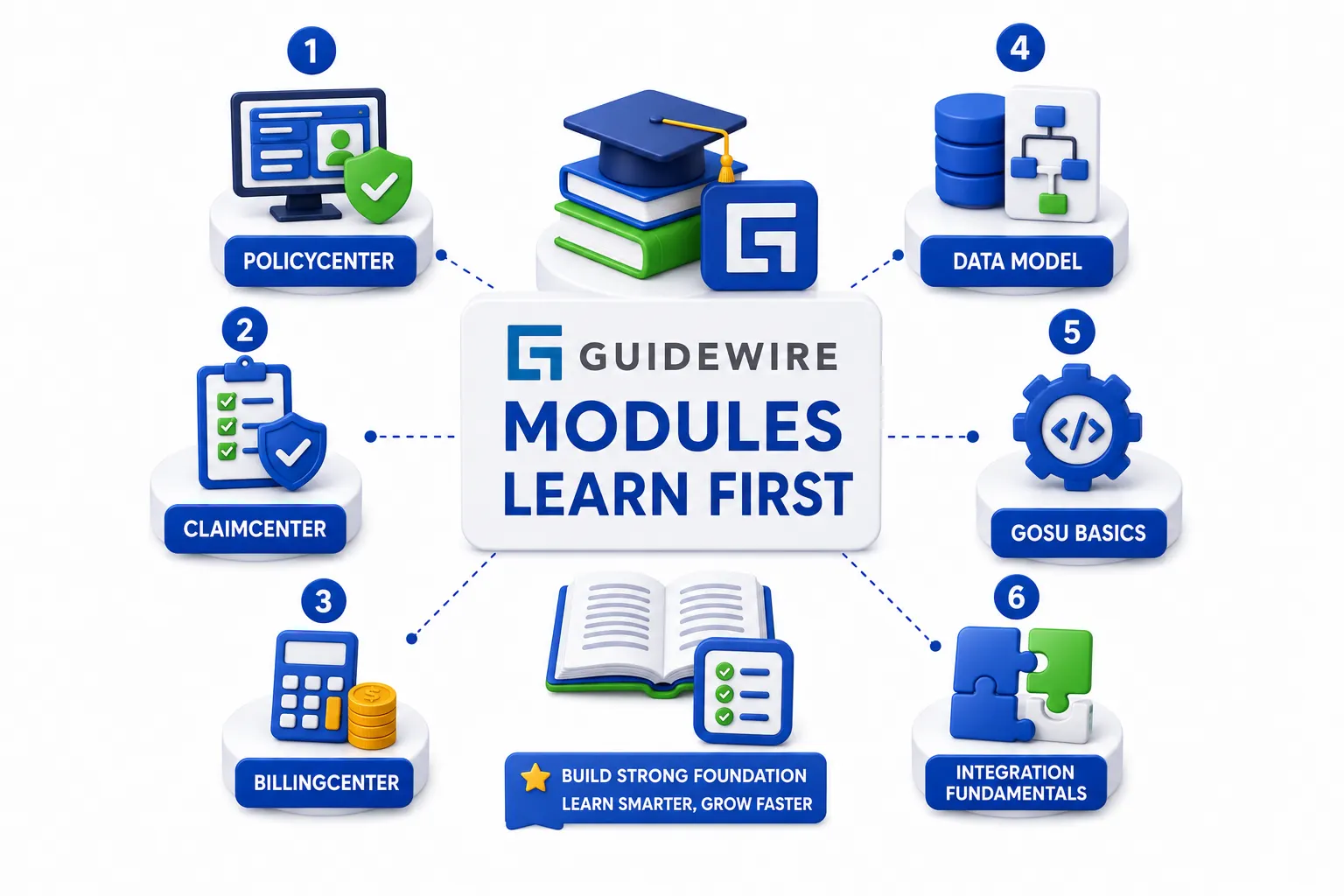
Guidewire's product suite can feel overwhelming to newcomers, so prioritizing matters. PolicyCenter, BillingCenter, and ClaimCenter form the core trio, each handling a distinct part of the insurance lifecycle.
For someone starting fresh, PolicyCenter is often the most practical entry point. Policy administration touches nearly every downstream process, and having this foundation makes learning BillingCenter or ClaimCenter significantly easier later.
That said, your choice should also depend on the job market you're targeting. Some Bangalore-based projects specifically need ClaimCenter specialists, especially teams working with carriers focused heavily on claims transformation initiatives. Checking current job postings before committing to one module can save considerable time.
Beyond the core products, understanding Guidewire's underlying architecture, including its data model, Gosu scripting language, and integration framework, matters just as much as product-specific knowledge. Employers frequently test this foundational understanding during technical interviews, regardless of which product a candidate specializes in.
A well-structured Guidewire course in Bangalore typically sequences these topics logically, starting with fundamentals before moving into product-specific configuration. This kind of structured progression tends to build stronger long-term understanding than jumping randomly between topics based on job descriptions alone.
What Should You Expect From Local Training Programs?
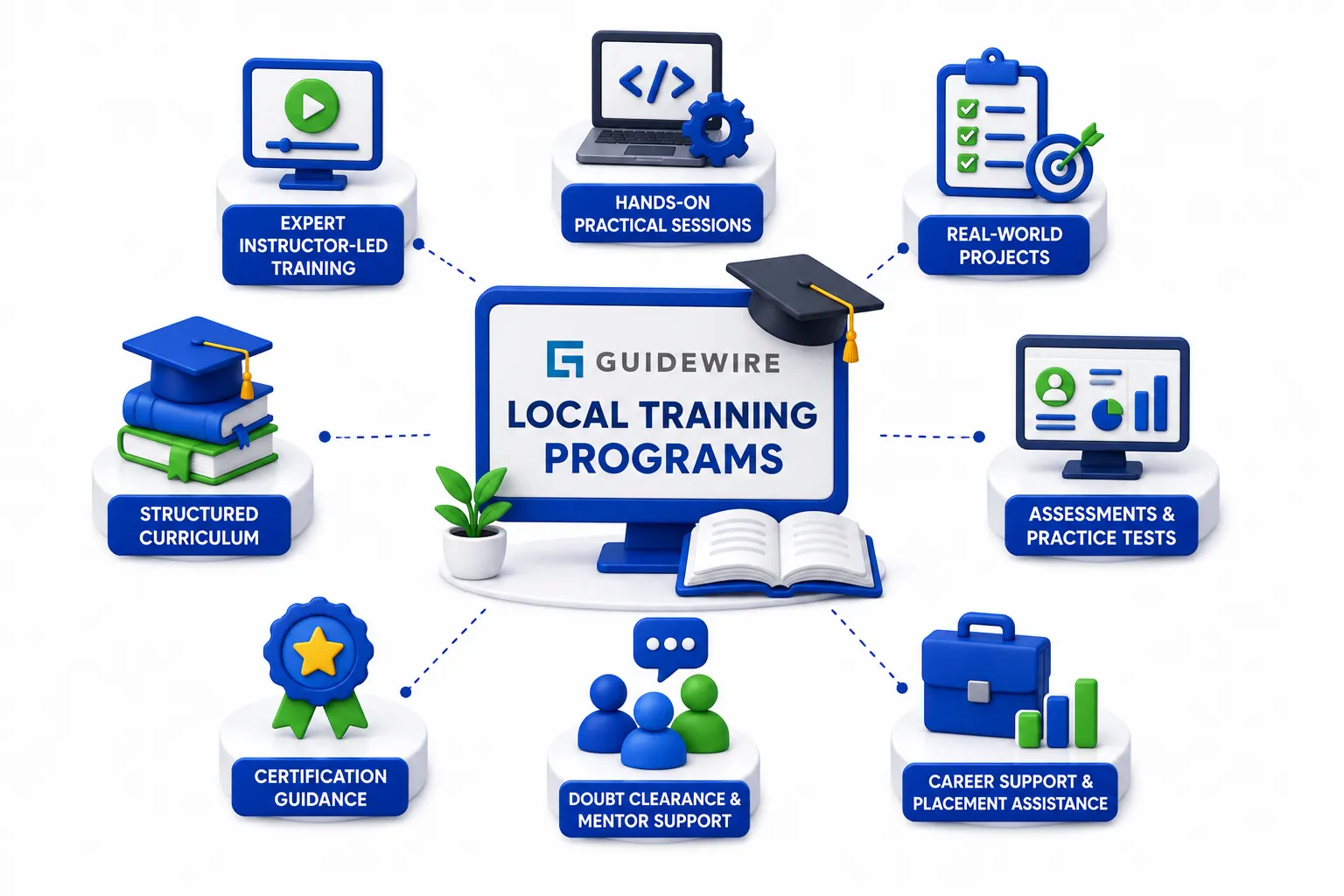
Not all training programs are built the same way, and this distinction matters enormously in a competitive city like Bangalore. Some courses focus purely on theory, while others emphasize hands-on configuration work using realistic project scenarios.
Practical exposure genuinely matters here. Employers evaluating fresher or career-switcher candidates almost always ask about project-style work, not just certificates or completed modules. Programs that include guided implementation exercises give candidates something concrete to discuss during interviews.
Local training also offers an underrated advantage: networking. Instructors and fellow learners often have direct connections to Bangalore's Guidewire hiring ecosystem, and referrals still play a meaningful role in how many positions get filled here.
Cost and duration vary widely across providers, so comparing curriculum depth matters more than comparing price alone. A shorter, shallow course might save time upfront but leave gaps that surface painfully during technical interviews.
Look specifically for programs that address current tooling, version updates, and integration practices rather than outdated material. Guidewire's platform evolves steadily, and training content that hasn't kept pace can leave learners unprepared for what employers actually expect on live projects today.
How Can You Build a Realistic Career Roadmap From Here?
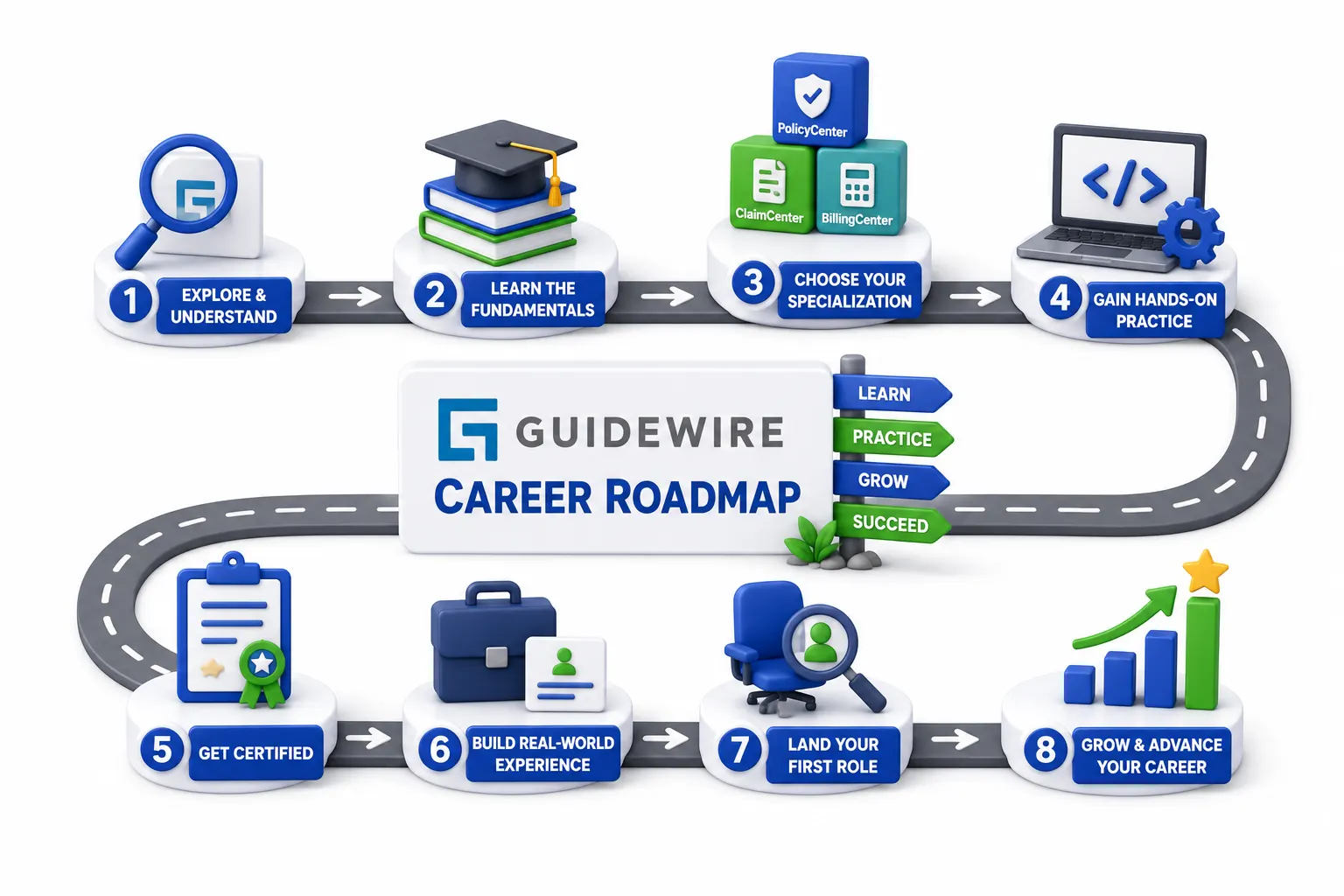
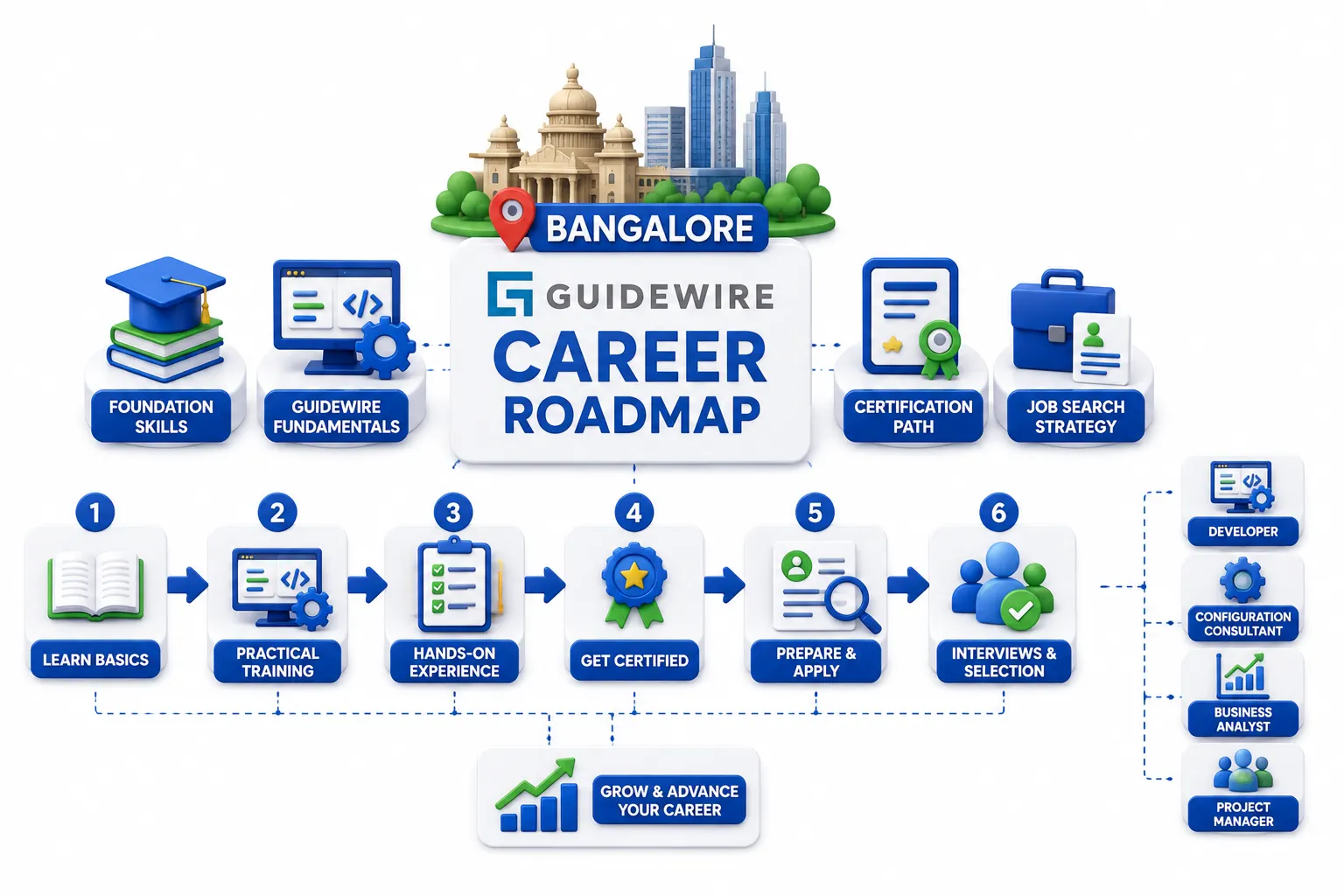
Turning interest into an actual career requires sequencing, not just enthusiasm. Start with foundational learning, ideally through structured coursework rather than scattered online tutorials, since consistency matters more than speed at this stage.
Once foundational concepts feel solid, build small practice projects if your course doesn't already include them. Configuring sample products or exploring Guidewire's data model hands-on cements concepts far better than passive video watching alone.
From there, focus on interview readiness. Understanding common technical questions, along with scenario-based problem solving, prepares you far better than memorizing definitions. Mock interviews, even informal ones with peers, expose weak spots before real interviews do.
Networking shouldn't be an afterthought either. Bangalore's Guidewire community, including local meetups, LinkedIn groups, and alumni networks from training programs, often surfaces opportunities before they're publicly posted. Many freshers underestimate how much this informal channel matters.
Finally, stay adaptable about your entry point. Your first Guidewire role might be testing, configuration, or support rather than full development, and that's perfectly normal. Career progression in this niche tends to move quickly once you're inside the ecosystem with genuine hands-on experience behind you.
Conclusion
Bangalore's Guidewire ecosystem rewards preparation over guesswork. Freshers and professionals who invest in structured learning and realistic project exposure consistently find stronger, faster career outcomes in this steadily growing, specialized job market.