

Guidewire Certification Path for Bangalore Professionals: What to Do After Your Training
Navigate through this article using the table of contents below
Table of Contents
No headings found in this article.
You finished your Guidewire training. The certificate is saved somewhere on your laptop, maybe printed and forgotten in a drawer. And now? Silence. No recruiter is knocking, no offer letter is waiting, and that nagging question won't leave you alone: what actually comes next?
This is the exact point where most learners in Bangalore's crowded insurance-tech job market either build real momentum or quietly stall. Guidewire certification isn't the finish line — it's the starting gun. What you do in the weeks right after training decides whether that certificate becomes a career or just a PDF.
Why Does Everyone Talk About Guidewire But Few Actually Get Hired?
Bangalore has no shortage of Guidewire-trained candidates. Walk into any insurance IT hiring event and you'll find dozens of people who've completed a course. Yet hiring managers routinely say qualified Guidewire talent is hard to find. That contradiction isn't really a contradiction — it's a filtering problem.
Training teaches you syntax, configuration steps, and platform navigation inside PolicyCenter, ClaimCenter, or BillingCenter. It rarely teaches you how insurance business logic actually behaves in production, how underwriting rules interact with rating engines, or how to debug a failed batch job at 2 a.m. before a release. Employers know this gap exists, so they filter aggressively.
The candidates who get hired are the ones who close that gap themselves — through certification exams, sandbox practice, and demonstrable project work. A completion certificate from a Guidewire training in Bangalore program signals attendance. An official Guidewire certification signals competence. Recruiters, rightly or not, treat those as very different things. If you want to stand apart from the crowd of "trained" candidates, this is the distinction you need to internalize immediately.
What Does the Real Guidewire Certification Roadmap Look Like?
Guidewire's certification structure is more layered than most newcomers expect, and understanding it early saves months of confusion later.
At the foundation sits the Guidewire Associate Certification, which validates your grasp of core platform concepts — data model, Gosu scripting basics, and configuration fundamentals. Most freshers and career-switchers start here, and it's a reasonable requirement before attempting anything advanced.
From there, professionals typically branch based on the product line they're targeting:
PolicyCenter track — for those drawn to underwriting, product configuration, and rating
ClaimCenter track — suited to candidates interested in claims workflow and adjudication logic
BillingCenter track — for professionals focused on invoicing, payment plans, and financial transactions
Integration/Cloud (Ivans, Jutro, Guidewire Cloud) paths — increasingly relevant as insurers migrate off legacy on-prem systems
Each track has its own advanced-level exams once you clear the associate stage. The mistake many make is chasing every track simultaneously. Depth in one module, backed by hands-on configuration work, beats a shallow spread across three.
Should You Specialize Immediately or Explore First?
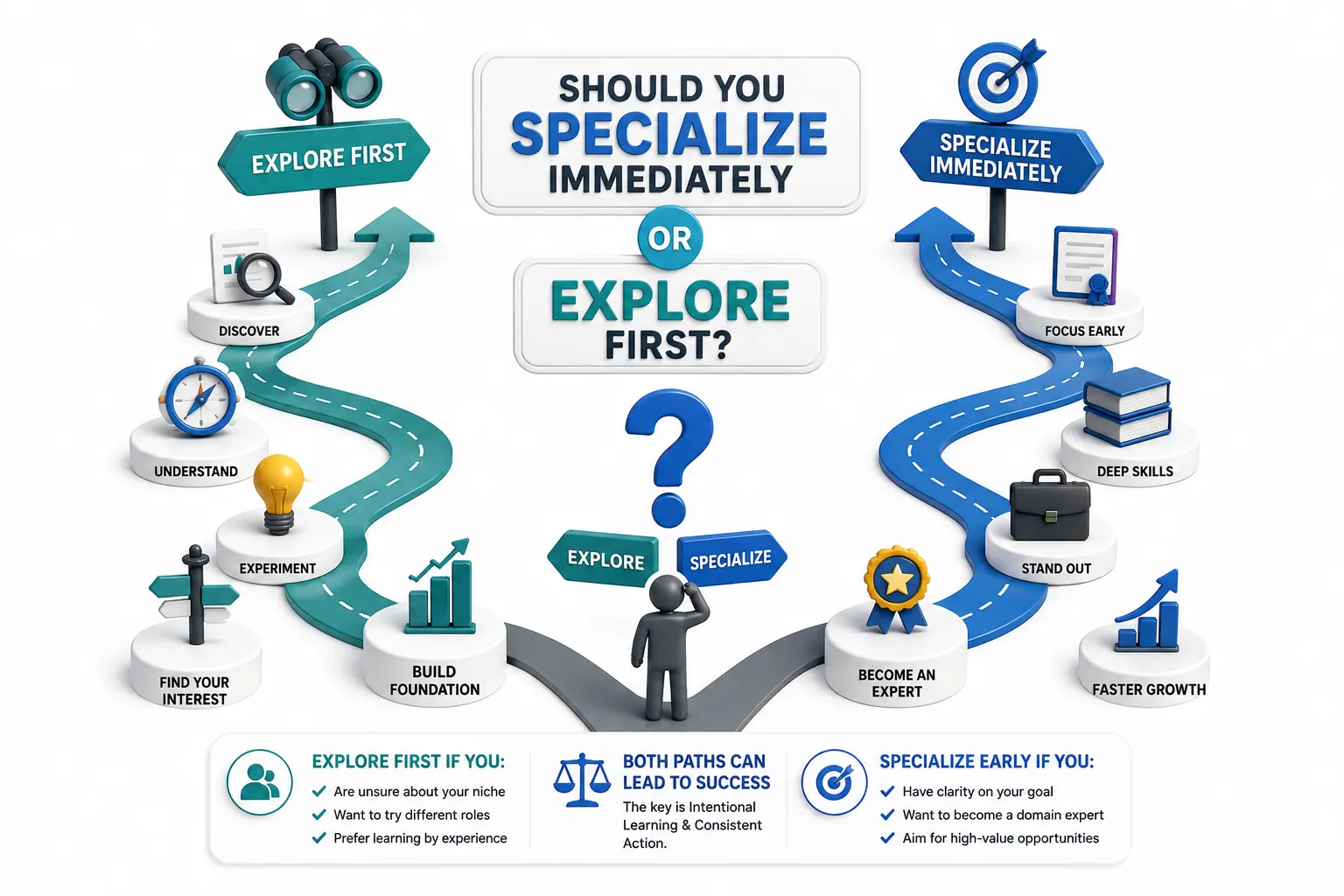
This question causes more indecision than it should. The honest answer: explore briefly, then commit.
Spend your first two to three weeks after training experimenting inside a sandbox environment across PolicyCenter and ClaimCenter modules. Notice which one you actually enjoy debugging. Configuration work in PolicyCenter, for instance, involves heavy rules-based logic and product model design — appealing if you like structured, almost mathematical problem-solving. ClaimCenter, by contrast, deals with workflow states, business rules around claim lifecycle, and integration with external adjusters — better suited if you enjoy process-oriented thinking.
Once you notice a genuine pull toward one, commit to it for at least six months. Employers in Bangalore's insurance technology corridor — companies serving clients like Zurich, Allianz, or regional insurers — hire for specific module expertise, not generalists in the early stages of a career. A developer who can speak fluently about ClaimCenter's exception handling will beat a generalist candidate nine times out of ten during technical rounds.
Specialization also compounds. Six months into a PolicyCenter-focused role, you'll naturally pick up adjacent skills — Gosu rules, product model migration, rating worksheets — that widen your expertise without diluting your core identity as a specialist.
How Do You Turn Certification Into Actual Project Experience?
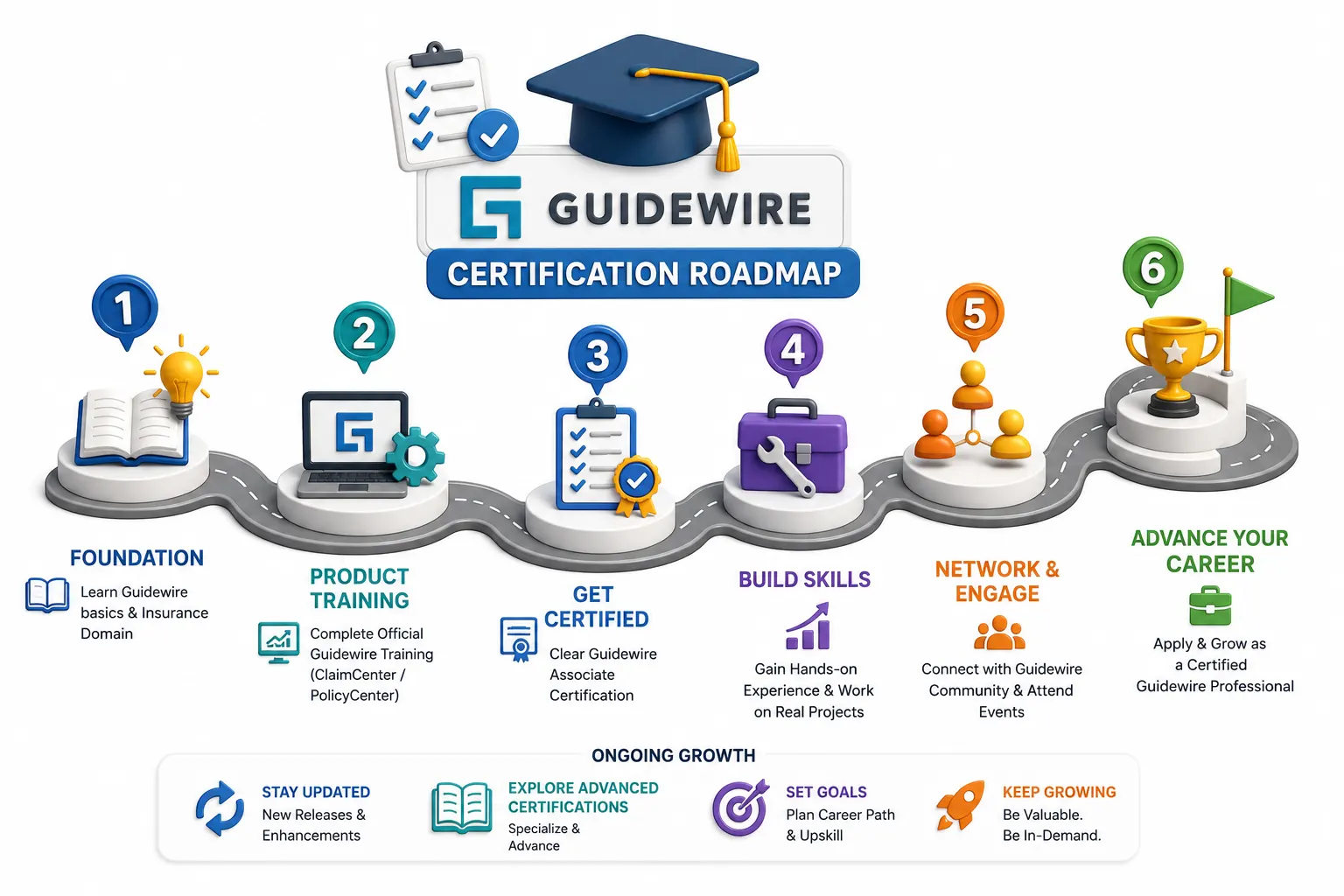
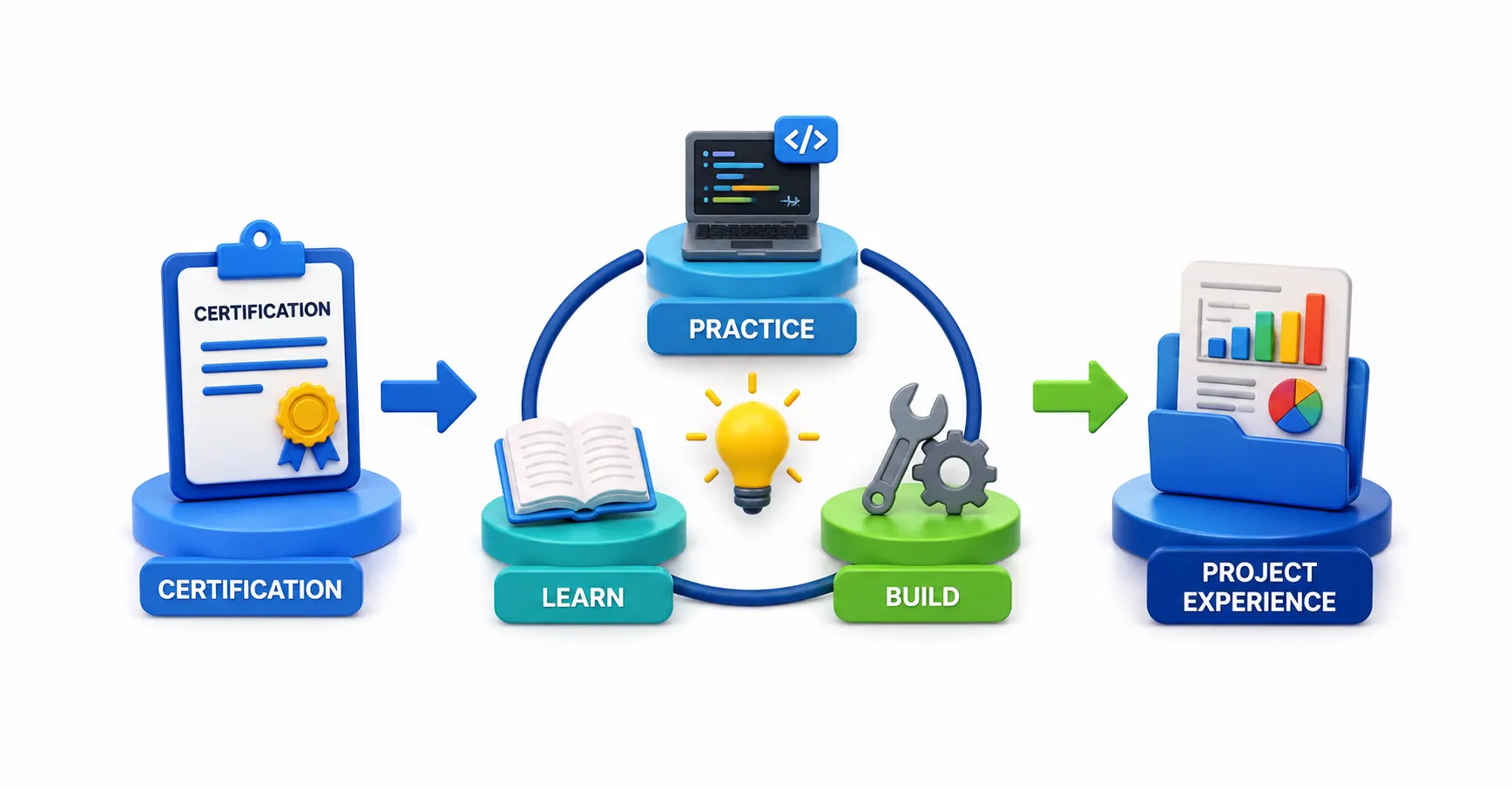
Here's an uncomfortable truth: certification alone rarely convinces a hiring panel. What convinces them is evidence that you've applied the concepts to something resembling real work.
Build a mini-project after your exam. Configure a sample product line in PolicyCenter with custom rating rules. Set up a claims workflow in ClaimCenter that mimics a real insurer's process — first notice of loss, adjuster assignment, reserve calculation, and closure. Document your decisions the way you would in a professional environment, including why you structured the data model a certain way.
This matters more than it sounds. During interviews, when asked "walk me through a project you've configured," candidates with only classroom exercises tend to give vague, textbook answers. Candidates with a self-built sandbox project describe specific trade-offs, errors they hit, and how they resolved them. That difference is instantly visible to an interviewer who has reviewed hundreds of resumes.
If your training program included live project simulations — as many structured Guidewire training in Bangalore courses do — revisit those exercises and extend them. Add complexity. Break something intentionally and fix it. Employers value people who've wrestled with the platform, not just watched someone else demonstrate it.
Where Are the Real Guidewire Job Opportunities in Bangalore?
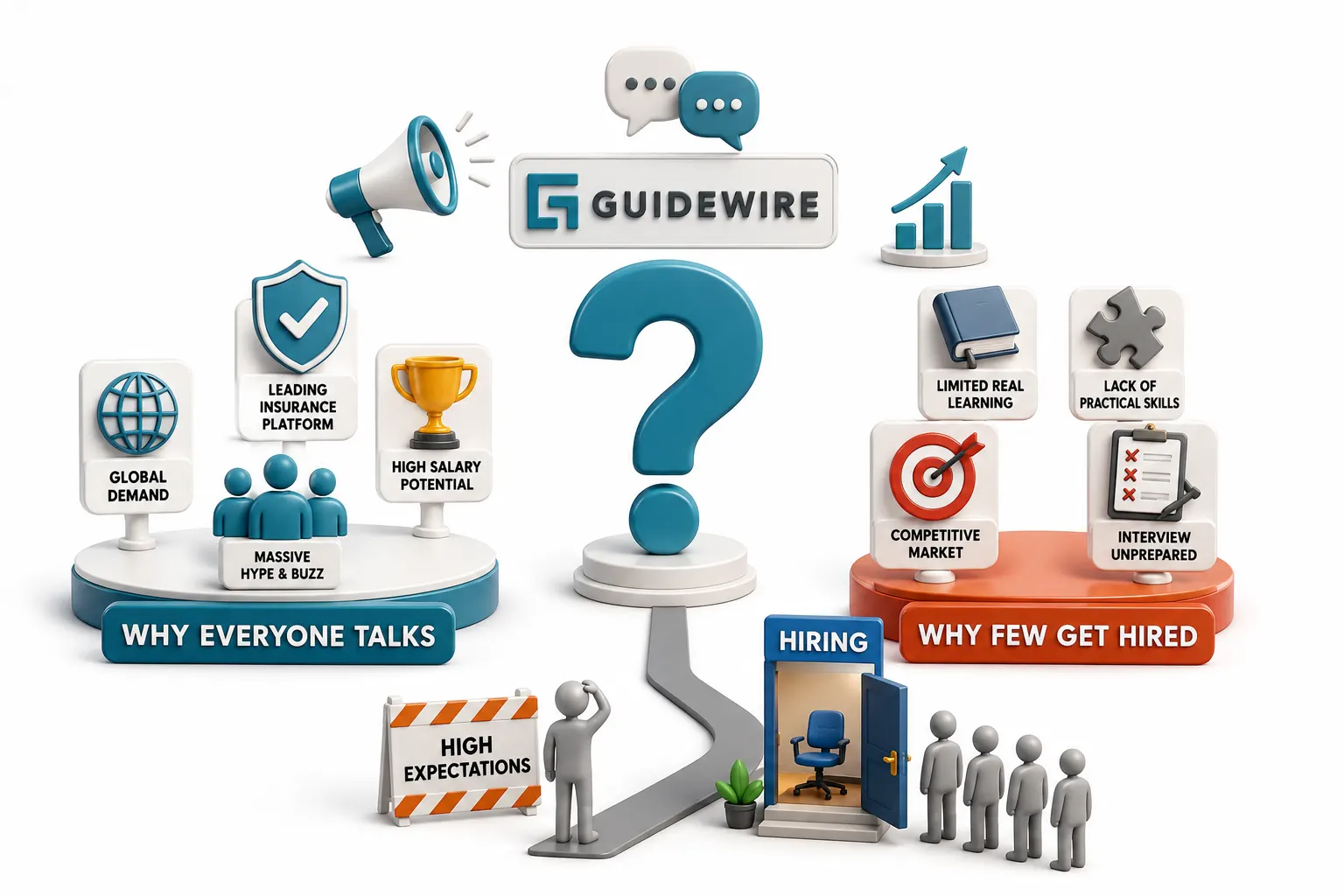
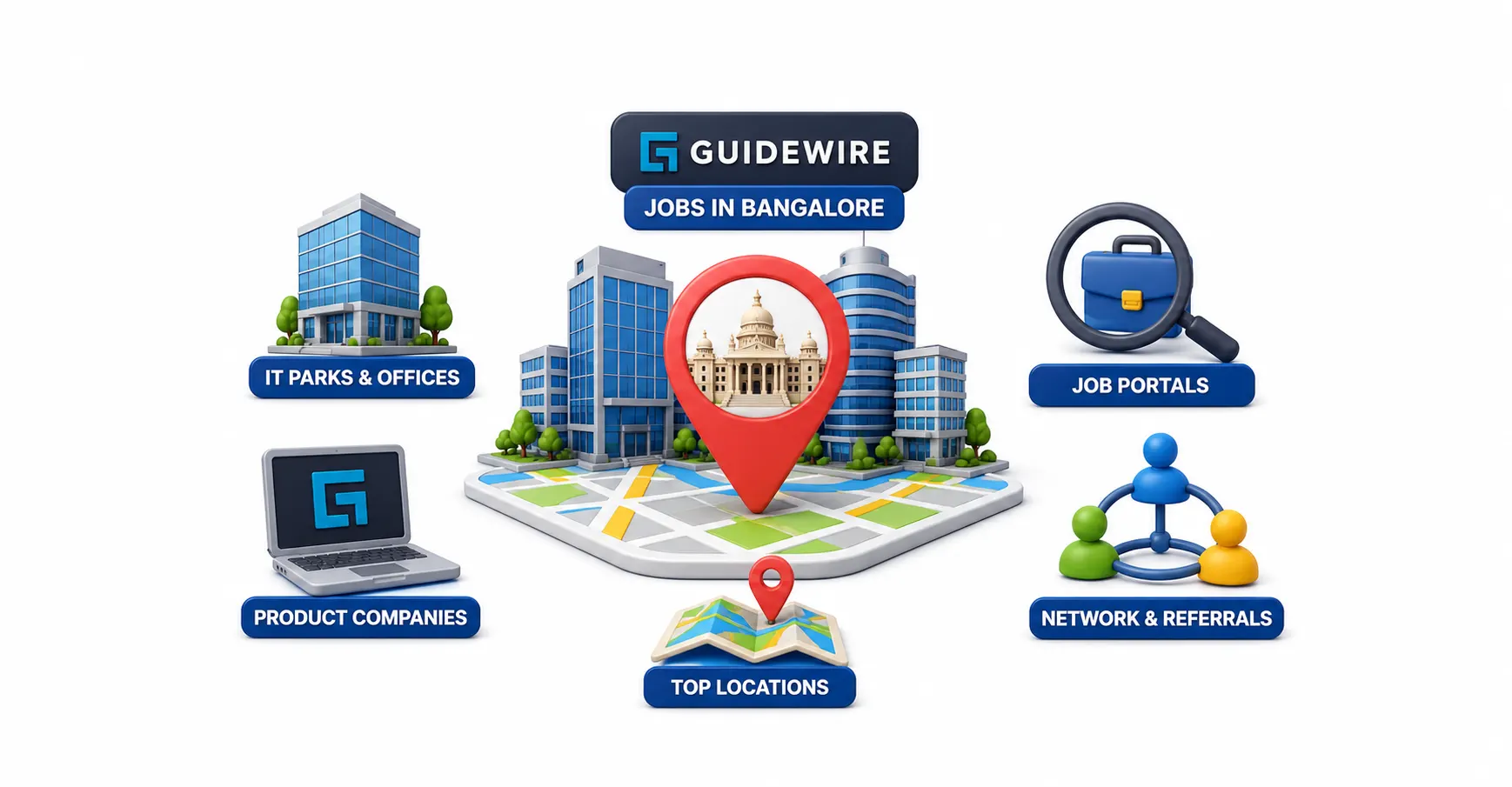
Bangalore remains India's densest hub for Guidewire implementation work, largely because of the concentration of global insurance clients served by IT services and consulting firms headquartered or delivering out of the city. Companies working on Guidewire implementations here range from large system integrators to specialized insurance-technology consultancies, and demand tends to cluster around specific skill combinations: Guidewire configuration paired with Gosu development, or integration experience with Guidewire Cloud and REST-based APIs.
Entry-level roles typically sit under titles like Guidewire Developer, Configuration Analyst, or Associate Consultant. Mid-level professionals move toward Business Analyst or Integration Developer roles, particularly if they've picked up exposure to Guidewire Cloud Platform migrations, which insurers are prioritizing heavily right now as they retire legacy on-prem systems.
Networking matters more here than job portals alone. Guidewire-focused meetups, LinkedIn groups tied to insurance technology in Bangalore, and alumni networks from training programs often surface openings before they're publicly posted. Recruiters working exclusively in insurance IT also tend to source candidates directly from certified talent pools, so keeping your certification status visible and current on professional profiles genuinely helps.
Salary expectations vary by experience and module specialization, but professionals with verified certification and demonstrable project work consistently negotiate from a stronger position than those relying on training completion alone.
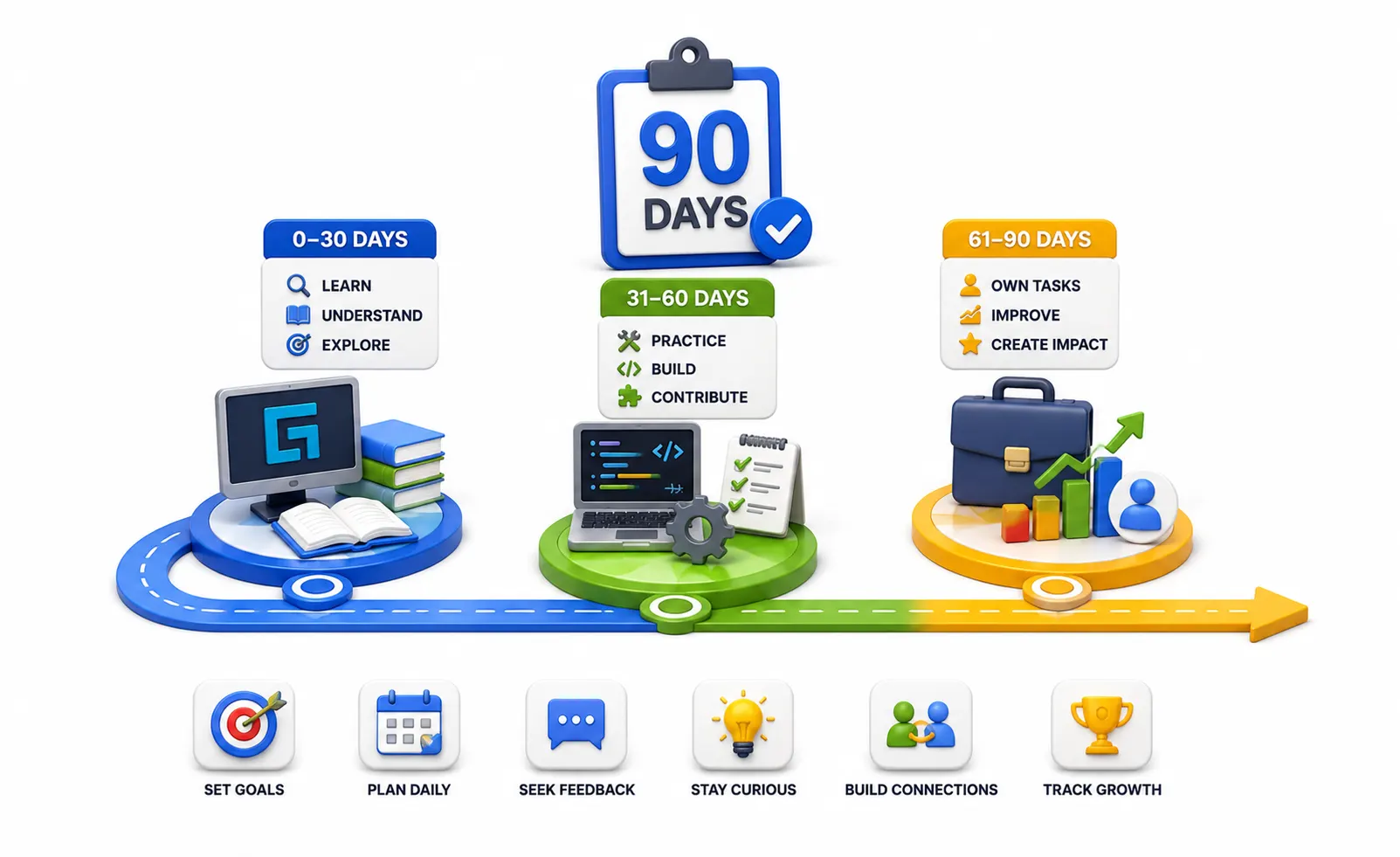
What Should Your First 90 Days Post-Certification Actually Look Like?
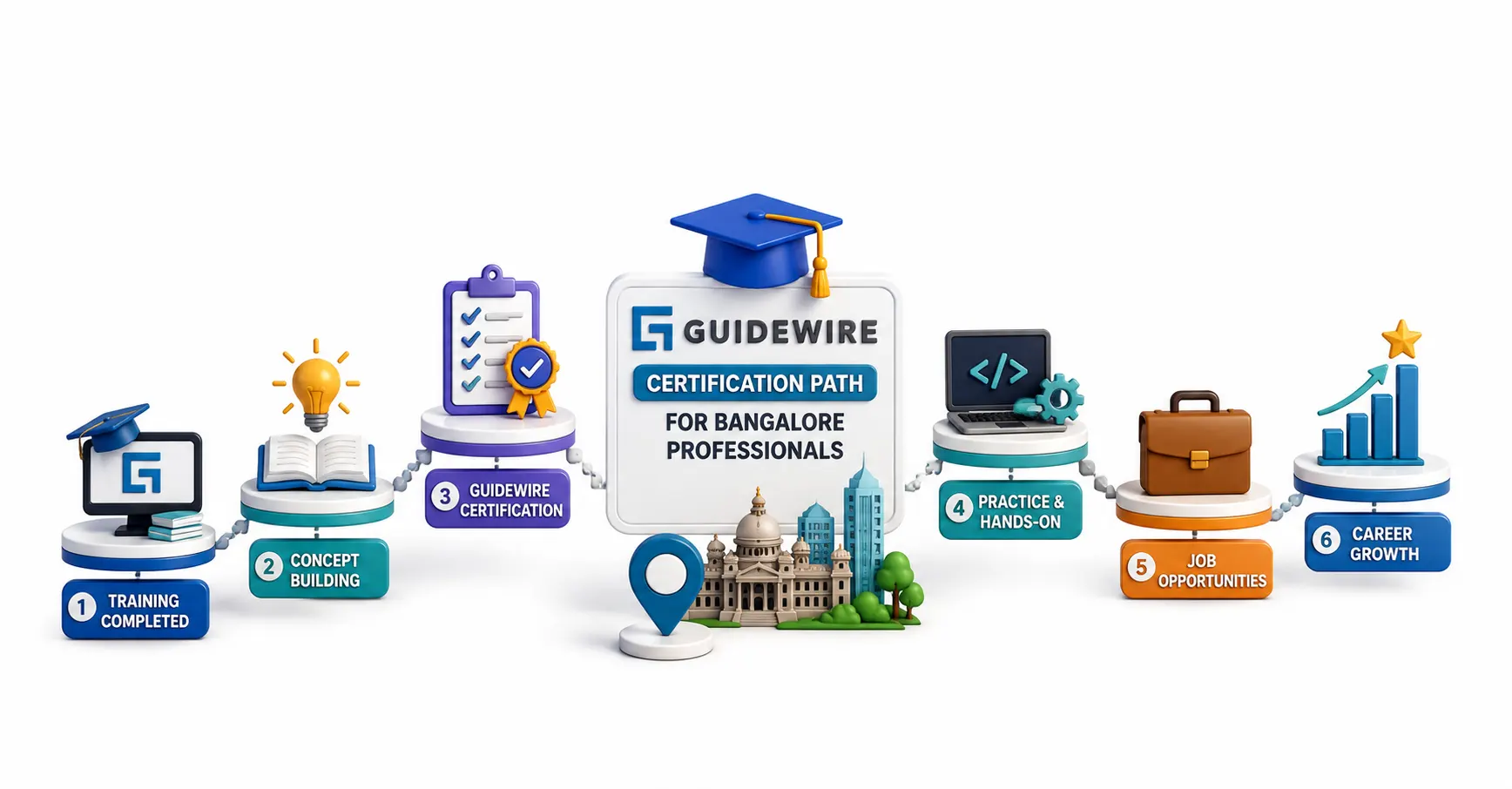
Treat the ninety days after certification as a structured sprint, not an open-ended waiting period.
Weeks one through three: consolidate your sandbox project, document it properly, and prepare a portfolio you can walk an interviewer through confidently. Weeks four through six: actively apply to roles while simultaneously deepening one adjacent skill — SQL for data queries, or basic Java, since Gosu shares syntactic similarities. Weeks seven through nine: focus heavily on mock interviews and revisiting weak areas identified during applications. Weeks ten through twelve: reassess. If interviews aren't converting, examine whether it's a resume gap, a knowledge gap, or simply market timing.
Professionals who treat this window with discipline — rather than passively waiting for recruiters to reach out — consistently land roles faster. If you need structured guidance through this phase, revisiting a well-designed Guidewire training in Bangalore program's placement or mentorship support, such as the one offered at JASTTech, can help bridge the gap between certification and your first real project.
Conclusion
Certification opens the door; it doesn't walk you through it. A clear Guidewire certification path — chosen deliberately, backed by real sandbox projects, and pursued with a structured 90-day plan — is what actually converts training into a career. The professionals who thrive aren't the most certified; they're the most prepared.