

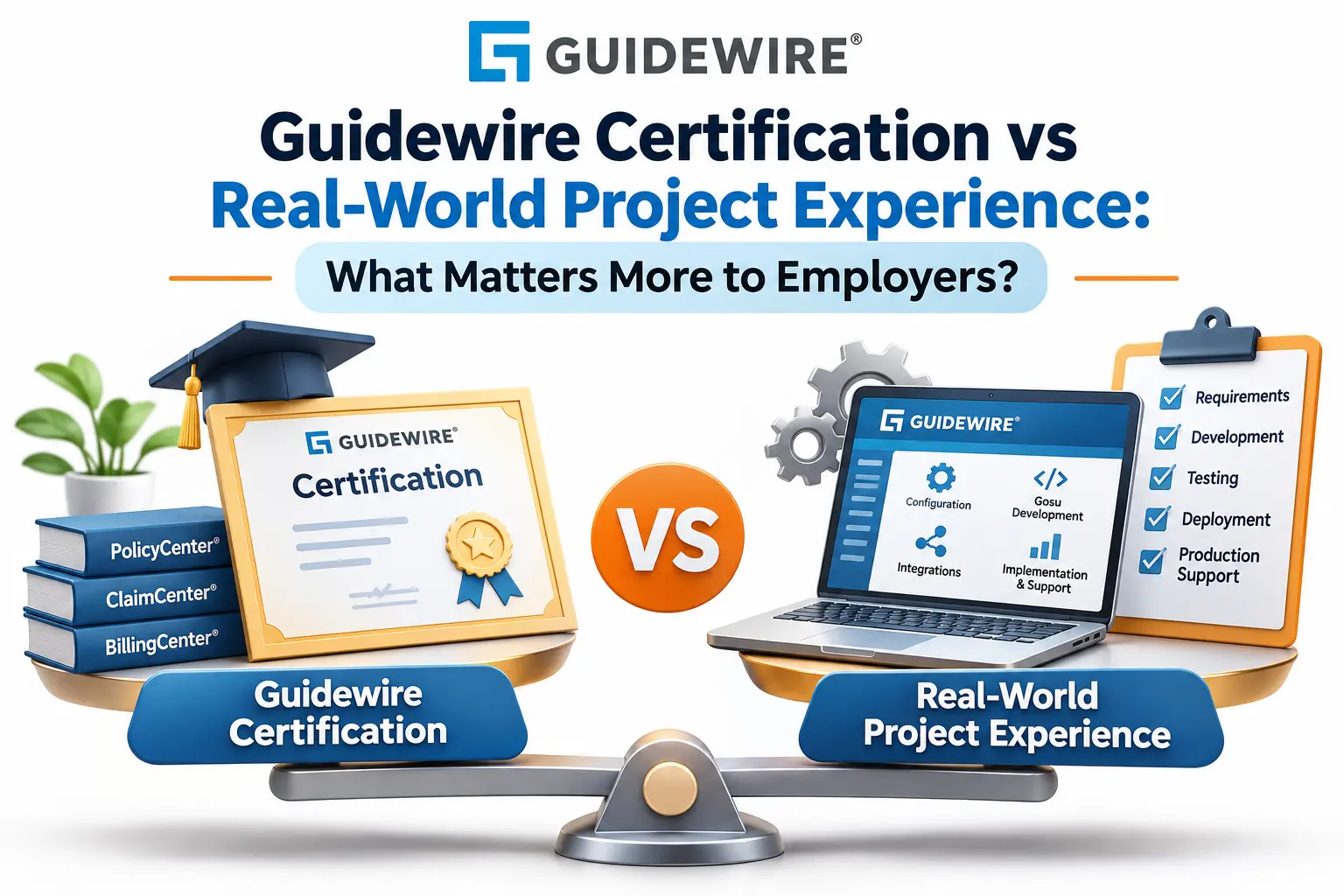
Guidewire Certification vs Real-World Project Experience: What Matters More to Employers?
Navigate through this article using the table of contents below
Table of Contents
No headings found in this article.
A Guidewire certification can strengthen your resume, but can it convince an employer that you can handle a real insurance technology project? Many candidates face this question when preparing for Guidewire careers.
The reality is that employers evaluate more than certificates. They want professionals who understand InsuranceSuite, solve business problems, and contribute to successful implementations. Understanding this difference can change your career strategy.
Why Guidewire Certification Matters in Today's Job Market
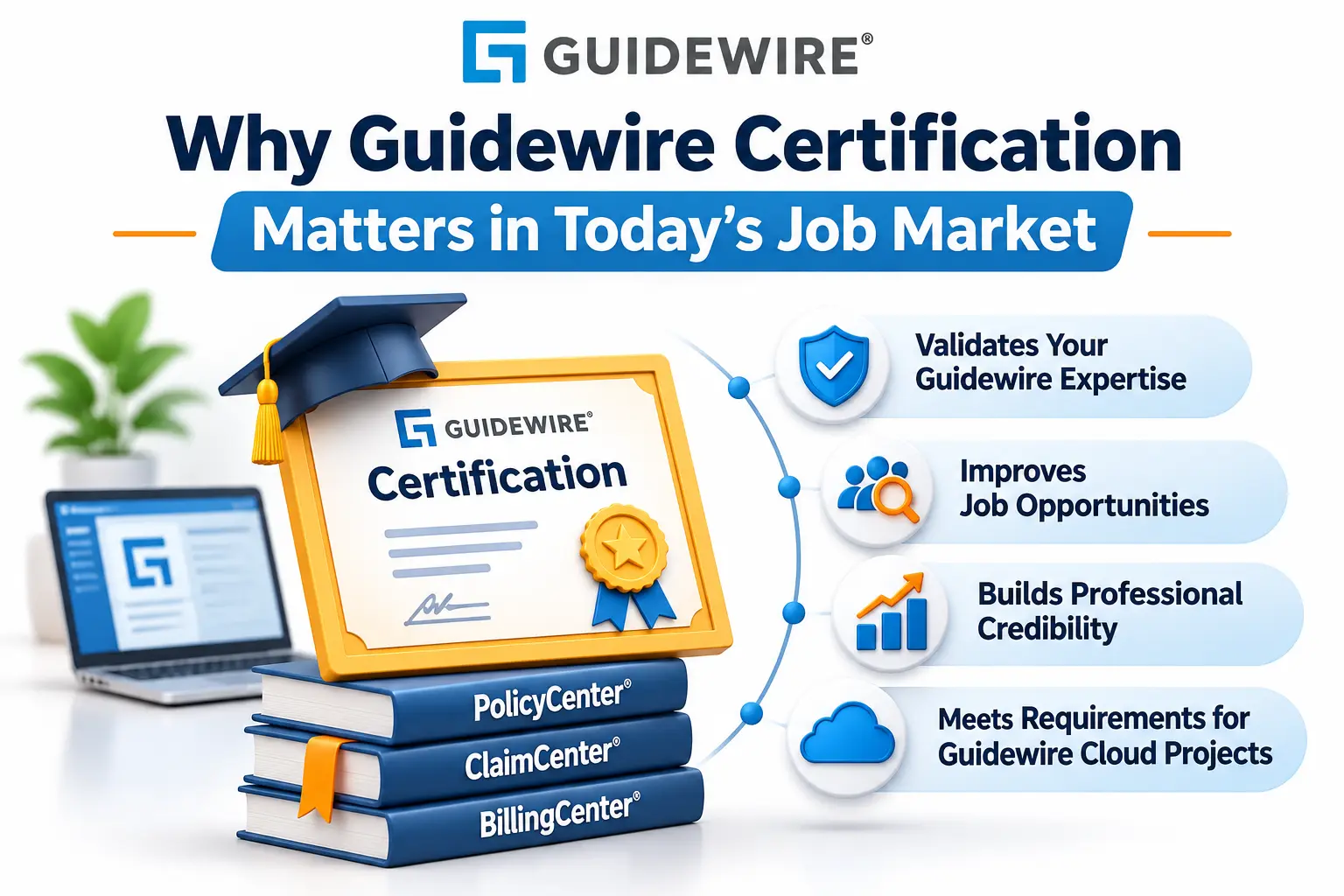
Guidewire certification provides formal recognition of your understanding of specific Guidewire products, technologies, and implementation practices. It helps employers identify candidates who have followed structured learning and demonstrated knowledge through an official assessment.
For professionals entering the insurance technology industry, certification can improve credibility. It demonstrates familiarity with products such as PolicyCenter, ClaimCenter, and BillingCenter, depending on the certification pathway.
Guidewire currently offers two primary certification levels for developers:
Certified Associate: Demonstrates the ability to apply Guidewire fundamentals and best practices with appropriate guidance.
Certified Ace: Recognizes advanced expertise in designing and implementing Guidewire solutions.
Certification is particularly important in Guidewire Cloud implementations, where specific certification requirements apply to professionals working on these projects.
However, passing an examination does not automatically demonstrate that someone can independently configure an application, troubleshoot production issues, or manage complex integrations.
That distinction is important. Certification validates knowledge, while professional performance depends on how effectively someone applies that knowledge.
What Employers Expect From Real-World Guidewire Project Experience
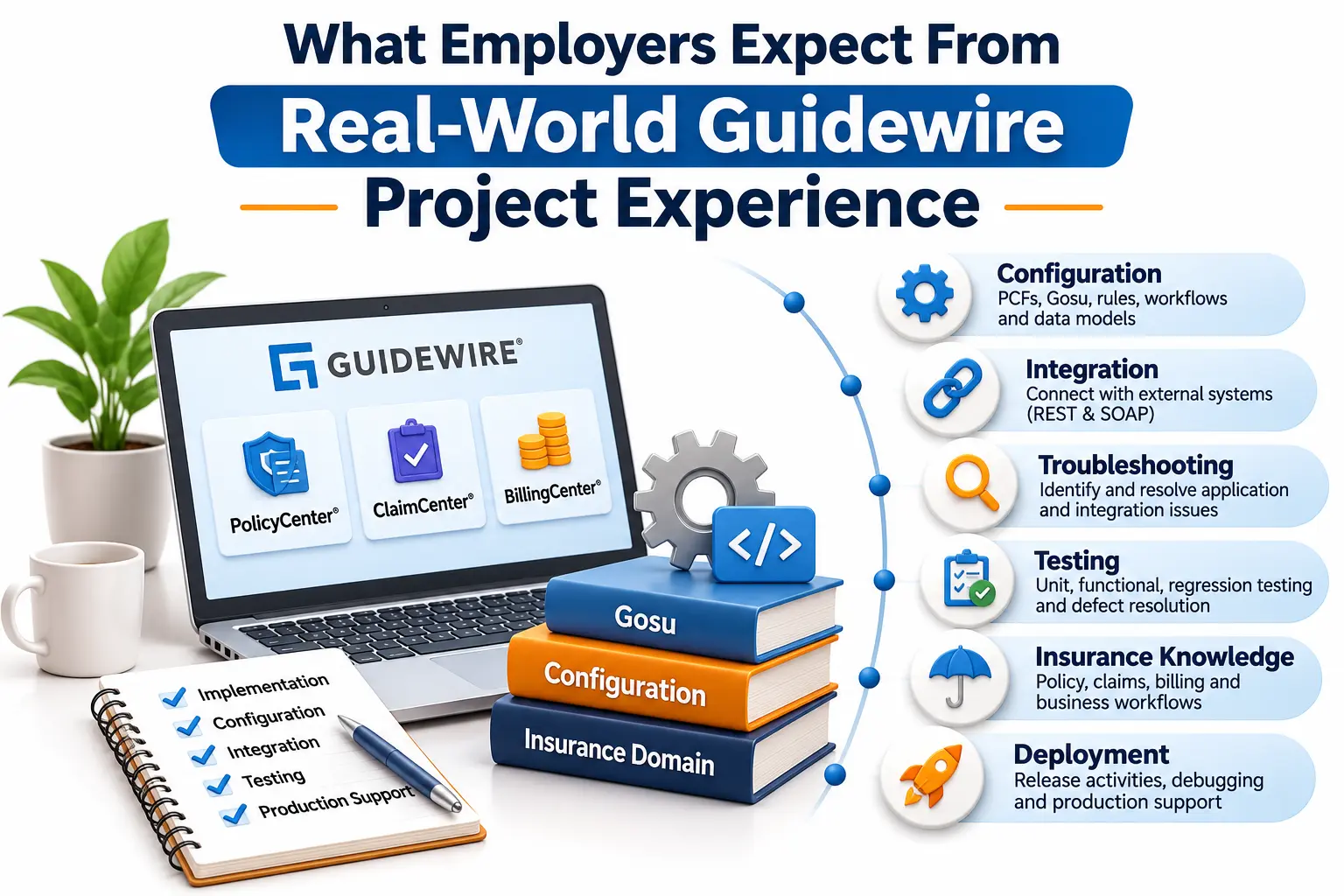
Employers working on insurance technology implementations need professionals who understand how Guidewire applications operate in actual business environments.
Consider a PolicyCenter implementation. A developer might understand product models, Gosu, entities, and configuration concepts from training. However, a real project introduces additional responsibilities, including translating business requirements into technical solutions and resolving unexpected application behaviour.
Employers commonly evaluate practical abilities such as:
Configuration: Working with PCFs, Gosu, rules, workflows, and data models.
Integration: Connecting Guidewire applications with external systems through REST and SOAP services.
Troubleshooting: Identifying configuration errors, integration failures, and application performance issues.
Testing: Understanding unit testing, functional testing, regression testing, and defect resolution.
Insurance knowledge: Understanding policy administration, claims processing, billing operations, and business workflows.
Deployment: Participating in release activities, debugging, and production support.
For example, a ClaimCenter developer may need to investigate why a claim assignment rule is not behaving as expected. Knowing the theoretical definition of assignment rules is useful, but identifying the configuration issue and implementing the correct solution demonstrates practical capability.
This is why project experience often becomes a deciding factor during technical interviews.
Certification vs Practical Experience: Understanding the Difference
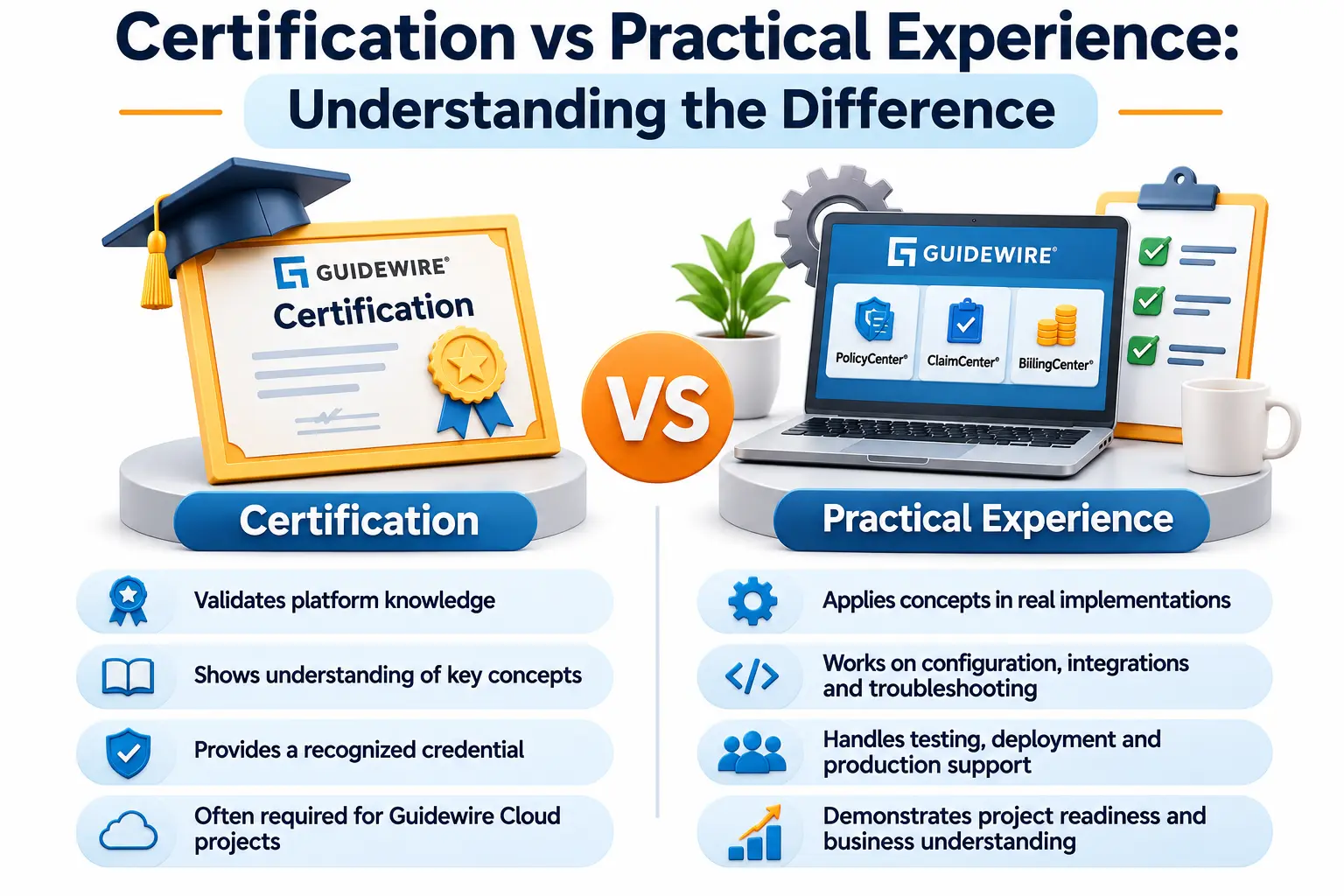
Certification and project experience are not competing achievements. They demonstrate different aspects of professional capability.
Certification establishes that candidates understand a defined set of platform concepts and practices. It provides a recognizable qualification that can help recruiters assess their technical foundation.
Project experience demonstrates whether candidates can apply those concepts under real delivery conditions.
Consider two candidates applying for a Guidewire developer position.
Candidate A:
Holds a Guidewire certification.
Understands Gosu fundamentals.
Has studied PolicyCenter configuration.
Has limited experience solving implementation problems.
Candidate B:
Has completed practical PolicyCenter projects.
Understands Gosu, PCFs, rules, and data models.
Can explain configuration decisions.
Has experience debugging and testing application functionality.
Candidate A has a valuable credential, but Candidate B may demonstrate stronger immediate project readiness.
However, the outcome depends on the employer and role. Some organizations have mandatory certification requirements, particularly for Guidewire Cloud projects.
The strongest professional profile combines both achievements: verified platform knowledge and demonstrated implementation capability.
How Freshers Can Build Real-World Guidewire Project Experience
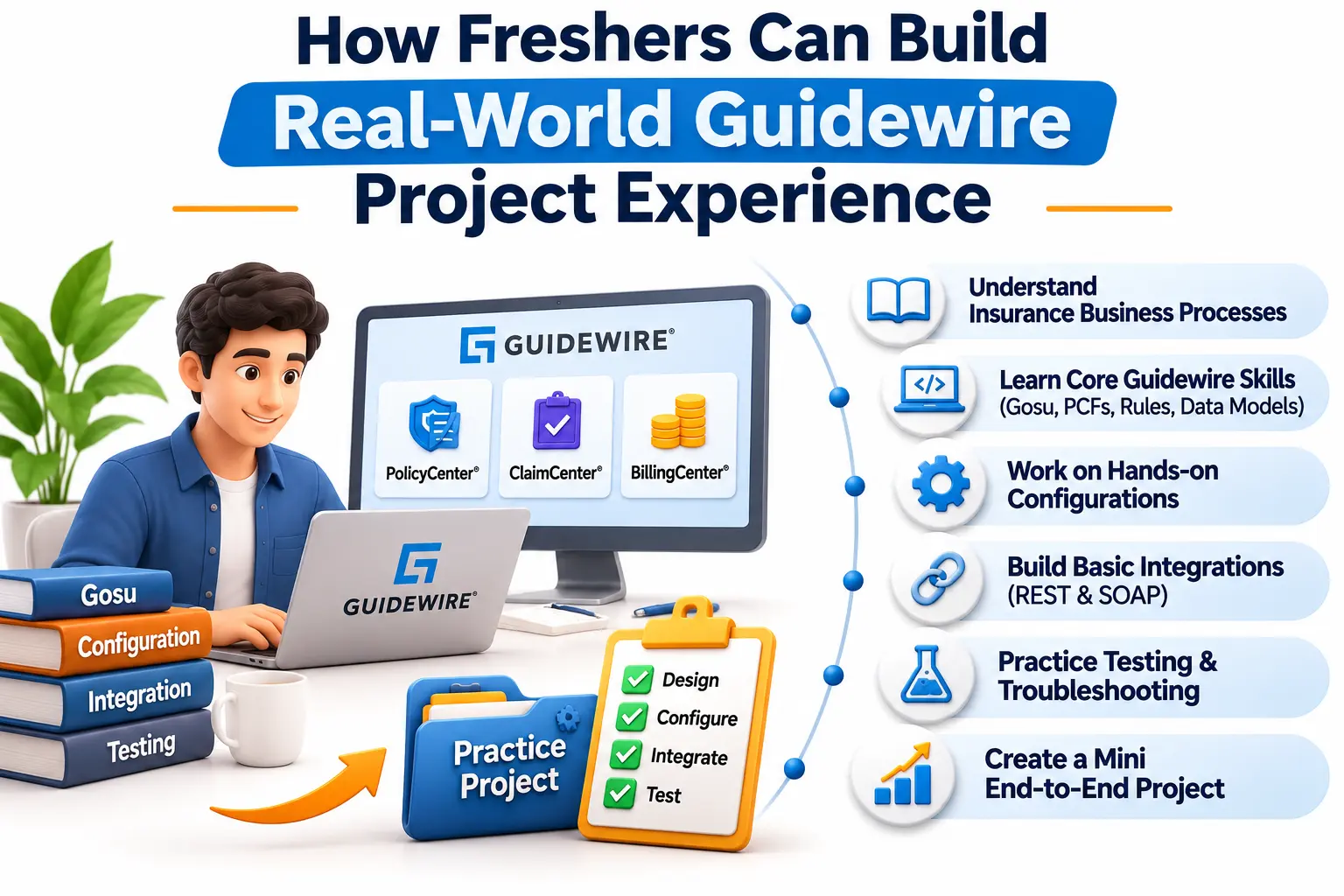
One of the biggest challenges for freshers is gaining project exposure before securing their first Guidewire job. Employers ask for practical knowledge, but candidates often struggle to obtain professional implementation opportunities.
The solution is to develop structured, project-oriented learning experience.
A good starting point is understanding how insurance applications operate. Learn the business processes behind policy creation, underwriting, claims management, and billing before moving into advanced configuration.
Candidates can then develop practical assignments involving:
Creating sample policy workflows in PolicyCenter.
Understanding claim assignment and claim lifecycle operations in ClaimCenter.
Exploring invoices, payment plans, and billing workflows in BillingCenter.
Practising Gosu programming and business rule implementation.
Understanding data models, entities, typelists, and typekeys.
Exploring REST API integration concepts and error handling.
For example, create a simulated insurance policy workflow that covers submission, quotation, underwriting, issuance, and renewal. Document the business requirements, configuration approach, testing scenarios, and expected results.
Such assignments help candidates explain their technical decisions during interviews.
Structured learning through Guidewire Training in Hyderabad can also help aspiring professionals understand InsuranceSuite fundamentals and develop the practical knowledge required to pursue entry-level opportunities.
Importantly, candidates should clearly distinguish academic projects, training assignments, and professional client implementation experience on their resumes.
What Makes a Guidewire Candidate More Valuable to Employers?
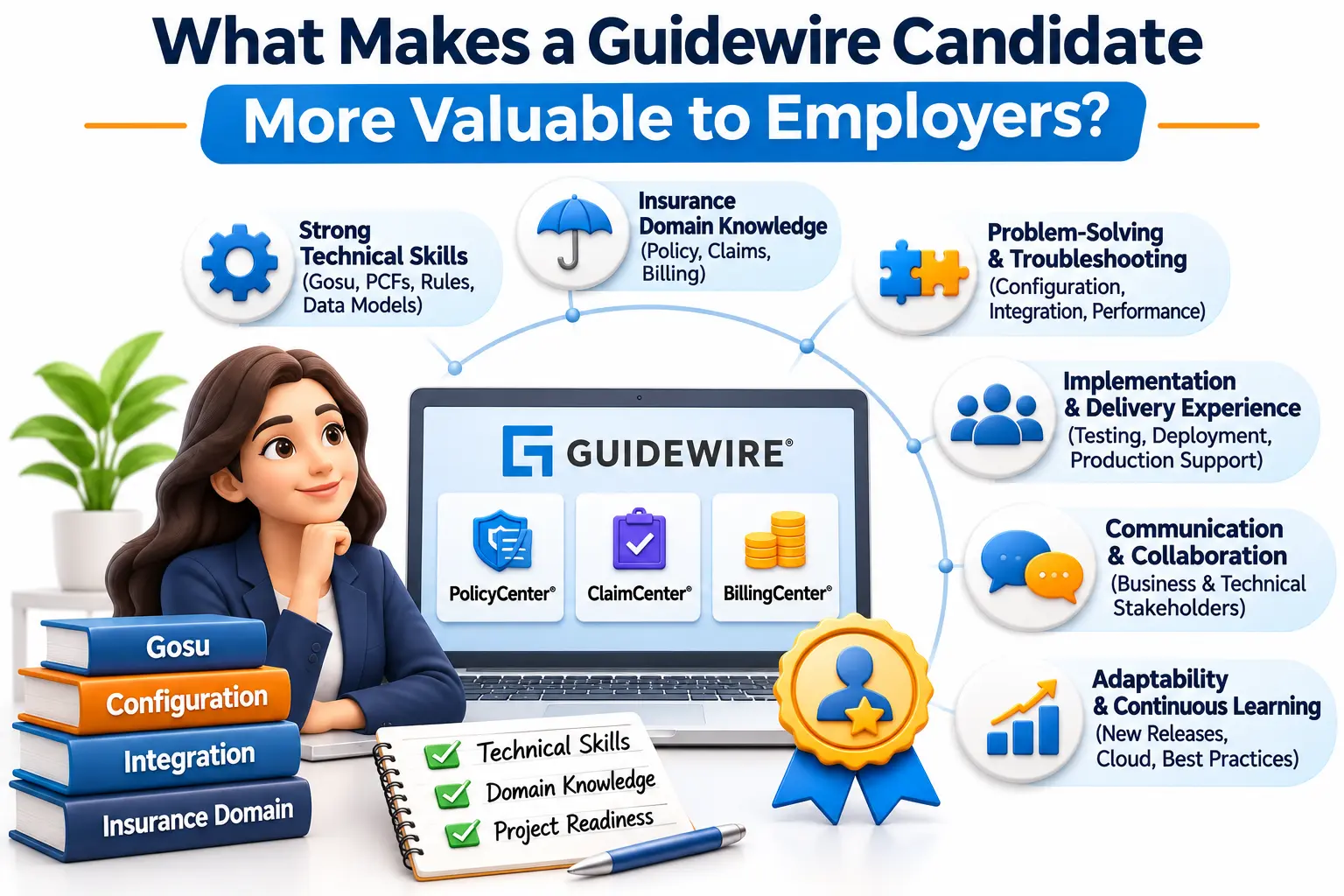
Employers do not evaluate candidates solely by counting certifications or years of experience. They also consider how effectively individuals solve problems, communicate technical decisions, and contribute to project delivery.
A candidate with strong practical knowledge can often explain why a particular configuration approach was selected rather than simply describing what a Guidewire feature does.
Several qualities make candidates more attractive to hiring managers.
Technical problem-solving: Candidates should be comfortable investigating errors, understanding application behaviour, and identifying appropriate solutions.
Insurance domain understanding: Knowledge of policy lifecycles, claims processes, billing operations, and underwriting requirements helps professionals connect technical work with business objectives.
Communication skills: Guidewire professionals regularly interact with developers, testers, business analysts, architects, and clients. Explaining technical issues clearly is essential.
Adaptability: Insurance platforms continue evolving, particularly with cloud adoption, integrations, and digital application development.
For candidates pursuing functional roles, Guidewire Business Analyst Training can help develop requirements gathering, process mapping, user story preparation, and business-to-technical communication skills.
JastTech emphasizes the importance of combining structured technical learning with practical assignments so that candidates can develop skills relevant to industry expectations.
Ultimately, employers value professionals who can understand a requirement, contribute to its implementation, and explain the results.
How to Combine Guidewire Certification and Project Experience for Career Growth
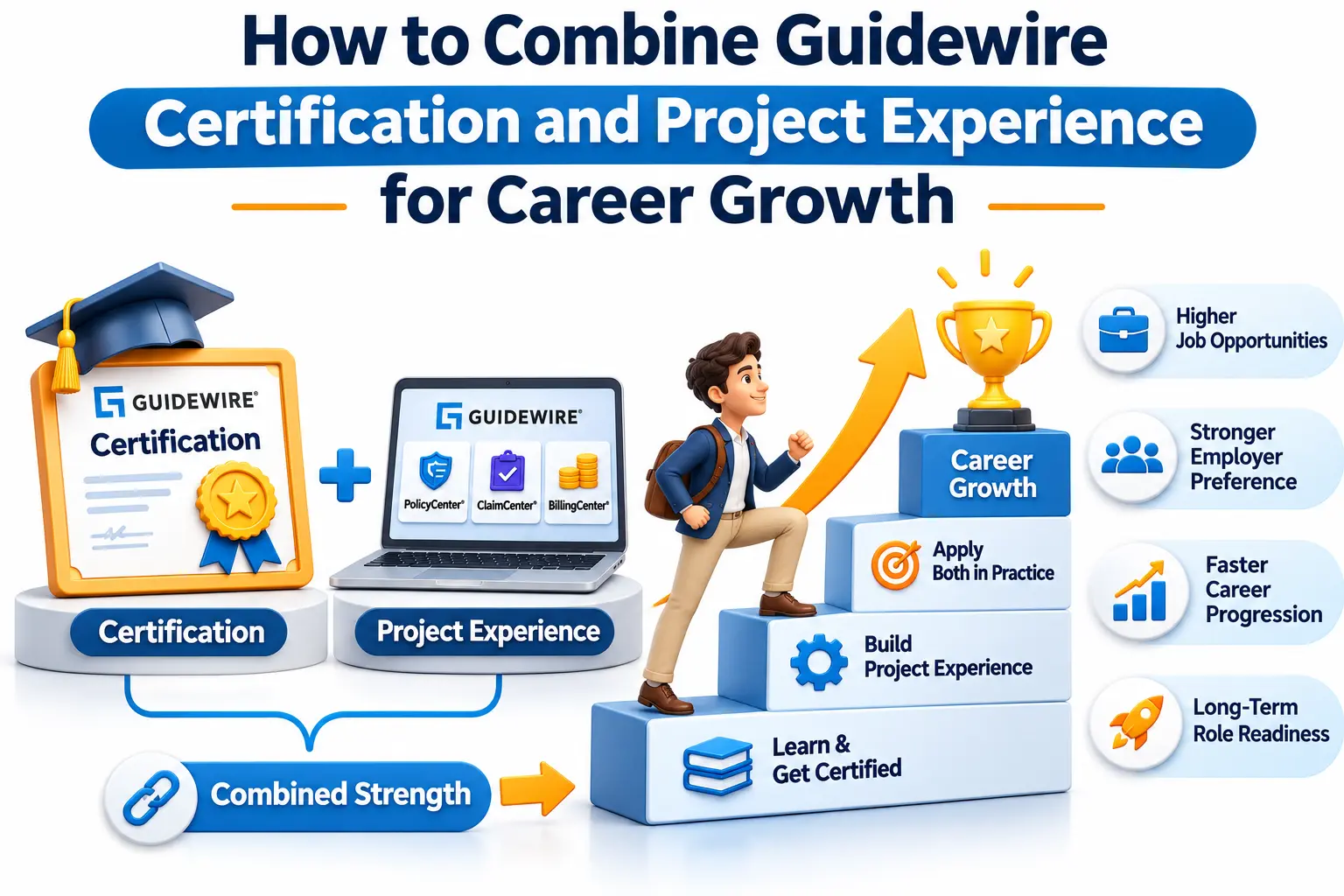
Rather than choosing between certification and practical experience, candidates should develop a learning strategy that incorporates both.
The ideal approach depends on your current experience level and target position.
For freshers:
Build foundational knowledge of Guidewire InsuranceSuite.
Understand insurance business processes.
Practise Gosu and basic configuration concepts.
Complete guided project assignments.
Prepare for the relevant certification pathway when eligible.
For working professionals:
Identify a primary specialization, such as PolicyCenter, ClaimCenter, BillingCenter, or Integration.
Gain experience with complex configurations and integrations.
Develop debugging and production support capabilities.
Pursue relevant Guidewire certifications.
Keep technical knowledge aligned with current platform releases.
For experienced developers:
Strengthen solution design and architectural understanding.
Develop expertise in Guidewire Cloud implementations.
Improve integration and performance troubleshooting capabilities.
Demonstrate ownership of technical decisions.
Maintain relevant certifications and release knowledge.
Candidates preparing through Guidewire Certification Preparation should avoid treating the examination as their final learning objective. Instead, connect every certification topic with a practical scenario.
For instance, after studying Guidewire messaging, practise explaining how messages are generated, processed, monitored, and handled when failures occur.
This approach creates stronger technical understanding and improves the ability to answer scenario-based interview questions.
Conclusion
Guidewire certification and real-world project experience both contribute significantly to career development, but they serve different purposes. Certification establishes structured platform knowledge, while project experience demonstrates the ability to apply that knowledge in actual implementation environments. Employers may require certifications for particular roles, but practical problem-solving, insurance domain understanding, and technical confidence remain important hiring considerations.
For aspiring Guidewire professionals, the smartest strategy is to build both. Develop a strong foundation in InsuranceSuite, complete practical assignments, understand real business workflows, and pursue relevant certifications. With consistent learning and hands-on preparation, candidates can build stronger profiles and become better prepared for opportunities in the growing insurance technology industry.