


Guidewire ClaimCenter Pune Complete Guide to Career Opportunities
Navigate through this article using the table of contents below
Table of Contents
No headings found in this article.
One Guidewire ClaimCenter job post can suddenly turn a quiet Friday evening into a flood of applications. That is exactly what makes Pune interesting for anyone watching the insurance technology job market. Guidewire roles are becoming more visible, and ClaimCenter continues to be a key area for developers, testers, business analysts, and implementation professionals.
Pune has become an active hub for Guidewire implementation, development, testing, and support projects, with major IT services and consulting organizations working on insurance technology solutions in the city. But getting into this field takes more than simply learning the name of the platform.
This guide looks at what a Guidewire ClaimCenter role in Pune actually involves, which technical and functional skills employers commonly expect in 2026, how professionals can prepare for the work, and what the hiring process can look like. It is also useful for anyone considering a Guidewire course in Pune and trying to understand what skills and knowledge they should build before applying for a job.
Why Pune Has Become a Guidewire Hiring Hotspot
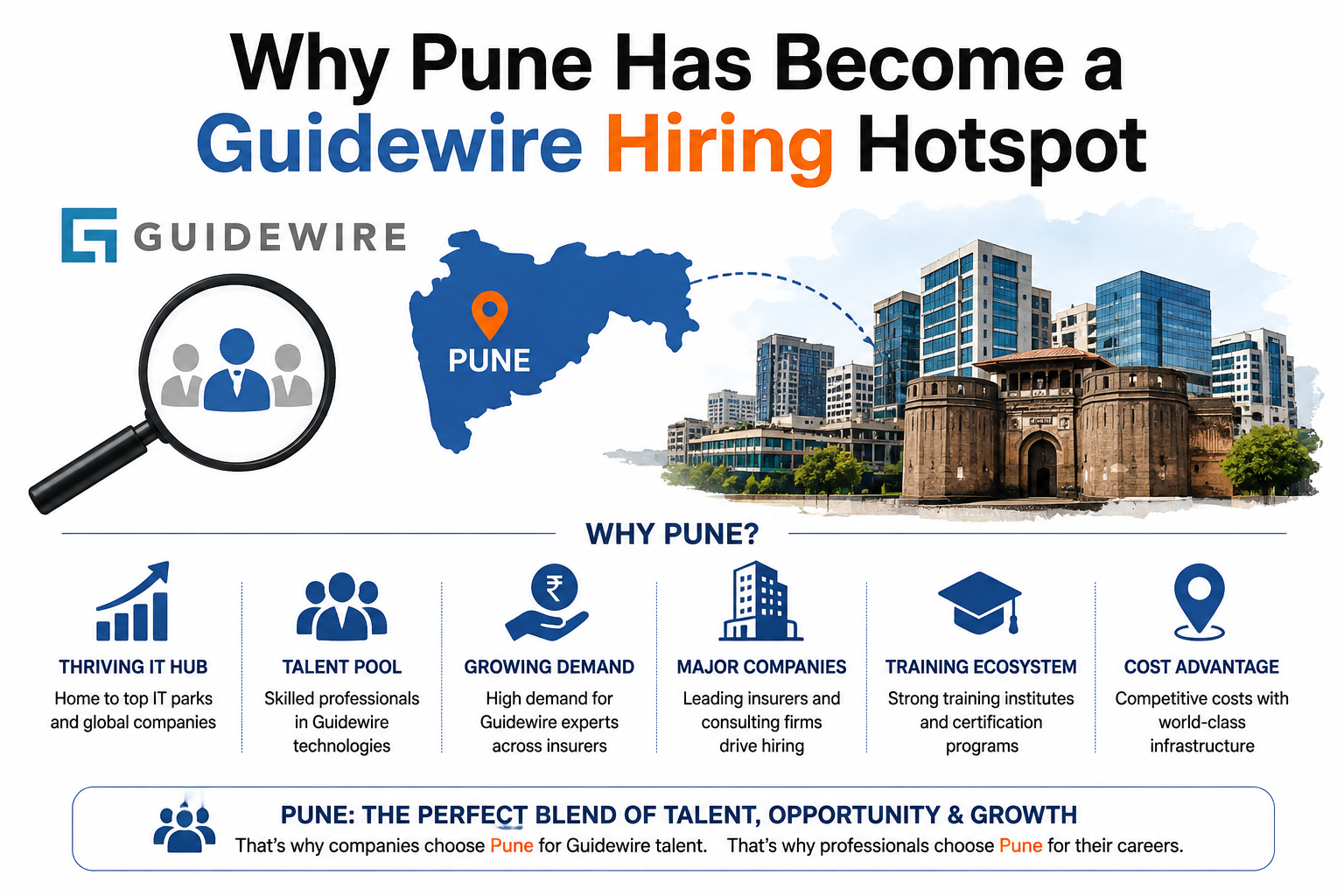
Pune's rise as a Guidewire center is not an accident. The city already had a mature insurance-and-BFSI IT ecosystem, and when global carriers began modernizing their claims systems, Pune's talent pool and cost structure made it a natural delivery location. Today, firms including Accenture, PwC, Deloitte, EY, and several dedicated Guidewire consulting partners run active ClaimCenter engagements from Pune offices, alongside product and platform teams.
What is driving the demand isn't just backlog work — it is transformation. Insurers across the US, UK, and Australia are migrating legacy claims systems onto Guidewire Cloud, and that migration wave needs configuration specialists, integration developers, and testers in large numbers. Pune, sitting alongside Bangalore and Hyderabad as one of India's three biggest Guidewire delivery centers, has absorbed a large share of that work. If you track job boards over any given month, Pune consistently ranks among the top Indian cities for live ClaimCenter openings, spanning everything from associate developer roles to senior architect positions.
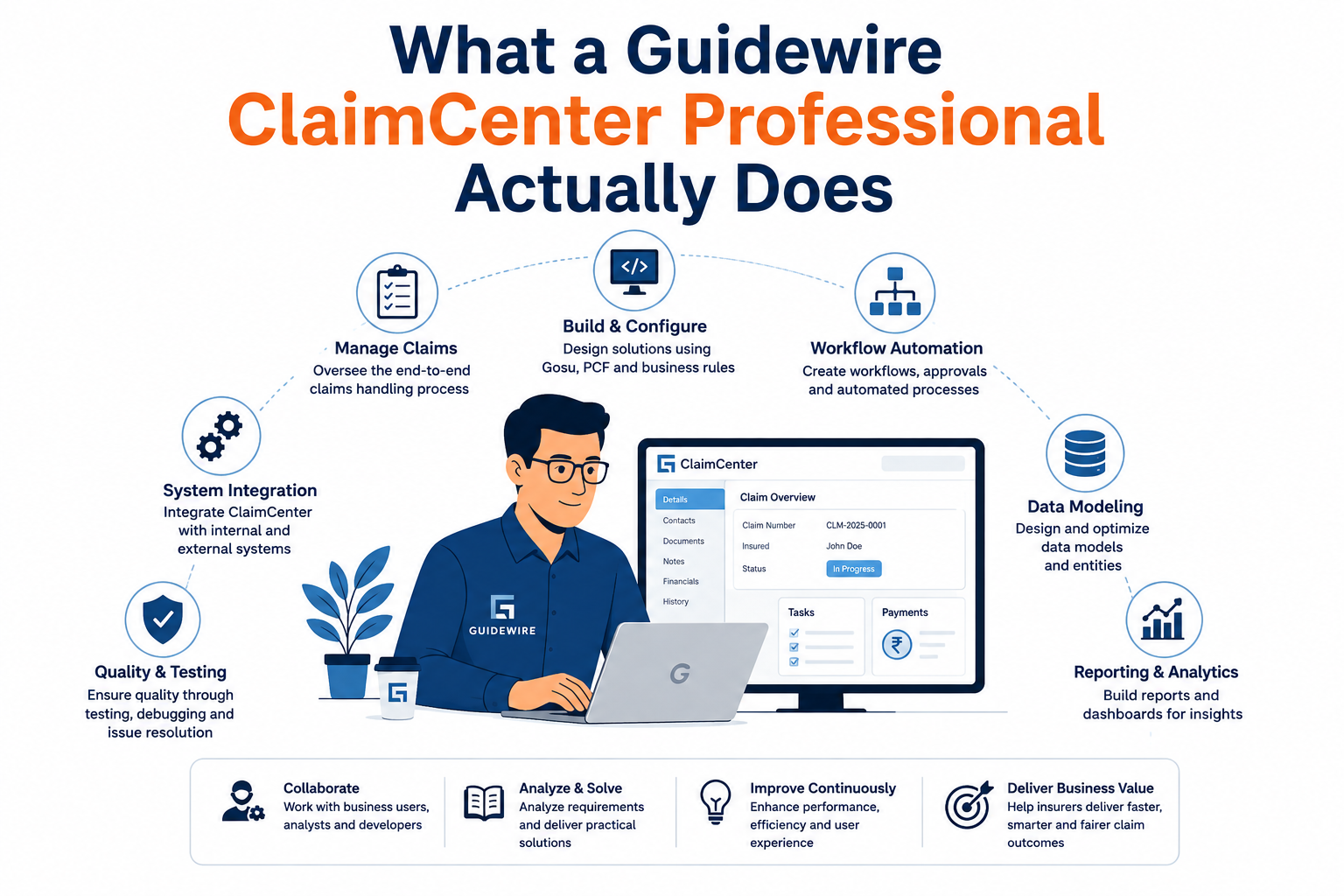
It helps to be clear-eyed about what this job involves, because "Guidewire developer" covers a wide range of day-to-day work depending on your track.
Configuration work: building and modifying claim workflows, business rules, and user interfaces using Guidewire's proprietary Gosu language and PCF (Page Configuration Framework) files.
Integration work: connecting ClaimCenter to external systems — payment gateways, document management platforms, third-party data providers — using SOAP and REST APIs, along with tools like MuleSoft, Dell Boomi, or Apigee.
Data and rating work: managing the Guidewire data model, writing SQL queries, and handling claim rating logic.
Quality engineering: testing claim workflows end-to-end, validating rules against real-world claim scenarios, and running regression suites, often in Agile sprints.
Business analysis: translating an insurer's claims-handling requirements into functional specifications developers can build against.
None of this is abstract coding in a vacuum — ClaimCenter sits at the center of how an insurance company actually pays out claims, which is why domain understanding (property and casualty insurance, in particular) carries real weight alongside the technical skill set.
Core Skills That Actually Get You Hired
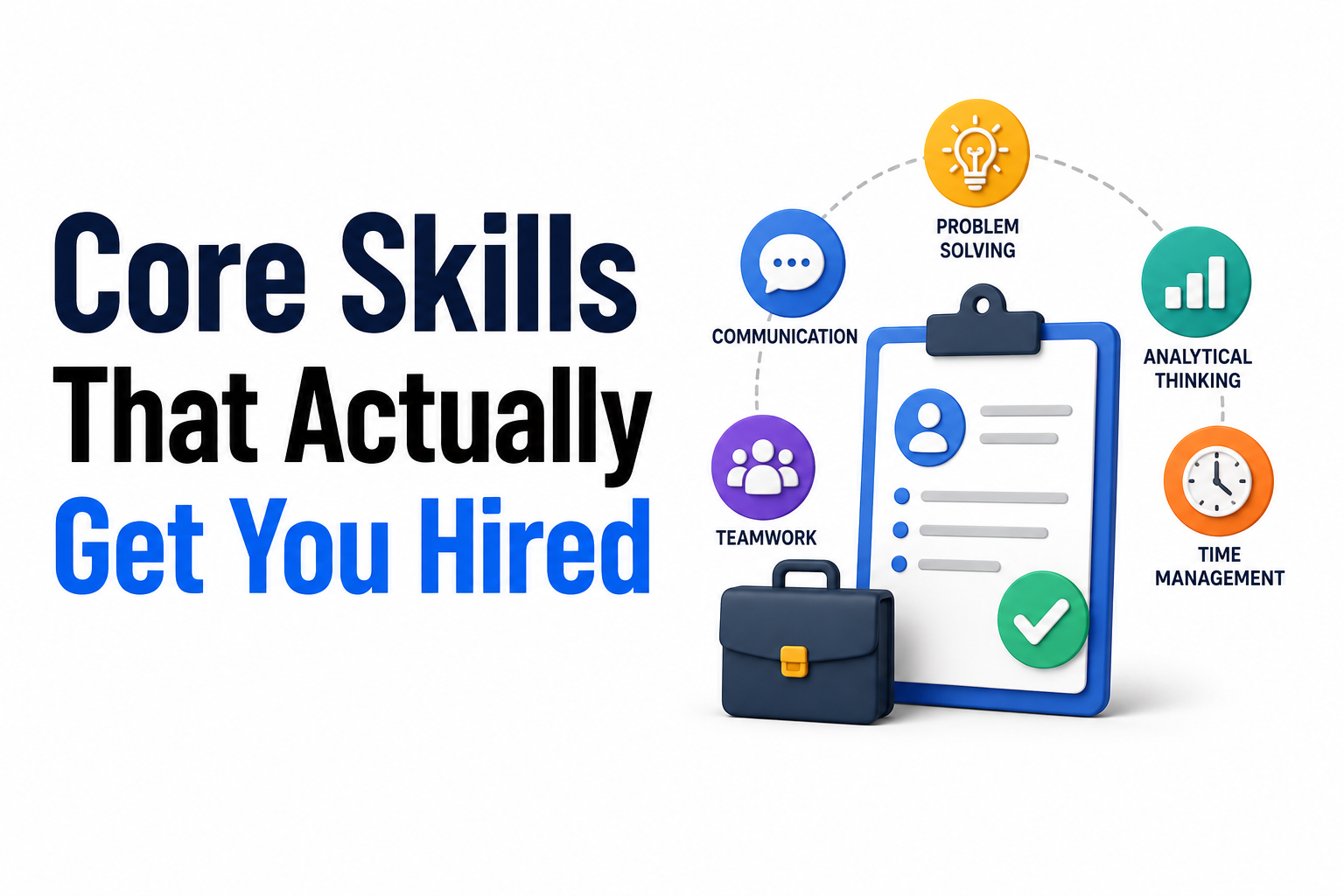
Job postings for Pune-based ClaimCenter roles follow a fairly consistent pattern once you look past the buzzwords. The skills that show up again and again include:
Gosu programming — Guidewire's own object-oriented language; there is no substitute for hands-on Gosu experience.
Java and JavaScript — the underlying platform is Java-based, and most integration work leans on solid Java fundamentals.
Guidewire Cloud Platform experience — as insurers move off on-premise ClaimCenter installs, cloud configuration and deployment knowledge is increasingly a baseline expectation rather than a bonus.
Web services (SOAP/REST), XML, and JSON — for anything touching integrations.
SQL and relational database experience — for data model work and troubleshooting.
DevOps familiarity — Jenkins, Git, and Azure DevOps show up frequently in current postings, reflecting how CI/CD pipelines have become standard even in configuration-heavy roles.
Insurance domain knowledge — understanding how a claim moves from First Notice of Loss through settlement makes you dramatically more useful than someone who only knows the tooling.
The mix you need shifts depending on the specific role — a pure configuration specialist doesn't need the same integration depth as someone doing platform engineering — but Gosu plus a working grasp of the claims lifecycle is close to non-negotiable across the board.
Career Paths and Job Roles You Can Target
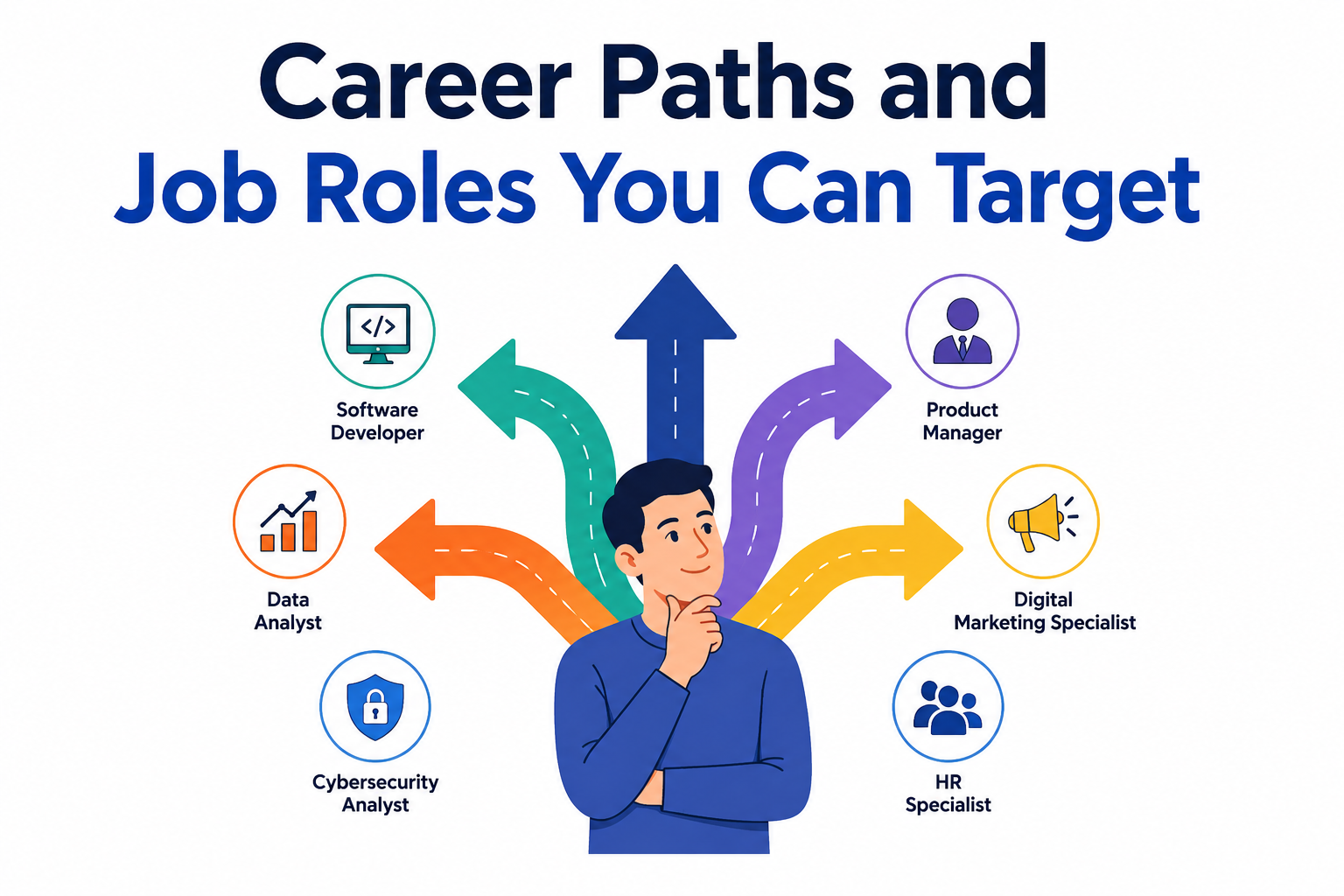
One thing that often surprises people when they first explore Guidewire is the number of different career paths available. It is not just about becoming a developer. Depending on your background and interests, you can choose from several roles that are involved in building, testing, and supporting insurance applications.
Some of the common Guidewire roles include:
ClaimCenter Configuration Developer — a popular starting point, where you work on configuring screens, rules, workflows, and other ClaimCenter features.
Guidewire Integration Developer — focused on connecting Guidewire with external applications using APIs, messaging, and integration services.
Guidewire QA/Test Engineer — responsible for testing configurations, business rules, integrations, and overall application functionality.
Guidewire Business Analyst — works between the business and technical teams to understand insurance requirements and translate them into system requirements.
Guidewire Solution Architect — a senior-level role focused on designing complete solutions across PolicyCenter, ClaimCenter, BillingCenter, and related systems.
Guidewire Support/AMS Specialist — handles production support, troubleshooting, maintenance, and ongoing changes after the system goes live.
Companies hire for these roles based on project needs, experience, and technical or insurance knowledge. With time, professionals can also move from configuration into integration, technical leadership, or architecture. For beginners exploring a Guidewire class in India, understanding these roles early can make it much easier to choose the right learning path.
Salary Expectations in Pune's Guidewire Market

Compensation in this space has held up well because demand continues to outpace the supply of experienced Guidewire talent. Based on current market data, here's a realistic range:
Freshers/entry-level (0–2 years, often after structured training): roughly ₹6–9 LPA.
Mid-level developers (3–6 years, solid configuration or integration experience): roughly ₹12–22 LPA.
Senior developers and consultants (6+ years, especially with cloud migration or architecture experience): ₹25–35+ LPA, with some specialist and architect roles going well beyond that at top consulting firms.
Certifications matter here more than in many other tech domains — professionals holding current Guidewire Developer Associate, Specialist, or Ace credentials consistently report a meaningful pay premium over non-certified peers, largely because certification signals you can be deployed on a live client project without a long ramp-up period. Companies delivering claims transformation for large global insurers are generally the ones paying at the top of these ranges, since the stakes and complexity of that work are higher.
How to Actually Break Into This Field

If you're evaluating whether to invest time in Guidewire ClaimCenter as a career direction, here's a practical path rather than a vague "learn the platform" suggestion:
Start with Java fundamentals if you don't already have them — Gosu is easier to pick up once object-oriented programming is second nature.
Get hands-on with Guidewire's own learning resources and a sandbox environment rather than relying on theory alone; configuration work is learned by doing.
Pursue the Guidewire Developer Associate certification first, then build toward Specialist as you gain project exposure — most Pune employers explicitly list certification as a preferred or required qualification in job postings.
Build a small portfolio project — even a simplified claim workflow you've configured yourself — that you can walk an interviewer through.
Target the transformation wave, not just maintenance roles. Cloud migration projects are where most new hiring is concentrated right now, so cloud platform familiarity gives you an edge over candidates who only know legacy on-premise ClaimCenter.
Network within Pune's insurance-tech community — many roles get filled through referrals before they're widely advertised, and local meetups or LinkedIn groups focused on Guidewire are worth following.
The honest picture is that Guidewire ClaimCenter isn't a platform you master over a weekend, but it rewards focused effort unusually well — the talent pool remains narrower than the demand, and that gap is exactly what's keeping salaries and hiring activity strong across Pune's insurance IT sector heading into the rest of 2026.