


Guidewire Course in Kolkata: Syllabus, Fees, Certification & Career Opportunities
Navigate through this article using the table of contents below
Table of Contents
No headings found in this article.
A recruiter in Kolkata recently admitted something surprising: she had three open Guidewire positions and barely five qualified applicants to choose from in an entire month. That imbalance isn't unusual — it's the norm right now.
Insurance companies run on software most people never think about, and Guidewire happens to be the engine behind a huge share of it. A solid Guidewire course in Kolkata puts you directly in front of that hiring gap, and the details below explain exactly how.
The Insurance Tech Boom Nobody's Talking About

Kolkata has long been known for IT services, support operations, and BPO-driven employment, but the city’s technology landscape is gradually becoming more specialized. Guidewire is one area attracting attention. As global insurance companies continue using Guidewire for core business operations, there is a growing need for professionals who can configure, test, integrate, customize, and maintain these platforms. This has created opportunities for Guidewire developers and consultants within Kolkata’s expanding IT ecosystem.
Guidewire products such as PolicyCenter, BillingCenter, and ClaimCenter handle important insurance processes, from policy management and billing to claims administration. Because these systems are deeply integrated into an insurer’s operations, replacing them can involve significant cost, time, and business risk. As a result, companies continue to invest in skilled professionals who can manage, upgrade, troubleshoot, and improve their existing Guidewire environments.
Kolkata also offers a practical advantage for employers: access to a large pool of engineering and IT graduates combined with relatively competitive operating costs. This has encouraged training providers to introduce specialized Guidewire training in India and placement support, helping freshers and experienced IT professionals build skills aligned with industry requirements.
For someone planning to enter Guidewire, the opportunity is attractive because it sits within a specialized technology niche rather than the much broader and highly competitive general web-development market. However, completing a course alone is not enough. Practical knowledge of Gosu, Guidewire configuration, integrations, testing, and real project workflows can make a significant difference when applying for jobs.
The combination of specialized skills, established insurance technology, and growing demand is what makes Guidewire an increasingly relevant career option in Kolkata.
Breaking Down What You'll Actually Study
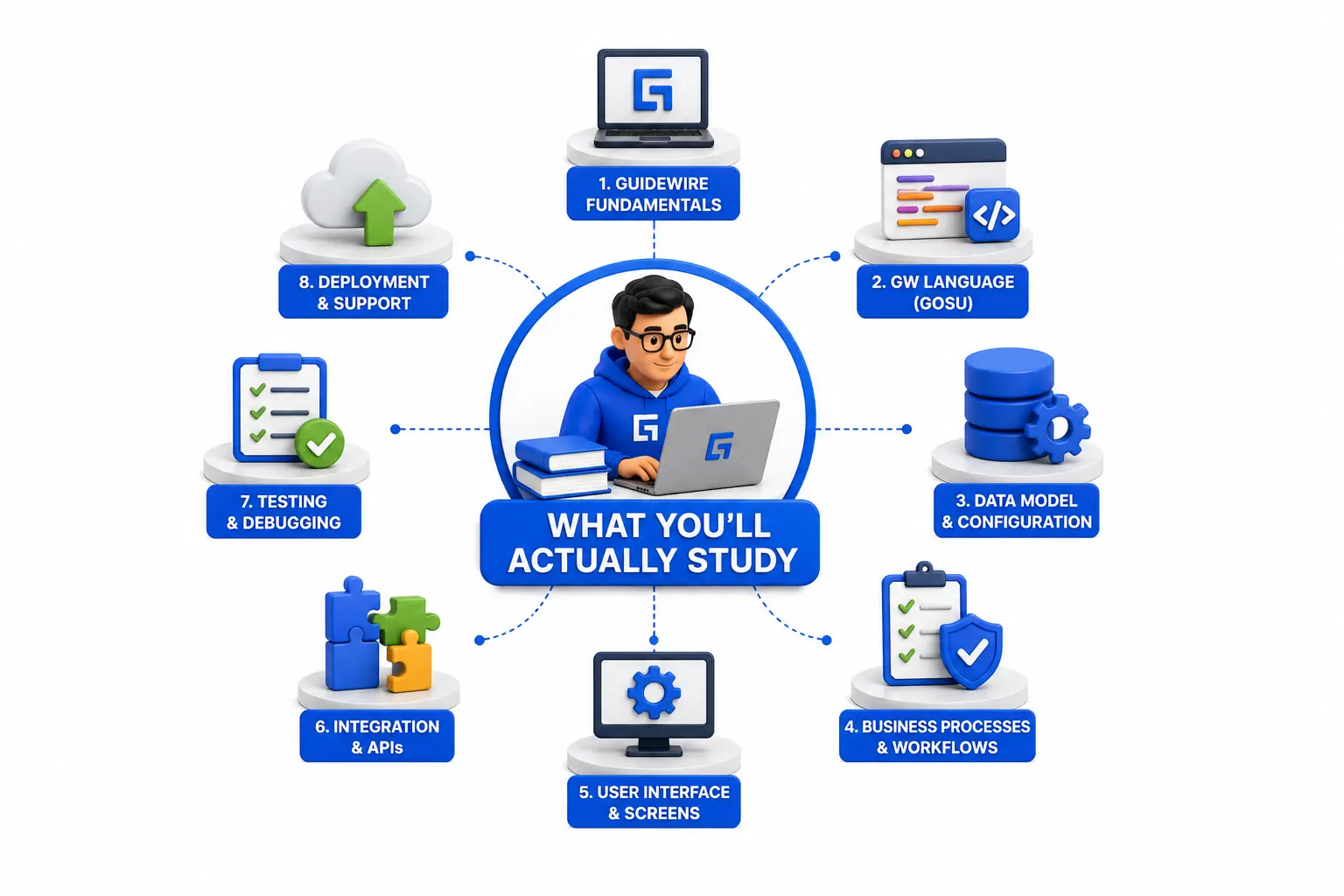
Course structure varies slightly between institutes, but most reputable programs follow a similar backbone built around the Guidewire InsuranceSuite: PolicyCenter, BillingCenter, and ClaimCenter.
Here's what typically shows up on the syllabus:
Platform architecture — how data flows between modules and why the underlying model matters for configuration work
Gosu — Guidewire's own programming language, essential for customizing business logic
PCF (Page Configuration Format) — the framework for building and editing screens
Integration methods — linking Guidewire to external systems through plugins and messaging queues
Business rules and the rules engine
Deployment and testing fundamentals
Stronger programs now also touch on Guidewire Cloud, since carriers are steadily moving away from on-premise deployments. Employers increasingly ask about cloud familiarity during interviews, so a syllabus that ignores it is already a step behind.
What separates a decent course from a genuinely useful one is lab time. Reading about Gosu syntax on a slide is nothing like debugging it yourself inside a sandbox environment at 11 p.m. because a rule isn't firing correctly. That struggle is where real learning happens.
Working Out What the Training Will Cost You
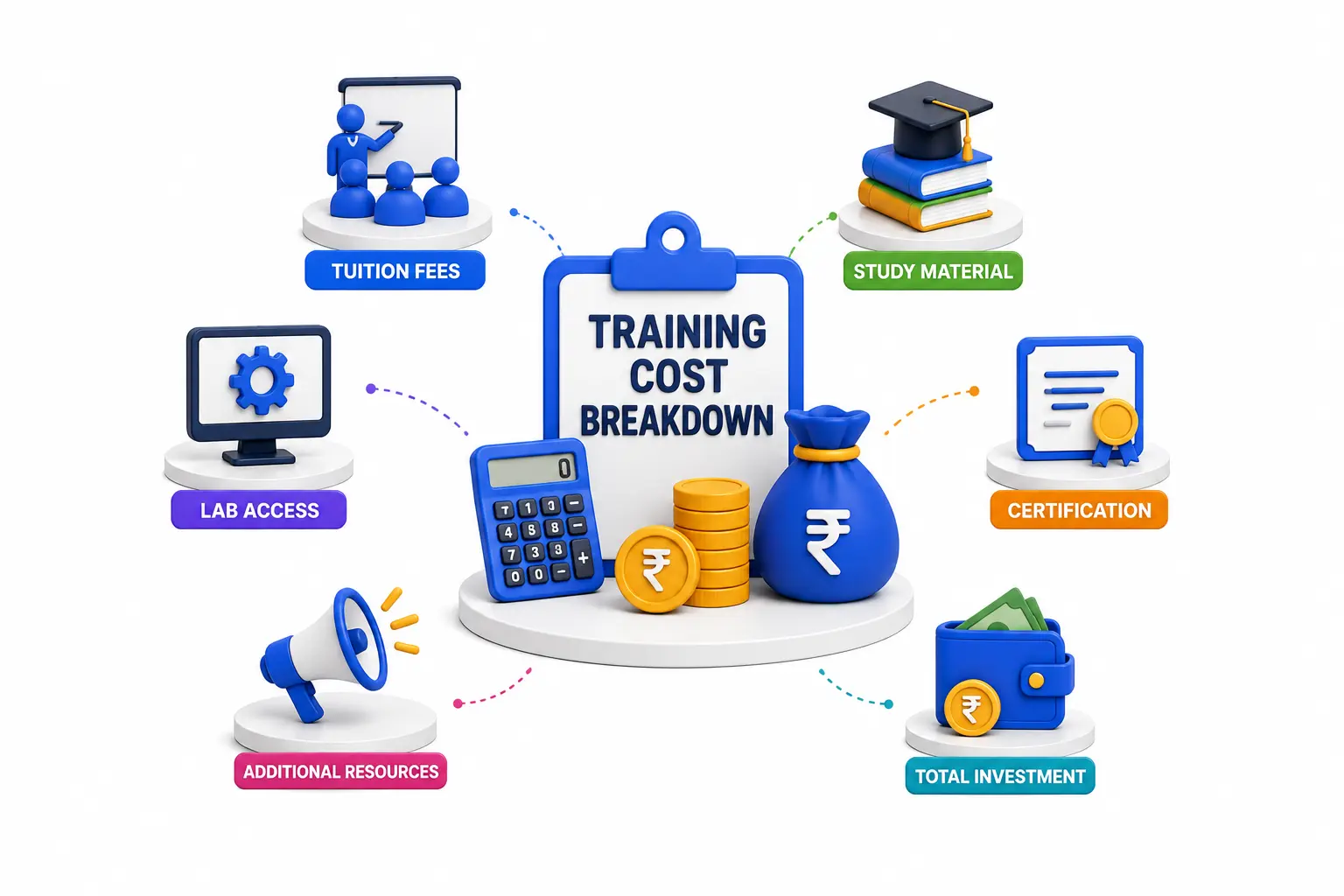
Pricing for Guidewire training in Kolkata isn't fixed — it shifts based on course depth, batch size, and whether you're getting group instruction or individual mentoring. A narrow, single-module course costs less than a full track spanning all three InsuranceSuite products.
The smarter approach isn't hunting for the lowest number on a brochure. It's asking what that number actually buys you. Some institutes fold certification prep, live project work, and interview coaching into one fee; others charge piecemeal for each add-on, which can quietly inflate your total spend.
One detail worth confirming upfront: does the fee include hands-on access to a live Guidewire instance? Watching a trainer demonstrate configuration on a projector is not the same as fumbling through it yourself and fixing your own mistakes. That difference shows up later, in how you handle a technical interview.
Several institutes now offer installment plans, which helps if you're funding this transition out of pocket while still working elsewhere. Before signing up anywhere, get quotes from at least two or three providers and compare what's actually included — not just the sticker price.
Does the Certification Exam Really Move the Needle?
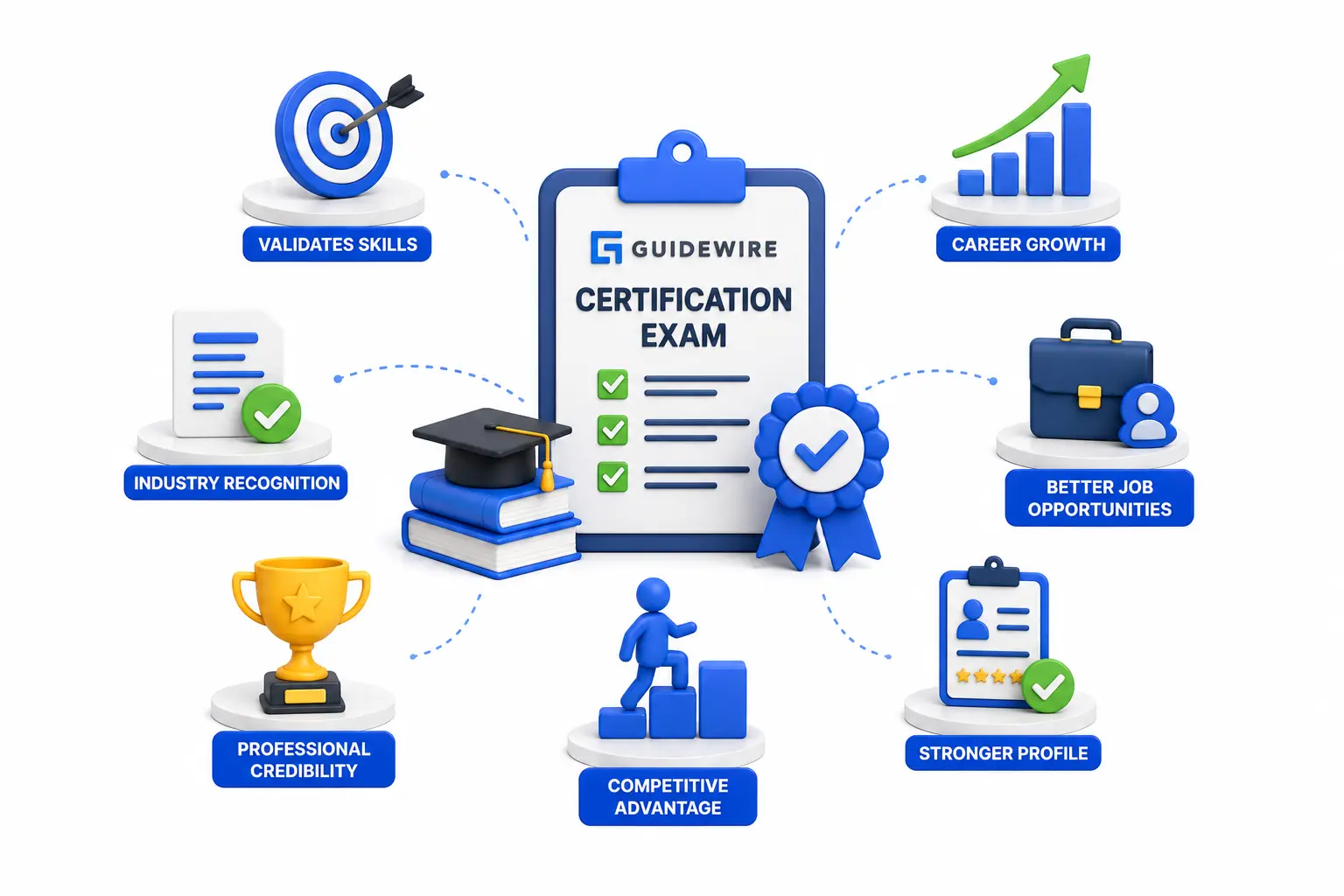
It's a fair thing to question. Plenty of IT certifications look impressive on paper but do little for actual hiring outcomes. Guidewire's certification is an exception, mostly because the pool of certified professionals remains small relative to how many roles need filling.
Guidewire University runs official exams across specific tracks — ClaimCenter, PolicyCenter, and BillingCenter configuration among them. Clearing one tells a hiring manager you've been tested on real platform knowledge, not just exposed to a few tutorial videos.
Recruiters screening resumes for insurance-tech roles frequently use certification as a first filter, especially when sorting through applicants who don't have prior Guidewire project experience. It won't single-handedly land you the job, but it moves your profile out of the discard pile faster.
There's a secondary benefit too. Preparing for the exam forces you to study configuration edge cases most learners skip when they're just following a course casually. That extra depth tends to surface naturally during technical interviews, where questions rarely stick to textbook basics.
If money is tight after training, this is the one expense worth stretching for.
Where Does This Actually Lead Career-Wise?
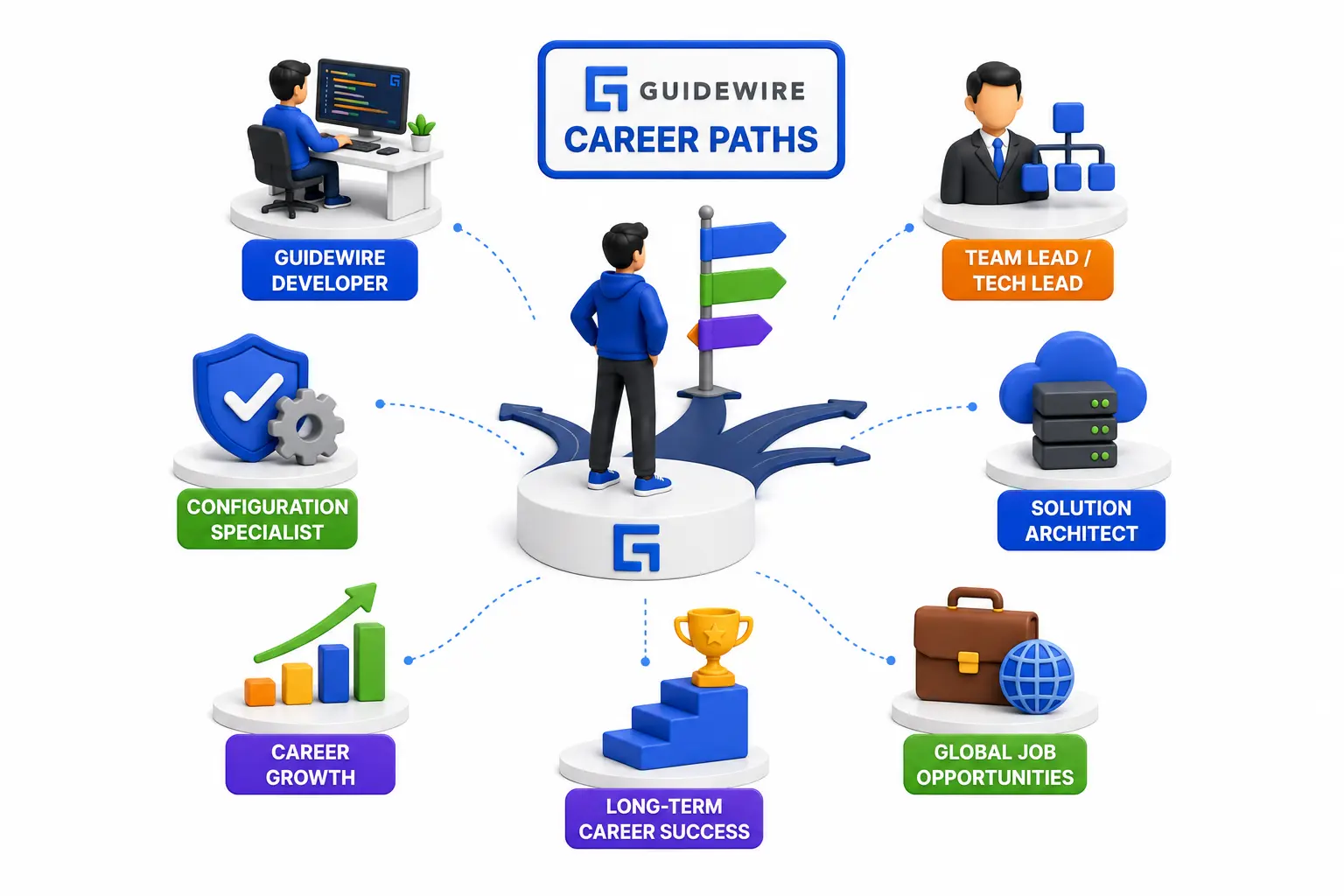
Certified professionals typically move into roles like Guidewire Developer, Configuration Analyst, or Business Systems Analyst inside insurance-focused IT teams. Others gravitate toward integration work, connecting Guidewire to external systems such as payment processors or document platforms.
In Kolkata specifically, much of this work flows through IT services firms handling Guidewire implementation for insurance clients based abroad — the US, UK, and Australia being common markets. That client exposure ends up sharpening communication skills alongside the technical ones, which matters more than people expect early on.
Professionals with a couple of years of hands-on configuration experience often progress into Guidewire Architect or Technical Lead positions, where compensation and responsibility both climb noticeably. Compared to some tech fields where the next career step feels murky, this path is unusually well-defined.
There's steady room for QA specialists too — testers who focus specifically on Guidewire implementations are in demand and represent a solid entry point for people who'd rather start in testing than jump straight into development.
Because supply hasn't caught up with demand, many newly certified professionals start hearing from recruiters within a few months — a pace that's become rare across most other IT specializations.
Read more about :- Guidewire Skills You Actually Need for a Career in 2026
Picking a Training Institute Without Regretting It Later
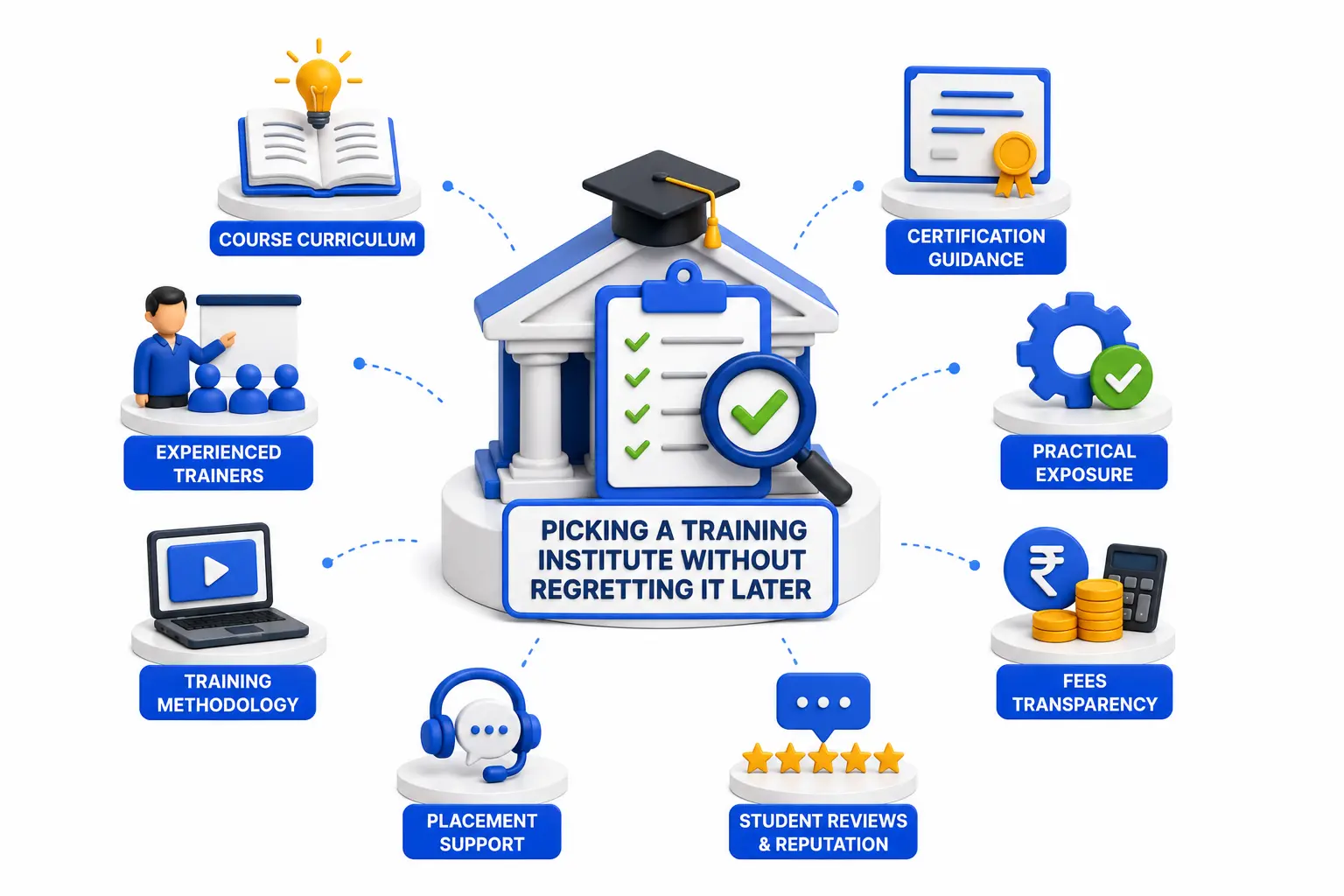
Quality varies a lot between institutes offering a Guidewire course in Kolkata, so a little scrutiny before enrolling saves real money and time. Start by checking whether the trainers have actually implemented Guidewire projects in the field, rather than only having taught the subject.
Ask for a demo class if one's offered. A single live session tells you more about teaching quality than any glossy brochure or curated testimonial page ever will.
Placement claims deserve a closer look too. Rather than accepting a vague "100% placement" promise, ask for names of recent graduates you can actually speak with. Institutes confident in their outcomes rarely hesitate to connect you.
Batch size matters more than people assume going in. Guidewire learning depends heavily on hands-on troubleshooting, and smaller batches mean you're not stuck waiting in line for help when your first configuration exercise breaks in a way the textbook never mentioned.
Conclusion
Choosing the right Guidewire course in Kolkata means weighing syllabus depth, real fees, and certification value together — not separately. Get that balance right, and the return shows up fast, usually in the form of a job offer that arrives sooner than you expected.