

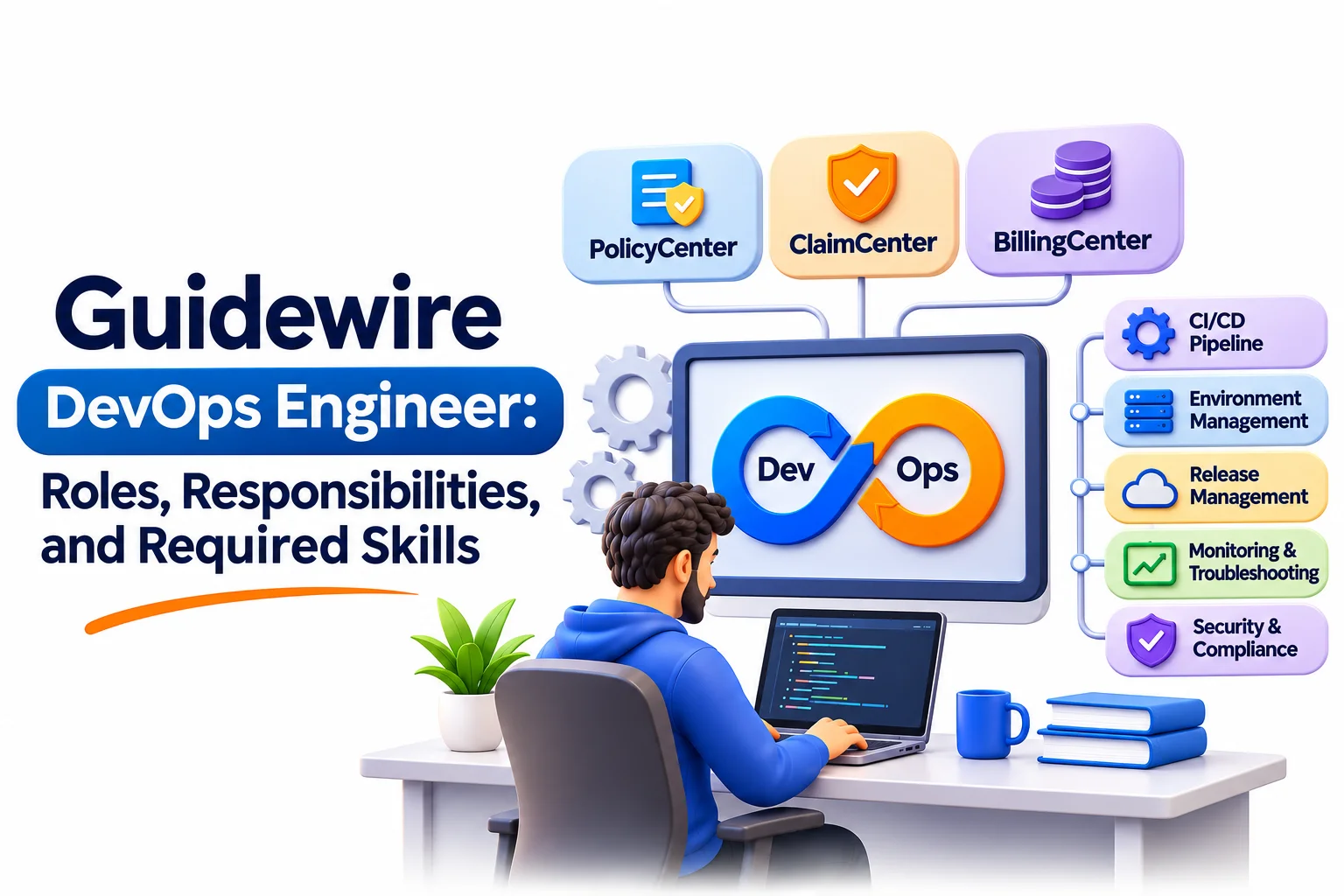
Guidewire DevOps Engineer: Roles, Responsibilities, and Required Skills
Navigate through this article using the table of contents below
Table of Contents
No headings found in this article.
Modern insurance companies cannot afford slow software releases, unexpected deployment failures, or application downtime. As insurance platforms become increasingly cloud-driven, organizations need professionals who can maintain reliable development and deployment processes. This is where Guidewire DevOps Engineers become important.
A Guidewire DevOps Engineer connects development, testing, infrastructure, and operations to ensure that insurance applications run smoothly. Understanding this role, its responsibilities, and the technical skills required can help aspiring professionals prepare for opportunities in the growing Guidewire ecosystem.
Understanding the Role of a Guidewire DevOps Engineer
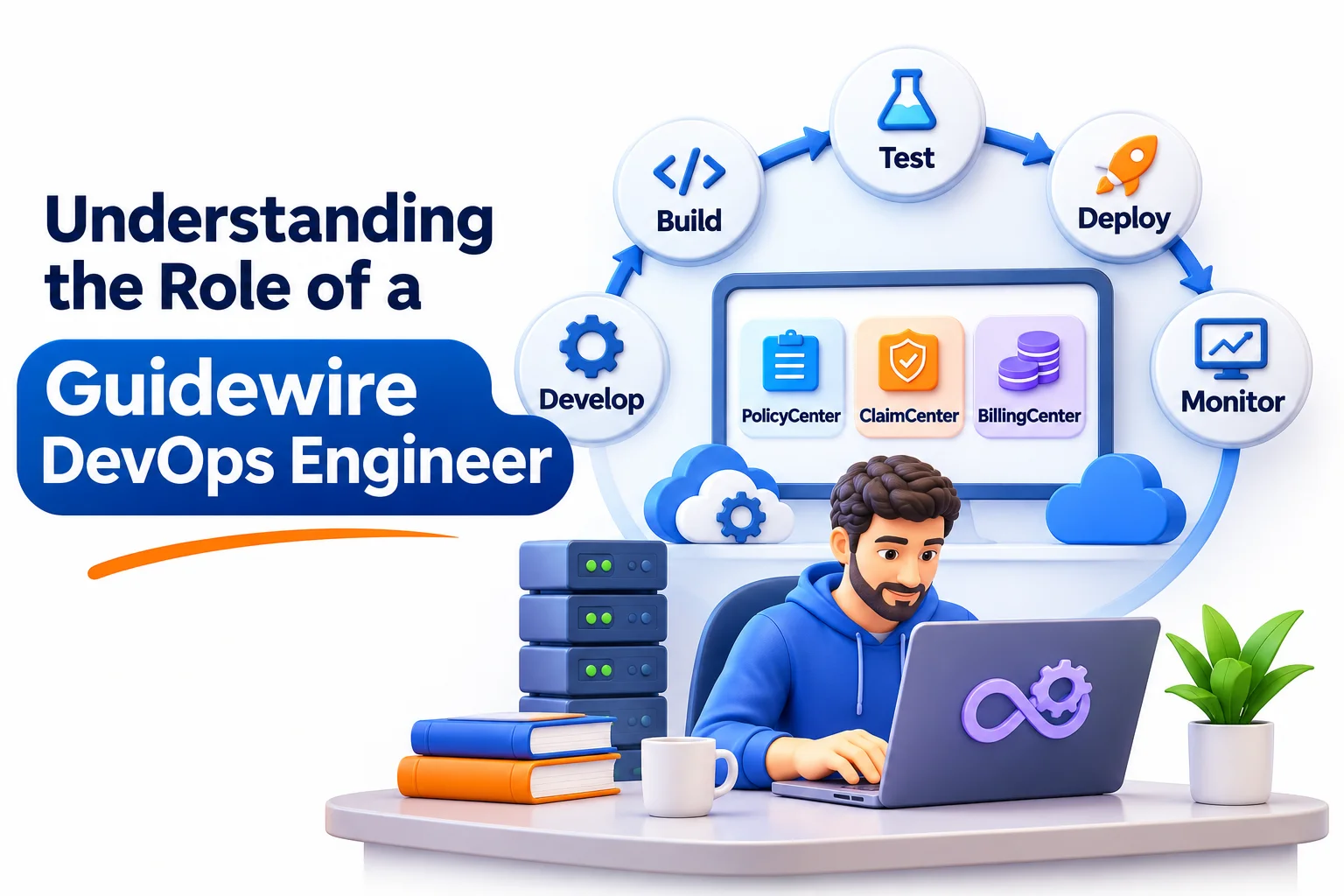
A Guidewire DevOps Engineer manages the processes and technologies required to build, test, deploy, monitor, and maintain Guidewire applications. The role focuses on improving software delivery speed while maintaining application stability, security, and performance.
Guidewire InsuranceSuite includes three major applications: PolicyCenter, ClaimCenter, and BillingCenter. These applications support insurance policy administration, claims management, and billing operations. DevOps professionals help development teams deliver changes to these applications through structured deployment processes.
Unlike traditional infrastructure administrators, these engineers work closely with application developers, QA engineers, architects, and cloud teams.
Their primary responsibilities include:
Automating application build and deployment processes.
Managing development, testing, staging, and production environments.
Maintaining CI/CD pipelines.
Supporting application upgrades and releases.
Monitoring application health and resolving infrastructure issues.
Improving deployment reliability and operational efficiency.
The objective is to create a consistent software delivery process where development changes can move safely through different environments.
Key Roles and Responsibilities in Guidewire DevOps
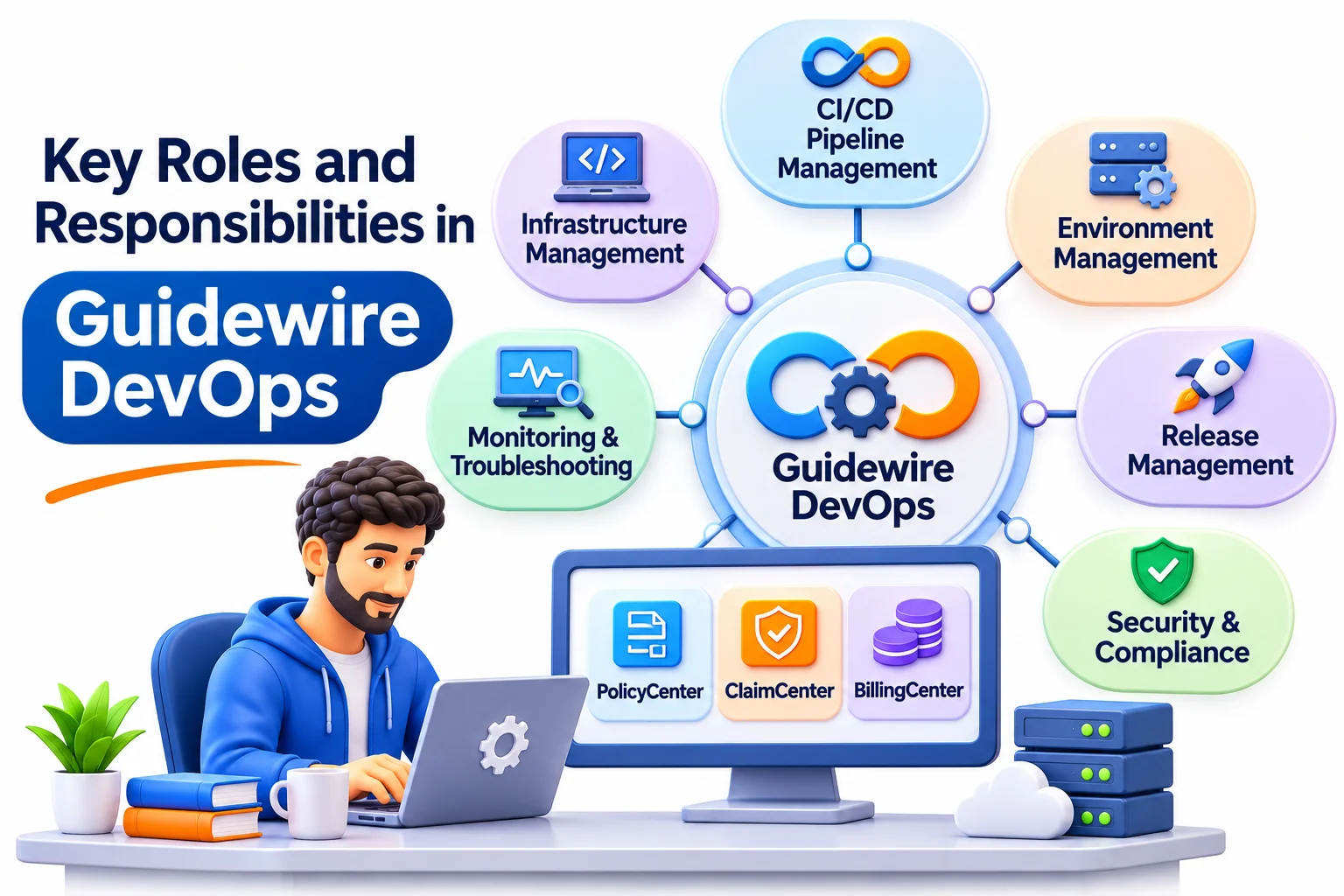
A Guidewire DevOps Engineer performs several responsibilities throughout the software development lifecycle. These activities ensure that application changes are delivered without unnecessary delays or operational disruptions.
One important responsibility is managing release pipelines. Engineers coordinate code integration, automated testing, build validation, and deployment activities. They also collaborate with developers to identify problems before changes reach production.
Important responsibilities include:
CI/CD Pipeline Management: Creating and maintaining automated workflows that support continuous integration, testing, and deployment.
Environment Management: Maintaining development, QA, UAT, pre-production, and production environments according to project requirements.
Release Management: Coordinating application releases, deployment schedules, version control, and rollback preparation.
Infrastructure Management: Supporting cloud infrastructure, environment configuration, networking, and application availability.
Monitoring and Troubleshooting: Identifying deployment failures, application performance issues, infrastructure problems, and operational incidents.
Security and Compliance: Managing access permissions, credentials, secrets, and secure deployment practices.
For example, when a developer introduces a new feature into PolicyCenter, the DevOps engineer helps ensure that the code passes the required validation stages before reaching production.
Essential Technical Skills Required for Guidewire DevOps Engineers
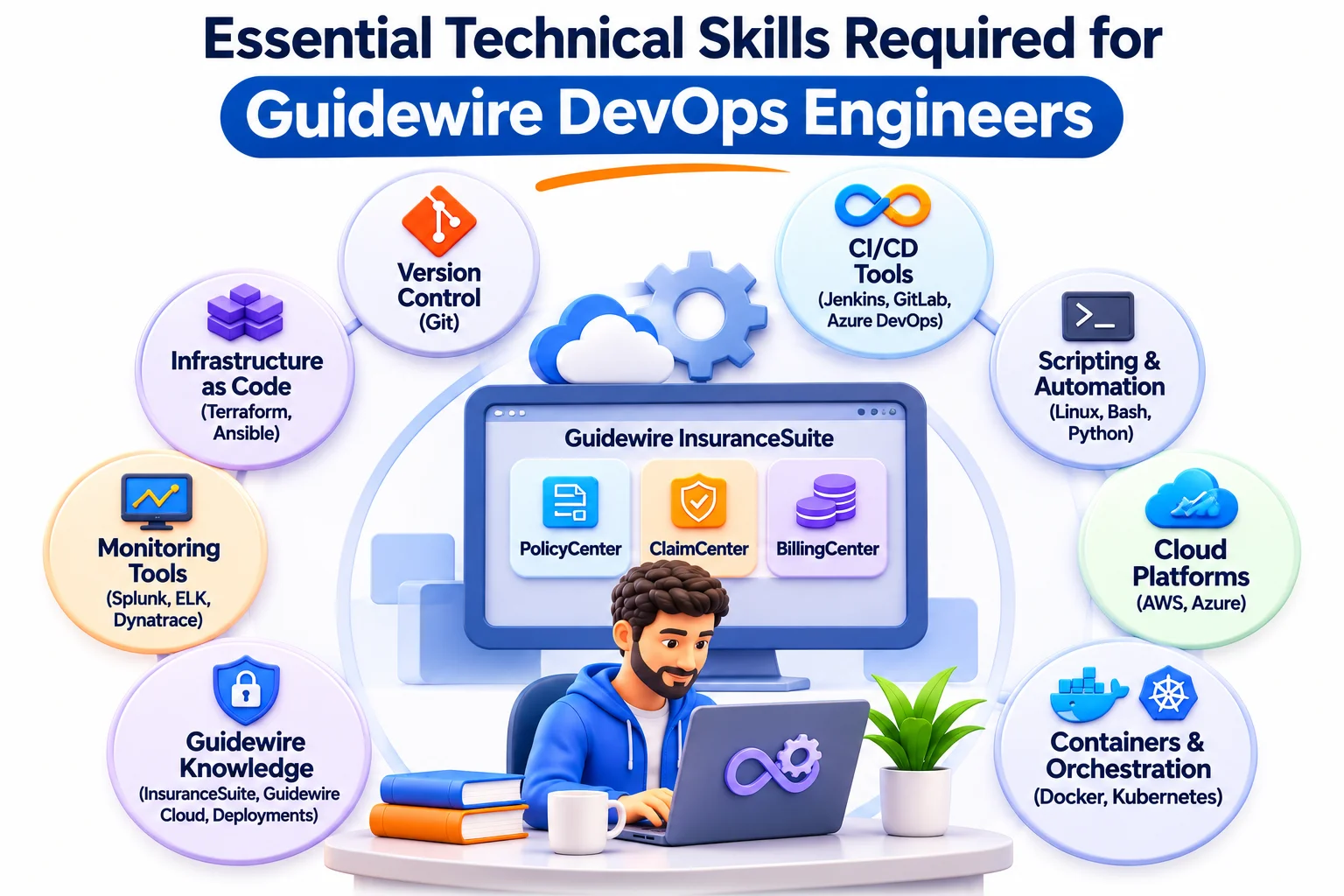
Employers generally expect a combination of DevOps knowledge, cloud infrastructure experience, scripting abilities, and an understanding of enterprise application environments.
The most important skills include:
Version Control: Knowledge of Git, branching strategies, pull requests, merging, and repository management is essential for coordinating development activities.
CI/CD Tools: Practical experience with Jenkins, GitLab CI/CD, Azure DevOps, or GitHub Actions helps automate software delivery workflows.
Scripting and Automation: Familiarity with Linux commands, Bash, Python, and automation scripts helps eliminate repetitive operational tasks.
Cloud Platforms: Understanding AWS or Azure infrastructure, networking, storage, identity management, and cloud security is valuable.
Infrastructure as Code: Tools such as Terraform and Ansible help automate infrastructure provisioning and configuration management.
Containers and Orchestration: Knowledge of Docker and Kubernetes is useful for cloud-native infrastructure and supporting services, depending on the project architecture.
Monitoring Tools: Experience with Splunk, ELK Stack, Dynatrace, or similar platforms helps identify application errors and performance problems.
Guidewire-specific knowledge is equally important. Professionals should understand InsuranceSuite applications, Guidewire Cloud concepts, deployment workflows, application configuration, and release dependencies.
Guidewire Cloud, CI/CD Pipelines, and Deployment Management
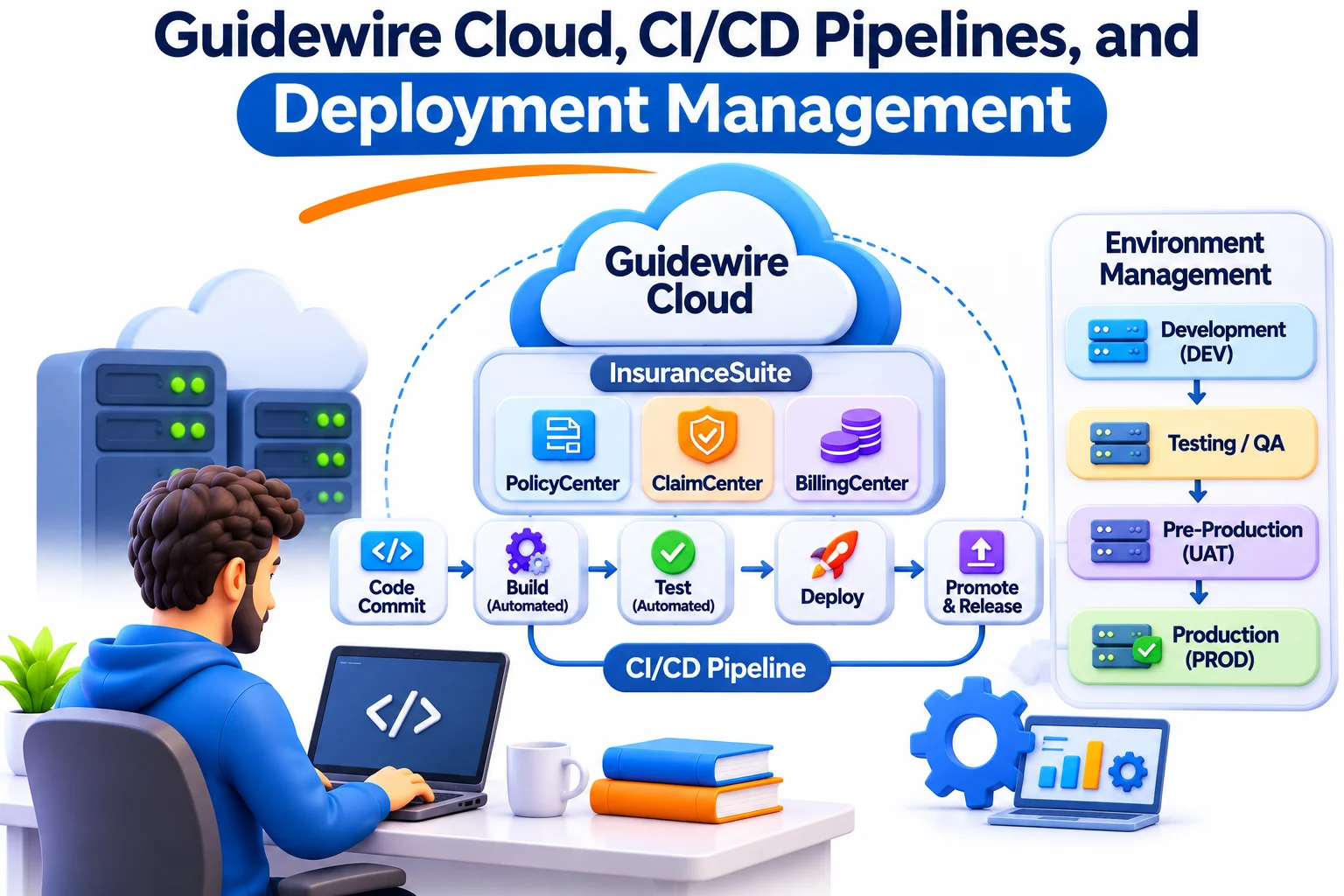
Cloud adoption has changed how organizations manage Guidewire applications. DevOps engineers increasingly need to understand cloud-based deployment models, automated builds, application promotion, and environment management.
Guidewire Cloud Platform provides deployment capabilities for InsuranceSuite applications. Development teams can deploy applications to development environments, validate changes in pre-production, and promote approved builds toward production.
A typical delivery workflow includes:
Source Code Management: Developers commit application changes to the appropriate repository.
Build Automation: The pipeline generates application builds and performs initial validation.
Automated Testing: Testing processes verify application functionality and identify potential defects.
Quality Gates: Required checks determine whether a build is ready for promotion.
Environment Promotion: Approved builds move through development and pre-production environments.
Production Deployment: Validated releases are deployed according to the organization's release procedures.
Post-Deployment Validation: Smoke tests and application health checks confirm deployment success.
Guidewire also provides CI/CD Manager capabilities for configuring automated builds, test suites, quality gates, and post-deployment testing.
A DevOps engineer must understand deployment status, application health, configuration differences, and recovery procedures. Production deployment preparation may also involve backup verification, dry runs, and rollback planning.
These responsibilities require more than operating automation tools. Engineers must understand how application changes affect business-critical insurance operations.
Security, Monitoring, and Troubleshooting in Guidewire DevOps
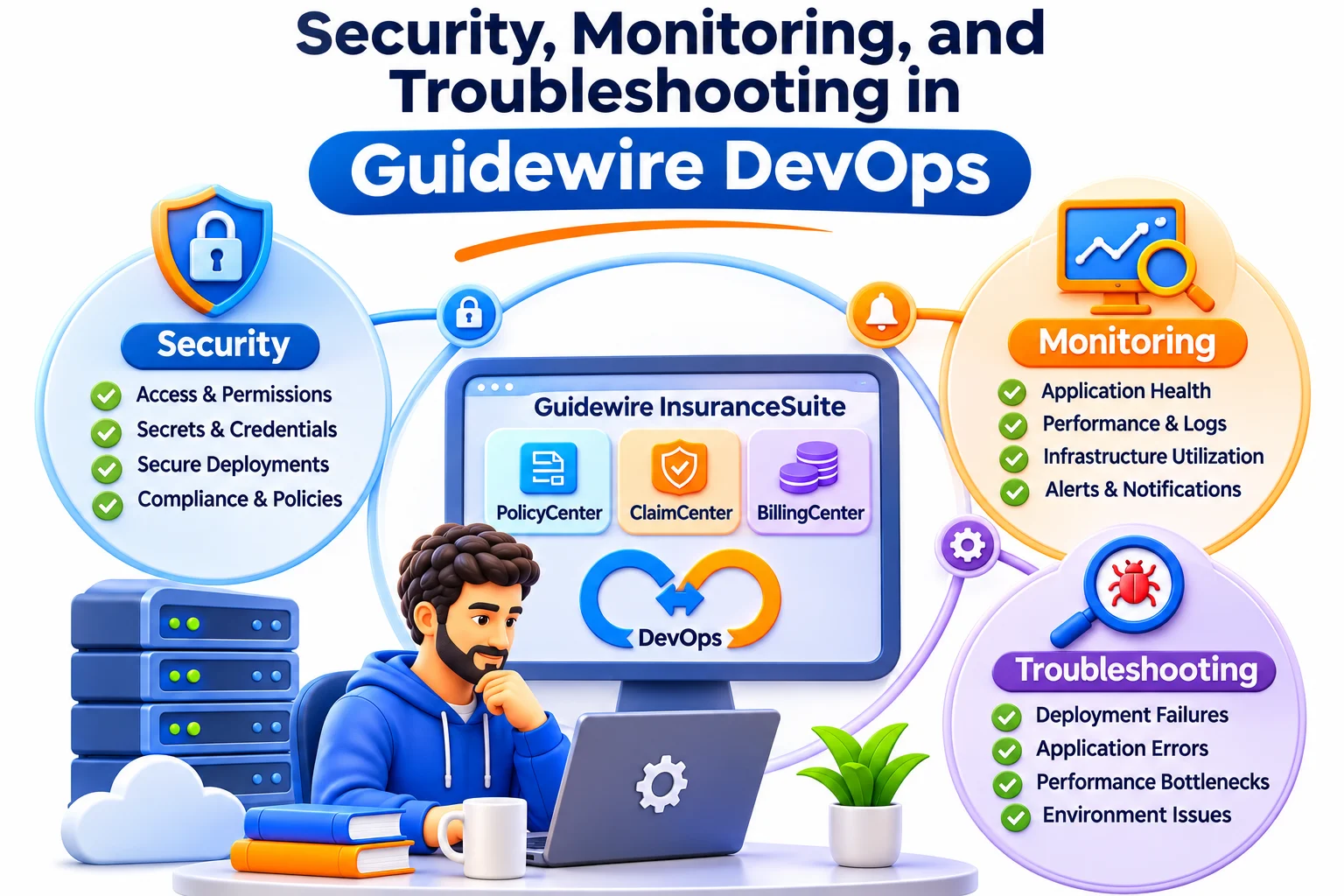
Insurance applications handle sensitive customer information, policy records, payment details, and claims data. Therefore, security and operational reliability are essential responsibilities.
Guidewire DevOps Engineers must understand how to implement secure deployment practices while maintaining application availability.
Important areas include:
Access Management: Applying role-based access controls and ensuring that users have appropriate permissions.
Secrets Management: Protecting credentials, API keys, certificates, and sensitive configuration values.
Infrastructure Security: Understanding network restrictions, encryption, security configurations, and cloud access policies.
Application Monitoring: Tracking application availability, response times, infrastructure health, and error patterns.
Incident Management: Investigating deployment failures, application interruptions, and infrastructure-related incidents.
Consider a situation where ClaimCenter becomes unavailable after a production deployment. The DevOps engineer must investigate deployment logs, application status, infrastructure health, configuration changes, and relevant dependencies.
A systematic troubleshooting process generally involves:
Identifying the incident and its business impact.
Reviewing application and infrastructure logs.
Checking recent deployments and configuration changes.
Identifying the underlying technical issue.
Implementing corrective actions or rollback procedures.
Performing validation before closing the incident.
Monitoring tools and structured incident management processes help teams identify problems earlier and reduce operational disruptions.
How to Build a Career as a Guidewire DevOps Engineer
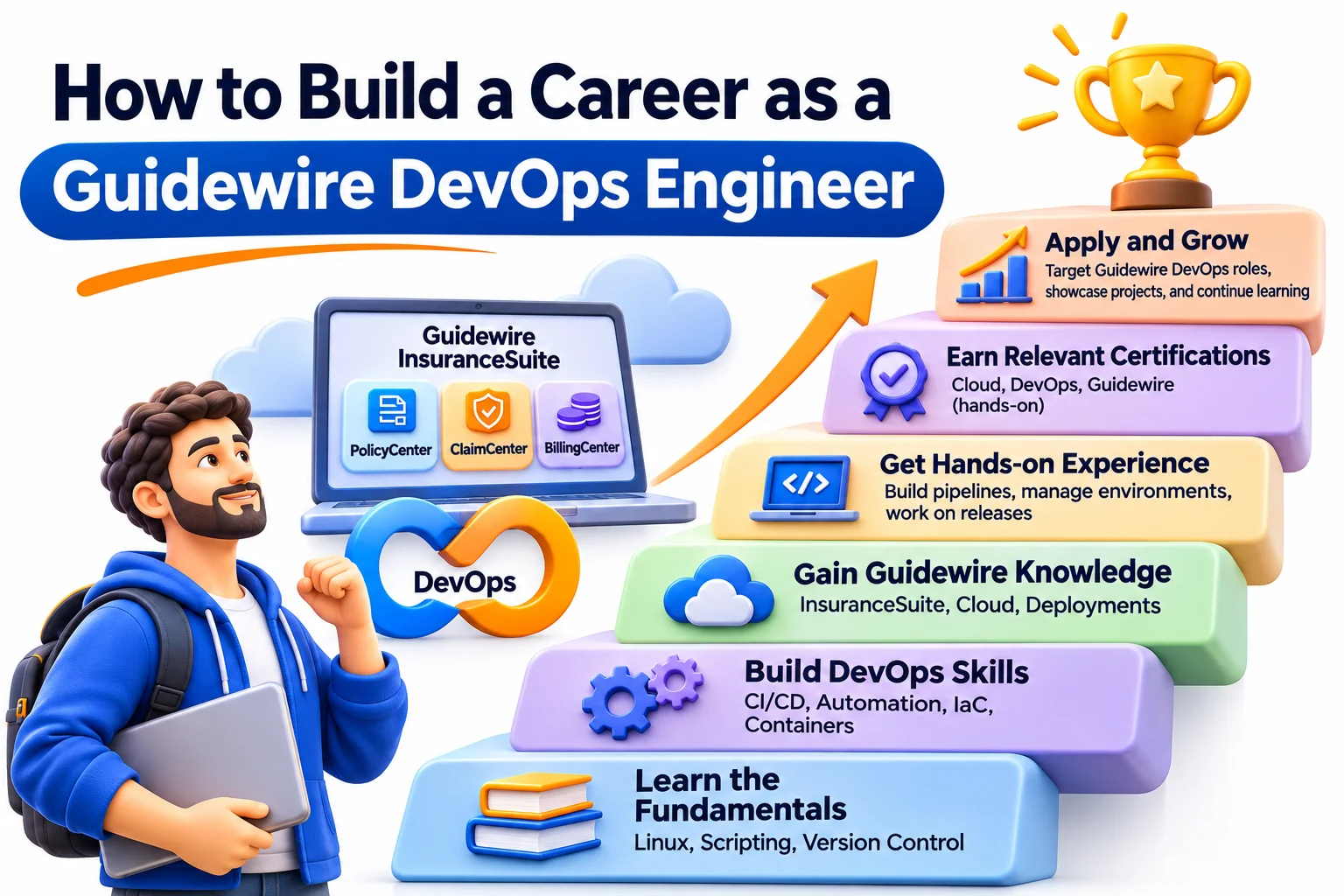
Building a career in this field requires a combination of foundational DevOps knowledge and practical Guidewire ecosystem understanding. Candidates from software development, cloud engineering, infrastructure administration, and application support backgrounds can gradually develop the required expertise.
A structured learning approach can make preparation more effective.
Start with Linux fundamentals, networking, Git, and basic scripting. These concepts provide the foundation for managing application environments and automating operational activities.
Next, develop practical knowledge of:
Jenkins or another CI/CD platform.
Git branching and release management.
AWS or Azure fundamentals.
Terraform and infrastructure automation.
Docker and container fundamentals.
Monitoring, logging, and troubleshooting.
Guidewire InsuranceSuite architecture and cloud deployment concepts.
Practical projects are particularly valuable when preparing for interviews.
Consider building projects such as:
Automated CI/CD Workflow: Create a sample pipeline that performs source-code validation, automated testing, and deployment to a test environment.
Infrastructure Automation: Use Terraform to provision a sample cloud environment with appropriate networking and access controls.
Monitoring Implementation: Configure application monitoring and create alerts for simulated performance or availability problems.
Release Management Simulation: Document a complete release workflow, including build validation, deployment checks, and rollback planning.
Candidates looking for structured learning can explore JastTech, where practical technical learning and industry-oriented preparation can help develop relevant knowledge. Its Guidewire Training in Pune can be a useful starting point for learners interested in understanding the Guidewire ecosystem and preparing for technology-focused career opportunities.
Conclusion
A Guidewire DevOps Engineer plays an important role in maintaining reliable insurance application delivery. From CI/CD pipeline management and cloud deployments to security, monitoring, and production troubleshooting, the position requires a broad combination of technical and operational skills. Understanding PolicyCenter, ClaimCenter, BillingCenter, and Guidewire Cloud workflows can further strengthen a candidate's professional capabilities.
As insurance organizations continue modernizing their technology platforms, professionals with practical DevOps, cloud, automation, and Guidewire knowledge can prepare themselves for relevant career opportunities. Focus on building real-world projects, understanding deployment workflows, and developing problem-solving abilities. With structured preparation and consistent practice, aspiring professionals can work toward becoming capable Guidewire DevOps Engineers.