

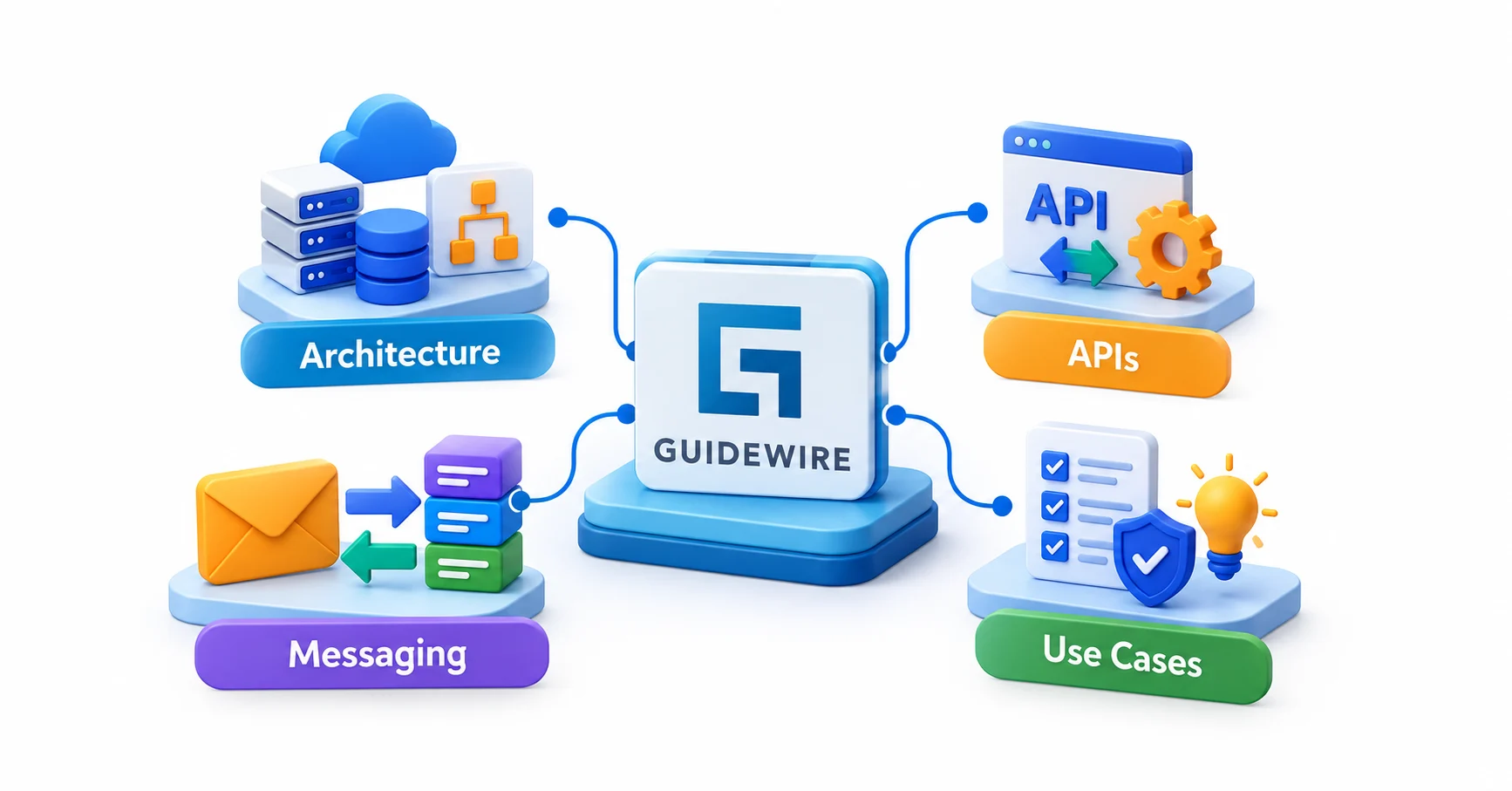
Guidewire Integration Complete Guide to Architecture, APIs, Messaging & Use Cases
Navigate through this article using the table of contents below
Table of Contents
No headings found in this article.
A claims adjuster clicks "Submit" and expects a payment, a letter, and a fraud check to follow without touching another screen. That chain of events is Guidewire integration at work, and it often decides whether an implementation runs smoothly or stalls. Many people who join a Guidewire training program in India learn the core applications first, then discover how much project work sits in the connections between them.
The choices are rarely obvious. Should a given call be a REST API, a message, or a plugin? The answer depends on a few ideas worth understanding first.
What Guidewire Integration Really Covers
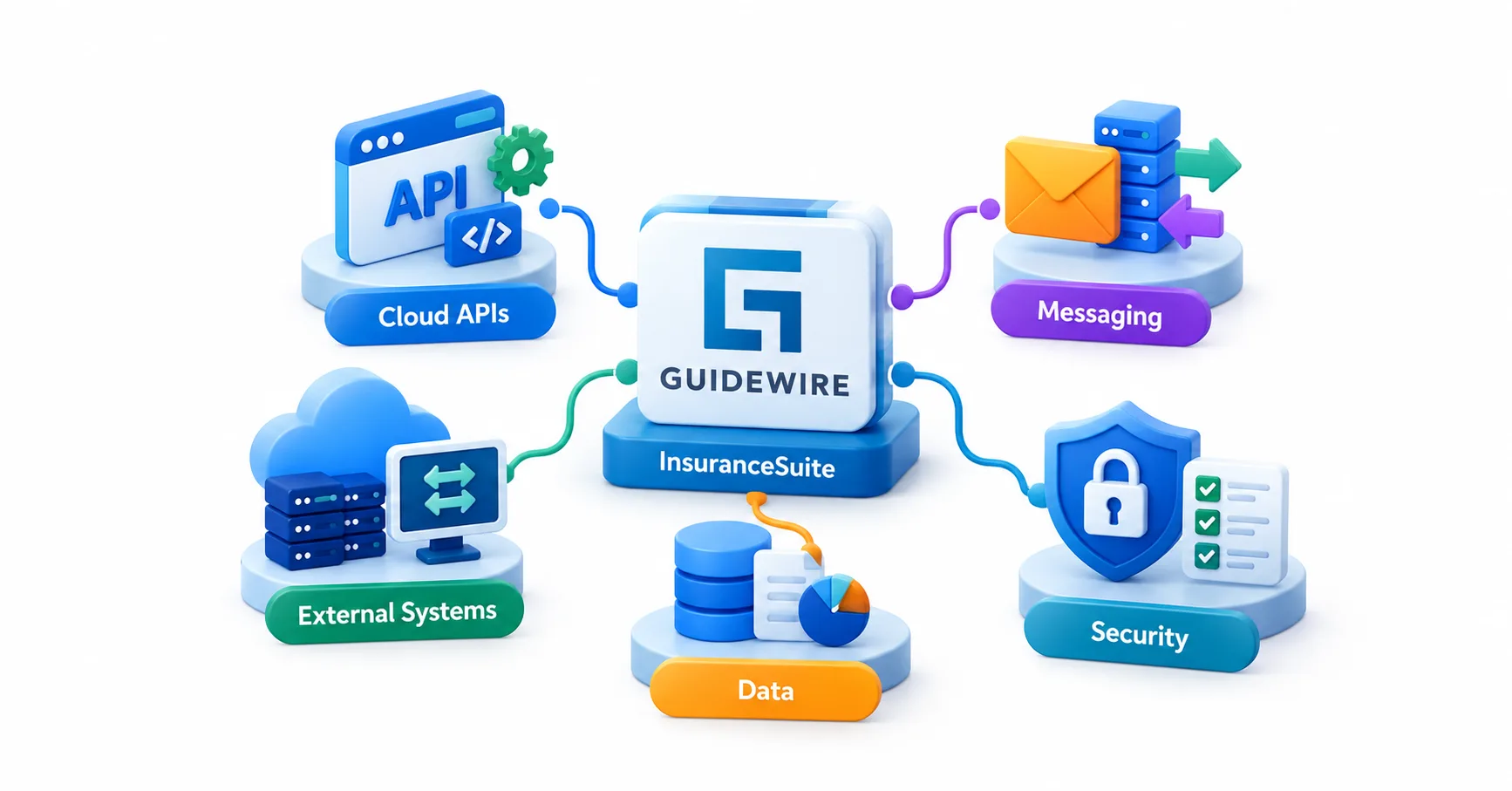
Guidewire integration is the set of methods that let InsuranceSuite applications such as PolicyCenter, ClaimCenter, and BillingCenter exchange data and trigger actions with other systems. Those systems include payment gateways, document platforms, CRMs, data warehouses, government databases, and third-party data providers.
Insurers rarely run on one platform. A single claim may touch a policy system, a vendor for repair estimates, a payment processor, a document generator, and an analytics platform. Each of those touchpoints is an integration, and each has to be reliable, secure, and easy to trace when something fails.
Integration work falls into three broad directions:
Inbound: external systems create or read data in Guidewire, such as a customer portal submitting a first notice of loss.
Outbound: Guidewire notifies or calls another system, such as sending an approved payment to a finance platform.
Bulk or scheduled: large volumes of data move on a timetable, such as nightly extracts for reporting.
Knowing which direction you are dealing with usually narrows the choice of tool right away.
Architecture: Where Integration Sits in InsuranceSuite
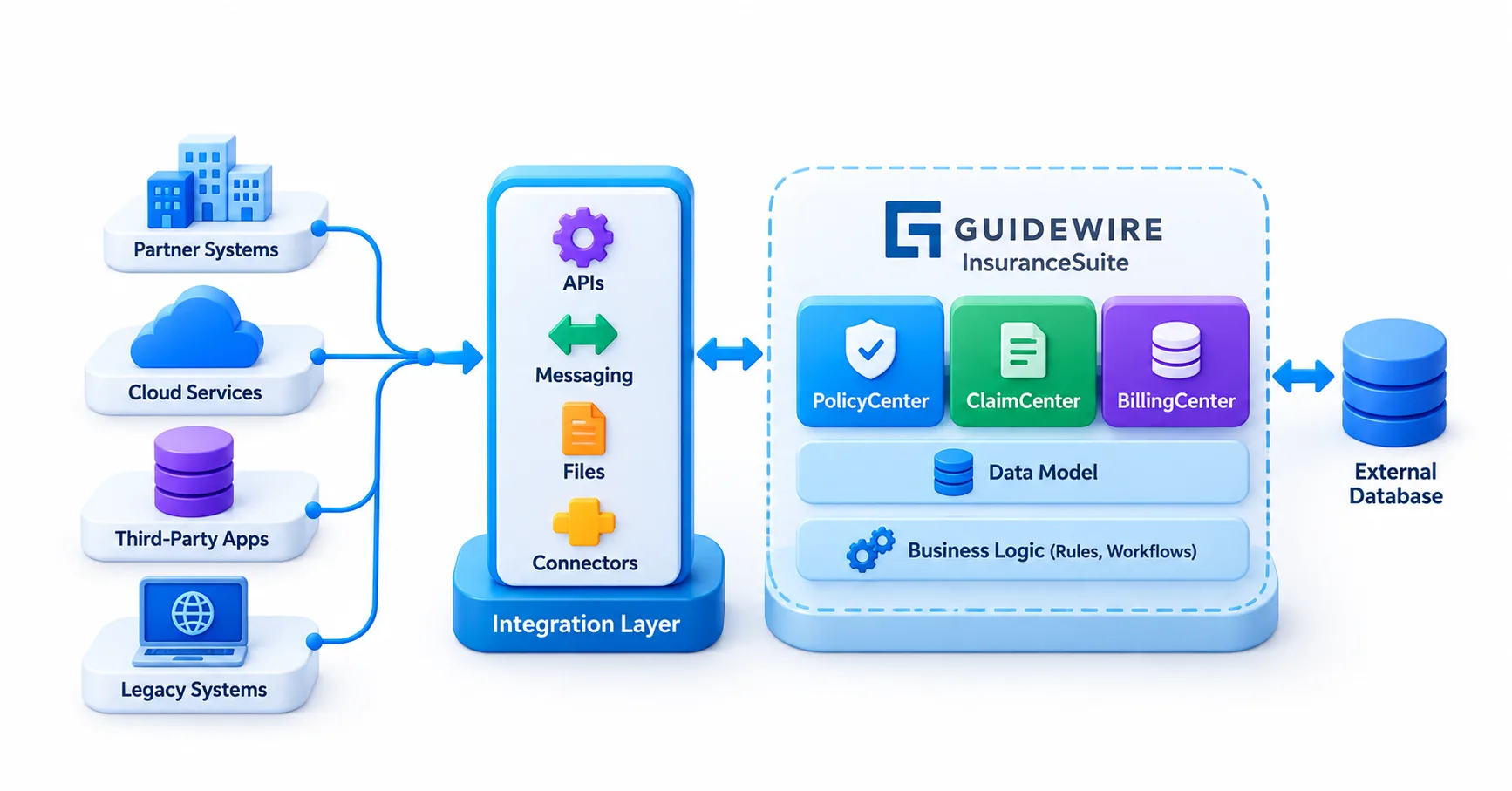
The core applications hold the business logic, and integration points are the controlled openings through which that logic talks to the outside world. Around them sit middleware or an integration layer, and beyond that the external systems themselves.
Guidewire provides several such openings, and each suits a different job:
APIs and web services for requests that need an immediate response.
Messaging for event-driven, outbound communication that must not be lost.
Plugins for hooks where the application calls out to a service during a process.
Batch processes and data extraction for scheduled and high-volume work.
Deployment model matters too. On Guidewire Cloud, integration usually runs through the platform's Cloud APIs and an integration layer, including Integration Gateway, which is built around Apache Camel. Older self-managed installations lean more heavily on Gosu-based web services, plugins, and messaging. Many real projects use both styles while a migration is in progress.
A healthy design keeps Guidewire out of the business of translating every partner's data format. Put a mapping and orchestration layer between Guidewire and the outside world, and the core application stays cleaner and easier to upgrade.
Cloud APIs: The Front Door for Modern Integrations
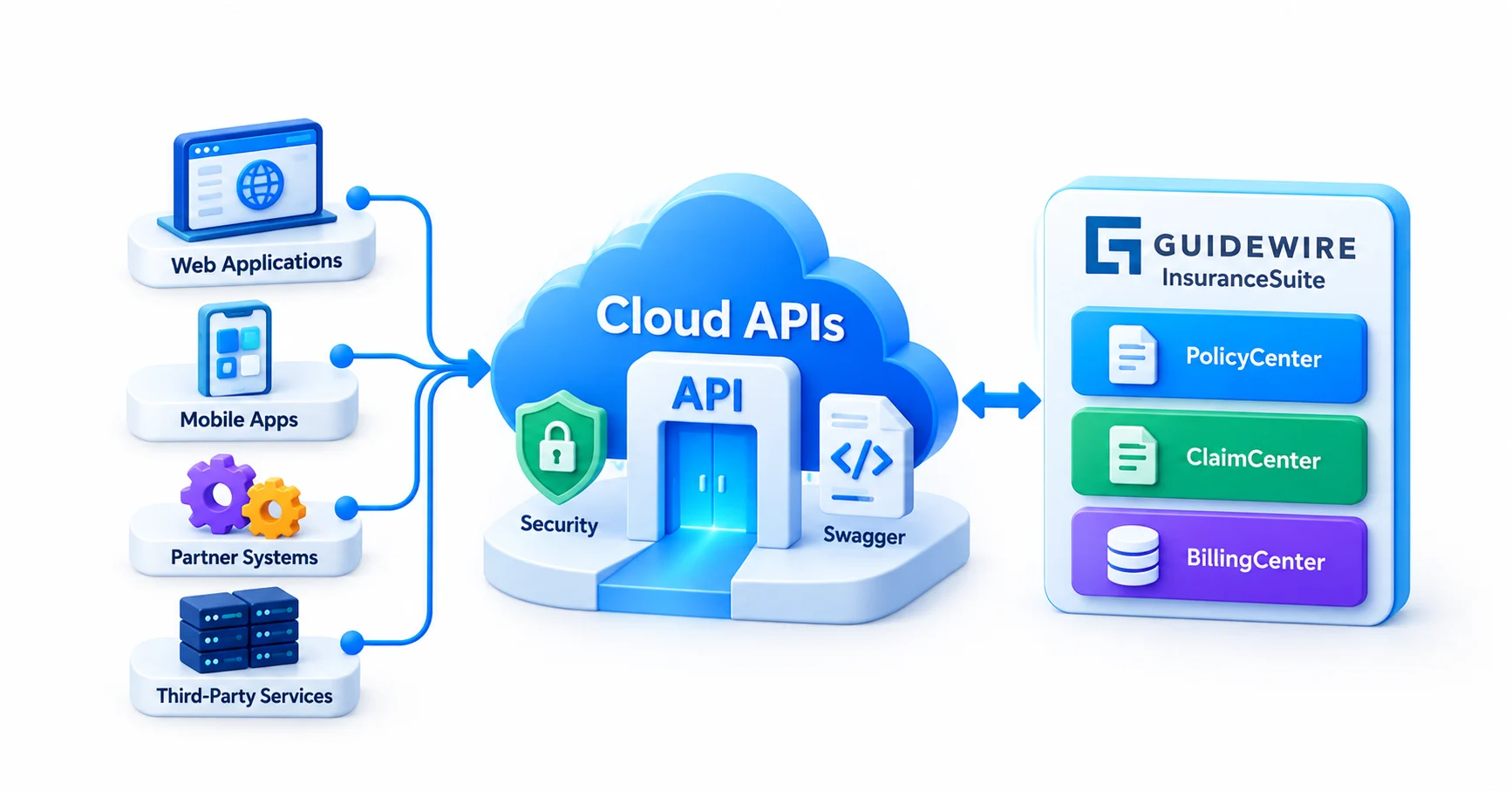
Guidewire's Cloud APIs are REST-based interfaces that expose InsuranceSuite data and operations as JSON over HTTP. They are documented with OpenAPI specifications, so developers can see the available resources, fields, and operations without guessing.
They typically cover business objects such as accounts, policies, and claims, along with the common administrative data around them. Access is secured through OAuth 2.0 with tokens issued by Guidewire's identity components, so every calling application has to be authorized explicitly.
Two habits separate solid API work from fragile work. The first is to call the documented APIs rather than reach into the database or lean on internal behavior, which makes upgrades far less painful. The second is to design for failure. Networks time out and calls get repeated, so the receiving side should handle a duplicate request without creating a duplicate claim.
Take a mobile app that lets a policyholder upload photos to an open claim. The app authenticates, calls the claim endpoint, and attaches documents. It needs no message queue or custom plugin, because a synchronous request and response is exactly the right fit.
Web Services: Publishing and Consuming SOAP and REST
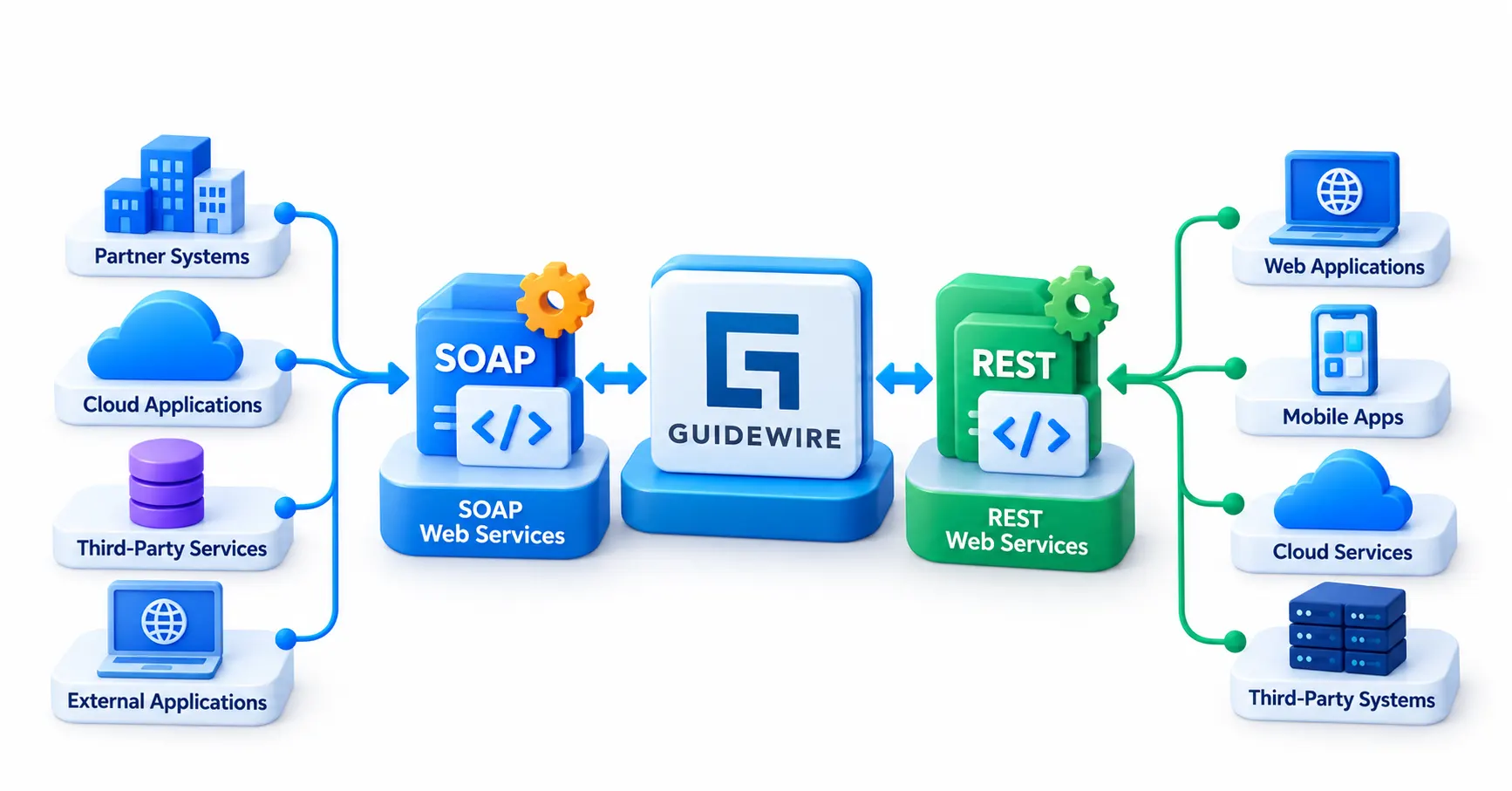
Web services are the traditional workhorse of integration in Guidewire. Developers write them in Gosu and publish them so other systems can call into the application. Classic publishing uses SOAP with a generated WSDL. Guidewire can also consume external services by importing their definitions and calling them from Gosu code.
If you are new to this area, a structured look at Guidewire integration web services is a good way to see how publishing, consuming, and securing them work in a real project.
Two practical points come up constantly. Keep published services thin, so they validate input, call the right business logic, and return a clear result rather than embedding rules of their own. And treat the contract as a public promise. Once another team depends on a service, changing a field name can break a production process.
SOAP is not obsolete just because REST is newer. Many insurers have partners and legacy systems built around it, and you will meet both styles. What matters is being able to reason about either one: how it authenticates, how it reports errors, and what happens when the other side is slow.
Messaging: Getting Events Out Reliably
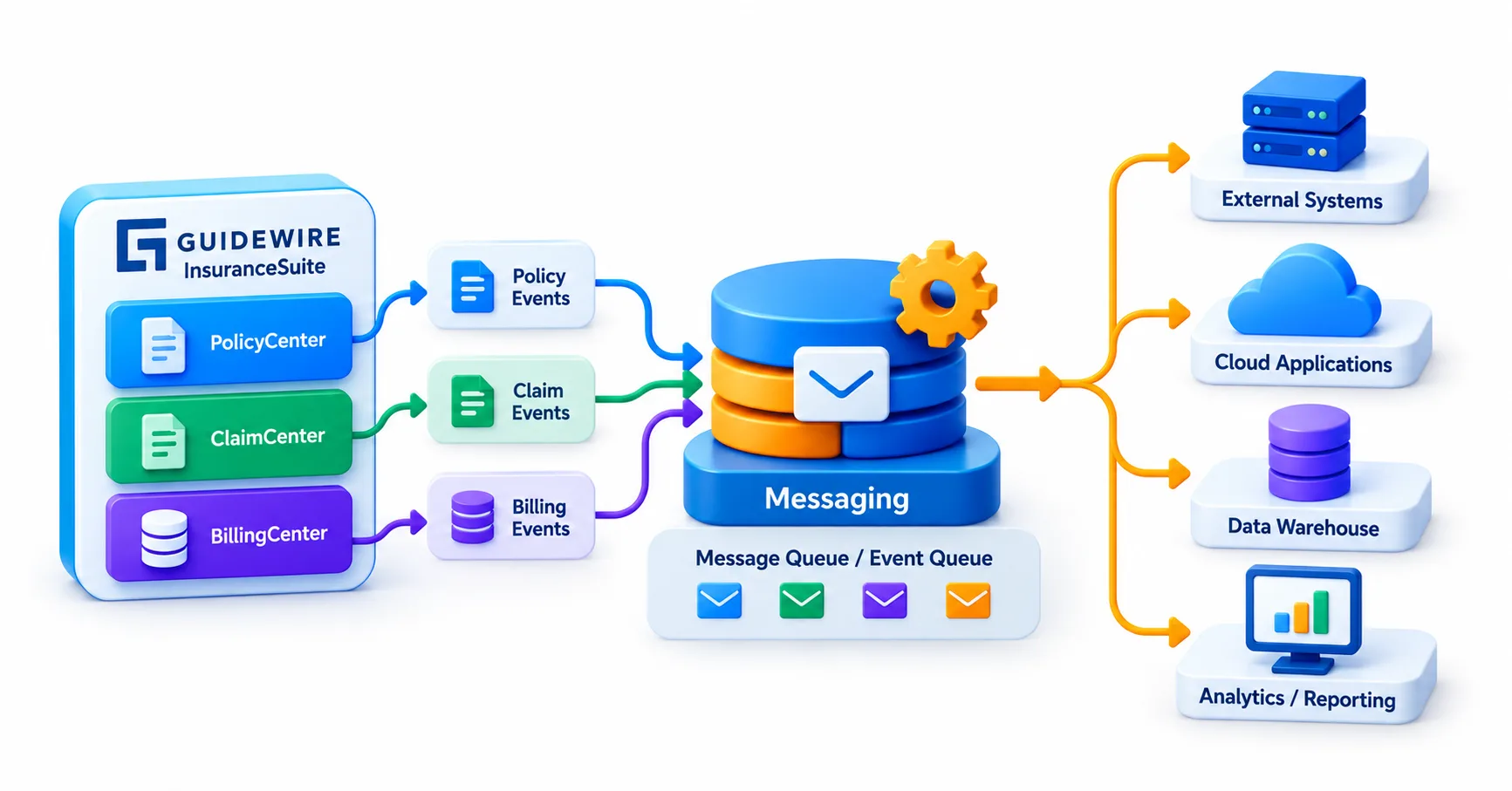
Web services suit questions that need an answer now. Messaging suits a different need: telling another system that something happened, and being certain that the notice is not lost. This distinction is an important concept for anyone learning Guidewire integration, especially through a Guidewire online course in Bangalore, where understanding real-world integration patterns is essential.
In Guidewire, changes to business data can raise events. Rules react to those events and create messages bound for a message destination. Each destination has transport logic that sends the message to the target system, and it can also handle the reply that comes back.
The important property is reliability. Messages are stored as part of the same transaction as the change that produced them, so a payment is never approved without its notice being queued. If delivery fails, the system can retry, and errors can be reviewed by an administrator rather than vanishing silently. Ordering matters as well, since updates about the same claim should reach the downstream system in sequence.
The trade-off is that messaging is asynchronous. The sender does not wait, so it is a poor choice when a user needs an instant answer on screen. A simple test helps: if the business can tolerate a short delay but cannot tolerate a lost update, use messaging. For learners taking a Guidewire online course in Bangalore, this distinction between synchronous web services and asynchronous messaging is particularly useful because it connects Guidewire integration concepts with practical enterprise application scenarios.
Plugins, Batch, and Data Extraction: The Supporting Cast
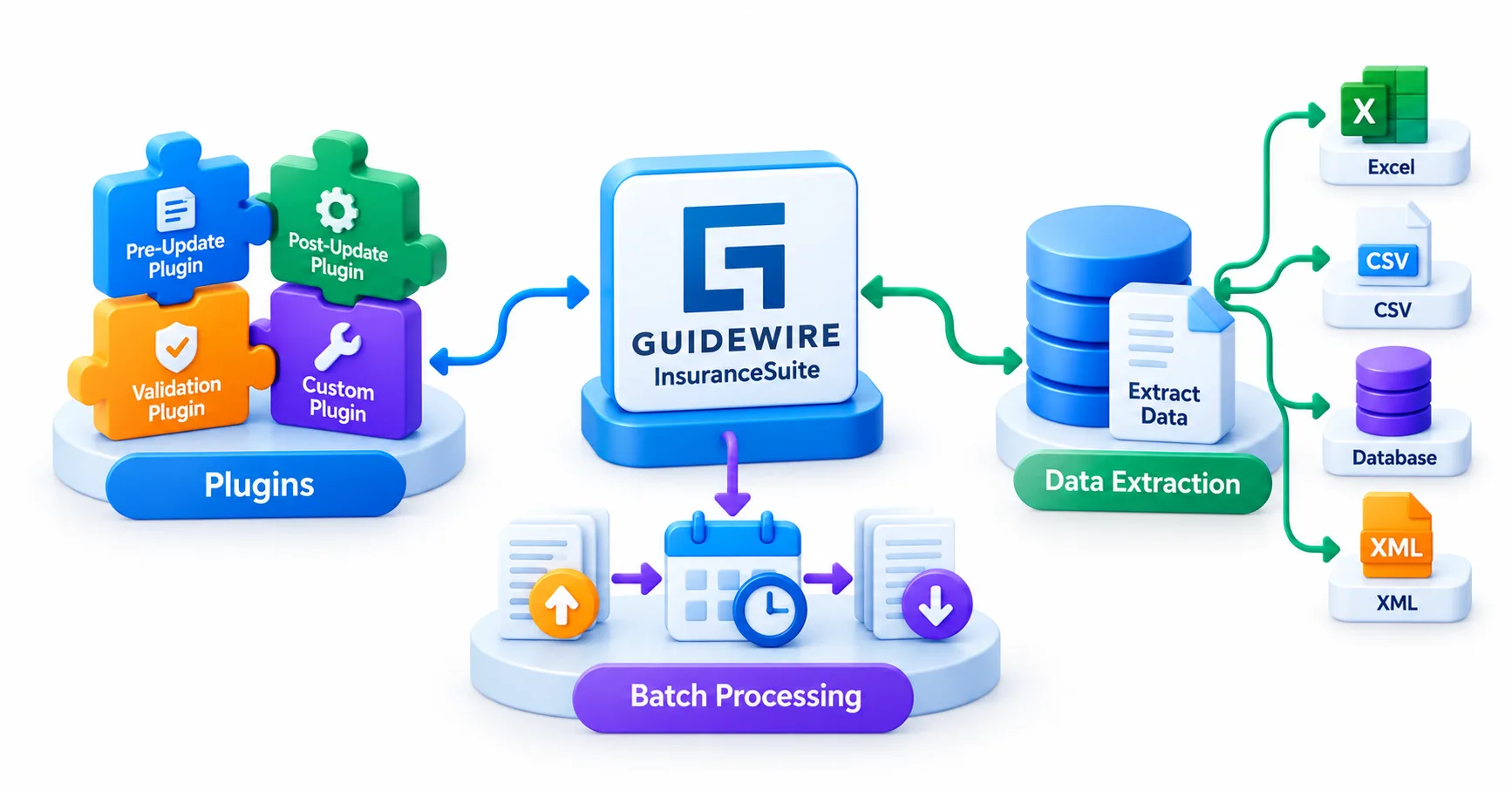
Not every integration is an API call or a queued message. Plugins let the application call an implementation you supply at defined points. Common examples include document production, document storage, and authentication. Because plugins run inside a process, a slow one can slow the user or the transaction that triggered it. Keep them fast, and move heavy work elsewhere.
Batch processes handle scheduled and high-volume work, such as nightly billing runs, data clean-ups, or periodic file exchanges. They are often the right answer when nobody is waiting on the result.
Analytics is a separate concern. Reporting teams should not query a live transactional system with heavy queries. Guidewire's data-access offerings for cloud customers export data to storage where analysts and data engineers can work on it without loading the core application. This is a frequently overlooked topic in beginner material, and it shapes how insurers build dashboards and machine learning models on top of their policy and claims data.
Use Cases and Mistakes to Avoid
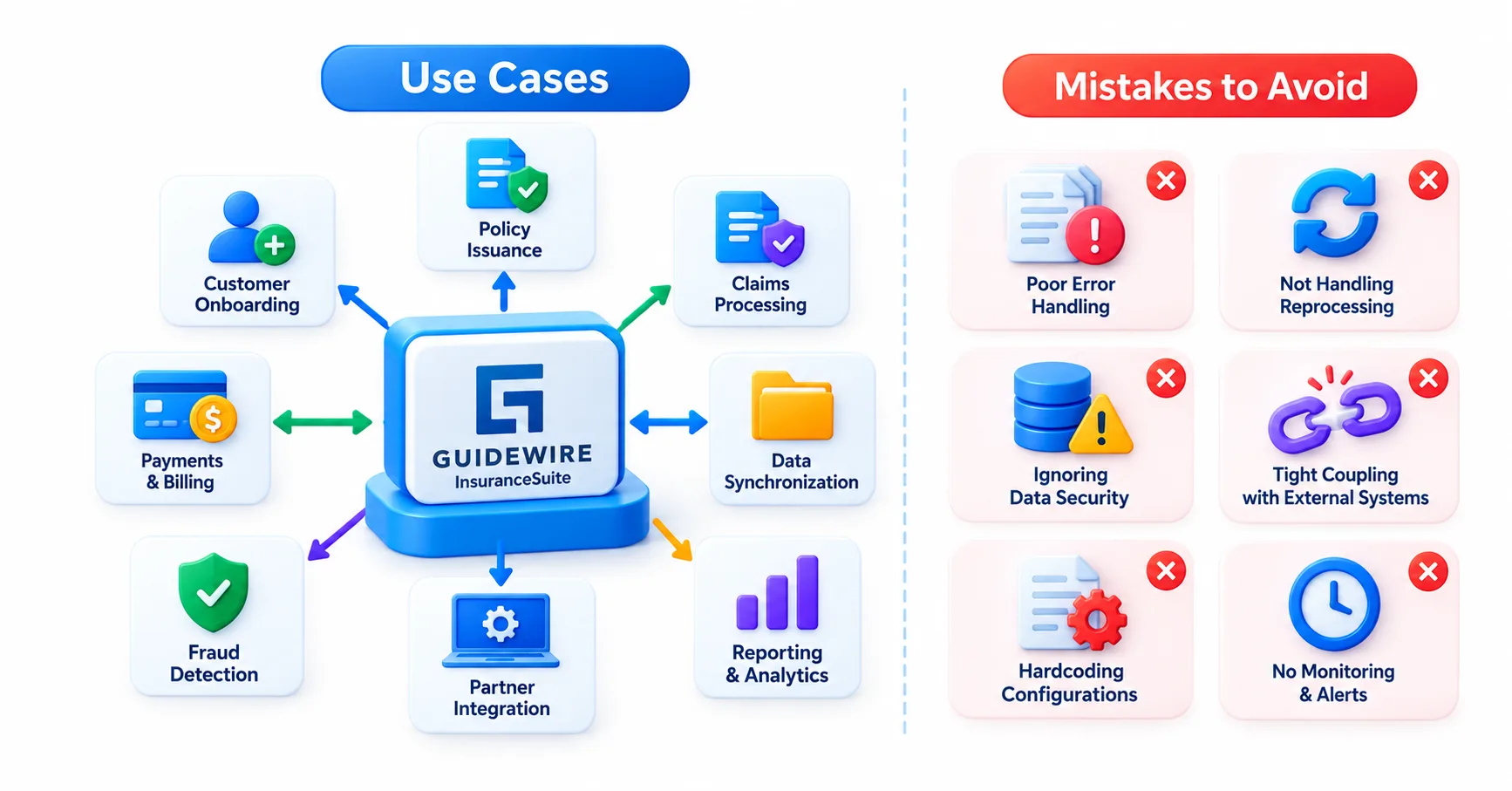
The table below maps common needs to the mechanism that usually fits best. The scenarios are illustrative, and real projects vary.
A few mistakes recur across projects:
Using synchronous calls for work that should be queued, which makes the user wait on someone else's system.
Putting business rules inside integration code, so the same logic lives in two places.
Ignoring error handling until go-live, when a failed message has no owner and no alert.
Skipping idempotency, which turns a retry into a duplicate record.
Interviewers often ask candidates to choose between these approaches for a scenario. Explaining why you would pick messaging over a web service shows far more understanding than reciting definitions.
Conclusion
Guidewire integration comes down to matching the right mechanism to the job: APIs and web services for immediate answers, messaging for dependable notifications, plugins for in-process hooks, and batch or data extraction for volume. Learners who grasp that logic, and who practice it on realistic scenarios through training providers such as JastTech, are better prepared for the questions real projects ask. Connect systems carefully and the rest of the platform gets easier to trust.