

Guidewire Integration Tools, Web Services, and Event Messaging: A Complete Engineer's Guide
Navigate through this article using the table of contents below
Table of Contents
No headings found in this article.
Ask any insurance IT team what keeps them up at night, and integration will be near the top of the list. Systems that don't talk to each other cost time, money, and customer trust.
That's exactly where Guidewire integration earns its reputation. It connects policy, billing, and claims data with the outside world — CRMs, payment gateways, rating engines — without forcing anyone to rebuild the core platform from scratch.
Why Guidewire Integration Keeps Insurance Systems Talking to Each Other
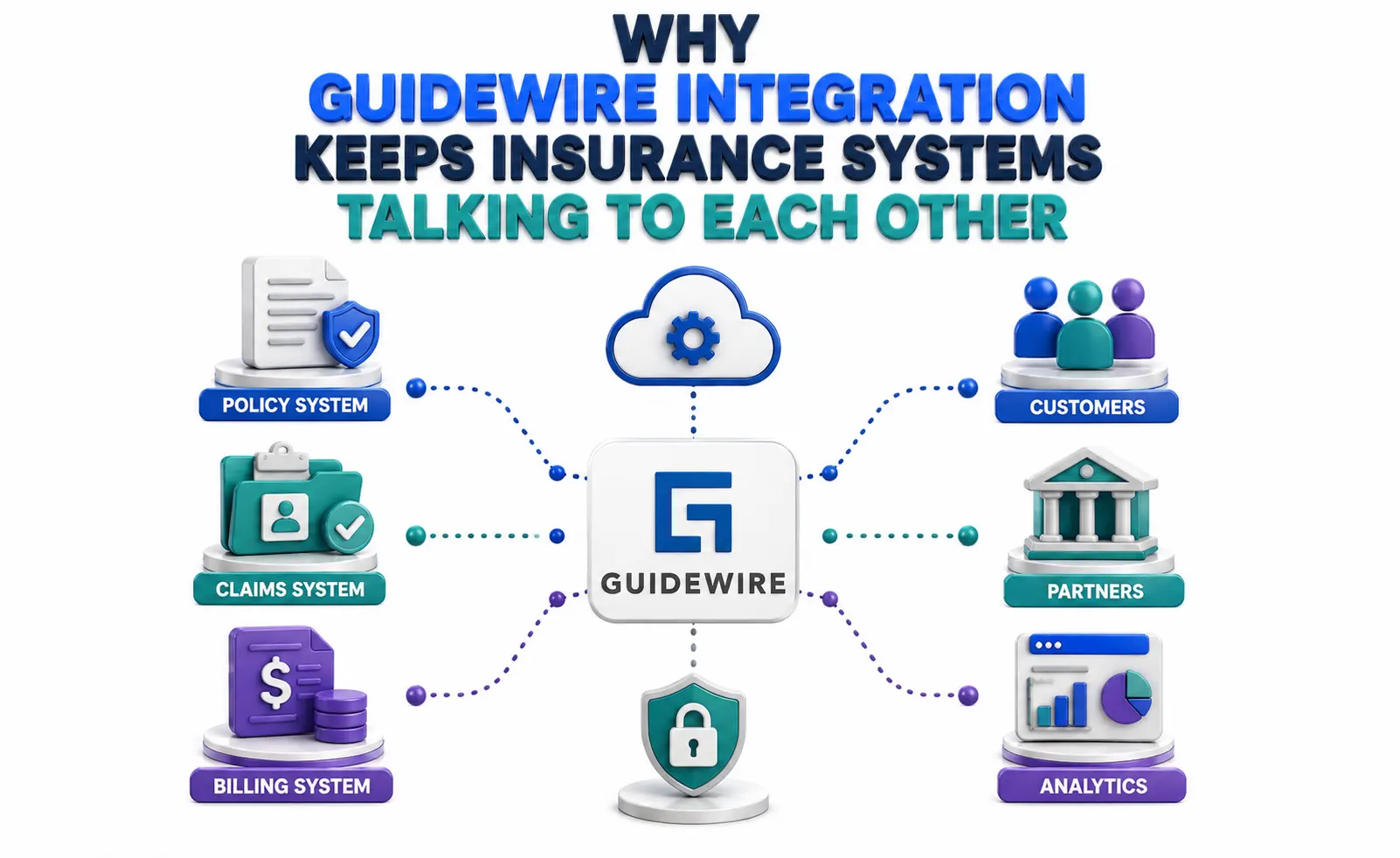
Insurance carriers rarely run on a single platform. A typical stack includes a policy administration system, a document management tool, a payment processor, and often a handful of third-party data providers for underwriting. Guidewire integration exists to make these pieces cooperate instead of operating in silos.
Think of it like a busy office where every department speaks a different language. Without a translator, nothing gets done efficiently. Guidewire's integration layer plays that translator role, converting internal data structures into formats other systems understand, and vice versa.
This matters more than it sounds. A claims adjuster pulling vehicle history from an external database needs that data in seconds, not minutes. A billing system syncing payment status needs to reflect changes immediately, or customers get incorrect notices. Integration isn't a technical nicety — it's what keeps daily operations from breaking down.
Carriers that invest properly in this layer typically see fewer manual data-entry errors and faster policy issuance cycles, since information moves automatically rather than through spreadsheets or email attachments passed between teams.
Also Check / Read
Before moving further, it's worth pairing this guide with a couple of resources that go deeper into the practical side of Guidewire integration work:
Guidewire Integration & Web Services Course — a structured way to build hands-on integration skills.
Guidewire Configuration vs Customization: Understanding the Key Differences — useful context for deciding how far to extend the platform before you start integrating externally.
Web Services: The Backbone of Every Guidewire Connection
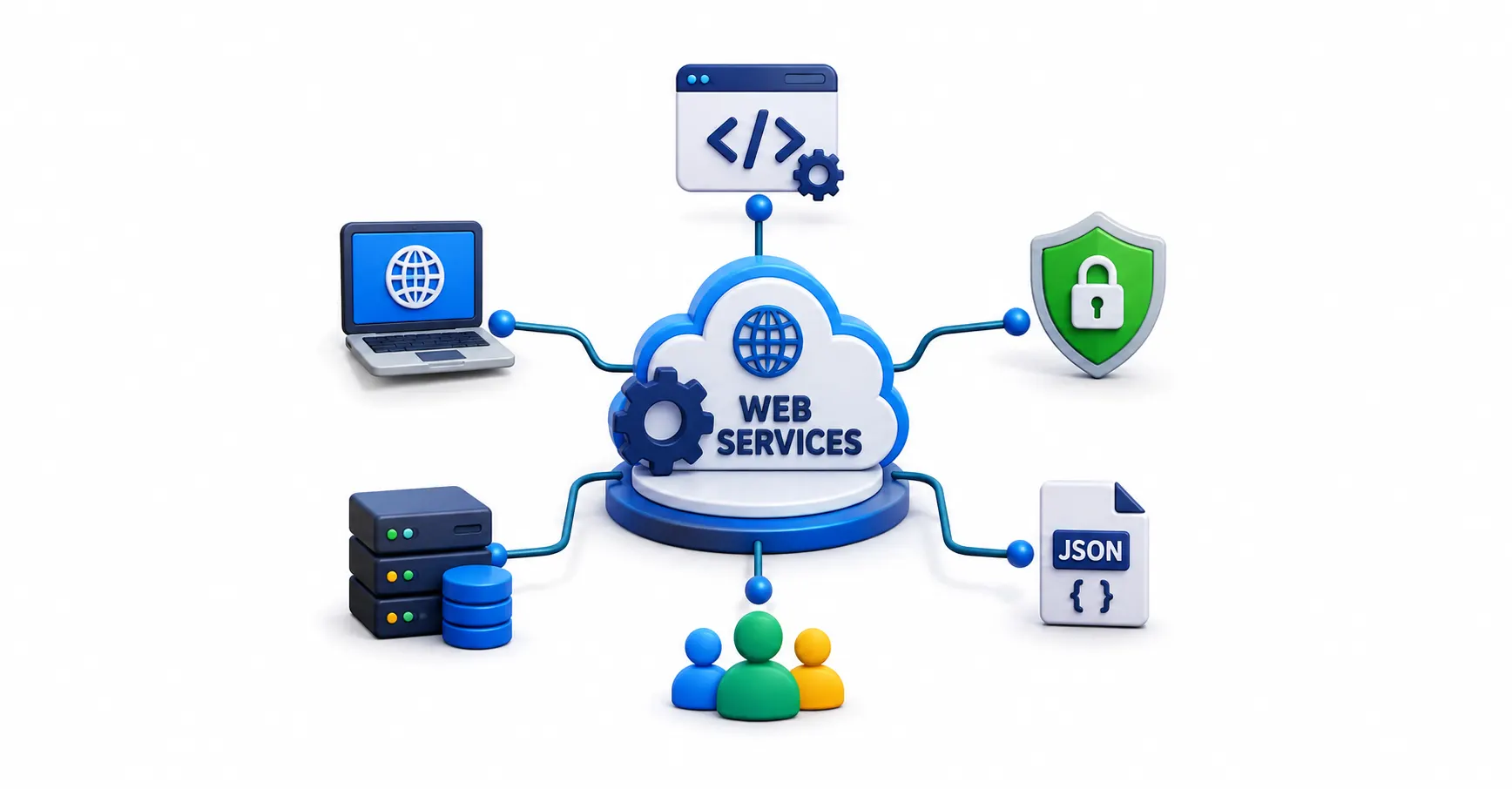
Strip away the buzzwords, and Guidewire's integration capability really comes down to web services. These are the standardized channels through which data enters and leaves the platform — think of them as controlled doorways rather than open windows.
Guidewire supports both SOAP-based and REST-based web services, and the choice between them usually depends on what the receiving or sending system expects. SOAP has been around longer and suits environments with strict contracts and formal schemas. REST, lighter and more flexible, has become the default for newer integrations, especially mobile apps and cloud-native tools.
A practical example: when a customer submits a claim through a mobile app, a REST call typically sends that claim data straight into ClaimCenter. No manual re-entry, no delay. Compare that to a legacy batch process running overnight, and the difference in customer experience is obvious.
Engineers working with these services also need to understand authentication methods, payload structures, and error handling patterns — because a poorly designed web service call doesn't just fail quietly. It can silently corrupt data downstream, which is far worse than an outright crash.
Event Messaging: How Guidewire Reacts in Real Time

If web services are the doorways, event messaging is the alarm system that tells everyone the moment something changes. Guidewire generates events whenever meaningful actions occur — a policy renews, a claim status updates, a payment posts.
These events get published to a messaging queue, and external systems subscribed to that queue react instantly. No polling, no repeated "has anything changed?" requests hammering the database every few minutes. That efficiency matters at scale, especially for carriers processing thousands of transactions daily.
A good analogy is a newsroom wire service. Reporters don't call the source every hour asking for updates; they subscribe to a feed and get notified the second something newsworthy happens. Guidewire's event system works the same way, and it's a big reason real-time dashboards and notification systems function smoothly.
There's a subtlety worth knowing: not every event needs a subscriber. Overloading the messaging system with unnecessary listeners can slow performance and complicate debugging later. Skilled engineers are selective, wiring up only the events that genuinely drive downstream action, keeping the architecture lean and easier to maintain over the platform's lifecycle.
Guidewire Integration Tools Every Engineer Should Know
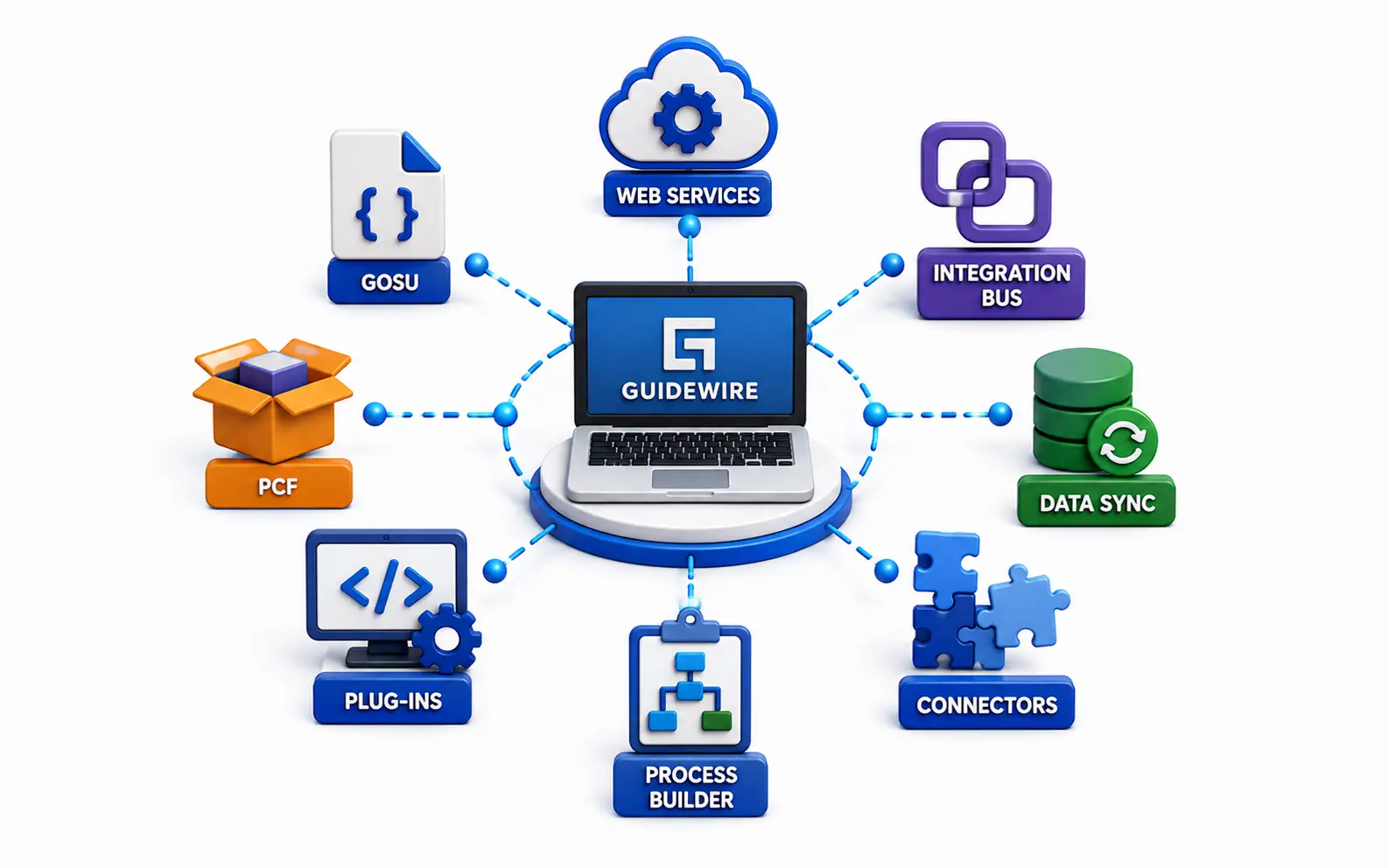
Beyond raw web services and messaging, Guidewire ships with a toolkit purpose-built for integration work. Guidewire integration tools like the Integration Gateway, PolicyCenter's plugin architecture, and the Cloud API give engineers structured ways to extend functionality without touching core code.
The Integration Gateway, for instance, acts as a managed entry point for external calls, handling routing, security, and monitoring in one place. Instead of every team building custom connection logic, they route through a standardized gateway — which cuts down on duplicated effort and inconsistent error handling.
Plugins take a different approach, letting engineers hook custom logic into specific points of the application lifecycle. Say a carrier wants to trigger a fraud-check API call the moment a claim exceeds a certain dollar amount. A plugin handles that trigger cleanly, without modifying the base product.
Cloud API, meanwhile, reflects Guidewire's shift toward cloud-hosted environments, offering programmatic access that doesn't rely on direct database connections. This separation matters for security and for staying upgrade-friendly, since direct database dependencies tend to break during platform updates. Learning these tools individually, then understanding how they combine, is where junior engineers typically level up into senior integration specialists.
Configuration vs Customization: Where Integration Fits In
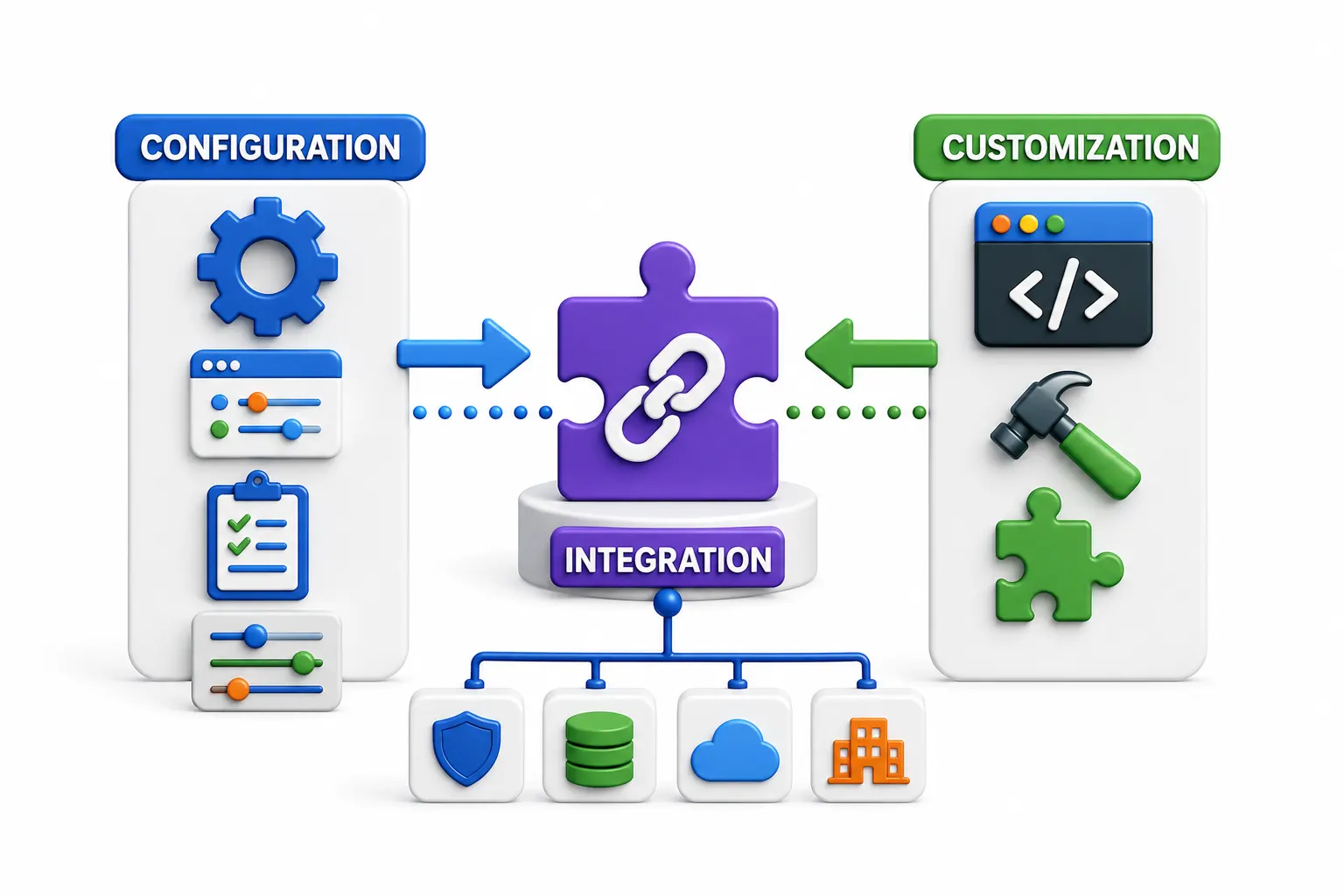
One question trips up almost every new Guidewire engineer: should this be solved through configuration, customization, or integration? Getting this wrong creates technical debt that follows a project for years.
Configuration means adjusting settings within Guidewire's supported framework — product models, business rules, UI layouts — without writing custom code that fights the platform's upgrade path. Customization goes further, involving actual code changes to core behavior. Integration, by contrast, connects Guidewire to external systems while leaving the core untouched.
The safest projects lean heavily on configuration first, use integration for anything involving outside systems, and reserve customization for genuine gaps that neither option covers. Teams that customize too aggressively often struggle during platform upgrades, since heavily modified code doesn't merge cleanly with new releases.
A rule of thumb worth remembering: if the requirement involves talking to another system, it belongs in the integration layer, not buried inside customized business logic. Keeping that boundary clean saves enormous headaches later, particularly when a carrier eventually migrates to Guidewire Cloud, where customization is intentionally more restricted than in on-premise deployments.
Common Pitfalls That Break Guidewire Integrations (And How to Avoid Them)
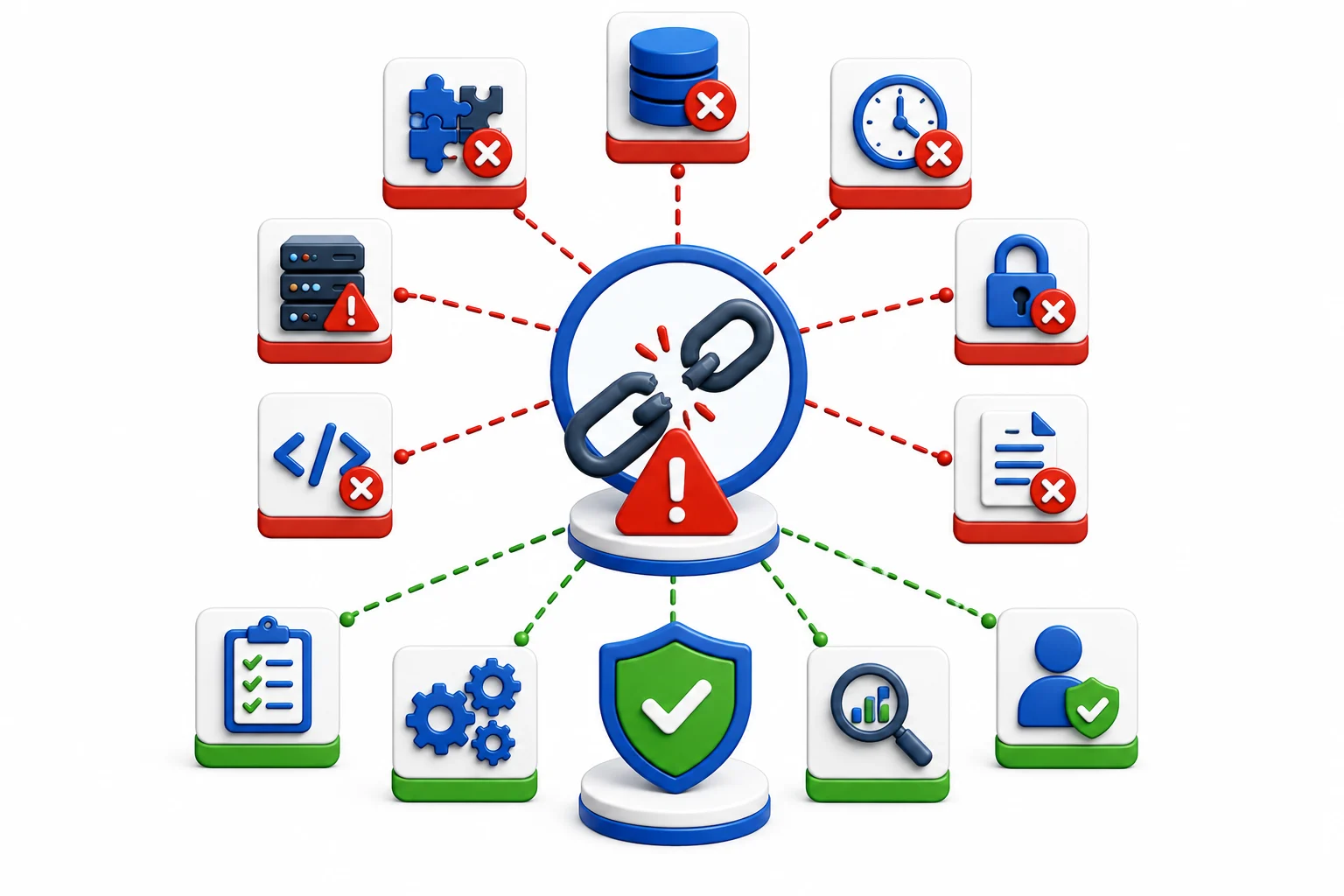
Even well-planned integrations fail, and it's rarely because of exotic technical problems. Most failures trace back to a handful of repeated mistakes.
Poor error handling tops the list. When a web service call fails silently, teams often don't notice until a customer complains weeks later. Building proper logging and alerting around every integration point isn't optional — it's the difference between catching a problem in minutes versus discovering it during an audit.
Another common issue is tight coupling. Some engineers hard-code assumptions about external system behavior directly into Guidewire, so when the external system changes its API, everything breaks. Designing with loose coupling and clear versioning avoids this trap.
Ignoring event volume is another quiet killer. As data grows, an event messaging setup that worked fine in testing can choke in production if nobody planned for scale.
Finally, skipping documentation causes long-term pain. Six months later, nobody remembers why a particular integration was built a certain way, and fixing it becomes guesswork. Treating documentation as part of the deliverable, not an afterthought, saves future engineers real time.
Conclusion
Solid Guidewire integration isn't about flashy tools — it's disciplined use of web services, thoughtful event messaging, and knowing when configuration beats customization. Master those fundamentals, and the rest of the platform becomes far easier to work with.