

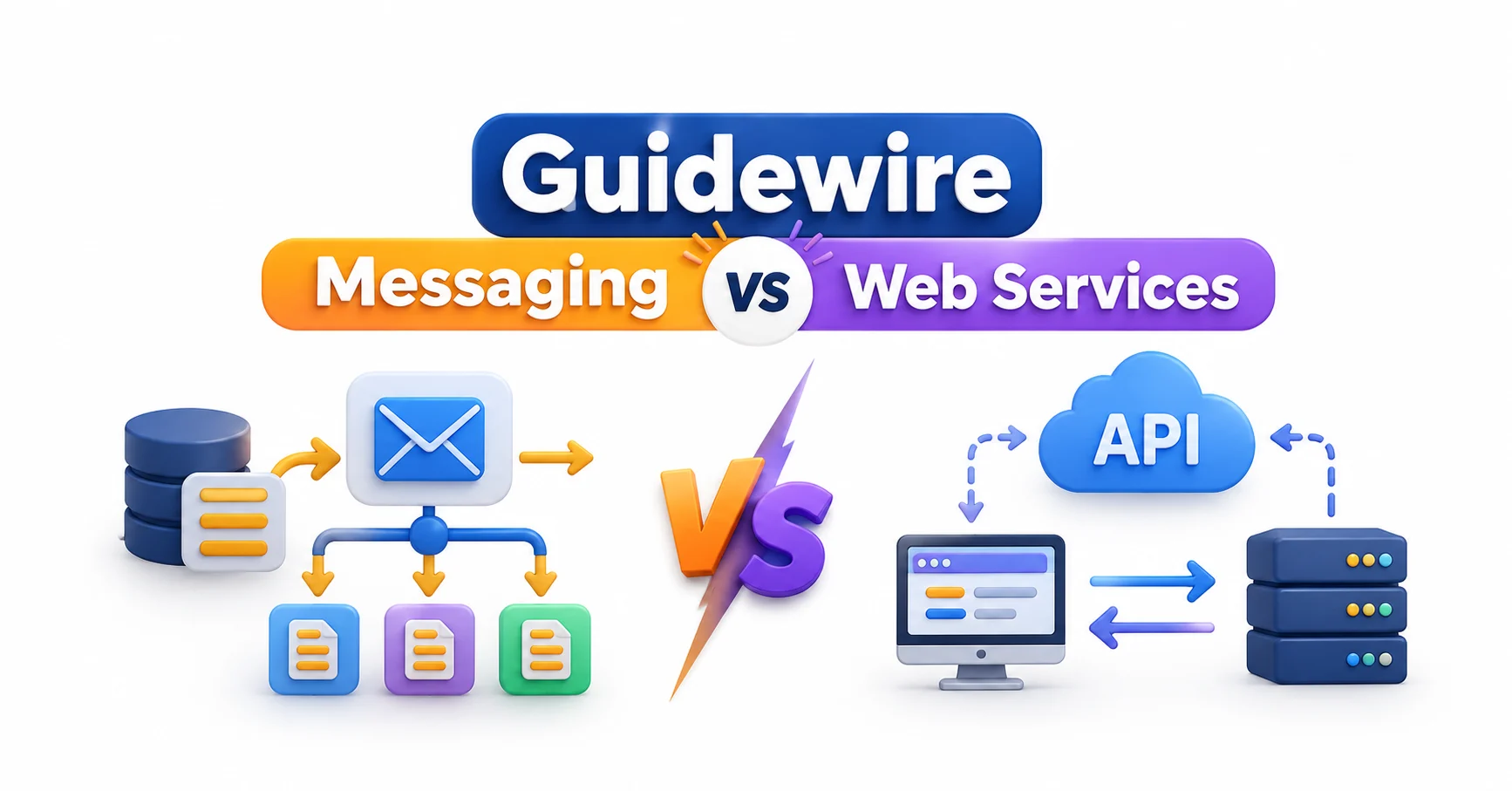
Guidewire Messaging vs Web Services: Key Differences Explained
Navigate through this article using the table of contents below
Table of Contents
No headings found in this article.
A claim is closed in ClaimCenter, but the downstream payment system never hears about it. Or a policy change reaches the document system twice. Problems like these usually trace back to one early design decision: how the integration was built. Developers who learn through structured programs such as Guidewire training in India hit this fork sooner than most, and it comes down to Guidewire messaging vs web services.
Both move data between Guidewire and other systems, yet they behave very differently under failure, load, and change. Choosing the wrong one is expensive to undo.
What Guidewire Messaging Actually Does
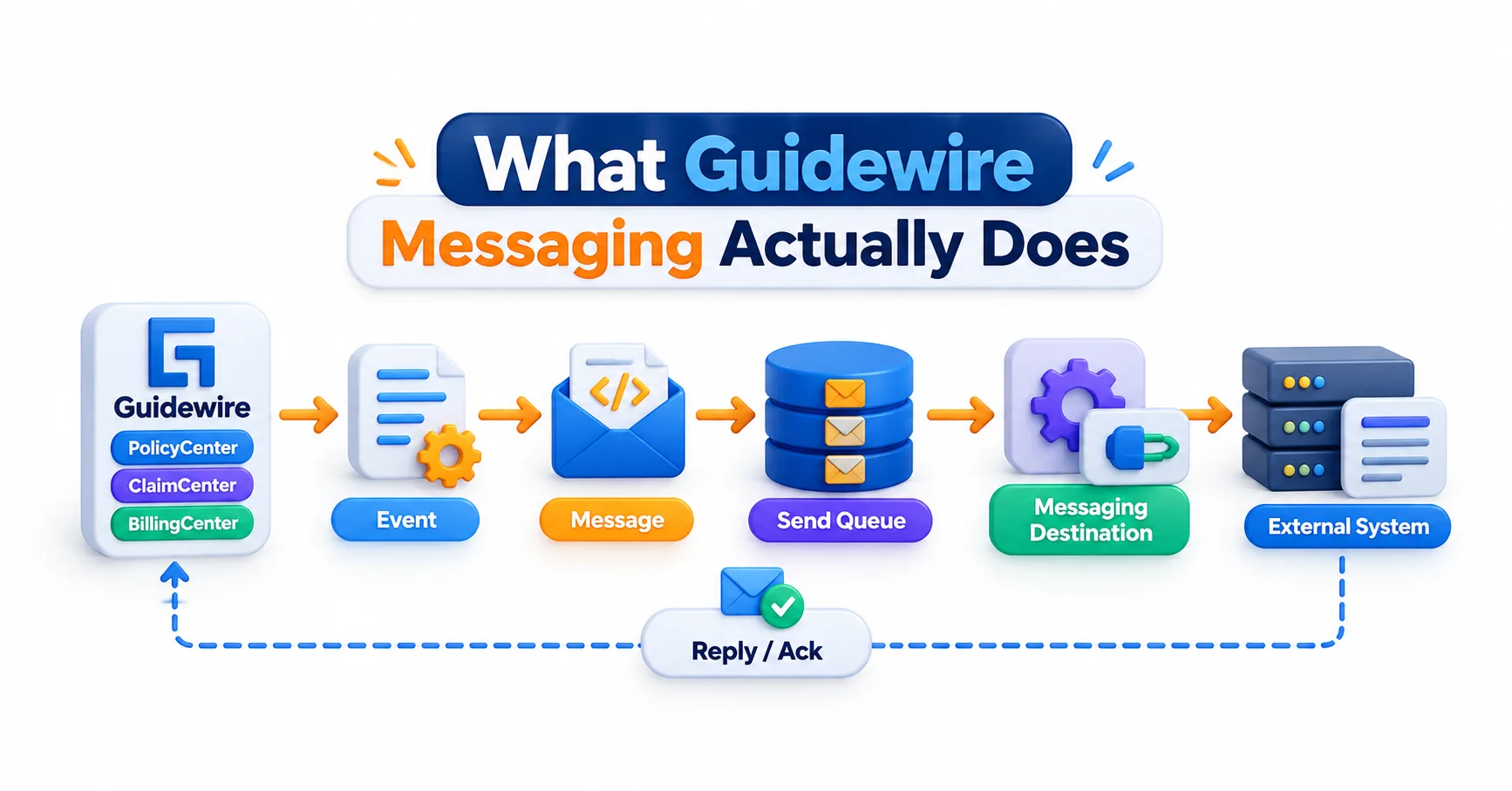
Guidewire messaging is an asynchronous, event-driven way to send data out of the application. Something happens inside Guidewire, such as a policy being issued or an account being updated, and the platform fires an event. An event rule picks it up, builds a message, and places it in a queue for a specific destination.
The detail that matters most is timing. The message is created in the same database transaction as the business change. If the transaction rolls back, the message never exists, so an external system can't be told about something that didn't happen.
A messaging plugin then sends the message to the target system and handles the acknowledgment. If the target is down, the destination retries or suspends instead of silently dropping data. Messages for the same business object are also sent in order, which protects against a "policy updated" message arriving before "policy created".
How Web Services Work in Guidewire
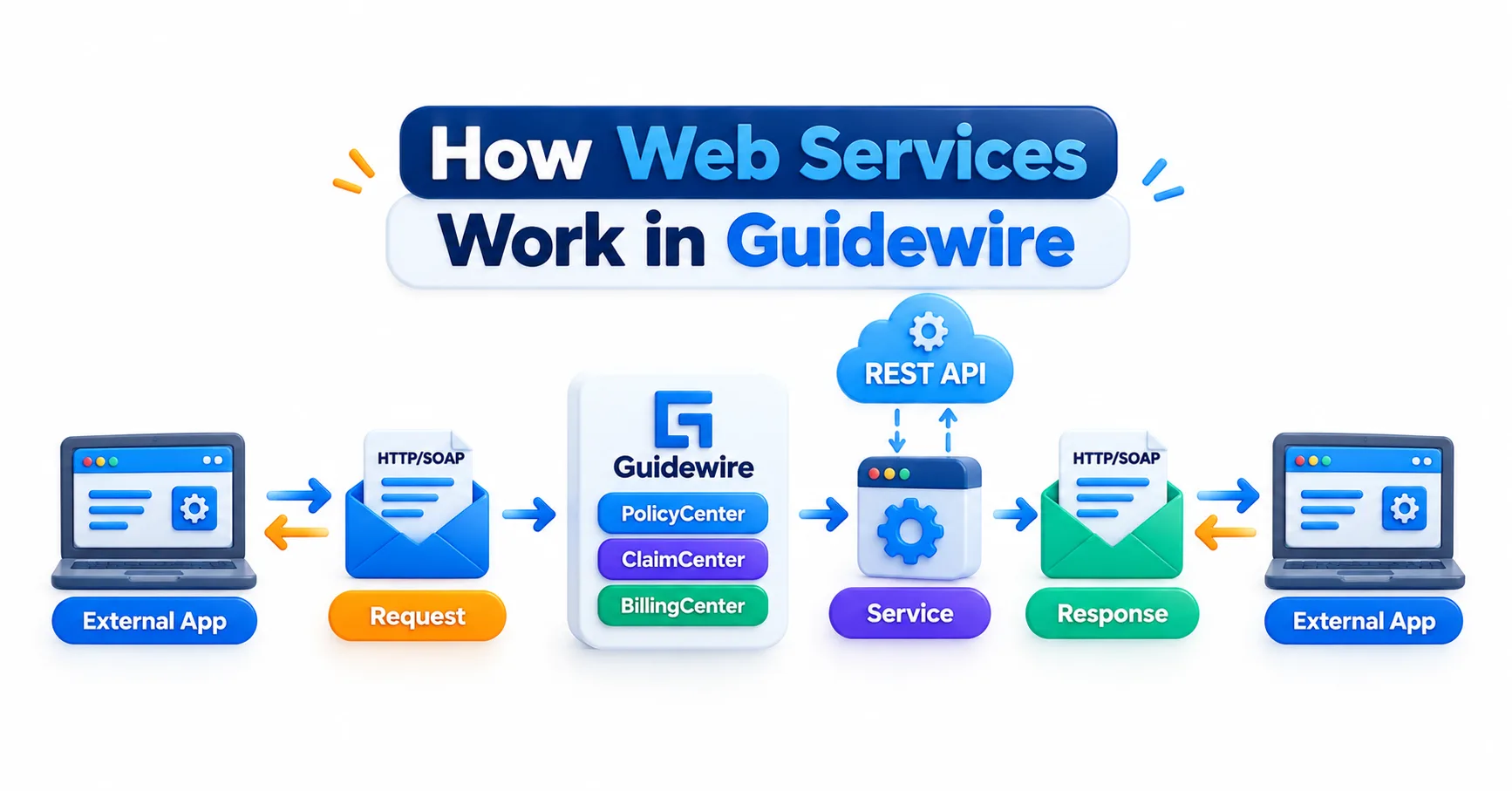
Web services are synchronous. One system calls another and waits for an answer. Guidewire supports both directions. You can publish Gosu classes as web services so outside systems can call into Guidewire, and you can consume external services by generating a client from a WSDL or an API definition.
Published services have traditionally been SOAP, annotated and exposed through the platform's web service framework. Newer releases also offer REST-style APIs, and the exact options depend on your version.
The defining trait is immediacy. The caller sends a request and gets a result or an error in the same breath. That suits a call center screen that needs a quote or a customer lookup in the moment. The cost is that Guidewire does not guarantee delivery for you. If a call times out halfway, the caller must decide whether the work happened.
Guidewire Messaging vs Web Services: The Differences That Matter
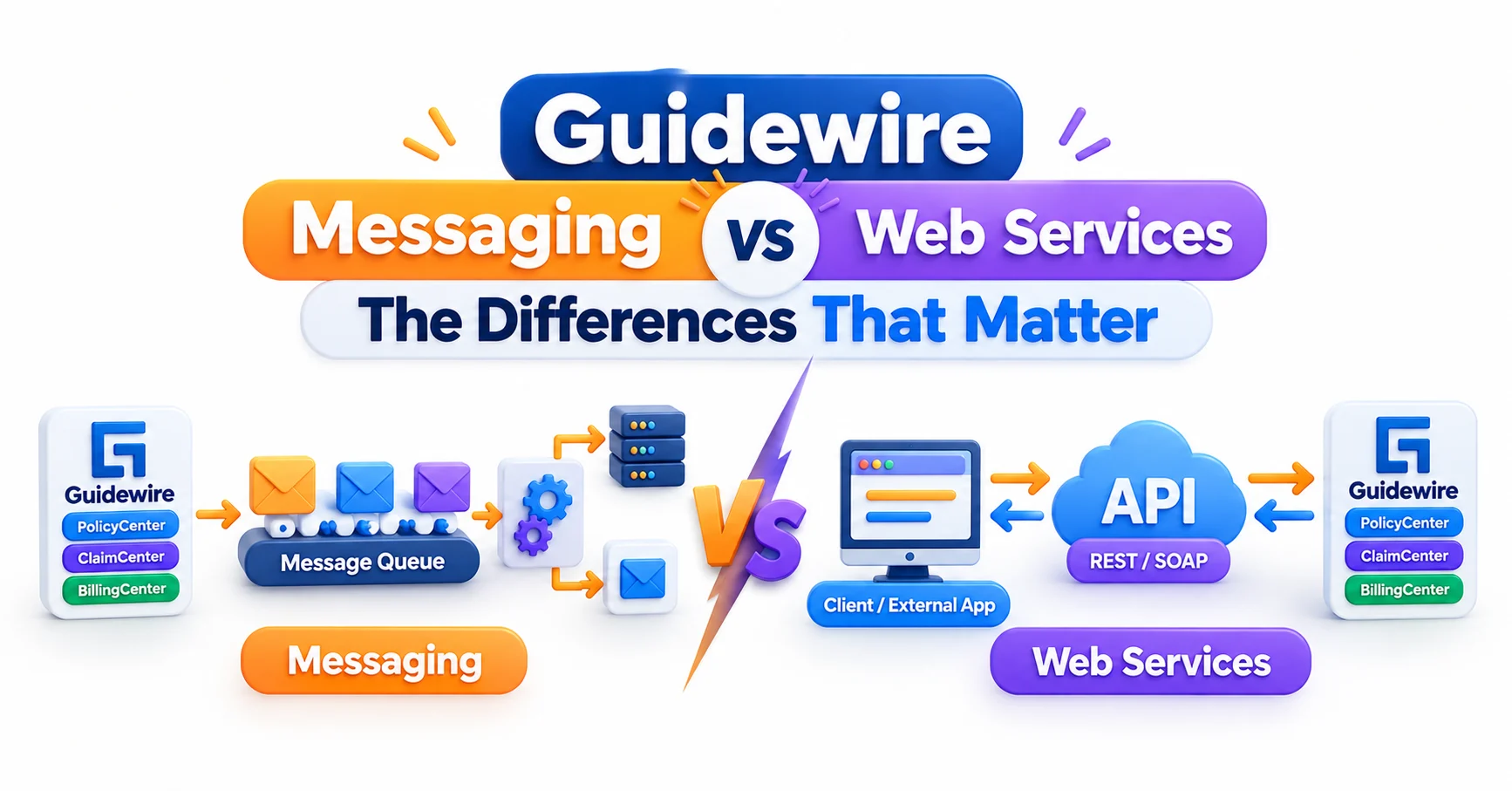
Direction is the first difference. Messaging is built for pushing data out of Guidewire after something changes. Web services handle both inbound and outbound calls, but they are most associated with outside systems calling in.
Timing is the second. Messaging is asynchronous, so the business transaction finishes without waiting on the receiver. A web service call is synchronous, so a slow partner system makes your user wait.
Reliability is the third. Messaging gives you transactional creation, ordered delivery, retries, and error handling out of the box. With web services, you build that safety net yourself with idempotency checks, retry logic, and reconciliation.
Coupling is the last. A messaging destination hides the receiver behind a plugin, so a downstream outage doesn't stop users from working. A web service call ties the user's action to the other system's availability.
Choosing the Right One in a Real Project

Take a hypothetical case. An insurer needs policy changes sent to a billing system, and agents also need to check a customer's payment status while on a call.
The first need is a textbook messaging case. The data must arrive reliably and in order, and nobody is waiting on a screen. The second is a web service case, because the agent needs an answer now and a delayed result is useless.
The two aren't mutually exclusive either. A messaging destination often uses a transport that calls an external web service to deliver its payload. Messaging decides when and how safely something is sent, and the web service is the delivery mechanism. Billing integrations commonly mix both, which is why people studying Guidewire BillingCenter training in Pune are expected to understand each.
Mistakes Teams Make With Both
The most common mistake is using web services for everything because they feel simpler. It works in testing, then fails in production the first time a partner system has a maintenance window.
The reverse also happens. Teams push request-response needs through messaging, then struggle to get a quick answer back to a waiting user. Messaging is not built for that.
Other recurring problems:
Sending oversized payloads in messages instead of just the identifiers the receiver needs
Ignoring error queues until a suspended destination blocks everything behind it
Forgetting that web service calls inside long transactions can hold locks and slow the application
Skipping idempotency, so a retried call creates duplicate records
None of these are exotic. They show up in ordinary projects, usually when someone chose a pattern by habit instead of by requirement.
Building Skills for Integration Work
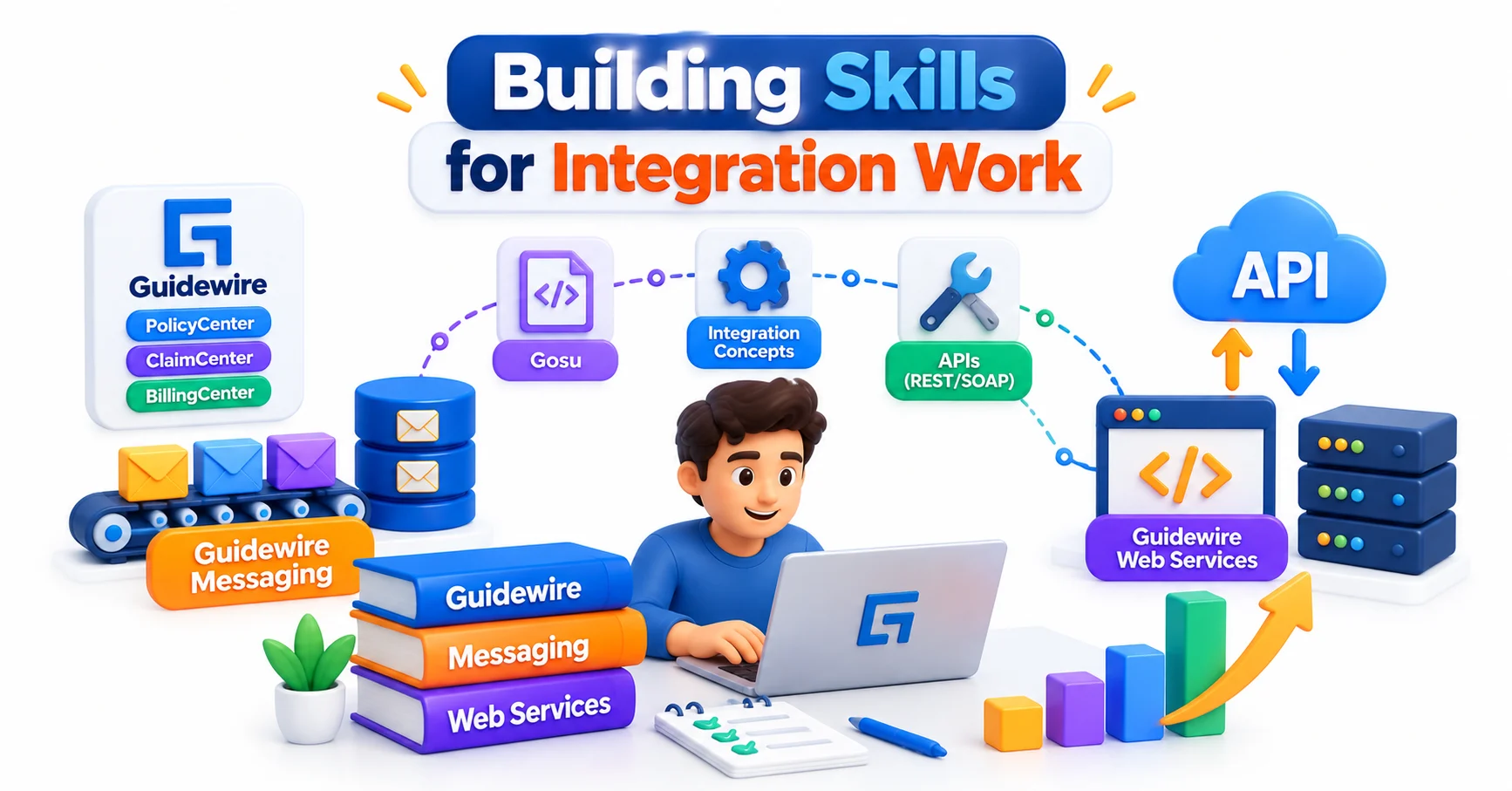
Integration questions come up often in Guidewire interviews, mostly because they expose whether a candidate understands real system behavior and not just configuration screens. Being able to explain why a message is created inside the transaction, or when a synchronous call is the wrong choice, sets a candidate apart.
The best way to learn is by building. Create a simple destination, trace an event through to a message, then publish and call a web service of your own. Working through guided material such as a Guidewire integration and web services course gives that practice some structure. JastTech's programs are one option for learners who want both concepts and hands-on exercises.
Conclusion
Guidewire messaging vs web services is not a contest with a single winner. Messaging protects data that must arrive reliably and in order, while web services serve moments when someone needs an answer right now. Understanding that split makes integrations easier to design, debug, and defend. Get it right early, and fewer 2 a.m. production calls follow.