

Guidewire Product Model vs. Policy Model: Understanding the Difference
Navigate through this article using the table of contents below
Table of Contents
No headings found in this article.
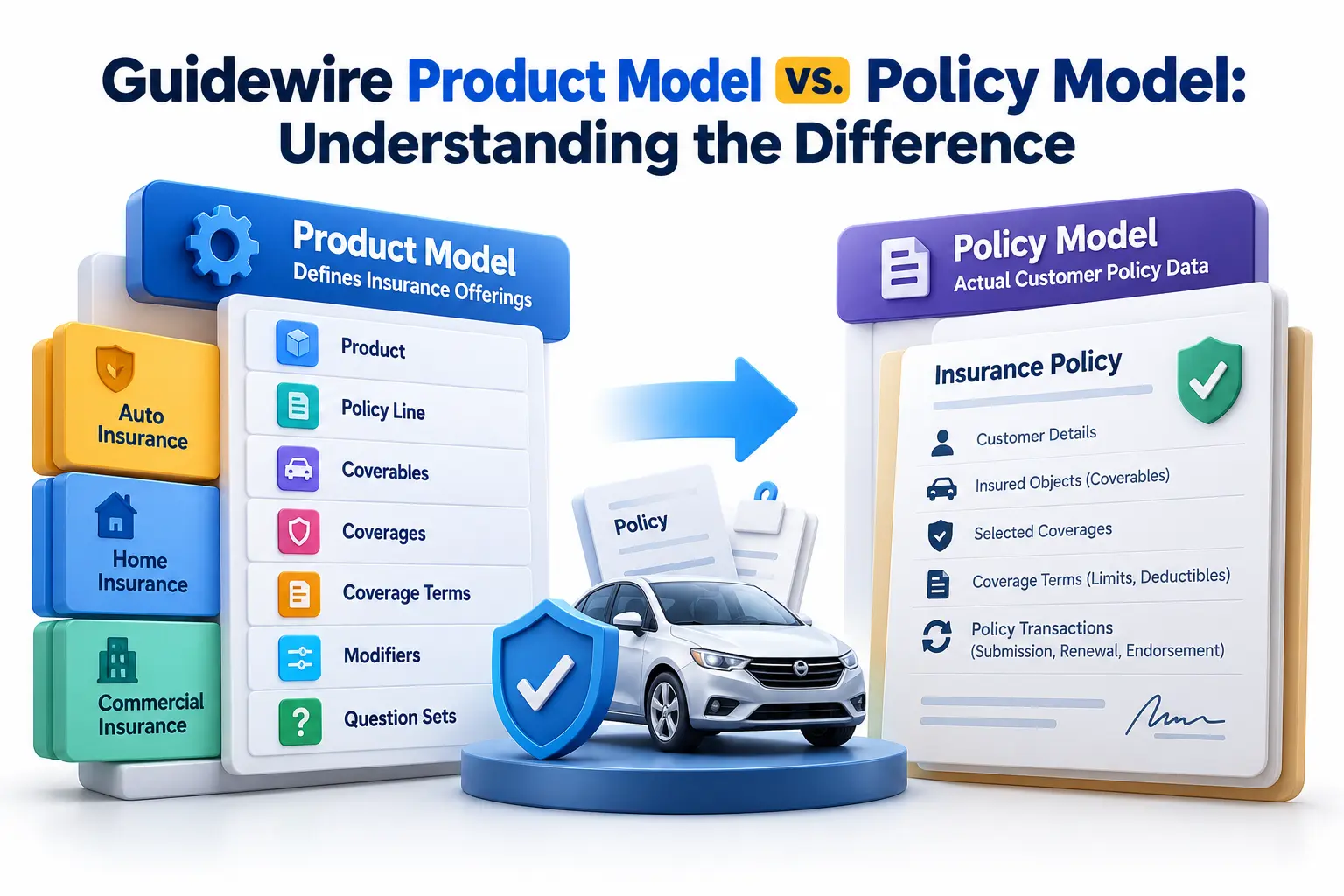
In Guidewire PolicyCenter, the Product Model and Policy Model are closely related, but they serve different purposes. Understanding their relationship is essential for anyone working with insurance product configuration, policy administration or Guidewire development.
Imagine an insurance company launching a new motor insurance product. How does PolicyCenter know which coverages customers can select, and how does it store the actual policy details? The answer lies in understanding these two concepts.
What Is the Guidewire Product Model?
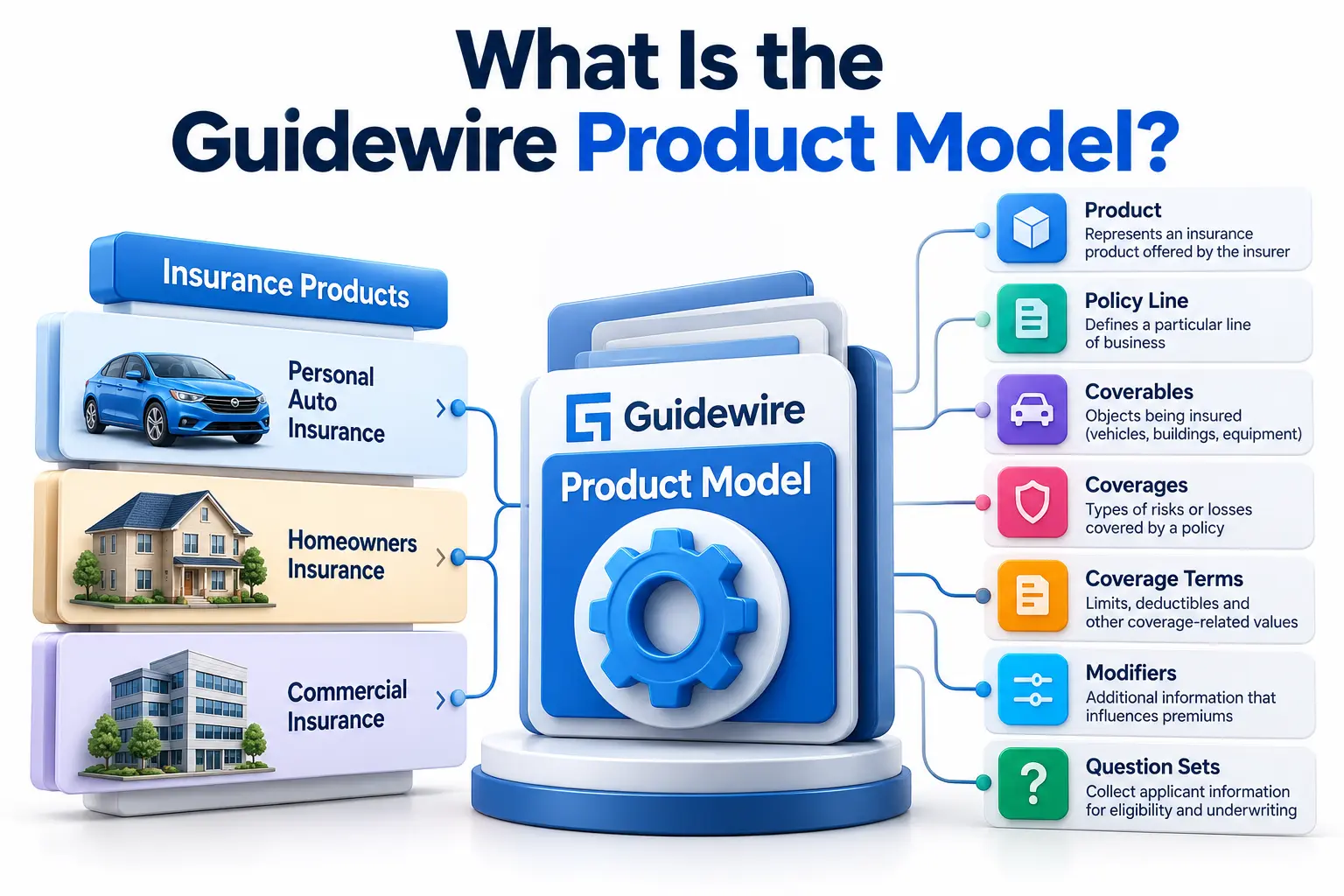
The Product Model in Guidewire PolicyCenter defines the insurance products an insurance company offers to customers. It establishes the structure, available options and rules associated with different insurance products. In simple terms, it acts as the blueprint that determines what an insurer can sell.
For example, an insurance company might offer Personal Auto Insurance, Commercial Auto Insurance and Homeowners Insurance. Each product has specific configurations that determine its available coverages, conditions, exclusions, modifiers and other insurance-related options.
The Product Model contains several important components:
Product: Represents an insurance product offered by the insurer.
Policy Line: Defines a particular line of business, such as Personal Auto or Commercial Property.
Coverables: Represent the objects being insured, such as vehicles, buildings or equipment.
Coverages: Define the types of risks or losses covered by an insurance policy.
Coverage Terms: Specify coverage limits, deductibles and other coverage-related values.
Modifiers: Provide additional information that can influence insurance premiums.
Question Sets: Collect applicant information for eligibility assessment and underwriting.
These components work together to establish the available insurance options. Product configuration also supports business requirements such as product availability, jurisdiction-specific rules and underwriting conditions.
What Is the Policy Model in Guidewire?
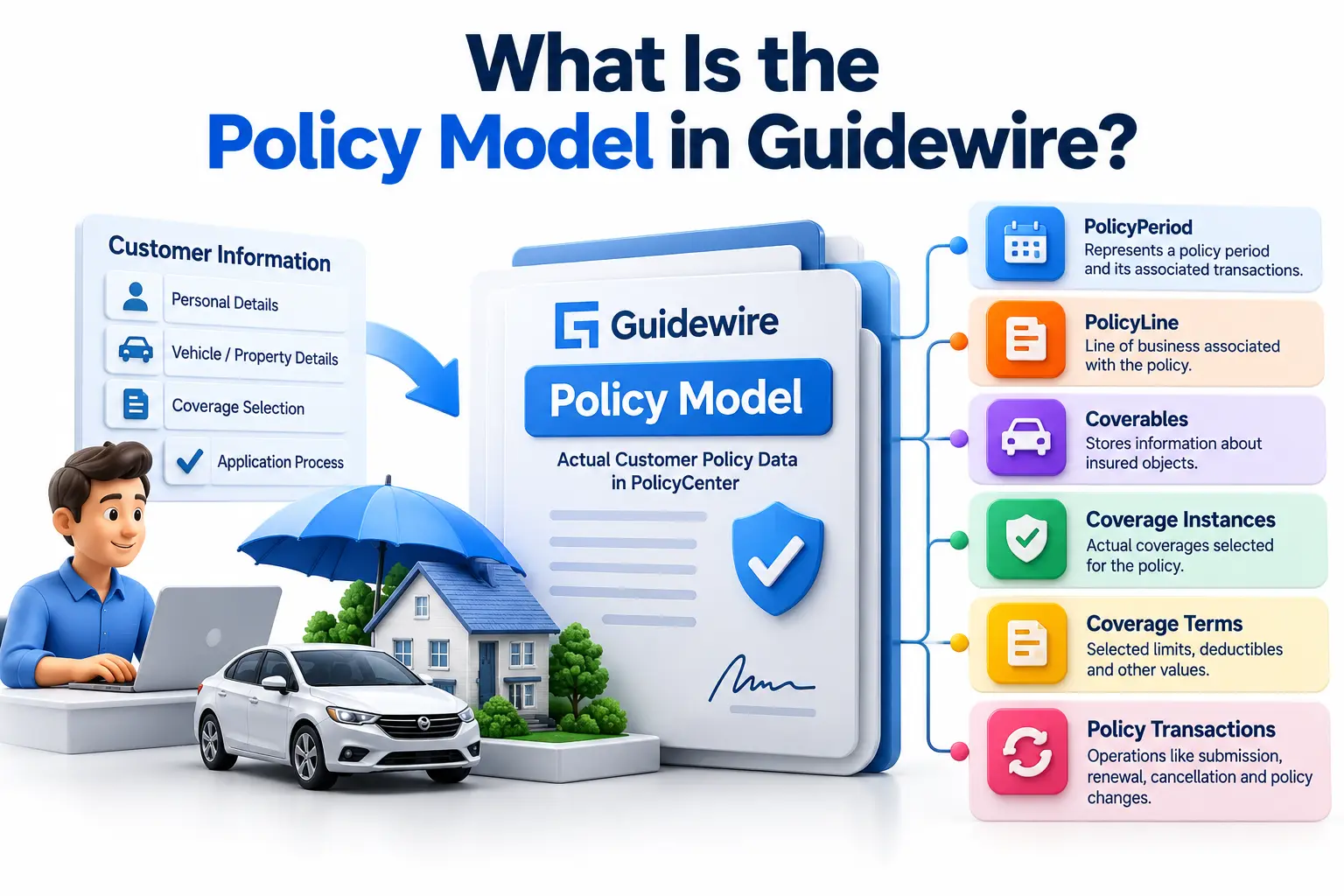
The term Policy Model is commonly used when discussing the actual policy structure and data maintained by PolicyCenter. It is important to understand that this is a conceptual comparison rather than a separate formal feature equivalent to the Product Model.
While the Product Model defines what an insurance company can offer, the policy data represents what has actually been selected and recorded for a particular customer.
For example, consider a customer purchasing Personal Auto Insurance. The customer provides vehicle details, selects collision coverage, chooses a deductible and completes the application process. These selections become part of the policy information maintained by PolicyCenter.
Important policy-related elements include:
PolicyPeriod: Represents a particular policy period and its associated transaction data.
PolicyLine: Represents the line of business associated with the policy.
Coverables: Store information about insured objects.
Coverage Instances: Represent the actual coverages selected for the policy.
Coverage Terms: Store selected limits, deductibles and other values.
Policy Transactions: Represent operations such as submissions, renewals, cancellations and policy changes.
The policy data evolves throughout the insurance lifecycle. When a customer requests a change or renews a policy, PolicyCenter processes the transaction and maintains the appropriate policy information.
Key Differences Between Product Model and Policy Model
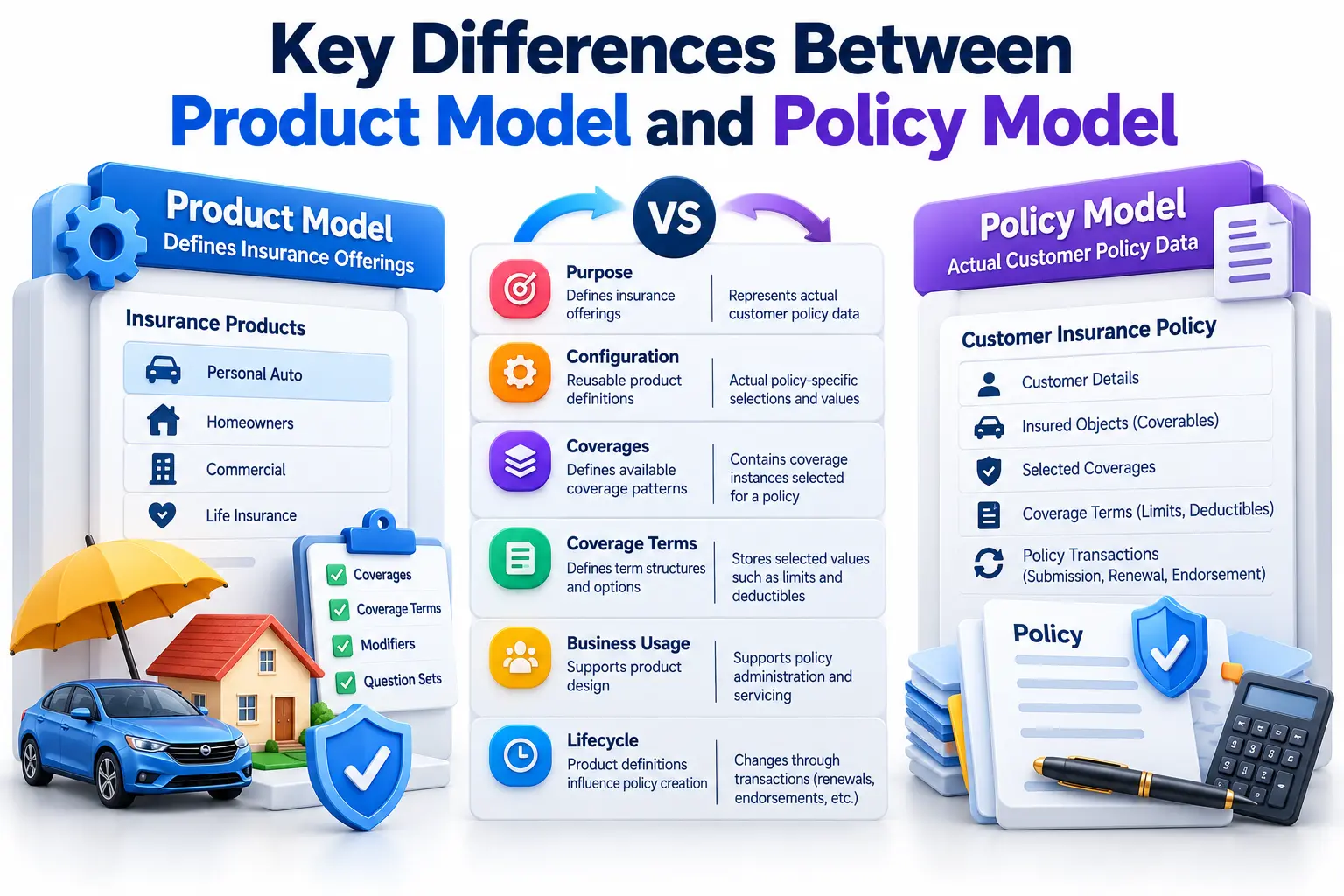
The biggest difference between these concepts is their responsibility within the insurance application. The Product Model defines the available insurance configuration, whereas policy data represents the actual insurance agreement being created and maintained.
Understanding this distinction helps developers avoid confusion when working with PolicyCenter entities, product configuration and policy transactions.
Consider these practical differences:
Purpose: Product Model defines insurance offerings, while policy data represents an individual customer's insurance contract.
Configuration: Product Model contains reusable product definitions and patterns. Policy data contains actual policy-specific selections and values.
Coverages: Product Model defines available coverage patterns, while policy data contains coverage instances selected for a policy.
Coverage Terms: Product Model defines available term structures and options, while policy data stores selected values such as deductibles and limits.
Business Usage: Product Model supports insurance product design, while policy data supports policy administration and servicing.
Lifecycle: Product definitions influence policy creation, while policy data changes through transactions such as renewals and endorsements.
For example, an insurer may configure collision coverage with deductible options of ₹10,000, ₹20,000 and ₹30,000. These options belong to the product configuration. When a customer selects ₹20,000, that selected value becomes part of the customer's policy data.
This distinction is particularly important when troubleshooting configuration issues or implementing new insurance requirements.
How Product Model and Policy Model Work Together in PolicyCenter
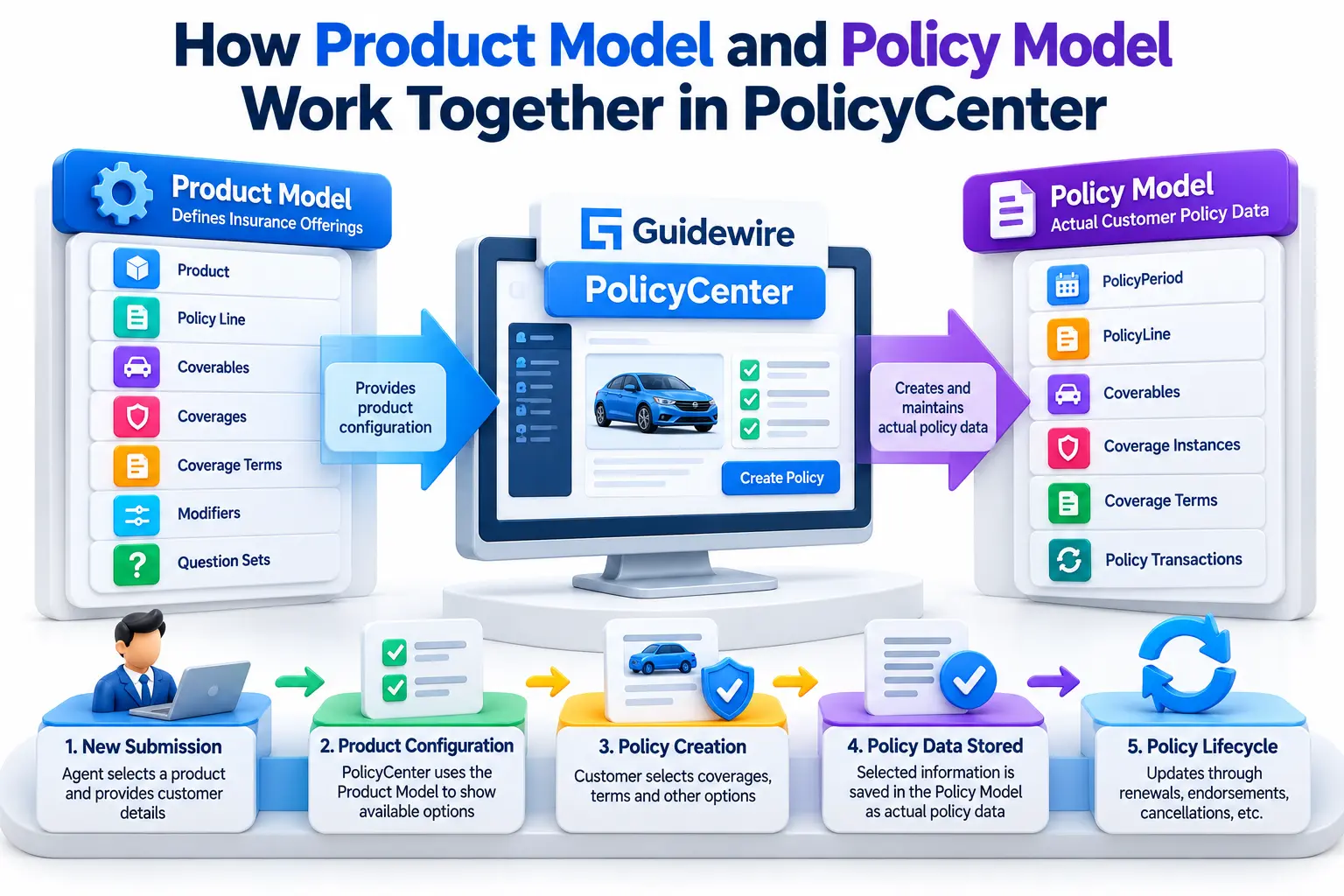
The Product Model and policy data are not independent concepts. They work together during policy creation and throughout the policy lifecycle.
When an insurance agent starts a new submission, PolicyCenter uses the configured product information to determine which products, policy lines and coverage options are available.
A simplified workflow looks like this:
Product Configuration → New Submission → Customer Information → Coverage Selection → Rating → Quote → Bind → Policy Creation
Consider a Personal Auto Insurance example:
The insurer configures a Personal Auto product.
The product includes a Personal Auto policy line.
The policy line defines vehicles, drivers and available coverages.
The agent starts a new submission in PolicyCenter.
The customer provides vehicle and driver information.
Available coverage options are presented based on the product configuration.
The customer selects collision coverage and an appropriate deductible.
PolicyCenter calculates the premium using configured rating logic.
After the necessary approvals and binding steps, the policy is issued.
During this process, the Product Model provides the configuration framework, while PolicyCenter creates and maintains the corresponding policy-specific data.
Professionals learning these concepts through Guidewire Training in Bangalore should practise the complete submission workflow rather than memorizing individual definitions. Understanding how configuration decisions affect actual policy transactions builds stronger implementation knowledge.
Real-World Examples for Developers and Business Analysts
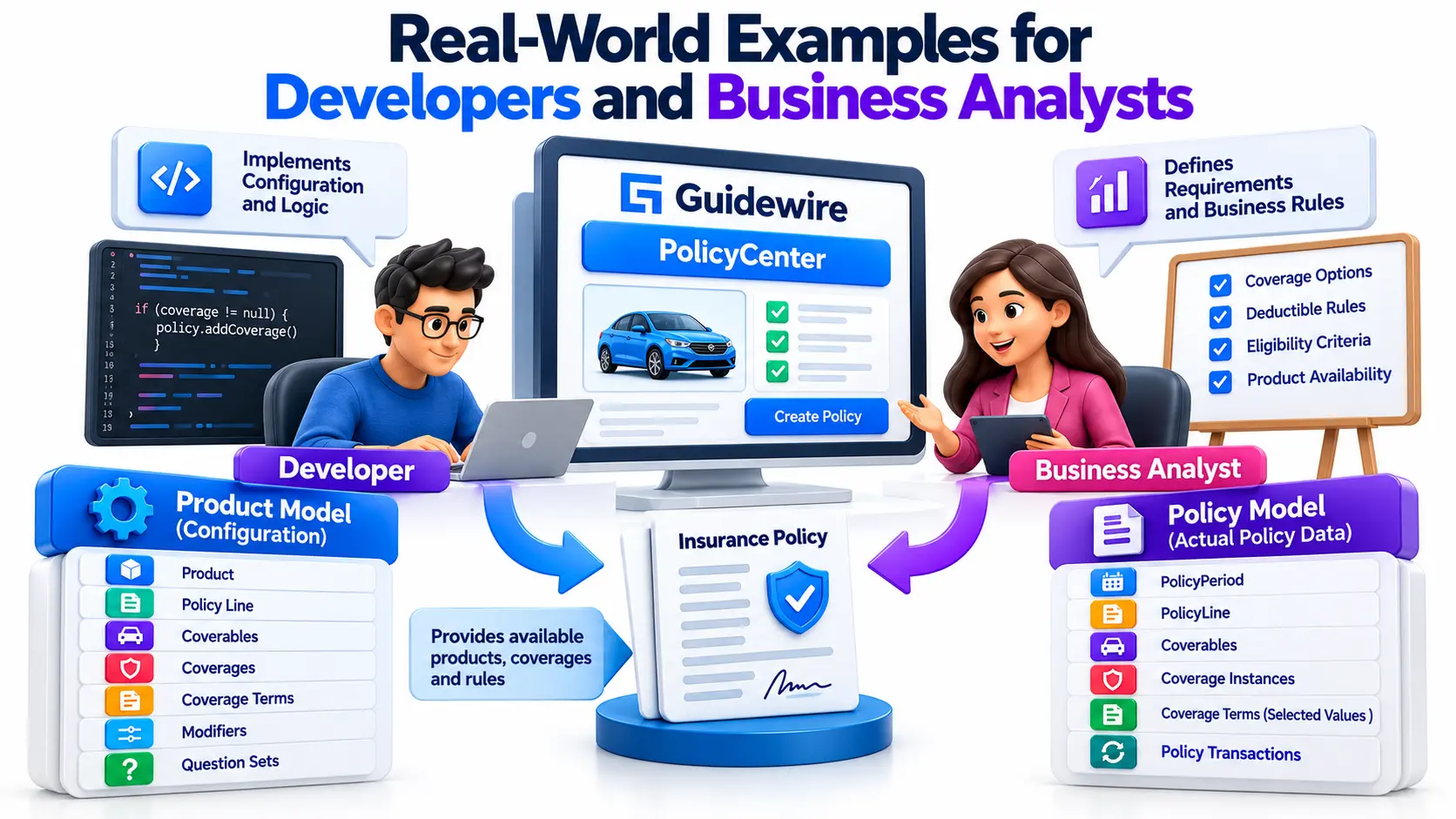
Understanding the theoretical distinction is useful, but practical scenarios explain how these concepts affect everyday Guidewire projects.
Scenario 1: Adding a New Coverage
An insurance company wants to introduce roadside assistance coverage for its Personal Auto Insurance product.
The development team first configures the appropriate coverage pattern and its availability within the product configuration. When customers create new submissions, the coverage can become available according to the configured rules.
When a customer selects roadside assistance, PolicyCenter maintains the corresponding coverage information within that policy.
Scenario 2: Changing Deductible Options
Suppose an insurer wants to introduce a new deductible option of ₹40,000.
The product configuration must support the new option. The actual deductible selected by an individual customer is maintained within the policy data.
This distinction matters because changing an available option does not automatically mean every existing policy should receive that value.
Scenario 3: Introducing a New Insurance Product
An insurer decides to launch a Commercial Package product containing Commercial Property and General Liability lines.
The Product Model defines the product and its associated lines of business. When a customer purchases the package, PolicyCenter creates the relevant policy information based on the selected product configuration.
These scenarios demonstrate why developers and business analysts must understand both configuration and runtime policy information.
Skills Needed to Understand Both Concepts in Guidewire Careers
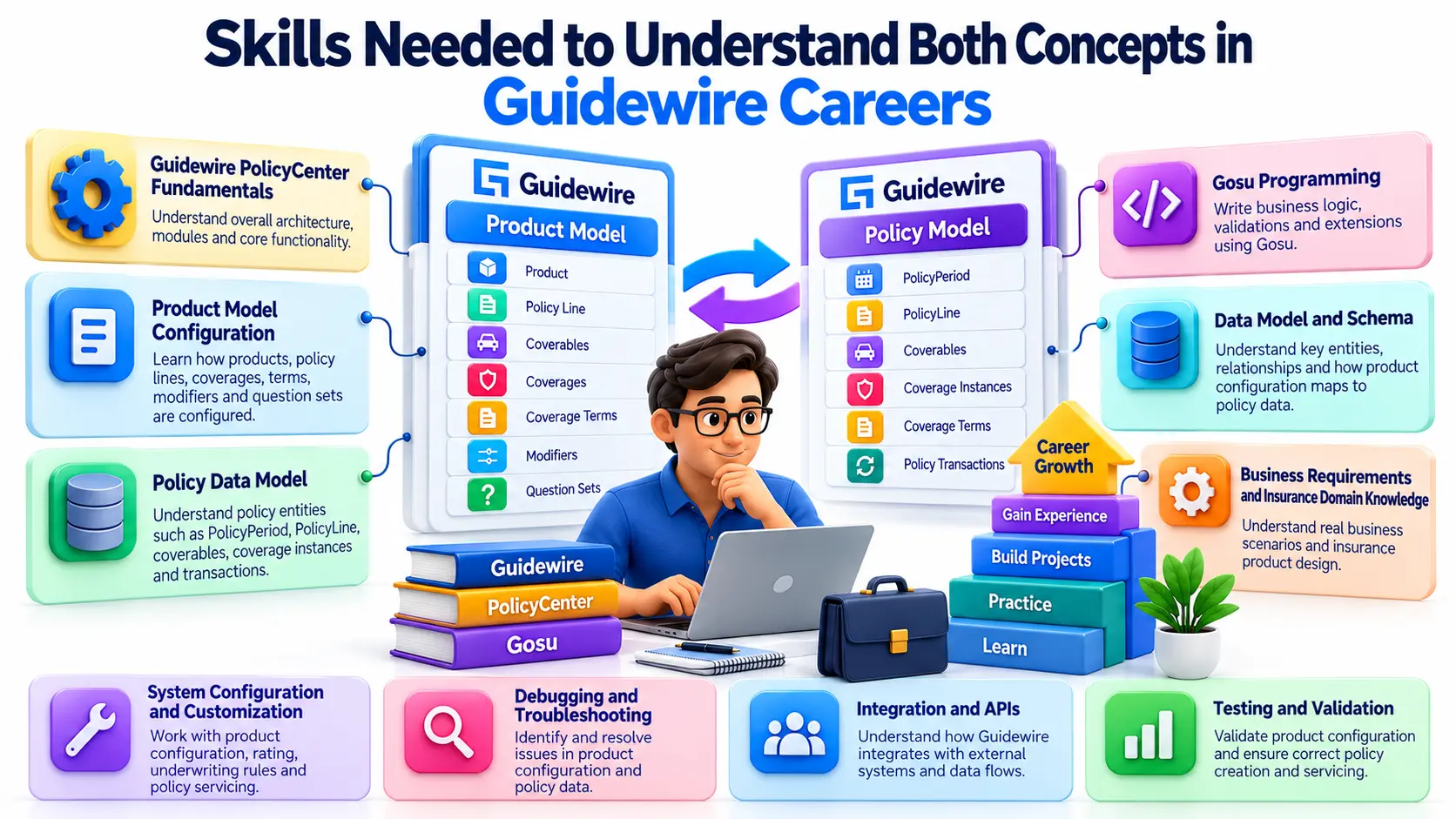
Professionals working with Guidewire PolicyCenter need more than theoretical knowledge of insurance terminology. They must understand how product definitions, policy data, business rules and transactions interact.
For aspiring developers, important technical skills include:
Understanding PolicyCenter architecture and configuration.
Learning Gosu programming fundamentals.
Working with product configuration and coverage patterns.
Understanding PolicyPeriod and related policy entities.
Learning rating, validation and underwriting concepts.
Understanding submission, renewal and policy change workflows.
Exploring integrations and PolicyCenter APIs.
Business analysts also need a strong understanding of these concepts because they translate insurance requirements into system configurations and functional specifications.
For professionals pursuing Guidewire Business Analyst Training, useful learning areas include product requirements gathering, coverage analysis, policy lifecycle workflows, business rules, acceptance criteria and functional testing.
JastTech can help learners build a stronger understanding of Guidewire concepts by focusing on practical insurance workflows, configuration knowledge and industry-oriented learning.
Developers, testers and business analysts who understand the relationship between the Product Model and policy data can communicate more effectively with insurance stakeholders and contribute more confidently to PolicyCenter implementation projects.
Conclusion
The Guidewire Product Model and policy data serve different but interconnected purposes in PolicyCenter. The Product Model defines the insurance products, policy lines, coverages, coverage terms and other configuration options an insurer makes available. Policy data represents the actual insurance information selected and maintained for individual customers. Understanding this distinction helps professionals understand how insurance products move from configuration into real policy transactions.
For anyone building a career in Guidewire, learning both concepts is an important step toward understanding PolicyCenter implementation. Practical experience with product configuration, submissions, coverage selection, rating and policy changes provides a stronger foundation than theoretical knowledge alone. Whether pursuing development, testing or business analysis opportunities, mastering these concepts can improve technical understanding and industry readiness.