

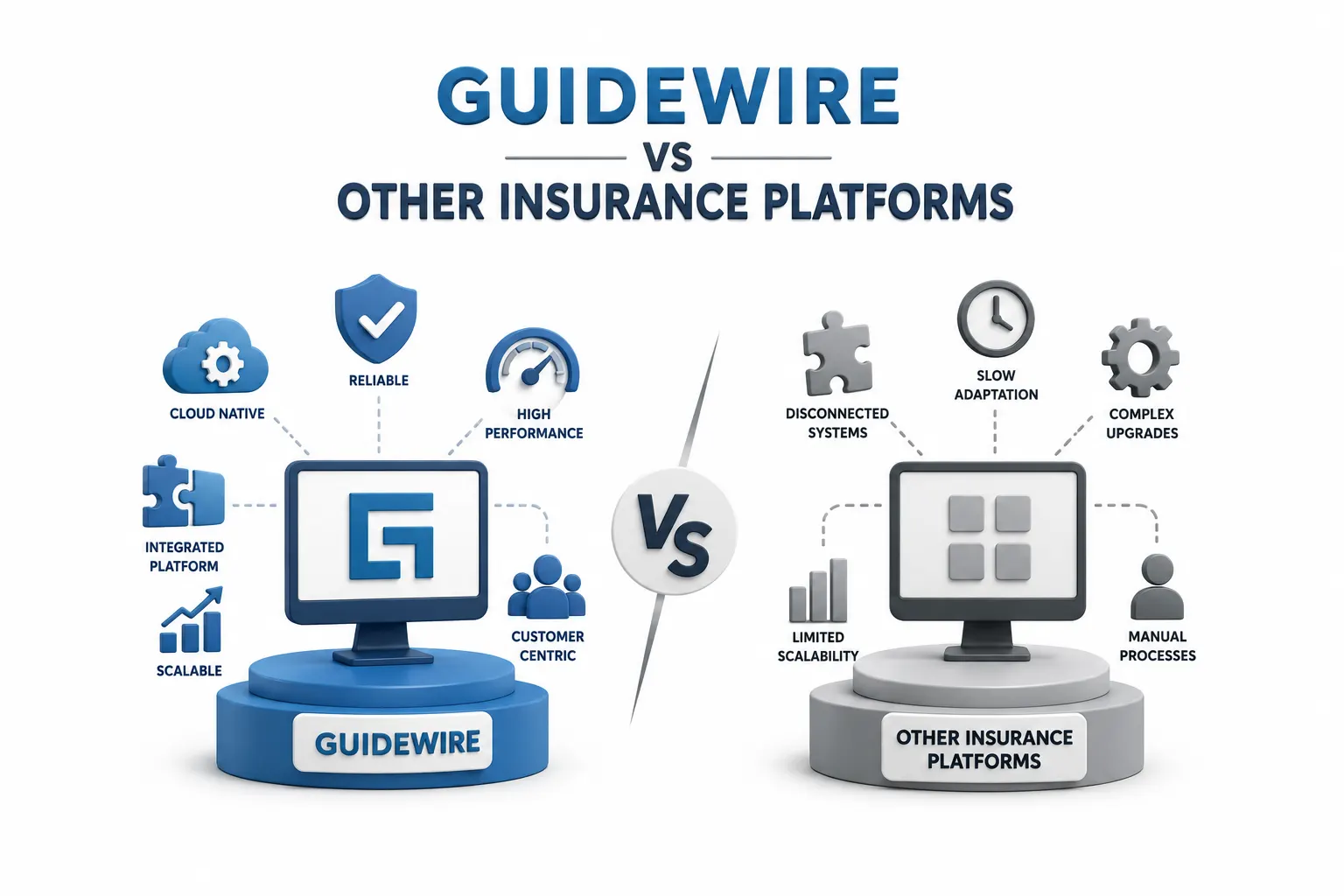
Guidewire vs Other Insurance Platforms: Which One Is Better?
Navigate through this article using the table of contents below
Table of Contents
No headings found in this article.
Ask ten insurance IT professionals which core system keeps them up at night — in a good way — and most will mention the same name. That's no accident, and it's exactly why Guidewire is in high demands across underwriting, claims, and policy teams right now.
But "popular" doesn't automatically mean "best fit for you." Insurers are juggling legacy systems, newer cloud-native challengers, and budget pressures that make platform decisions feel more like gambles than upgrades. So let's actually pick apart what separates Guidewire from its competitors — and where it still has to earn its reputation.
What Makes Guidewire Different From the Rest?
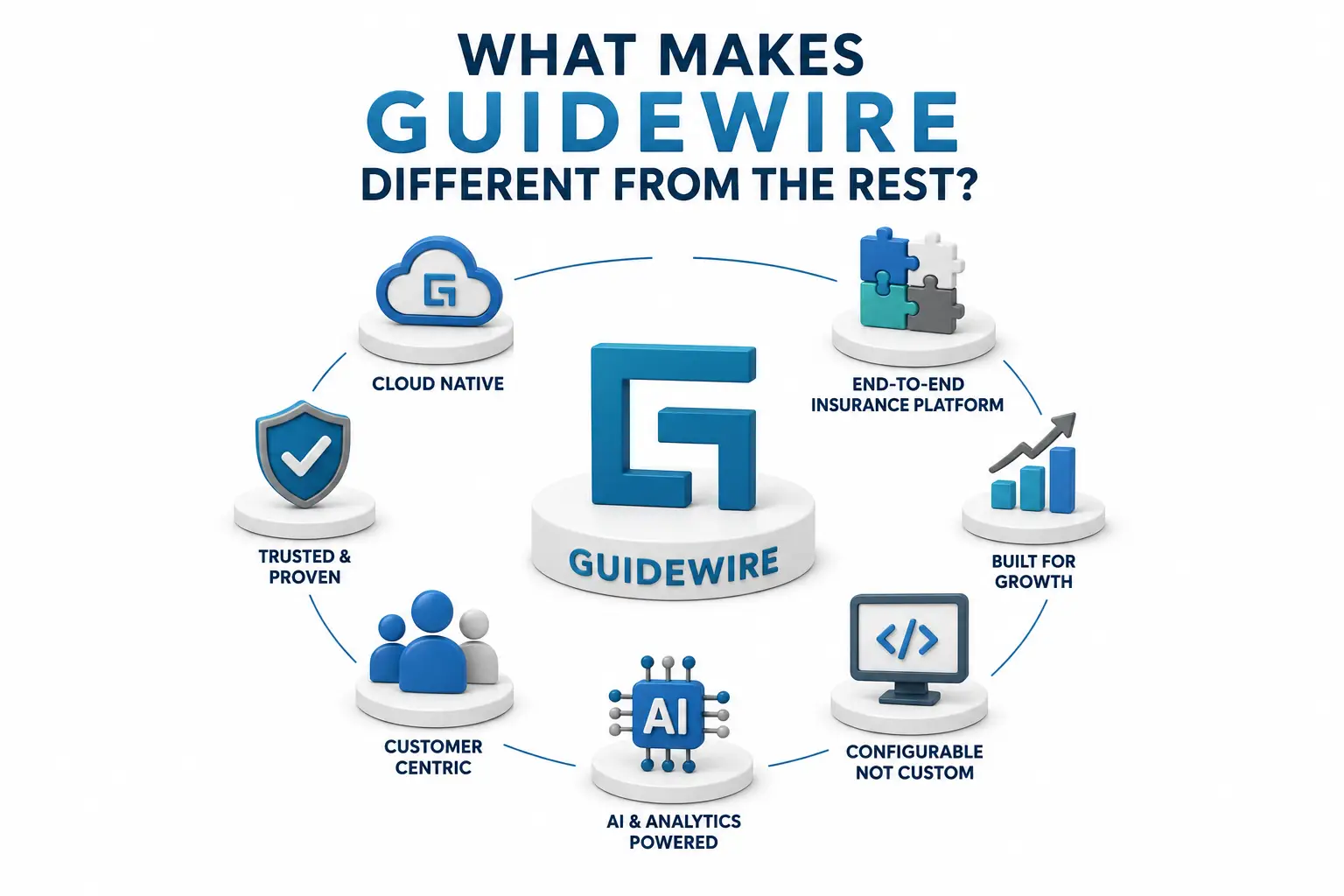
Most core insurance platforms try to do three things: manage policies, process claims, and handle billing. Guidewire does all three, but its real strength is how those pieces talk to each other. PolicyCenter, ClaimCenter, and BillingCenter share a common data model, so information doesn't get stuck in silos the way it does with cobbled-together legacy stacks.
Think of an insurer using a patchwork of ten-year-old systems duct-taped together with custom scripts. Every policy change means updating three different databases and hoping nothing breaks. Guidewire's architecture was built specifically to avoid that mess.
It also helps that Guidewire built its platform around configurability rather than heavy custom coding. Insurers can adjust workflows, forms, and rules without ripping apart the core codebase every time regulations shift. That matters a lot in an industry where compliance requirements change by state, sometimes by county.
This isn't a small technical detail — it's the reason so many insurers migrate to Guidewire even when the switch is expensive and disruptive in the short term.
Why Guidewire Is in High Demand Across the Insurance Industry

The demand story here is pretty straightforward once you look at the numbers behind it. Guidewire holds one of the largest market shares among core insurance platforms used by property and casualty insurers globally, and that dominance has created a ripple effect in hiring.
Insurers aren't just buying software — they're buying an ecosystem. Consultants, implementation partners, and in-house developers all need Guidewire-specific skills, and that talent pool hasn't kept pace with adoption. Recruiters routinely struggle to fill open positions for Guidewire developers, business analysts, and configuration specialists.
There's also a generational shift happening. Many insurers running decades-old mainframe systems are finally modernizing, and Guidewire is frequently the destination platform. Every migration project needs a team, and that team needs training most professionals don't already have.
Add cloud adoption to the mix — Guidewire Cloud has pushed even more insurers toward the platform, since it removes a lot of the infrastructure burden insurers used to manage themselves. The combination of scarce talent, active migrations, and cloud momentum explains the hiring surge better than any single factor alone.
Guidewire vs Duck Creek: How Do They Really Compare?
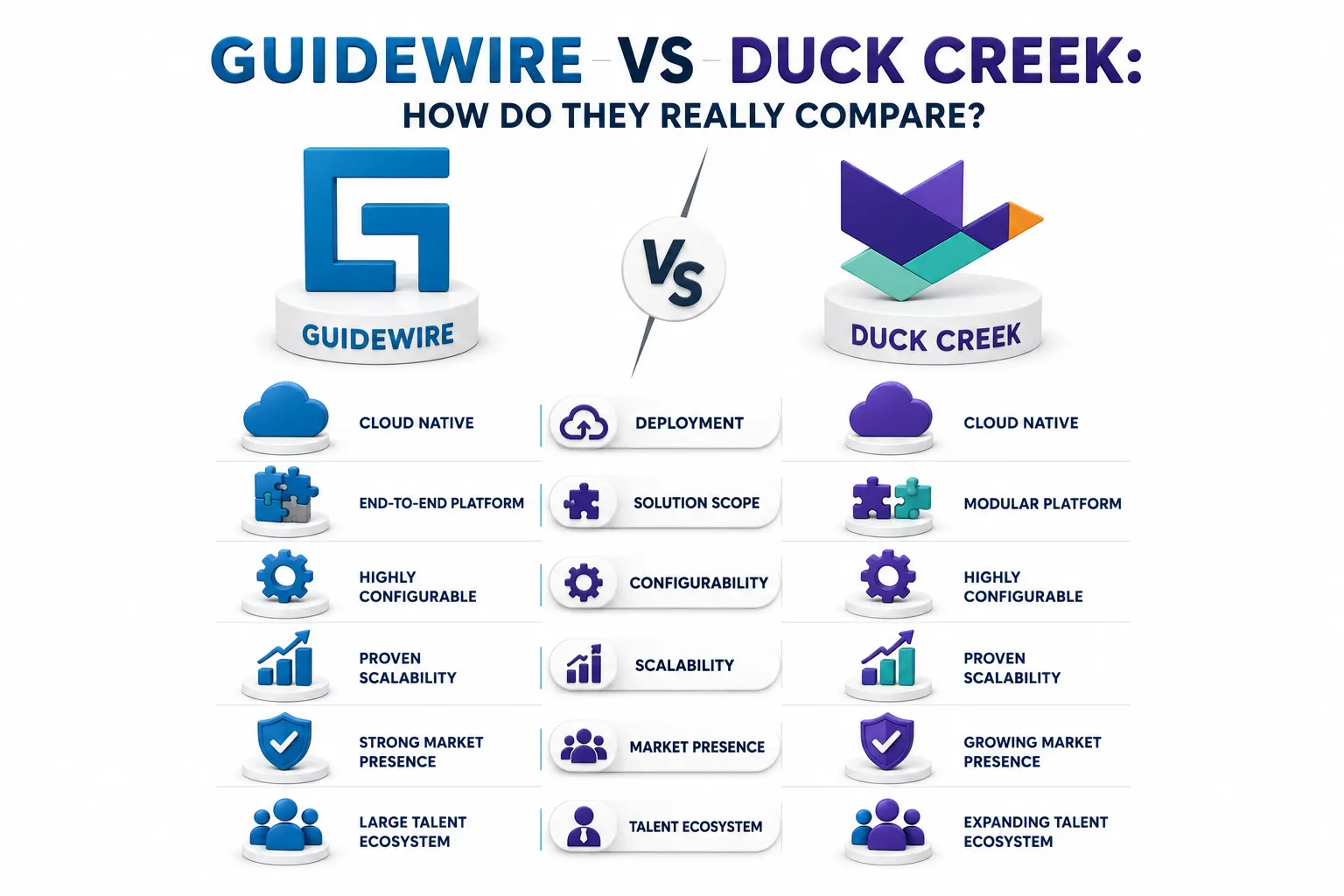
Duck Creek is probably Guidewire's closest rival, and the comparison comes up constantly in industry forums. Both platforms cover policy, billing, and claims, but they approach configuration differently.
Duck Creek leans heavily on its "Author" tool for building forms and rating rules, which some teams find more approachable for business users without deep technical backgrounds. Guidewire's configuration process, by contrast, often requires more developer involvement, particularly for complex rating logic.
On the flip side, Guidewire's ecosystem is larger. More system integrators specialize in it, more pre-built accelerators exist, and more third-party tools plug directly into it. If you're an insurer that wants a broader vendor marketplace to choose from, that matters.
Pricing tends to favor Duck Creek for smaller insurers, while Guidewire often makes more sense for larger, more complex books of business that need deep customization down the line. Neither platform is objectively superior — it genuinely depends on company size, existing infrastructure, and long-term growth plans.
What's worth noting: insurers rarely regret picking either platform outright. Most regret rushing the decision without mapping their actual operational needs first.
Guidewire vs Legacy Systems: Old School vs New School
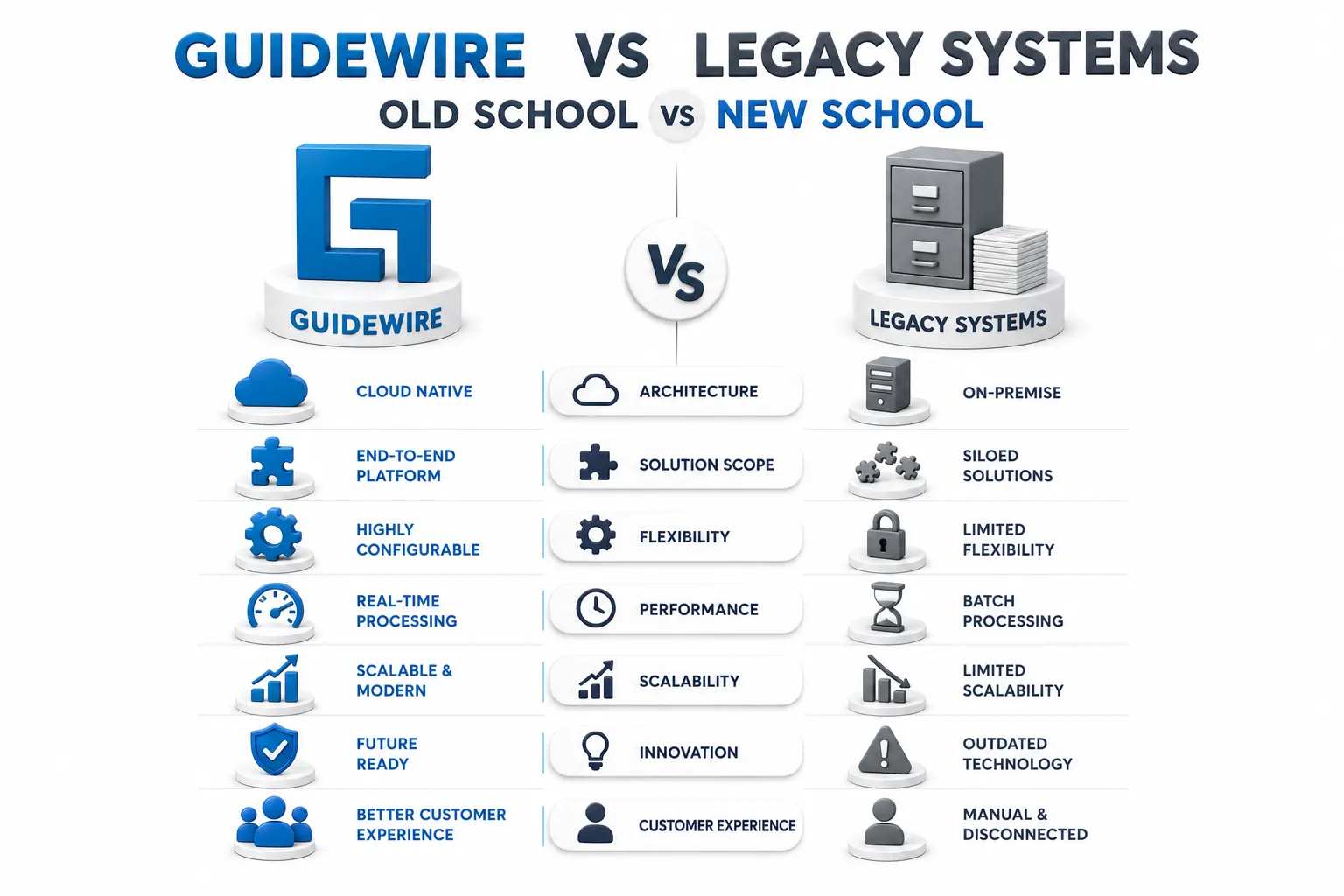
This comparison isn't really fair, and that's the point. Legacy mainframe systems were built in an era when insurers processed paper forms and mailed renewal notices. They weren't designed for real-time data, API integrations, or customer self-service portals.
Guidewire was built from the ground up with modern architecture in mind. It supports REST APIs out of the box, integrates with third-party data providers for underwriting, and can plug into modern CRM and analytics tools without custom middleware.
The cost of staying on legacy systems isn't always obvious upfront, but it shows up over time. Maintenance costs climb as fewer engineers know the old programming languages. Innovation slows because every new feature requires workarounds instead of native support.
Insurers still running legacy cores often face a quiet risk too: institutional knowledge walking out the door when senior developers retire. Guidewire's larger, younger talent pool reduces that dependency significantly.
That's not to say migration is painless — it rarely is. But the operational flexibility gained afterward usually justifies the transition for mid-size and large insurers.
Is It Worth to Learn Guidewire in 2026?

For professionals weighing where to invest their learning time, this question deserves an honest answer rather than a sales pitch. Yes, is it worth to learn Guidewire right now, and the reasoning holds up under scrutiny.
Demand for Guidewire developers, testers, and business analysts remains strong because implementation projects take years, not months. Insurers don't rip out a core system overnight — they run phased rollouts, meaning skilled professionals stay in demand throughout multi-year contracts.
Guidewire certifications also carry real weight on a resume. Unlike some generic software skills, Guidewire expertise is niche enough that certified professionals often command higher rates, particularly in configuration, integration, and cloud migration roles.
That said, it's not a guaranteed shortcut to success. Learning Guidewire requires understanding insurance domain concepts too — underwriting rules, claims workflows, regulatory nuances — not just the software itself. People who learn both the technical platform and the business context behind it tend to advance faster than those who only memorize configuration steps.
If you're already in insurance tech or considering a pivot into it, the investment tends to pay off within a reasonable timeframe.
Where Guidewire Falls Short (Because No Platform Is Perfect)
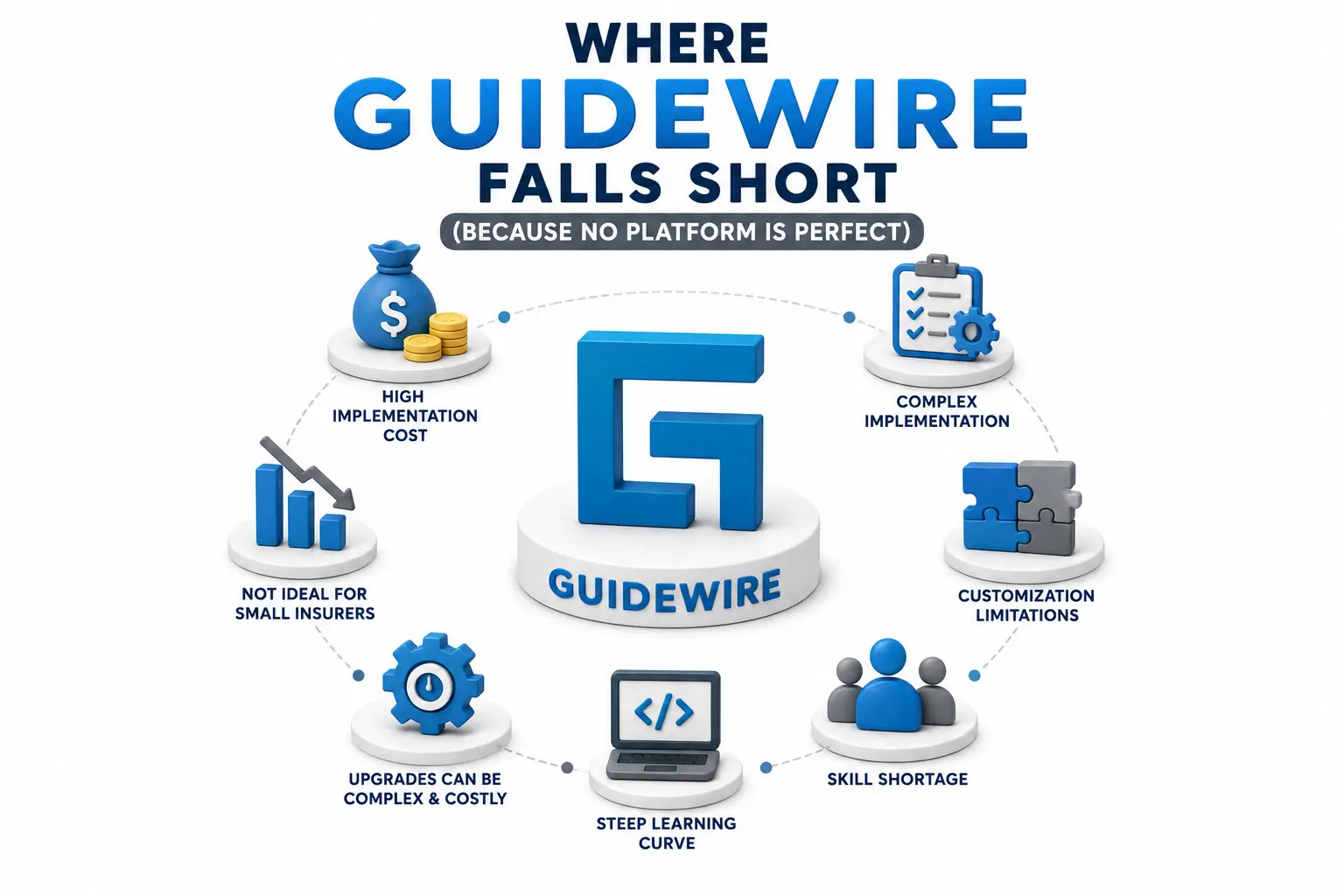
It would be dishonest to paint Guidewire as flawless. Implementation timelines are notoriously long, sometimes stretching well over a year for large insurers with complex product lines. That's a real cost, both financially and operationally.
The learning curve is steep too. New developers often need months before they're comfortable navigating Guidewire's configuration layers, especially Gosu, its proprietary scripting language. That's a barrier competitors with more standard tech stacks don't always have.
Smaller insurers sometimes find Guidewire overbuilt for their needs — paying for capabilities they'll never fully use. In those cases, lighter platforms might genuinely serve them better.
Support costs can also add up. Between licensing, implementation partners, and ongoing configuration work, total cost of ownership tends to run higher than some competitors, particularly in the first few years post-migration.
None of this cancels out Guidewire's strengths. It just means the "better" platform depends entirely on company size, budget, and long-term strategy — not blind brand loyalty.
Conclusion
Guidewire isn't universally "better" — it's the stronger choice for insurers needing scale, flexibility, and a mature ecosystem. That's precisely why Guidewire is in high demands today. For professionals, learning it remains a smart, defensible career move in an industry still catching up on modernization.