

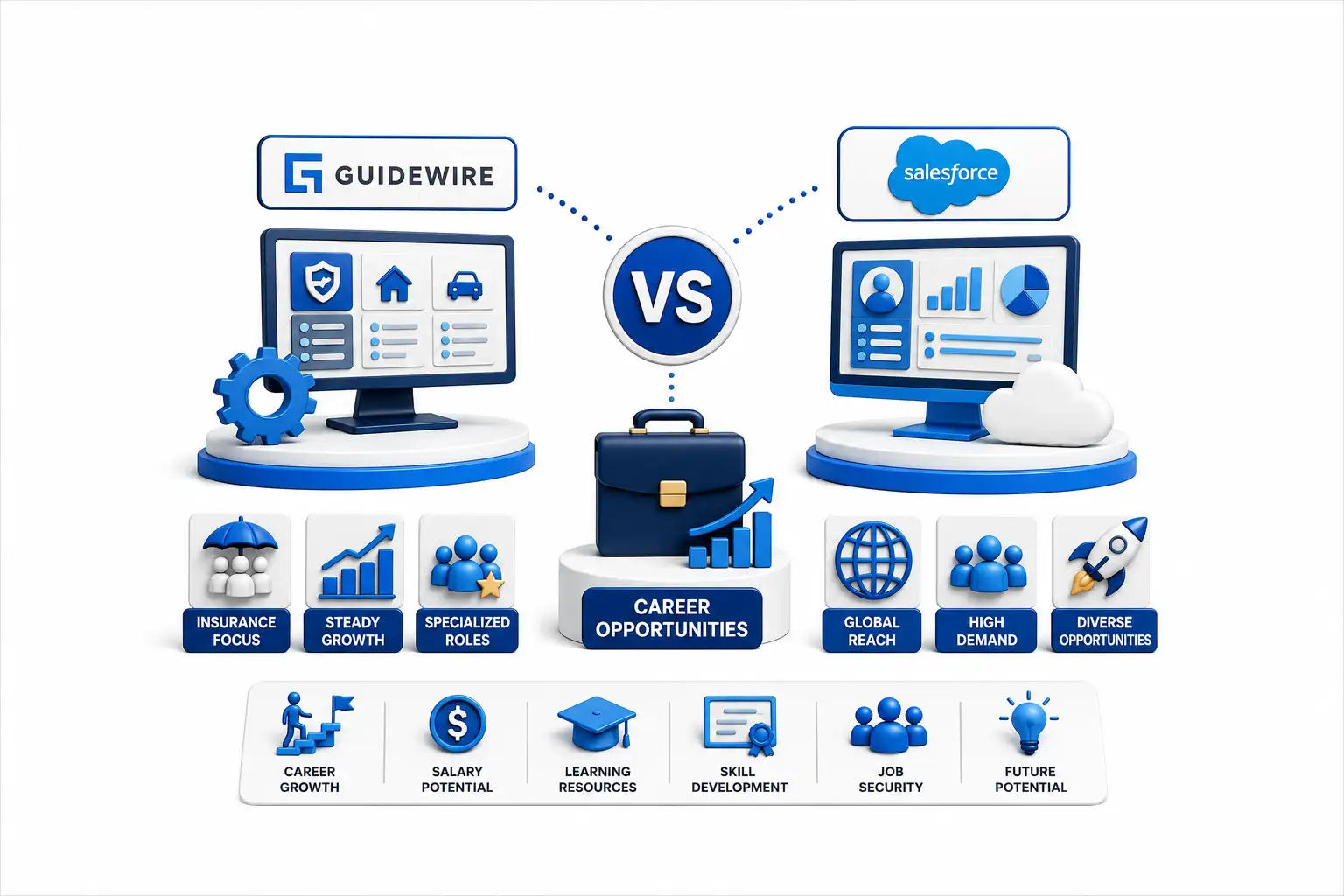
Guidewire vs Salesforce Which Platform Offers Better Career Opportunities
Navigate through this article using the table of contents below
Table of Contents
No headings found in this article.
Two candidates, same experience level, wildly different job offers. One chose Guidewire. The other chose Salesforce. What separated them wasn't luck.
If you're standing at the same crossroads, deciding between Guidewire vs Salesforce for your next career move, the answer depends less on which platform is "better" and more on which one fits your goals, industry interest, and long-term plans.
What Exactly Do These Platforms Do?
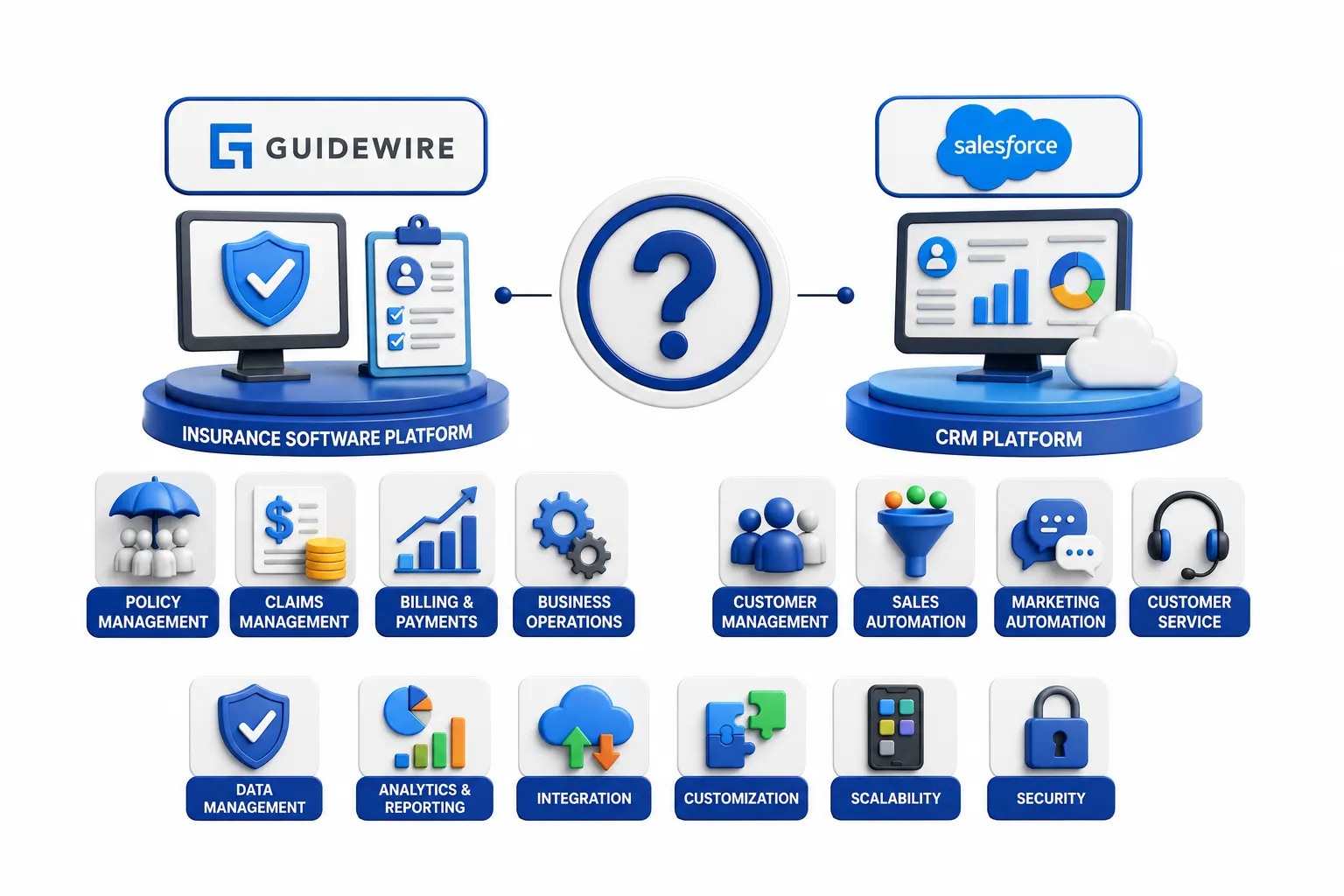
Before comparing career paths, it helps to understand what each platform actually does, since they solve completely different business problems.
Guidewire is a specialized software suite built exclusively for the insurance industry. It powers core operations like policy administration, claims processing, and billing through modules such as PolicyCenter, ClaimCenter, and BillingCenter. Insurers rely on it to run their entire business, not just a department.
Salesforce, by contrast, is a broad customer relationship management (CRM) platform used across nearly every industry, from retail to healthcare to finance. It handles sales pipelines, customer service, marketing automation, and increasingly, custom app development through its Lightning platform.
This distinction matters more than it seems. Guidewire professionals develop deep, specialized knowledge of insurance workflows, while Salesforce professionals often work across varied industries and business functions.
Think of it this way: Guidewire is like becoming a specialist surgeon, focused and highly valued within one field. Salesforce is like becoming a general practitioner, versatile and always in demand, but sharing that demand with a much larger pool of professionals.
Which Platform Has Stronger Job Demand?
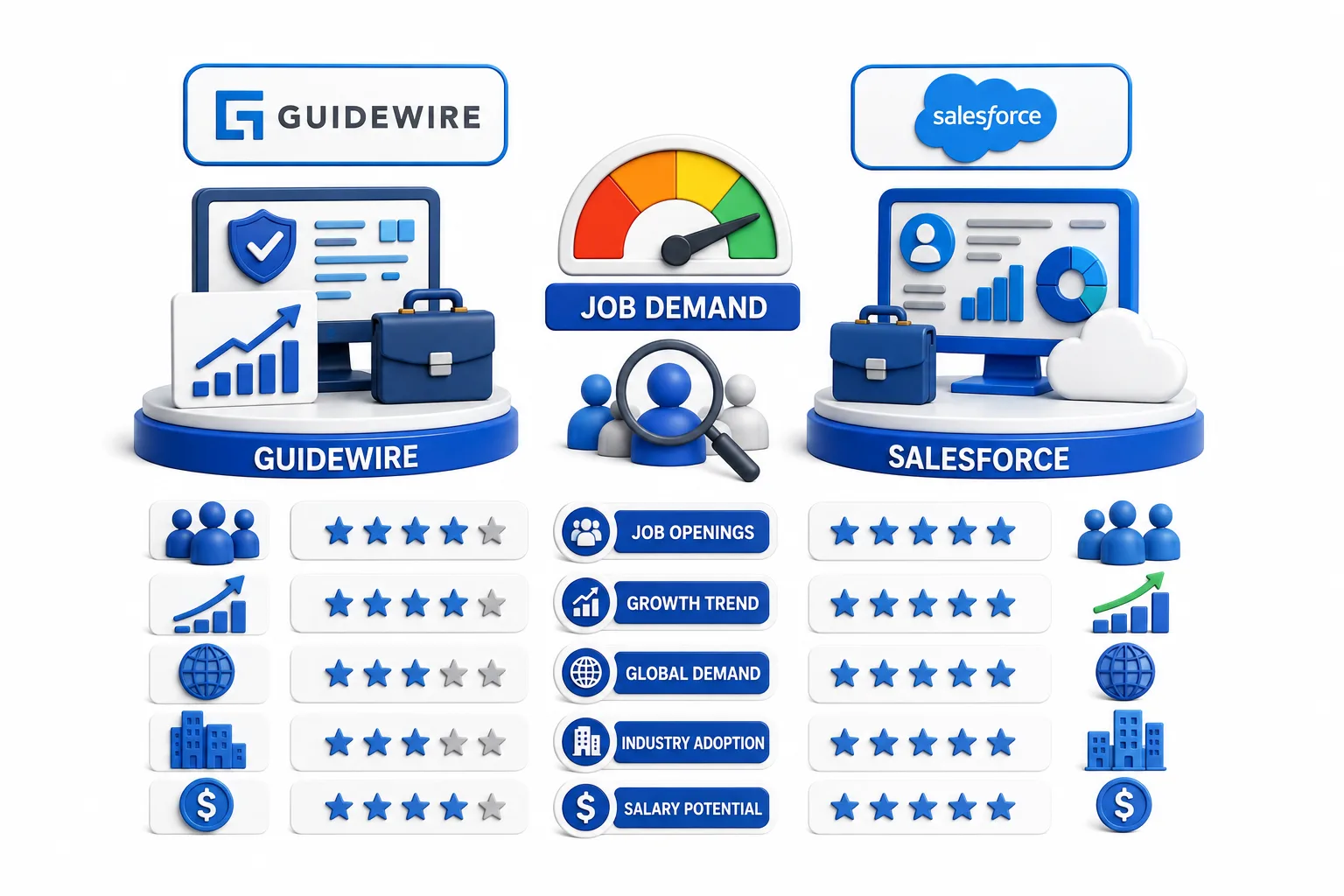
Both platforms have healthy job markets, but the nature of that demand differs significantly.
Salesforce has a massive global footprint. Because so many companies across industries use it, job postings are abundant, and the ecosystem includes everything from admins to developers to solution architects. This breadth means more entry points, but it also means more competition, since Salesforce skills are common among a large and growing professional base.
Guidewire's job market is smaller in raw numbers but far less crowded. Because it's insurance-specific, only companies within that sector need Guidewire talent, but those companies need it consistently. Insurers rarely switch core systems once implemented, which creates long-term, stable demand for skilled professionals.
A useful way to frame it: Salesforce offers volume, Guidewire offers scarcity value. Fewer professionals specialize in Guidewire, so those who do often face less competition for available roles.
Location also plays a role. Cities with strong insurance sectors, including several IT hubs across India, consistently show demand for Guidewire specialists working with global insurance clients through offshore delivery models.
How Do Salary Expectations Compare?
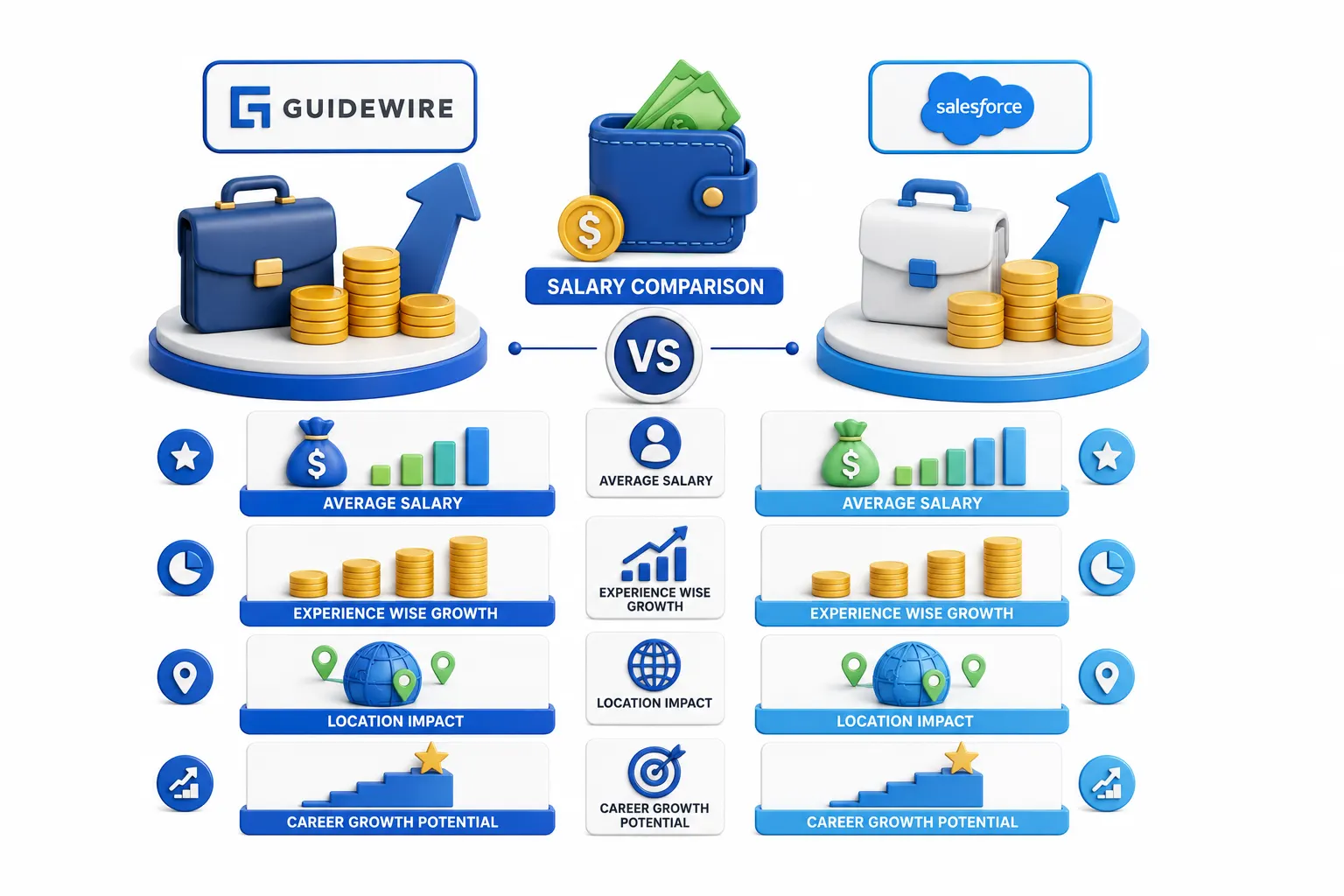
Salary comparisons between these platforms rarely tell a simple story, since compensation depends heavily on role, experience, and location.
Salesforce salaries vary widely because the ecosystem itself is so diverse. An entry-level administrator earns considerably less than a certified technical architect, and the gap between those roles can span several years of specialization and multiple certifications.
Guidewire salaries tend to sit within a narrower, often higher-than-average band for mid-level and senior roles, largely because the talent pool is smaller and the skill requirement is more specific. Companies implementing or maintaining Guidewire systems typically can't easily substitute generalist developers, which supports steadier compensation.
That said, experience level matters more than platform choice in both cases. A senior Salesforce architect with a strong certification portfolio can easily out-earn a mid-level Guidewire developer, and vice versa.
A practical way to think about it:
Salesforce rewards breadth, certifications, and industry versatility
Guidewire rewards depth, domain expertise, and long-term specialization
Neither path guarantees a higher paycheck automatically. What consistently moves the needle is proven project experience, the ability to solve real implementation problems, and staying current as each platform evolves its architecture and best practices.
What Skills Do You Actually Need to Succeed?
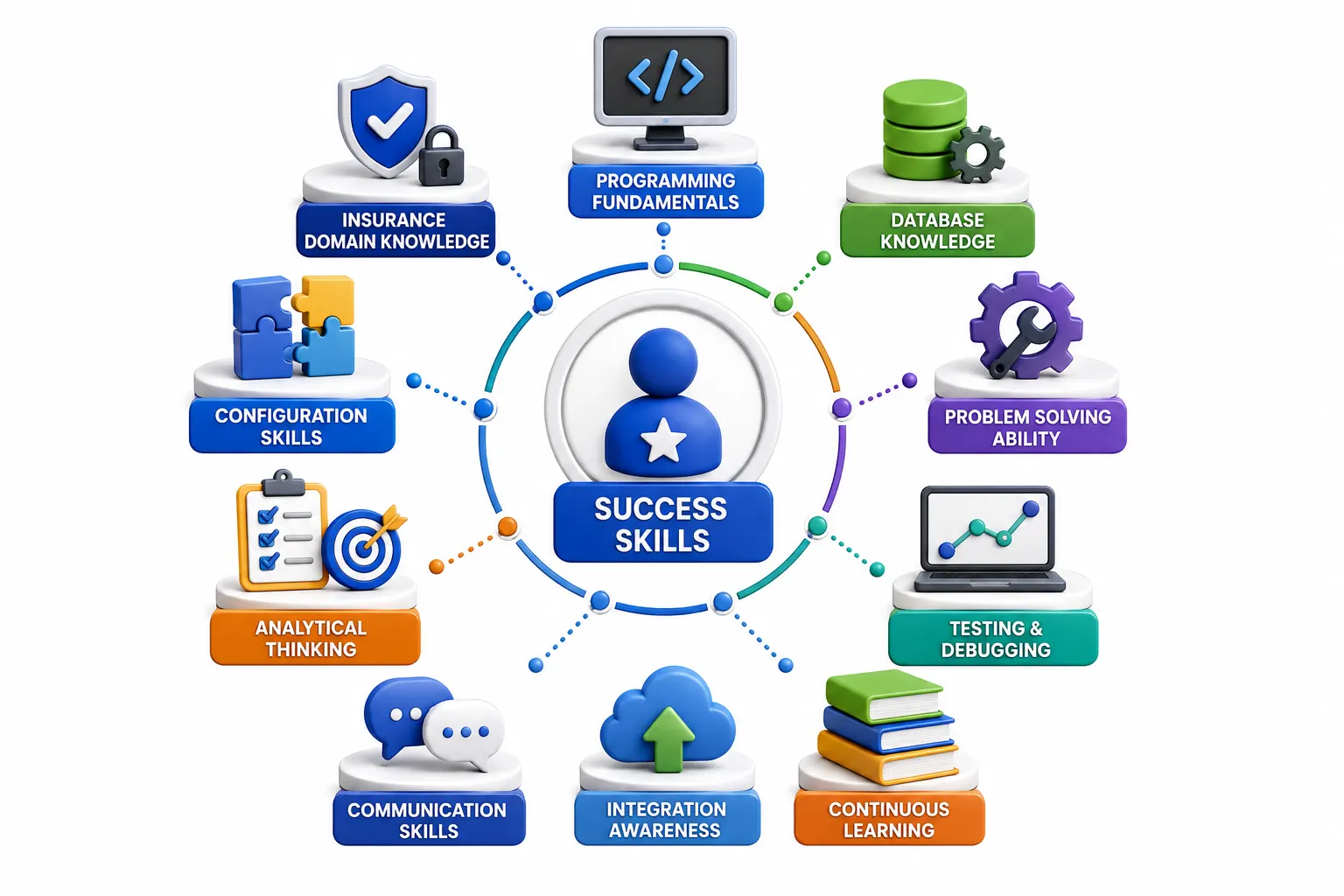
Success on either platform requires more than watching a few tutorials. Employers want practical, applied skill.
For Guidewire, core requirements typically include Gosu scripting, XML configuration, and hands-on experience with at least one core module. Understanding insurance domain concepts, like how a claim progresses from filing to settlement, often separates strong candidates from average ones. Integration knowledge, including web services and API handling, has become increasingly important as insurers connect Guidewire to broader digital ecosystems.
For Salesforce, foundational skills include Apex programming, Lightning Web Components, and a solid grasp of declarative tools like Flow. Certifications carry real weight here, since Salesforce's certification path is well-structured and widely recognized by employers as proof of capability.
Both platforms reward hands-on project experience over theoretical knowledge. A candidate who has configured a real claims workflow or built a functioning Salesforce app during training stands out immediately during interviews.
Soft skills matter too. Guidewire professionals often collaborate closely with insurance business analysts, while Salesforce professionals frequently interact directly with sales and marketing teams, so communication style should match the environment you're entering.
Which Career Path Offers Better Long-Term Stability?
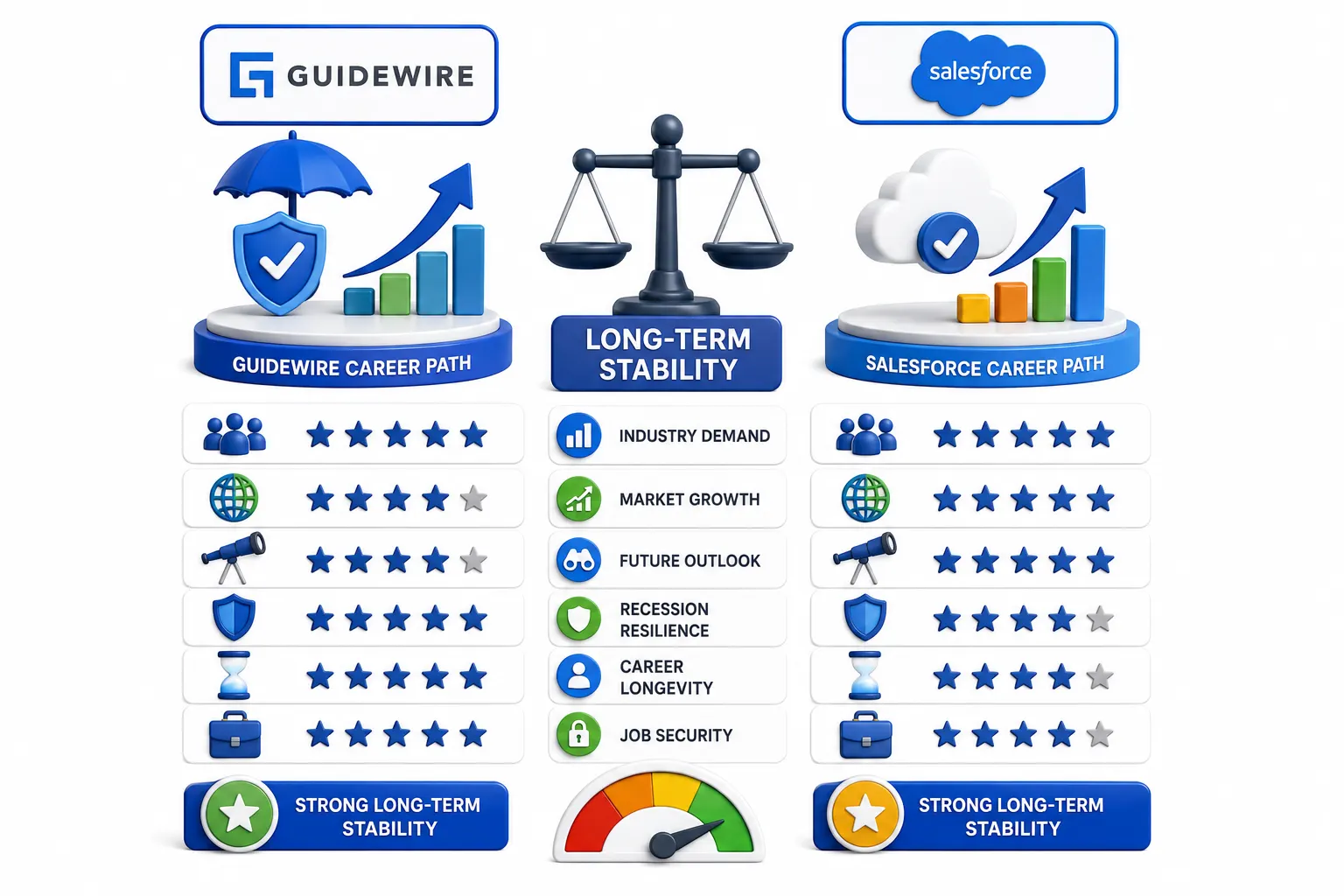
Long-term stability depends on how deeply a platform is embedded in its industry's operations, and both platforms score well here, just differently.
Guidewire's stability comes from insurer dependency. Once an insurance company implements Guidewire as its core system, replacing it is expensive, disruptive, and rare. This creates sustained demand for maintenance, upgrades, and configuration work for years after initial implementation, giving Guidewire professionals unusually steady career runways.
Salesforce's stability comes from ecosystem dominance. As one of the most widely adopted CRM platforms globally, Salesforce continues expanding into new areas like AI-driven analytics and industry-specific clouds, creating fresh opportunities as the platform evolves.
The real difference lies in how each career grows. Guidewire specialists tend to deepen their expertise within a single, well-defined ecosystem, becoming increasingly valuable insurance-technology experts over time. Salesforce professionals often diversify, picking up adjacent skills like Marketing Cloud or Einstein Analytics to expand their versatility.
Neither path is inherently more "future-proof," but each rewards different strengths, focus versus adaptability, depth versus breadth, so the better choice depends on which working style suits you.
How Should You Decide Which Platform Fits You?
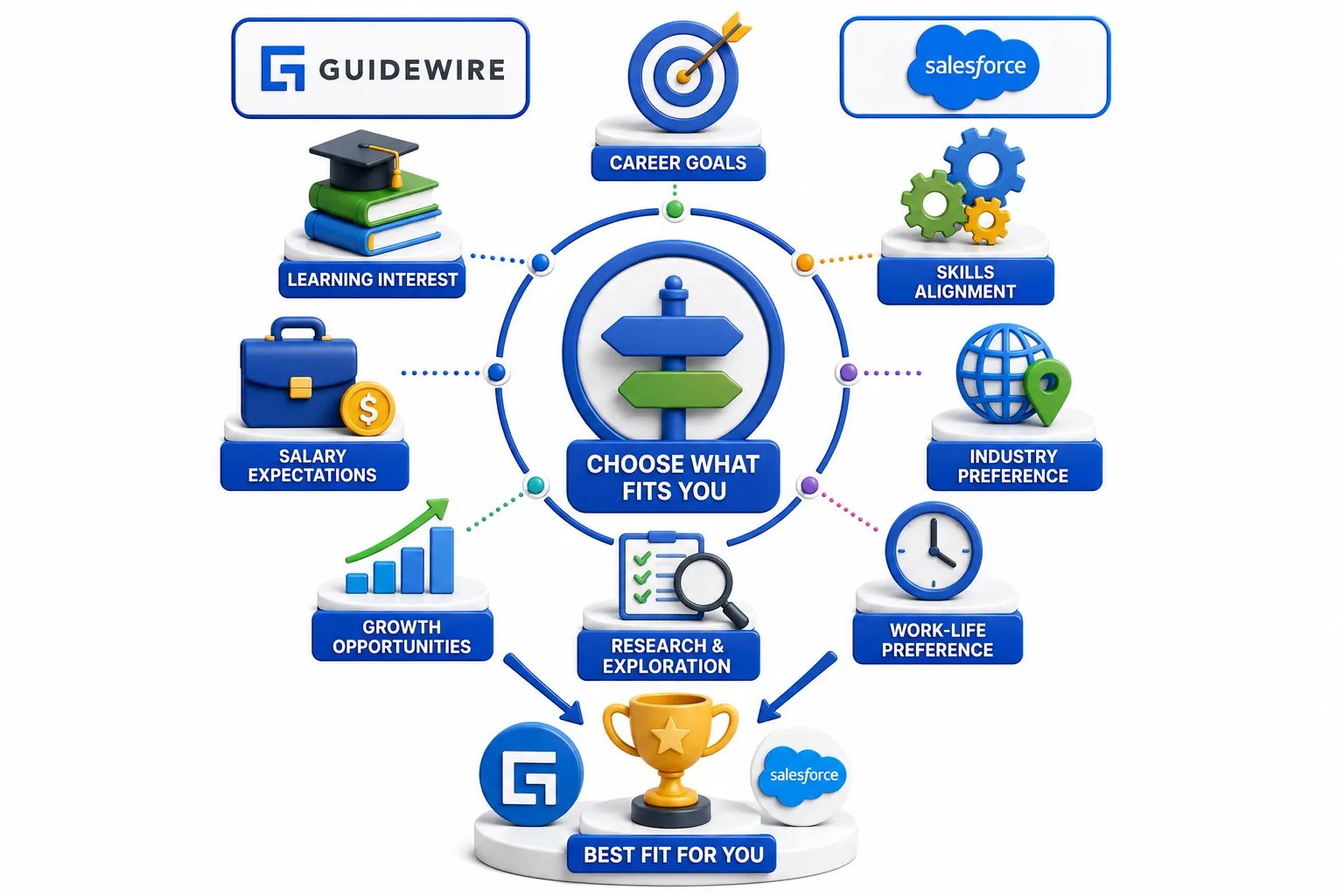
Choosing between these platforms isn't about which one is objectively superior. It's about matching the platform to your interests, working style, and career goals.
Consider Guidewire if you're drawn to structured, domain-specific work, enjoy understanding how a single industry operates end-to-end, and prefer building deep expertise in one area rather than spreading across many.
Consider Salesforce if you enjoy variety, want exposure to multiple industries, and prefer a platform with a large community, extensive learning resources, and a clear certification roadmap.
Your existing background matters too. Someone with a Java or backend development foundation often transitions smoothly into Guidewire configuration work. Someone with a sales, marketing, or admin background frequently finds Salesforce more intuitive to start with.
Ultimately, both platforms offer legitimate, well-paying careers. The professionals who thrive aren't necessarily the ones who picked the "right" platform, but the ones who committed fully to mastering it, built real project experience, and stayed current as the technology evolved around them.
Conclusion
Both Guidewire and Salesforce open doors to strong, sustainable careers. The right choice depends on whether you value deep industry specialization or broad, cross-industry versatility. Either path rewards genuine skill and commitment.