

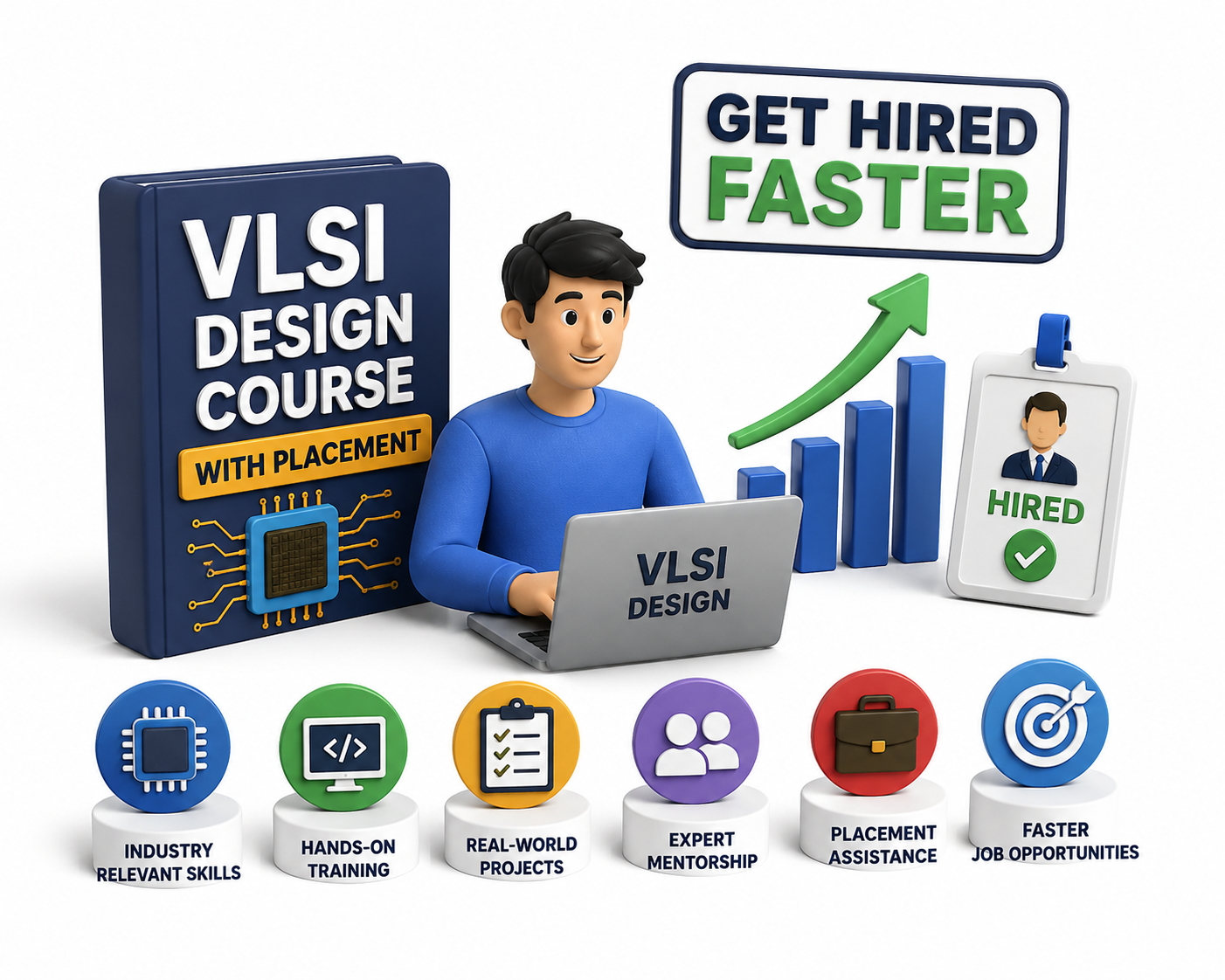
How a VLSI Design Course with Placement Can Help You Get Hired Faster
Navigate through this article using the table of contents below
Table of Contents
No headings found in this article.
The semiconductor industry is expanding rapidly, but hiring standards have become more demanding than ever. Companies are looking beyond academic qualifications and focusing on engineers who can contribute from their very first day. That shift has made practical training one of the biggest deciding factors in recruitment.
Choosing the right VLSI Design Course with Placement is no longer just about learning design concepts. It is about gaining industry-ready skills, working on real projects, preparing for technical interviews, and building the confidence needed to secure opportunities in leading semiconductor companies. Here's how the right training can significantly shorten your journey from learner to professional.
Why Companies Prefer Industry-Ready Candidates Over Fresh Graduates
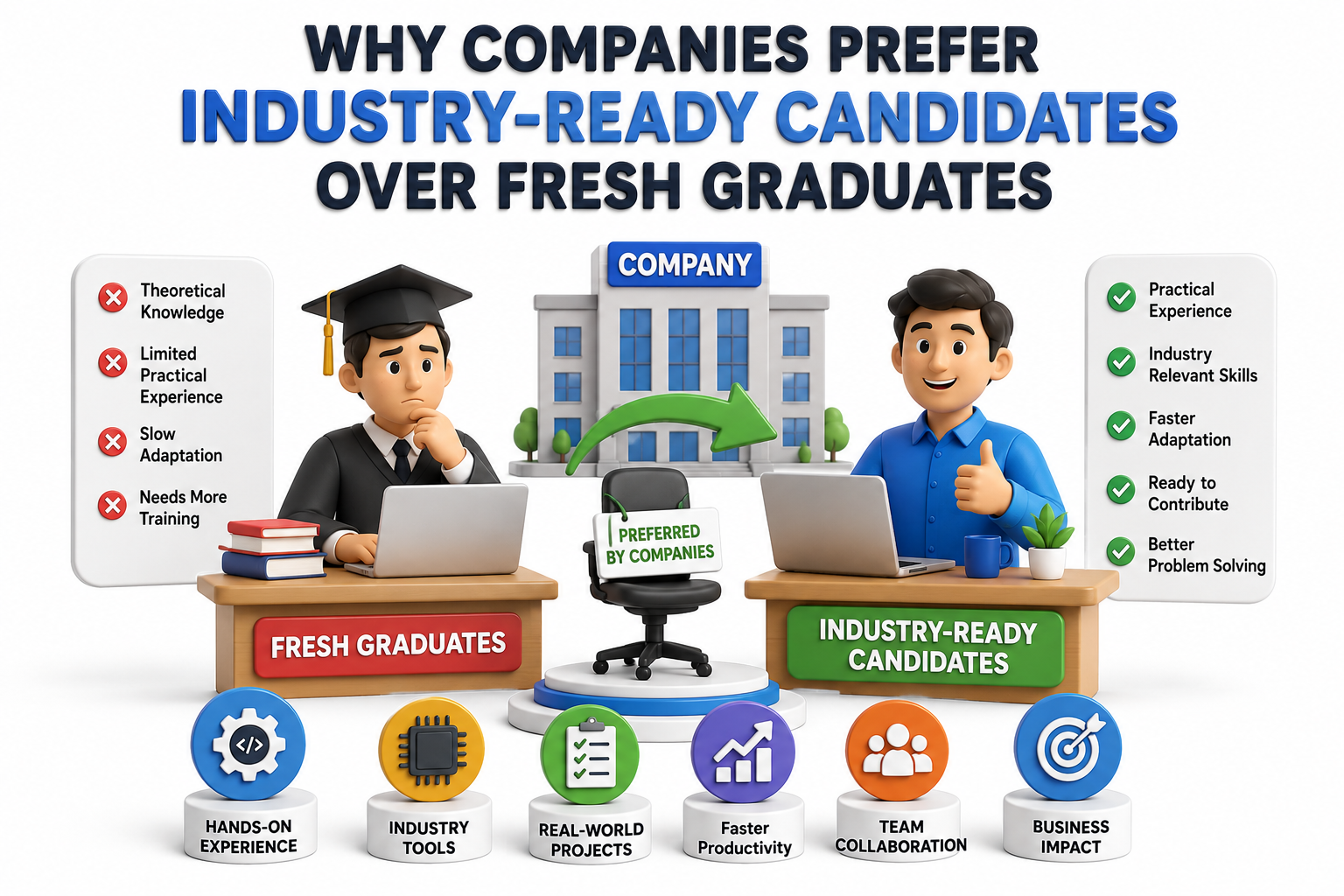
The biggest challenge for fresh graduates is not the lack of theoretical knowledge but the lack of practical implementation experience. Recruiters expect candidates to understand complete chip design workflows, debugging techniques, and verification methodologies before joining their teams.
A quality VLSI design training program bridges this gap by combining classroom concepts with hands-on implementation. Instead of only studying digital electronics, students actively design, simulate, verify, and optimize circuits using industry-standard methodologies.
Employers value candidates who can demonstrate:
RTL design experience
Functional verification knowledge
Timing analysis basics
FPGA implementation exposure
Debugging skills
Strong problem-solving abilities
When recruiters find candidates who already possess these practical capabilities, onboarding becomes faster, making them much more attractive during campus and off-campus hiring.
Practical Projects Build the Experience Recruiters Actually Want
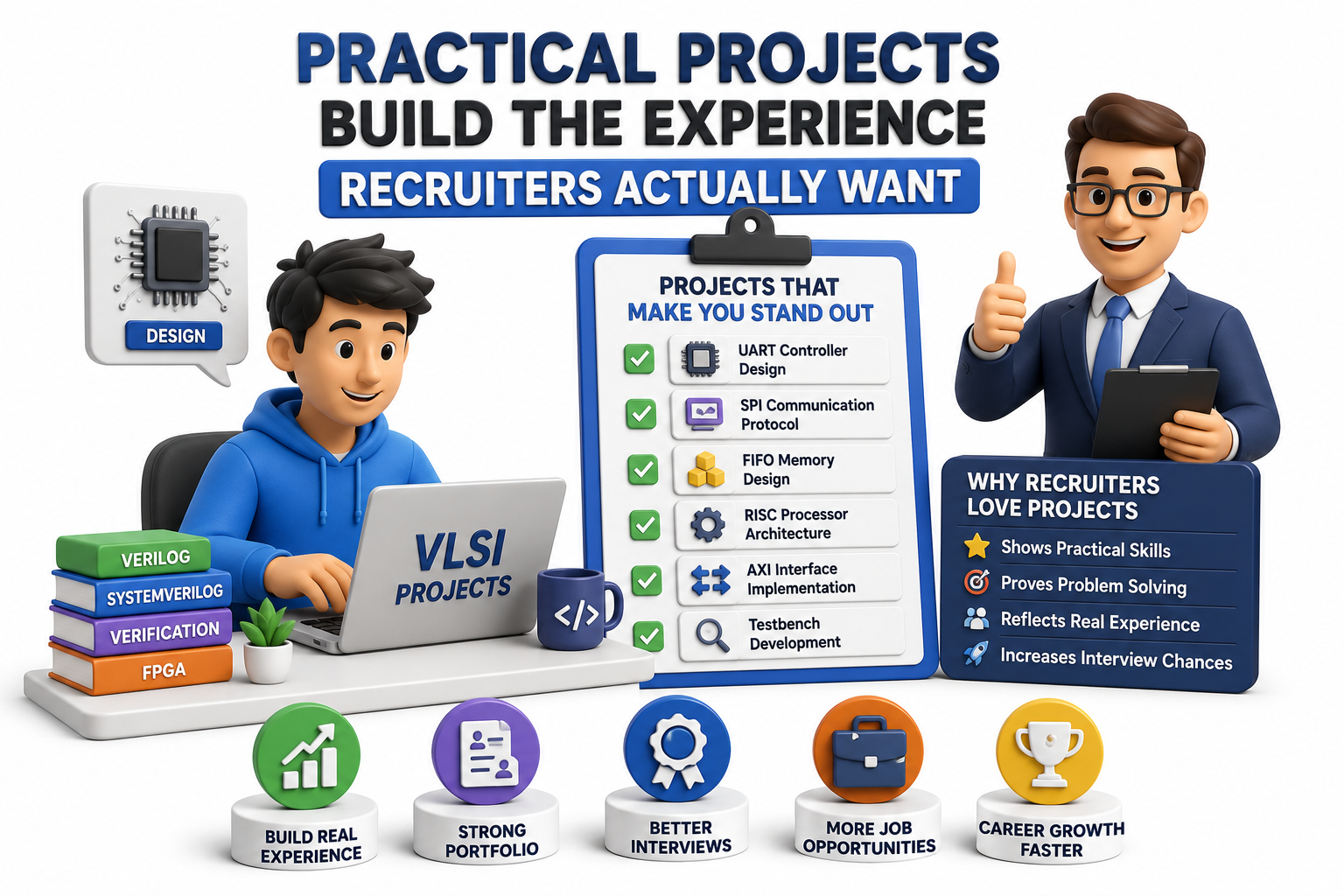
One of the strongest advantages of professional VLSI education is project-based learning. Recruiters frequently ask candidates to explain projects because projects reveal how well someone understands real engineering challenges.
Instead of simply completing assignments, students should build projects that demonstrate complete design thinking. These projects showcase problem-solving ability, coding standards, verification methodology, and documentation skills.
Strong portfolio projects often include:
UART Controller Design
SPI Communication Protocol
FIFO Memory Design
RISC Processor Architecture
AXI Interface Implementation
Memory Controller Verification
These projects become valuable discussion points during interviews and help candidates confidently answer technical questions with practical examples rather than theoretical explanations.
Many recruiters are more impressed by a well-executed project than by high academic scores because projects reflect real engineering capability.
Placement Assistance Gives You a Competitive Advantage

Learning technical concepts alone does not guarantee interviews. Many talented candidates struggle simply because they lack guidance on resume preparation, interview strategy, and industry networking.
A well-designed VLSI Design Course with Placement provides structured career support alongside technical education. This helps candidates avoid common mistakes during the hiring process while improving overall interview performance.
Comprehensive placement support typically includes:
Resume optimization
LinkedIn profile enhancement
Mock technical interviews
HR interview preparation
Aptitude training
Company-specific interview guidance
Job referrals
Placement drives
JAST Tech focuses on preparing students not only for examinations but also for actual recruitment processes followed by semiconductor companies.
This combination of technical expertise and career preparation significantly increases interview opportunities.
Industry Tools Make Learning Relevant to Real Jobs
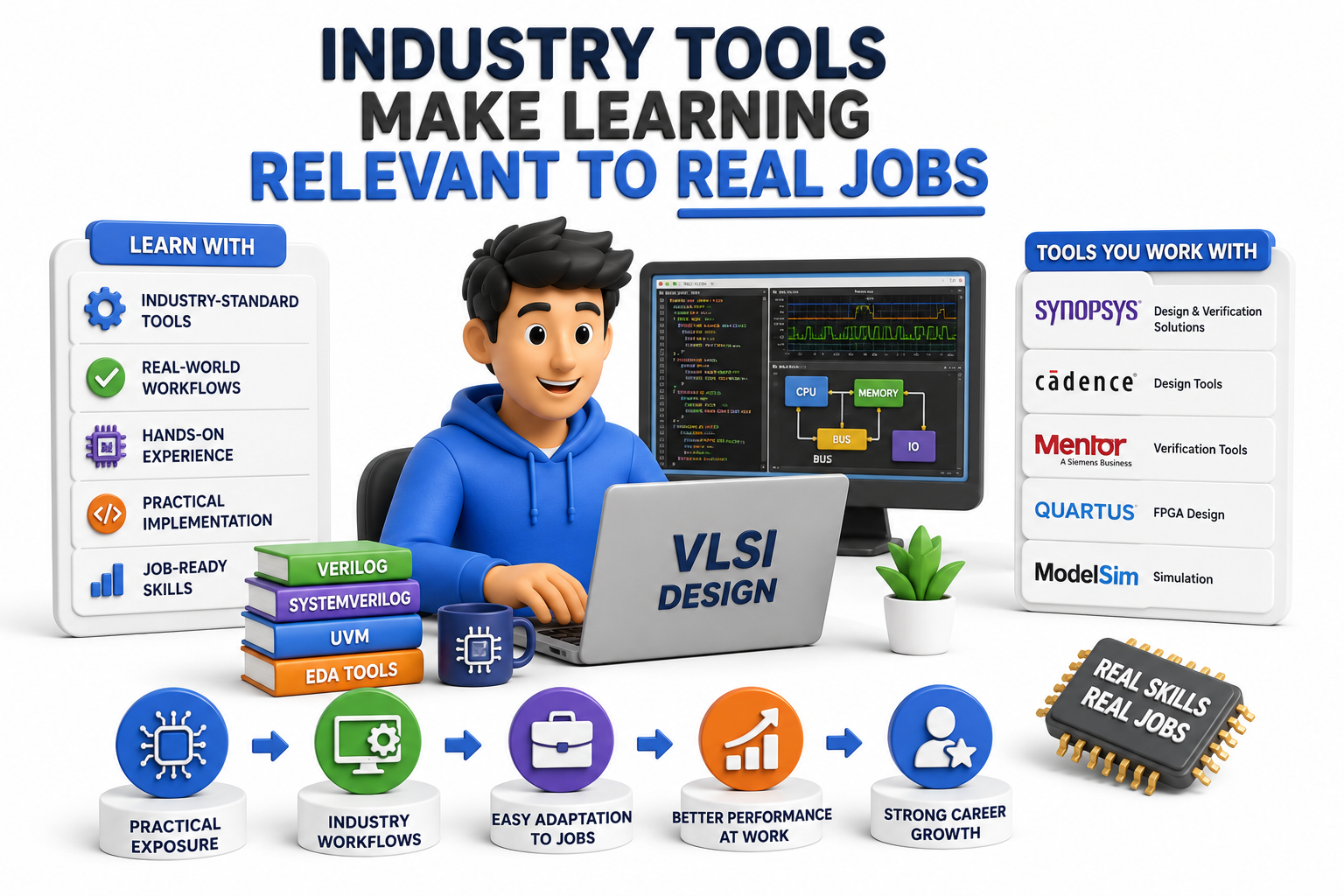
Modern semiconductor companies expect engineers to be comfortable working with professional Electronic Design Automation (EDA) tools. Learning only theoretical concepts without exposure to these environments creates a major skill gap.
A professional VLSI design online course introduces learners to practical workflows that closely resemble real engineering environments. Students understand how designs move through different stages rather than studying isolated concepts.
Practical exposure generally includes understanding:
RTL development workflow
Functional verification process
Simulation environments
Timing verification concepts
Scripting basics
Design debugging techniques
Industry documentation practices
Working with practical workflows builds confidence while helping students understand how multiple engineering teams collaborate during chip development.
This practical familiarity allows graduates to adapt much faster when they join semiconductor organizations.
Expert Mentorship Helps You Learn Faster and Avoid Common Mistakes

Learning VLSI independently can be overwhelming because the field combines digital design, hardware description languages, verification methodologies, timing concepts, and semiconductor fundamentals.
Experienced mentors simplify this learning journey by explaining industry expectations, identifying mistakes early, and recommending better design approaches. Their real-world experience often provides insights unavailable in textbooks.
Good mentorship offers several advantages:
Personalized doubt resolution
Better understanding of complex concepts
Industry best practices
Design review sessions
Interview-focused preparation
Career guidance based on current hiring trends
JAST Tech emphasizes mentorship throughout the learning journey, allowing students to receive continuous feedback instead of waiting until the course ends.
This structured guidance reduces learning time while helping candidates develop stronger engineering fundamentals.
Continuous Skill Development Leads to Long-Term Career Growth
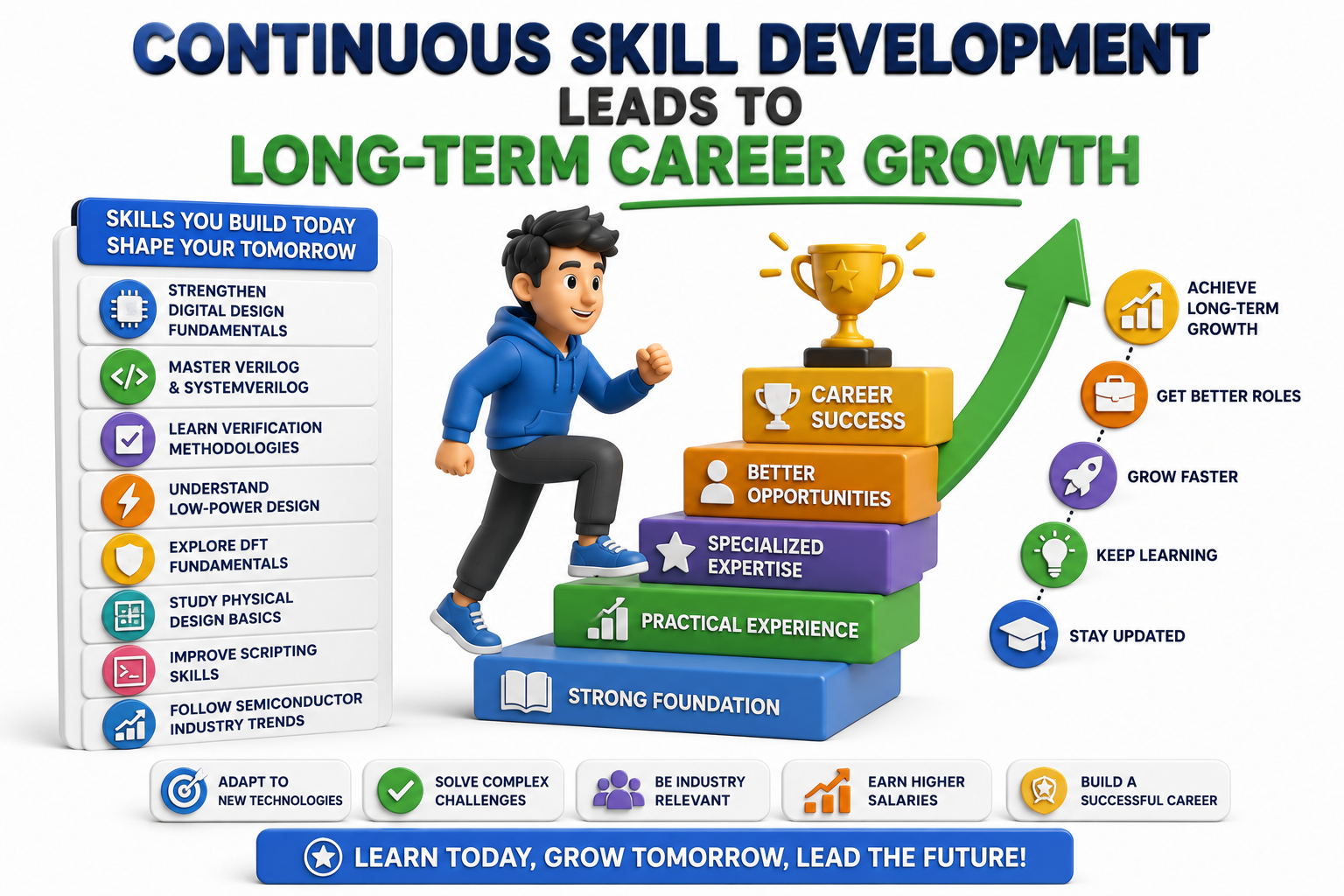
Getting the first job is only the beginning of a successful semiconductor career. Technology continues evolving with AI accelerators, automotive electronics, advanced packaging, chiplets, RISC-V processors, and next-generation verification methodologies.
Professionals who continue upgrading their knowledge remain competitive throughout their careers.
An effective learning roadmap includes:
Strengthening digital design fundamentals
Mastering Verilog and SystemVerilog
Learning verification methodologies
Understanding low-power design
Exploring DFT fundamentals
Studying physical design basics
Improving scripting skills
Following semiconductor industry trends
The best training programs encourage continuous learning rather than stopping after placement. This approach helps engineers qualify for promotions, specialized technical roles, and higher-paying opportunities over time.
Building strong fundamentals today creates flexibility for future specialization across RTL Design, Functional Verification, Physical Design, DFT, FPGA Design, or ASIC Development.
Conclusion
The semiconductor industry rewards engineers who combine technical knowledge with practical implementation skills. While academic education provides a strong foundation, companies increasingly seek candidates who understand real design workflows, can explain hands-on projects confidently, and are prepared for technical interviews from day one. Choosing a structured learning path significantly improves employability and reduces the time required to secure the first opportunity.
JAST Tech helps aspiring engineers develop these industry-ready capabilities through practical learning, expert mentorship, career guidance, and project-based training. Whether you are a student, recent graduate, or working professional looking to transition into semiconductor engineering, investing in quality VLSI education today can open doors to faster hiring, stronger career growth, and long-term success in one of the world's fastest-growing technology industries.