

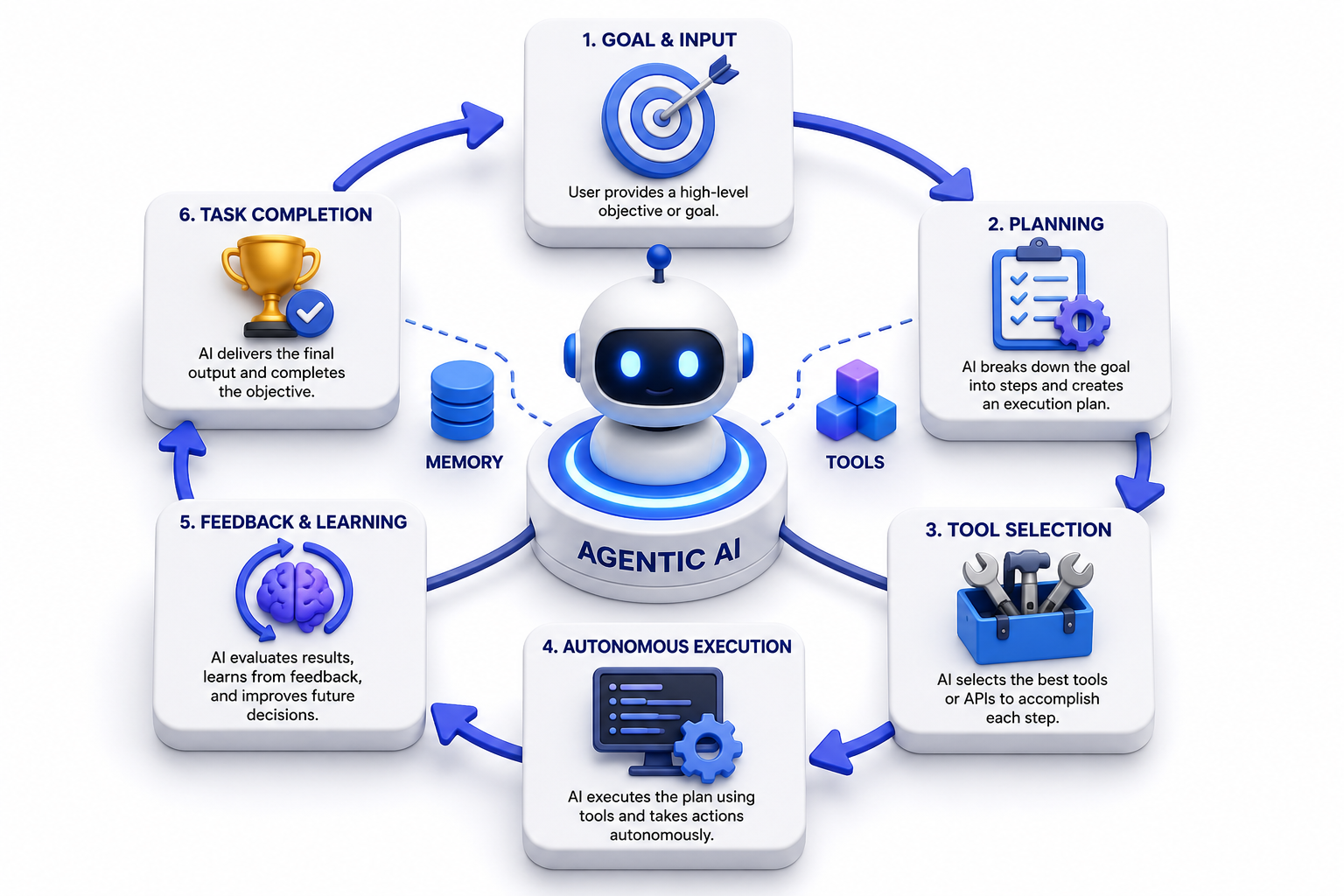
How Agentic AI Works: Planning, Tools, and Autonomous Execution Explained
Navigate through this article using the table of contents below
Table of Contents
No headings found in this article.
Artificial intelligence is entering a new phase where systems no longer stop after generating an answer. Modern AI can analyze objectives, plan multiple actions, use software tools, evaluate outcomes, and continue working until a goal is completed. This shift is transforming AI from a digital assistant into an autonomous problem solver.
Agentic AI represents this next evolution. Rather than responding to prompts one at a time, it continuously reasons, adapts, and executes complex workflows with minimal human intervention. Understanding how this process works is becoming essential for engineers, developers, and AI professionals building next-generation applications with JastTech and modern AI platforms.
What Makes Agentic AI Different from Traditional AI?
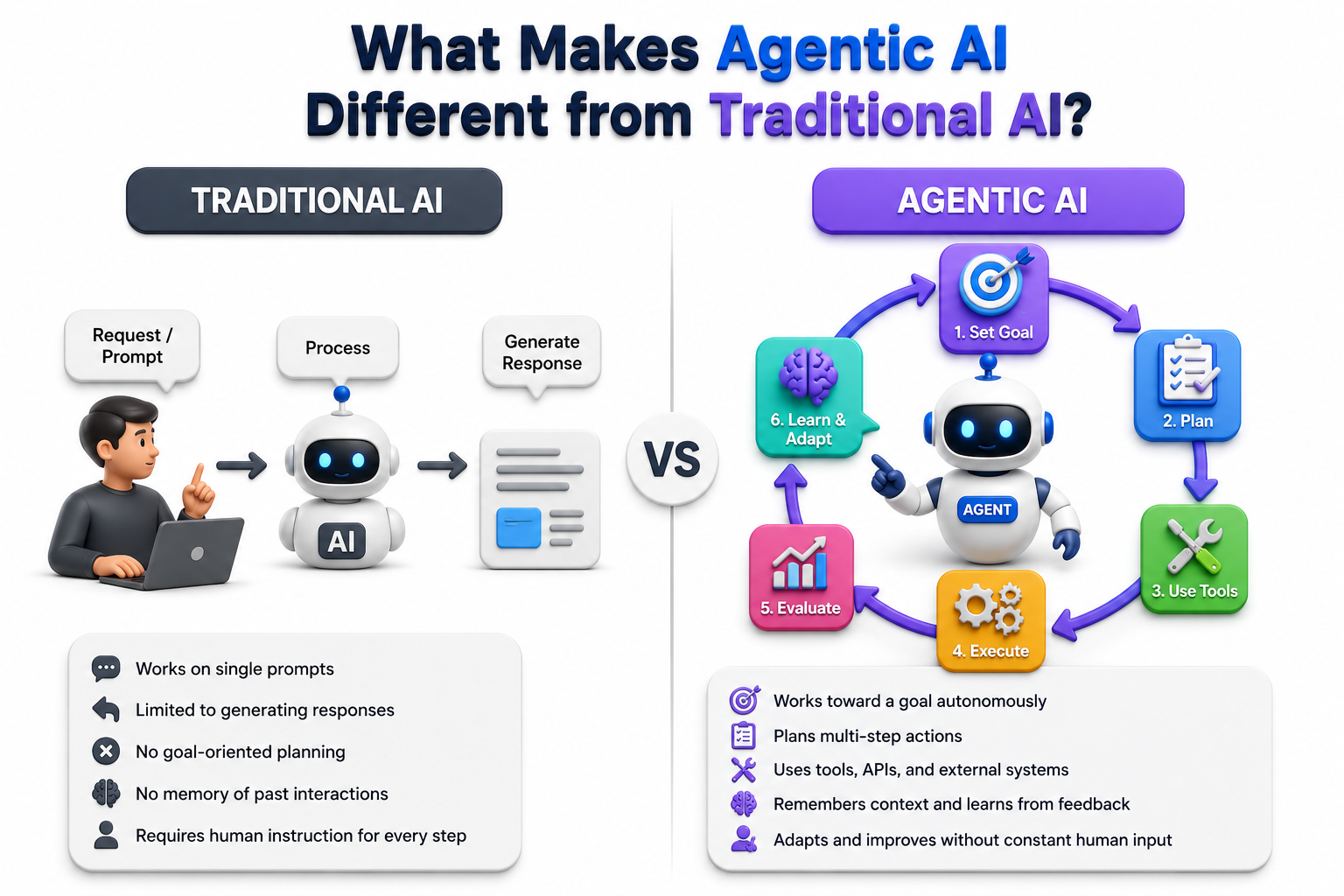
Traditional AI systems operate in a request-response pattern. A user provides an input, the model generates an output, and the interaction ends. While this works well for content generation or answering questions, it cannot independently complete long-running objectives.
Agentic AI introduces autonomy. Instead of waiting for every instruction, it receives a high-level goal and determines how to achieve it through planning and execution.
Key characteristics include:
Goal-oriented reasoning
Multi-step decision making
Autonomous task decomposition
Dynamic planning
Continuous feedback evaluation
Self-correction during execution
For example, instead of simply suggesting travel destinations, an agentic system can compare flights, reserve hotels, optimize costs, update calendars, and notify users automatically.
The Planning Engine: Where Autonomous Intelligence Begins
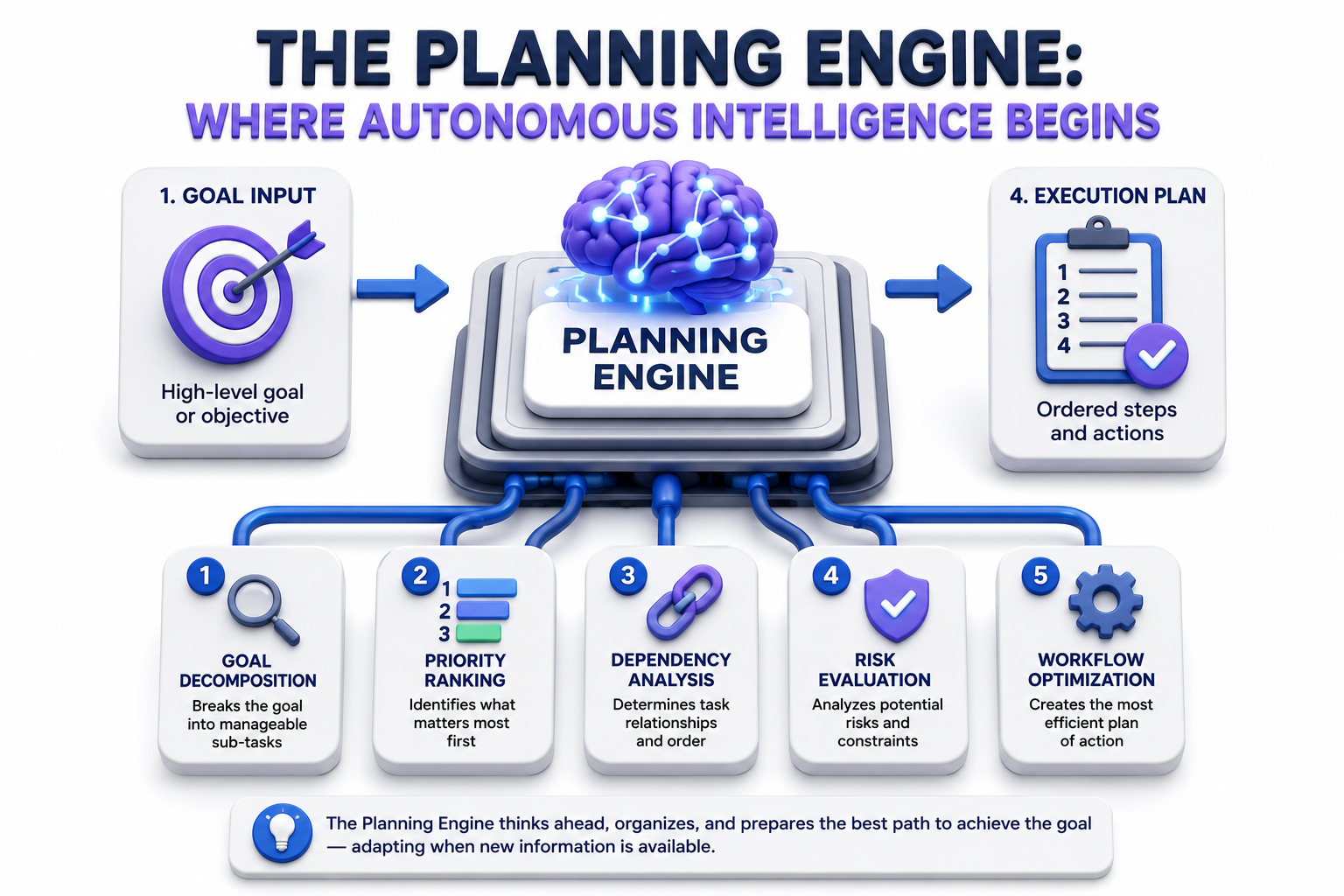
Planning is the foundation of every Agentic AI system. Once a goal is received, the AI does not immediately act. Instead, it analyzes the objective and creates an execution strategy.
This planning stage typically includes identifying the desired outcome, breaking the objective into manageable tasks, determining dependencies, and selecting the most efficient sequence of actions.
A planning engine commonly performs:
Goal decomposition
Priority ranking
Risk evaluation
Dependency analysis
Workflow optimization
If new information becomes available during execution, the planner can generate a revised strategy instead of restarting the process. This adaptive planning capability makes Agentic AI far more flexible than conventional automation.
Tool Integration: How AI Interacts with External Systems
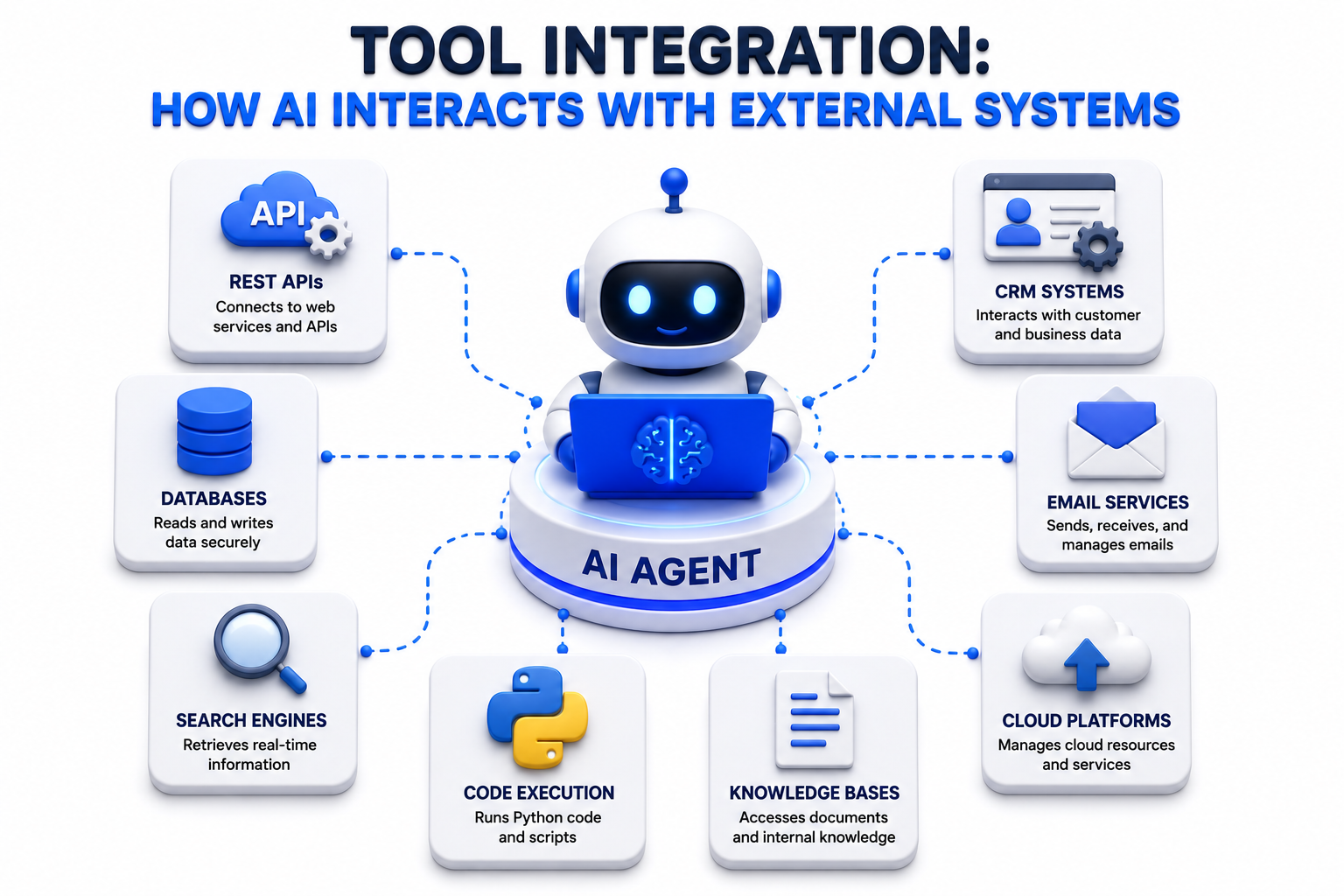
Reasoning alone cannot complete real-world work. Agentic AI must interact with software applications, APIs, databases, cloud platforms, and enterprise systems.
Tool integration allows an AI agent to move beyond generating text and begin performing actual operations.
Common tools include:
REST APIs
Databases
Search engines
Enterprise CRM systems
Email services
Cloud infrastructure
Python execution environments
Knowledge bases
Rather than hardcoding every workflow, the planning engine decides which tool should be used at each stage. This dynamic tool selection enables agents to adapt to changing environments while maintaining efficiency.
Memory and Feedback Loops Enable Better Decisions
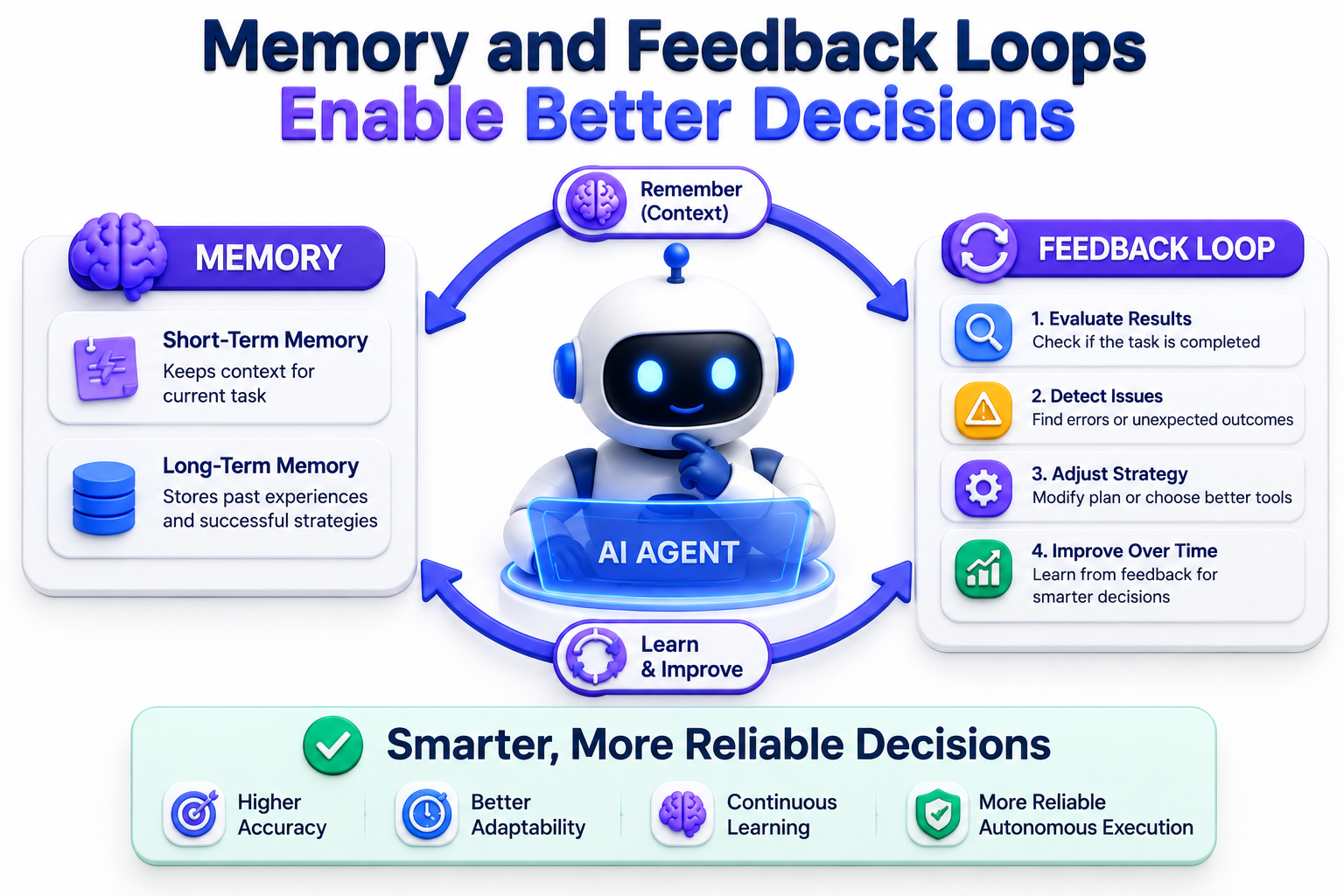
Unlike standard chatbots that forget previous interactions, Agentic AI uses memory to maintain context across long-running tasks.
Memory generally exists in two forms:
Short-term working memory for the current objective
Long-term memory that stores previous experiences and successful strategies
Feedback loops continuously monitor progress throughout execution.
The agent evaluates:
Was the task completed?
Did the API respond correctly?
Should another tool be used?
Does the plan require modification?
Has the objective changed?
If execution fails, the system analyzes the error, updates its strategy, and attempts an alternative approach. This continuous learning process significantly improves reliability in production environments.
Autonomous Execution: From Plan to Completed Task
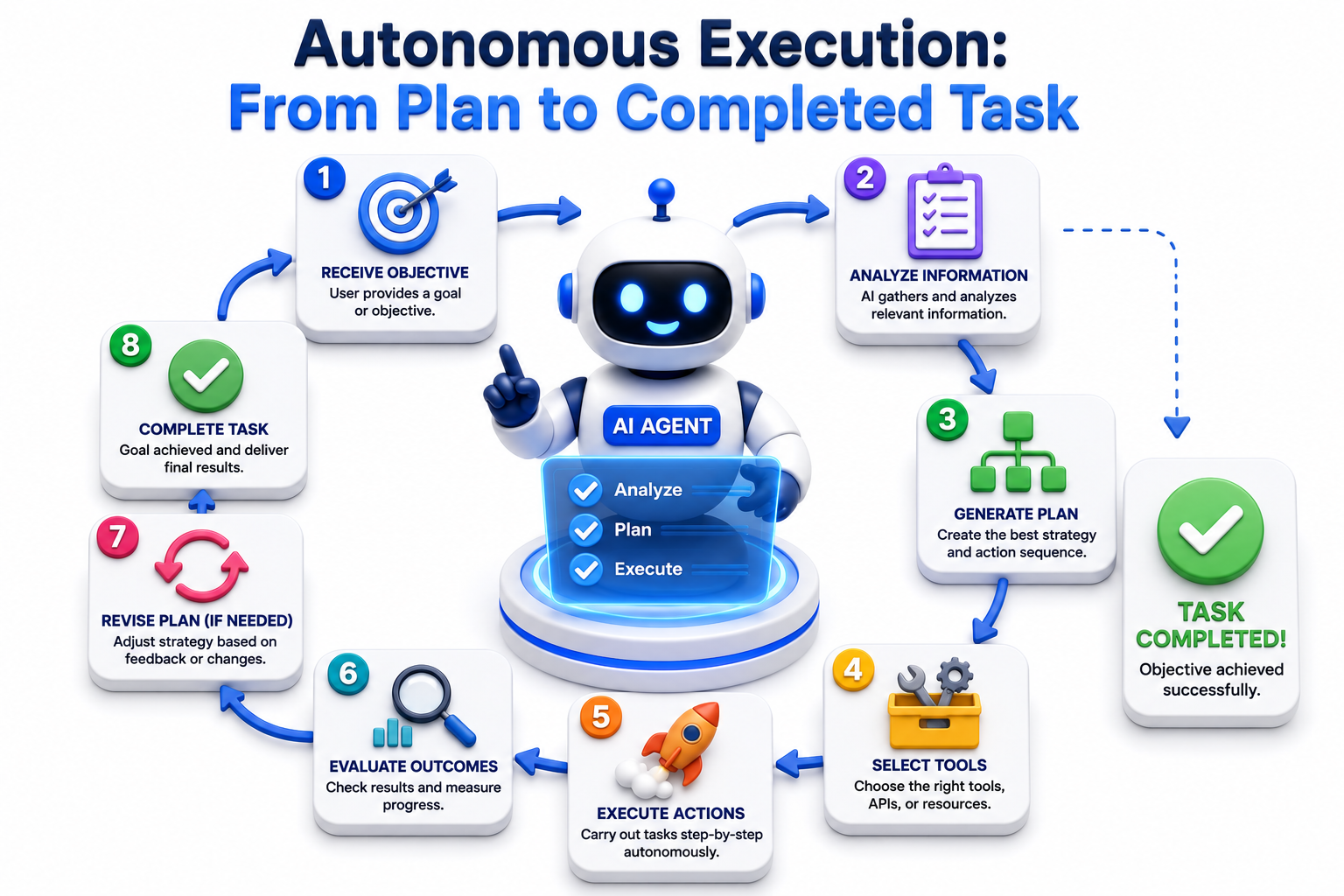
Autonomous execution is where planning becomes action. Once the workflow has been generated, the agent begins executing tasks independently while monitoring every result.
A typical execution cycle follows these stages:
Receive objective
Analyze available information
Generate execution plan
Select appropriate tools
Execute individual actions
Evaluate outcomes
Revise plan if necessary
Continue until completion
Consider an AI coding assistant. Rather than generating a single code snippet, an autonomous agent can understand project requirements, create source files, write functions, run tests, identify failures, debug errors, and repeat the cycle until the application works correctly.
This ability to execute complete workflows is what distinguishes Agentic AI from traditional generative models.
Real-World Applications and Future Opportunities
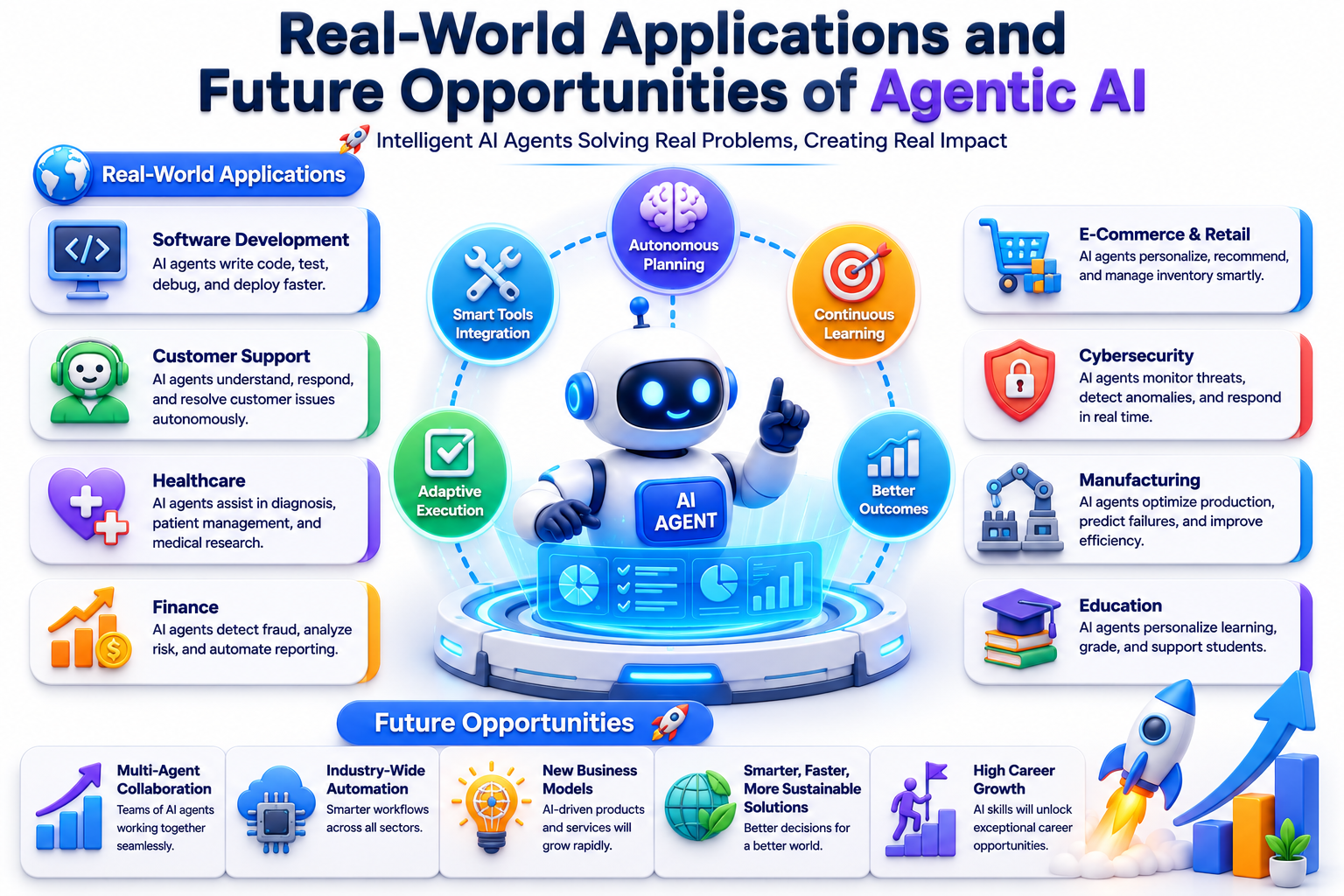
Organizations are rapidly adopting Agentic AI to automate increasingly complex business operations.
Popular applications include:
Software engineering assistants
Autonomous customer support
Healthcare workflow automation
Financial operations
Cybersecurity monitoring
Manufacturing optimization
Supply chain planning
Intelligent research assistants
Future systems are expected to coordinate multiple specialized agents working together on large objectives. One agent may handle planning, another perform research, while additional agents manage coding, testing, quality assurance, and reporting.
For professionals seeking careers in AI, mastering concepts such as planning algorithms, tool orchestration, memory management, retrieval systems, prompt engineering, and autonomous workflow design through JastTech can provide a strong competitive advantage as enterprises increasingly deploy production-grade AI agents.
Conclusion
Agentic AI marks a significant advancement beyond traditional generative AI by combining reasoning, planning, memory, tool usage, and autonomous execution into a unified intelligent workflow. Instead of producing isolated responses, these systems actively pursue goals, adapt to changing conditions, and complete complex tasks with minimal human intervention. As businesses demand greater automation, understanding how these components work together is becoming an essential skill for engineers and AI practitioners.
The future of AI will increasingly depend on intelligent agents capable of collaborating across software systems, learning from feedback, and making informed decisions in real time. Whether you're building enterprise automation, AI-powered applications, or preparing for a career in artificial intelligence, gaining expertise in Agentic AI concepts through practical training at JastTech can position you for the next generation of intelligent software development.