

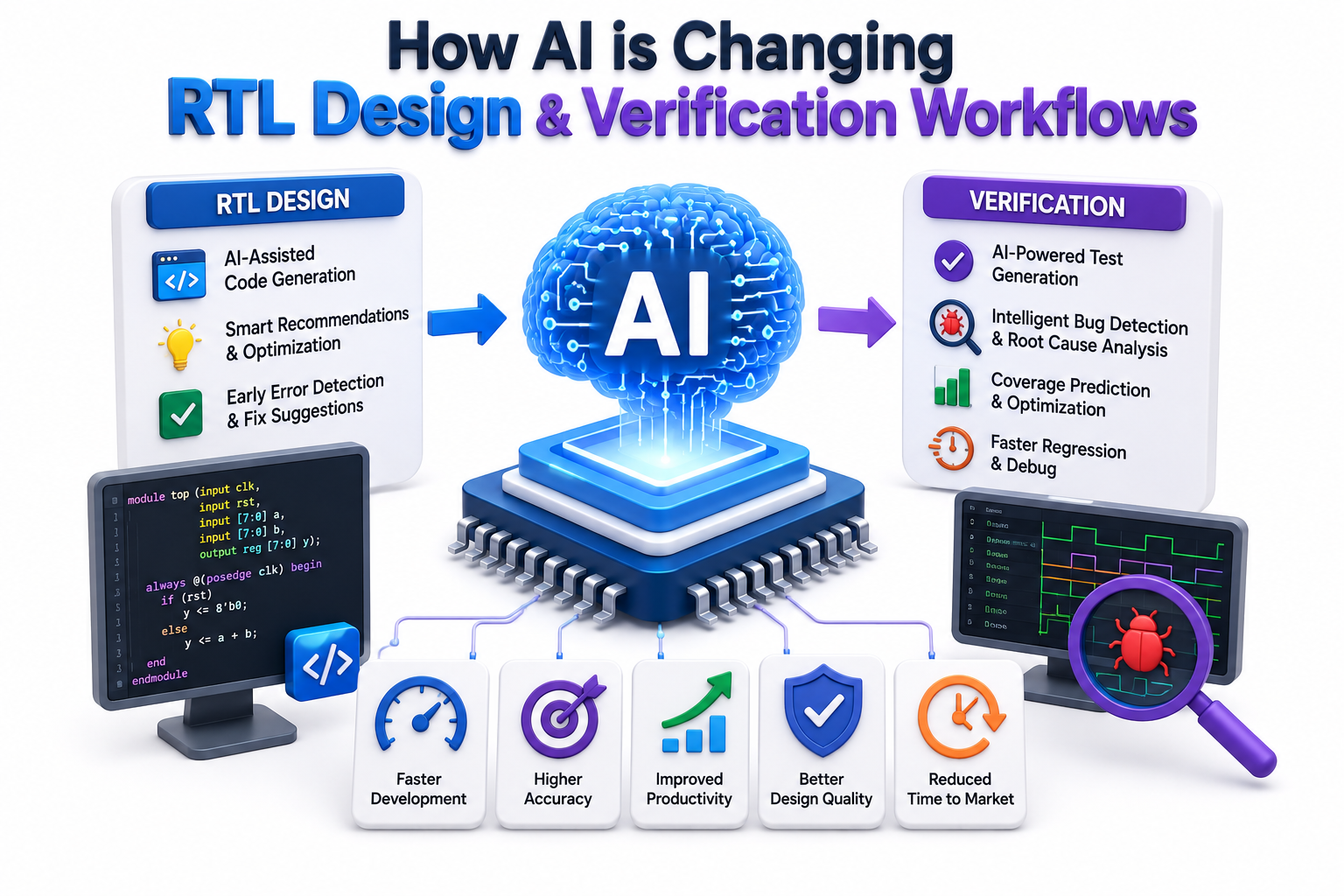
How AI is Changing RTL Design and Verification Workflows
Navigate through this article using the table of contents below
Table of Contents
No headings found in this article.
Artificial Intelligence is no longer just influencing software development—it is rapidly reshaping semiconductor engineering. From generating RTL code to automating verification tasks, AI is helping engineering teams reduce development cycles while improving chip quality.
As chip complexity continues to increase with AI processors, automotive electronics, IoT devices, and high-performance computing, traditional engineering methods are reaching their limits. Understanding how AI is changing RTL workflows has become essential for every engineer planning a successful semiconductor career.
Why AI Is Becoming Essential in Modern RTL Design
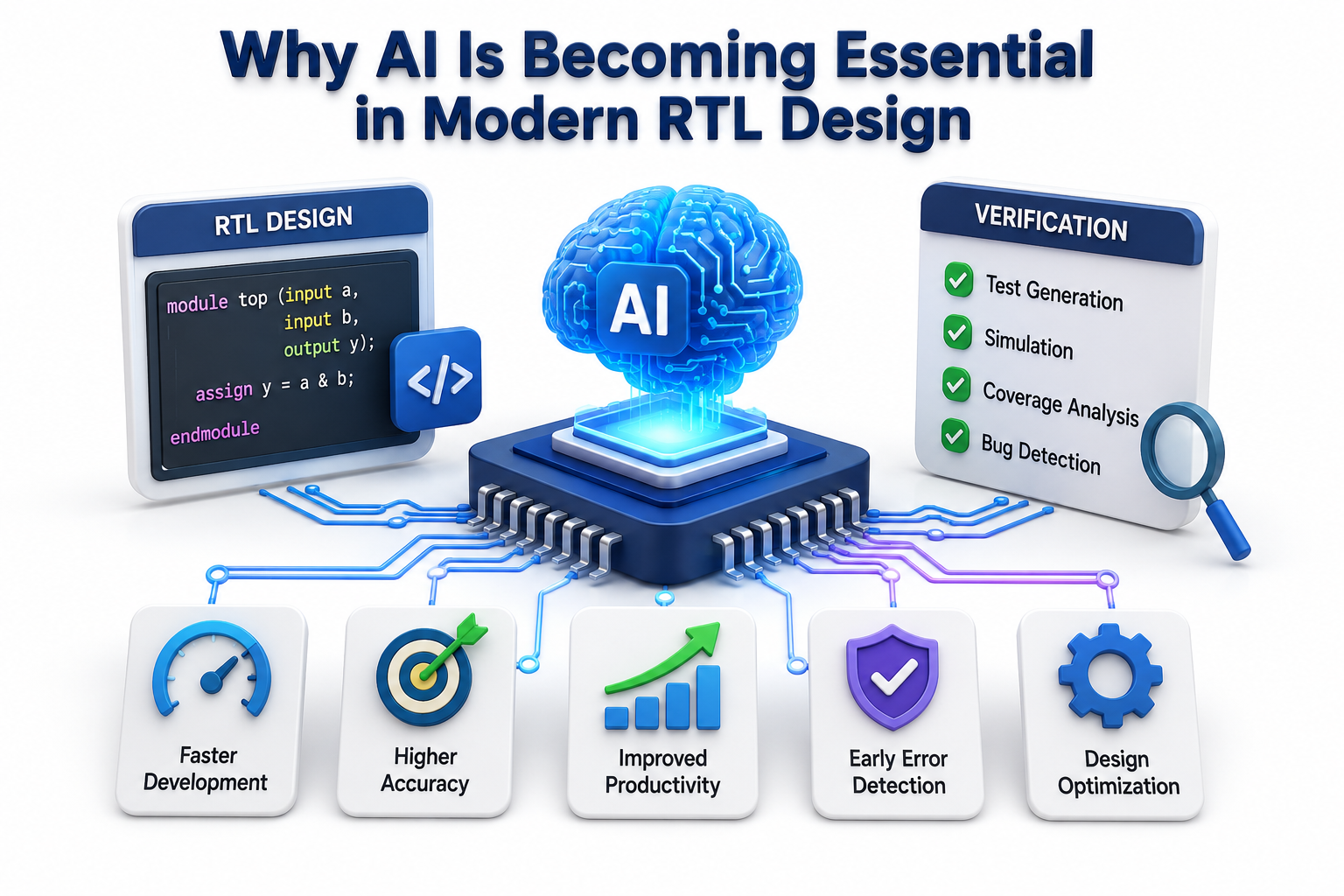
Modern semiconductor chips contain billions of transistors and increasingly sophisticated architectures. Designing and verifying these devices manually requires enormous engineering effort, making automation more valuable than ever before.
Artificial intelligence assists engineers by identifying design patterns, predicting coding issues, and accelerating repetitive development tasks without replacing engineering expertise. Instead of spending hours on routine coding activities, designers can focus on solving architectural challenges.
AI contributes throughout RTL development by:
Recommending synthesizable HDL code
Detecting coding inconsistencies early
Suggesting design optimizations
Identifying possible timing concerns
Improving coding productivity
Reducing human errors
Rather than replacing RTL engineers, AI acts as an intelligent engineering assistant. Engineers still make architecture decisions, validate functionality, and ensure compliance with design specifications while AI speeds up supporting activities.
As semiconductor companies compete to deliver chips faster, AI-assisted RTL development is becoming a competitive necessity instead of a future trend.
AI Is Revolutionizing Verification More Than Coding

Verification has traditionally consumed nearly 70% of the total chip development effort. Writing testbenches, creating constrained-random tests, debugging failures, and measuring coverage require significant engineering resources.
Artificial intelligence is dramatically improving this phase by automating many repetitive verification activities.
Key areas where AI improves verification include:
Intelligent test generation
Automatic bug classification
Functional coverage prediction
Regression prioritization
Root cause analysis
Failure clustering
Simulation optimization
Instead of executing thousands of random simulations blindly, AI learns from previous regressions to prioritize the most effective test cases. This significantly reduces simulation time while maintaining verification quality.
Machine learning models can also analyze historical bug databases to predict where new design issues are most likely to appear. This enables verification engineers to focus their effort where it matters most.
An advanced RTL design and verification course now introduces engineers to these emerging AI-assisted verification methodologies alongside traditional UVM, SystemVerilog, and simulation concepts, ensuring they are prepared for evolving industry expectations.
AI-Powered Debugging Is Reducing Development Time
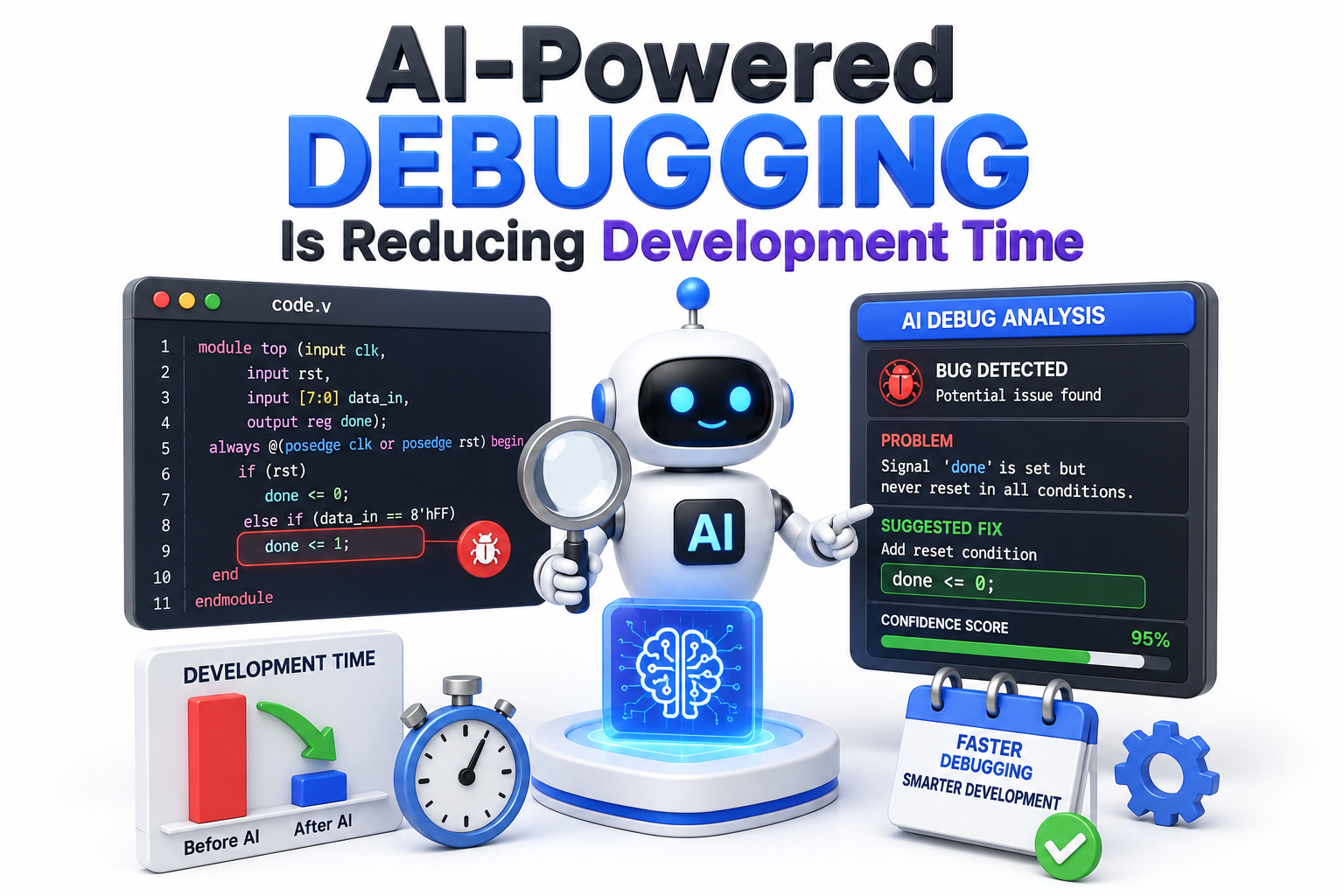
Debugging remains one of the most time-consuming parts of semiconductor development. Engineers often spend days tracing signal transitions across thousands of waveform cycles to locate the actual source of a failure.
Artificial intelligence is simplifying this process considerably.
Modern AI-driven debugging platforms can:
Detect abnormal waveform behavior
Highlight suspicious signal paths
Predict probable root causes
Compare failing and passing simulations
Recommend debugging checkpoints
Analyze historical bug similarities
Rather than manually searching through millions of signal transitions, engineers receive intelligent recommendations that narrow the investigation.
AI also assists with log analysis by identifying recurring failure signatures that may otherwise remain hidden within extensive simulation outputs.
Although experienced engineers still validate every conclusion, AI dramatically reduces the time needed to locate potential issues, resulting in faster design iterations and quicker project completion.
This improvement becomes especially valuable as SoCs continue growing in complexity across automotive, networking, AI accelerators, and consumer electronics.
How AI Supports Better Design Quality Without Replacing Engineers
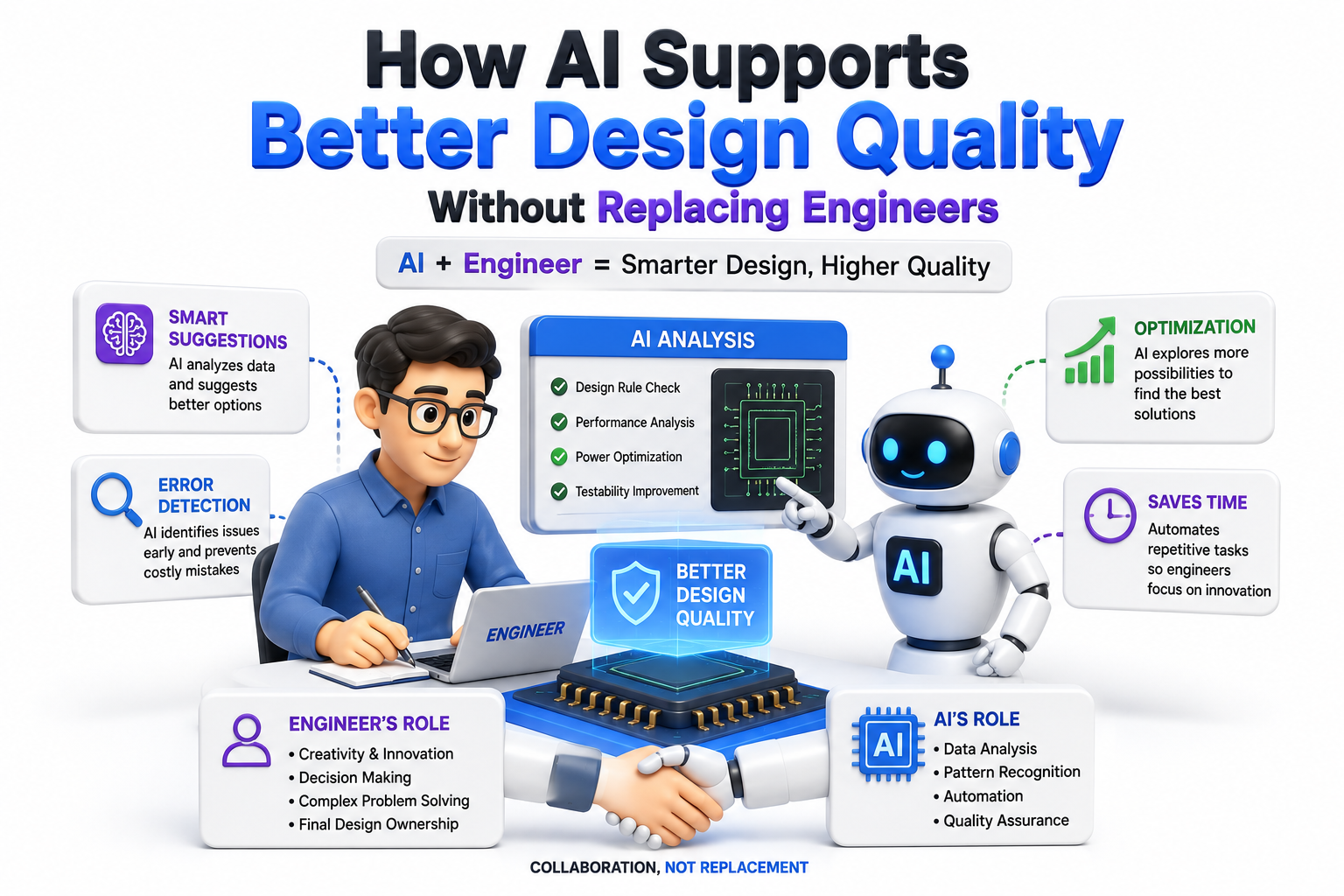
A common misconception is that artificial intelligence will replace RTL designers. In reality, successful chip development still depends heavily on engineering judgment, hardware architecture knowledge, and verification expertise.
AI performs best when handling repetitive analytical tasks, while engineers remain responsible for:
Microarchitecture planning
Design trade-off decisions
Performance optimization
Power optimization
Functional correctness
Safety compliance
Final design reviews
Artificial intelligence continuously analyzes previous projects, coding standards, synthesis reports, and verification results to provide useful recommendations. Engineers evaluate these recommendations before implementation.
This collaboration improves consistency across development teams while reducing avoidable mistakes.
Organizations increasingly seek professionals who understand both semiconductor fundamentals and AI-assisted engineering workflows. Learning these technologies together provides a stronger competitive advantage than mastering either discipline independently.
For students wondering How to Learn RTL Design, combining hardware fundamentals with exposure to AI-enabled design environments offers a practical path toward modern semiconductor engineering roles.
Skills Engineers Need for AI-Driven Semiconductor Development
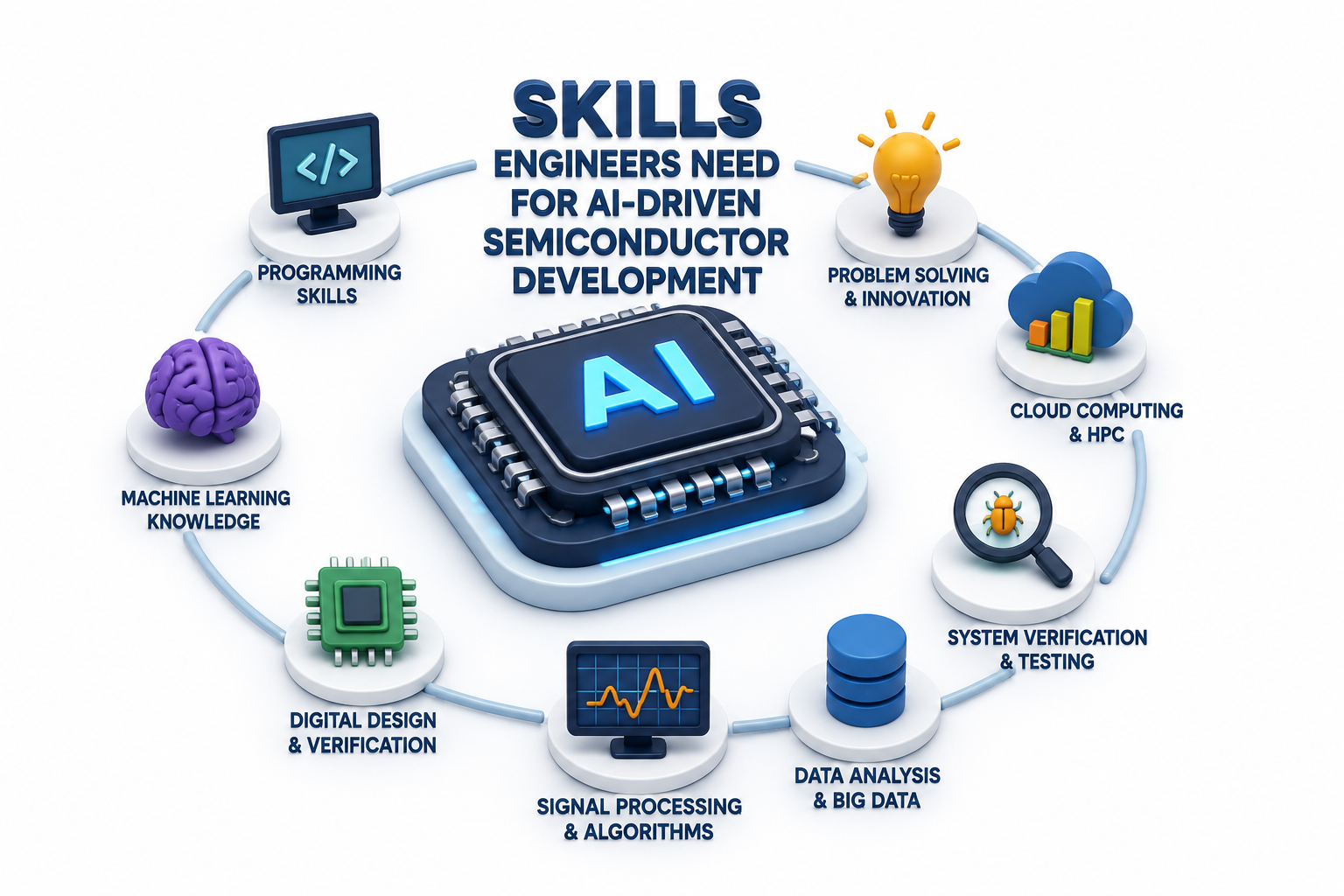
The semiconductor industry is evolving beyond traditional RTL coding. Employers increasingly value engineers who understand how AI integrates into existing Electronic Design Automation (EDA) workflows.
Core technical skills continue to include:
Digital electronics
Verilog
SystemVerilog
RTL architecture
Finite State Machine design
Timing concepts
Simulation
Debugging
Synthesis fundamentals
Alongside these, valuable complementary skills include:
Basic machine learning concepts
Python scripting
Data analysis
Automation workflows
AI-assisted EDA tools
Version control
Linux
Problem-solving
Learning automation and scripting helps engineers create more efficient design environments while AI tools handle repetitive analysis.
A well-designed RTL design and verification course should combine practical projects, simulation experience, verification methodologies, scripting, debugging techniques, and exposure to AI-assisted workflows so learners can confidently contribute to modern semiconductor projects from the beginning of their careers.
Continuous learning has become one of the defining characteristics of successful VLSI engineers.
The Future of RTL Design and Verification in the AI Era
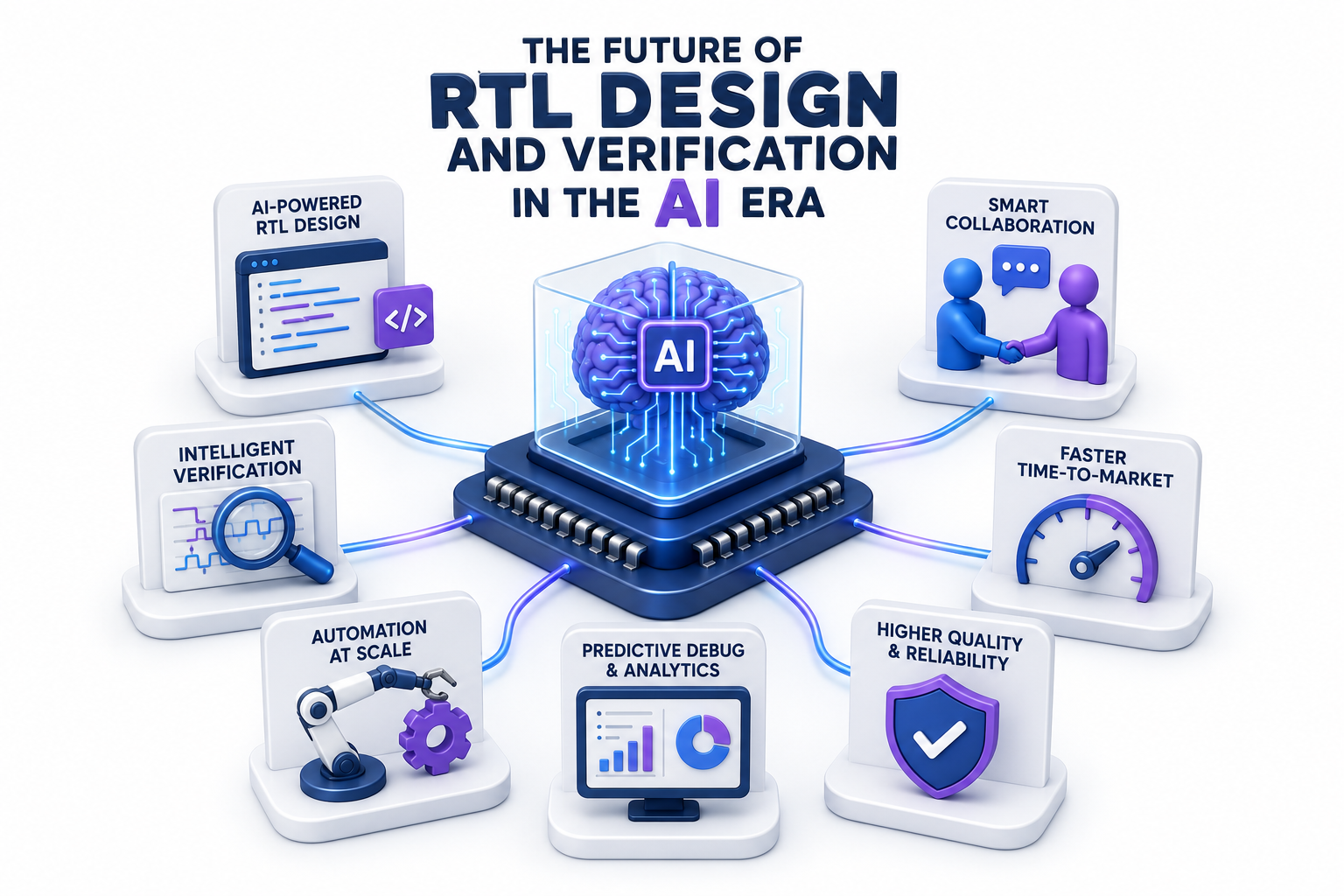
Artificial intelligence will continue expanding throughout semiconductor design, but its role will remain collaborative rather than autonomous.
Future AI capabilities are expected to include:
More intelligent RTL generation
Automated verification planning
Better coverage optimization
Faster design-space exploration
Predictive timing optimization
Automated documentation
Smarter design reviews
Engineers will increasingly supervise AI-generated outputs instead of manually performing every repetitive engineering task.
This shift allows design teams to spend more time on innovation, architectural optimization, power efficiency, and product differentiation.
The demand for professionals capable of working alongside AI-powered EDA tools is expected to rise steadily as semiconductor companies pursue shorter design cycles and increasingly complex products.
For aspiring engineers exploring How to Learn RTL Design, focusing on strong digital design fundamentals while embracing AI-assisted development practices will create long-term career opportunities across ASIC, FPGA, SoC, automotive electronics, telecommunications, consumer devices, and AI hardware.
Conclusion
Artificial intelligence is fundamentally changing the way semiconductor companies approach RTL development and verification. Rather than replacing engineers, AI reduces repetitive work, accelerates debugging, improves verification efficiency, and enables faster delivery of increasingly complex chips. Engineers who understand both traditional hardware development and AI-assisted workflows will be better positioned for future opportunities.
Whether you are a student, recent graduate, or working professional, investing in modern semiconductor education is essential. JastTech provides industry-focused learning designed to help engineers build practical RTL, verification, debugging, and automation skills aligned with current semiconductor practices. By combining strong hardware fundamentals with emerging AI technologies, learners can confidently prepare for the next generation of VLSI engineering careers.