

How Guidewire Handles Policy Renewals and Midterm Changes in Insurance Systems
Navigate through this article using the table of contents below
Table of Contents
No headings found in this article.
Managing the life cycle of an insurance policy demands absolute precision, automated workflows, and robust system agility. Property and casualty (P&C) carriers constantly face the challenge of updating coverage terms without disrupting ongoing operations or introducing data inconsistencies. Modern carriers rely on sophisticated core systems to streamline policy renewals and process mid-term adjustments efficiently while maintaining strict regulatory compliance and financial accuracy across every transaction.
Carriers seeking comprehensive industry expertise often explore specialized professional pathways, such as a Guidewire Training in Hyderabad, to build enterprise-level capabilities in core insurance platforms. Mastering these advanced administrative mechanics ensures that insurance portfolios remain profitable, risk assessment remains accurate, and policyholders experience seamless continuity from one coverage period to the next.
The Core Architecture of Policy Lifecycle Management
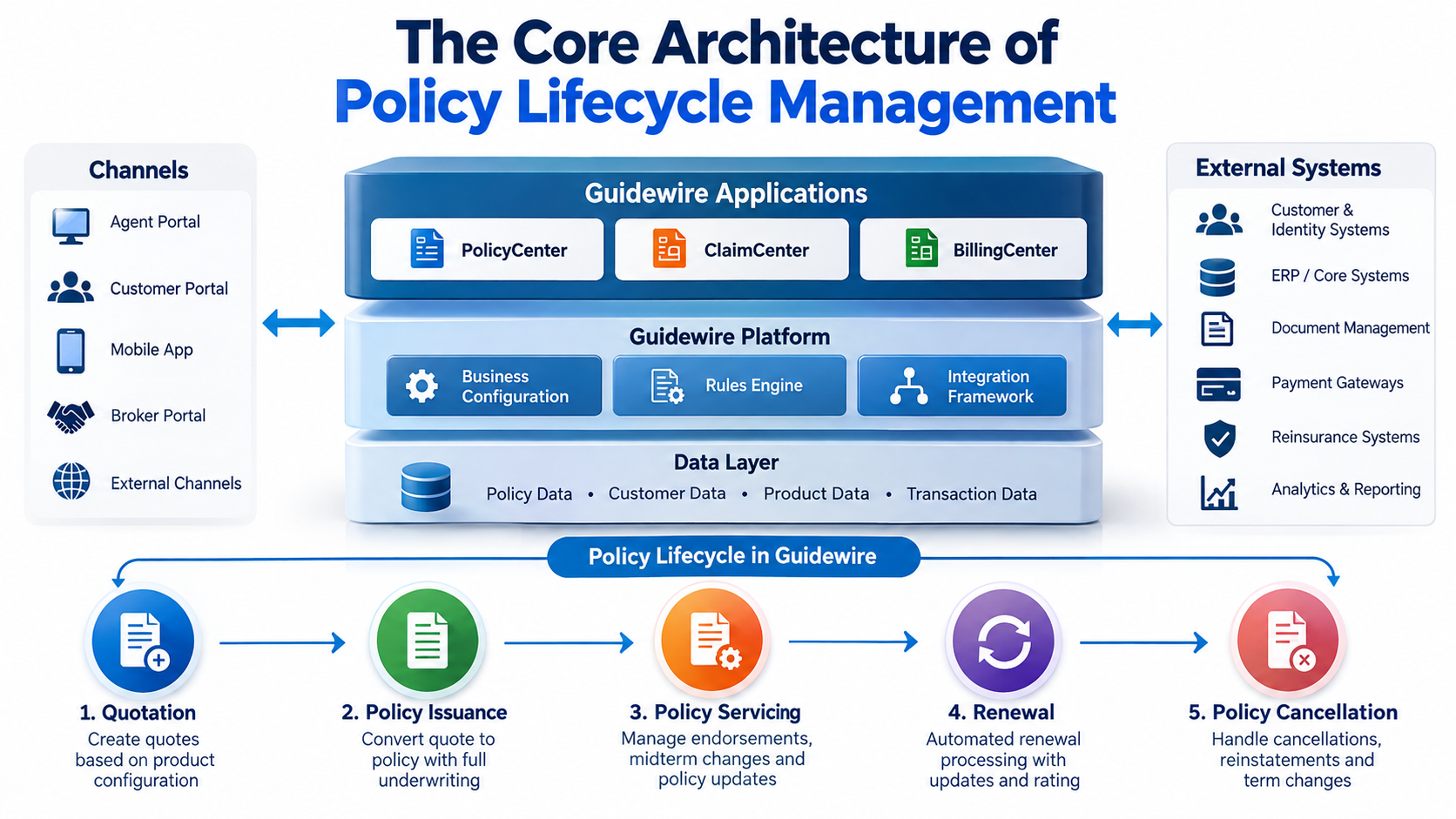
The foundation of modern insurance administration rests on modular system design that separates data models from business logic. Policy systems utilize specialized transaction types to handle new business, renewals, cancellations, and mid-term changes as distinct events rather than overwriting existing records. This separation ensures that historical audit trails remain completely intact, allowing underwriters and compliance officers to trace every financial and coverage adjustment back to its precise origin.
Insurance platforms maintain data integrity through effective version control and date-effective tracking mechanisms. When a policy undergoes modifications, the system generates a new effective-dated slice of data, preserving the prior state for historical reporting while activating the new parameters for future transactions. This architecture eliminates data corruption risks and ensures that rating engines evaluate risk based on the exact temporal validity of the policy terms.
Mechanics of Automated Policy Renewals
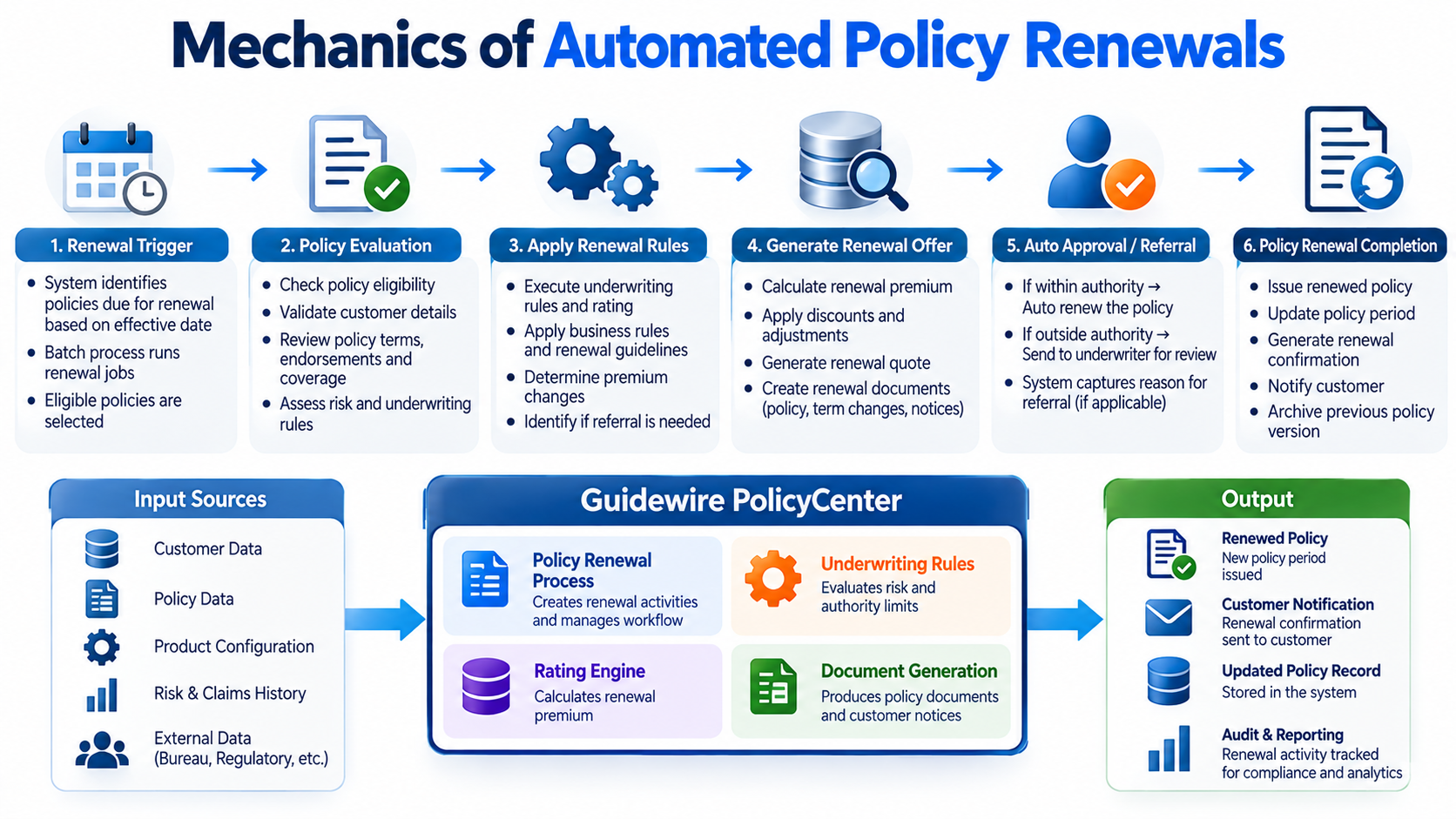
Policy renewals represent a critical revenue retention phase for P&C insurers, requiring seamless transition from an expiring term to a new coverage period. Automated workflows initiate renewal cycles several weeks before expiration, pulling historical exposure data, current risk classifications, and prior claims history into a fresh draft term. This automated generation significantly reduces manual underwriting effort and ensures continuous coverage for policyholders without administrative bottlenecks.
Professionals looking to deepen their understanding of core issuance workflows frequently study Guidewire PolicyCenter Fundamentals to master the configuration of renewal jobs and underwriting rules. Rating engines then re-evaluate the risk profile against updated actuarial tables, applying inflation indexes, territorial adjustments, and loyalty discounts automatically to generate accurate renewal premiums before the notice is dispatched to the insured.
Processing Mid-Term Policy Changes
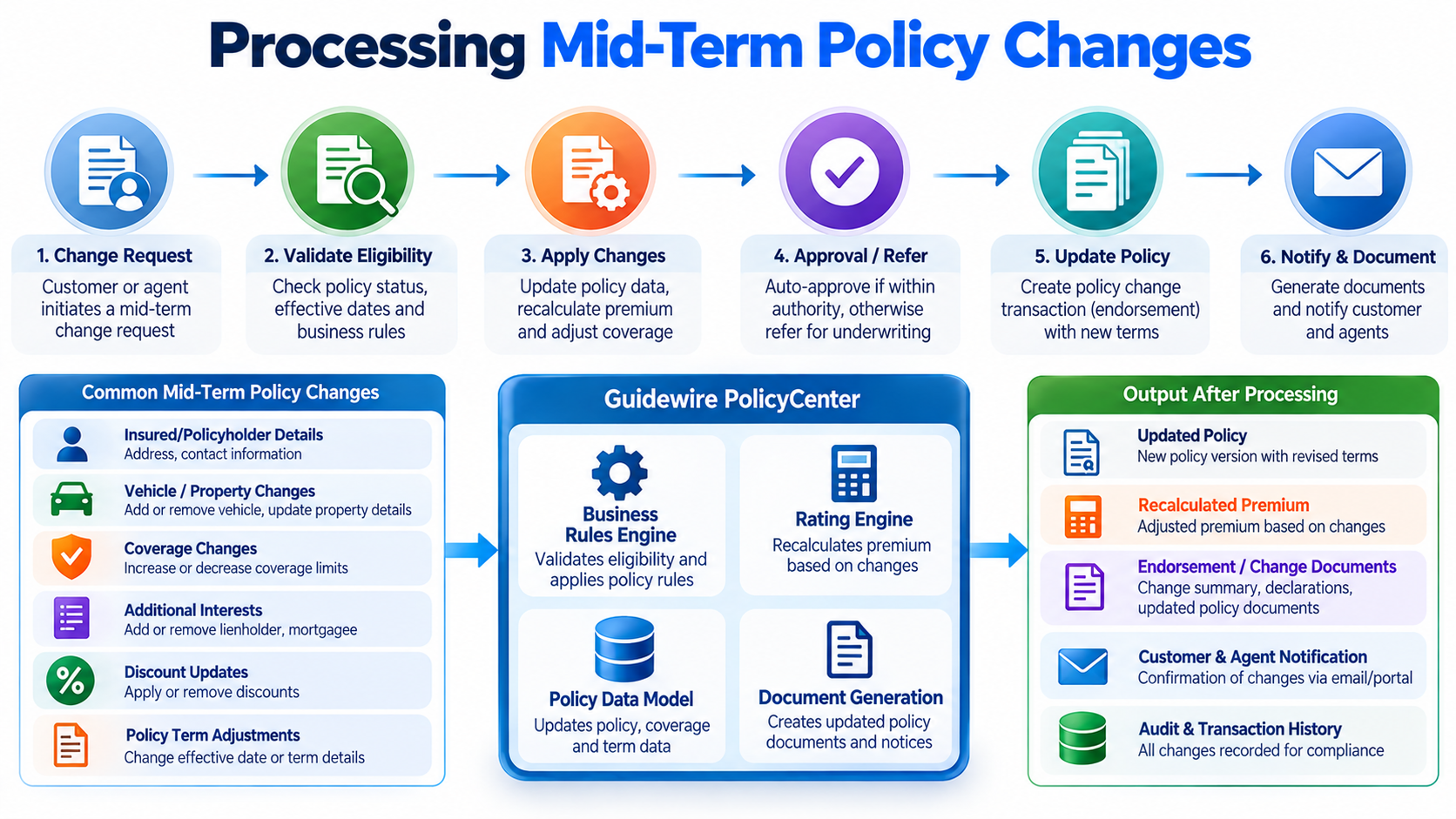
Mid-term changes, also known as endorsements, occur when a policyholder modifies their coverage, insured assets, or deductible limits during an active policy period. These adjustments require precise proration calculations to ensure that premium charges or credits apply accurately from the exact date and time the endorsement takes effect. Core insurance platforms execute these calculations by splitting the remaining policy term into distinct segments based on the effective date of the change.
Endorsement processing workflows guide underwriters or customer service representatives through validation checks to confirm that requested modifications comply with underwriting guidelines and state regulations. If a policyholder adds a new driver or increases property limits mid-term, the system recalculates the unexpired portion of the term, issues a prorated premium adjustment, and instantly updates billing schedules to reflect the new financial obligation without disrupting the primary billing lifecycle.
Financial Impact and Proration Calculations
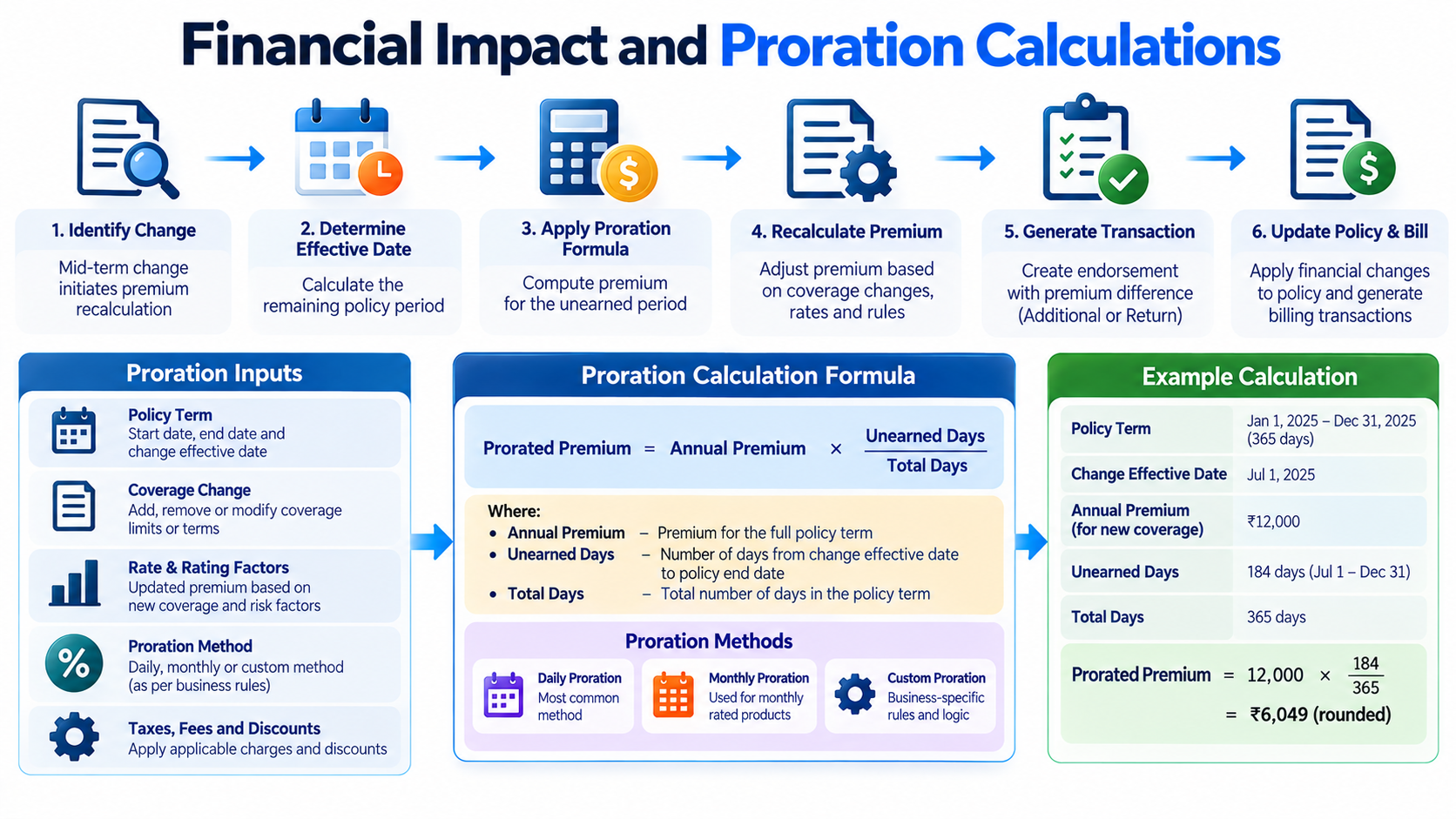
Financial accuracy during mid-term adjustments depends entirely on sophisticated proration engines that determine exact premium differences down to the day or hour. Insurers typically utilize daily pro-rata or short-rate cancellation and endorsement formulas depending on whether the change was initiated by the carrier or the insured. These calculations prevent financial leakage and ensure that accounting ledgers balance correctly across general ledger accounts.
Core systems automate the distribution of these financial adjustments across remaining installment schedules, updating direct bill or agency bill accounts seamlessly. When an endorsement results in an additional premium, the system can distribute the balance across remaining payment chunks or demand an immediate single payment, while premium decreases automatically generate credits applied to future invoices or direct refunds to the policyholder.
Underwriting Authority and Referral Rules
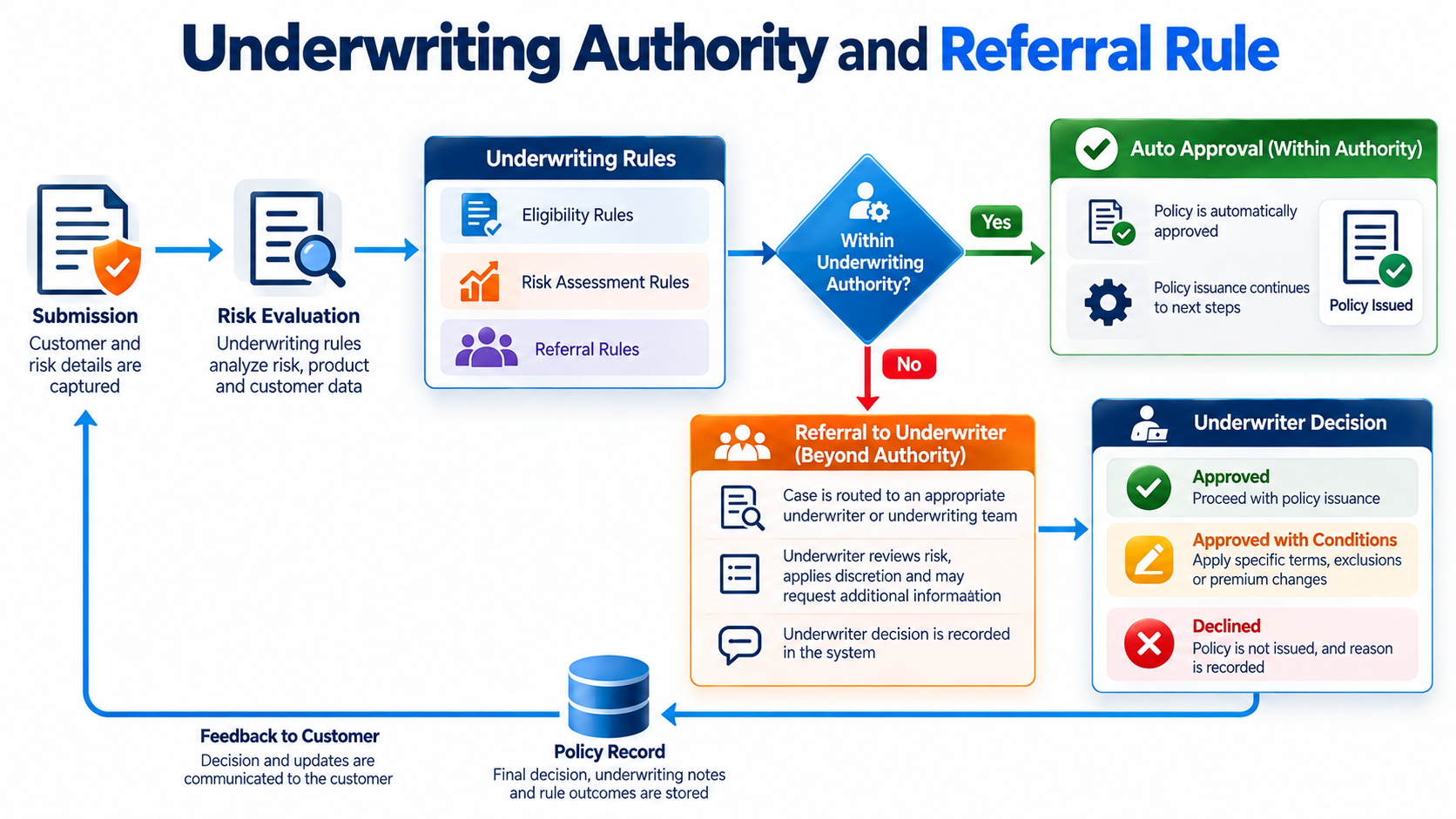
Not all policy changes or renewals can be processed through straight-through automated processing; complex risks require manual underwriting intervention. Core insurance systems incorporate robust rule engines that evaluate incoming renewal parameters and mid-term endorsement requests against predefined risk thresholds. If a change exceeds standard underwriting guidelines—such as a substantial increase in property value or a newly added high-risk driver—the system automatically halts processing and routes the job to an underwriter's queue.
Referral management streamlines this review process by attaching detailed deficiency notes, risk scores, and comparative historical data directly to the pending transaction file. Underwriters can approve, reject, or negotiate modifications within the system interface, ensuring that authority matrices are strictly enforced while maintaining a transparent audit trail of every manual intervention executed during the policy lifecycle.
Integration with Billing and Claims Modules
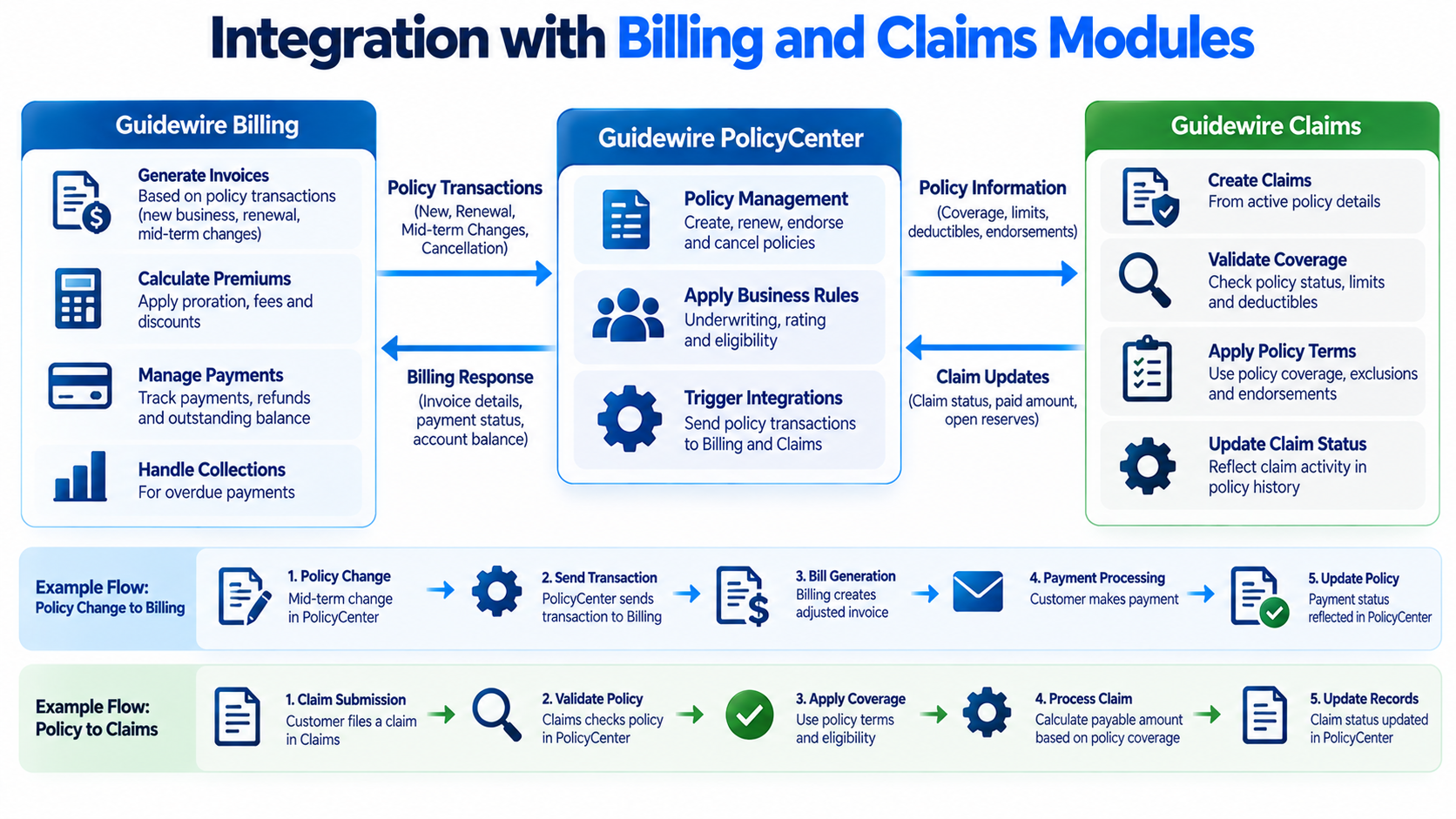
Policy renewals and mid-term changes do not operate in an isolated environment; they maintain constant data synchronization with billing and claims administration modules. When a renewal premium changes, the billing system must instantly update invoice generation schedules, account balances, and payment plans. Similarly, active claims must be cross-referenced against incoming policy changes to ensure that endorsements affecting coverage limits or deductibles apply correctly to open or future loss events.
Enterprise service buses and event-driven messaging architectures facilitate real-time communication between policy administration, billing, and claims repositories. This integration prevents discrepancies where a customer service representative modifies coverage limits mid-term while an open claim is being evaluated under older policy terms, thereby mitigating legal and financial liabilities for the insurance carrier.
Compliance, Auditing, and Regulatory Reporting
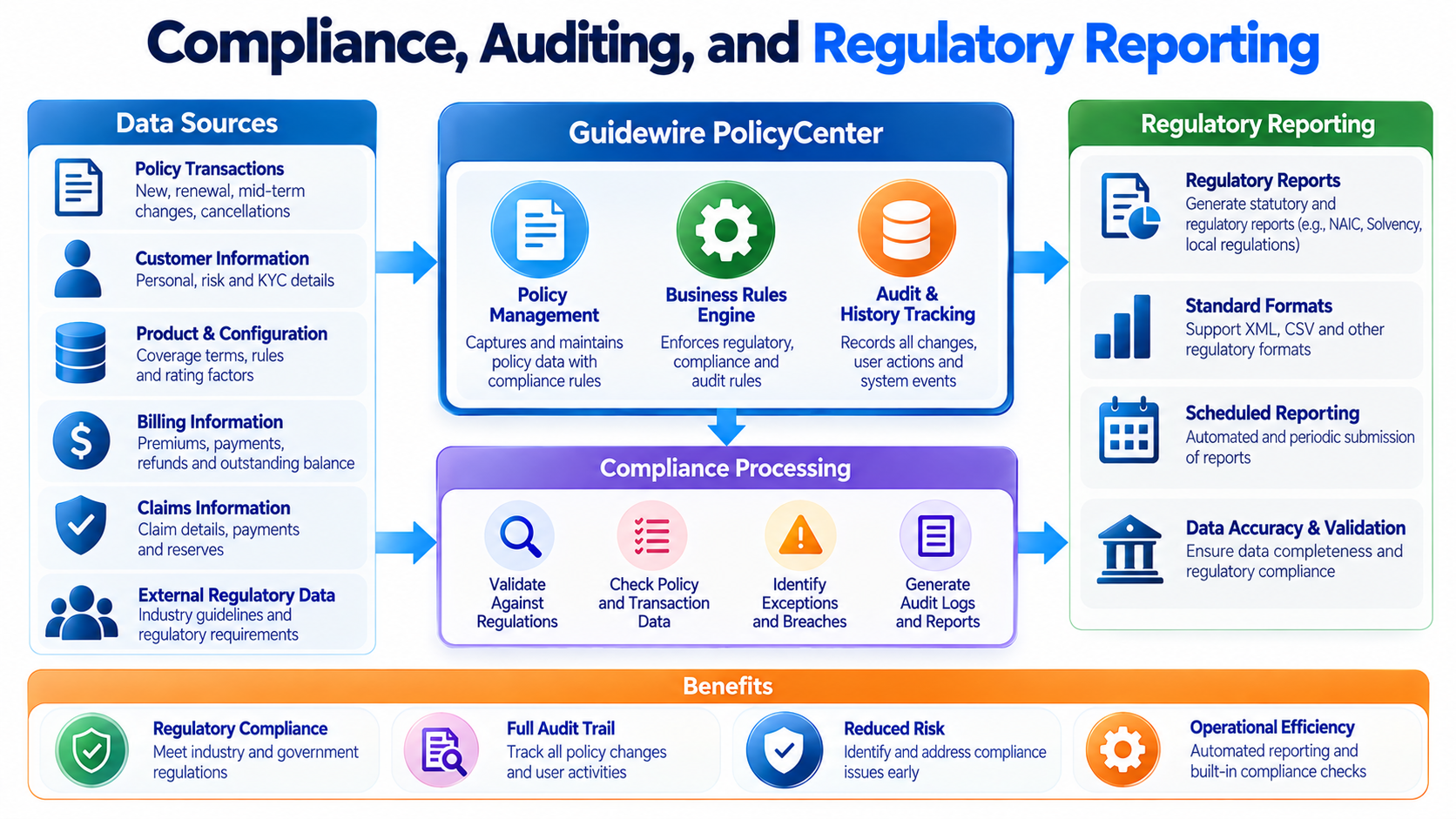
Insurance carriers operate in a heavily regulated environment where every policy renewal and mid-term adjustment must adhere to strict state and federal compliance mandates. Core systems maintain comprehensive transaction logs, recording every user interaction, system-generated rating decision, and approval signature associated with a policy file. These immutable audit trails are essential during market conduct examinations and financial audits conducted by regulatory bodies.
Reporting frameworks extract renewal retention rates, endorsement frequencies, and average processing times to help executive management monitor operational efficiency and portfolio health. By maintaining pristine data governance and transparent record-keeping, insurers satisfy statutory filing requirements effortlessly while safeguarding policyholder data privacy against unauthorized access or accidental modification.
Conclusion
Managing policy renewals and mid-term changes efficiently is vital for maintaining customer satisfaction, operational profitability, and regulatory compliance in the insurance industry. By leveraging modular architectures, automated workflows, and robust financial proration engines, P&C carriers can navigate complex policy adjustments with absolute precision. Implementing these advanced administrative practices ensures long-term operational resilience and positions insurance enterprises for sustained growth in a competitive marketplace.