

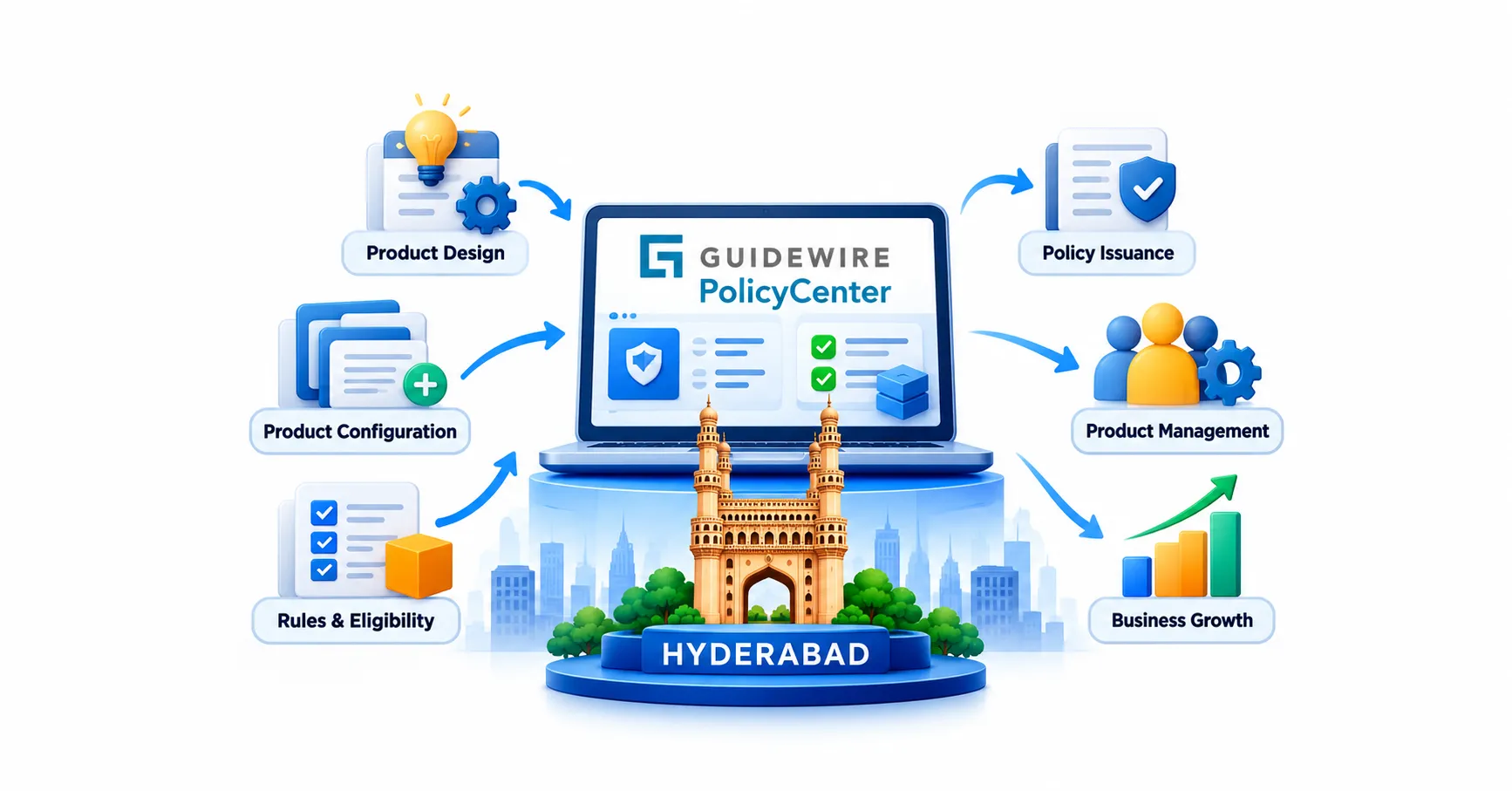
How Guidewire PolicyCenter Supports Insurance Product Development in Hyderabad
Navigate through this article using the table of contents below
Table of Contents
No headings found in this article.
A new insurance product usually starts as a document full of eligibility rules, coverages, limits and pricing factors. The hard part is turning that document into something underwriters can quote and customers can buy. That gap is where PolicyCenter earns its place, and it is why many professionals look into Guidewire training in Hyderabad.
This article explains how Guidewire PolicyCenter supports insurance product development, and what that work looks like for teams in Hyderabad.
Why Insurance Products Are Harder to Build Than They Look
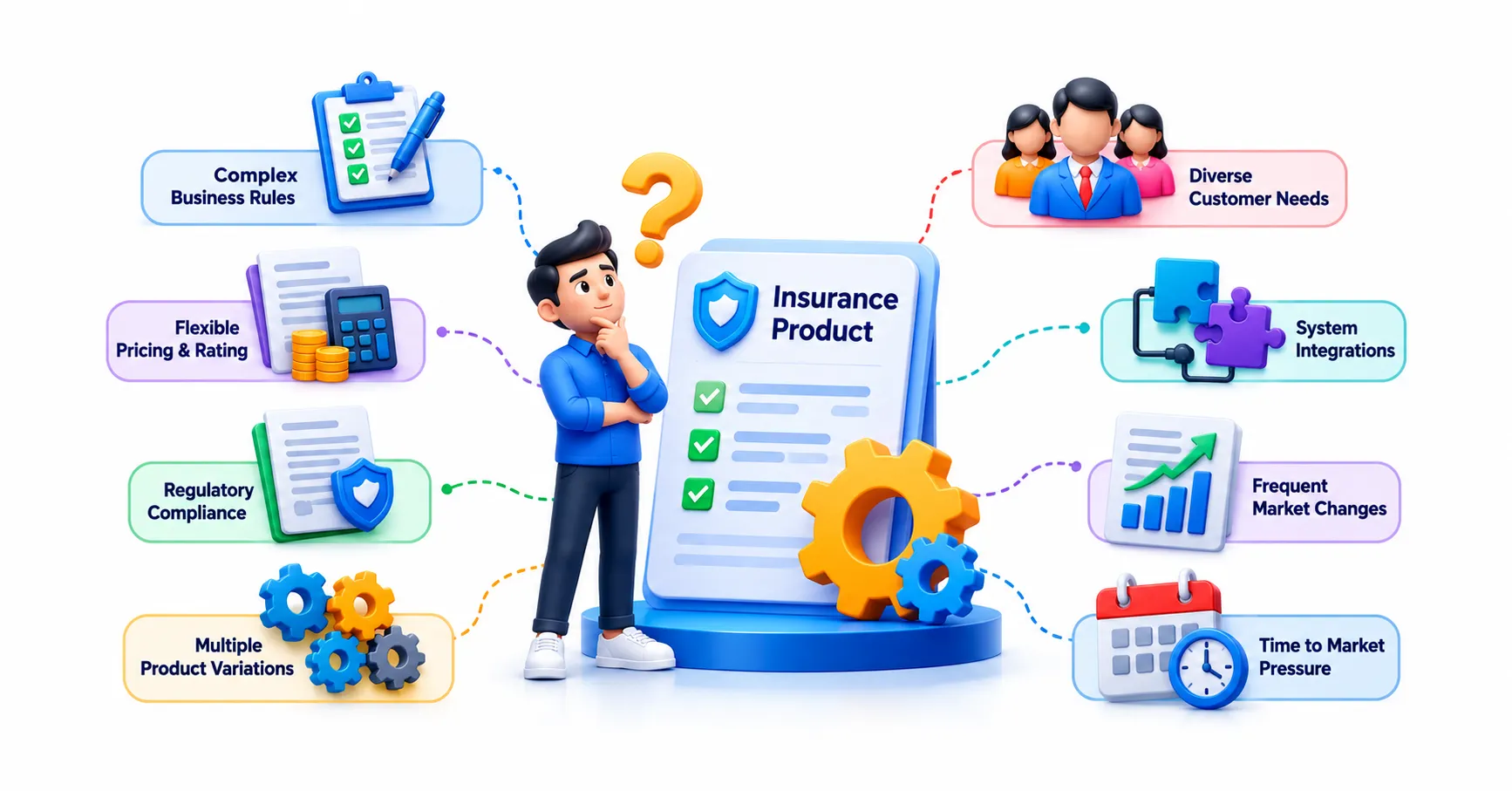
Most people picture an insurance product as a price and a policy document. Inside an insurer, a product is a bundle of decisions. Which risks are eligible? Which coverages are mandatory, and which are optional? What limits and deductibles can a customer choose? How does the price change when any of those choices change?
Multiply that by states, regions, customer segments and regulatory filings, and a single product can have hundreds of variations. When these rules live in spreadsheets, emails and the heads of a few senior people, launching a product takes a long time and mistakes slip through.
PolicyCenter is Guidewire’s policy administration system for property and casualty insurance. It holds product rules, pricing logic and the full life of a policy in one platform. That means a product change is a configuration task with traceable results, not a scattered effort across several systems.
For delivery teams, this shifts the question from “can the system do this?” to “how should we model this?” That question is the heart of product development in PolicyCenter.
The Product Model: Where a Product Takes Shape
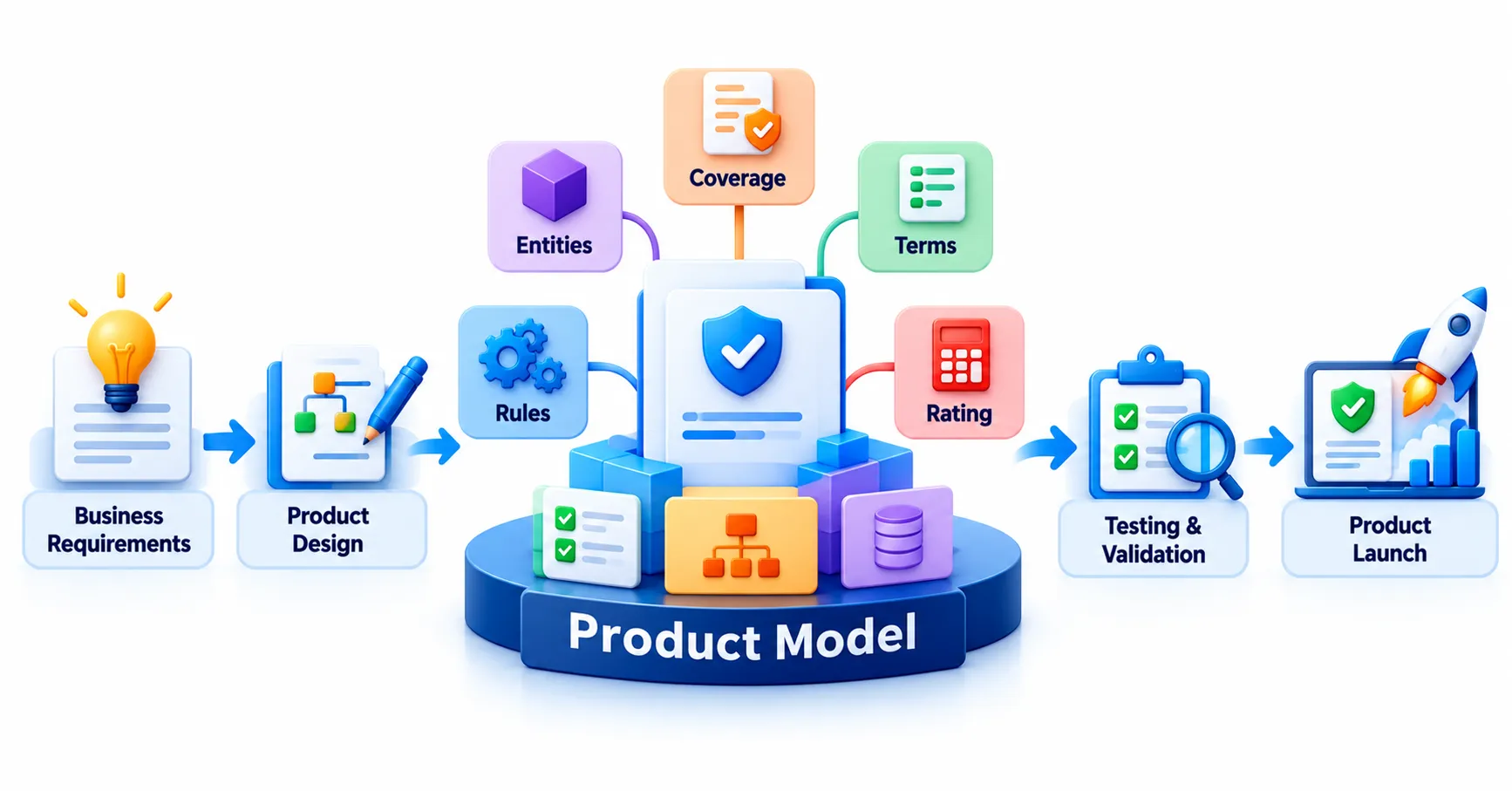
The product model is the structure that defines what an insurer sells. It describes a line of business, such as personal auto or commercial property, and the coverages inside it. Each coverage has terms like limits and deductibles, and each term has a set of allowed values.
Think of it as a blueprint. A business analyst can say “personal auto includes liability, collision and comprehensive, with these deductible options.” The product model captures that statement in a form the system can enforce on every quote, every renewal and every mid-term change.
Guidewire also provides a product designer tool for defining and maintaining this structure, and newer cloud releases extend it with more low-code product configuration. The exact tooling differs by version, so teams should check the release their client runs.
A well-built product model has a few practical benefits:
Business users and developers share one definition of the product
New coverage options can be added without rewriting core code
Validation happens consistently, no matter which screen or integration creates the policy
The common beginner mistake is modelling too literally. If every marketing variation becomes its own coverage, the model gets heavy and hard to maintain. Experienced modellers look for what really differs in the risk and the rules, and keep the rest as configuration.
Rating and Underwriting: Turning Rules into Prices and Decisions
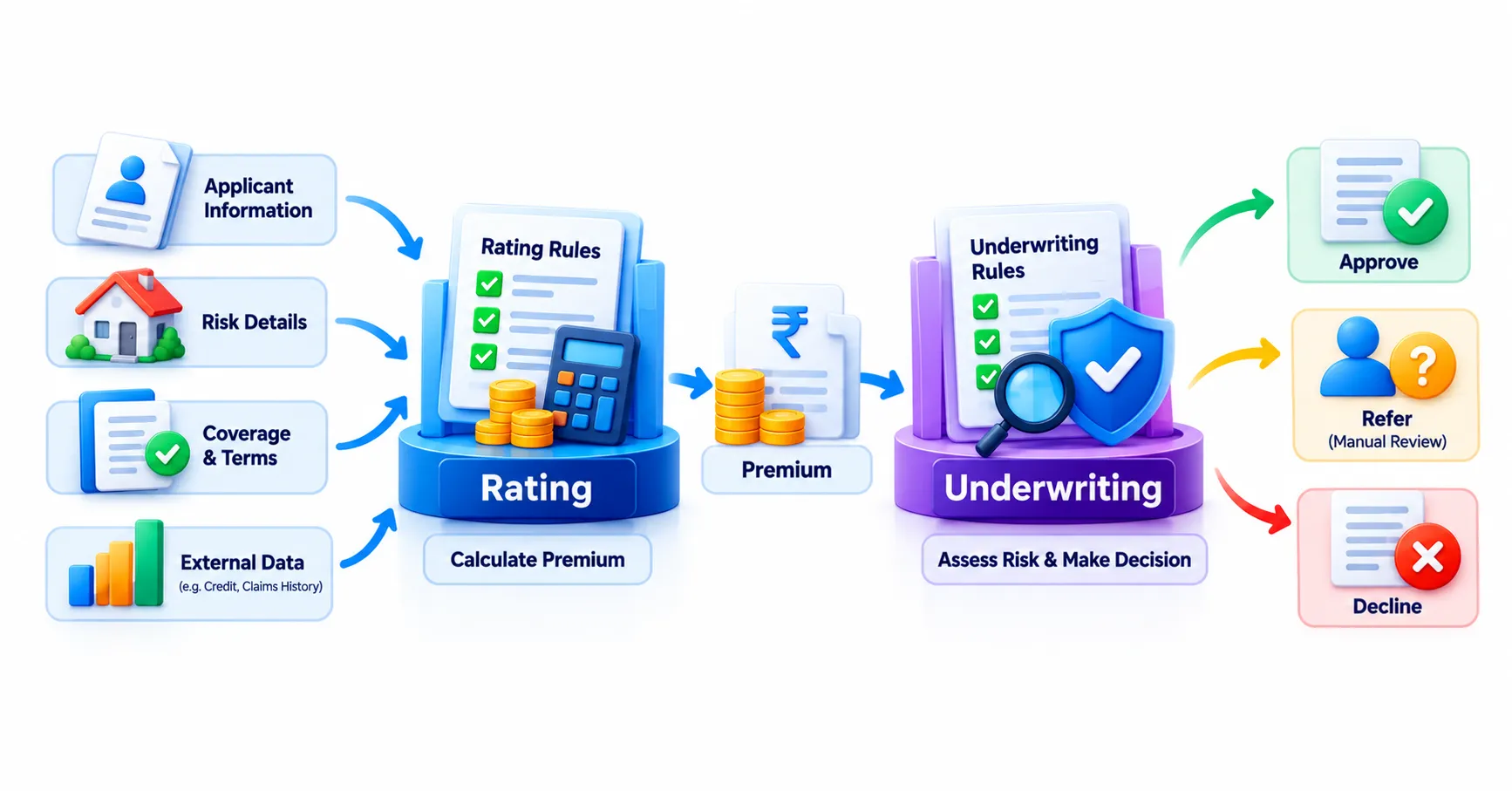
A product that cannot be priced is only a concept. PolicyCenter connects the product model to rating, where factors such as driver age, building construction or claims history are combined with rate tables to produce a premium. Insurers often keep these rates in structured tables, so actuarial changes do not have to mean code changes.
Underwriting rules sit beside rating. Some risks should be accepted automatically, some need a human to review them, and some should be declined. PolicyCenter lets teams define these checks so a submission that crosses a threshold is flagged for referral instead of quietly bound.
Picture a hypothetical commercial property product. A small shop in a standard building might be quoted straight through. A warehouse storing flammable goods might trigger an underwriting issue that needs senior approval. The product team decides where those lines fall, and the configuration enforces them.
This is also where product development gets collaborative. Actuaries own the rates, underwriters own the appetite, and analysts translate both into requirements. Developers then implement the logic and test it against real scenarios. PolicyCenter gives all of them one place where those decisions become visible and testable.
Gosu, PCF and Typelists: The Developer’s Everyday Toolkit
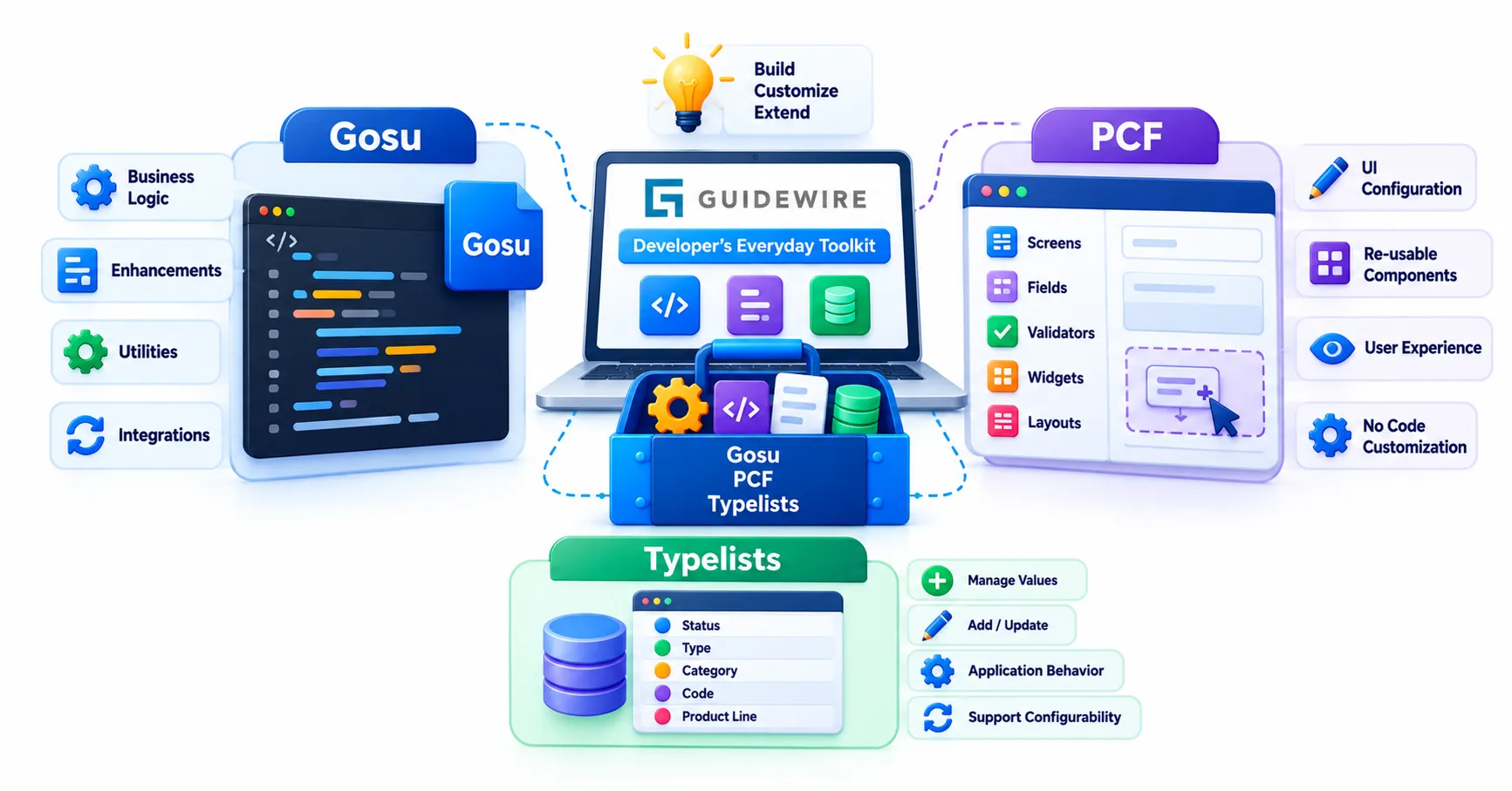
Not everything fits into the product model. Custom validation, conditional behaviour and integration hooks need code, and in PolicyCenter that code is usually written in Gosu, Guidewire’s own programming language. Gosu runs on the Java platform and reads fairly naturally to anyone with Java or similar experience.
The user interface is configured through PCF files, which define screens, fields and their behaviour. If a new product needs an extra question at quote time, a PCF change shows it and Gosu validates the answer.
Typelists handle controlled lists of values, such as policy types, payment methods or coverage categories. They keep data consistent across screens, rules and integrations.
A realistic example: a new homeowners product requires a roof-age question, but only when the property is older than a certain year. The model holds the field, a PCF change displays it conditionally, and a Gosu rule blocks the quote if the answer is missing. Each tool does one job, and the skill lies in knowing which tool fits.
Teams run into trouble when developers write Gosu for problems the product model could solve with configuration. Logic buried in code is harder for analysts to review and harder to change when the product evolves.
Effective Dating and Policy Changes Over Time
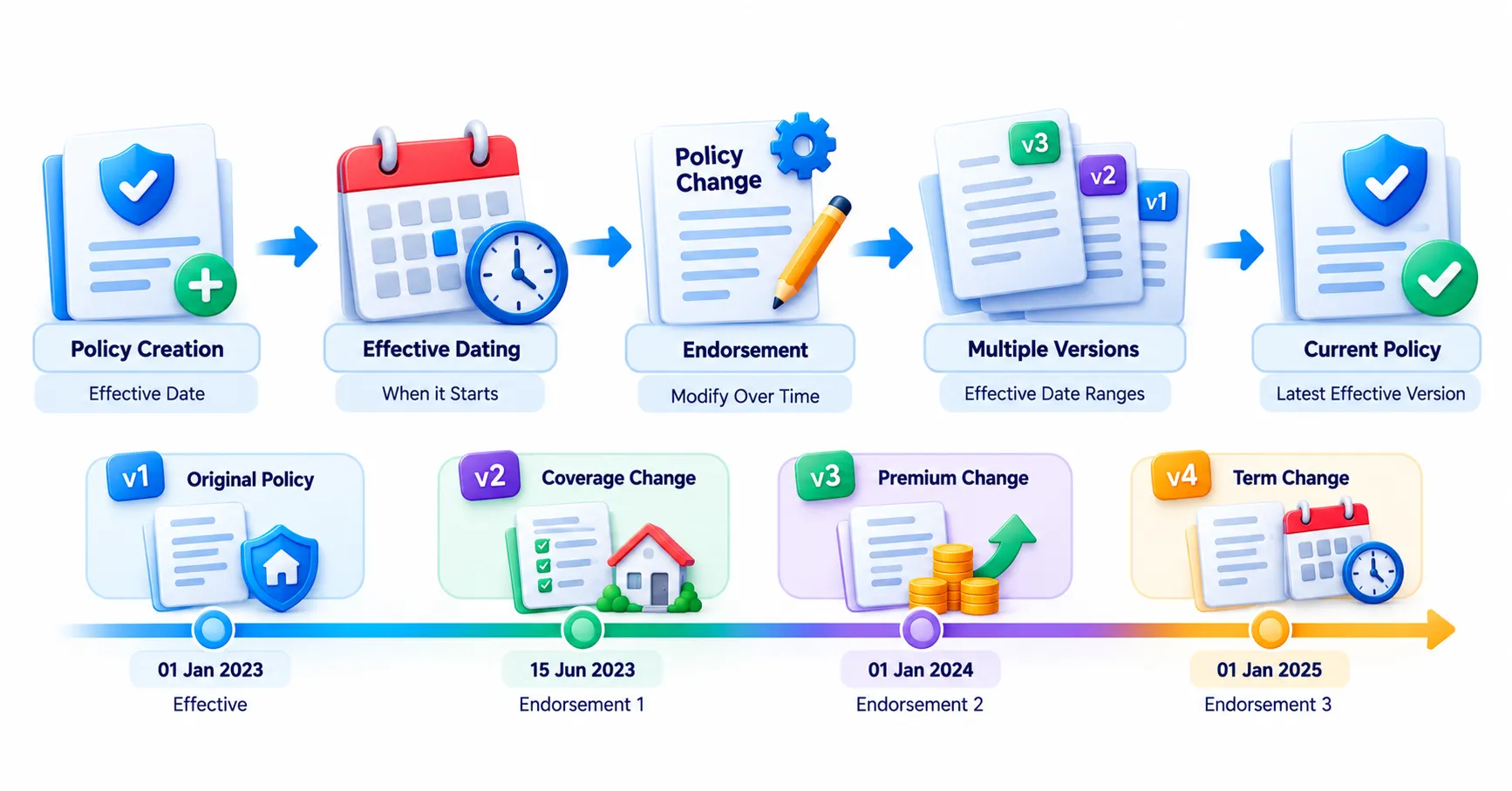
A product does not stop at the first sale. Customers add vehicles, change addresses, adjust coverage or cancel, and the system must always be able to say what was true on a given date. PolicyCenter handles this with effective dating, which records data against the period it applies to instead of overwriting it.
For product development, this matters because a product change must respect timing. If an insurer launches a revised coverage on 1 July, a policy renewing in June and one renewing in August should behave differently. The product model supports versioning by date so both can exist side by side.
The hardest cases involve changes that arrive late, such as an endorsement that must be applied to a date earlier than a change already processed. These out-of-sequence transactions force the system to recalculate and reconcile. A practical look at out-of-sequence transactions in PolicyCenter shows why these scenarios deserve attention during design, not after go-live.
Testing is where many teams discover gaps. A new product that works for a clean new-business quote can still fail on a mid-term change or a backdated cancellation. Good test plans cover the full transaction set: submission, policy change, renewal, cancellation, reinstatement and rewrite.
How Hyderabad Delivery Teams Put This into Practice
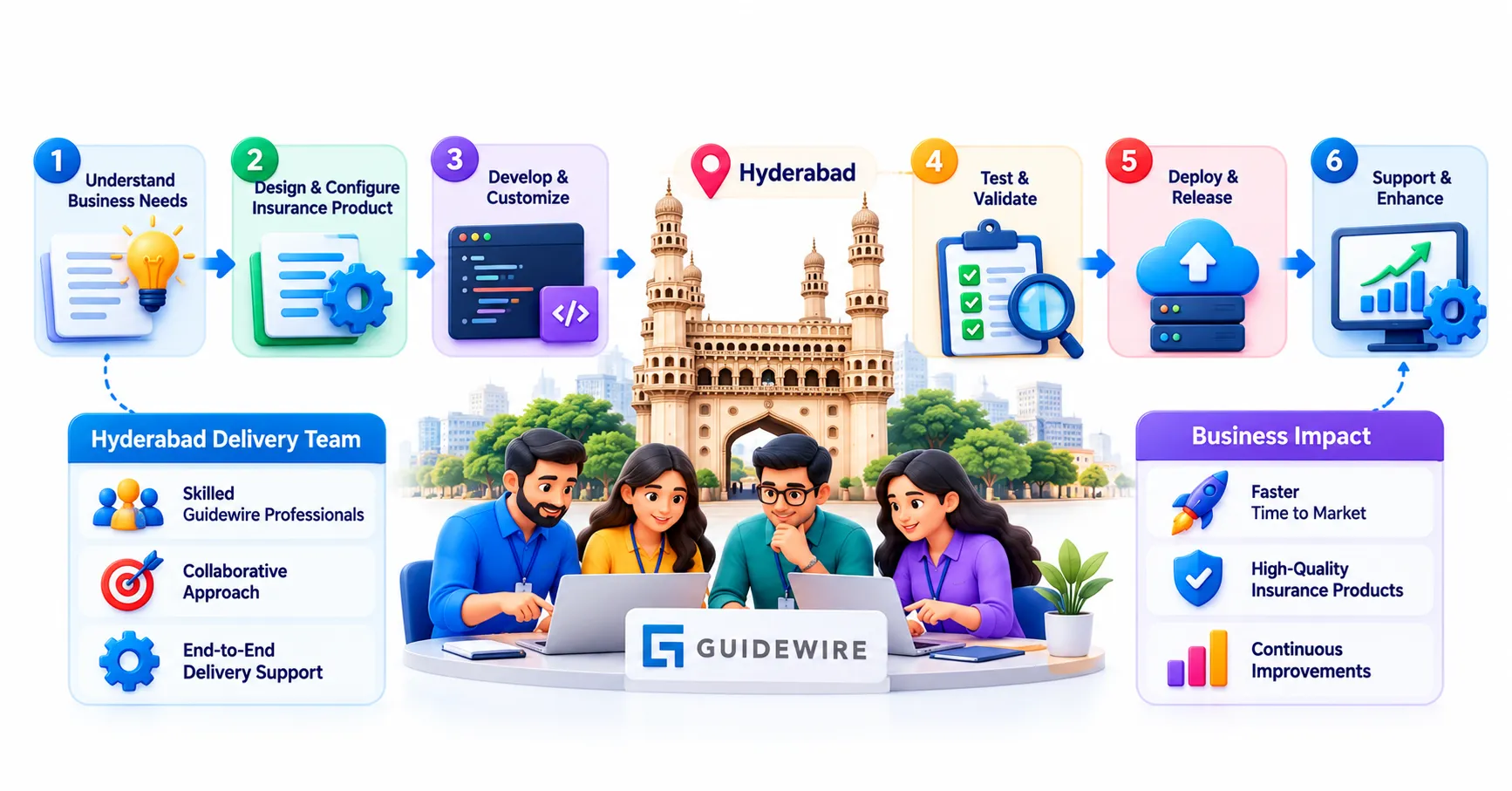
Hyderabad has a large base of technology and delivery centres, and insurance technology work is a natural part of that mix. Teams here typically work on implementations, upgrades and enhancements for insurers elsewhere, often across time zones.
A new product launch in this setting usually moves through familiar stages:
Business analysts gather product requirements and map them to the product model
Developers configure the model, rating and rules, and write Gosu where needed
QA engineers build scenarios covering normal and awkward transactions
The team deploys through test environments before release
Clear requirements are worth more than extra developer hours. A vague note like “support multiple deductible options” creates rework, while a table of allowed values per state gives developers something exact to build.
Communication across distributed teams matters just as much. Product decisions often come from the insurer’s business side, so analysts who can ask precise questions and document answers save the whole team time. Technical skill is necessary, but the people who understand both the insurance logic and the configuration usually become the most valuable on a project.
Building the Skills to Work on PolicyCenter Products in Hyderabad
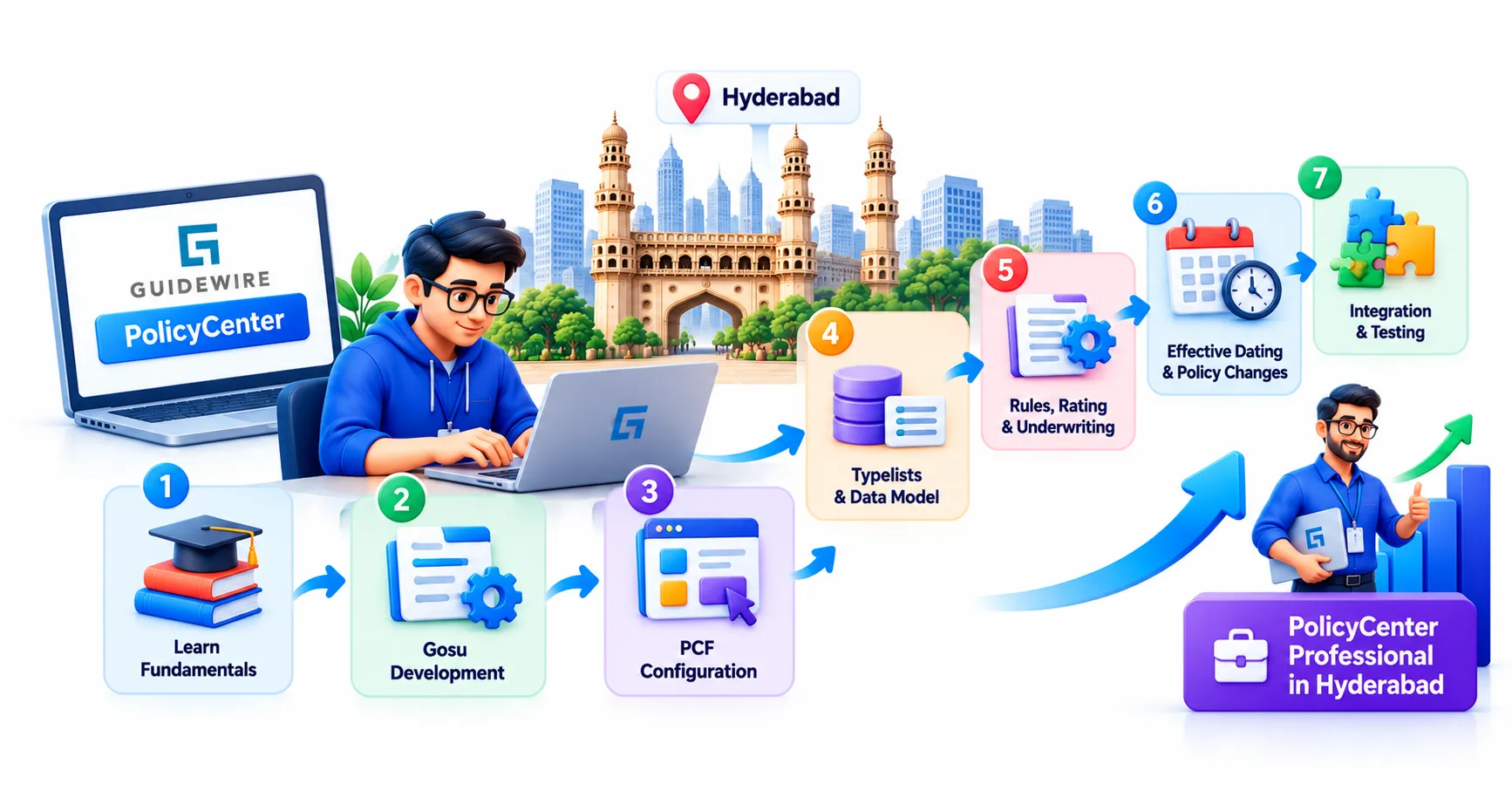
Anyone aiming for a role on PolicyCenter product work should start with the insurance basics: how policies, coverages, premiums and endorsements fit together. Without that, the product model looks like abstract configuration. With it, the structure makes sense quickly.
From there, the learning path is fairly clear. Learn the product model, then rating and underwriting rules, then Gosu, PCF and typelists, and finally effective dating and transaction types. Hands-on practice matters more than reading, so build a small product and run it through a quote, a change and a renewal.
Structured programs can shorten that path. Guidewire PolicyCenter training covers these areas with practical exercises, and JastTech teaches them with an emphasis on how the pieces connect in real project work.
Be realistic about the timeline. Product configuration looks simple in a demo, but the awkward edge cases take time and repeated practice to learn. Learners who work through those cases, instead of stopping at the happy path, tend to be better prepared for interviews and real projects.
Conclusion
Insurance products succeed when the business rules behind them are modelled clearly, priced correctly and tested across the whole policy lifecycle. Guidewire PolicyCenter gives teams a structured way to do that, and for professionals in Hyderabad it is a practical skill set tied to real project demand. Learn the product model well, and the rest of PolicyCenter becomes much easier to understand.