

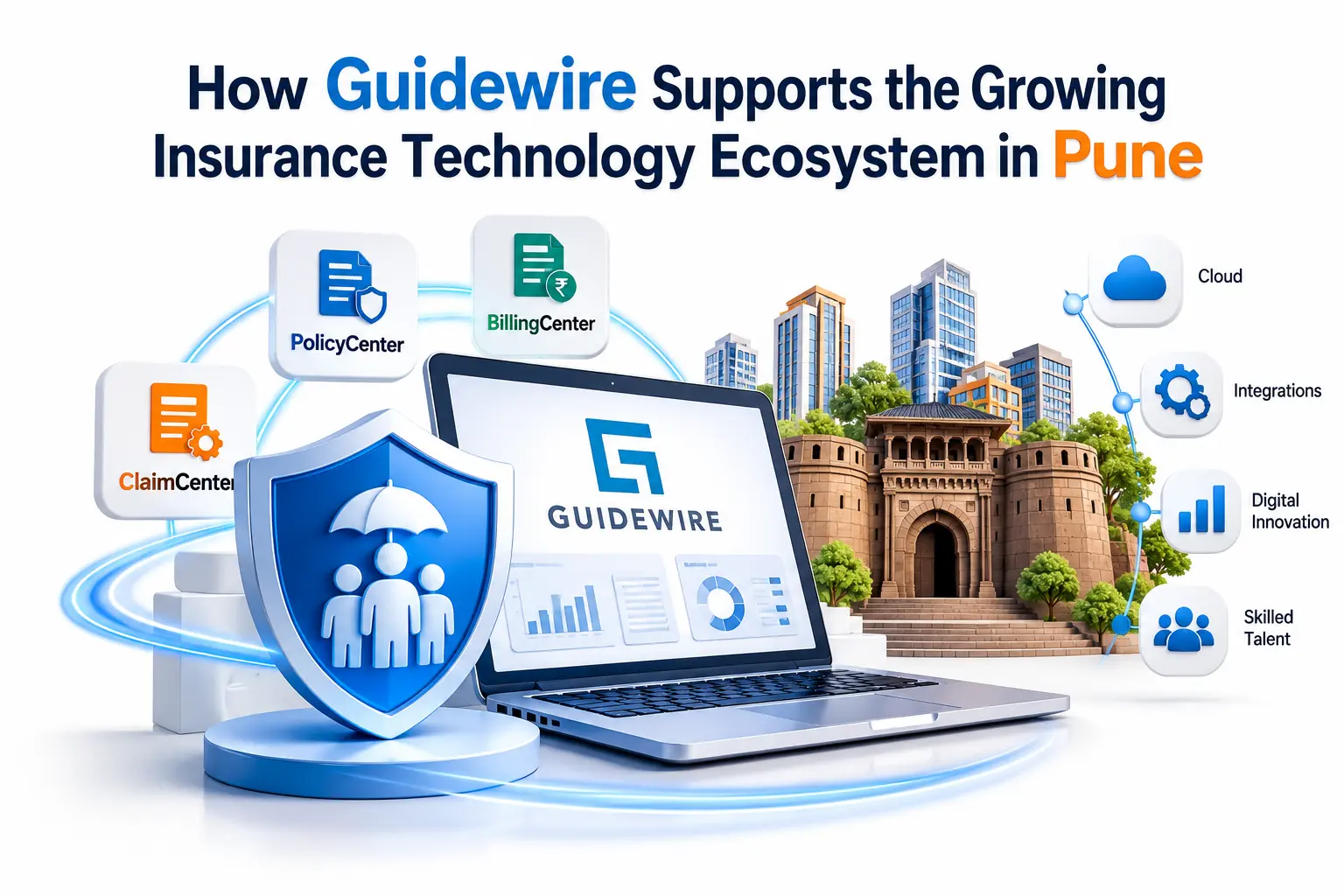
How Guidewire Supports the Growing Insurance Technology Ecosystem in Pune
Navigate through this article using the table of contents below
Table of Contents
No headings found in this article.
Pune is no longer simply an IT delivery location. A deeper insurance-technology ecosystem is taking shape as insurers, technology companies, consulting teams and digital specialists work on increasingly sophisticated platforms. At the centre of many P&C transformation programs sits a technology worth understanding: Guidewire.
What makes this important is not merely demand for another enterprise software skill. Guidewire connects insurance knowledge with cloud, APIs, digital experiences, data and software engineering. For Pune’s technology workforce, that combination is creating a specialized intersection between insurance operations and modern engineering.
Pune Is Developing the Right Environment for Insurance Technology
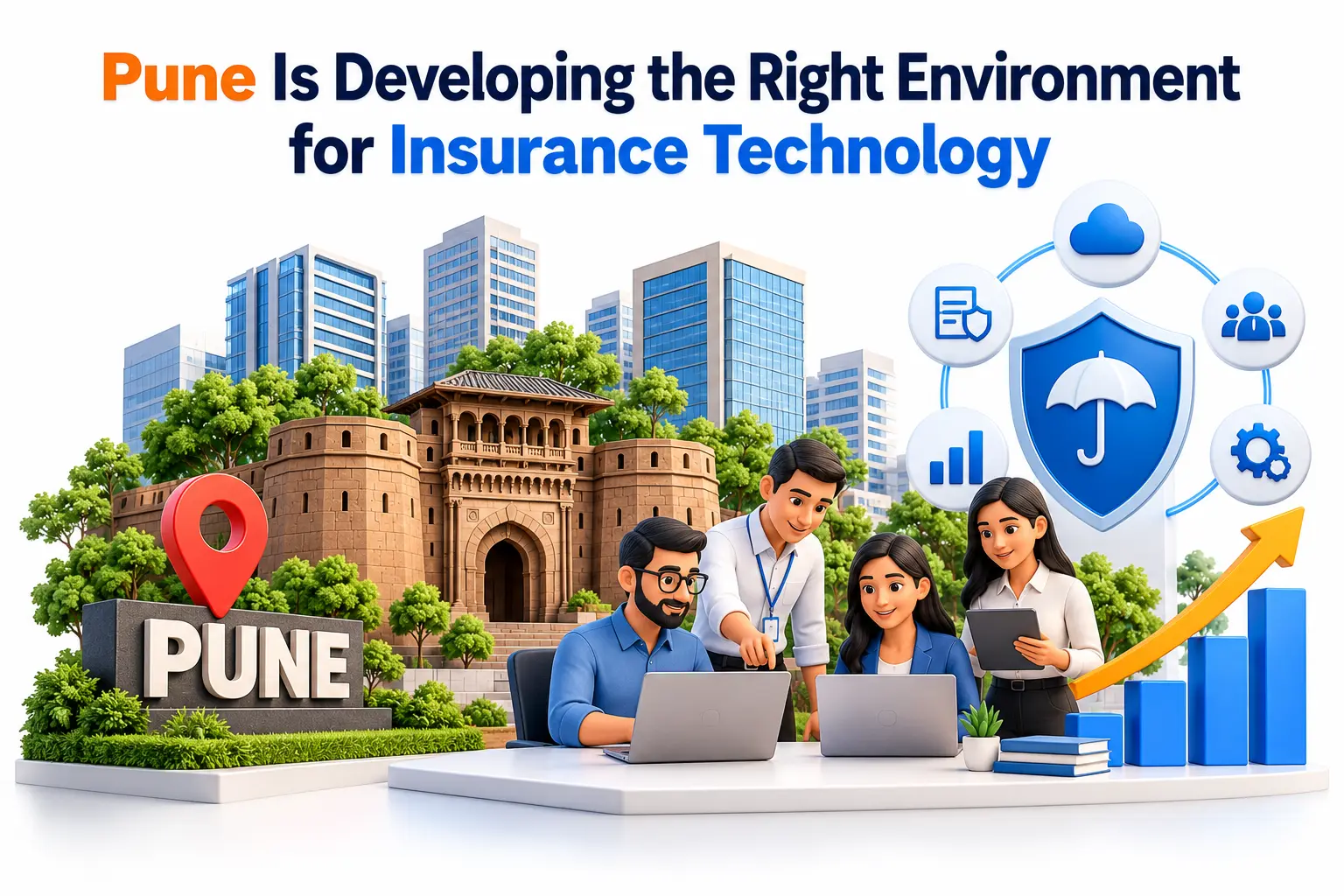
Pune already has the ingredients required for insurance technology to grow: a large IT workforce, enterprise delivery centres, consulting capabilities, software engineering talent and access to graduates from engineering and technology institutions. Insurance adds another layer because transformation projects require both technical expertise and knowledge of complex business processes.
Insurance technology is also becoming broader than traditional policy administration. Modern projects can involve digital distribution, automated underwriting, claims intelligence, cloud platforms, customer portals, analytics and connections with external services. Pune-based companies are already operating across parts of this landscape, making the city relevant to both enterprise insurance transformation and emerging InsurTech development.
This creates an environment where different capabilities can reinforce one another:
Insurance domain and business analysis
Enterprise application engineering
Cloud and DevOps practices
API and integration development
Testing and automation
Data and analytics
Digital customer experiences
Guidewire becomes particularly relevant because many of these capabilities meet around the core insurance platform.
Guidewire Creates the Digital Core Behind Insurance Operations
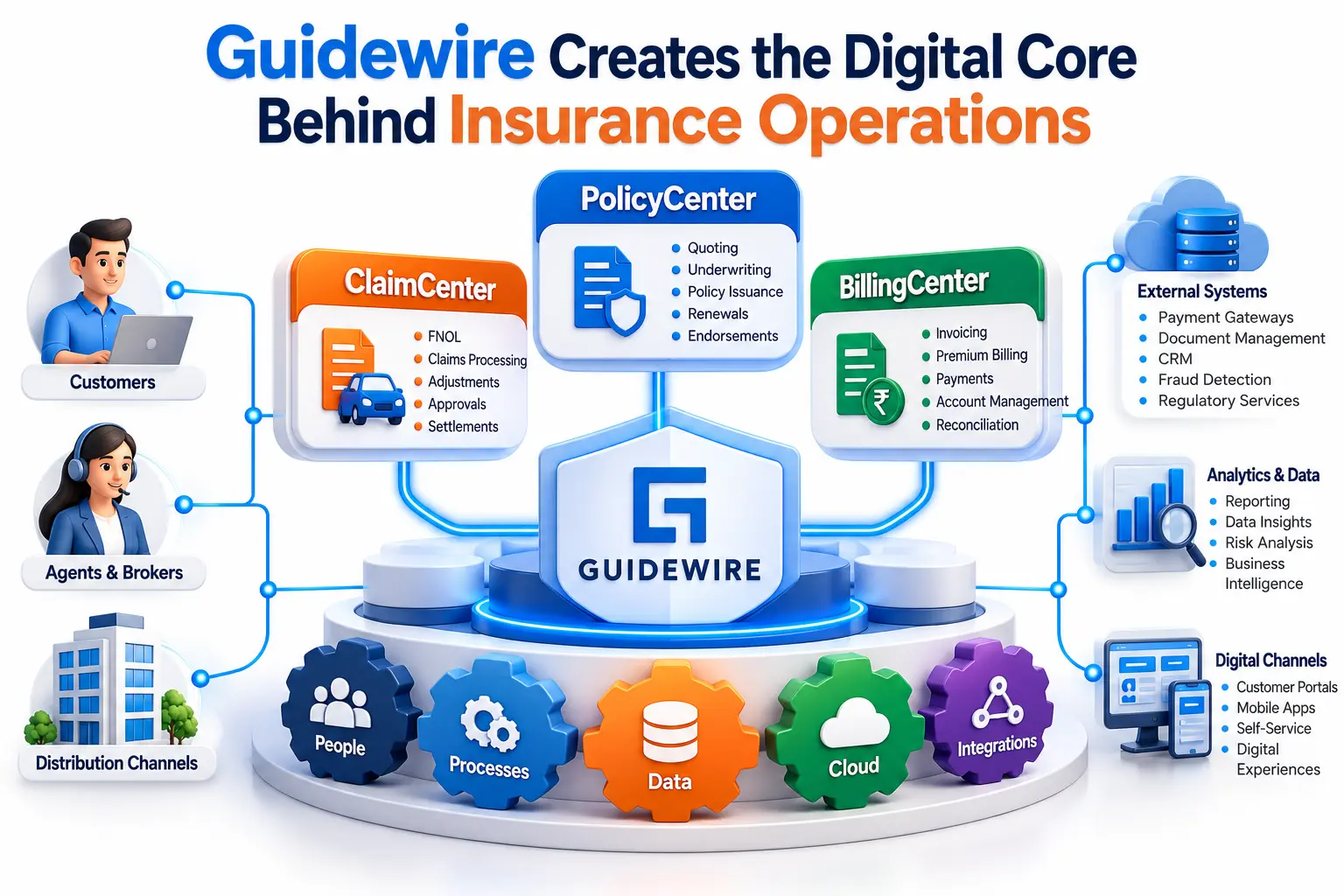
An insurer cannot modernize effectively if its critical policy, billing and claims processes remain disconnected or difficult to change. Guidewire InsuranceSuite addresses these core functions through PolicyCenter, BillingCenter and ClaimCenter.
PolicyCenter supports policy administration processes such as quoting, underwriting, issuance, endorsements and renewals. BillingCenter handles billing-related workflows, while ClaimCenter supports the claims lifecycle. Together, they give technology teams a structured foundation on which wider insurance experiences can be developed.
The real value, however, is not simply replacing screens or databases. A Guidewire implementation requires teams to translate insurance rules into reliable software behavior. For example, a motor-insurance change may affect rating, policy transactions, documents, billing, external integrations and testing.
That creates work for multiple specialists—business analysts, configuration developers, integration engineers, QA professionals, architects and support teams. For Pune, this matters because Guidewire projects can support an entire delivery capability rather than one isolated developer role.
Cloud and Integration Are Expanding the Guidewire Skill Landscape
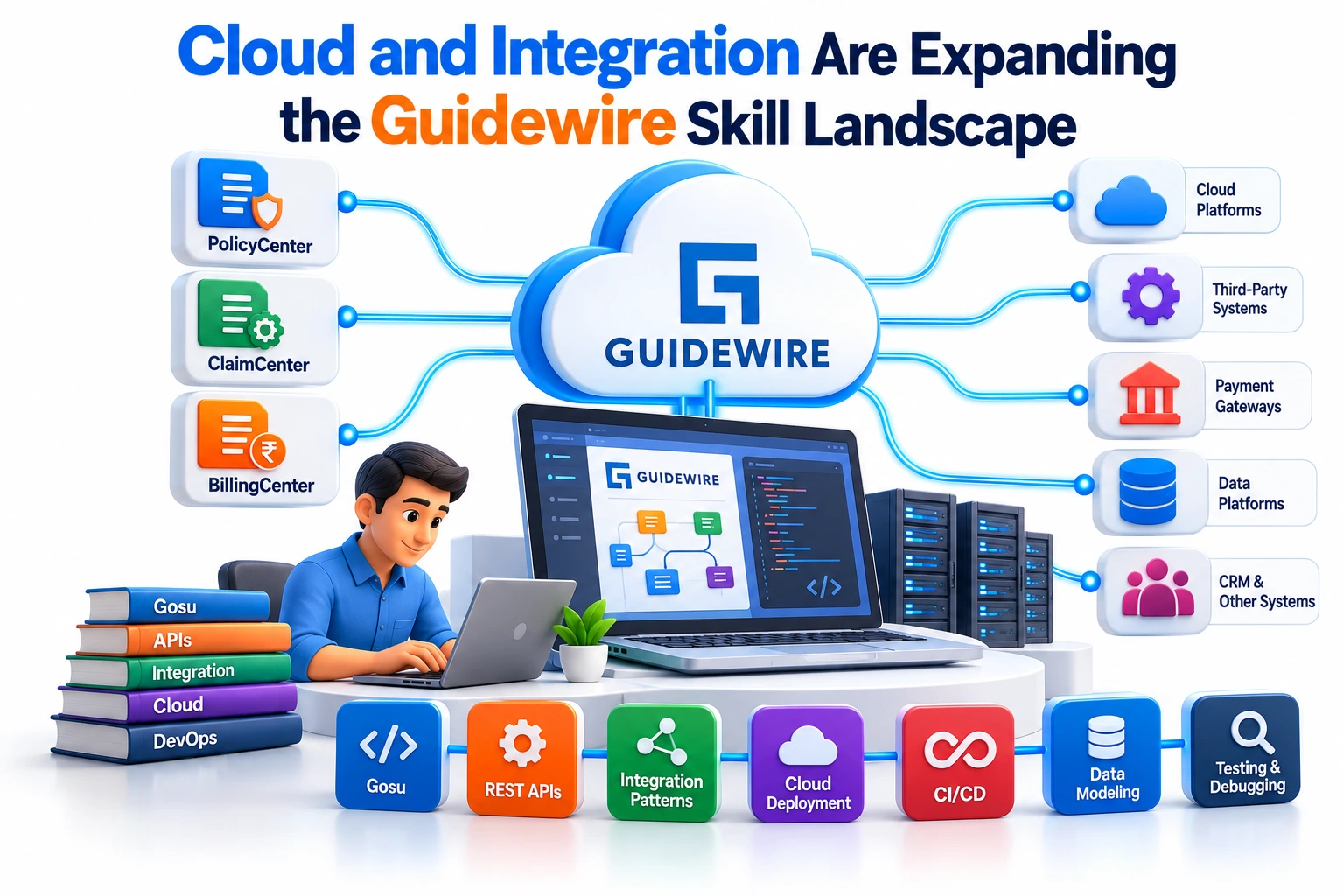
Guidewire work is increasingly connected with cloud architecture and external systems. An insurer may need its core platform to communicate with payment services, document systems, CRM applications, fraud solutions, regulatory services, digital portals and data platforms.
That changes what companies need from technical professionals. Knowing only basic configuration may not be sufficient for complex projects. Teams increasingly benefit from understanding REST APIs, JSON, messaging, authentication, integration patterns, debugging, CI/CD and cloud deployment alongside Guidewire concepts.
For learners evaluating guidewire training in india, this is an important distinction. Training should build understanding of complete insurance workflows rather than encourage memorization of isolated product features. Similarly, a guidewire course in pune becomes more valuable when practical work connects configuration, Gosu, APIs, data models, testing and troubleshooting around a realistic business requirement.
This is also where institutes such as JastTech can contribute to the local talent ecosystem by emphasizing project-oriented learning and helping learners understand how technical components interact across an insurance implementation.
Guidewire Helps Connect Core Insurance With Pune’s InsurTech Innovation
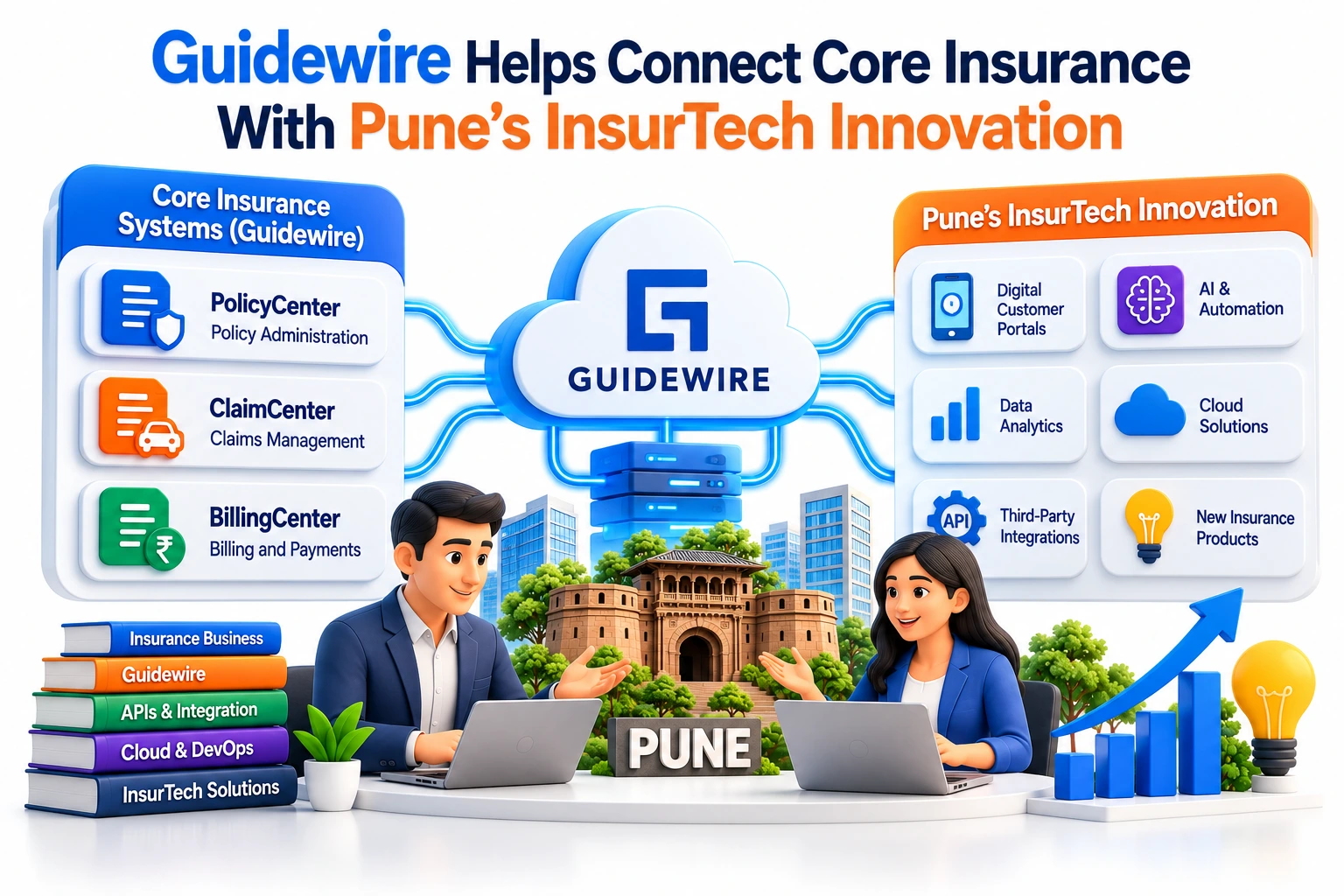
InsurTech often attracts attention through AI, mobile applications, embedded insurance, automation or analytics. Yet innovative customer-facing technology still needs dependable access to policies, claims, billing information and insurance business rules.
This is where core platforms and InsurTech solutions can complement each other. Guidewire does not need to perform every specialized function itself. Through APIs, integrations and its broader technology ecosystem, insurers can connect the core platform with specialized capabilities.
Consider a digital claims experience. A customer could report an accident through a mobile interface. External services might validate documents, analyze images or perform fraud checks. Guidewire can remain part of the core claims workflow while those specialized systems perform their respective functions.
This architecture creates opportunities for Pune teams working across:
API development and orchestration
Digital insurance portals
Claims automation
Third-party service integration
Cloud engineering
Insurance data processing
The result is an ecosystem in which core insurance expertise and newer technology skills increasingly overlap.
Pune’s Guidewire Opportunities Are Becoming More Specialized

One of the clearest signs of ecosystem maturity is specialization. Current Pune opportunities are not limited to a generic “Guidewire Developer” profile. Roles can focus on PolicyCenter, ClaimCenter, BillingCenter, configuration, integration, testing, cloud implementation, digital portals and architecture.
This changes how professionals should prepare. A strong foundation starts with understanding the insurance lifecycle: how a customer receives a quote, how underwriting decisions are made, how a policy is issued, how premiums are billed and how claims are processed.
Technical depth can then be built around a particular direction. A configuration professional may concentrate on Gosu, data models, business rules and application behavior. An integration developer needs stronger API, messaging and external-system knowledge. Digital specialists may combine Guidewire with React-based experiences, while senior engineers increasingly need cloud, architecture and deployment knowledge.
The strongest professionals therefore understand both what the insurer is trying to accomplish and how the platform delivers it. That combination is harder to replace than tool knowledge alone.
The Next Stage Will Be About Complete Insurance Engineering Skills
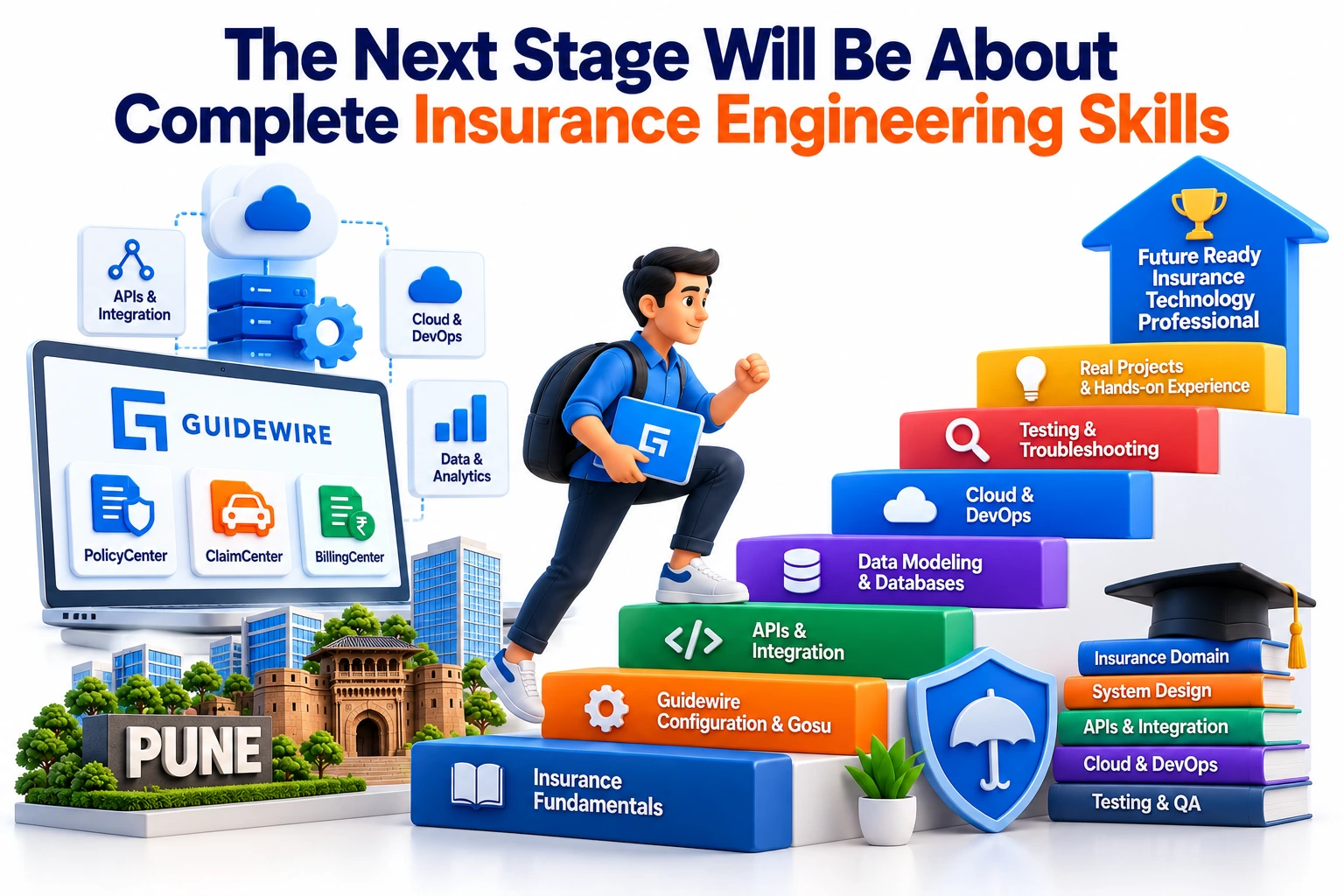
Guidewire’s role in Pune’s ecosystem should not be viewed only through current vacancies. The larger trend is toward insurance platforms that are connected, cloud-oriented and easier to extend with digital services, analytics and emerging AI capabilities.
That means career preparation must evolve as well. Instead of asking, “Which Guidewire module should I learn?” professionals can ask, “Which part of insurance technology can I become capable of delivering?”
A practical roadmap is:
Learn P&C insurance fundamentals and terminology.
Understand PolicyCenter, ClaimCenter and BillingCenter responsibilities.
Develop Gosu, configuration and data-model fundamentals.
Learn REST APIs, JSON, messaging and integration patterns.
Practice debugging and testing complete workflows.
Understand Git, CI/CD and cloud delivery concepts.
Build projects that start with business requirements and end with tested solutions.
That broader engineering mindset will become increasingly important as Pune moves from providing technology resources toward owning larger portions of insurance transformation programs.
Conclusion
Guidewire supports Pune’s insurance technology ecosystem because it creates a bridge between two areas in which the city has strong potential: enterprise software engineering and domain-focused digital transformation. Policy administration, billing and claims provide the core, while cloud, APIs, integrations, data and digital experiences expand what can be built around it.
For students and professionals, the opportunity is therefore larger than learning another enterprise platform. The valuable skill set is the ability to understand an insurance problem, translate it into Guidewire functionality, connect the required systems, test the complete workflow and support it reliably in production. As Pune’s insurance-tech ecosystem develops, professionals who combine platform expertise with this broader engineering perspective will be positioned for the most meaningful roles.