


How to Become a Guidewire ClaimCenter Developer
Navigate through this article using the table of contents below
Table of Contents
No headings found in this article.
Picture this: an insurance claim that used to take three weeks to process now clears in three days — and somewhere behind that speed is a developer who built the system making it happen. That's the quiet power of working with Guidewire ClaimCenter.
Insurance is going digital fast, and companies are scrambling to find people who can build, customize, and maintain claims platforms. If you're curious whether this niche but high-demand career path is worth chasing, stick around — by the end of this blog, you'll know exactly what it takes to get there.
What Does a Guidewire ClaimCenter Developer Actually Do?
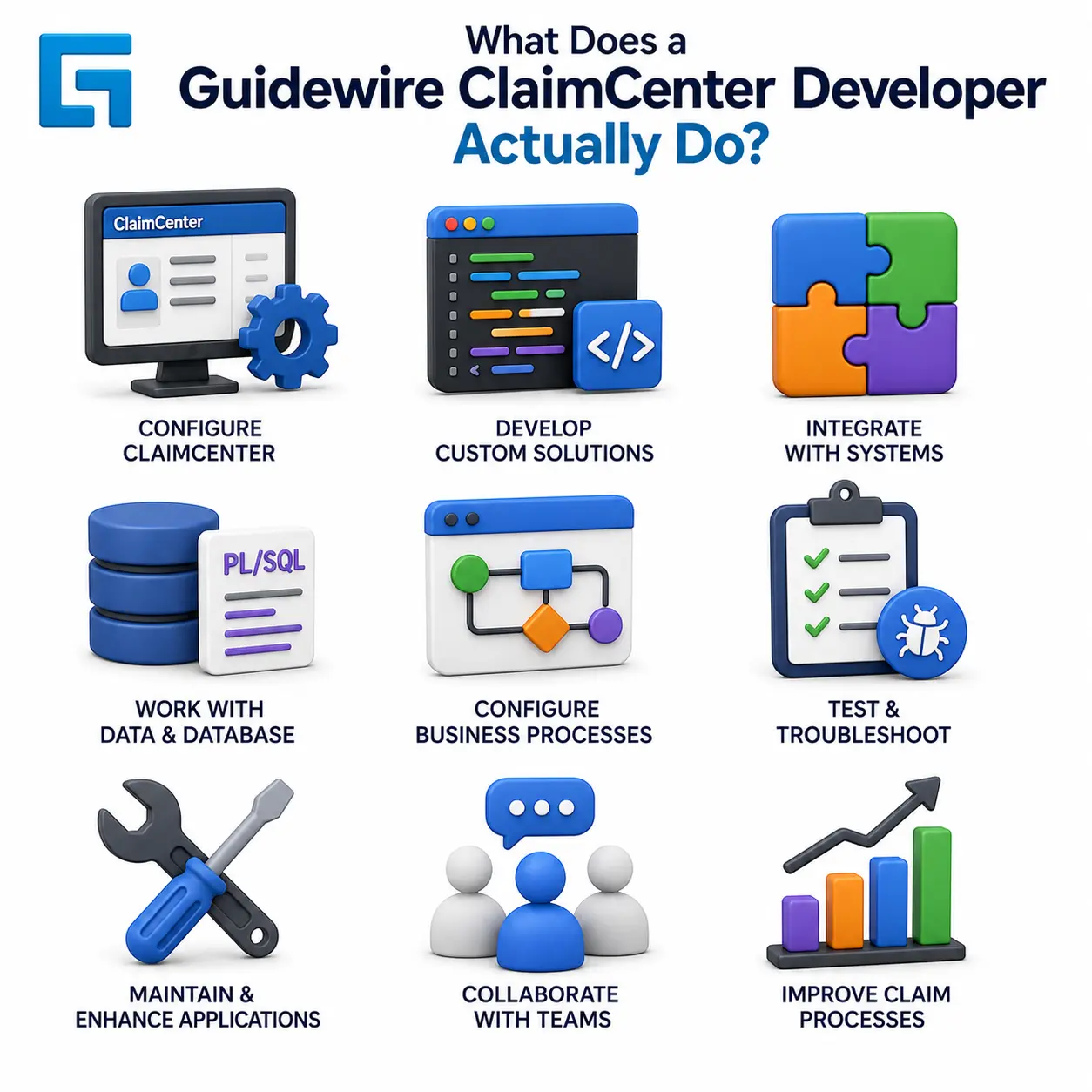
Before chasing the title, it helps to understand what sits behind it. A Guidewire ClaimCenter developer builds and customizes the software insurance companies use to manage claims — from the moment a policyholder reports an incident to the final payout. This isn't just backend coding. It involves configuring business rules, designing workflows, integrating third-party systems, and writing code in Gosu, Guidewire's proprietary scripting language.
Understanding Guidewire ClaimCenter Developer job roles is the first step to planning your career. Typical responsibilities include developing new features within ClaimCenter, customizing existing modules to fit an insurer's specific claims process, fixing bugs, writing unit tests, and collaborating with business analysts to translate insurance workflows into functional software. Some developers specialize in configuration, others in integration, and senior developers often move into architecture roles where they design how ClaimCenter connects with policy and billing systems. Knowing this range helps you figure out where you might eventually specialize.
It also helps to know that these roles rarely exist in isolation. Most Guidewire developers work inside cross-functional teams that include QA engineers, scrum masters, and insurance domain experts, so the job is as much about collaboration as it is about writing clean code. Entry-level roles usually focus on configuration and bug fixes under supervision, while mid-level developers take ownership of entire modules. By the time you reach a senior role, you're often the person other developers turn to when a claims workflow breaks in production and needs a same-day fix.
The Skills That Separate Good Developers from Great Ones
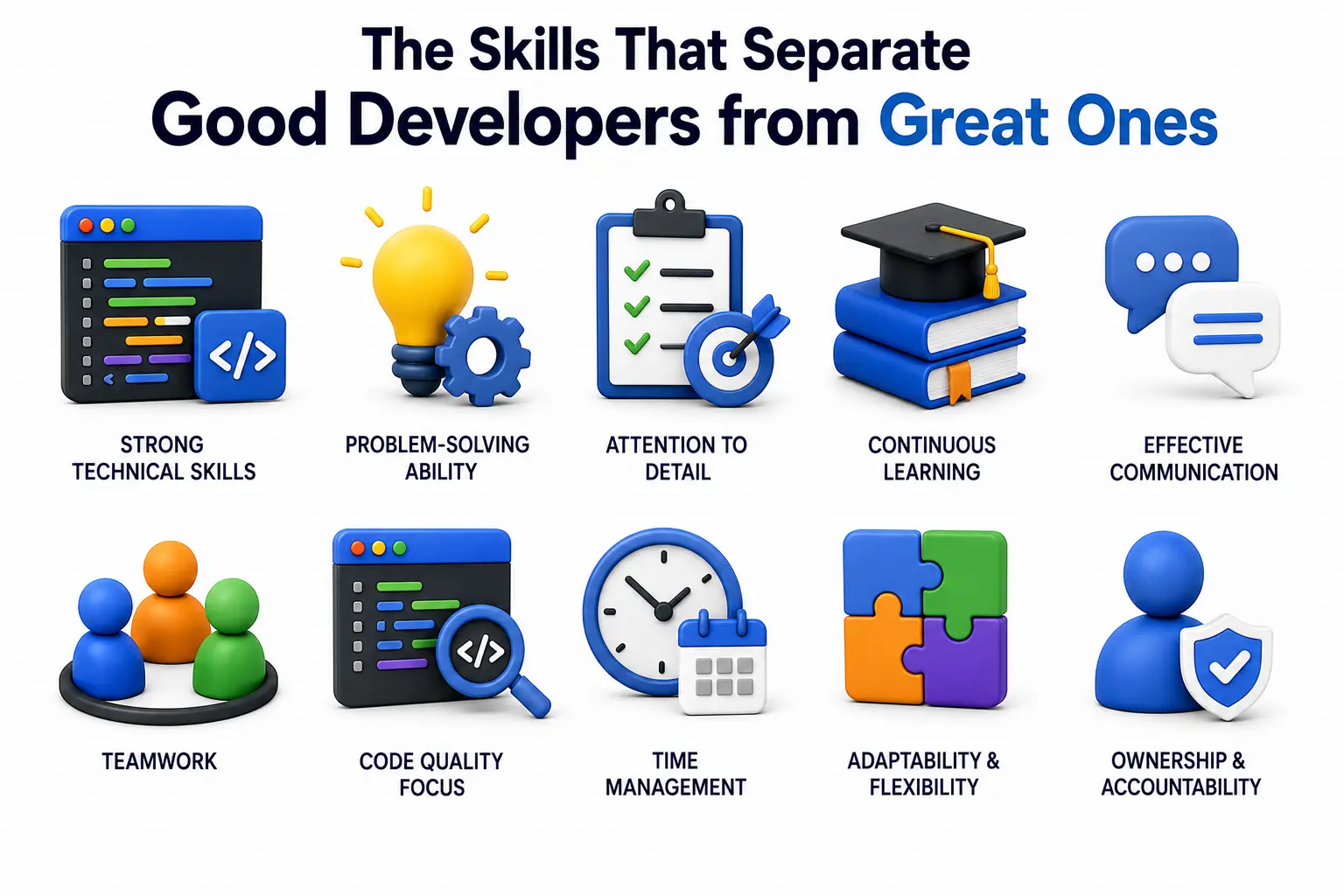
Not every developer who touches ClaimCenter becomes genuinely valuable to a team — the difference usually comes down to a specific skill set. If you're wondering what Guidewire ClaimCenter Developer skills required for the job actually look like, here's the honest breakdown.
Core technical skills include Java (since Gosu is built on top of it), XML, SQL, and web services like SOAP and REST for integrations. You'll also need to get comfortable with ClaimCenter's data model, its rules engine, and its workflow configuration tools. Beyond the technical side, insurance domain knowledge matters more than most people expect — understanding how claims, policies, and underwriting connect will make you far more effective than someone who only knows the code. Soft skills count too: debugging production issues under pressure, communicating with non-technical stakeholders, and reading business requirements carefully are what separate developers who get promoted from those who stay stuck at the same level.
It's also worth building familiarity with version control tools like Git, since most Guidewire teams work in agile sprints with regular code reviews. Exposure to cloud platforms is becoming increasingly valuable too, as more insurers migrate their Guidewire instances to cloud-hosted environments. And don't underestimate the value of patience — configuration-heavy platforms like ClaimCenter reward developers who read documentation carefully and test thoroughly rather than those who rush to ship a quick fix.
Mapping Your Learning Path: From Beginner to Guidewire Pro
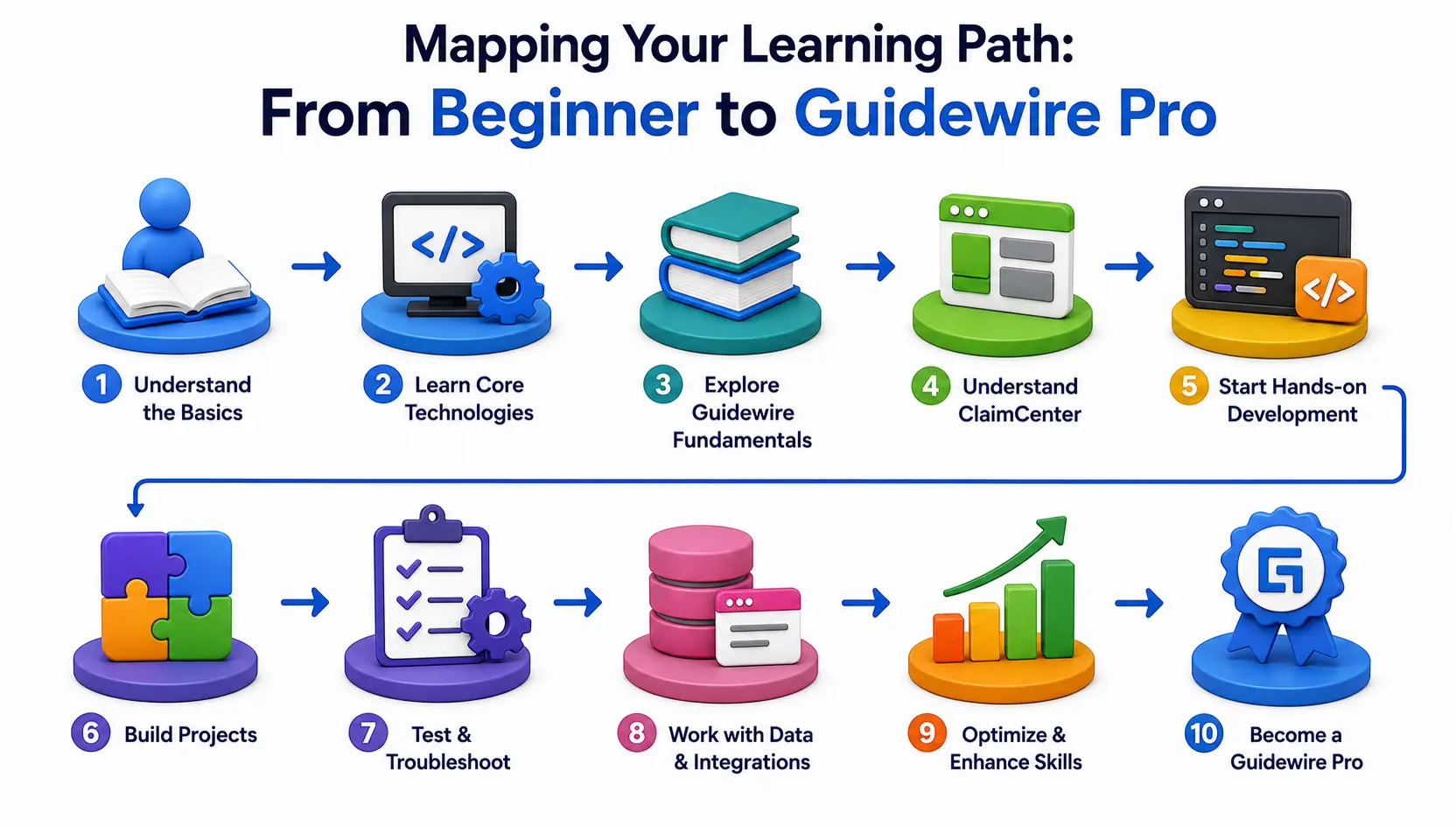
So how do you actually acquire all this? This is where structured Guidewire ClaimCenter Developer training comes in, and it's smarter to follow a sequence rather than jumping around randomly.
Start with the fundamentals of Java and object-oriented programming if you don't already have them — this is non-negotiable since Gosu syntax closely mirrors Java. From there, move into Guidewire-specific training, which typically covers the ClaimCenter application architecture, PCF (Page Configuration File) development, business rules, and data model customization. Many aspiring developers take official Guidewire training courses, while others build foundational knowledge through self-paced platforms and then supplement it with hands-on practice in a sandbox environment. The key is not to rush — spend real time understanding how the platform's different layers interact before jumping into complex customizations. Developers who skip this groundwork often struggle later when debugging deeply nested configuration issues.
A good rule of thumb is to allocate roughly three to six months for structured learning before you feel ready to apply for junior roles, though this varies depending on your existing programming background. Pace yourself through small milestones: first get comfortable navigating Guidewire Studio, then practice writing simple business rules, and only after that move into integration exercises. Joining online communities and forums dedicated to Guidewire developers can also accelerate your learning, since real practitioners often share troubleshooting tips you won't find in official documentation.
Certifications Worth Your Time and Effort
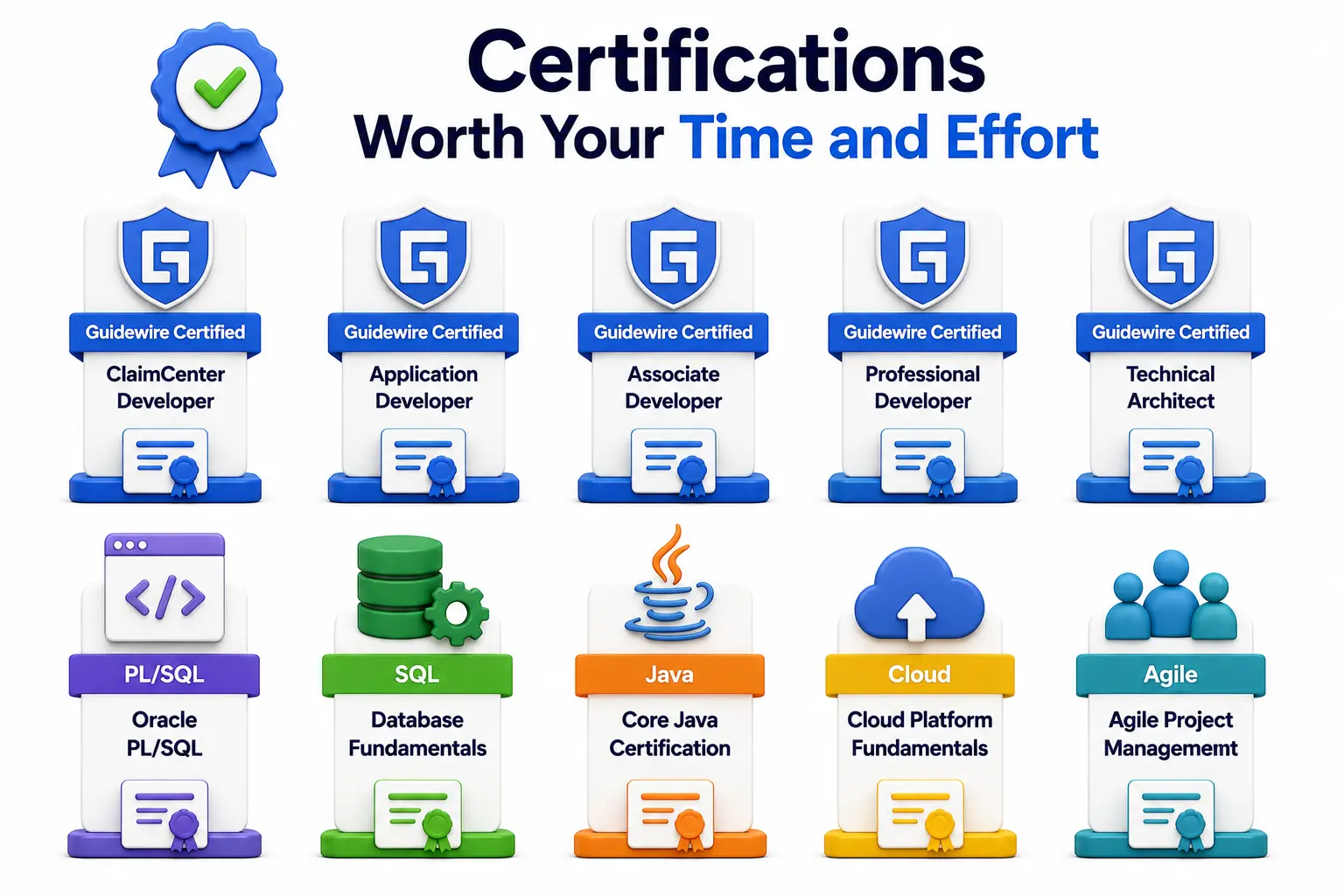
Once you've built a working knowledge of ClaimCenter, certification becomes your proof of credibility to employers. Guidewire offers official certification tracks, including the Guidewire Certified Associate and more advanced Specialist-level exams focused specifically on ClaimCenter.
These certifications validate that you understand core configuration, integration, and development concepts — and recruiters actively filter for them when screening candidates. While certification alone won't guarantee a job, it does two things well: it forces you to study the platform systematically, and it signals to hiring managers that you've invested seriously in this niche. Pair your certification with a portfolio of practice projects, since employers want to see applied skill, not just exam scores.
Getting Real Experience Before Your First Official Job
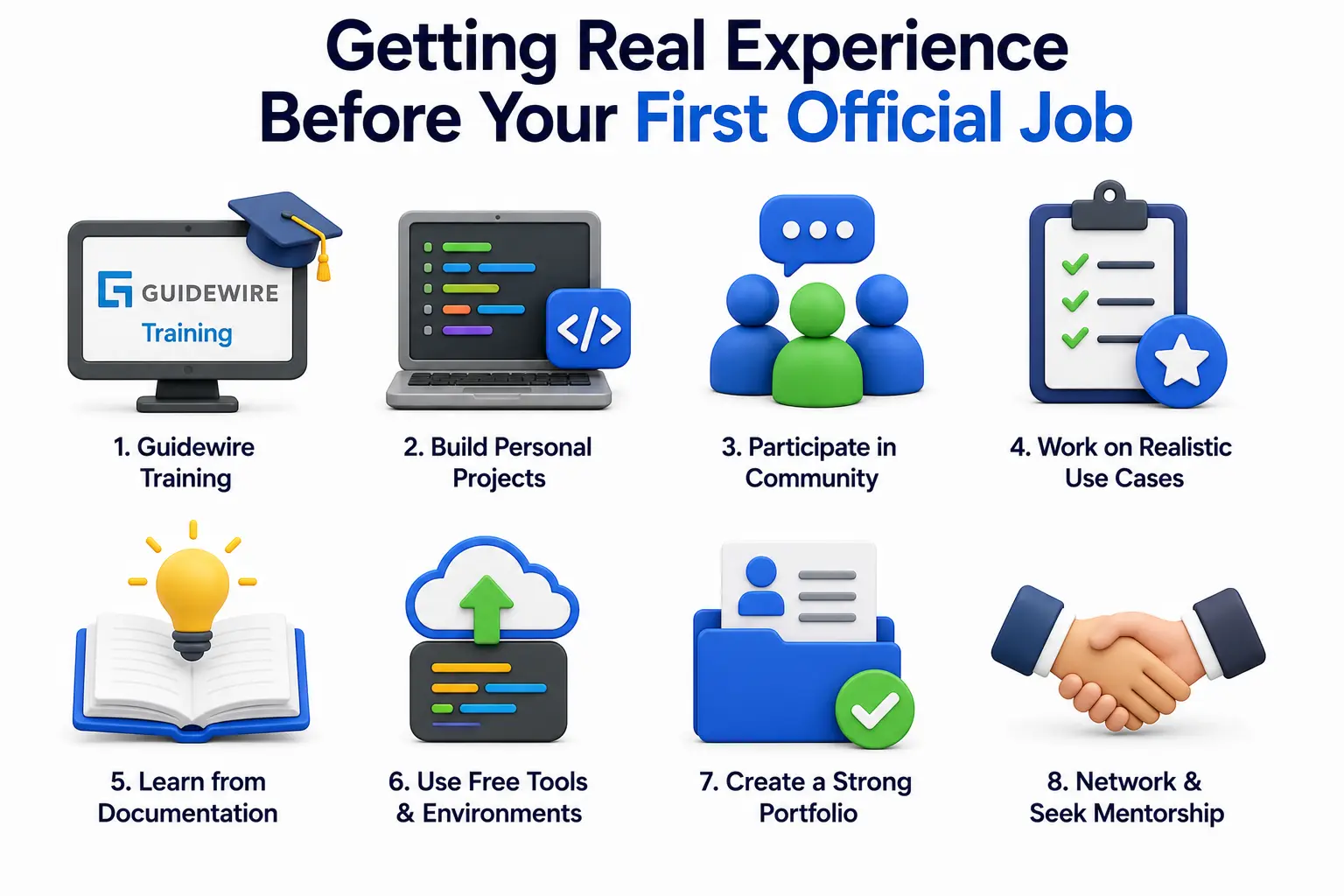
Here's the catch most beginners face: companies want experienced developers, but you can't get experience without a job. Breaking this cycle requires some creativity.
Look for internship programs at insurance technology consulting firms, since many of them train fresh graduates specifically on Guidewire products because demand outpaces supply. If internships aren't available, build your own practice projects using a Guidewire trial or sandbox environment — configure a mock claims workflow, integrate a sample third-party API, or customize screens using PCF. Document this work clearly, because a well-explained personal project often carries more weight in interviews than a vague line on a resume. Freelance or contract-based entry points also exist, particularly through insurance IT staffing agencies that specifically recruit and train Guidewire talent.
Networking plays a bigger role here than in many other tech fields, simply because the Guidewire developer community is smaller and tighter-knit. Attending virtual meetups, following Guidewire-focused groups on LinkedIn, and reaching out to working developers for informational chats can open doors that job boards never will. Many hiring managers in this space would rather train a motivated beginner with a solid sandbox project than hire someone with a generic resume and no demonstrable Guidewire exposure.
Career Growth: Where This Specialization Can Take You
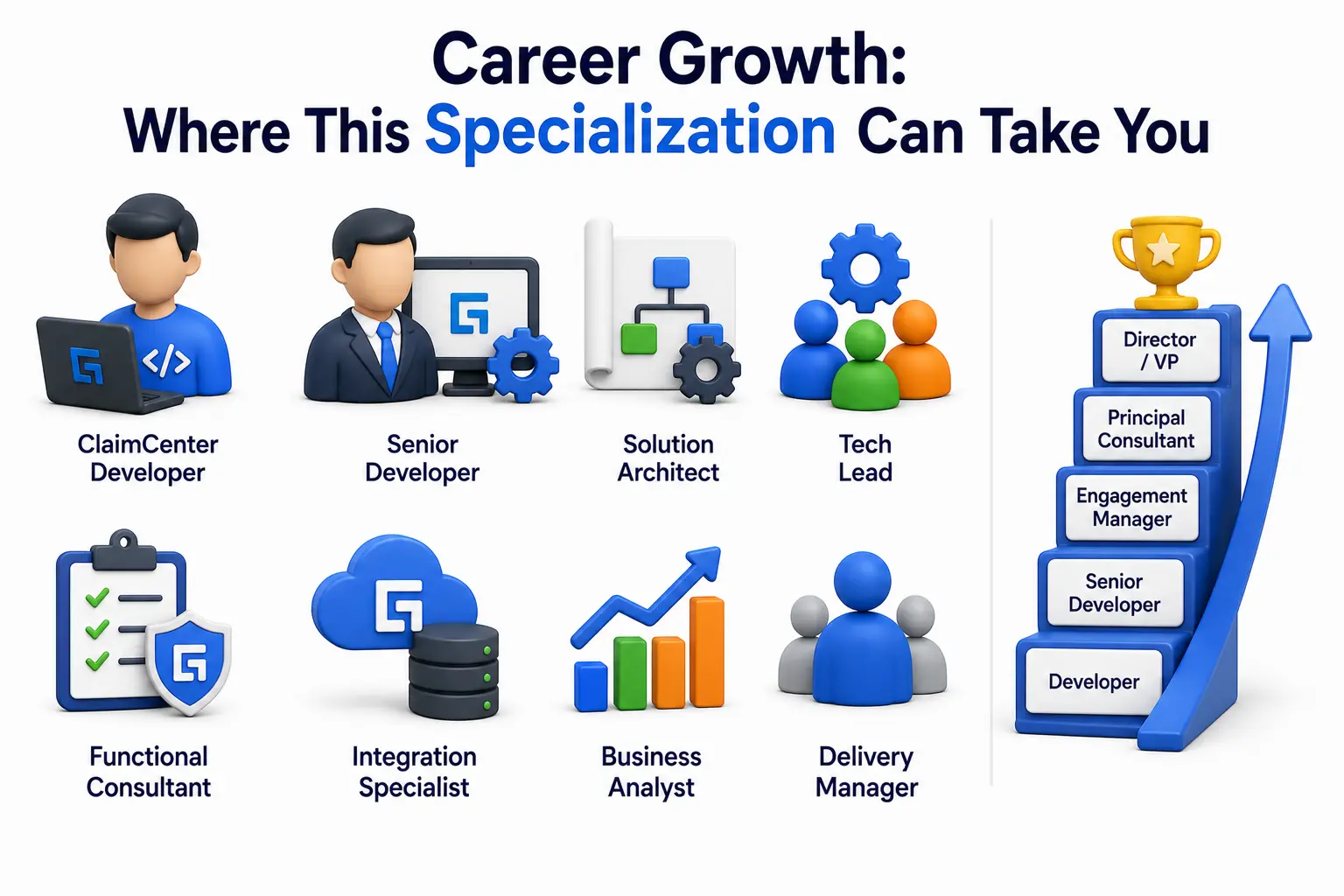
The good news is that Guidewire developers rarely stay stuck in one lane for long. Once you have a couple of years of ClaimCenter experience, doors open toward becoming a Guidewire architect, technical lead, or integration specialist — roles that come with significantly higher pay because so few people reach that level of platform mastery.
Some developers move laterally into Guidewire PolicyCenter or BillingCenter to become full-suite consultants, which makes them even more valuable to insurance carriers running the entire Guidewire ecosystem. Others transition into consulting roles at firms that implement Guidewire for multiple insurance clients, which often means better pay and more varied project exposure. The insurance technology sector isn't slowing down, and developers who specialize early in a platform like ClaimCenter tend to enjoy a longer runway of demand compared to more generalized development roles.
Conclusion
Becoming a Guidewire ClaimCenter developer takes patience, but it's one of the most stable, well-paying niches in insurance tech. With focused training, real practice, and the right certification, you can turn this specialized skill into a lasting, in-demand career.