

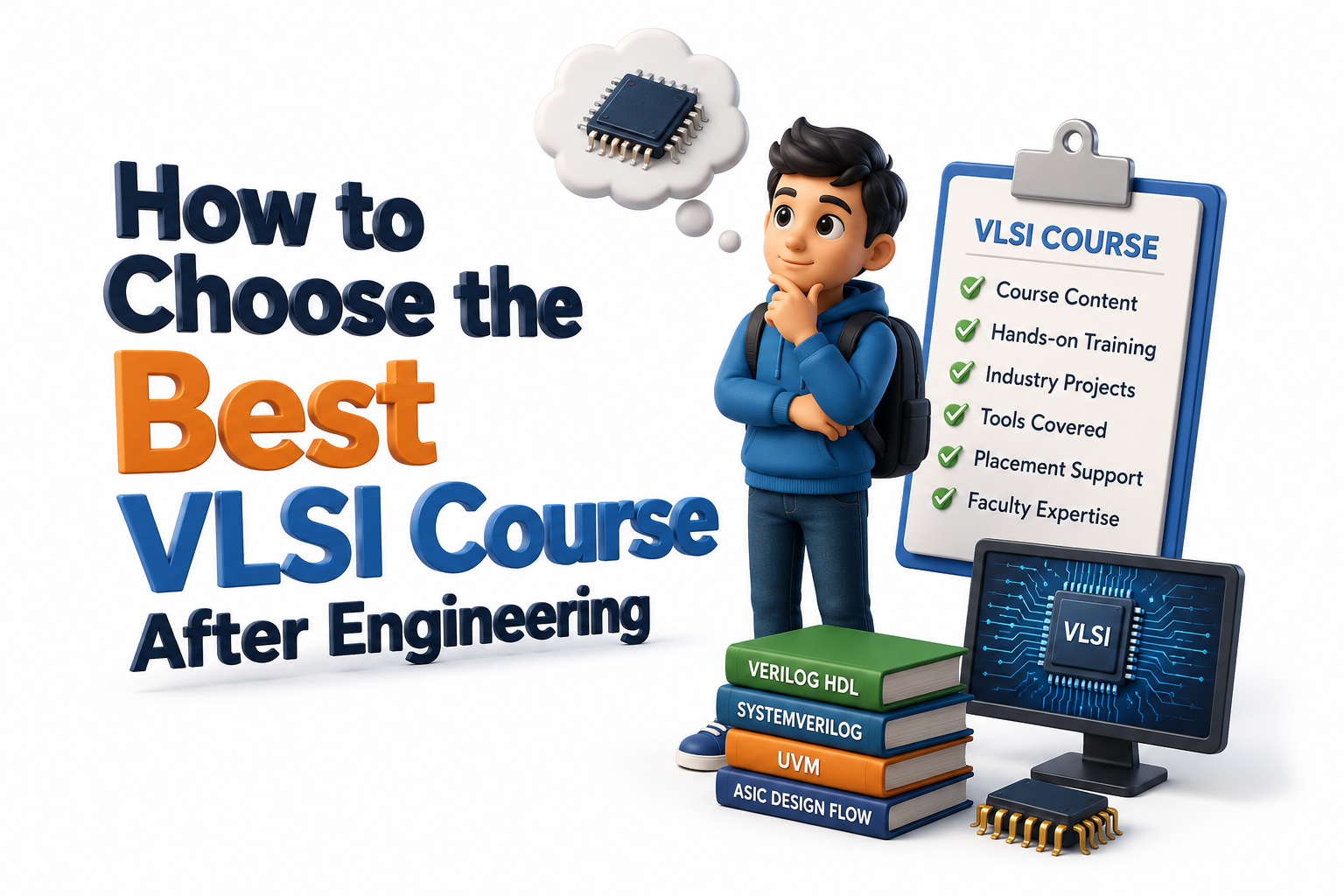
How to Choose the Best VLSI Course After Engineering
Navigate through this article using the table of contents below
Table of Contents
No headings found in this article.
The semiconductor industry is growing faster than ever, creating thousands of opportunities for engineering graduates across VLSI design, verification, physical design, DFT, embedded systems, and semiconductor manufacturing. Yet many graduates struggle to choose the right VLSI course because countless institutes promise placements without explaining what truly matters.
Selecting the wrong training program can waste months of learning and delay your career. This guide explains exactly how to evaluate a VLSI course, the skills employers expect in 2026, and why choosing industry-focused training from JastTech can significantly improve your career prospects.
Understand Your Career Goal Before Selecting a VLSI Course
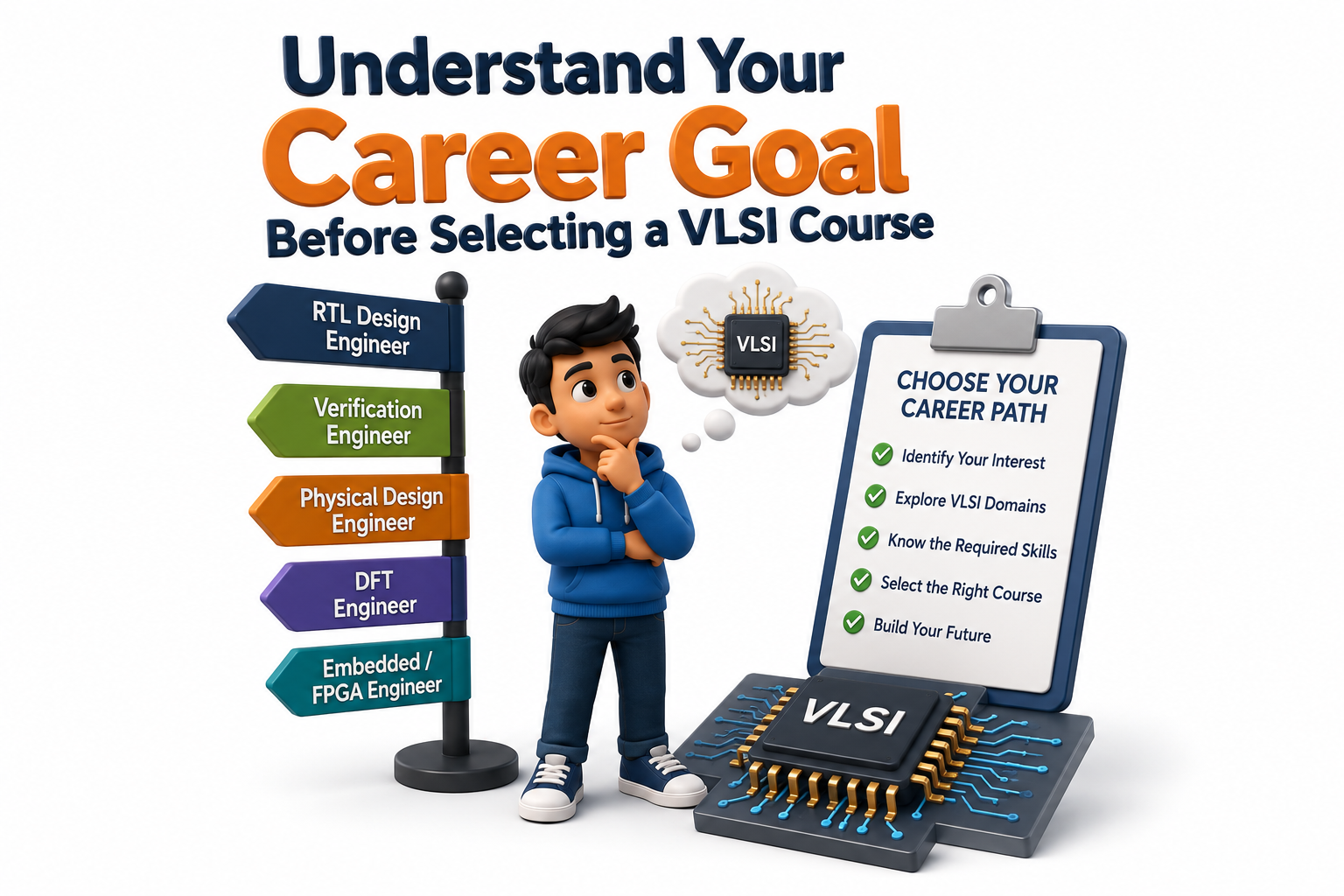
Many engineering graduates make the mistake of joining the first VLSI course they find. However, VLSI is a broad industry with multiple specialized career paths. The right course depends entirely on your interests and long-term goals.
Ask yourself which area excites you the most before enrolling.
Some popular VLSI career paths include:
RTL Design Engineer
ASIC Verification Engineer
Physical Design Engineer
DFT Engineer
Analog IC Design Engineer
FPGA Engineer
Embedded Systems Engineer
Post-Silicon Validation Engineer
Each role requires different tools and technical knowledge. For example, RTL engineers spend most of their time writing Verilog or SystemVerilog code, while Physical Design engineers work on floorplanning, placement, clock tree synthesis, routing, and timing closure.
Choosing your specialization first helps you avoid learning unnecessary topics and allows you to focus on building job-ready skills.
Check Whether the Course Matches Current Industry Requirements
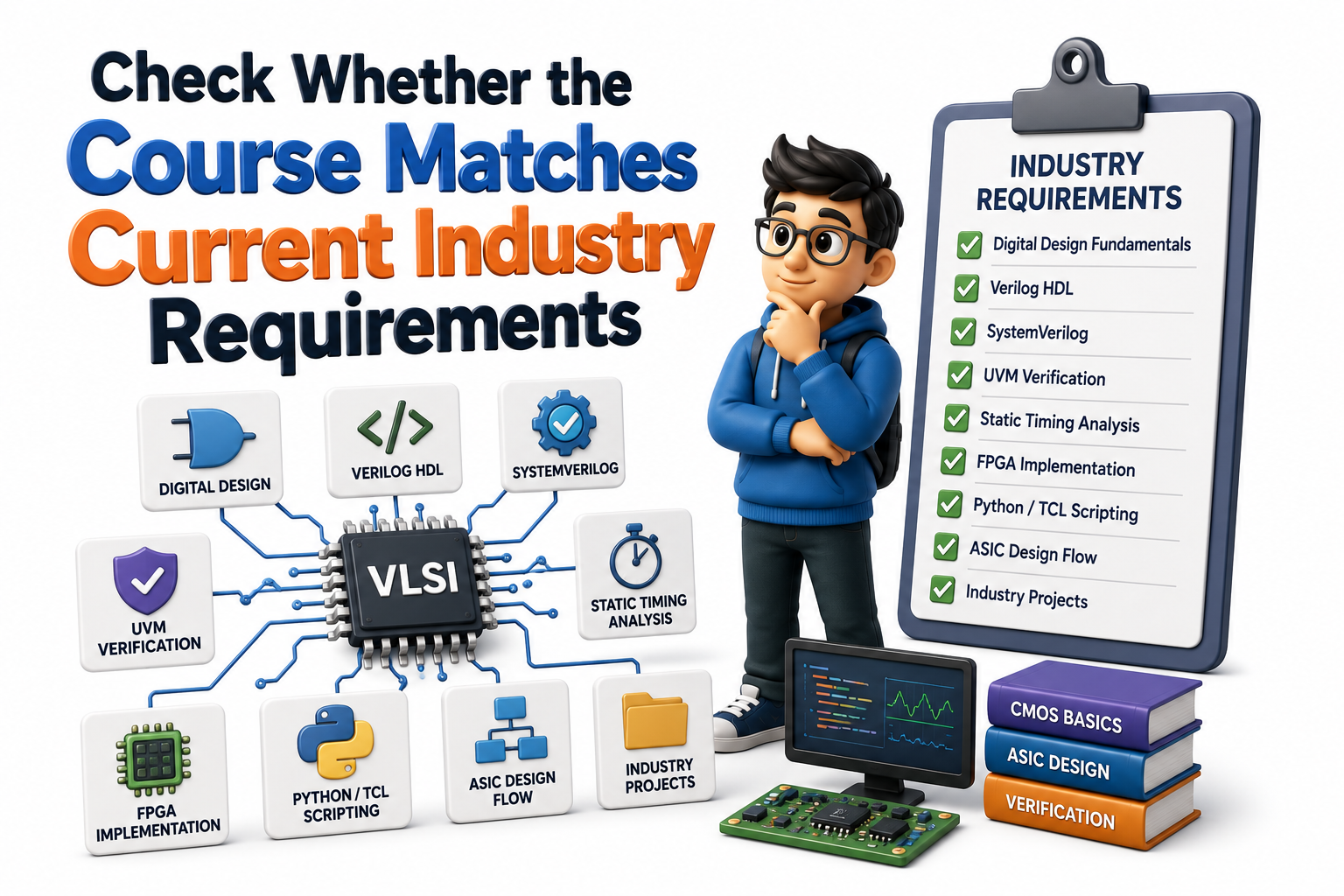
Technology changes rapidly, and many VLSI training programs still teach outdated concepts that no longer align with hiring requirements.
A modern VLSI course should focus on practical semiconductor workflows rather than only theoretical concepts.
Look for training that includes:
Digital Electronics fundamentals
CMOS Design basics
Verilog HDL
SystemVerilog
UVM Methodology
Static Timing Analysis (STA)
FPGA implementation
Scripting using Python or TCL
ASIC Design Flow
Semiconductor industry projects
Courses should also introduce learners to AI-assisted verification, automation, and modern EDA workflows, which are becoming increasingly important in semiconductor companies.
At JastTech, students are trained on industry-oriented concepts that reflect current semiconductor hiring expectations rather than outdated academic syllabi.
Evaluate the Hands-On Training and Industry Projects
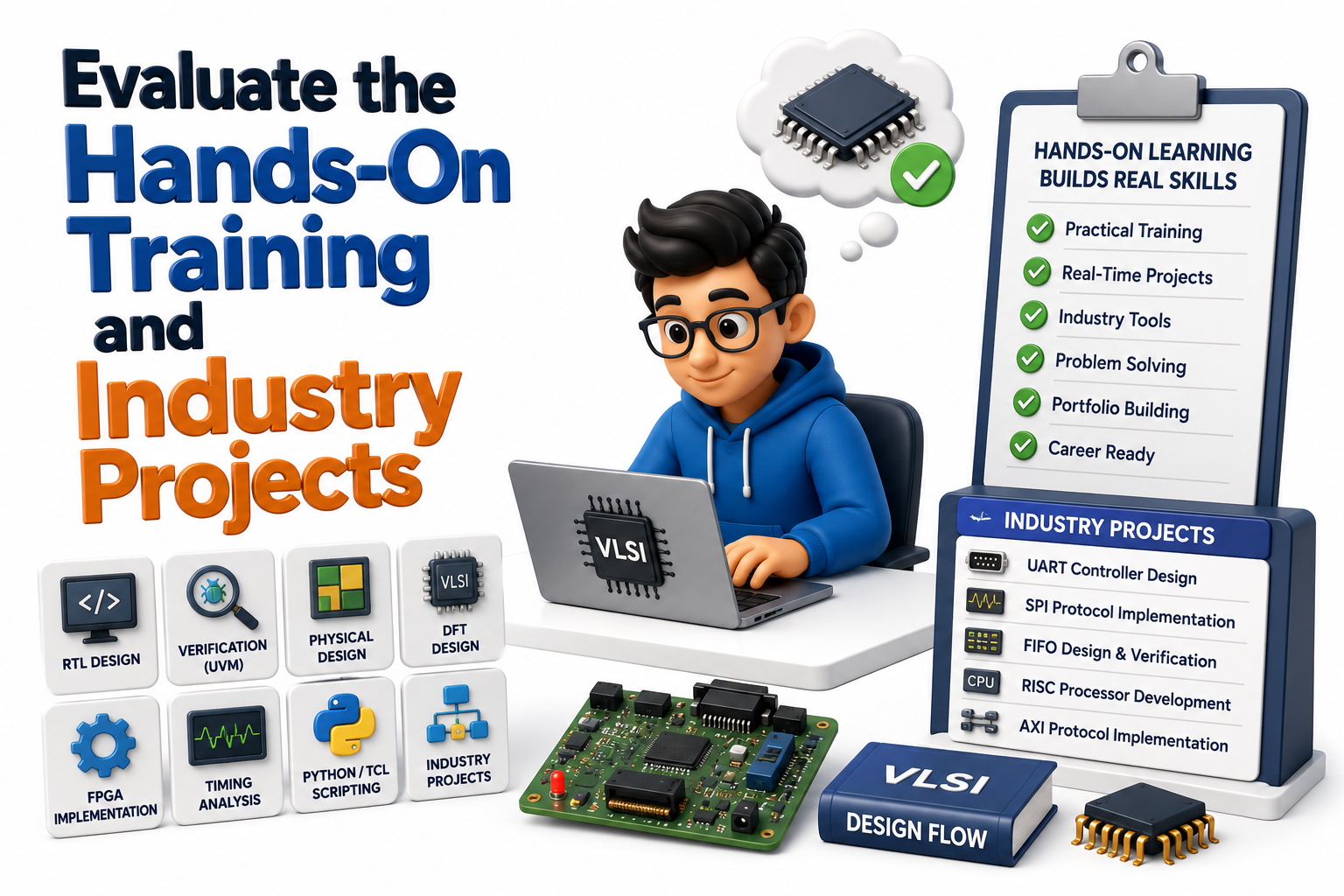
Theory alone will not help you clear technical interviews. Semiconductor companies expect candidates to explain real design challenges, debugging techniques, verification strategies, and project implementation.
The best VLSI courses include multiple practical projects that simulate real engineering environments.
Good project-based learning should cover:
UART Controller Design
SPI Protocol Implementation
FIFO Design and Verification
ALU Design
RISC Processor Development
Memory Controller Verification
AXI Protocol Implementation
FPGA-Based Digital Systems
When evaluating a course, ask these questions:
Does it include complete chip design projects?
Will you work on industrial verification environments?
Are debugging exercises included?
Do projects use industry-standard design flow?
Will you build a portfolio for interviews?
Employers consistently value candidates who have completed practical implementation projects because they demonstrate problem-solving ability instead of memorized theory.
Verify the Tools, Faculty, and Placement Support
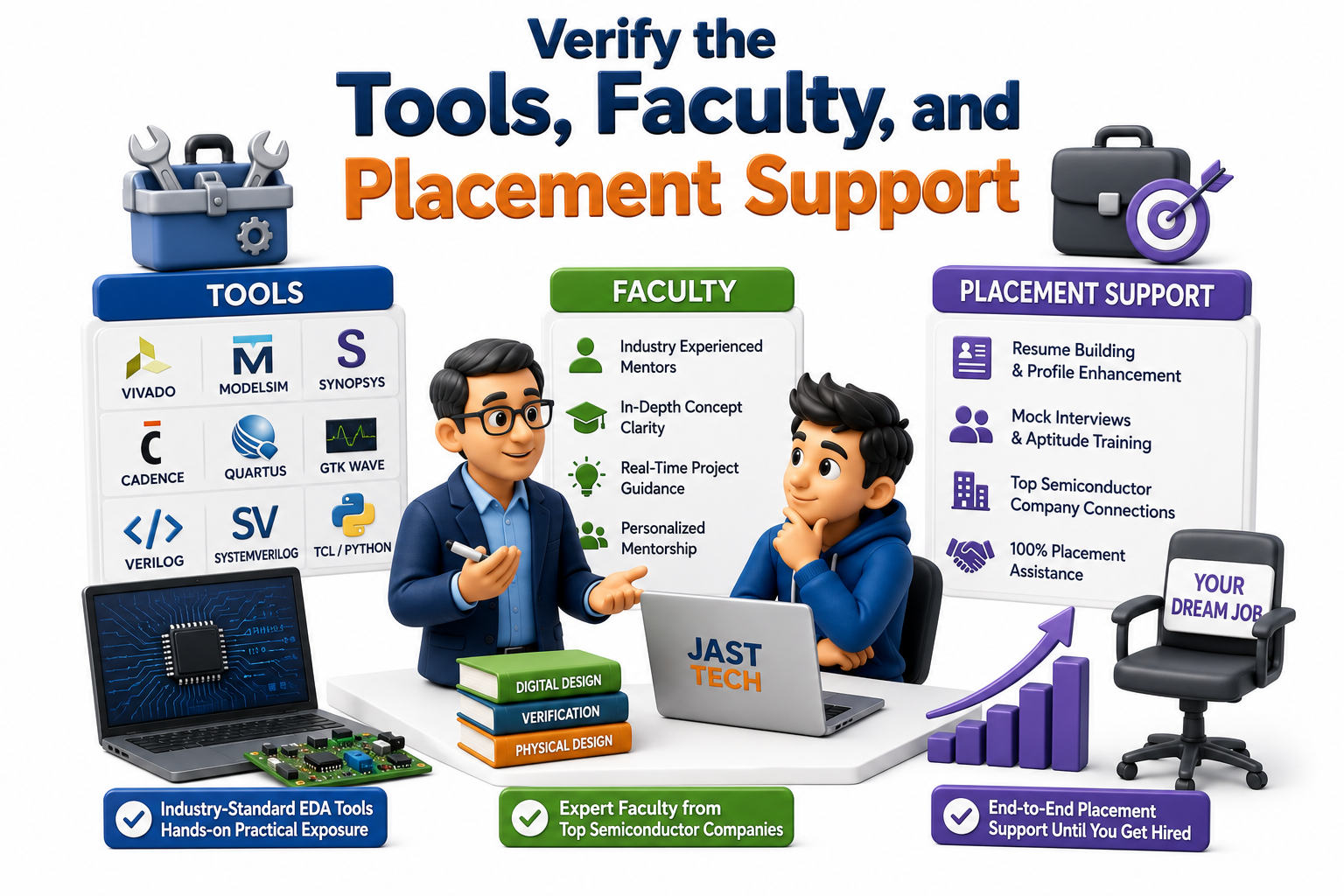
One of the biggest differences between an average course and an excellent VLSI program is exposure to professional EDA tools and experienced mentors.
The semiconductor industry uses specialized software throughout the chip design cycle. Even if students begin with educational environments, understanding professional workflows is essential.
A quality VLSI course should provide exposure to:
RTL coding environments
Simulation tools
Synthesis flow
Static Timing Analysis
FPGA development platforms
Verification frameworks
Debugging environments
Faculty should ideally have semiconductor industry experience instead of only academic teaching backgrounds. Experienced mentors explain real project challenges, interview expectations, debugging strategies, and design optimization techniques.
Placement support should include:
Resume preparation
LinkedIn profile optimization
Mock technical interviews
HR interview preparation
Aptitude guidance
Company-specific interview sessions
Institutes like JastTech emphasize career readiness by combining technical learning with interview preparation and industry mentoring.
Compare Course Duration, Learning Mode, and Career Value
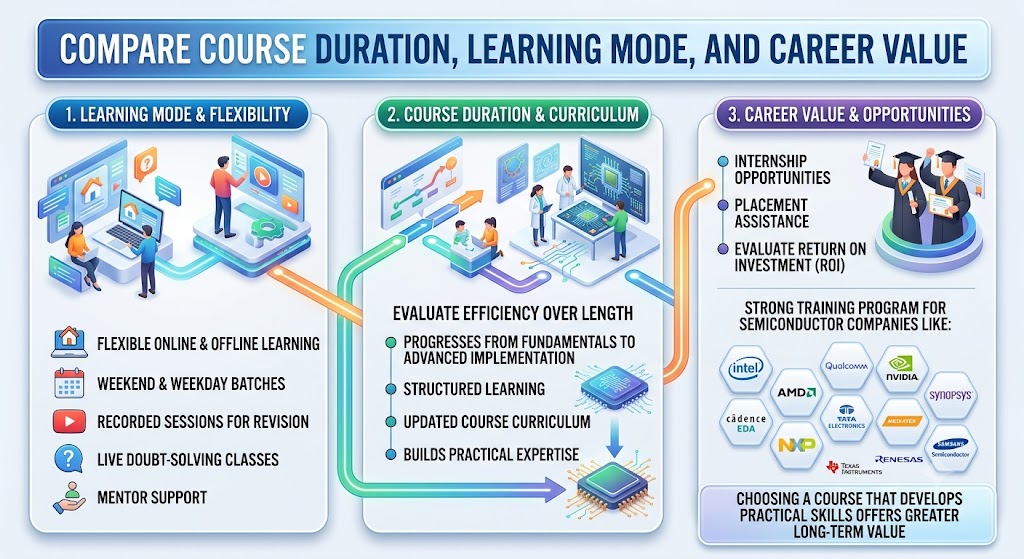
The longest course is not necessarily the best course. Instead, evaluate how efficiently the curriculum builds practical expertise.
A balanced VLSI course typically progresses from fundamentals to advanced implementation through structured learning.
When comparing institutes, consider:
Flexible online and offline learning
Weekend and weekday batches
Recorded sessions for revision
Live doubt-solving classes
Mentor support
Internship opportunities
Placement assistance
Updated course curriculum
Also evaluate the return on investment rather than focusing only on course fees.
A strong training program can significantly improve opportunities in semiconductor companies such as:
Intel
AMD
Qualcomm
NVIDIA
Synopsys
Cadence
Siemens EDA
Tata Electronics
MediaTek
NXP
Texas Instruments
Renesas
Samsung Semiconductor
Choosing a course that develops practical skills often delivers much greater long-term value than selecting the lowest-cost option.
Build Skills Beyond the Course to Stay Competitive
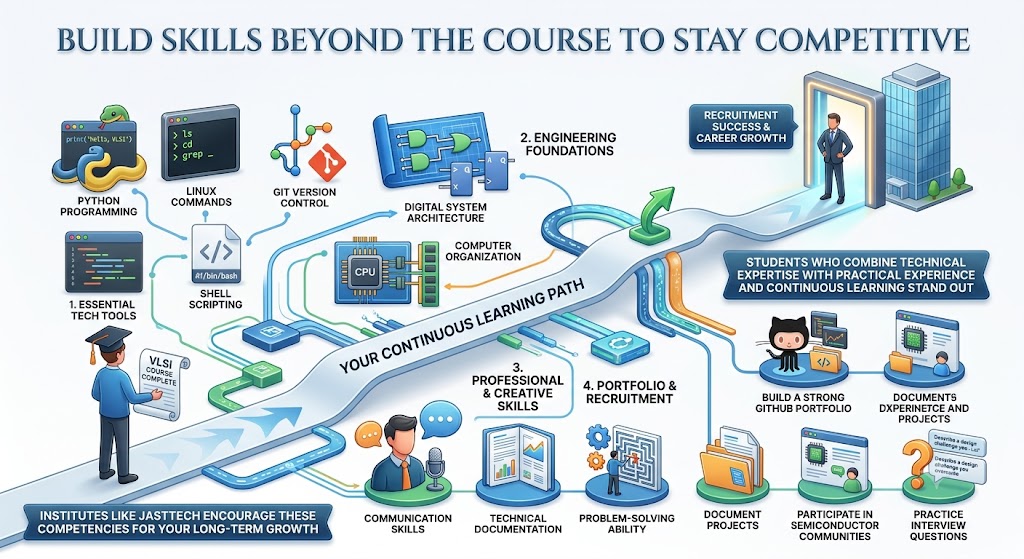
Completing a VLSI course is only the beginning of your semiconductor career. The most successful engineers continuously expand their knowledge as technologies evolve.
Along with classroom learning, students should focus on developing complementary skills that improve employability.
Important areas include:
Python programming
Linux commands
Git version control
Shell scripting
Digital system architecture
Computer organization
Communication skills
Technical documentation
Problem-solving ability
Building a strong GitHub portfolio, documenting your projects, participating in semiconductor communities, and practicing interview questions can greatly increase your confidence during recruitment.
Students who combine technical expertise with practical project experience and continuous learning generally stand out during campus placements and lateral hiring.
Institutes like JastTech encourage learners to develop these additional competencies so they are prepared not only for interviews but also for long-term growth in the semiconductor industry.
Conclusion
Choosing the best VLSI course after engineering is one of the most important decisions for anyone planning a career in semiconductor technology. Instead of selecting a course based only on advertisements or fees, evaluate the curriculum, practical projects, faculty expertise, tool exposure, mentorship, and placement support. A structured learning path aligned with current industry expectations will help you build the technical foundation required by leading semiconductor companies.
As the global demand for chip design professionals continues to rise, engineers with hands-on skills will have a significant advantage. A career-focused training program from JastTech equips learners with practical knowledge, real-world projects, interview preparation, and industry-relevant expertise, enabling them to confidently pursue opportunities across RTL design, verification, physical design, embedded systems, and other high-growth VLSI domains.