

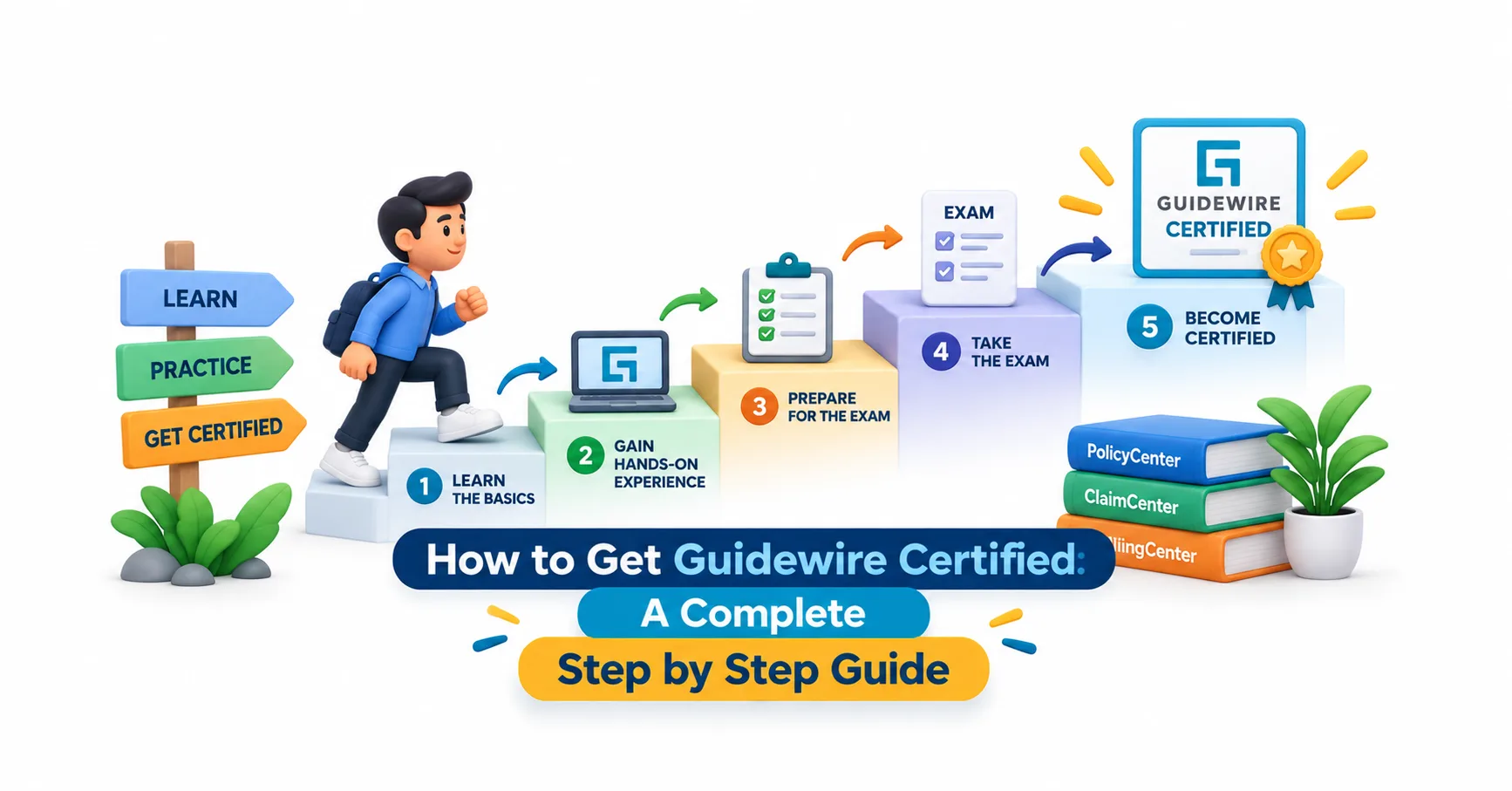
How to Get Guidewire Certified: A Complete Step by Step Guide
Navigate through this article using the table of contents below
Table of Contents
No headings found in this article.
Somewhere right now, a hiring manager is scrolling through resumes, searching for one specific credential that can help a candidate stand out from the competition. That credential is Guidewire certification, and many applicants don't even know it exists until it's too late.
If you've ever wondered why some insurance tech professionals invest in Guidewire online courses in India to build specialized skills and prepare for certification, this guide breaks down exactly how Guidewire certification works, what it actually takes to earn one, and how to avoid the mistakes that trip up first-time candidates.
Why Does Guidewire Certification Suddenly Matter So Much?
Why Guidewire Certification Matters Today
| Career Area | Without Certification | With Guidewire Certification |
|---|---|---|
| Industry Knowledge | Basic understanding of insurance platforms and business workflows. | Validated expertise in Guidewire products and core insurance processes. |
| Hiring Potential | Competes with general software engineering candidates. | Better suited for specialized Guidewire consulting and development roles. |
| Project Readiness | Requires longer onboarding before joining enterprise implementations. | Can contribute faster to live PolicyCenter and ClaimCenter projects. |
| Technical Skills | Limited exposure to Guidewire architecture and integrations. | Practical knowledge of Gosu, APIs, and Guidewire Cloud concepts. |
| Career Growth | Advancement depends mainly on years of experience. | Opens opportunities in development, QA, BA, and cloud teams. |
| Global Opportunities | Suitable for broader software industry positions. | Relevant for multinational insurers and global consulting firms. |
| Professional Credibility | Skills are assessed primarily through interviews and projects. | Industry-recognized certification strengthens employer confidence. |
Industry Knowledge
Basic understanding of insurance platforms and business workflows.
Validated expertise in Guidewire products and core insurance processes.
Hiring Potential
Competes with general software engineering candidates.
Better suited for specialized Guidewire consulting and development roles.
Project Readiness
Requires longer onboarding before joining enterprise implementations.
Can contribute faster to live PolicyCenter and ClaimCenter projects.
Technical Skills
Limited exposure to Guidewire architecture and integrations.
Practical knowledge of Gosu, APIs, and Guidewire Cloud concepts.
Career Growth
Advancement depends mainly on years of experience.
Opens opportunities in development, QA, BA, and cloud teams.
Global Opportunities
Suitable for broader software industry positions.
Relevant for multinational insurers and global consulting firms.
Professional Credibility
Skills are assessed primarily through interviews and projects.
Industry-recognized certification strengthens employer confidence.
Insurance companies are quietly rebuilding their entire technology backbone, and Guidewire sits at the center of that shift. PolicyCenter, BillingCenter, and ClaimCenter now run the daily operations of major insurers across the globe, which means the demand for professionals who actually understand these systems has grown faster than the talent pool can keep up.
That gap is exactly why Guidewire course in chennai carries so much weight today. It's not a vanity credential — it's proof that you can configure, integrate, and troubleshoot systems that insurers depend on every single day.
Employers don't have time to test every applicant's real skill level during an interview. A certification does that verification for them. It signals that you've already been through structured, standardized evaluation rather than just claiming experience on paper.
There's also a compounding effect. As more insurers adopt Guidewire's cloud platform, certified professionals become the bridge between legacy systems and modern architecture. That positions certified employees as indispensable during migrations, upgrades, and digital transformation projects — the kind of work that rarely gets outsourced or automated away.
What Are The Different Guidewire Certification Paths You Can Choose?
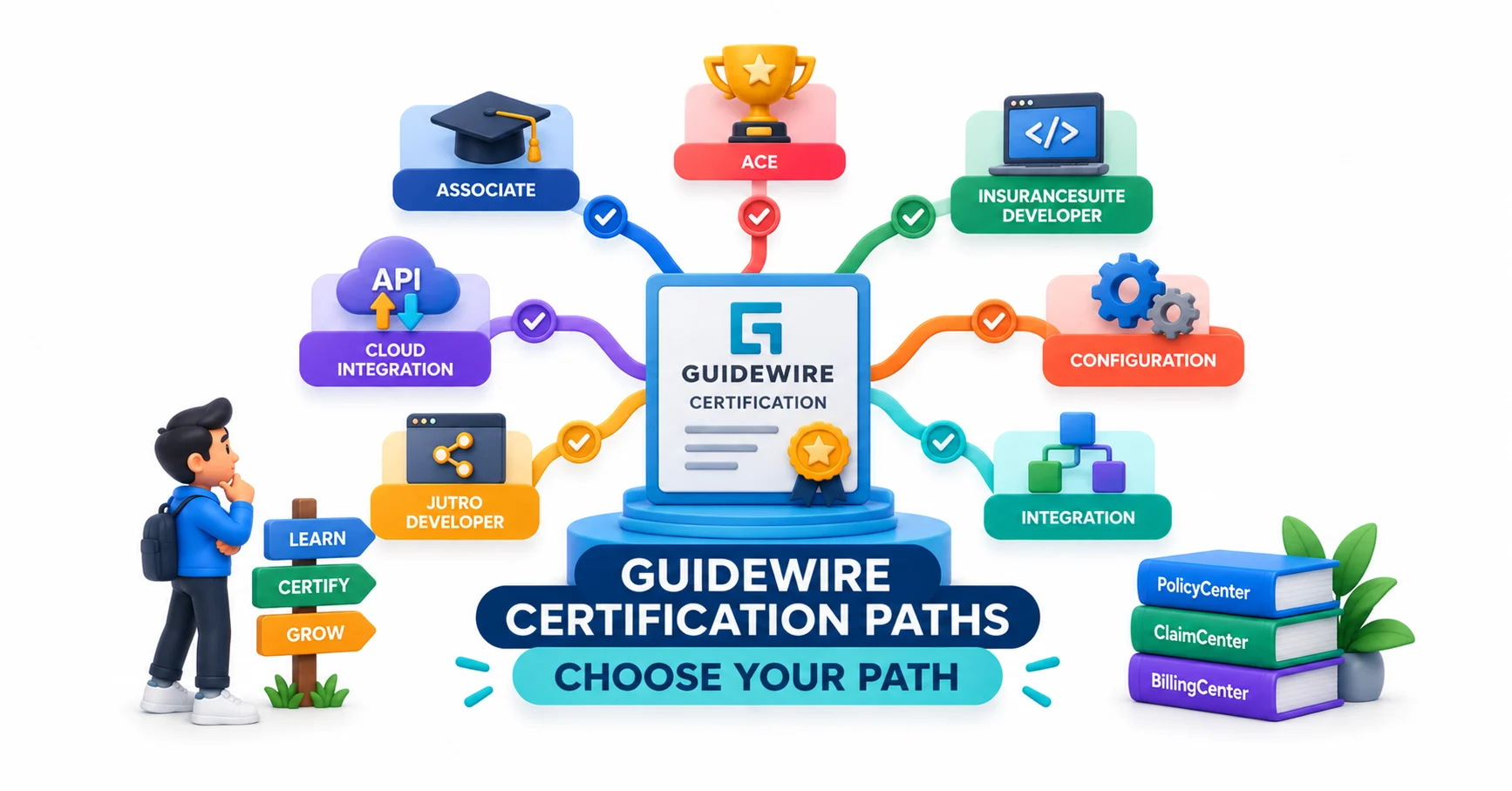
Guidewire doesn't offer a single, one-size-fits-all certificate. Instead, it structures certifications around specific roles, which actually works in your favor because you can align your credential with your career direction.
The most common paths include:
Associate Developer certifications for those starting out in configuration and integration work
Ace Developer tracks for professionals ready to handle more complex customization
Business Analyst certifications for those focused on requirements and process design
Cloud Platform certifications, which have grown rapidly as insurers migrate away from on-premise systems
Each path tests different competencies. A developer certification leans heavily on Gosu scripting, data models, and configuration logic. A business analyst credential instead tests your ability to translate business requirements into system specifications.
Choosing the wrong path wastes both time and money, so it's worth mapping your existing skills against each track before committing. Someone with a coding background will likely progress faster through developer certifications, while someone from a business or functional background may find more traction through analyst-focused tracks. Matching the certification to your actual strengths, not just what sounds impressive, makes the entire preparation process smoother.
How Do You Actually Prepare Without Wasting Months?
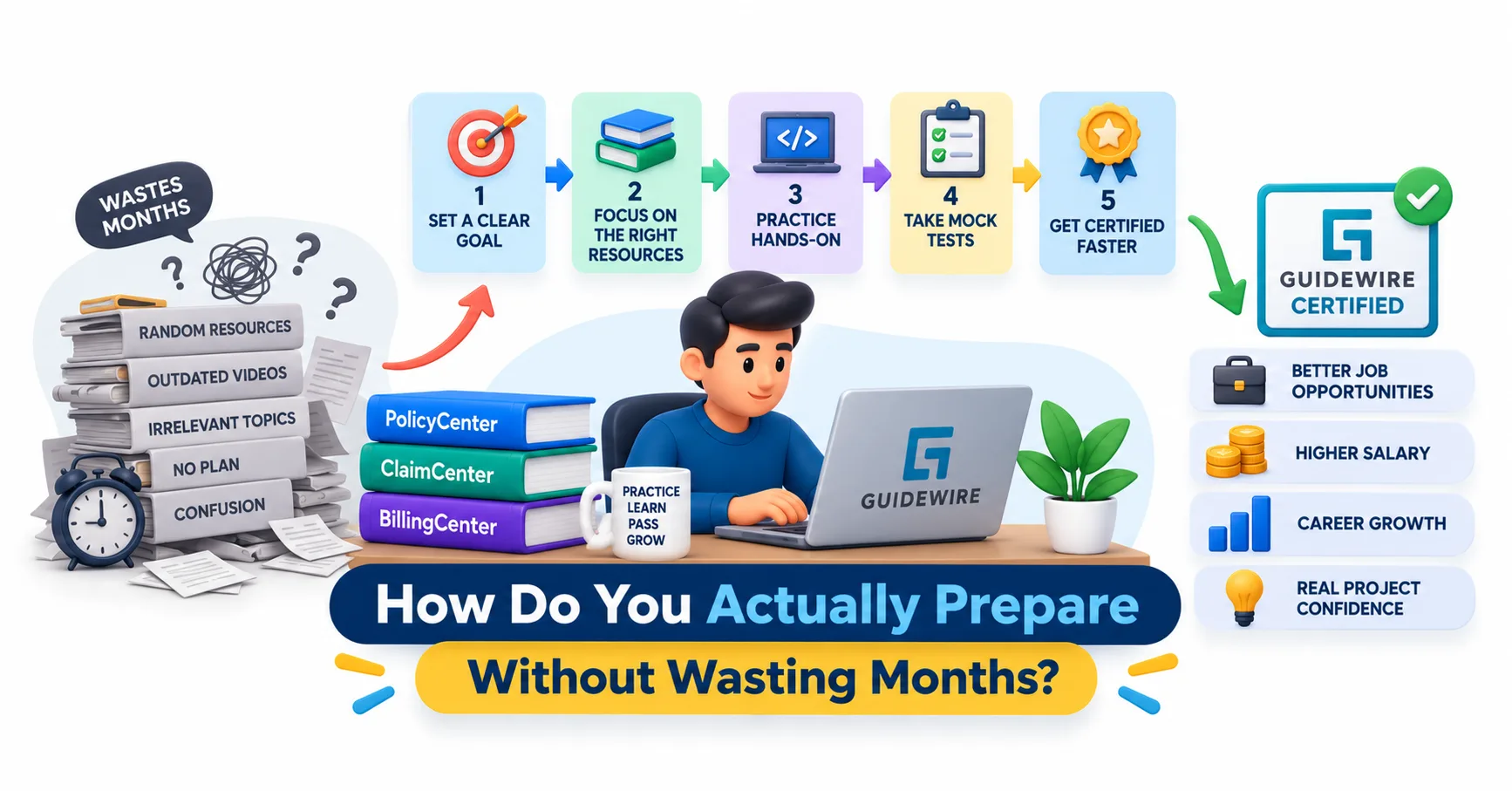
Most candidates fail their first attempt not because the material is impossible, but because they prepare the wrong way. Reading documentation alone rarely translates into exam-ready skill, especially for scenario-based questions that test applied knowledge rather than memorization.
A more effective approach combines three elements: structured coursework, hands-on configuration practice, and timed mock assessments. This mirrors how the actual certification exams are built — they're designed to test whether you can apply concepts under realistic conditions, not just recall definitions.
This is where a guided program makes a measurable difference. JastTech's Guidewire certification preparation course is structured specifically around this applied-learning model, walking candidates through real configuration exercises rather than abstract theory. Instead of guessing which topics matter most, learners follow a sequence built around the actual exam blueprint.
Set a realistic study window — most working professionals need six to ten weeks of consistent practice, not cramming. Break your preparation into weekly milestones tied to specific modules, and revisit weak areas immediately rather than pushing through and hoping they resolve themselves later.
What Does The Exam Format Actually Look Like?
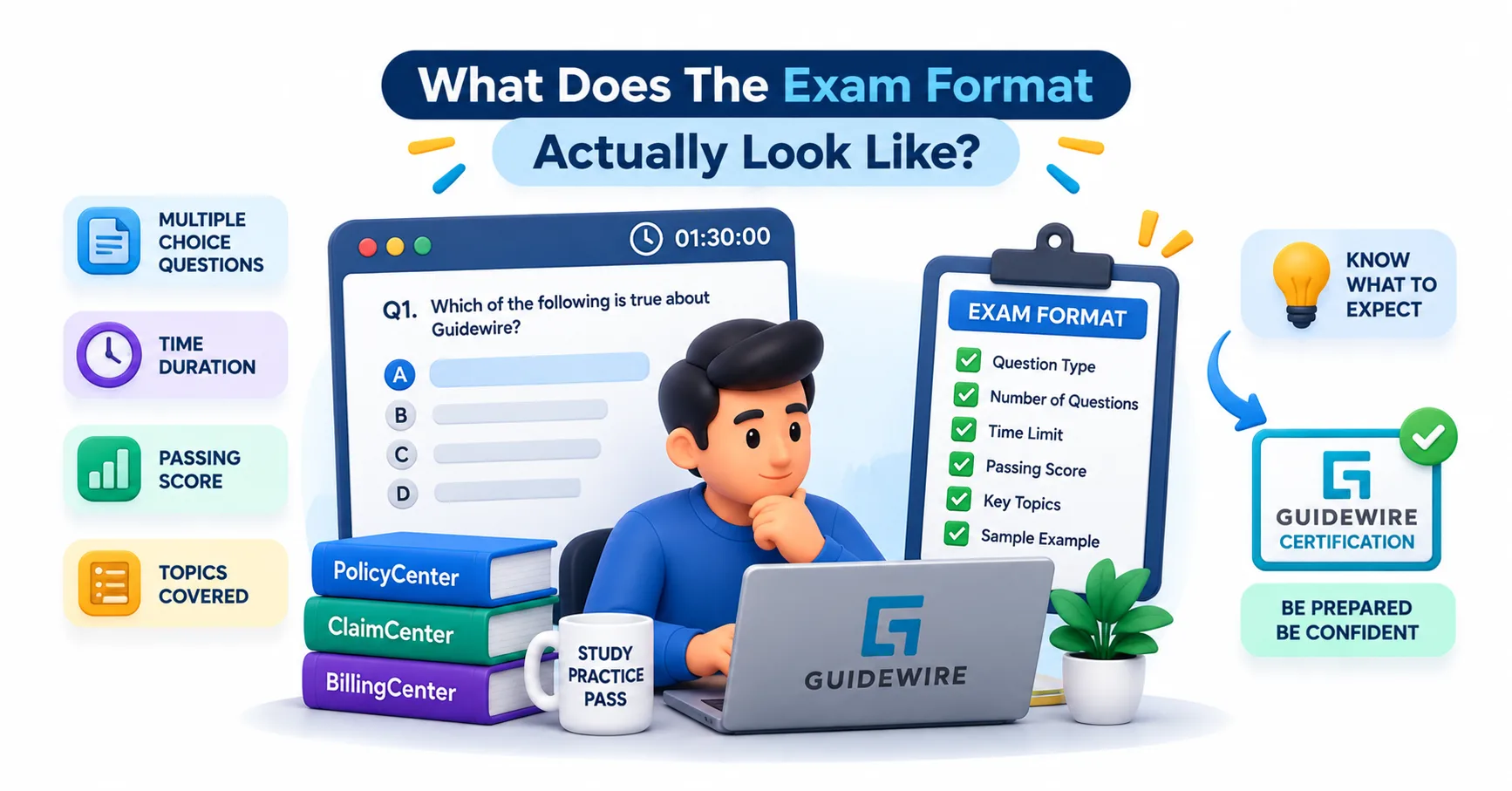
Walking into any certification exam blind is one of the fastest ways to underperform, even when you actually know the material. Guidewire's exams are typically multiple-choice and scenario-based, delivered online through a proctored format that monitors your session for integrity.
Questions rarely ask you to define a concept outright. Instead, they present a situation — a configuration conflict, an integration error, a business requirement — and ask you to identify the correct resolution. This format rewards candidates who've practiced applying knowledge, not just memorized terminology.
Time management matters more than most candidates expect. With a fixed number of questions and a strict time limit, spending too long on one tricky scenario can cost you several easier points later in the exam. Practicing under timed conditions before the real attempt helps you develop a natural pace.
Passing scores vary by certification level, but they're generally set high enough that guessing isn't a viable strategy. You need genuine command of the material, particularly around configuration logic, data relationships, and platform-specific terminology.
Reviewing the official exam guide before you register is non-negotiable. It outlines weighted topic areas, so you know exactly where to concentrate your final weeks of preparation.
Which Mistakes Quietly Sabotage First-Time Candidates?
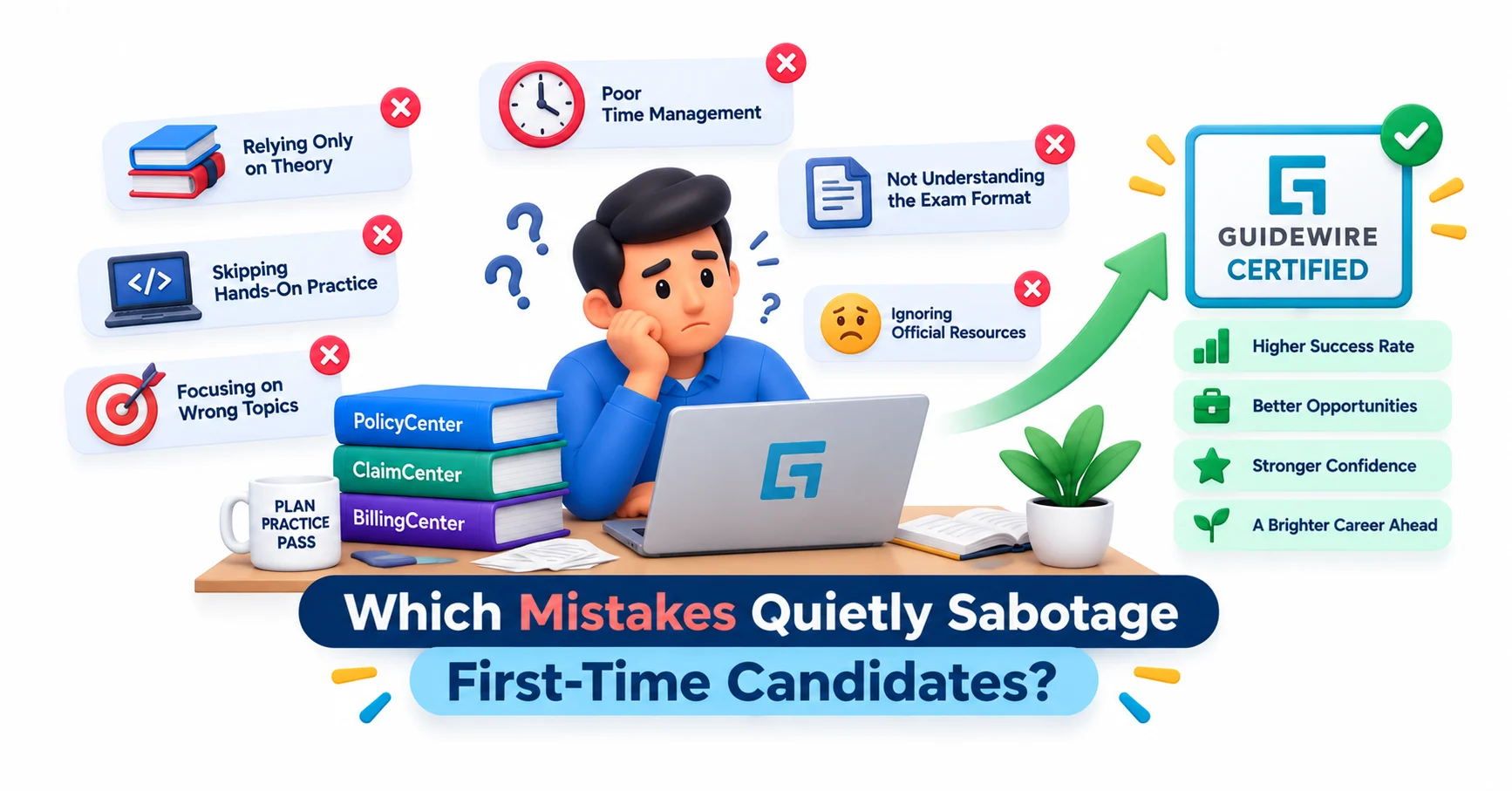
Even well-prepared candidates stumble over avoidable errors. The most common one is underestimating the platform's terminology — Guidewire uses specific vocabulary for configuration elements, data models, and workflows that don't map directly onto general software development concepts.
Another frequent mistake is preparing only through passive reading. Watching tutorial videos or skimming study guides feels productive, but it rarely builds the muscle memory needed for scenario-based exam questions. Active practice — actually configuring elements inside a sandbox environment — closes that gap far more effectively.
Candidates also tend to underestimate how quickly the platform evolves. Guidewire regularly updates its cloud architecture and feature set, and outdated study material can leave you unprepared for current exam content. Always confirm you're studying against the most recent version of the certification blueprint.
Finally, many professionals treat certification as an isolated goal rather than part of a broader career strategy. Insurers are increasingly investing in AI-driven automation and cloud-native platforms, and understanding where Guidewire fits into that bigger picture makes your certification far more valuable. Jast Tech's breakdown of the future of Guidewire in India's insurance sector offers useful context on where the platform — and the demand for certified professionals — is headed next.
What Happens After You Pass The Exam?
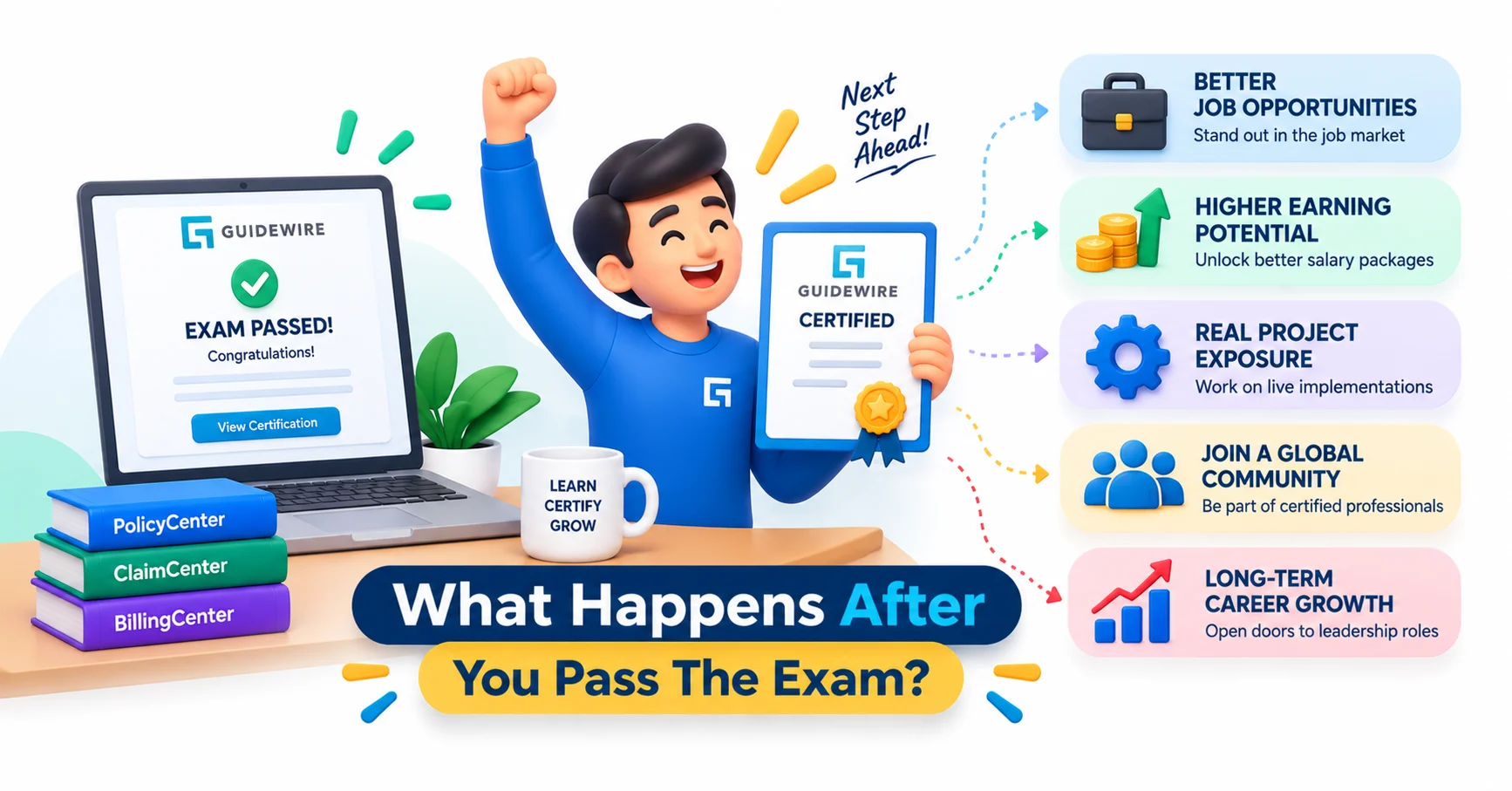
Earning your certification isn't the finish line — it's the credential that opens the next set of doors. Certified professionals typically qualify for roles like Guidewire configuration analyst, integration developer, or implementation consultant, often with meaningfully higher starting compensation than non-certified applicants in similar roles.
Recruiters actively filter for these credentials on platforms like LinkedIn, meaning your certification often works passively in the background, attracting opportunities even when you're not actively job hunting. It also signals to current employers that you're ready for more responsibility, which can support internal promotion conversations.
Certification also isn't a one-and-done achievement. Guidewire periodically updates its platform, and staying current — through refresher courses, cloud-specific add-on certifications, or advanced-level credentials — keeps your skill set aligned with what insurers are actually implementing.
Many professionals use their first certification as a launchpad toward specialization, whether that's deepening cloud platform expertise, moving into solution architecture, or transitioning into training and mentorship roles for newer developers. The credential itself is valuable, but how you build on it afterward determines the real long-term payoff.
Networking within Guidewire's professional community, attending platform-specific webinars, and staying engaged with product updates all compound the value of that initial certification over time.
Conclusion
Getting Guidewire certified isn't about collecting another line on your resume — it's about proving you can handle the systems insurers depend on most. With the right preparation path and consistent practice, that certification becomes a genuine career accelerator, not just a checkbox.