

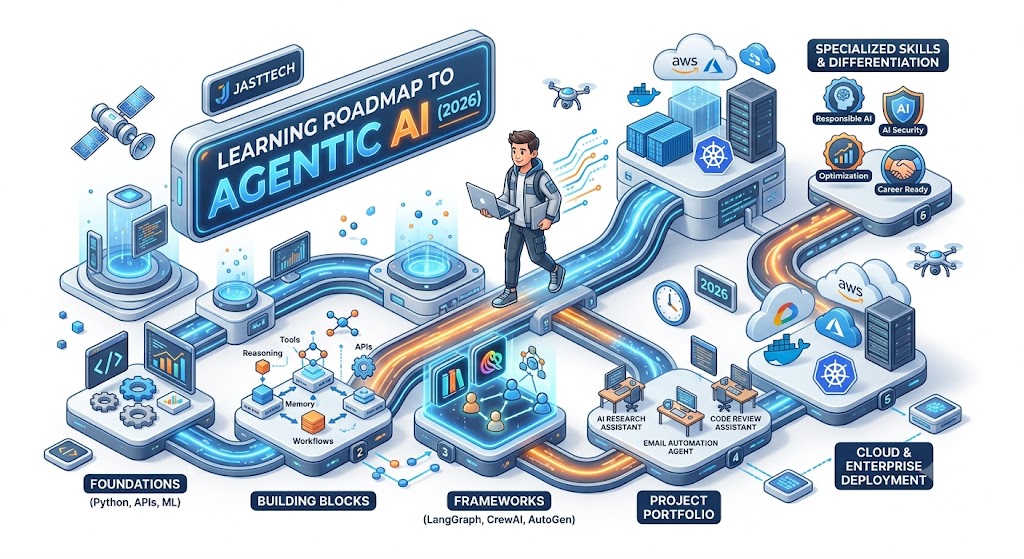
How to Learn Agentic AI in 2026: A Roadmap for Engineers
Navigate through this article using the table of contents below
Table of Contents
No headings found in this article.
Artificial Intelligence is no longer limited to answering questions or generating content. Modern AI systems are beginning to reason, plan, remember previous interactions, and execute complex workflows independently. This evolution has created one of the fastest-growing technology domains—Agentic AI.
For engineers looking to future-proof their careers, understanding Agentic AI is becoming as valuable as learning cloud computing or machine learning was a few years ago. Whether you come from software, electronics, VLSI, embedded systems, or data engineering, this roadmap from JastTech will help you build the right skills in the correct order.
Understand the Core Concepts Before Learning Agent Frameworks
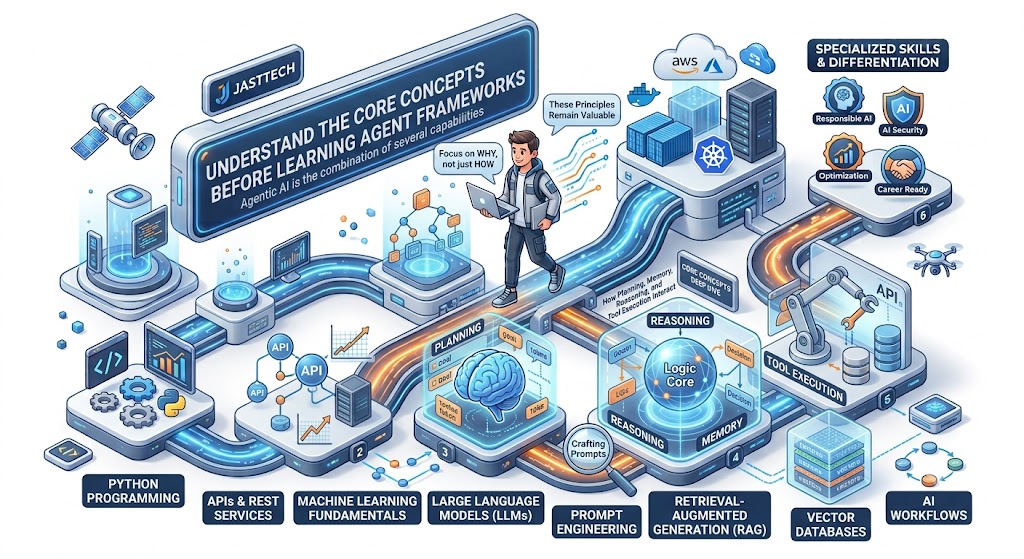
Many beginners make the mistake of jumping directly into frameworks like LangGraph or CrewAI without understanding the technologies that make autonomous agents possible. Agentic AI is not a single library—it is the combination of several AI capabilities working together.
Start by building a strong foundation in:
Python programming
APIs and REST services
Machine Learning fundamentals
Large Language Models (LLMs)
Prompt Engineering
Retrieval-Augmented Generation (RAG)
Vector databases
AI workflows
Once these fundamentals become familiar, understanding autonomous agents becomes much easier because you'll recognize how planning, memory, reasoning, and tool execution interact inside an AI system.
Instead of memorizing frameworks, focus on understanding why agents make decisions, how they retrieve information, and how they select actions. These principles remain valuable even as new frameworks continue to emerge.
Learn the Building Blocks of Agentic AI Systems
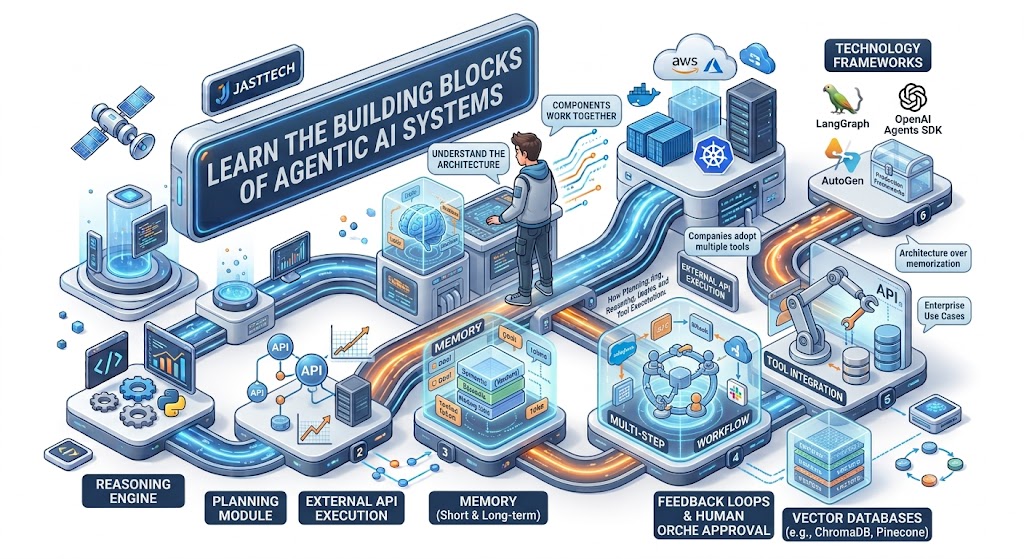
Modern Agentic AI applications consist of multiple intelligent components rather than a single AI model. Understanding these building blocks helps engineers design reliable autonomous systems.
Key components include:
Reasoning engine
Long-term and short-term memory
Planning module
Tool integration
External API execution
Multi-step workflow orchestration
Feedback loops
Human approval mechanisms
After learning these concepts, explore popular frameworks used in production.
Recommended technologies include:
LangGraph
CrewAI
OpenAI Agents SDK
AutoGen
MCP (Model Context Protocol)
Vector databases like ChromaDB and Pinecone
Rather than mastering every framework, understand their architecture, strengths, and enterprise use cases. Companies frequently adopt multiple tools depending on project requirements.
Build Practical Projects That Demonstrate Real Skills
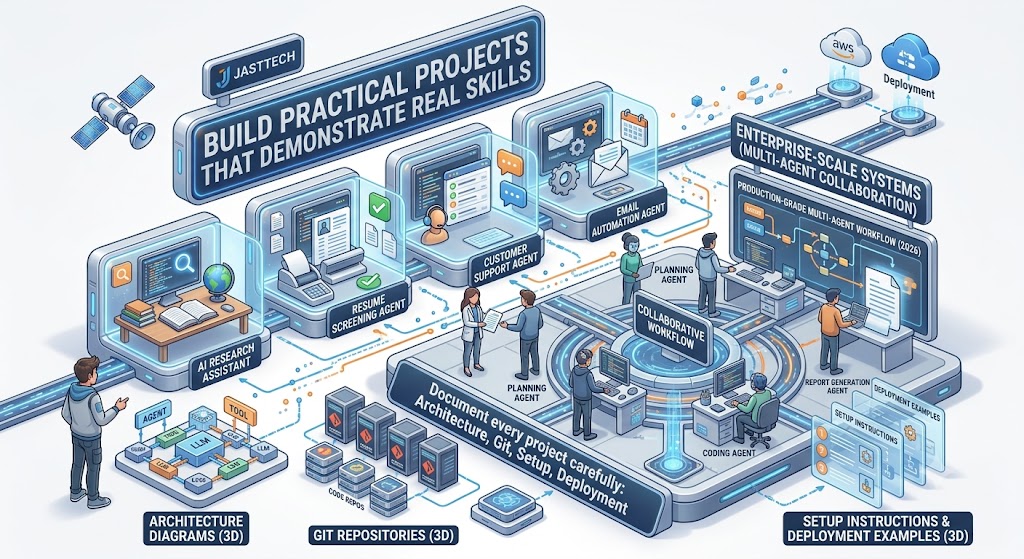
Employers value practical experience more than completed online courses. Your portfolio should demonstrate that you can build AI agents capable of solving real business problems.
Start with beginner-level projects before moving toward enterprise-scale systems.
Good portfolio ideas include:
AI Research Assistant
Resume Screening Agent
Customer Support Agent
Document Analysis Assistant
Meeting Summarization Agent
Email Automation Agent
Sales Intelligence Agent
Code Review Assistant
As your skills improve, combine multiple specialized agents into collaborative workflows.
Examples include:
Research Agent
Planning Agent
Coding Agent
Testing Agent
Report Generation Agent
These multi-agent systems closely resemble how enterprises are deploying Agentic AI in production during 2026.
Document every project carefully with architecture diagrams, Git repositories, setup instructions, and deployment examples. A well-documented portfolio often makes a stronger impression than multiple certificates.
Learn Cloud Deployment and Enterprise Integration
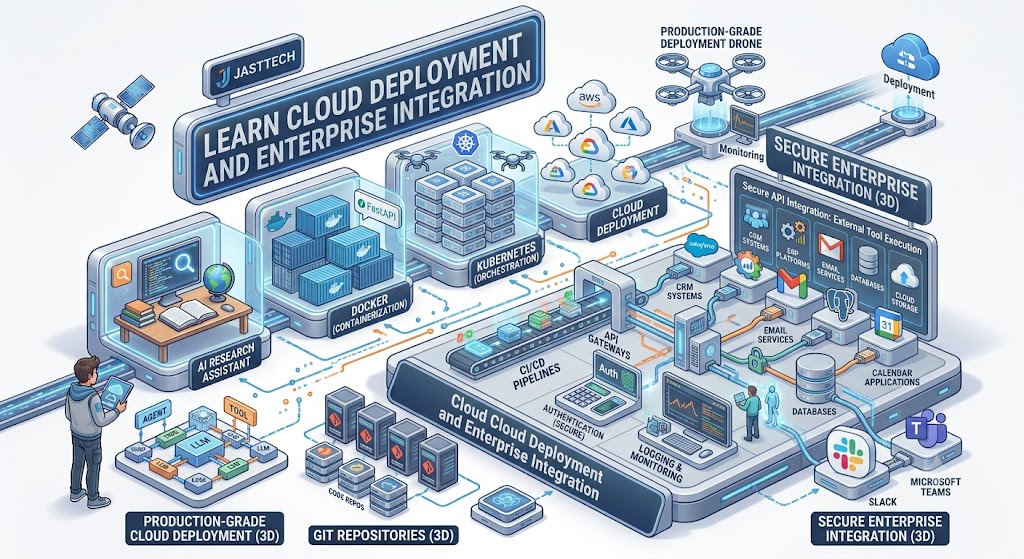
Building an AI agent locally is only the first step. Modern organizations expect engineers to deploy, monitor, and maintain intelligent systems in production environments.
Develop practical skills in:
Docker
Kubernetes basics
FastAPI
Cloud deployment
API gateways
Authentication
Logging
Monitoring
CI/CD pipelines
You'll also need to understand how AI agents connect with enterprise software through APIs.
Examples include:
CRM systems
ERP platforms
Email services
Databases
Cloud storage
Calendar applications
Slack
Microsoft Teams
Understanding secure API integration significantly increases your value because enterprise AI depends heavily on external tool execution rather than isolated language models.
Engineers who combine AI with cloud infrastructure become much more attractive candidates for organizations deploying production-grade autonomous systems.
Develop Skills That Differentiate You in the Job Market
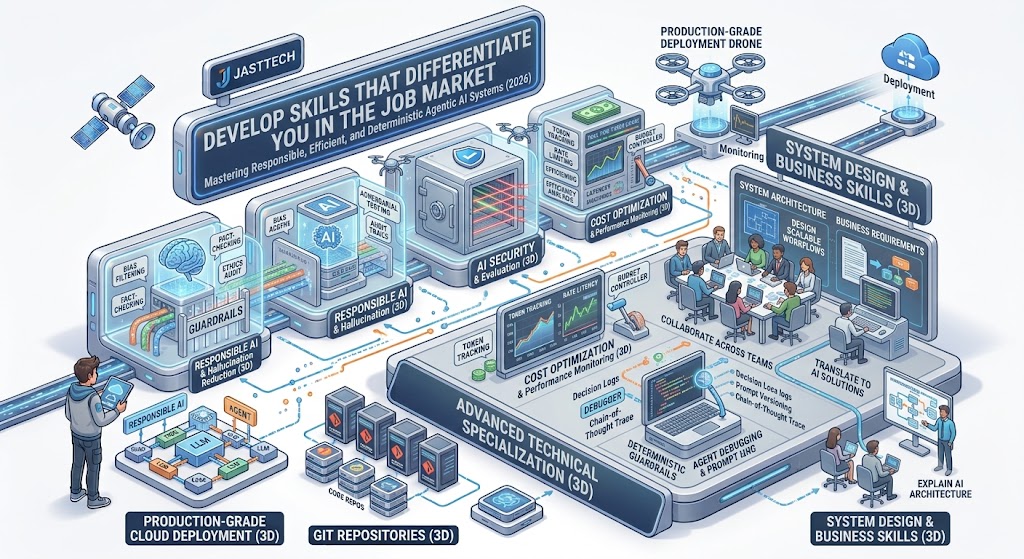
Technical knowledge alone is no longer enough. Companies increasingly seek engineers who understand how AI systems make decisions responsibly and efficiently.
Focus on learning:
AI evaluation techniques
Prompt optimization
Agent debugging
Cost optimization
Responsible AI
AI security
Hallucination reduction
Performance monitoring
Equally important are communication and system design skills.
Employers appreciate engineers who can:
Explain AI architecture clearly
Design scalable workflows
Collaborate across teams
Translate business requirements into AI solutions
Optimize workflows for cost and performance
Learning these complementary skills makes you more valuable than candidates who simply know how to use AI libraries.
Continuous learning is equally essential because Agentic AI evolves rapidly. Following industry updates, experimenting with new frameworks, and refining your projects will keep your expertise current.
Follow a Structured Learning Timeline to Become Job Ready
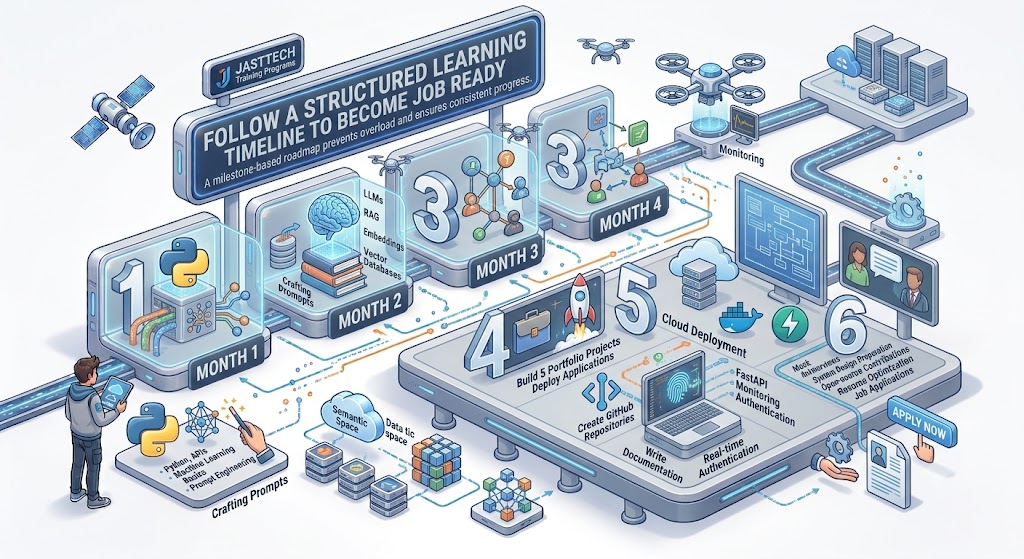
Without a roadmap, many learners spend months consuming tutorials without developing practical expertise. A structured learning plan accelerates progress and builds confidence.
A practical roadmap looks like this:
Month 1
Python
APIs
Machine Learning basics
Prompt Engineering
Month 2
Large Language Models
RAG
Embeddings
Vector databases
Month 3
LangGraph
CrewAI
OpenAI Agents SDK
Multi-agent architecture
Month 4
Build five portfolio projects
Deploy applications
Create GitHub repositories
Write technical documentation
Month 5
Cloud deployment
Docker
FastAPI
Monitoring
Authentication
Month 6
Mock interviews
System design preparation
Open-source contributions
Resume optimization
Job applications
Following a milestone-based roadmap prevents information overload while ensuring consistent progress. Training programs from JastTech can further accelerate learning by combining structured mentorship, industry-focused projects, and guidance aligned with current enterprise expectations.
Conclusion
Agentic AI represents one of the biggest shifts in artificial intelligence since the rise of Large Language Models. Organizations are rapidly moving beyond chatbots toward autonomous systems capable of planning, reasoning, collaborating, and completing complex business workflows with minimal human intervention. Engineers who understand these technologies today will be well positioned for tomorrow's AI-driven workplace.
Success in Agentic AI is not about learning one framework or completing one certification. It comes from mastering the fundamentals, building practical projects, understanding enterprise deployment, and continuously adapting to new technologies. By following this roadmap and strengthening your portfolio through hands-on learning with JastTech, you can confidently prepare for the growing career opportunities in Agentic AI throughout 2026 and beyond.