


How to Prepare for Guidewire Chennai Jobs and Build a Successful Career in Insurance Technology
Navigate through this article using the table of contents below
Table of Contents
No headings found in this article.
The global Property and Casualty (P&C) insurance sector is undergoing a massive digital overhaul, with modernized core systems replacing legacy software across claims, policy, and billing operations. At the forefront of this digital shift is Guidewire Software, an enterprise platform that powers core operational workflows for top insurance carriers worldwide. Because Chennai has established itself as a premier global hub for insurance technology, multinational consulting firms, global capability centers, and IT service integrators are actively expanding their dedicated technology teams within the city. Professionals who acquire hands-on proficiency in Guidewire architecture, Gosu programming, and cloud integration patterns are finding exceptional career stability, rapid advancement, and lucrative compensation packages in today's evolving market.
As leading insurance technology firms expand their delivery centers across Tamil Nadu, securing these competitive positions requires structured technical preparation, industry domain knowledge, and practical exposure to real-world deployment workflows. Aspiring developers, test automation engineers, and business analysts must align their learning path with industry-standard development workflows and platform frameworks. Enrolling in specialized programs like Guidewire training in Chennai allows technology professionals to build hands-on expertise in core platform mechanics, configuration rules, and data model extensions. By mastering these critical competencies early in your preparation, you create a direct pathway toward high-growth job roles in Chennai’s vibrant tech ecosystem.
Understanding the Guidewire Platform and Core Suite Architecture
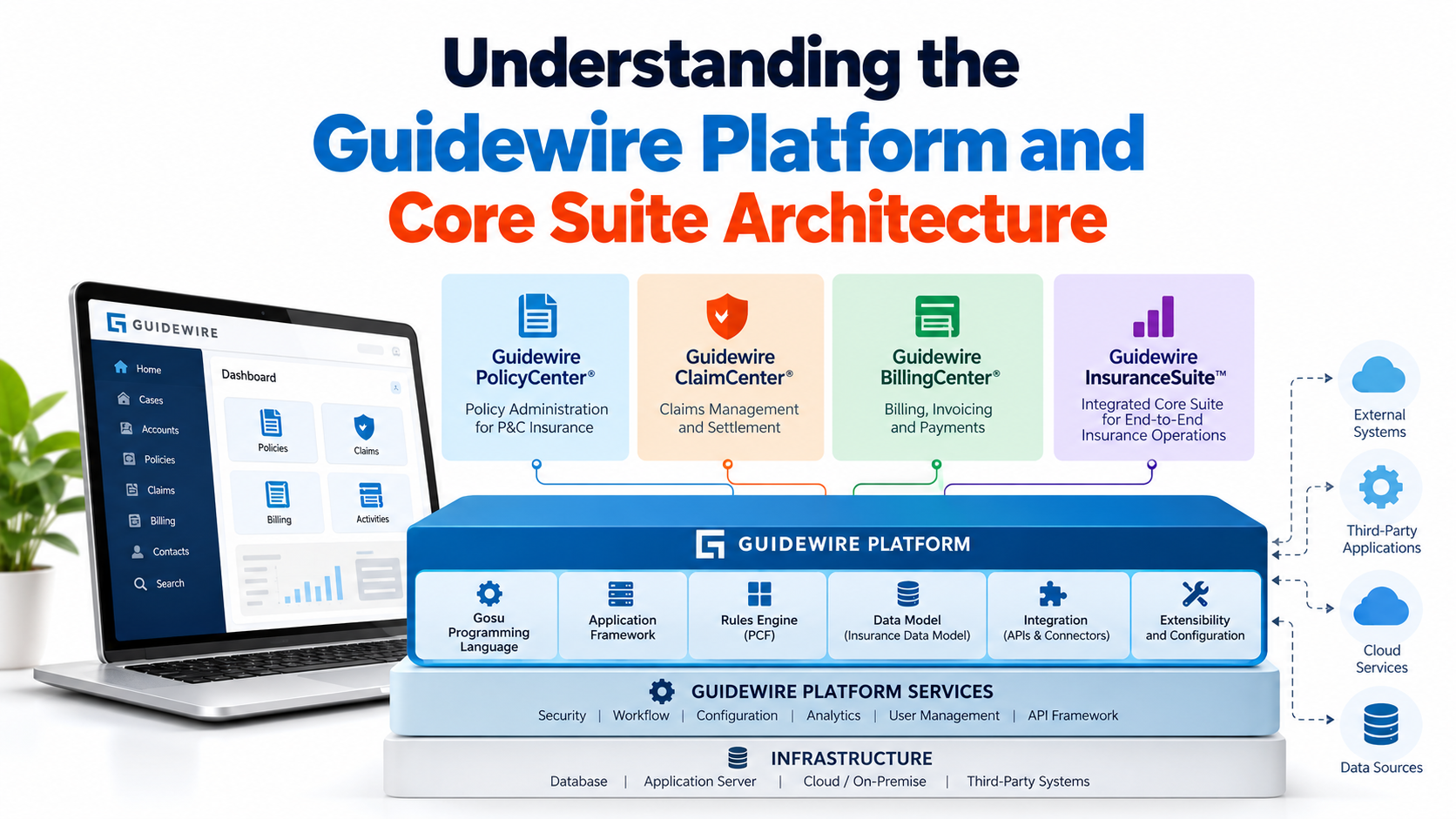
Guidewire InsuranceSuite forms the technological backbone for modern P&C insurance carriers, offering an integrated system of record designed to handle the entire policy lifecycle. The platform consists of three core applications: ClaimCenter, PolicyCenter, and BillingCenter. ClaimCenter manages the end-to-end claims lifecycle, from First Notice of Loss (FNOL) to adjudication, settlement, and financial reporting. PolicyCenter drives product design, quoting, underwriting, policy issuance, and mid-term endorsements. BillingCenter oversees premium invoicing, payment processing, commission disbursement, and agency accounting.
Underpinning these core applications is a unified platform layer that shares a common data model, rule engine, and administrative console. Developers interact with the platform primarily using Gosu, an object-oriented, strongly-typed programming language running on the Java Virtual Machine (JVM). Gosu simplifies domain-specific logic, entity extensions, data extraction, and rule writing. Understanding how these core applications interoperate with underlying database schemas, messaging buses, and API gateways is the foundation for building high-performance solutions within enterprise insurance environments.
Demand for Guidewire Professionals in Chennai and India
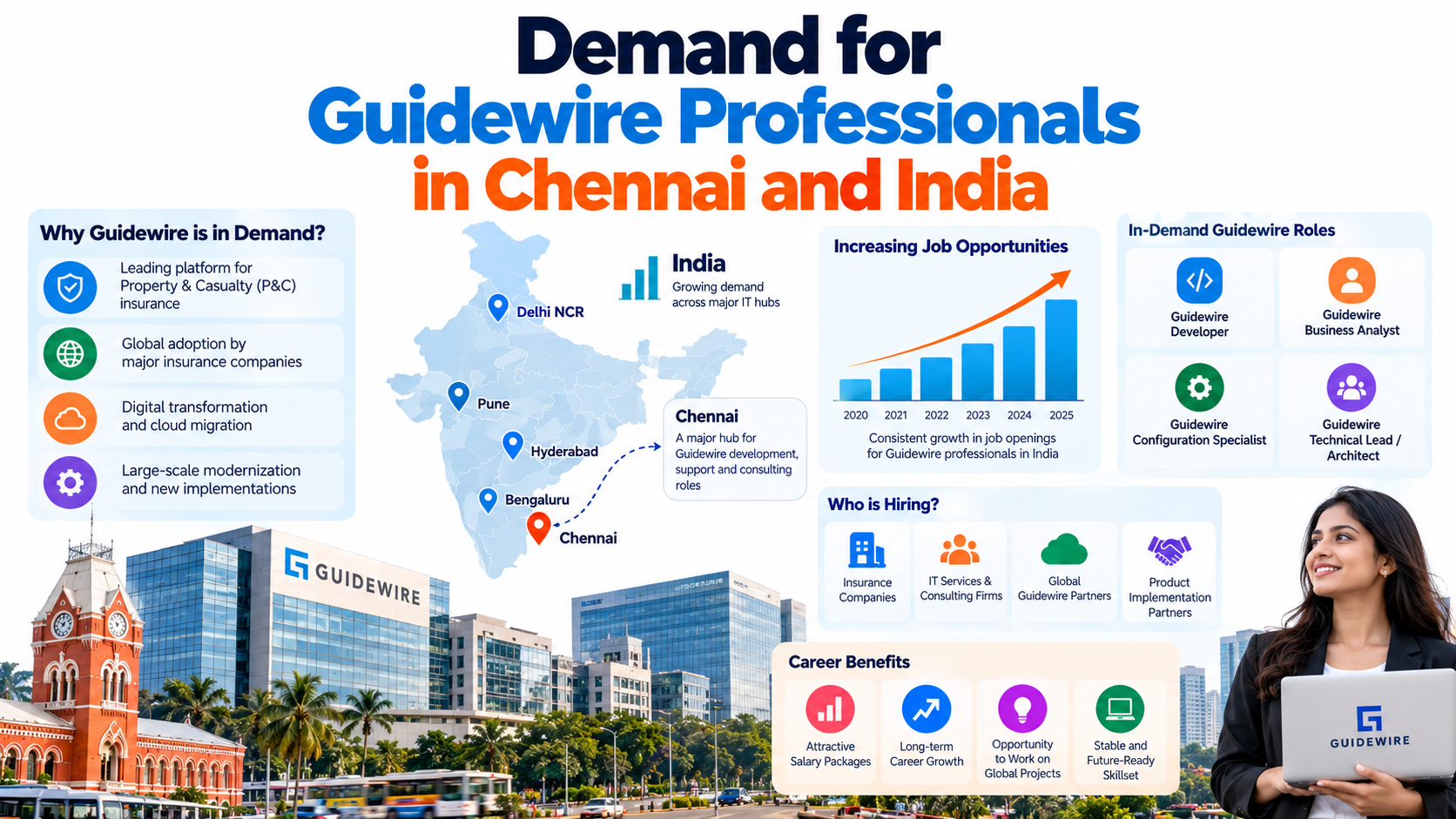
Chennai has emerged as a powerhouse for insurance technology expertise, housing dedicated global capability centers and delivery units for major multinational insurance carriers and consulting firms. These organizations handle complex international implementation, cloud migration, and version upgrade projects directly out of Chennai technology parks. Consequently, certified developers, business analysts, and integration specialists remain in high demand across the region. Professionals seeking flexible, high-impact learning opportunities across multiple regions can explore comprehensive programs like Guidewire training in India to gain end-to-end expertise aligned with international enterprise implementation standards.
Beyond Chennai, the overall national demand for skilled Guidewire engineers continues to climb as global insurance providers shift from legacy on-premises installations to cloud-native platforms like Guidewire Cloud (Jutro, Cloud API, and Cloud Data Platform). Indian IT services firms handle a vast share of global Guidewire implementations, creating long-term career stability and global mobility opportunities. Mastering local enterprise expectations while gaining a broad understanding of national industry trends positioning professionals to command strong compensation packages and secure leadership roles in insurance digital transformation projects.
Essential Technical Skills and Programming Prerequisites
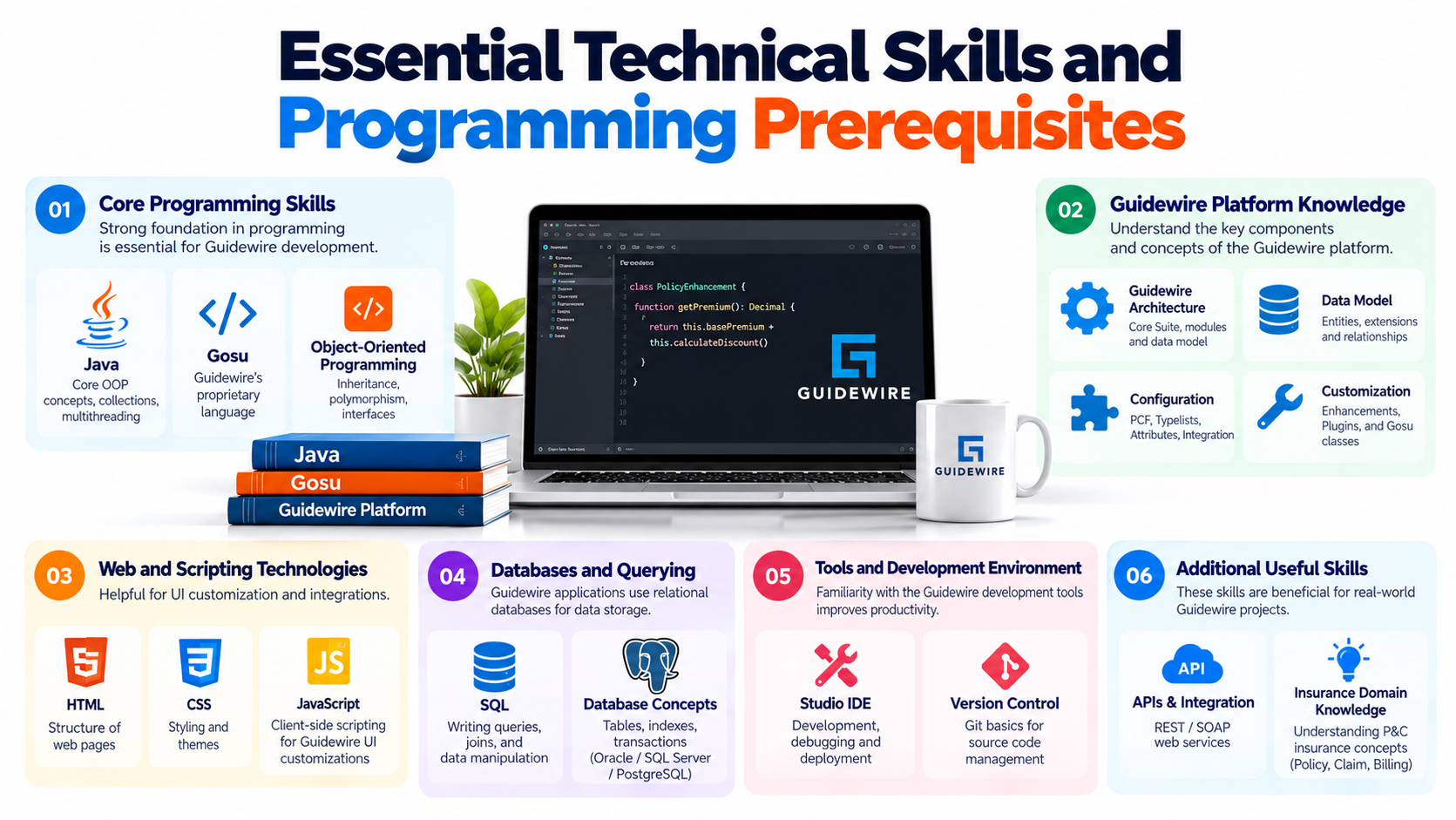
To build a career as a Guidewire developer or technical architect, candidates must establish a solid foundation in core software engineering principles and object-oriented programming. Since Gosu runs on the JVM, proficiency in Java or C# makes learning Gosu syntax, type inferences, and entity classes smooth and intuitive. Developers must understand XML/JSON schemas, object-relational mapping (ORM), software design patterns, and relational database structures (SQL) to manipulate data models and write efficient business logic without compromising system performance.
In addition to core programming language skills, modern Guidewire roles require deep familiarity with enterprise integration patterns, web services, and cloud technologies. Candidates should master RESTful and SOAP-based API integrations, message queues, microservices interfaces, and Guidewire’s Cloud API frameworks. Understanding version control tools like Git, CI/CD deployment pipelines, unit testing frameworks, and cloud services (AWS or Azure) ensures that developers can build, test, and deploy resilient customization packages within modern agile team environments.
Key Functional Roles: Developer, Business Analyst, and QA Engineer
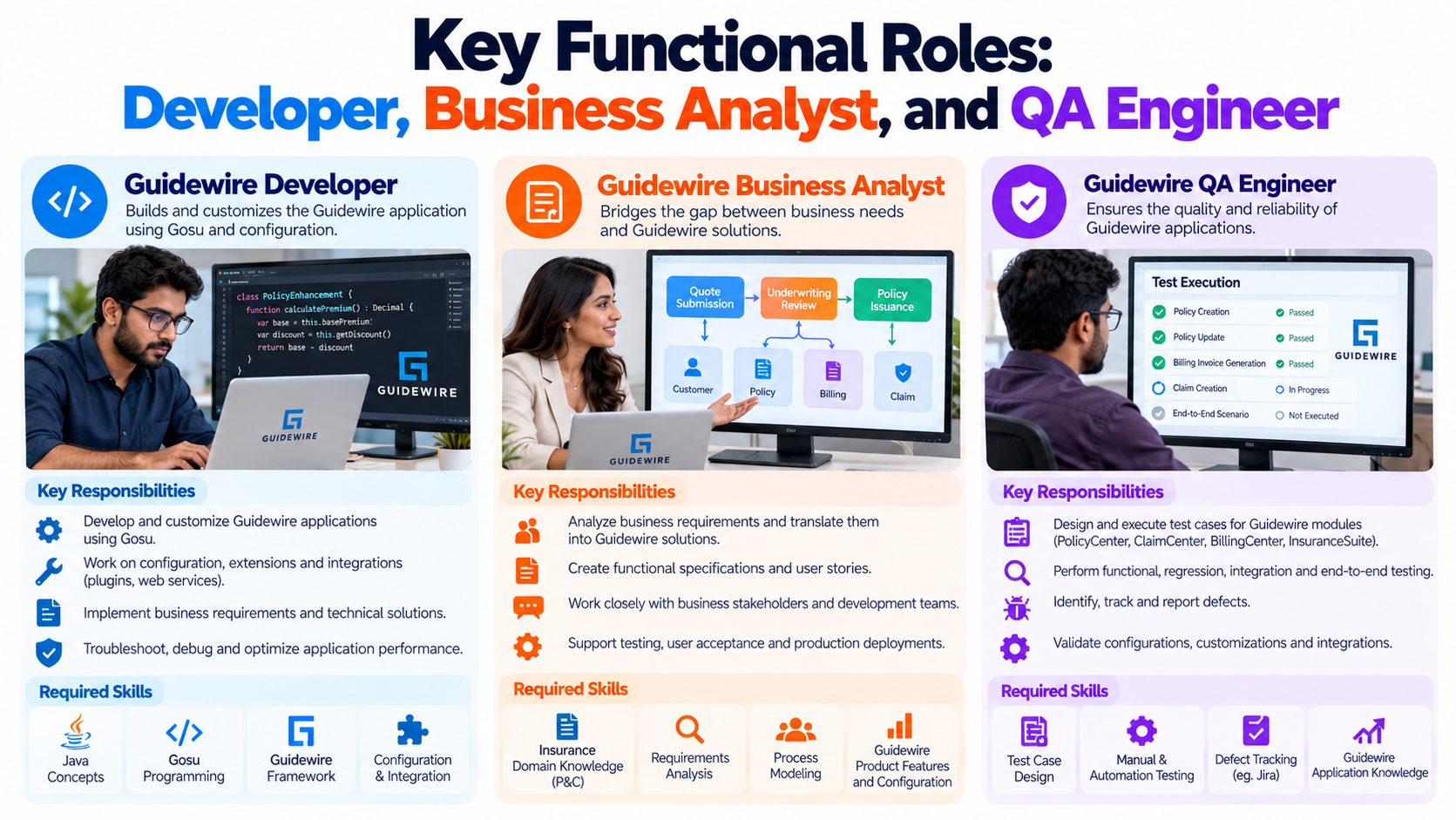
Career paths in the Guidewire ecosystem generally divide into technical, functional, and quality assurance disciplines, each requiring a tailored set of skills. Guidewire Developers focus on configuration and integration engineering. Configuration developers modify entity models, configure PCF (Page Configuration Format) user interfaces, and write Gosu business rules. Integration developers build robust connectors between Guidewire applications and third-party systems like payment gateways, fraud detection engines, credit bureaus, and document management platforms.
Business Analysts (BAs) bridge business operations and technical engineering teams. They translate complex underwriting, claims, and billing requirements into clear functional specs, wireframes, and user stories while ensuring compliance with regional insurance regulations. QA Engineers validate that platform configurations and integrations function properly. Automation test engineers leverage tools like Selenium, Cucumber, or specialized Guidewire testing frameworks to write automated end-to-end regression test suites, ensuring system reliability during frequent platform updates and cloud deployments.
Step-by-Step Preparation Strategy for Guidewire Chennai Job Interviews
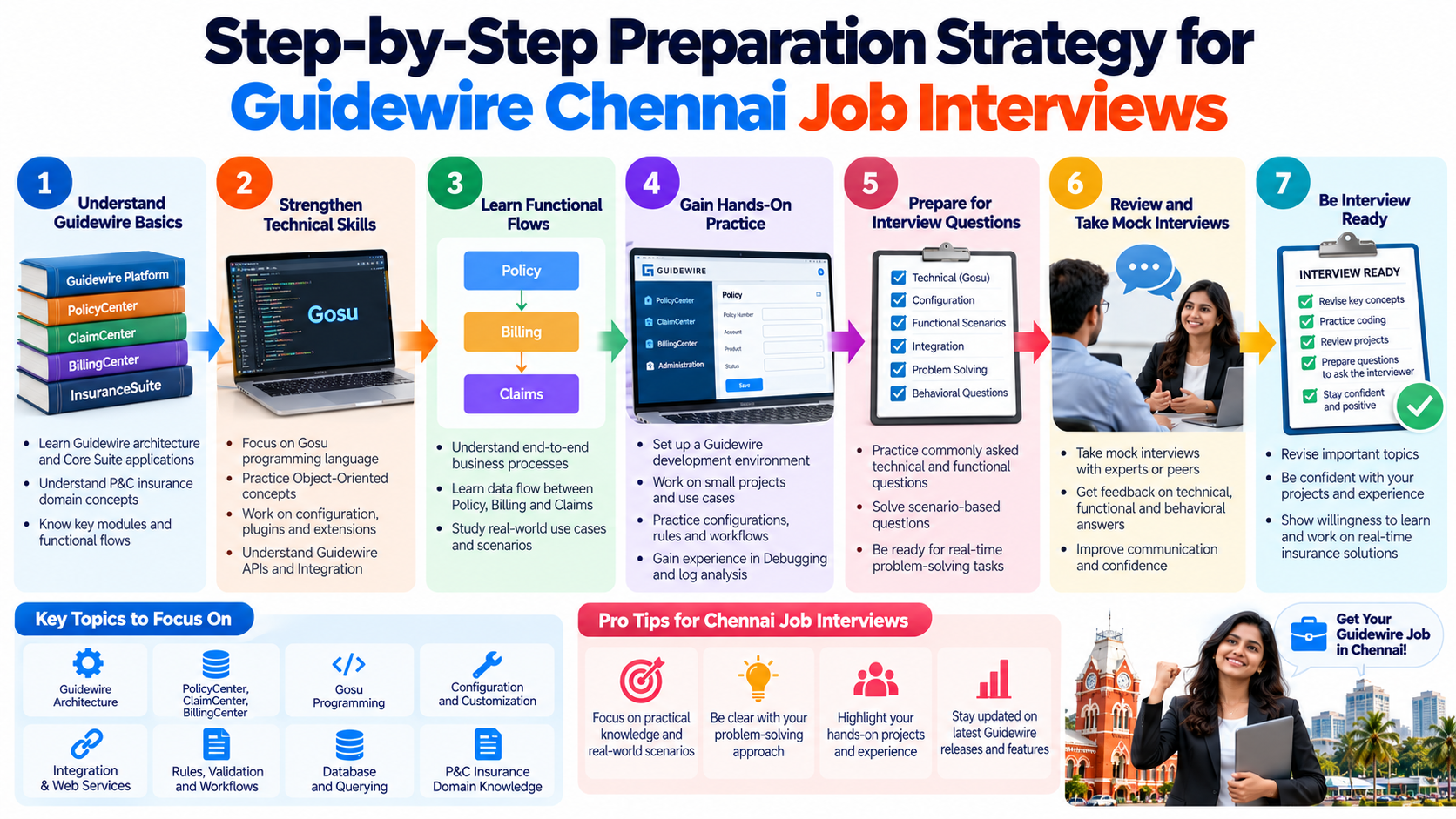
reparing for Guidewire job interviews in Chennai requires a dual focus on platform architecture and practical problem-solving skills. Begin by strengthening your foundational understanding of P&C insurance workflows, key terminology (such as deductibles, premiums, endorsements, FNOL, and reserves), and how core suite applications interact. Review core Gosu programming concepts, class structures, entity extensions, display keys, validation rules, and messaging plugins. Be ready to explain how you construct custom data fields, enforce business logic, and handle integration events cleanly.
Next, prepare for practical technical rounds and scenario-based questions. Employers in Chennai frequently use coding exercises, design reviews, or debugging tasks to evaluate a candidate's hands-on proficiency. Rehearse common scenario-based responses using real-world project examples, highlighting how you solved configuration bugs, optimized query performance, or resolved API integration issues. Demonstrating a clear problem-solving process, disciplined coding practices, and an understanding of agile team workflows will set you apart from other candidates during technical interviews.
Navigating Guidewire Certifications and Professional Growth
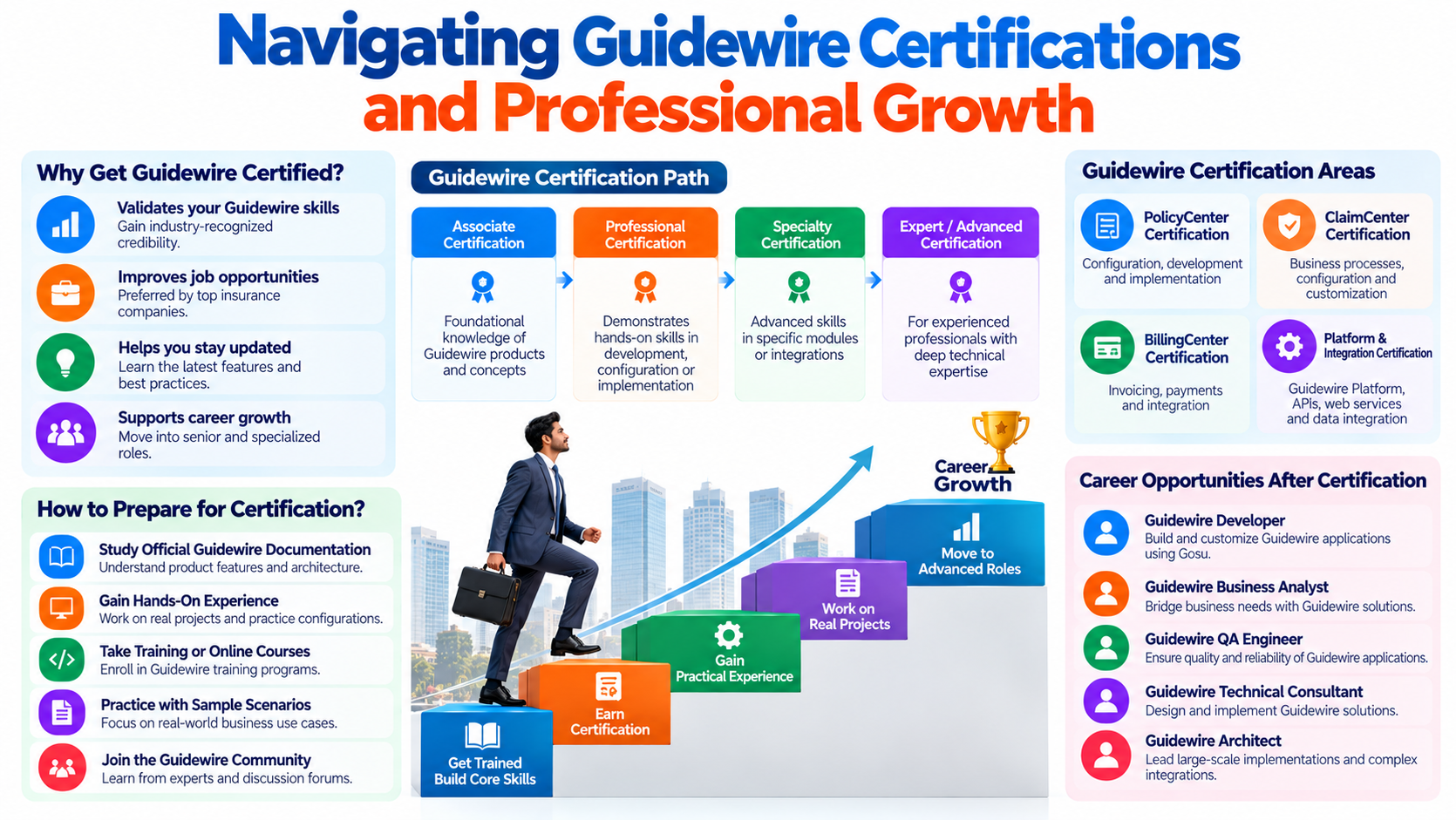
Earning official Guidewire certifications validates your technical expertise and provides a distinct advantage in the job market. Guidewire offers structured certification tracks tailored to candidate roles, including Associate, Professional, and Specialist levels across PolicyCenter, ClaimCenter, BillingCenter, and Guidewire Cloud capabilities. Earning an entry-level certification confirms your understanding of core platform principles, while advanced certifications prove your ability to design and implement complex, enterprise-grade customizations.
Continuous professional growth in insurance technology requires staying current with Guidewire's bi-annual platform releases, cloud migration patterns, and user experience frameworks like Jutro Digital Platform. As you build implementation experience, you can advance from junior developer or analyst roles into senior technical architect, integration lead, solution architect, or project management positions. Active participation in professional developer communities, industry forums, and technical user groups will help you stay informed on market trends and expand your career network.
Industry Trends: Guidewire Cloud, AI Integration, and Future Outlook
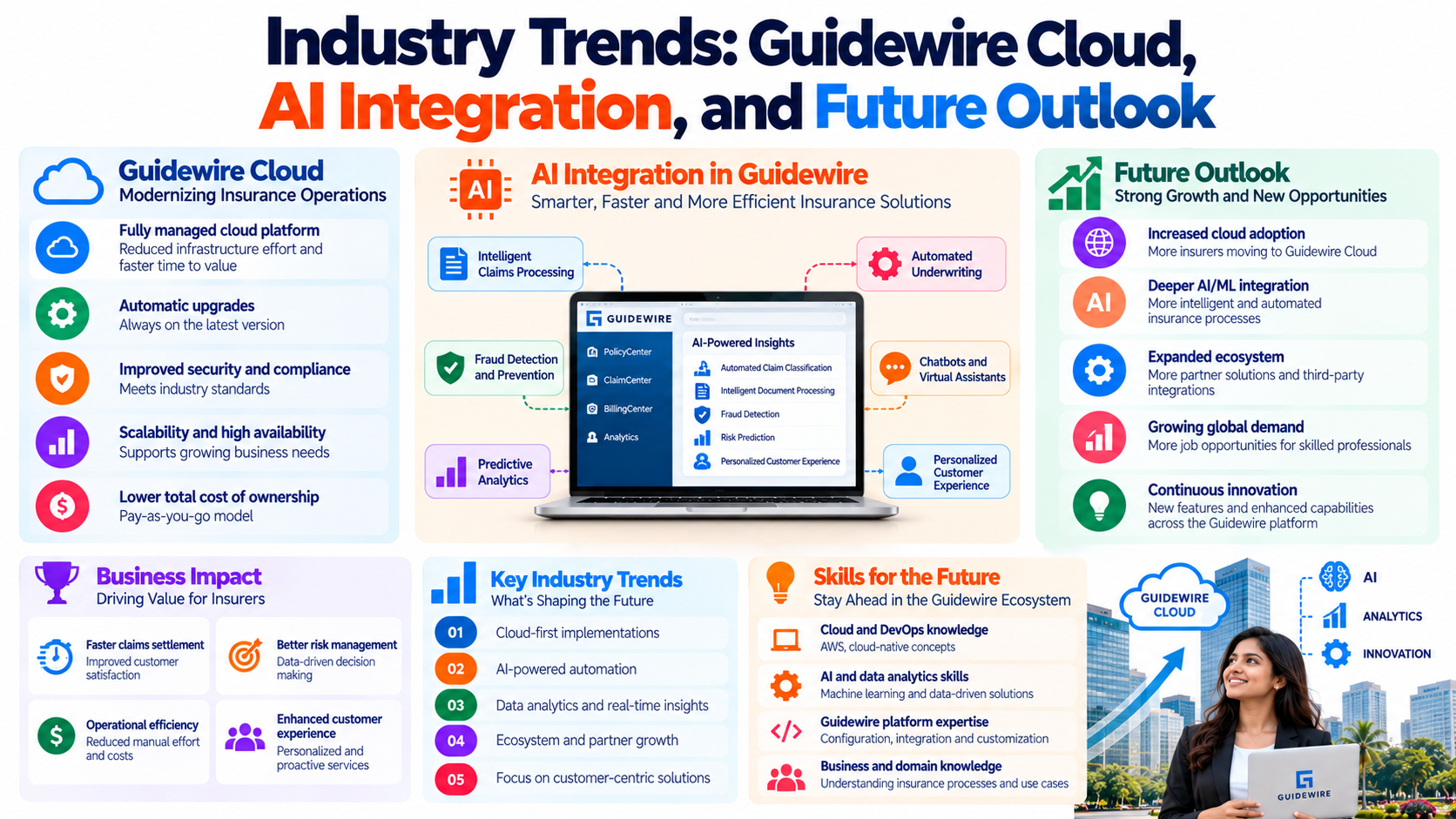
The P&C insurance industry is accelerating its transition from traditional on-premises software deployments to cloud-native SaaS architectures. Guidewire Cloud Platform (GWCP), powered by AWS, enables insurance carriers to deploy software updates faster, scale infrastructure on demand, and reduce operational maintenance overhead. Consequently, modern Guidewire engineering roles prioritize expertise in Cloud API standards, microservice integrations, containerized environments, and cloud deployment pipelines over legacy on-premises architecture patterns.
Artificial intelligence, machine learning, and predictive analytics are also transforming how Guidewire systems handle insurance workflows. Modern insurance platforms integrate AI-driven models to automate claims triage, detect fraudulent transactions, streamline underwriting risk assessments, and deliver personalized customer service interactions. Professionals who master cloud-native integration techniques alongside emerging AI-driven insurance automation patterns will remain at the forefront of the technology landscape, securing high-impact, future-proof roles across global markets.
Conclusion
Building a successful career in insurance technology through Guidewire specialization offers long-term professional growth, competitive compensation, and strong global mobility. As Property and Casualty insurance carriers accelerate their transition toward cloud-native platforms, the demand for qualified developers, functional analysts, and integration architects continues to rise in major technology hubs like Chennai. By building solid programming fundamentals, mastering core platform architecture, and completing targeted hands-on training, candidates can position themselves effectively for high-growth job opportunities across the sector.
Sustained success in this field requires continuous learning, keeping pace with platform updates, and earning relevant certifications that validate your technical expertise. Whether you focus on application configuration, external system integration, business analysis, or quality engineering, developing a clear understanding of both functional insurance workflows and technical engineering standards is key. Taking a structured approach to skill development and interview preparation will help you navigate the hiring process confidently and build a rewarding career in the evolving insurance technology landscape.