

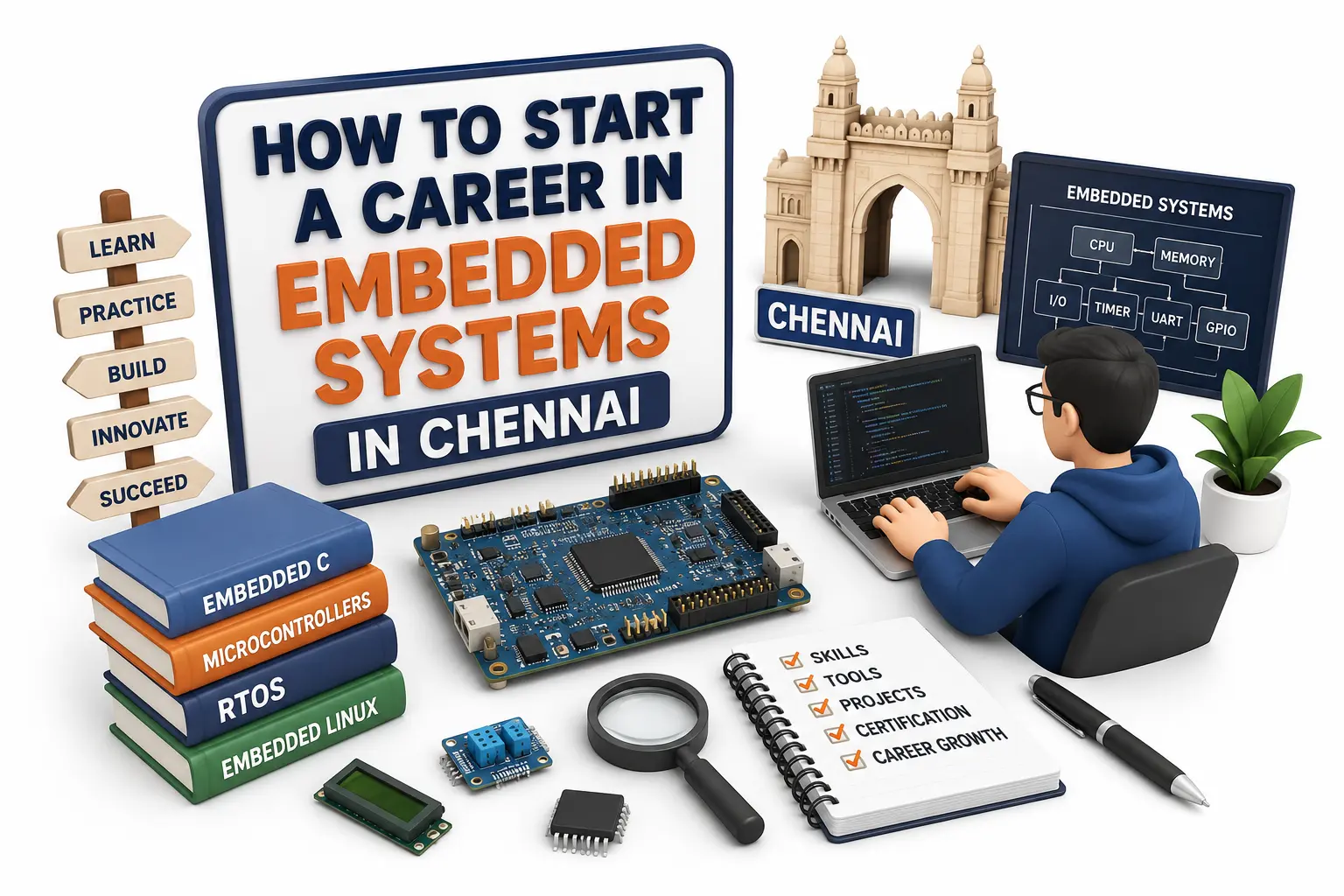
How to Start a Career in Embedded Systems in Chennai
Navigate through this article using the table of contents below
Table of Contents
No headings found in this article.
Every smart device around us—from automobiles and medical equipment to industrial robots and IoT products—depends on embedded systems. As industries continue adopting automation and connected technologies, the demand for skilled embedded engineers continues to grow across India, especially in Chennai's thriving electronics and manufacturing ecosystem.
The challenge isn't finding career opportunities—it's preparing with the right technical skills, practical experience, and industry mindset. This guide explains the complete roadmap for building an embedded systems career that aligns with what employers actually expect from fresh graduates.
Understand What the Embedded Systems Industry Really Needs
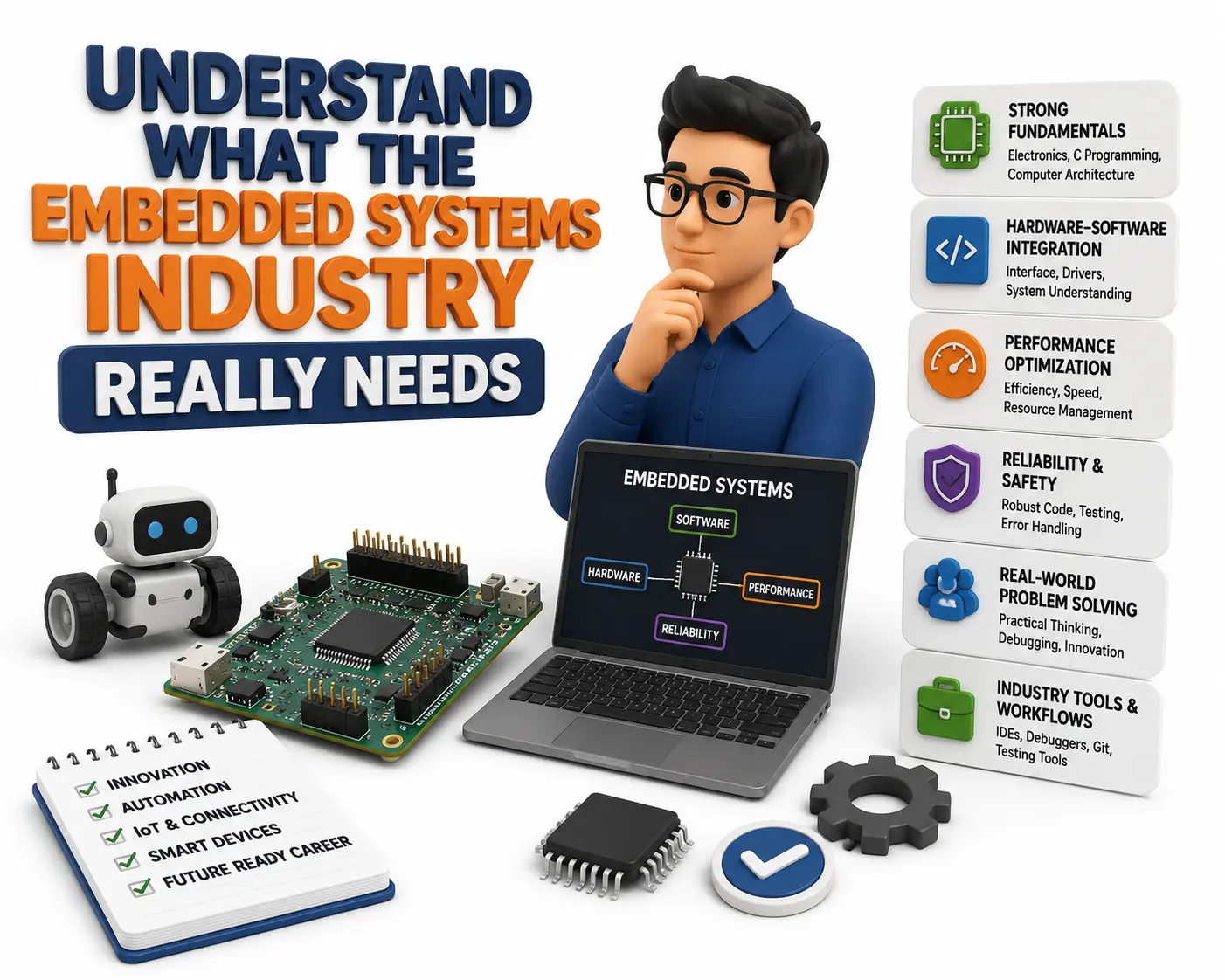
Before choosing a learning path, it is important to understand that embedded engineering combines both software and hardware. Companies look for engineers who can understand electronic systems while writing efficient, reliable software that runs on dedicated hardware.
Instead of focusing only on theoretical concepts, employers prefer candidates who understand complete product development. This includes learning how software communicates with hardware, debugging system-level issues, and optimizing performance.
Key knowledge areas include:
Embedded C programming
Digital electronics fundamentals
Microcontrollers and microprocessors
Communication protocols
Basic computer architecture
Problem-solving and debugging
Having a strong foundation makes advanced topics much easier to understand later in your career.
Build Strong Programming and Hardware Fundamentals
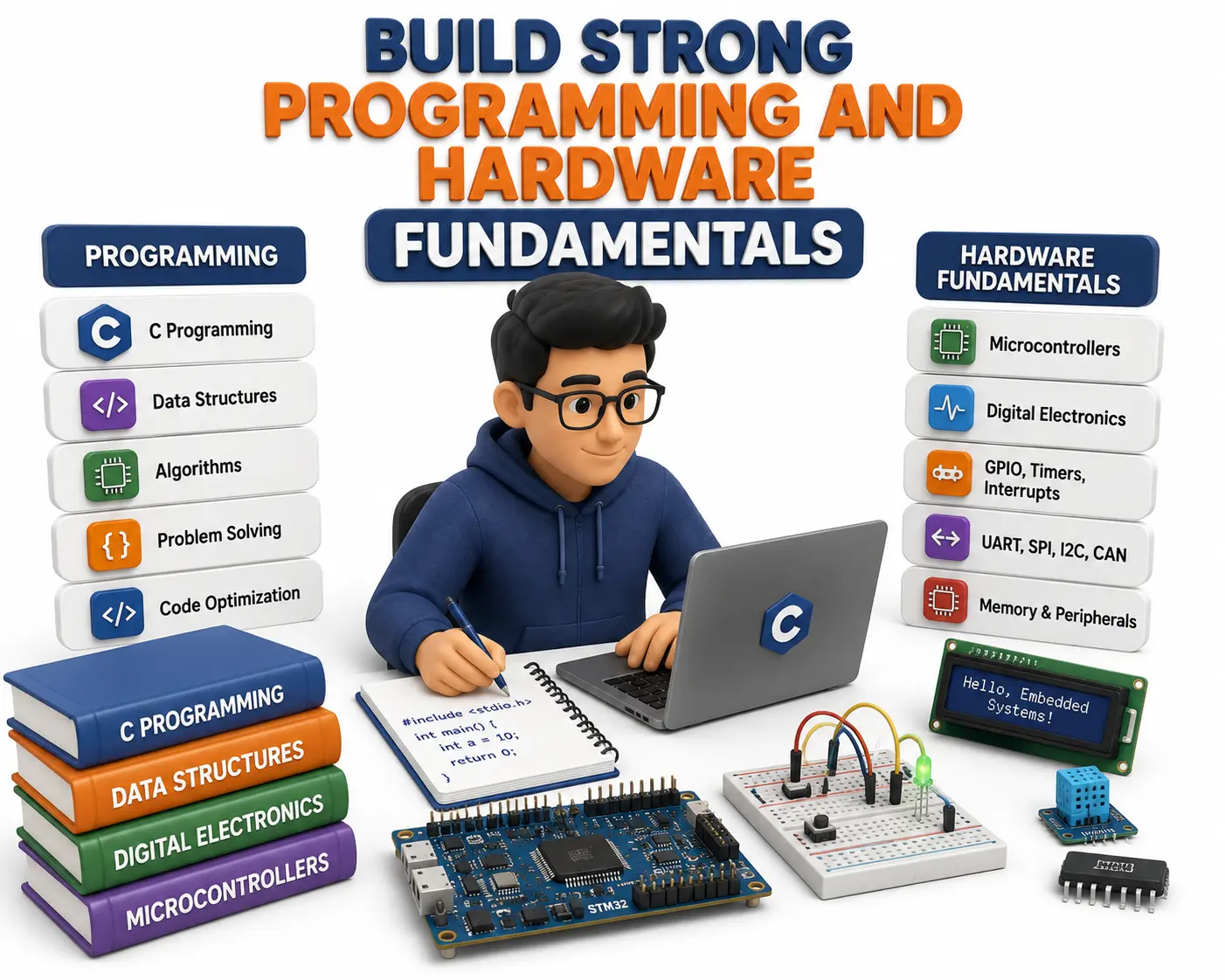
Programming is one of the most important skills for embedded engineers. Embedded software directly controls hardware resources, making efficiency and reliability essential.
Learning C thoroughly should be your first priority. Once comfortable with programming, move toward understanding hardware interfaces and peripheral communication. At the same time, strengthen your understanding of electronics because software and hardware are closely connected in embedded development.
Focus on learning:
C programming
Data structures
ARM architecture
GPIO programming
Timers and interrupts
UART
SPI
I2C
CAN protocol
Memory management
Practical experimentation using development boards helps reinforce these concepts far better than theoretical study alone.
Learn Industry Tools Through Practical Development
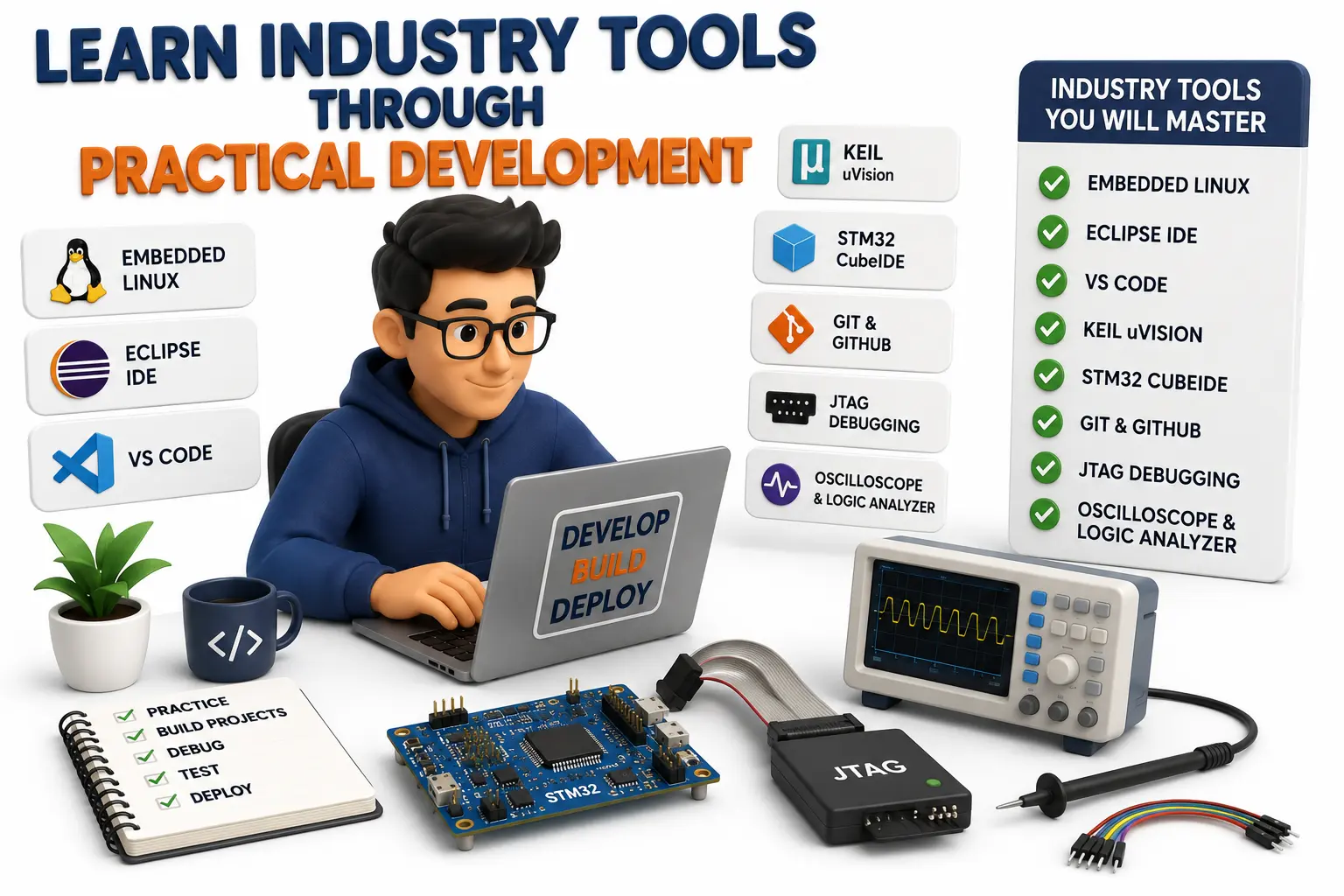
Modern embedded engineering involves much more than writing code. Engineers are expected to work with professional development tools that support collaboration, debugging, testing, and deployment.
A structured Embedded Systems Course in Chennai should expose students to these professional workflows rather than limiting learning to classroom examples. Employers value candidates who already understand commonly used tools because they require less onboarding after joining a team.
Important tools to learn include:
Embedded Linux
Eclipse IDE
VS Code
Keil uVision
STM32CubeIDE
Git and GitHub
JTAG debugging
Oscilloscope basics
Logic analyzer usage
Build automation concepts
JastTech emphasizes practical exposure to these technologies through guided laboratory exercises and real development workflows, helping learners gain confidence before entering the industry.
Build Real Projects That Demonstrate Your Skills
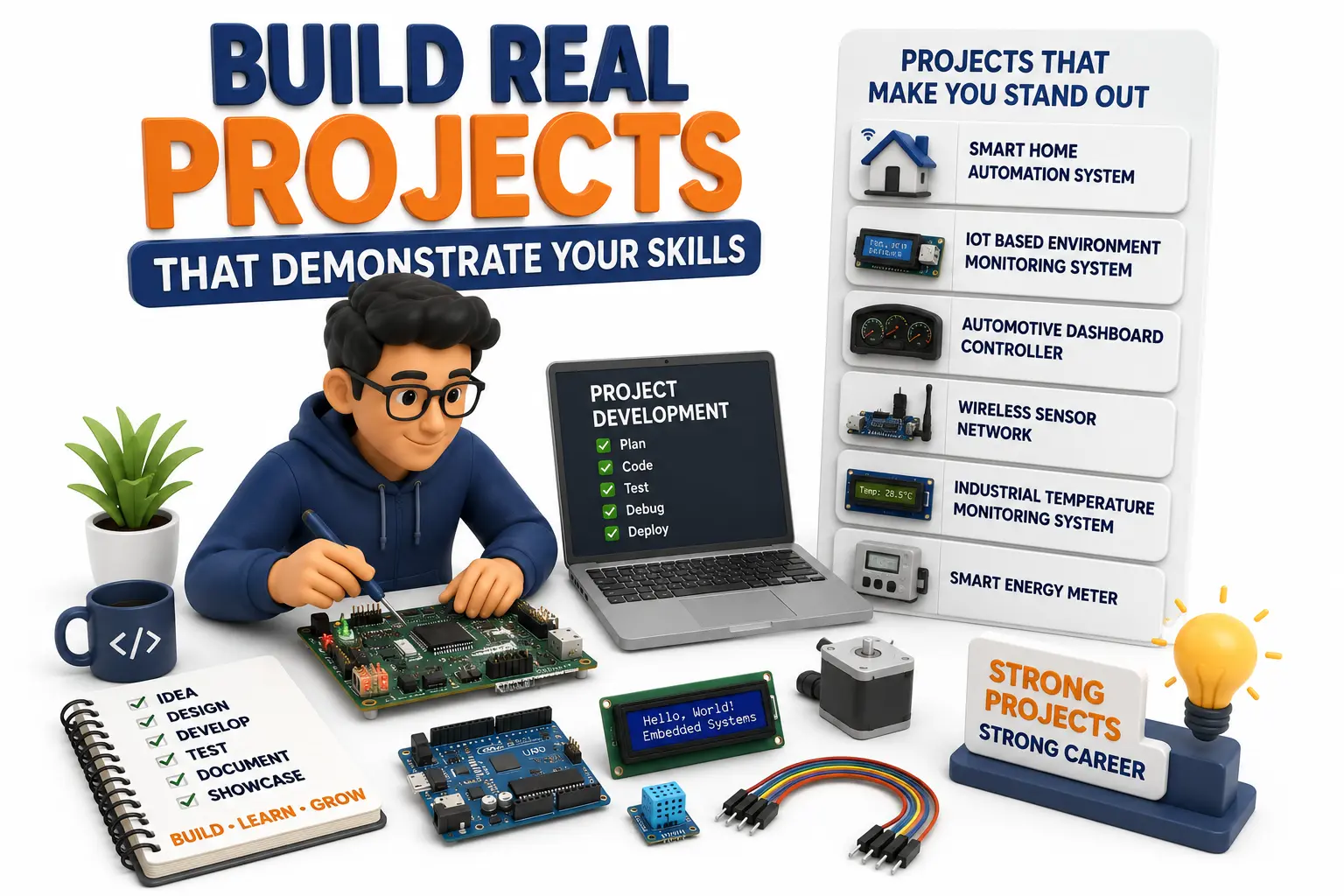
Recruiters often spend only a few minutes reviewing a resume. Strong projects immediately demonstrate your technical abilities far better than listing numerous theoretical subjects.
Projects should solve realistic engineering problems while showcasing multiple technical skills together. Instead of copying tutorials, modify existing ideas or build complete applications from scratch to demonstrate independent thinking.
Consider building projects such as:
Smart home automation system
Industrial temperature monitoring
IoT environmental monitoring station
Automotive dashboard controller
Smart energy meter
Embedded security system
Wireless sensor network
Robotic motor controller
A high-quality GitHub portfolio containing documentation, source code, architecture diagrams, and demonstration videos significantly increases interview opportunities.
Prepare Specifically for Technical Interviews
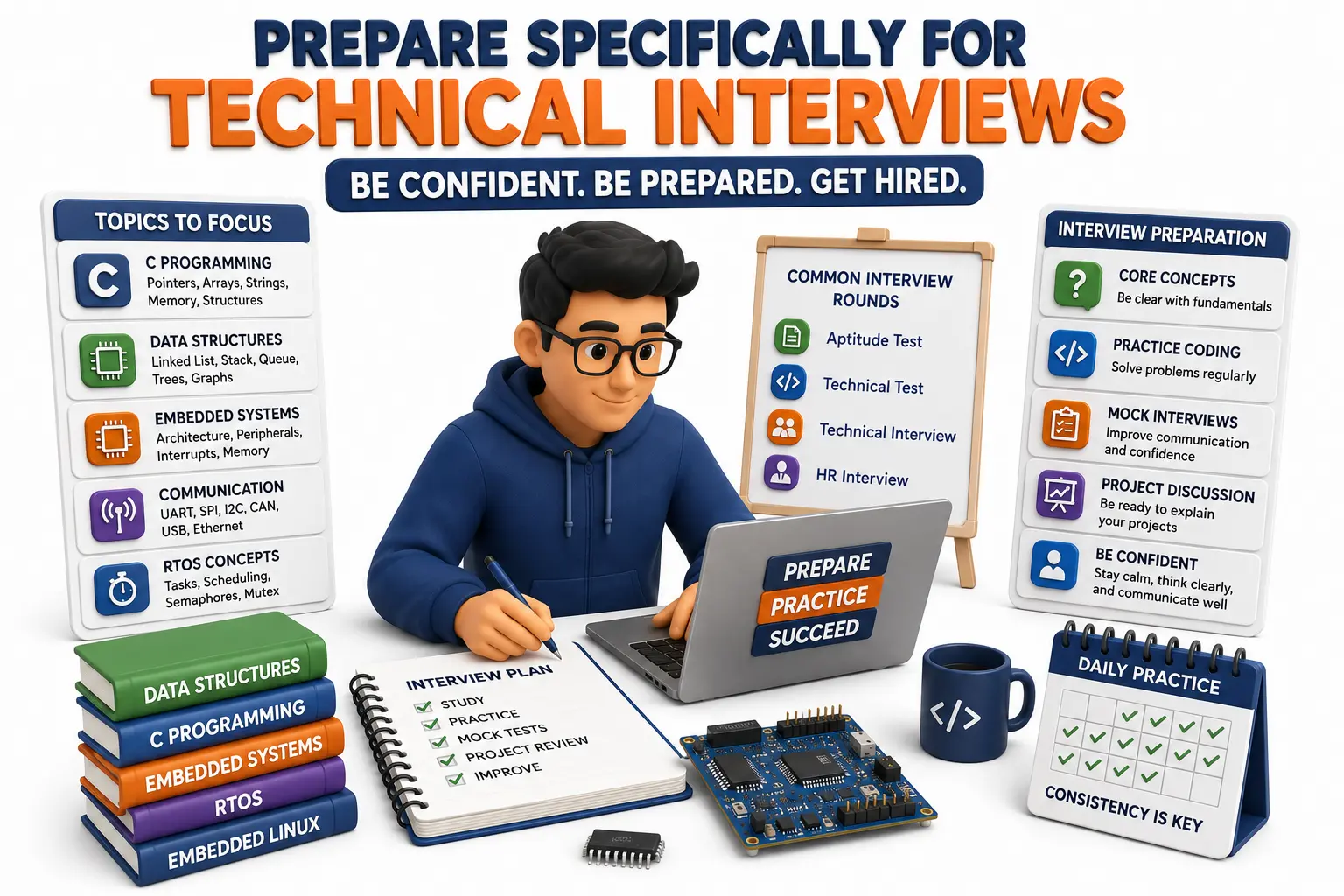
Many fresh graduates underestimate interview preparation. Companies evaluate much more than programming knowledge. Interviewers assess logical thinking, debugging ability, communication, and understanding of embedded concepts.
Technical interviews typically begin with core fundamentals before progressing toward project discussions. Being able to explain your own implementation decisions often matters more than memorizing textbook definitions.
Prepare by practicing:
C programming questions
Pointer concepts
Memory allocation
RTOS basics
Interrupt handling
Communication protocols
Embedded Linux fundamentals
Debugging scenarios
Project explanation
Coding exercises
Choosing an Embedded Systems Certification in Chennai that includes mock interviews, coding assessments, and project reviews can significantly improve confidence during placement processes.
Continue Learning as Technologies Continue Evolving
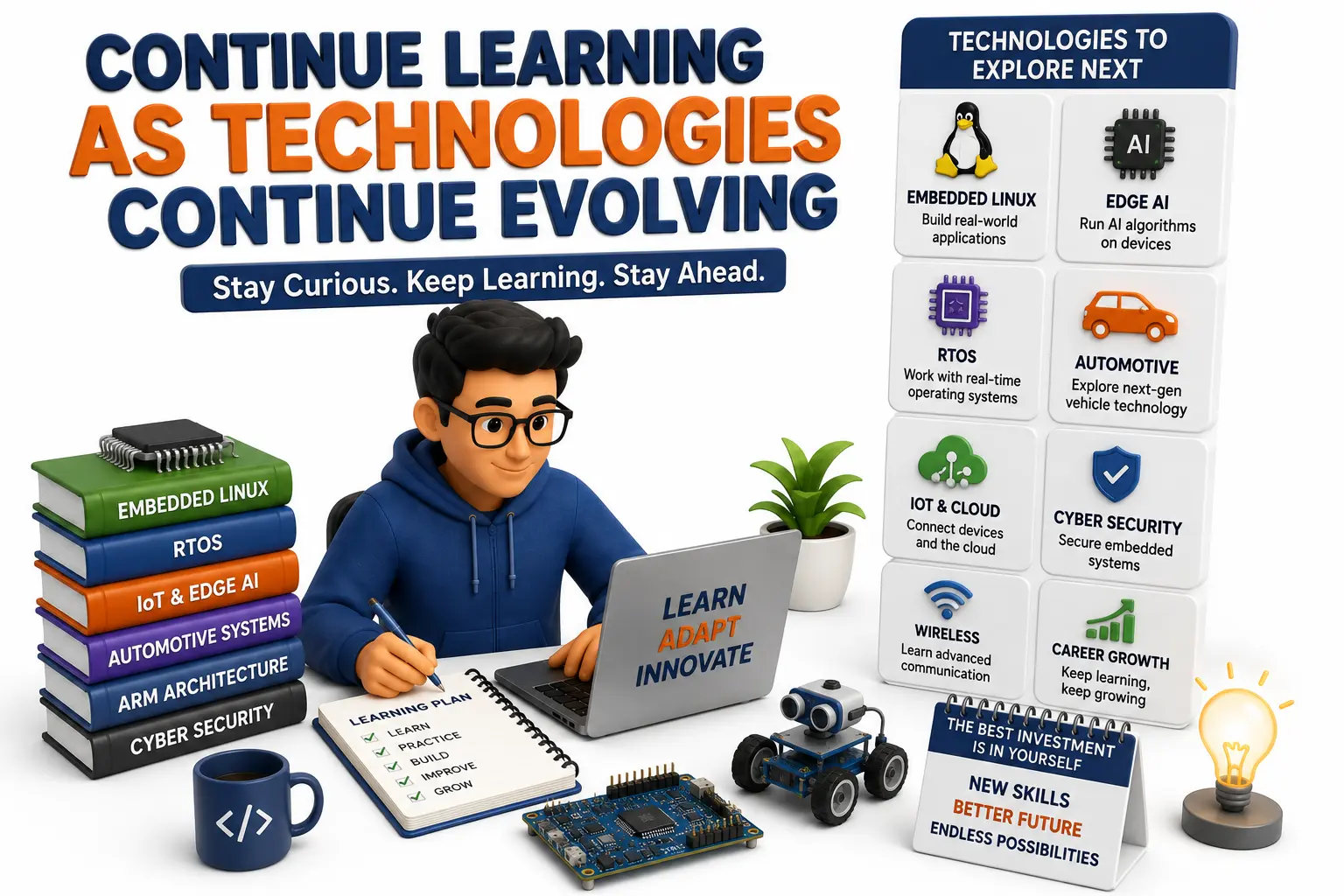
Embedded engineering is continuously changing as industries adopt AI, edge computing, autonomous systems, connected vehicles, and Industrial IoT. Engineers who continue learning remain competitive throughout their careers.
After securing your first role, continue expanding your expertise by learning advanced domains that complement embedded development. This creates opportunities for specialization and higher-paying positions.
Areas worth exploring include:
Embedded Linux kernel development
Device driver programming
RTOS optimization
IoT architecture
Edge AI
Automotive embedded software
Functional safety
ARM Cortex optimization
Wireless communication
Cloud-connected embedded devices
For graduates beginning their journey, Embedded Systems Training for Freshers in Chennai should ideally combine classroom concepts, industry-standard tools, hands-on projects, mentorship, and career preparation to build long-term professional success. JastTech follows this practical learning philosophy by focusing on skills that employers actively seek.
Conclusion
Starting a career in embedded systems requires much more than completing a course or learning a programming language. Success comes from building strong technical fundamentals, understanding hardware-software integration, mastering professional development tools, and consistently applying knowledge through meaningful projects. Engineers who invest time in practical learning become significantly more confident during interviews and adapt faster when they enter professional development teams.
Chennai continues to be one of India's strongest destinations for electronics manufacturing, automotive technology, industrial automation, and embedded software development, creating excellent opportunities for aspiring engineers. By following a structured roadmap, continuously upgrading your skills, and learning through industry-focused training at JastTech, you can build a rewarding embedded systems career that remains relevant as technology continues to evolve.