


How to Start a Career in Guidewire in Hyderabad
Navigate through this article using the table of contents below
Table of Contents
No headings found in this article.
Breaking into Guidewire can look difficult from the outside. You hear about PolicyCenter, ClaimCenter, Gosu, configuration, integrations, cloud and insurance workflows all at once. The real challenge, however, is not learning everything—it is learning the right things in the right order.
Hyderabad gives technology professionals access to a large enterprise IT environment, but simply adding Guidewire to a resume is not enough. Employers need people who can understand insurance requirements, work with the platform, troubleshoot problems and explain how their technical decisions support a real business process.
Understand the Guidewire Career Ecosystem Before Learning the Platform
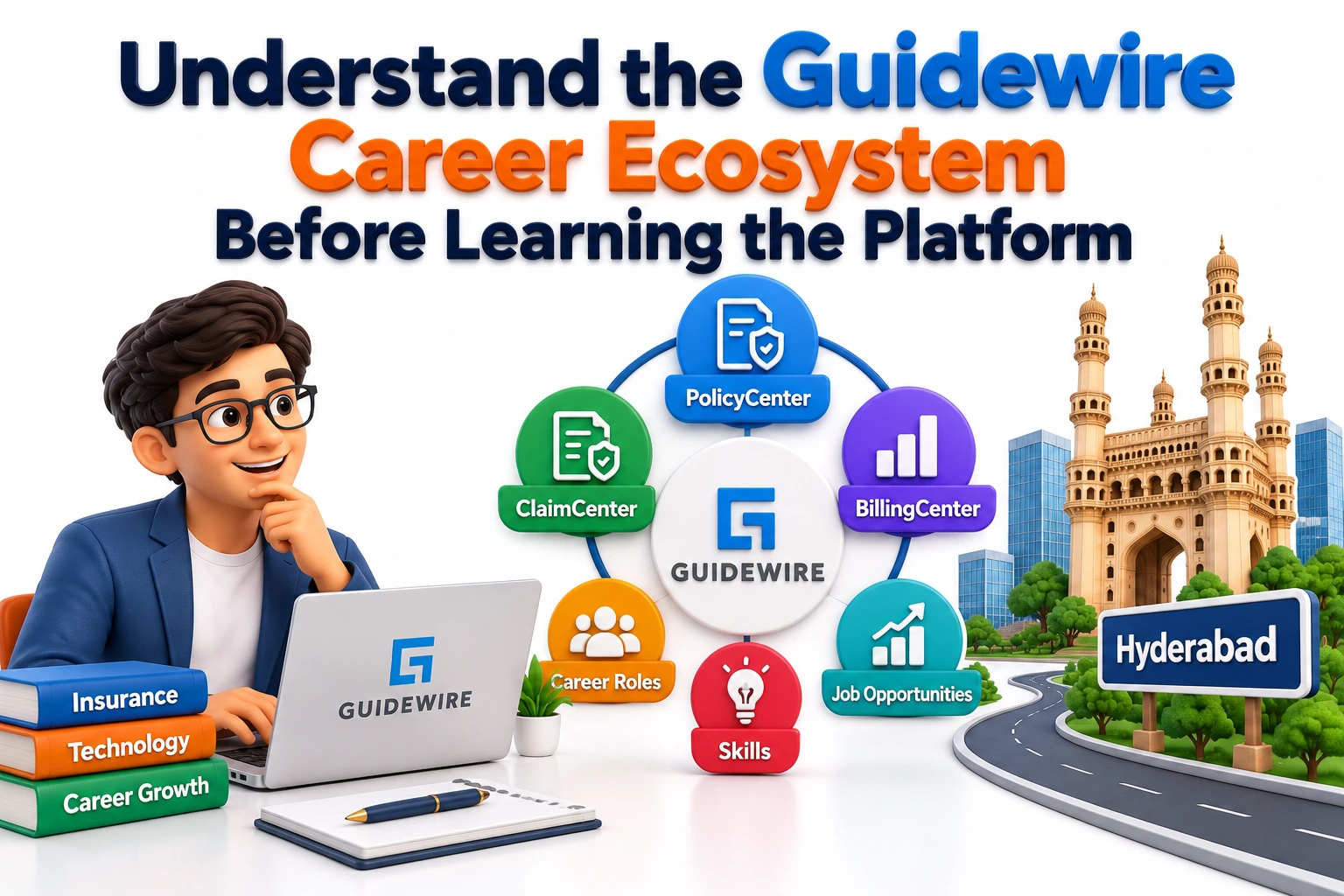
Guidewire is primarily associated with technology supporting property and casualty insurance operations. Its InsuranceSuite applications address different parts of the insurance lifecycle: PolicyCenter focuses on policy administration, ClaimCenter supports claims management, and BillingCenter handles billing-related processes.
A beginner should therefore understand the business context before jumping directly into screens and syntax. Learn how an insurance policy is created, changed and renewed; how a claim moves from reporting to settlement; and how billing transactions connect with policy activity. This context makes technical concepts much easier to understand.
You should also recognize that “Guidewire professional” is not one single career. Common directions include:
Configuration development
Integration development
Guidewire testing and QA
Business analysis
Production support
Data and migration work
Cloud and technical consulting
Knowing these paths early prevents you from studying every topic at the same depth without knowing which skills employers will actually expect from you.
Choose Your Entry Role Based on the Skills You Already Have
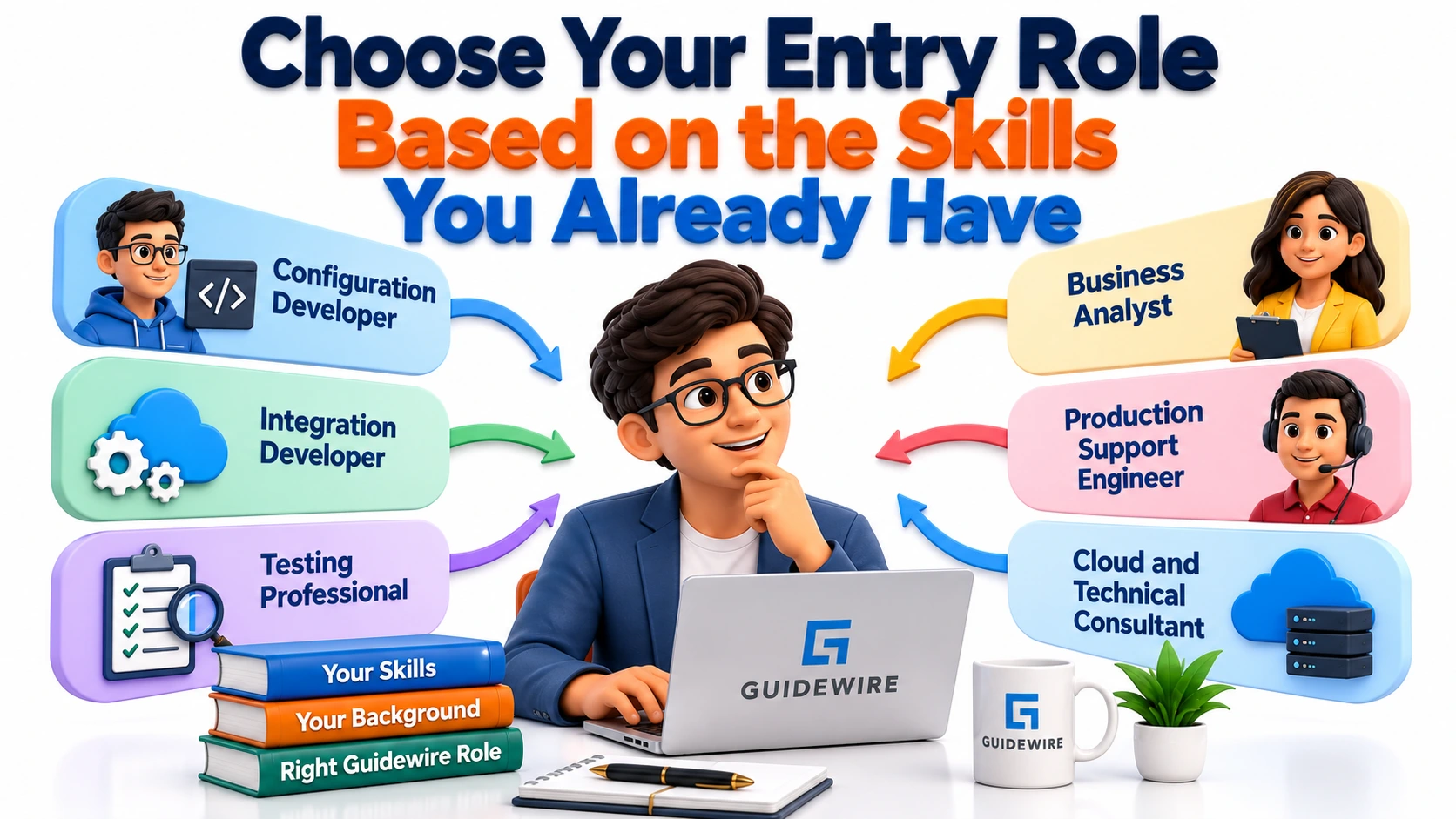
Your previous background should influence your starting point. A Java developer, manual tester, business analyst and fresher should not follow identical learning plans.
Developers with Java and object-oriented programming knowledge can move naturally toward configuration or integration. Testers can combine insurance workflows with functional testing, API testing and automation. Business analysts can focus more deeply on requirements, insurance processes, product behavior and communication between business and technical teams.
Fresh graduates need a broader foundation. Before specializing, become comfortable with:
Object-oriented programming concepts
Java fundamentals
SQL and relational data
XML and JSON
REST API fundamentals
Git and version control
Basic debugging
Insurance terminology
The objective is not to collect technologies on your resume. It is to establish enough software-engineering knowledge that Guidewire concepts have something solid to build upon.
Build Guidewire Skills Around Real Insurance Workflows
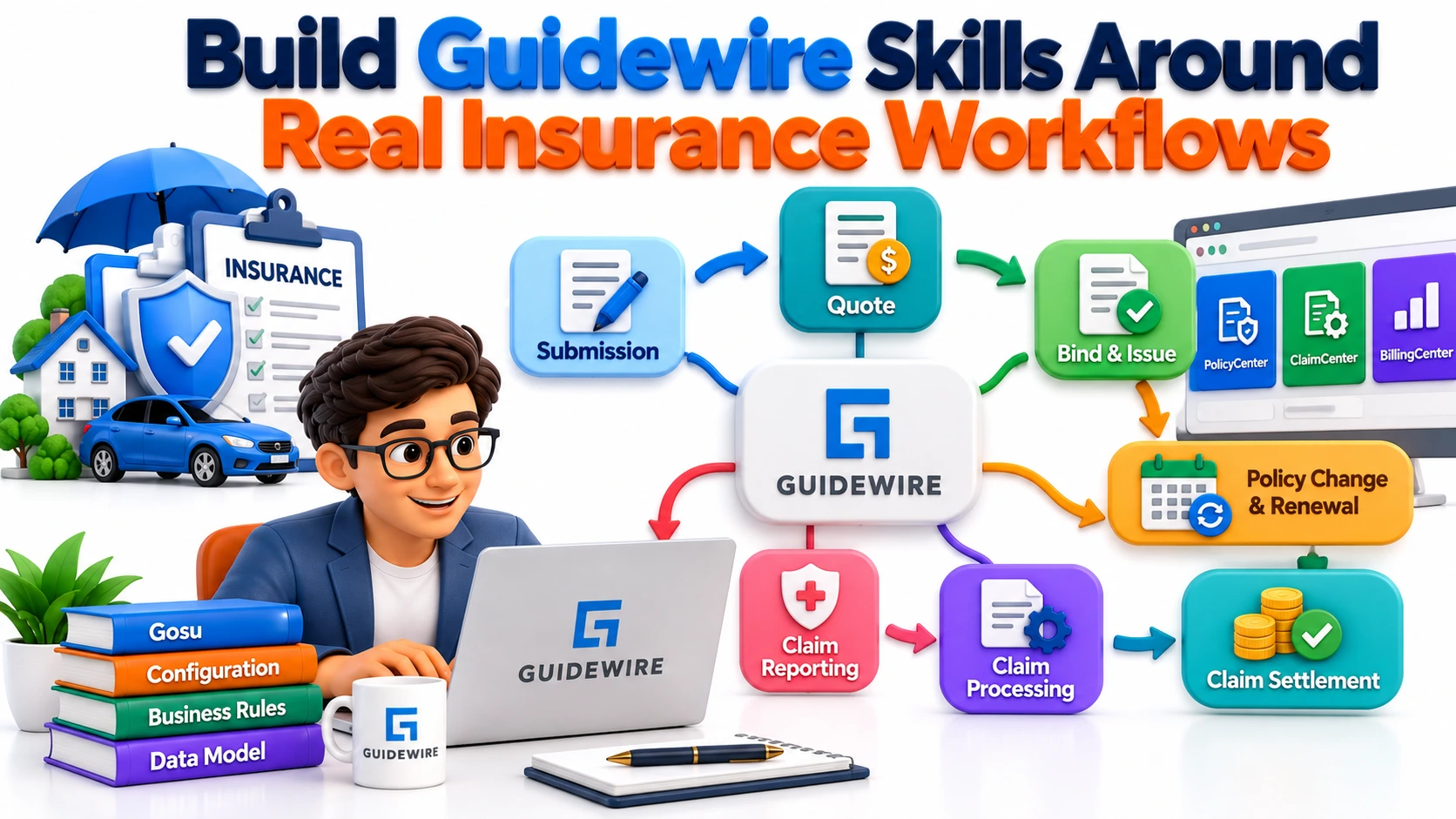
Once your fundamentals are ready, start learning the platform through business flows rather than isolated features. For example, instead of memorizing ClaimCenter screens, follow a claim from first notice of loss through assignment, investigation, financial activity and closure.
Similarly, PolicyCenter becomes more meaningful when you understand submission, quoting, binding, issuance, renewal and policy changes. Connecting technical features to these workflows develops the reasoning needed in real implementation projects.
At this stage, Guidewire Training in Hyderabad can be useful when the learning environment emphasizes hands-on configuration, Gosu, data models, integrations, troubleshooting and realistic insurance scenarios rather than demonstrations alone. JastTech can be considered by learners evaluating structured learning options, but the important criterion should be whether training turns concepts into work you can independently explain and reproduce.
A strong foundation should gradually cover Gosu, entities, typelists, PCF concepts, business rules, queries, bundles, validation and application configuration. Learn why each mechanism exists instead of memorizing where it appears in the development environment.
Add Integration and Cloud Knowledge to Your Core Skills
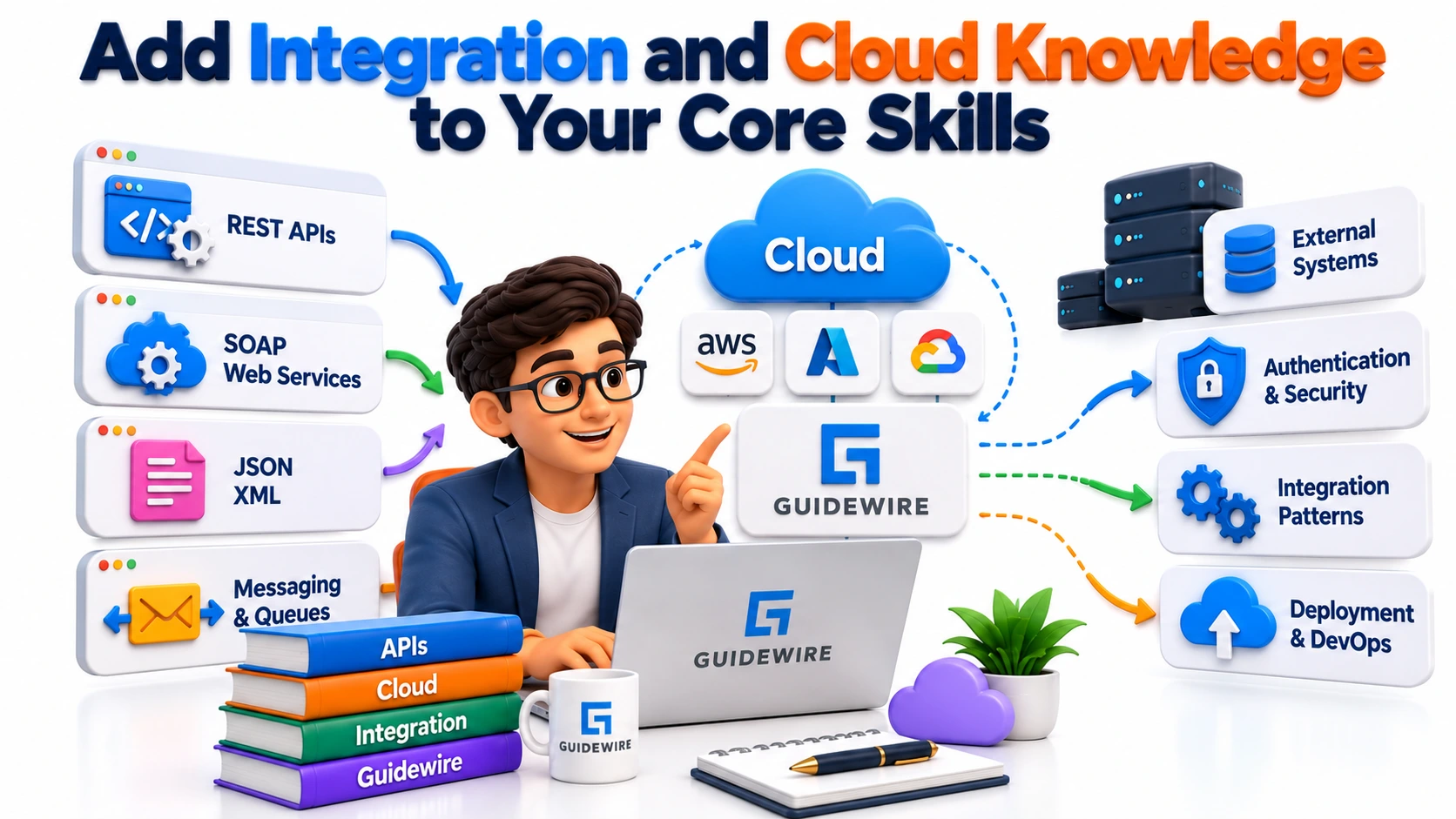
Modern insurance platforms rarely operate alone. A policy or claim system may exchange information with payment platforms, document services, customer portals, identity systems, external data providers and other enterprise applications.
That makes integration knowledge valuable even when your first role is primarily configuration-focused. Learn how to reason about:
REST and SOAP services
Request and response payloads
JSON and XML
Authentication concepts
Messaging and asynchronous processing
Error handling and retries
External system dependencies
API troubleshooting
Learners comparing guidewire training in india should therefore look beyond a syllabus containing only the three core applications. Exposure to APIs, integration patterns, cloud concepts, Git-based development and modern delivery practices creates a more complete foundation.
You do not need to become a cloud architect before applying for junior roles. You should, however, understand why cloud delivery changes development practices, upgrades, deployment, monitoring and integration decisions. That awareness makes your knowledge more aligned with the direction of enterprise Guidewire implementations.
Turn Learning Into a Project Recruiters Can Question You About
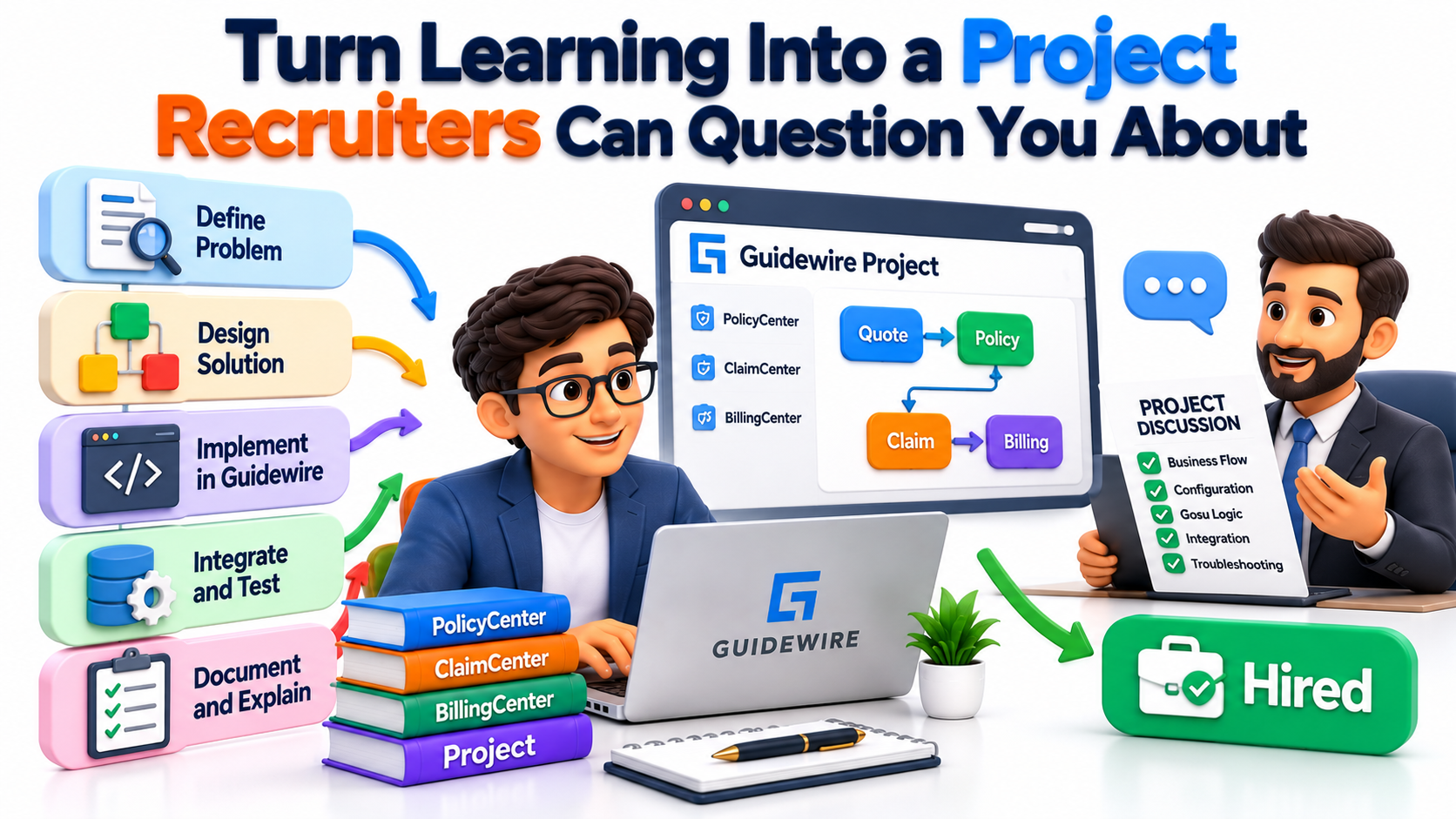
A certificate tells a recruiter that you completed something. A well-understood project gives an interviewer material to test your engineering ability.
Create a small insurance scenario and follow it end to end. For example, design a motor insurance workflow where a customer receives a quote, creates a policy, reports a claim and interacts with an external service. You do not need an enormous implementation. You need a project whose decisions you understand.
Document:
The business problem
The application or module involved
Entities and data relationships
Configuration changes
Gosu logic
Integration flow
Validation rules
Test scenarios
Errors encountered
How those errors were diagnosed
Final outcome
Pay particular attention to debugging. Interviews often become more revealing when the discussion moves from “What is a typelist?” to “What would you check if this transaction failed?” Practice tracing problems through data, logs, rules, APIs and application behavior.
Your project should let you explain not only what you built but why you built it that way.
Prepare for Hyderabad Guidewire Interviews Like a Project Engineer
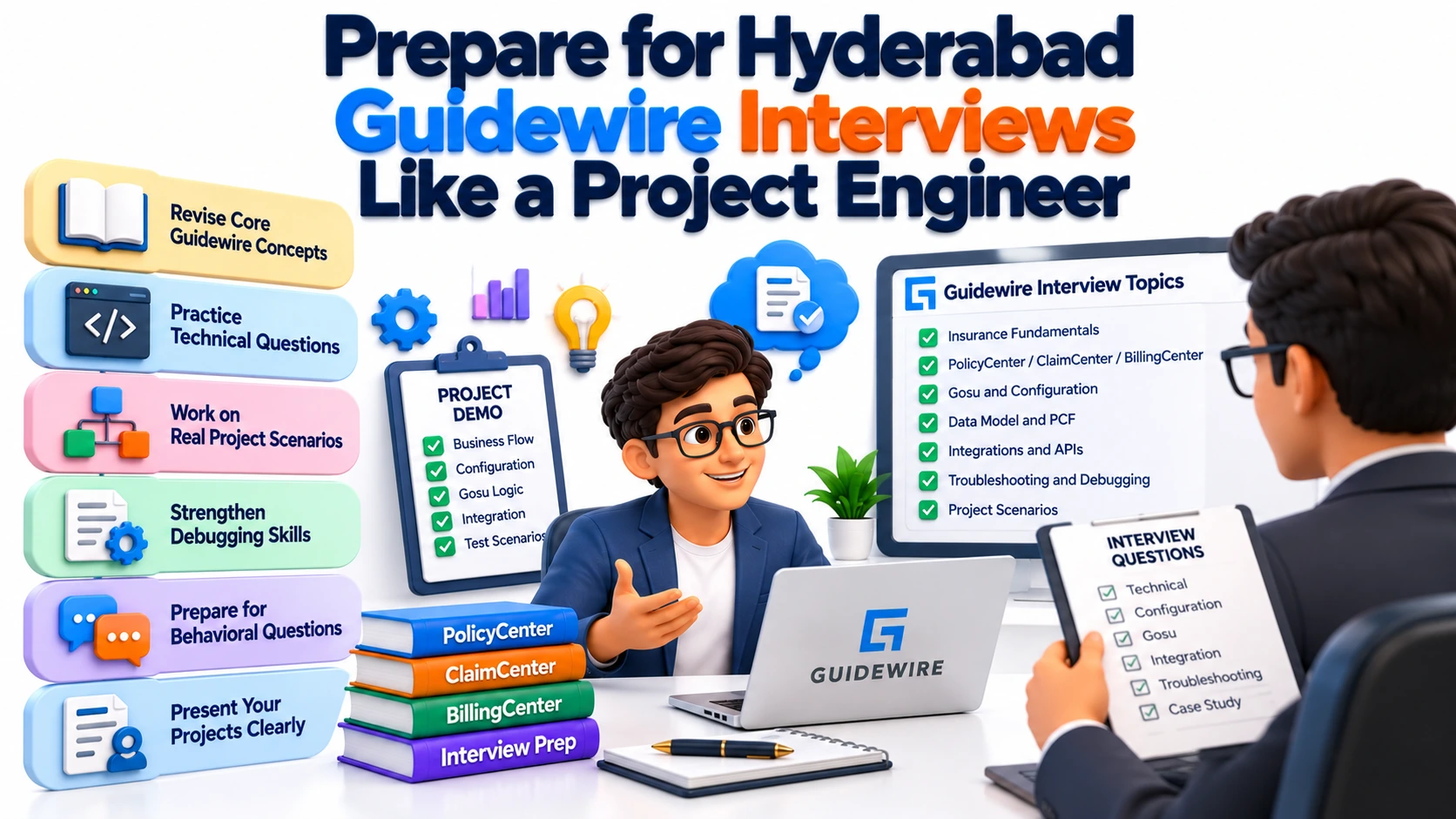
Do not wait until your learning is finished to start interview preparation. After every major topic, practice explaining it without notes. If you cannot explain a concept clearly, you probably do not understand it deeply enough yet.
Prepare questions across several layers: insurance fundamentals, Guidewire applications, Gosu, configuration, data models, integrations, APIs, SQL, troubleshooting and project scenarios. Your resume should reflect only skills you can defend during technical questioning.
Scenario practice is particularly important. Ask yourself what you would do if an API stopped responding, a validation rule behaved incorrectly, a query returned unexpected records or a business requirement changed midway through implementation.
Finally, build a focused professional profile. Describe project responsibilities using actions and outcomes rather than long tool lists. Search for roles aligned with your actual entry point—developer, tester, analyst, support engineer or integration professional—and study job descriptions to identify recurring skill gaps.
Your goal is not to appear experienced before you are. It is to demonstrate that you understand the foundation, have practiced realistic workflows and can learn effectively inside an enterprise project.
Conclusion
Starting a Guidewire career in Hyderabad becomes much simpler when you treat it as a progression rather than a race to finish a course. Begin with insurance fundamentals, choose a role that matches your existing strengths, develop software foundations, learn Guidewire through actual business workflows, and then expand into integrations and cloud-oriented concepts.
Most importantly, convert knowledge into evidence. A candidate who can walk an interviewer through a project, explain a configuration decision, trace an API flow and describe how a defect was debugged is far more convincing than someone who has only memorized definitions. Build that capability consistently, and Guidewire can become a focused path into enterprise insurance technology.