


How to Start a Guidewire Career in Pune: Skills, Salary & Job Roles
Navigate through this article using the table of contents below
Table of Contents
No headings found in this article.
Somewhere in Hinjewadi or Kharadi right now, a recruiter is scrolling through hundreds of Java resumes looking for exactly one thing: someone who knows Guidewire. Most candidates get skipped in seconds. The rare few who fit the profile get callbacks within hours.
That gap between "generic IT skills" and "in-demand niche skills" is where a Guidewire career in Pune quietly pays off. This piece walks through what the platform actually does, the skills worth learning, realistic salary expectations, and the job roles that don't always make it into typical career blogs.
What Exactly Is Guidewire, and Why Does Pune Care So Much?

Guidewire is the software backbone behind how property and casualty insurers manage policies, claims, and billing. Think of every car insurance claim you've ever filed — somewhere behind the scenes, a platform like this is tracking the entire process from submission to payout.
Pune has become a major delivery center for this work because global insurers and IT service firms like Capgemini, Cognizant, EY, and Zensar run large Guidewire practices out of the city. The combination of engineering talent, English proficiency, and cost advantage made Pune a natural fit for insurance-tech outsourcing over the past decade.
What sets this apart from typical software roles is the domain layer. You're not just writing code; you're encoding how underwriting decisions get made or how a claim escalates when fraud is suspected. That complexity is hard to replicate quickly, which keeps demand steady.
Legacy modernization projects add further fuel. Insurers running decades-old mainframe systems are steadily migrating to Guidewire, and each migration needs a full bench of configuration, integration, and testing talent — much of it sourced right here in Pune.
Which Skills Actually Land Interviews (Not Just Resume Buzzwords)
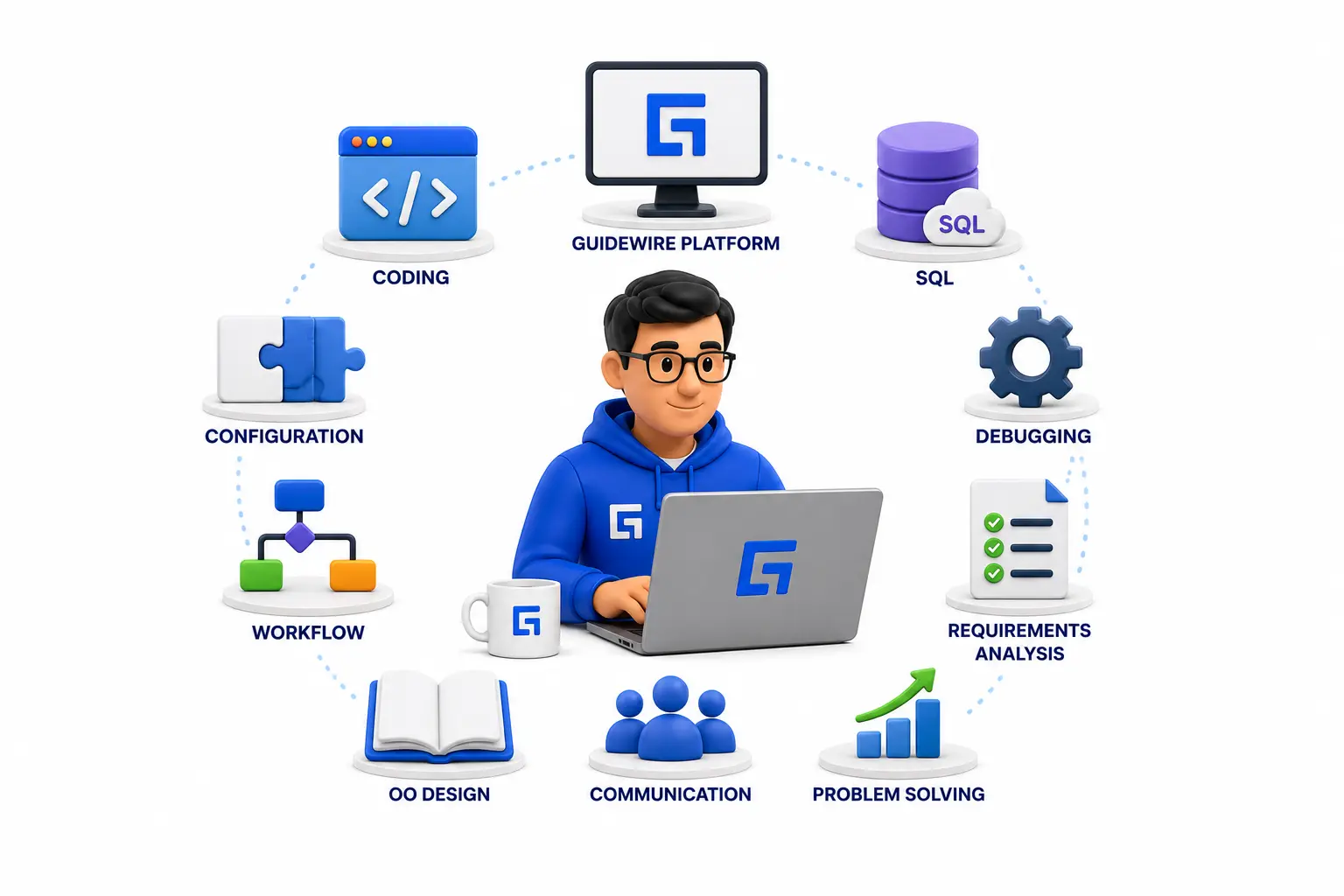
Hiring managers scanning Guidewire profiles look past generic keywords fast. Here's what genuinely gets attention:
Gosu – Guidewire's own programming language; expected for nearly every configuration role.
One specialized center – PolicyCenter, ClaimCenter, or BillingCenter; depth beats breadth here.
Core Java and XML – the foundation most Guidewire work is built on.
SQL – used constantly for debugging and data checks.
SOAP/REST web services – essential for integration-focused positions.
Technical skill alone isn't enough, though. Candidates who understand basic insurance concepts — how underwriting works, how a claim moves through its lifecycle, and how billing cycles are structured — generally have an easier time connecting technical concepts to real project requirements. A well-structured Guidewire class in Pune, such as the programs offered by JastTech, can combine these insurance fundamentals with Gosu, configuration, and integration topics instead of treating them as completely separate subjects.
If you're switching from a Java or .NET background, the coding side can become familiar within a few focused months with consistent practice. Domain fluency takes longer to build naturally, but understanding both the technology and insurance workflows can make your profile more relevant to Guidewire roles.
What Does a Guidewire Developer in Pune Actually Earn?

Compensation in this niche can be strong compared with many general Java or full-stack roles, particularly once a professional has built hands-on Guidewire experience. The difference isn't simply the certification on a resume — employers tend to place more value on people who can actually work with the platform, understand insurance workflows, and contribute to implementation projects.
For freshers, completing a relevant Guidewire course can provide a structured starting point, but the first job is where the real value begins to build. An entry-level configuration, testing, or support role gives you exposure to the platform and helps you move beyond what you learned in training. Once you've spent two or three years working with PolicyCenter, ClaimCenter, or BillingCenter, your options can start to expand considerably.
The bigger salary jumps often come when you combine experience with deeper technical responsibility. Someone who has worked through multiple implementation cycles, handled integrations, debugged production issues, and understands the insurance domain is in a very different position from someone who has only completed a course.
Certification can still help, particularly when two candidates have similar experience, but it shouldn't be treated as a shortcut to a higher salary. In practice, employers have plenty of reasons to look beyond the certificate.
Exact compensation varies by company, experience, project, and role. Rather than chasing a fixed salary figure, focus on building the kind of project experience that gives you stronger answers in interviews. That's usually what makes the difference when you're ready for your next move.
The Guidewire Job Roles Most Beginners Don't Know Exist
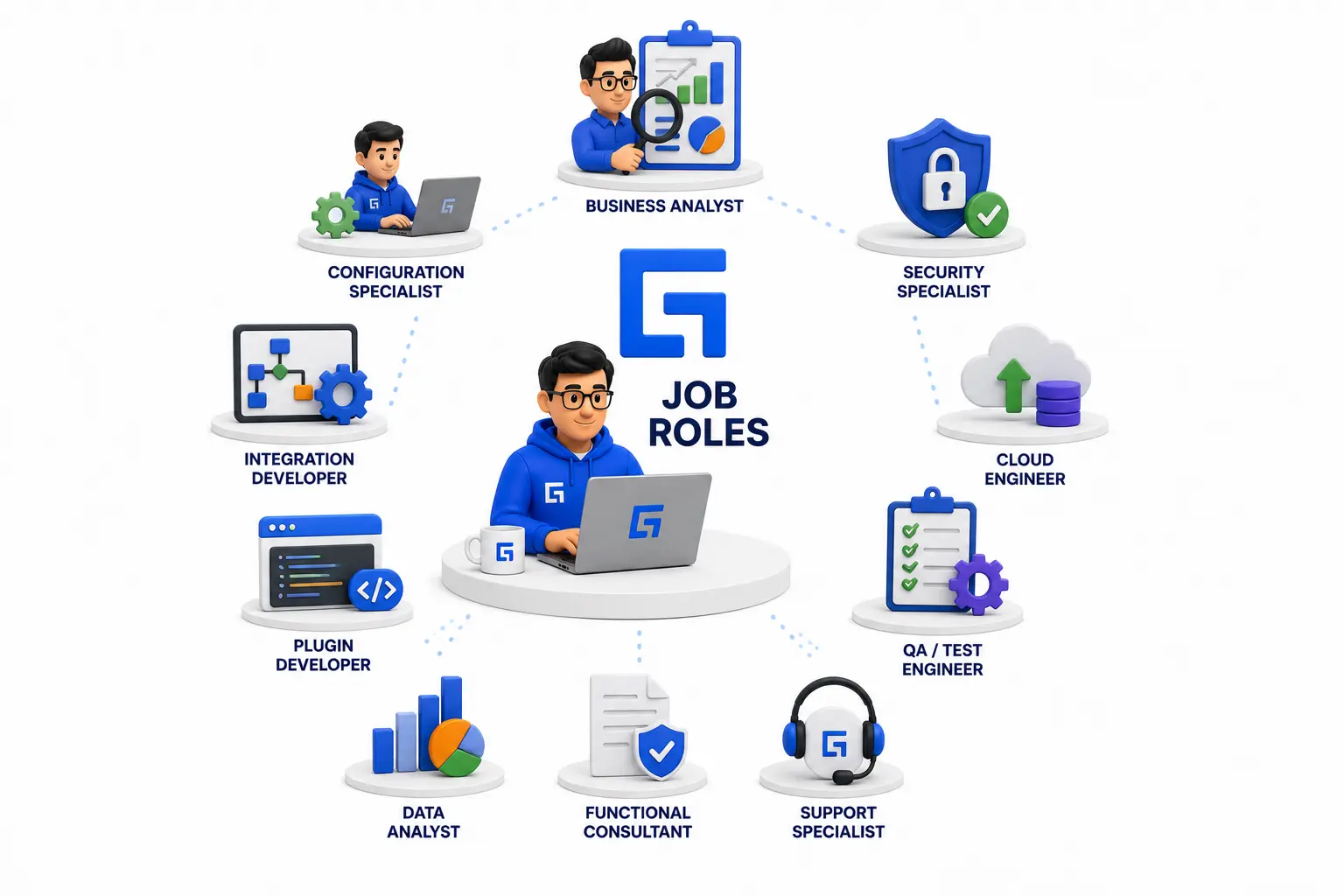
Ask a beginner what a "Guidewire job" means, and most will say developer. In practice, the field splits into several distinct paths, each suited to different strengths.
Configuration developers build and customize core insurance workflows in Gosu — the most common entry point for newcomers. Integration developers connect Guidewire with external systems like payment processors or document platforms, requiring sharper Java and API skills.
Business analysts bridge insurers and technical teams, converting insurance requirements into configuration specs — ideal for people who enjoy communication as much as logic. QA and automation testers verify that changes to policy, claims, or billing workflows don't break anything downstream.
Lesser-known but steady options include production support and DataHub/InfoCenter specialists, roles that stay in demand because every live implementation needs long-term upkeep. At the senior end, architects and delivery leads guide entire implementation programs from planning through go-live.
Choosing one track early, rather than trying to be broadly "good at Guidewire," tends to accelerate career growth — specialization is precisely what senior recruiters screen for.
The Realistic Path for Freshers and Career Switchers
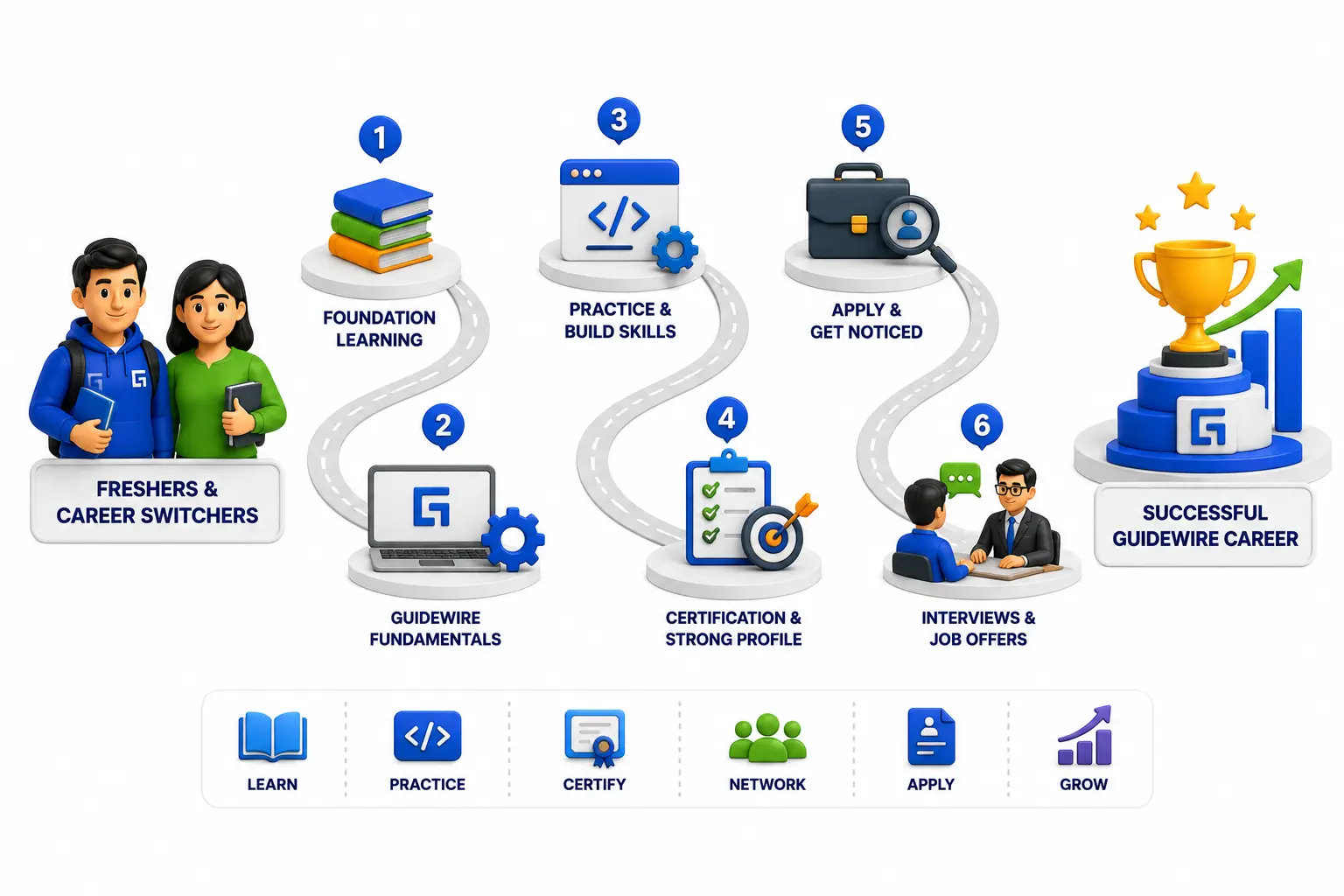
Fresh graduates carry an underrated advantage: no bad habits to unlearn. Structured Guidewire training programs in Pune, several including live simulated projects, can take a motivated graduate from zero to job-ready within a few months. For anyone wondering how to start your Guidewire career, the key is to build technical skills and insurance-domain knowledge together rather than focusing on certification alone.
Career switchers move faster than expected too. A Java developer tired of repetitive CRUD applications, or a manual tester looking to move up, already brings transferable technical foundations — what's missing is targeted insurance-domain training layered on top.
A workable entry plan: learn core Gosu alongside one Guidewire center, build two or three mock configuration projects, then pursue Associate-level certification. Pair that with active networking in Pune's insurance-IT community, since a meaningful share of hiring here happens through referrals rather than open job boards.
Contract-to-hire roles and internships are common entry routes in this space, more so than in many other tech domains. Taking a six-month contract isn't a step down — it's often how experienced professionals gain their first real project exposure, and that experience can add meaningful weight to future resumes.
Is Betting on a Guidewire Career in Pune Actually Worth It?

It's fair to weigh training time and cost against outcomes — this isn't the fastest or cheapest skill to pick up, and it demands real focus over a few months.
But weigh the trade-off carefully: insurance is a slow-moving, heavily regulated industry that isn't going anywhere, and Guidewire's dominant footprint in that space gives professionals unusual job stability compared to trend-driven tech stacks that lose relevance every couple of years. Pune adds density to that advantage — multiple employers, active training ecosystems, and a growing community of professionals who've already made this transition.
The biggest beneficiaries are those willing to specialize rather than dabble, treating domain knowledge with the same seriousness as the technical syllabus. For anyone choosing long-term stability over short-lived hype, this niche rewards patience more often than not.
Conclusion
Building a Guidewire career in Pune comes down to picking a specialization, earning certification, and stacking real project exposure early. Do that consistently, and the salary growth and job security tend to follow on their own.