

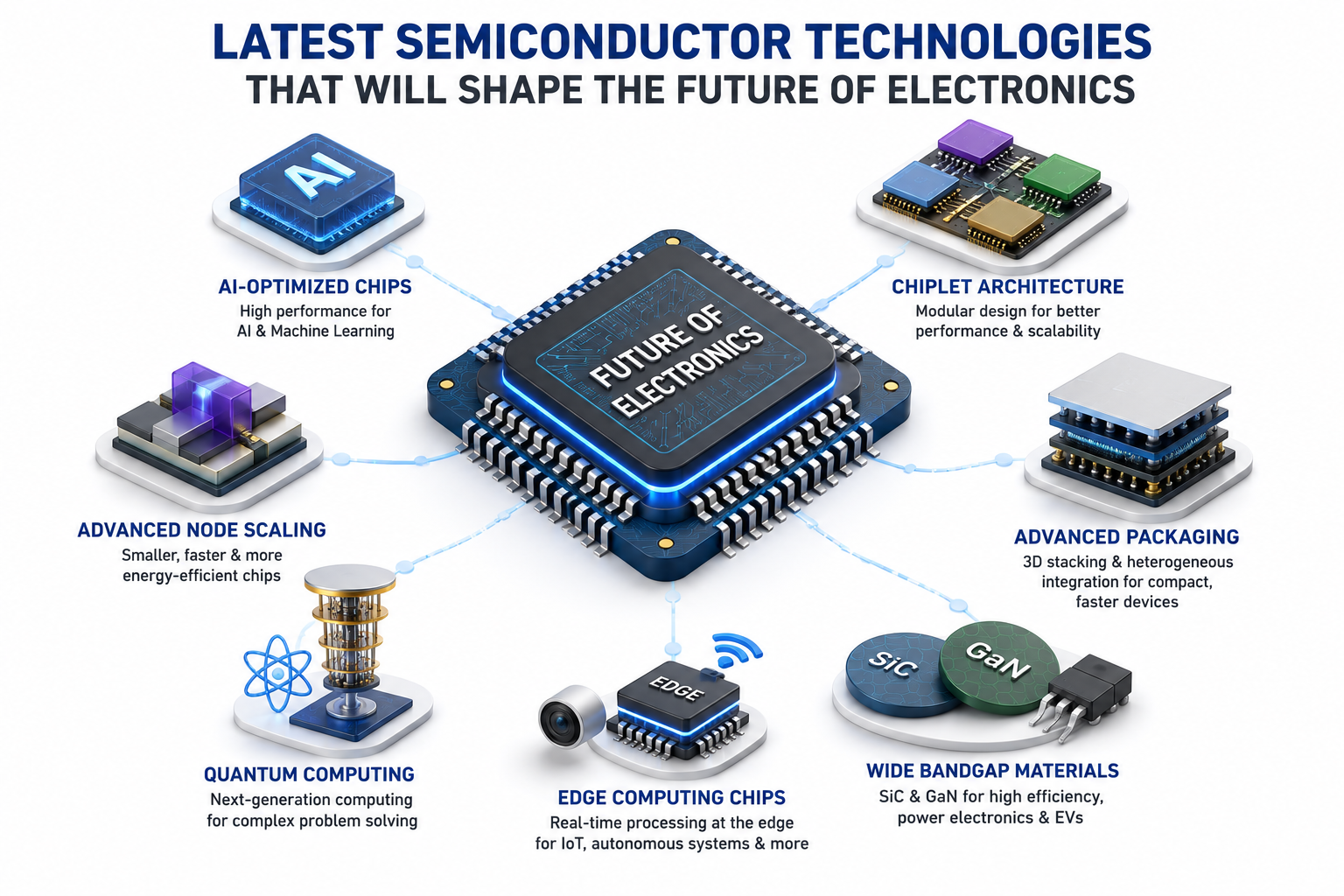
Latest Semiconductor Technologies That Will Shape the Future of Electronics
Navigate through this article using the table of contents below
Table of Contents
No headings found in this article.
The semiconductor industry is evolving faster than ever, powering innovations that were once considered impossible. From artificial intelligence and autonomous vehicles to advanced healthcare devices and smart manufacturing, every breakthrough begins with smarter and more powerful semiconductor technologies.
As demand for faster computing, lower power consumption, and higher performance continues to grow, semiconductor companies are introducing next-generation chip architectures, advanced packaging, and specialized processors. Understanding these technologies provides valuable insight into where electronics—and engineering careers—are headed in the coming years.
AI-Optimized Chips Are Transforming Computing Performance
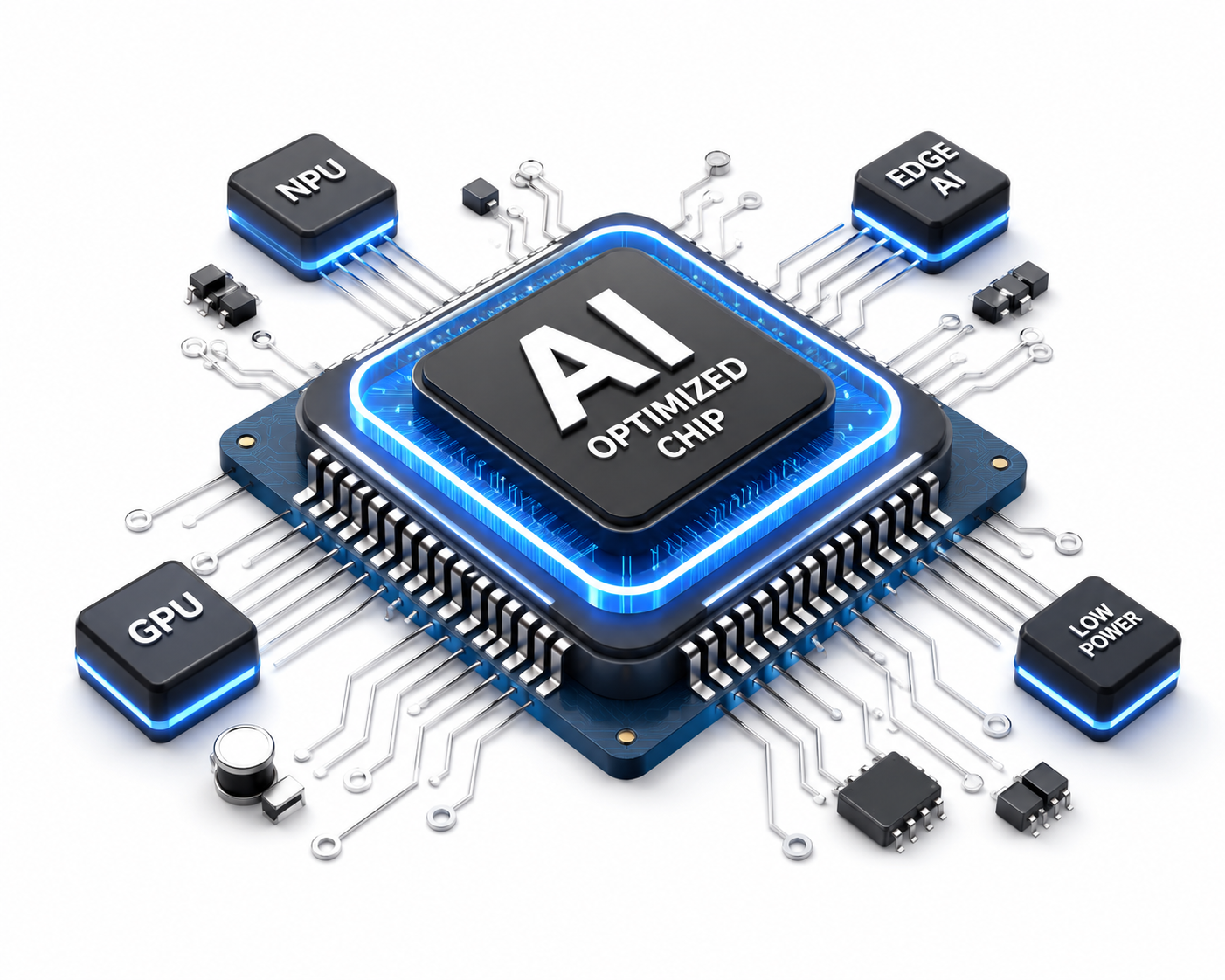
Artificial Intelligence has become one of the biggest drivers of semiconductor innovation. Traditional CPUs are no longer sufficient for handling large AI workloads, leading manufacturers to design processors specifically optimized for machine learning and deep learning applications.
Modern AI chips improve efficiency by executing billions of parallel operations while consuming significantly less power. This makes them ideal for cloud computing, robotics, autonomous systems, and generative AI applications.
Key innovations include:
Dedicated AI accelerators
Neural Processing Units (NPUs)
High-performance GPUs
Edge AI processors
Low-power inference chips
These processors now power everything from smartphones and laptops to industrial automation and healthcare equipment, making AI hardware one of the fastest-growing semiconductor markets.
Chiplet Architecture Is Replacing Traditional Monolithic Chip Design
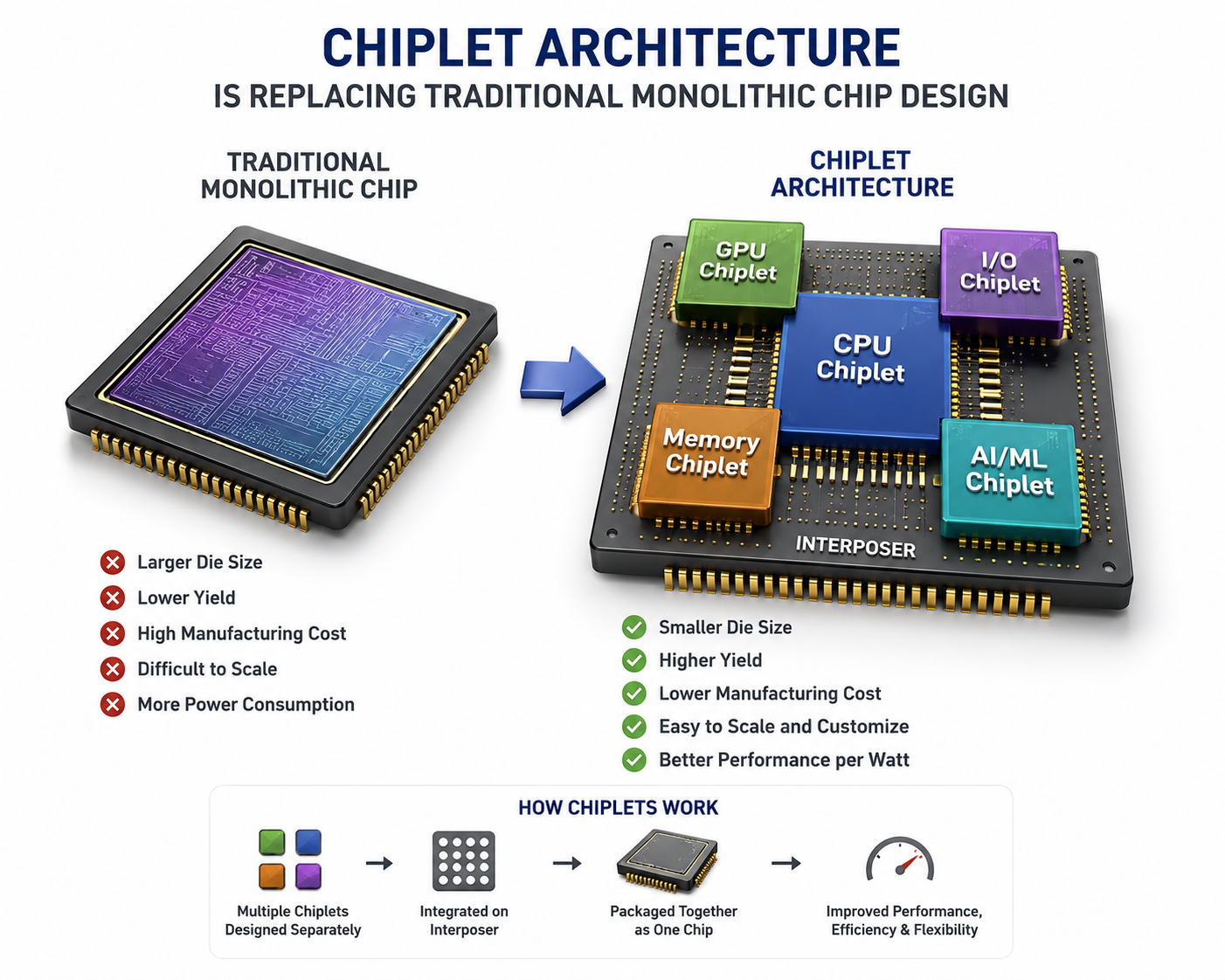
For decades, semiconductor manufacturers relied on monolithic chip designs where every circuit existed on a single silicon die. As chips became more complex, manufacturing costs and design challenges increased significantly.
Chiplet technology solves this problem by dividing a processor into multiple smaller chips that work together as one package. Each chiplet performs a specialized function, improving flexibility, manufacturing yield, and overall performance.
Major advantages include:
Faster product development
Lower manufacturing costs
Easier scalability
Better thermal performance
Higher production yield
Many leading semiconductor companies now use chiplet-based architectures for high-performance processors used in AI servers, gaming systems, and data centers, making this one of the industry's most important technological shifts.
Advanced Packaging Technologies Are Driving Faster and Smaller Electronics
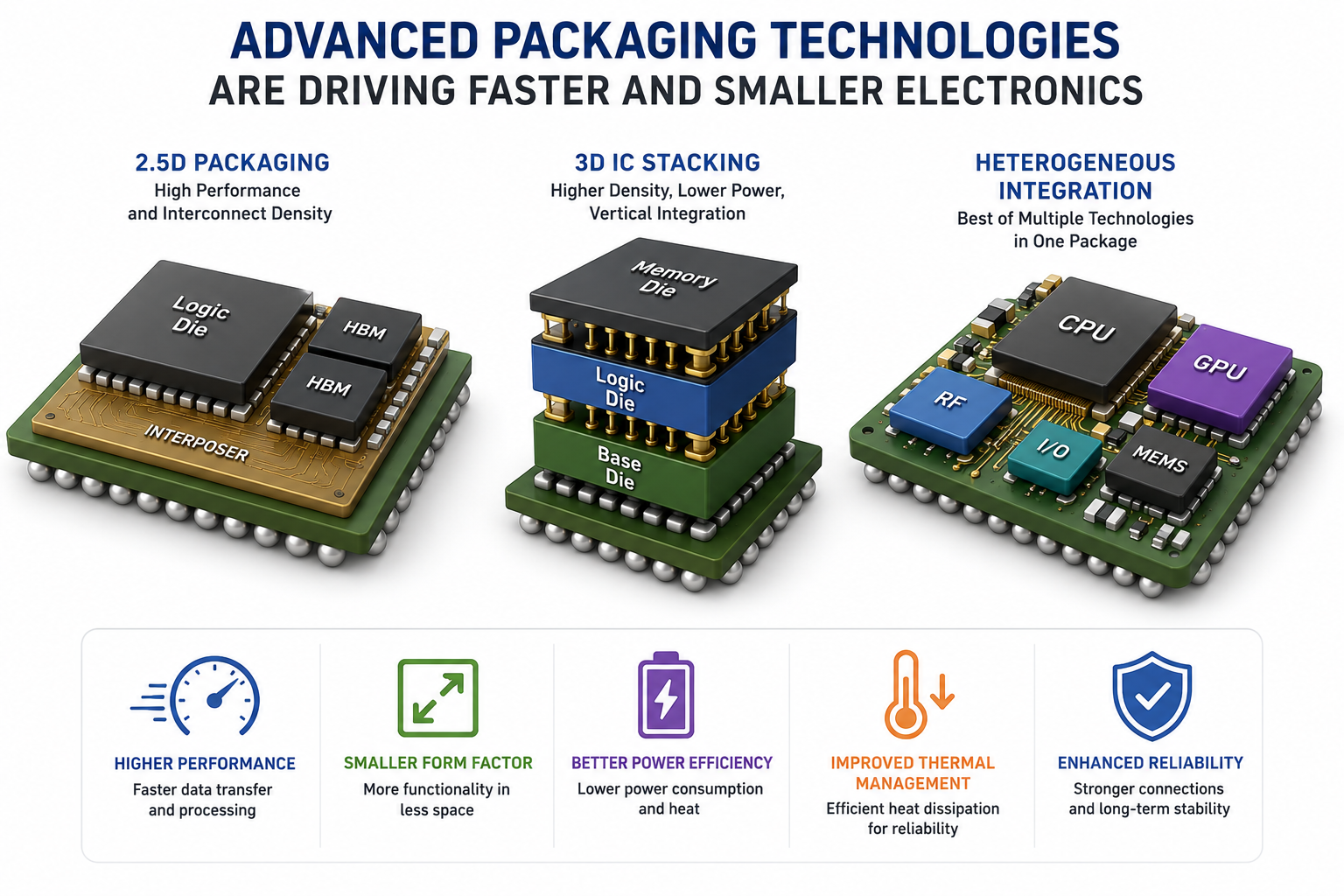
As Moore's Law becomes increasingly difficult to sustain, semiconductor manufacturers are focusing on advanced packaging technologies instead of relying solely on transistor scaling.
Technologies such as 2.5D packaging, 3D IC stacking, and heterogeneous integration enable multiple chips to work together efficiently within a compact package. This improves bandwidth, reduces latency, and enhances power efficiency.
Benefits of advanced packaging include:
Higher processing speed
Improved energy efficiency
Compact device design
Increased memory bandwidth
Better heat management
These innovations are especially important for AI accelerators, high-performance computing systems, smartphones, and automotive electronics, where maximizing performance within limited space is critical.
Wide Bandgap Semiconductors Are Revolutionizing Power Electronics
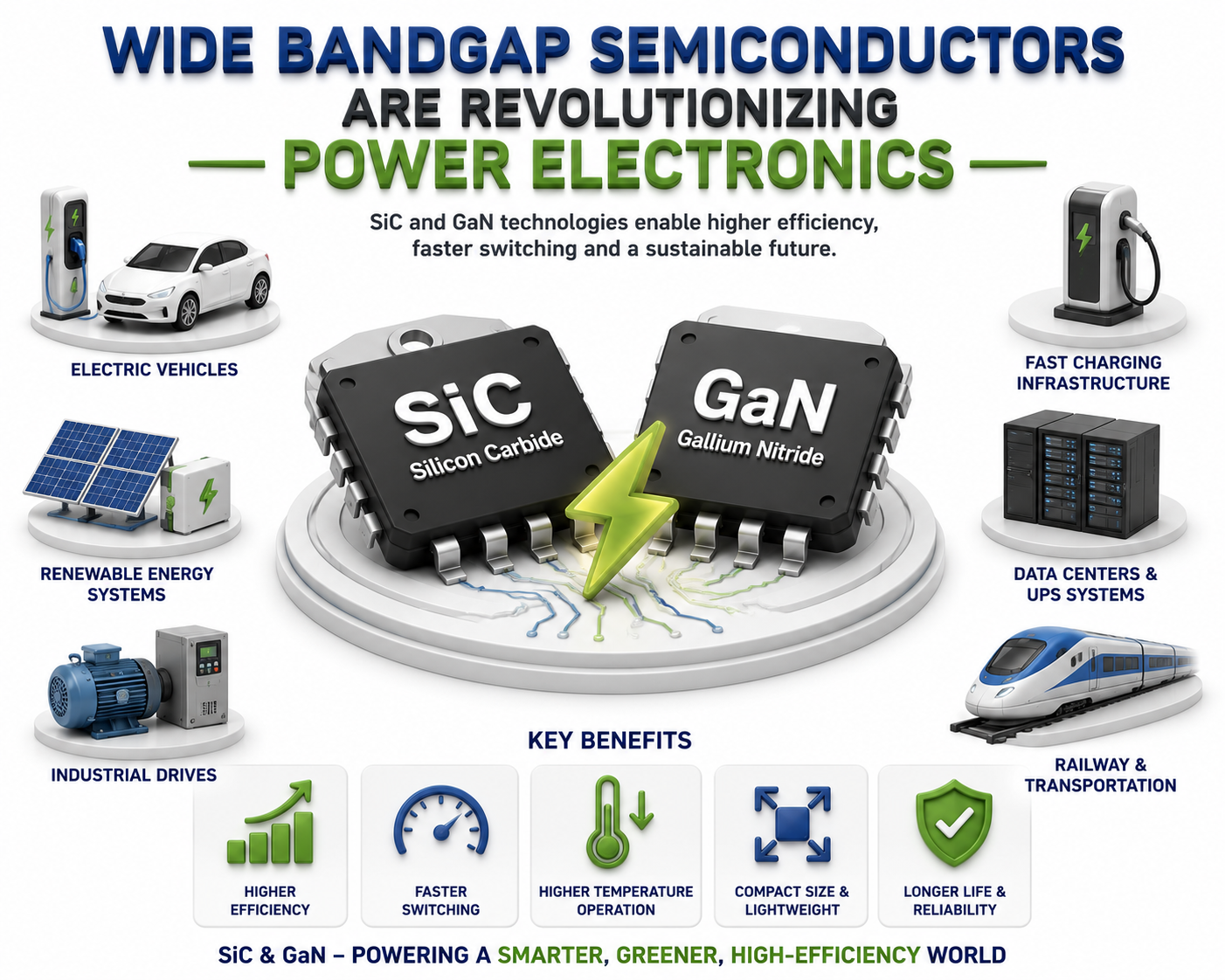
Silicon has long been the foundation of semiconductor manufacturing, but newer materials like Silicon Carbide (SiC) and Gallium Nitride (GaN) are changing the future of power electronics.
Wide bandgap semiconductors can operate at much higher voltages, temperatures, and switching frequencies than traditional silicon devices. This makes them ideal for electric vehicles, renewable energy systems, industrial automation, and fast-charging infrastructure.
Their advantages include:
Higher efficiency
Lower energy loss
Faster switching speeds
Smaller cooling requirements
Longer device lifespan
As electric vehicles become more mainstream, SiC and GaN technologies will play a crucial role in improving battery performance, charging speed, and overall energy efficiency.
Edge Computing Chips Are Bringing Intelligence Closer to Devices
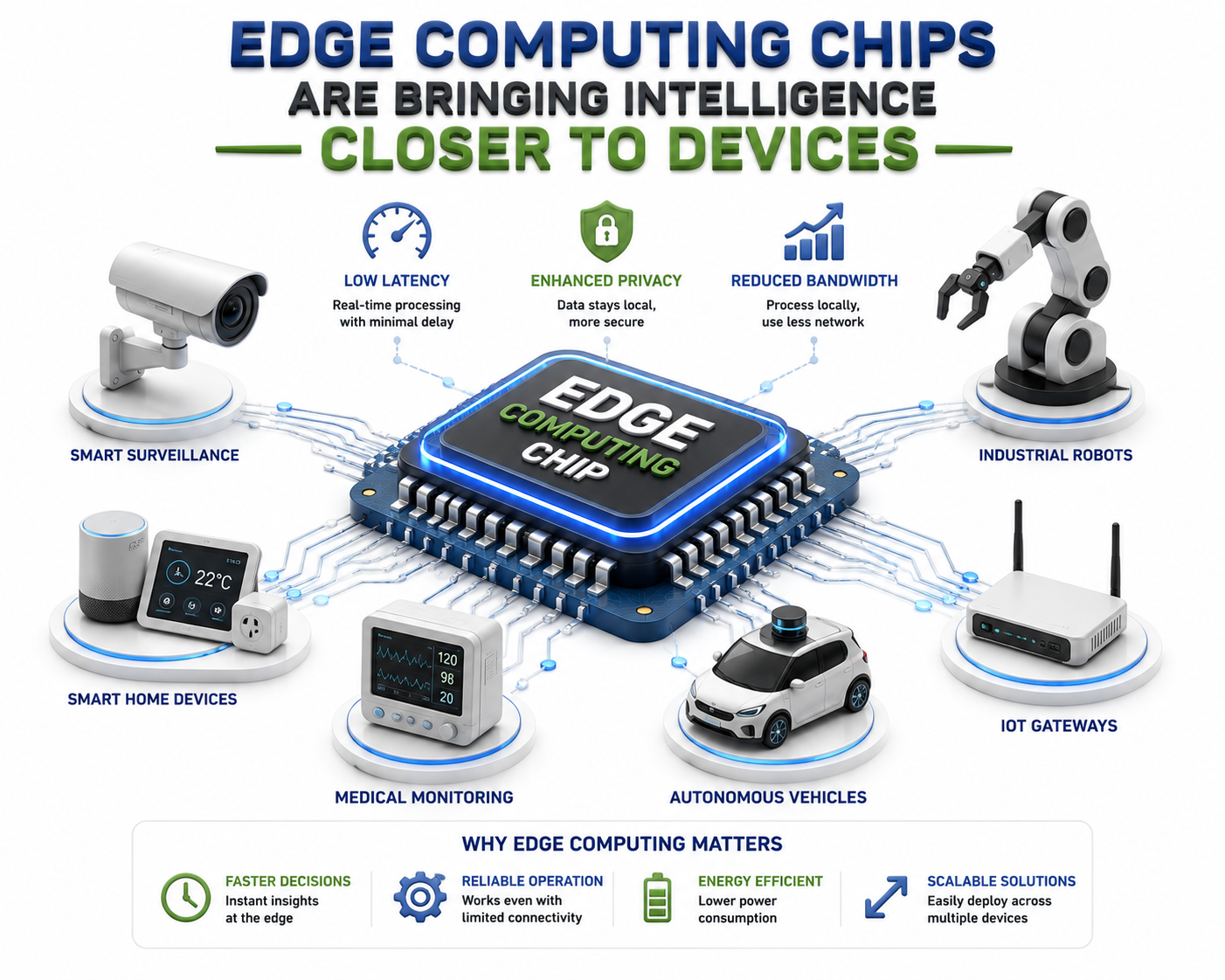
Instead of sending every piece of data to cloud servers, modern electronics increasingly process information locally using edge computing processors.
Edge AI chips reduce latency, improve privacy, and decrease network bandwidth requirements by performing real-time computations directly on devices.
Common applications include:
Smart surveillance cameras
Industrial robots
Medical monitoring devices
Autonomous vehicles
Smart home systems
This technology enables faster decision-making and uninterrupted operation, even when internet connectivity is limited. As IoT adoption continues to accelerate, edge semiconductor solutions will become essential across multiple industries.
Semiconductor Innovation Is Creating Massive Career Opportunities
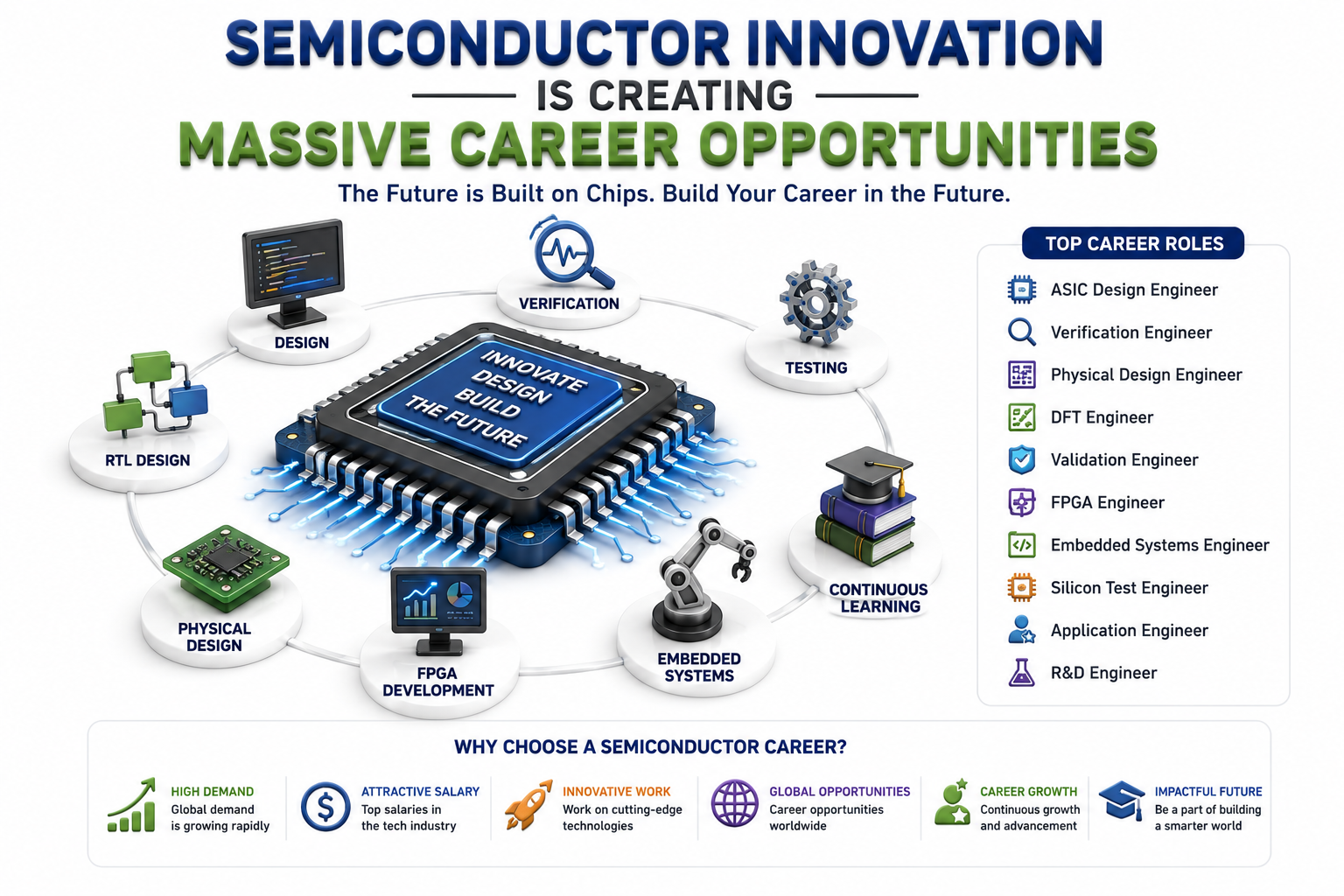
Rapid technological advancements have significantly increased demand for engineers with expertise in VLSI design, ASIC development, verification, embedded systems, physical design, and semiconductor testing.
As governments and private companies invest heavily in semiconductor manufacturing and chip design, skilled professionals are becoming increasingly valuable worldwide.
Students preparing for semiconductor careers should focus on developing practical skills in:
RTL Design
SystemVerilog
ASIC Design Flow
Physical Design
Static Timing Analysis
Design Verification
FPGA Development
Embedded Systems
Scripting using Python and Tcl
Industry-standard EDA tools
At JASTTech, industry-focused semiconductor training emphasizes practical projects, real-world design methodologies, and hands-on experience with professional workflows. This practical approach helps learners build the skills employers seek in today's rapidly evolving semiconductor industry.
Conclusion
The future of electronics will be defined by continuous semiconductor innovation. AI processors, chiplet architectures, advanced packaging, wide bandgap materials, and edge computing are reshaping how electronic systems are designed, manufactured, and deployed across industries. These technologies are enabling faster, more energy-efficient, and increasingly intelligent devices that support everything from autonomous transportation to advanced healthcare and smart manufacturing.
For aspiring engineers, this transformation presents exceptional career opportunities. Companies worldwide are investing heavily in semiconductor research, chip manufacturing, and advanced design technologies, creating strong demand for skilled professionals. By learning modern VLSI design concepts, mastering industry-standard tools, and gaining practical experience through programs offered by JASTTech, students can position themselves at the forefront of one of the world's fastest-growing technology sectors and contribute to the next generation of electronic innovation.