

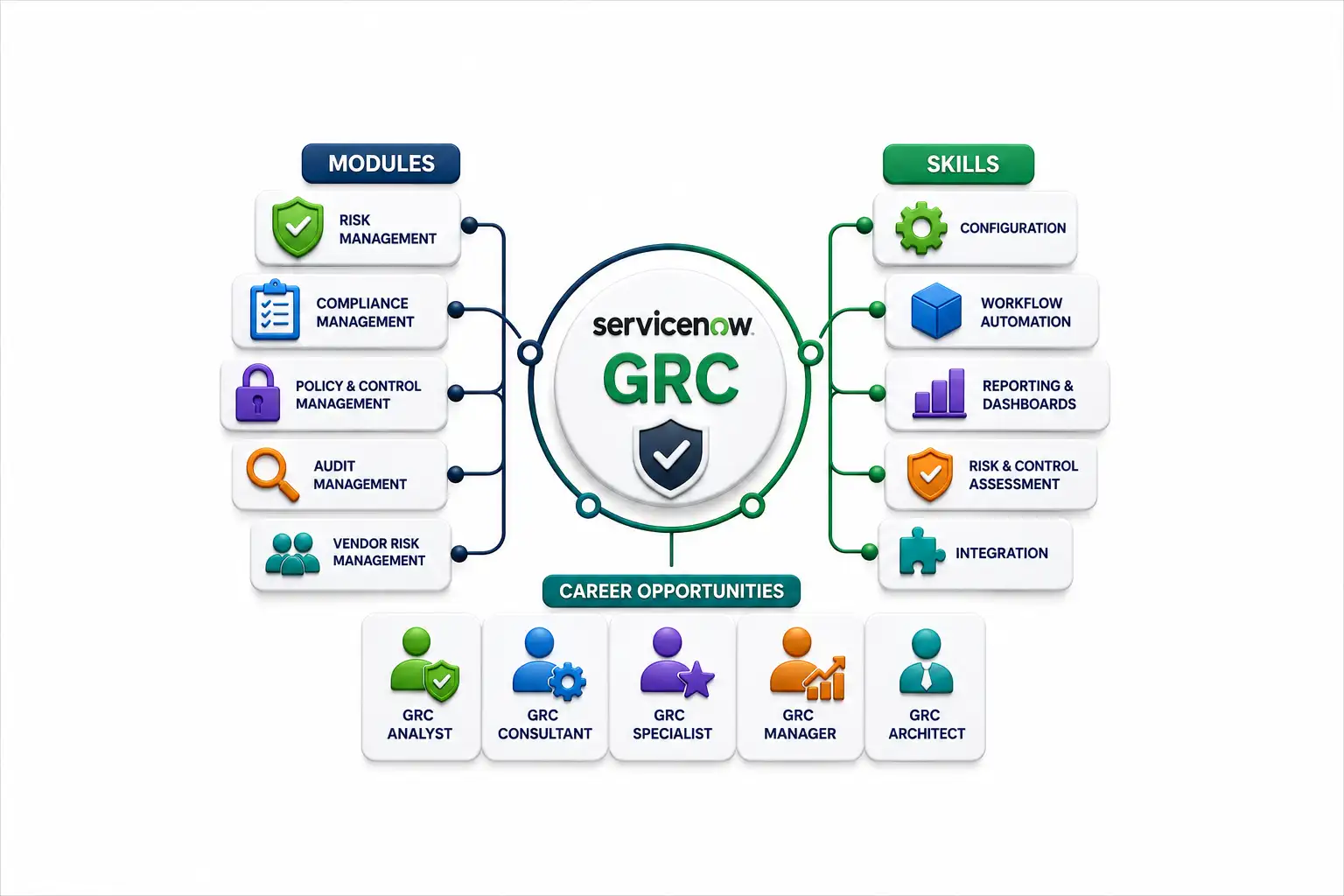
ServiceNow GRC Complete Guide to Modules Skills and Career Opportunities
Navigate through this article using the table of contents below
Table of Contents
No headings found in this article.
Picture a company scrambling after an audit finds three compliance gaps nobody caught in time. That scramble is exactly why organizations are racing to hire people who understand ServiceNow GRC.
If you've ever wondered how to become a ServiceNow GRC professional, or whether this niche skill set can actually build a real career, you're in the right place. This guide breaks down the modules, the skills, and the path forward, without the fluff.
What Makes ServiceNow GRC Different From Traditional Risk Tools
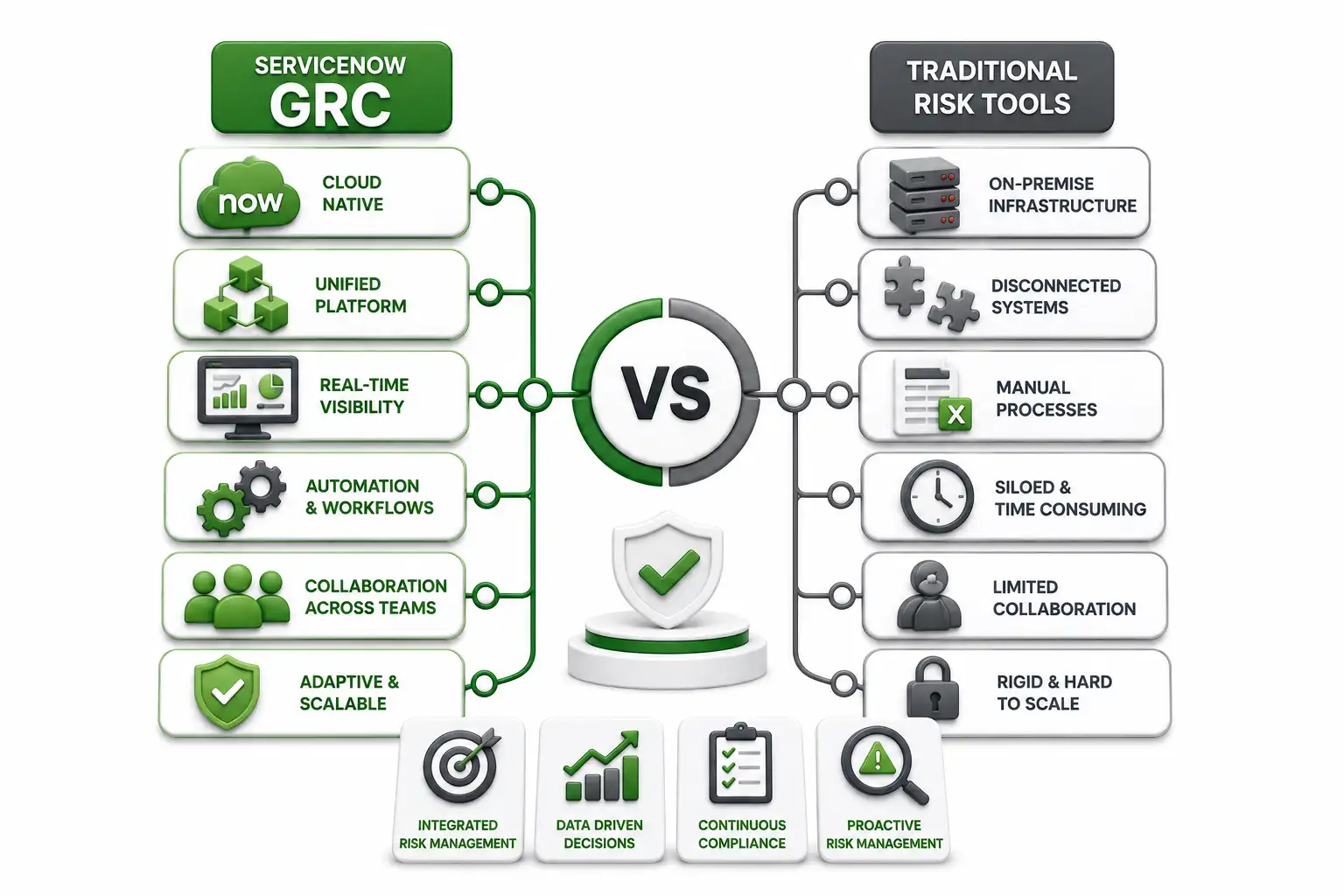
Most legacy risk management tools live in silos. Spreadsheets here, compliance checklists there, and audit trails buried in email threads nobody can find later. ServiceNow GRC changes that by putting governance, risk, and compliance on a single platform that talks to IT service management, security operations, and vendor risk data in real time.
Instead of manually cross-referencing which controls map to which regulations, the platform automates that mapping. When a new vulnerability appears in your security tools, GRC can automatically flag which compliance obligations are affected.
This matters because regulatory environments keep shifting. A financial firm dealing with SOX one year might face new data privacy rules the next, and manually updating every spreadsheet just doesn't scale.
Think of it less as a reporting tool and more as a nervous system for organizational risk. It senses problems early, routes them to the right people, and keeps a documented trail for auditors. That combination of automation and visibility is precisely why demand for skilled professionals keeps climbing, and why understanding this platform opens doors that generic risk certifications simply don't.
ServiceNow GRC Modules Explained: The Building Blocks You Need to Know
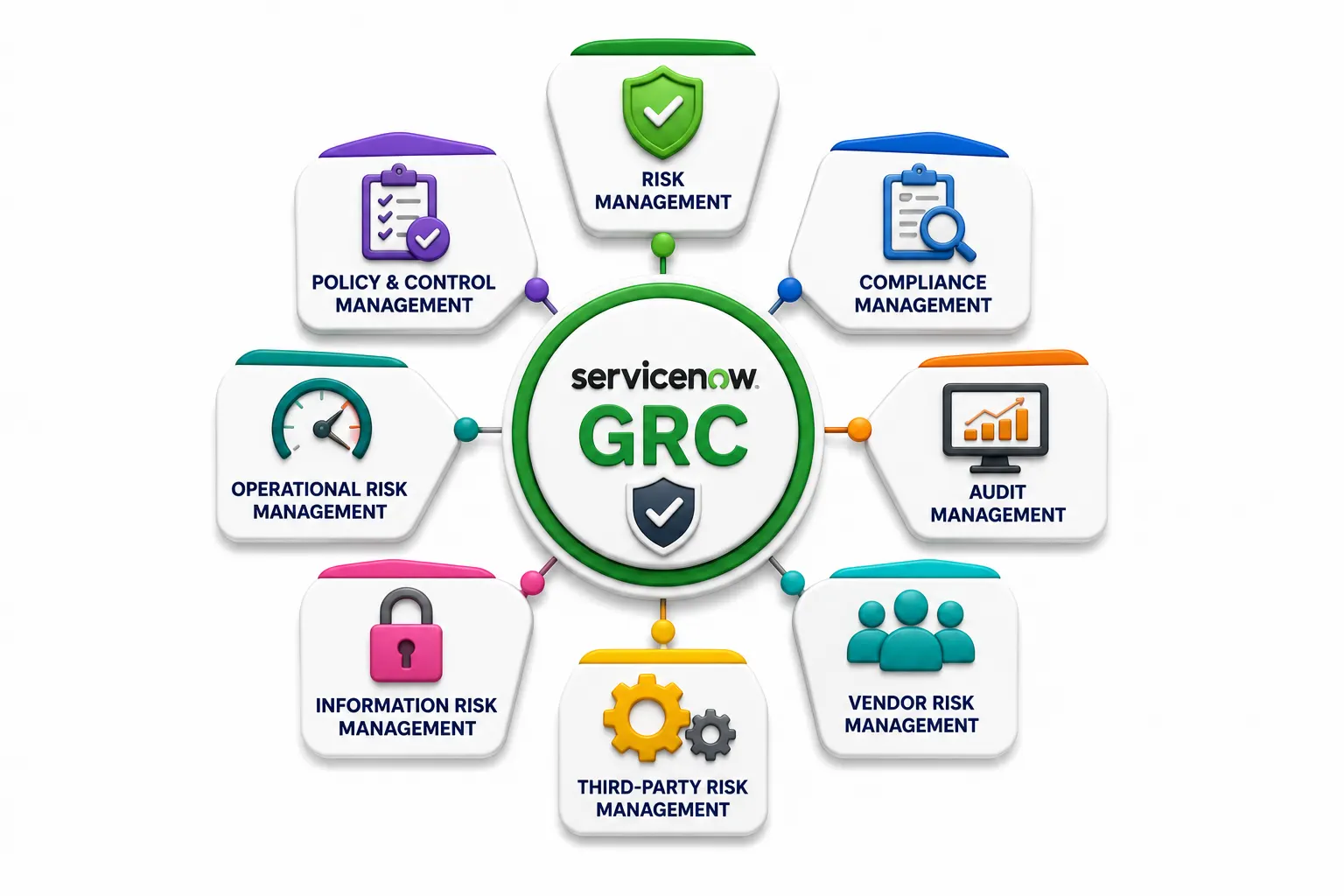
Breaking down the platform module by module makes it far less intimidating. Here's the core lineup you'll encounter on the job:
Policy and Compliance Management – centralizes policies, maps them to controls, and tracks adherence across departments.
Risk Management – identifies, scores, and monitors risks tied to business processes, projects, or vendors.
Audit Management – streamlines audit planning, fieldwork, and findings tracking in one workspace.
Vendor Risk Management – assesses third-party risk before and after contracts are signed.
Business Continuity Management – helps organizations prepare recovery plans for disruptions.
Each module shares data with the others, so a risk identified during an audit automatically links back to relevant policies and controls. That interconnection is the real value; it's not just five separate apps bolted together.
For beginners, Policy and Compliance Management is usually the easiest entry point since it mirrors familiar compliance frameworks. Risk Management tends to require more analytical thinking, since you're often working with scoring models and heat maps. Once you're comfortable navigating between modules, you start seeing GRC not as isolated software features but as a connected risk ecosystem.
The Technical Skills That Actually Get You Hired
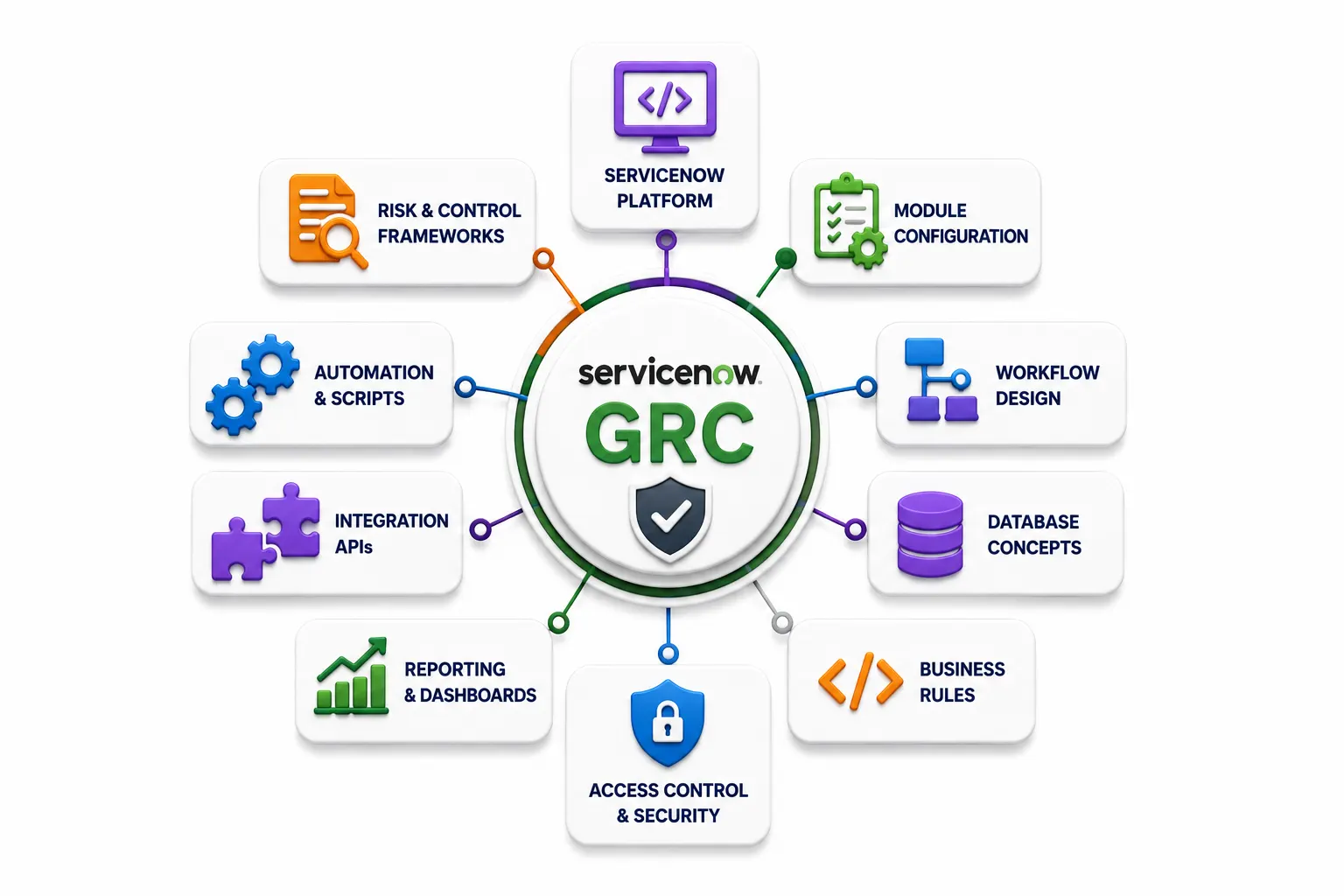
Job postings for GRC roles often list vague phrases like "strong analytical skills," which doesn't tell you much. Here's what actually matters in practice.
First, you need working knowledge of the ServiceNow platform architecture itself, including how workflows, forms, and tables function. You don't need to be a developer, but understanding how data flows between records saves enormous time.
Second, familiarity with risk frameworks helps translate business requirements into platform configurations. Knowing frameworks like NIST or ISO 27001 conceptually makes you far more effective when mapping controls.
Third, basic scripting knowledge in JavaScript gives you an edge, especially for customizing workflows or building automated notifications. You don't need to write complex applications, but reading and lightly modifying scripts is often expected in intermediate roles.
Fourth, reporting and dashboard skills matter more than people expect. Executives rarely read raw data; they want visual summaries that tell a story at a glance.
Finally, soft skills like stakeholder communication carry real weight. GRC professionals constantly translate between compliance teams, IT staff, and leadership, so being able to simplify technical risk language is a genuine differentiator few candidates master.
How to Learn ServiceNow GRC Without Wasting Months Guessing
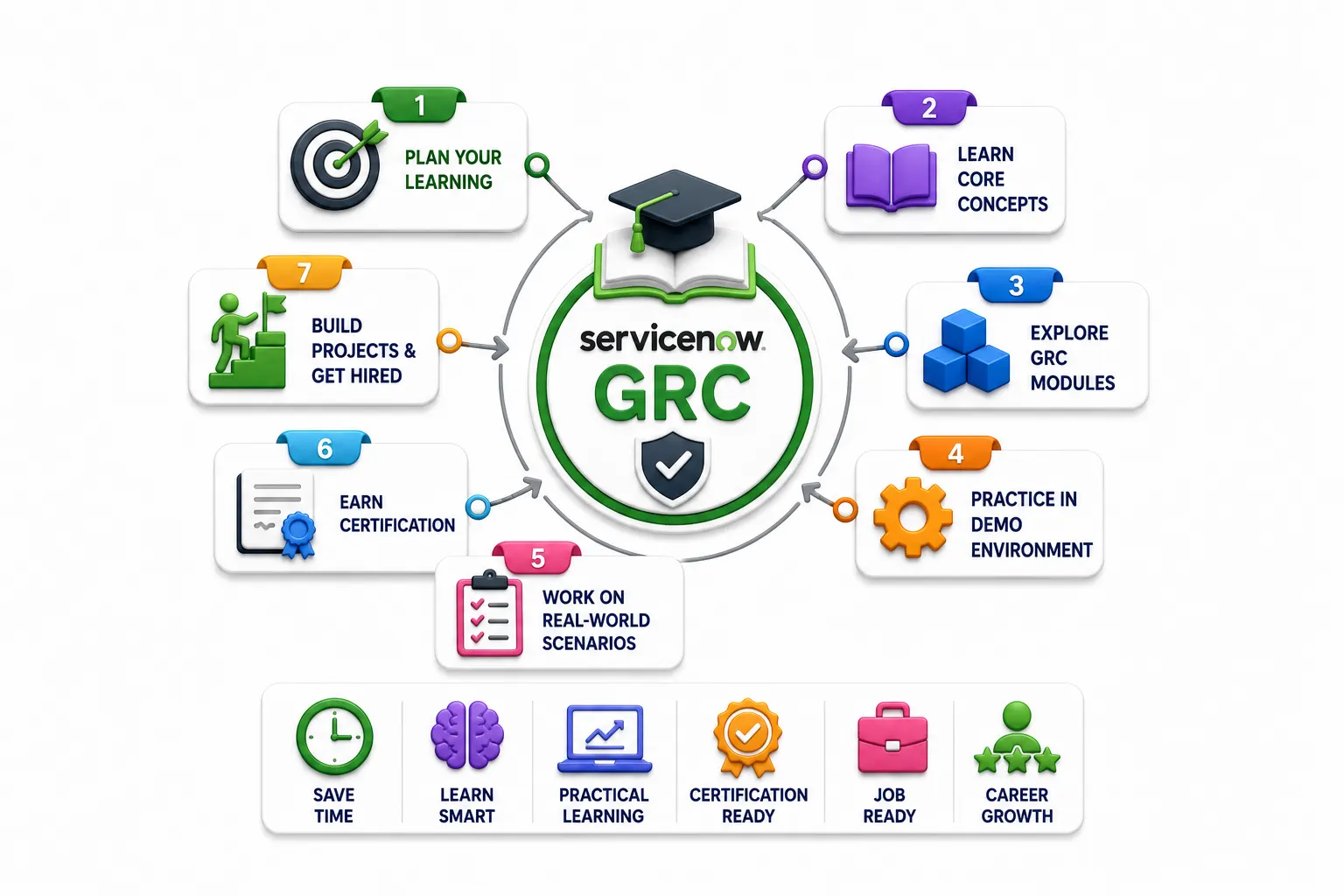
Here's where most beginners stumble: they try to learn everything at once instead of following a structured path. A smarter approach starts with the fundamentals of the ServiceNow platform before jumping into GRC-specific modules.
Start with free ServiceNow platform basics to understand navigation, tables, and workflows. This foundation makes everything else click faster later.
Next, move into GRC-focused training that walks through real implementation scenarios rather than just theory. This is where structured courses genuinely save time. For instance, JastTech offers a dedicated ServiceNow Integrated Risk Management (IRM) and GRC implementation course that walks learners through hands-on configuration, which is exactly the kind of practical exposure that separates candidates who merely know terminology from those who can actually configure a working solution.
After foundational training, practice matters more than theory. Set up a personal developer instance and try building out a small risk register or compliance workflow yourself. Mistakes made in a sandbox teach faster than any tutorial.
Finally, join community forums where practitioners discuss real implementation challenges. Watching how experienced professionals troubleshoot builds intuition that courses alone can't fully replicate, and that intuition is often what interviewers are quietly testing for.
Common Mistakes Beginners Make When Approaching GRC
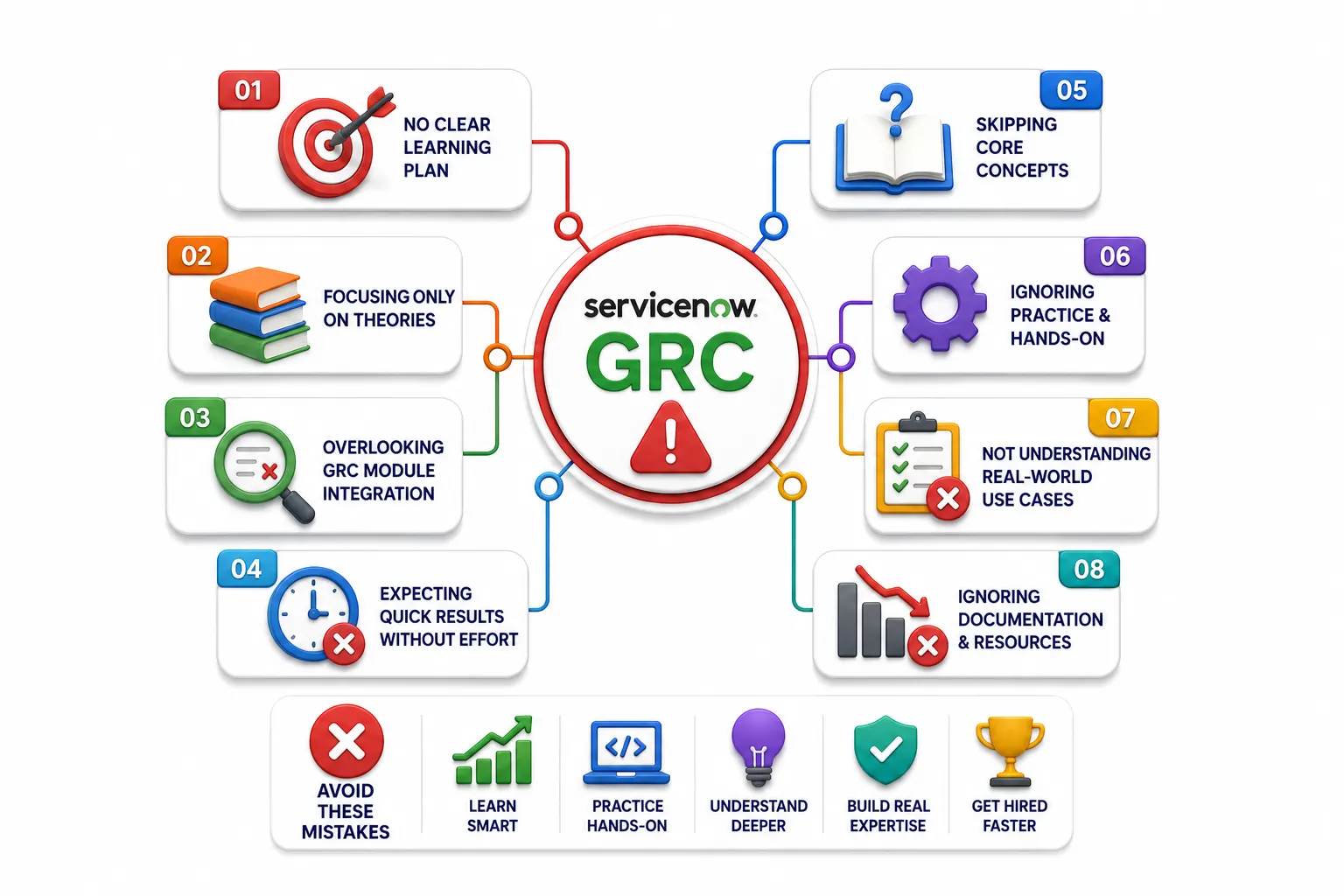
Even motivated learners trip over predictable pitfalls, and knowing them in advance saves frustration.
One frequent mistake is treating GRC purely as a compliance checkbox exercise rather than understanding the underlying risk logic. This leads to configurations that technically work but don't actually reduce organizational risk.
Another common error involves ignoring the relationship between modules. Someone might configure Risk Management beautifully but forget to link it properly to Policy and Compliance Management, creating disconnected data that defeats the platform's purpose.
Beginners also tend to underestimate the importance of clean data. GRC runs on accurate control libraries and risk taxonomies; if those foundations are messy, every report built on top inherits that mess.
A subtler mistake is focusing entirely on technical configuration while neglecting business context. Understanding why a particular regulation exists helps you configure controls that actually address the underlying concern, not just satisfy a checklist.
Lastly, many learners avoid hands-on practice out of fear of breaking something. Developer instances exist precisely for experimentation, so hesitation here just slows progress. The professionals who advance fastest are usually the ones who built things, broke things, and rebuilt them until the logic made sense.
Mapping Out a Realistic ServiceNow GRC Career Path
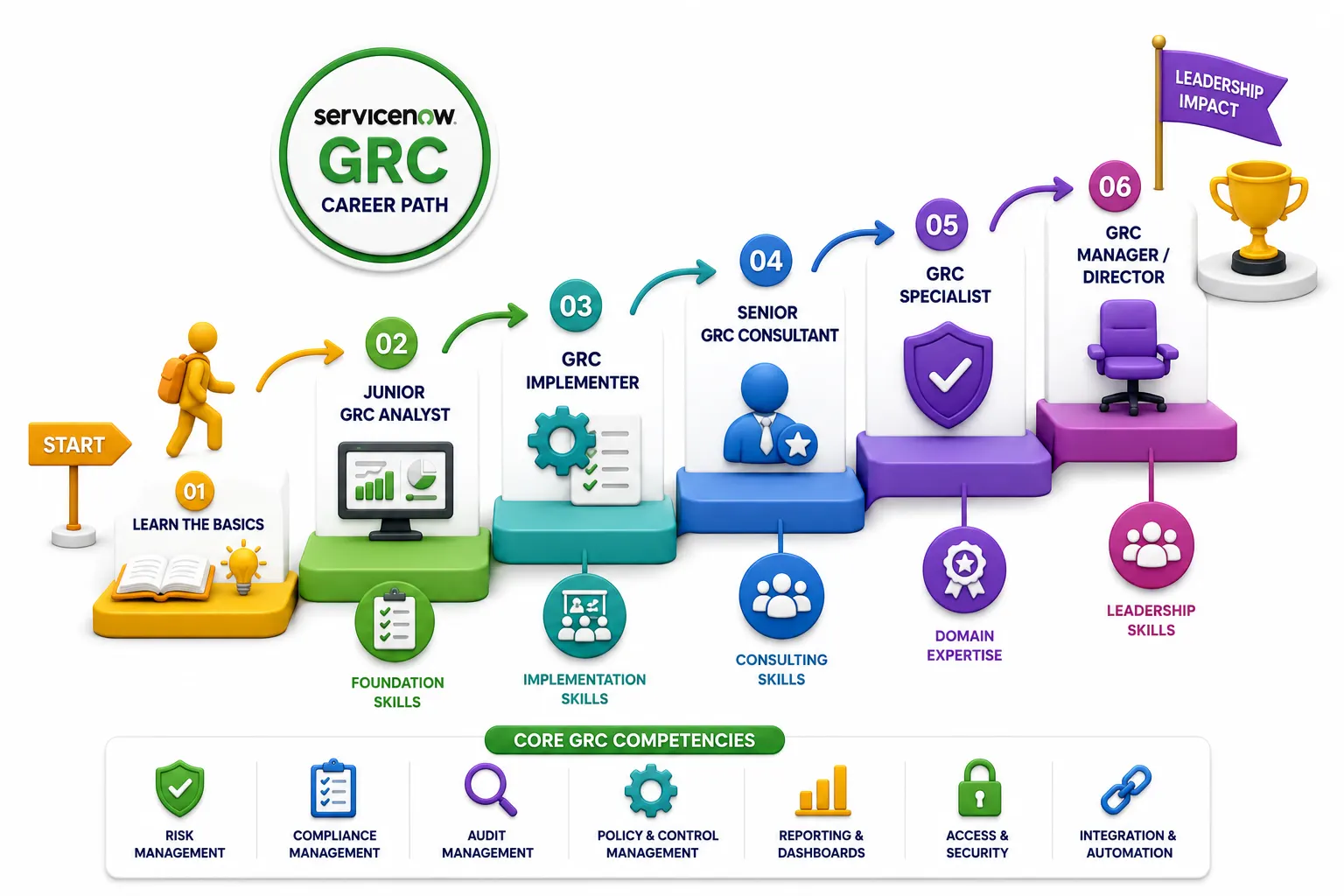
A ServiceNow GRC career path rarely follows a single straight line, but there are recognizable stages most professionals pass through.
Entry-level roles often start as GRC analysts or junior consultants, where you're primarily supporting configuration, data entry, and basic reporting under supervision. This stage builds foundational comfort with the platform's structure.
Mid-level roles shift toward implementation and configuration ownership. Here, you're designing workflows, building risk assessments, and working more directly with compliance stakeholders to translate requirements into system logic.
Senior roles move into solution architecture or GRC consulting, where the focus shifts from "how do I configure this" to "what's the right strategic approach for this organization's risk posture." These roles often involve leading implementations across multiple business units.
Some professionals branch into specialized tracks like vendor risk management or business continuity, while others move toward pure ServiceNow platform architecture roles that span beyond GRC alone.
Salary and demand trends have generally favored specialists who combine platform expertise with genuine risk and compliance knowledge, since that combination remains harder to find than either skill alone. Building this career doesn't require a traditional compliance background either; many successful professionals transition from IT support, business analysis, or audit roles.
Why This Skill Set Will Keep Growing in Relevance
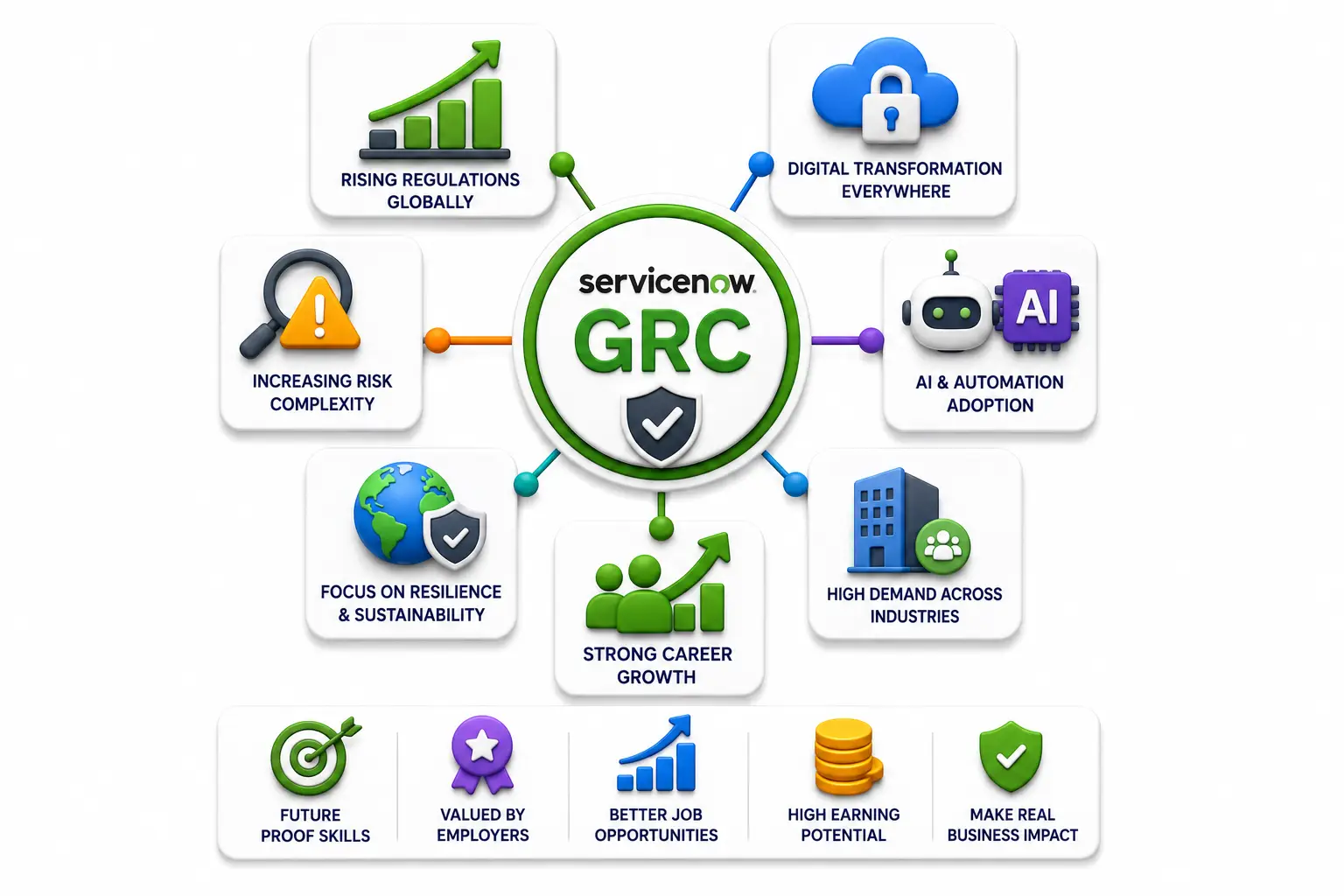
Regulatory scrutiny isn't slowing down anywhere. New privacy laws, cybersecurity mandates, and industry-specific regulations continue emerging across regions, and organizations need systems flexible enough to adapt quickly.
Manual compliance tracking simply cannot keep pace with this rate of change, which is precisely why platforms that automate control mapping and risk visibility continue gaining ground.
There's also a broader shift happening inside organizations: risk management is no longer viewed as a back-office function handled quietly by compliance teams. It's increasingly treated as a strategic concern discussed at leadership levels, which raises the profile and influence of people who understand these systems deeply.
Additionally, as organizations integrate AI tools and third-party vendors into their operations, the surface area for risk expands considerably. Vendor Risk Management alone is becoming more critical as supply chains grow more complex and interconnected.
For anyone building technical skills today, pairing platform knowledge with governance thinking creates a rare combination. It's not just about knowing where buttons are; it's about understanding why the workflow exists in the first place. That deeper understanding is what keeps this career path resilient even as specific tools and interfaces evolve over time.
Conclusion
Understanding ServiceNow GRC means seeing how modules, skills, and career stages connect into one coherent path. Start with fundamentals, build hands-on experience, and let genuine risk understanding guide your growth. The opportunity here isn't fleeting; it's structural, and it rewards patience over shortcuts.