

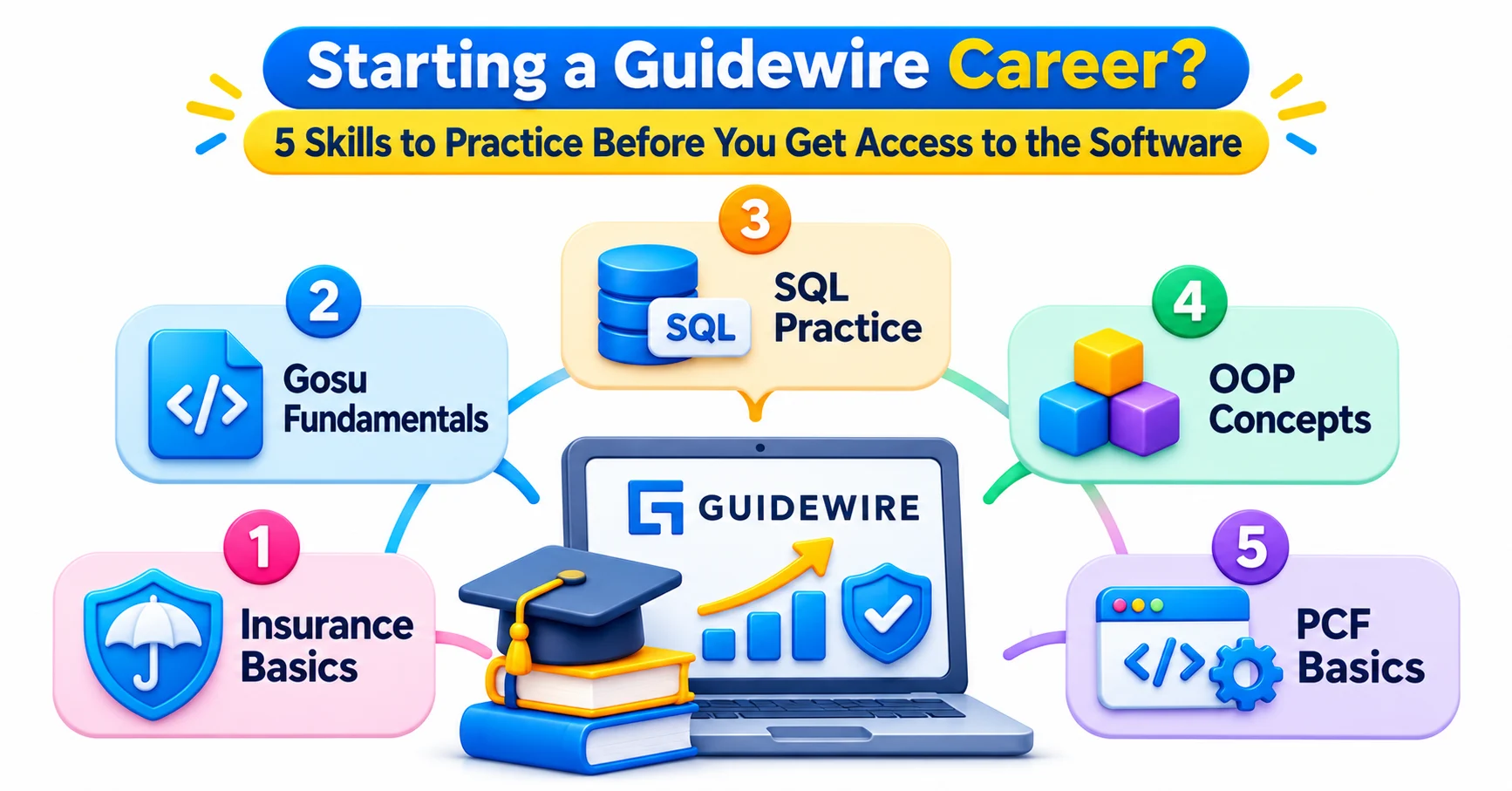
Starting a Guidewire Career? 5 Skills to Practice Before You Get Access to the Software
Navigate through this article using the table of contents below
Table of Contents
No headings found in this article.
Most people picture a Guidewire career beginning with a login, a training environment and a freshly installed PolicyCenter. In practice, the learners who progress fastest often spent a few unglamorous weeks preparing before that login arrived. A structured program like Guidewire training in Hyderabad gives you the software, but what you bring to the first session decides how quickly it starts making sense.
Software access is rarely the real bottleneck. The gap is usually insurance vocabulary, data thinking and comfort with code. Here are five skills you can practice today without a Guidewire licence.
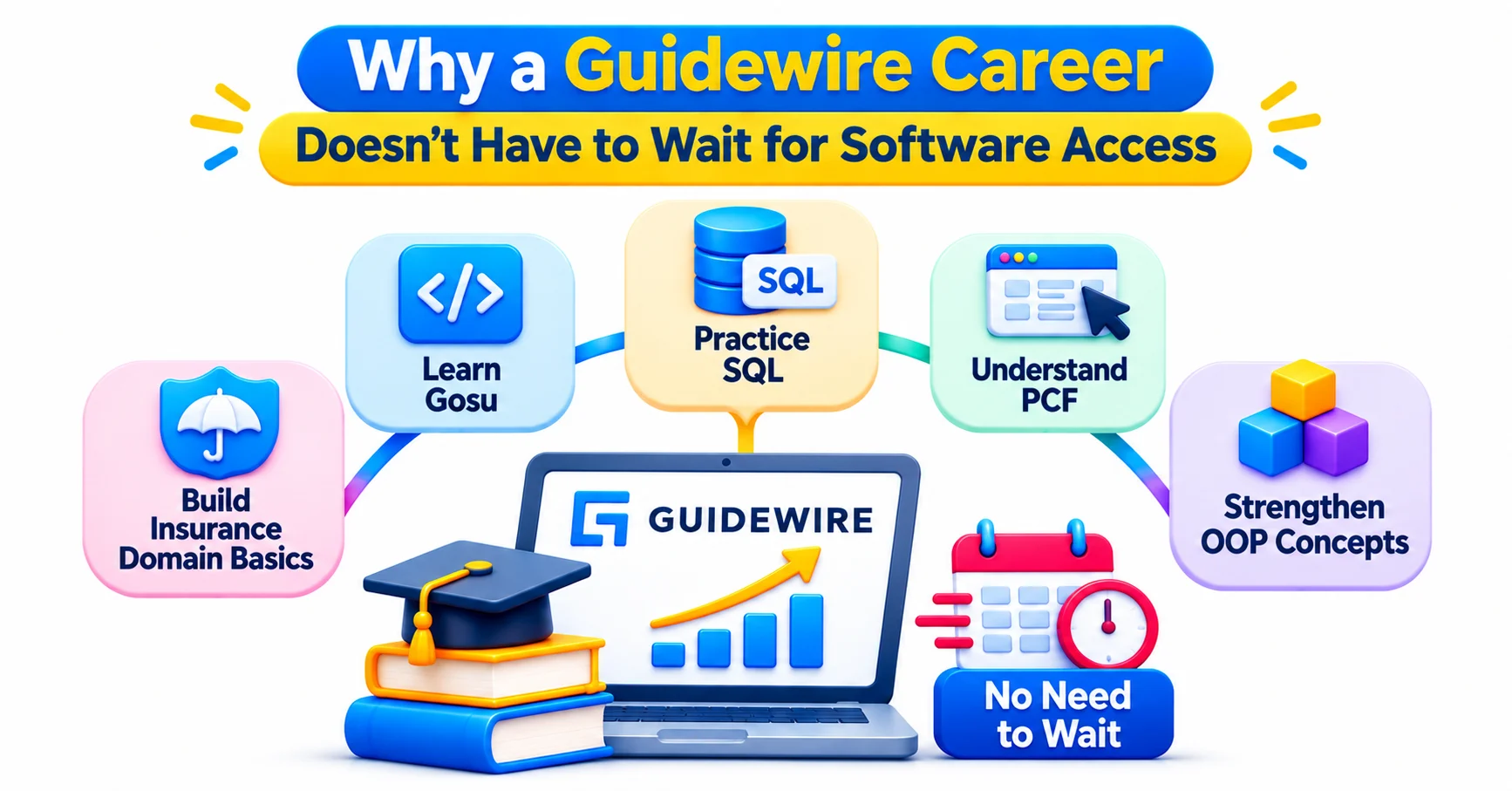
Why a Guidewire Career Doesn’t Have to Wait for Software Access
Guidewire is licensed enterprise software. Insurers and implementation partners run it, and most newcomers meet it only through a training program or an employer. That makes the early stage feel stuck: you can’t practice a tool you can’t open.
The way out is to see what the tool actually is. Guidewire’s InsuranceSuite is built around three core applications: PolicyCenter for policies and underwriting, ClaimCenter for claims, and BillingCenter for invoices and payments. Each one encodes how an insurer works. It stores data, applies business rules, and connects to other systems. Real project work is mostly configuring and extending those behaviors, not clicking through screens.
This means most of what you need is not specific to the product. A developer needs to read and write code and understand data. A business analyst needs to understand how insurance operates and describe changes clearly. A tester needs to know what a correct policy change looks like before they can say whether one is broken.
A common beginner mistake is spending the waiting period watching screen-recorded demos and memorizing menu paths. Menus change between versions, and the memory fades within a week. Concepts survive. If you understand why a mid-term policy change creates a new version of the policy data, you can find that feature in any release.
The five skills below are ordered the way most learners benefit from them: the insurance business first, then data, then code, then integration, then the ability to document what you’ve understood. None needs more than a laptop and a few hours a week. You don’t have to master any of them. You just need to be past the point where each one is brand new when training starts.
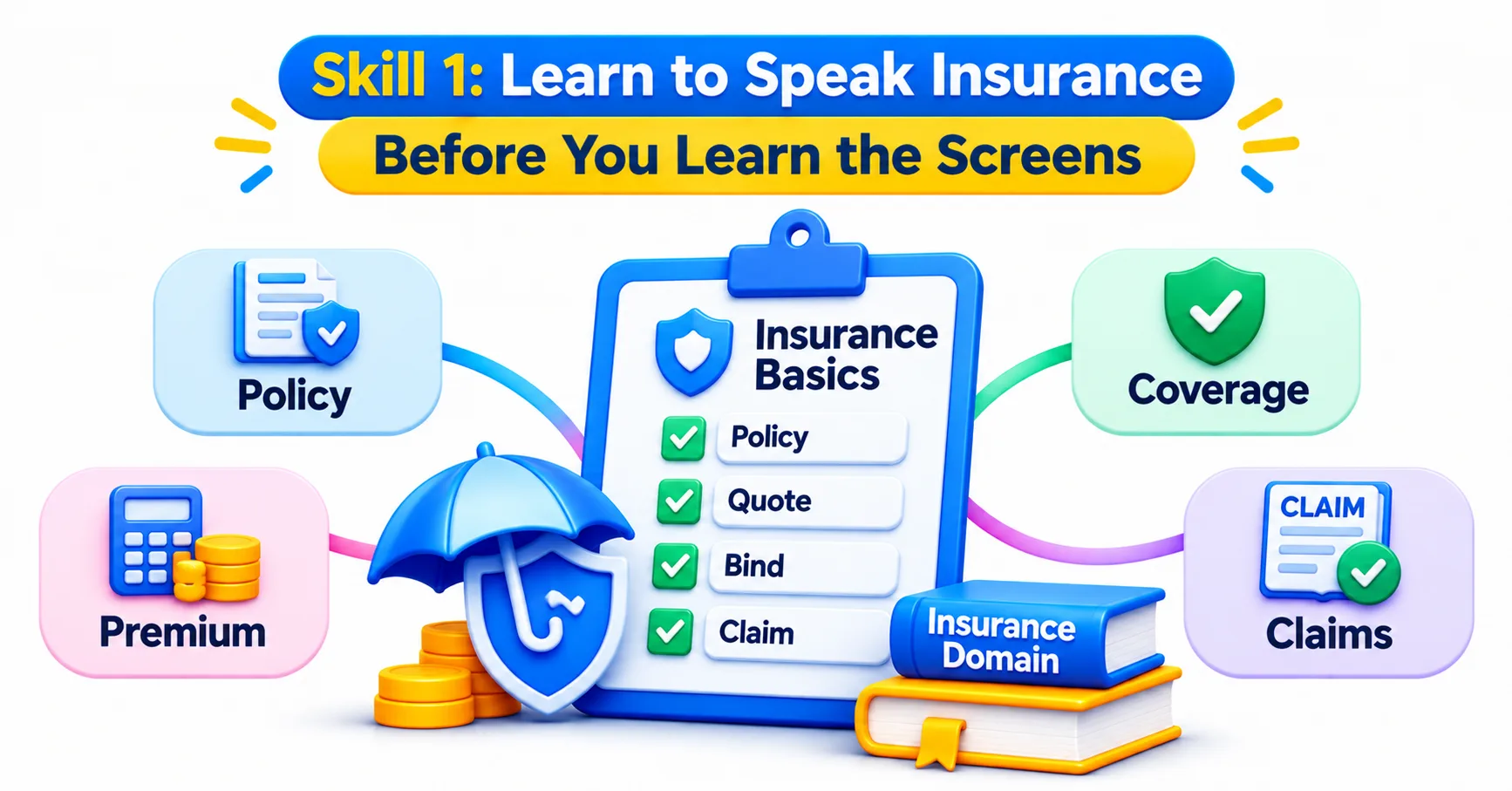
Skill 1: Learn to Speak Insurance Before You Learn the Screens
Insurance domain knowledge is the skill beginners most often skip, and it costs them later. In a Guidewire classroom or project meeting, people use words like endorsement, exposure, reserve and first notice of loss as if everyone was born knowing them.
Start with the lifecycle of a single policy:
Quote and underwriting: the insurer collects risk details and decides whether and at what price to offer cover.
Bind and issue: the customer accepts, and the policy becomes active with defined coverages and limits.
Mid-term change: an endorsement adds a driver or raises a limit, and the premium is adjusted.
Renewal or cancellation: the policy continues, changes terms or ends.
Claim: a loss is reported, investigated, reserved for and eventually paid or denied.
The best exercise needs no special material. Pull out your own motor, health or home policy document and read the declarations page line by line. Identify the insured, the policy period, each coverage, the deductible and the premium. Then write down what would have to happen if you bought a second car halfway through the year.
That one scenario touches most of what PolicyCenter does. It forces you to think about effective dates, premium recalculation and who has to approve what. It also shows how the three applications relate: the same policy feeds a claim in ClaimCenter, and its premium drives invoices in BillingCenter.
One distinction worth getting right early is the difference between an account, a policy and a policy period. A customer can hold several policies, and each policy can span several terms. Learners who blur these concepts struggle later when data models start to look confusing for no reason.
Read a few insurance glossaries, but prefer real documents over definitions. A definition tells you what deductible means. A policy tells you how it behaves.
Skill 2: Get Comfortable Thinking in Data and SQL
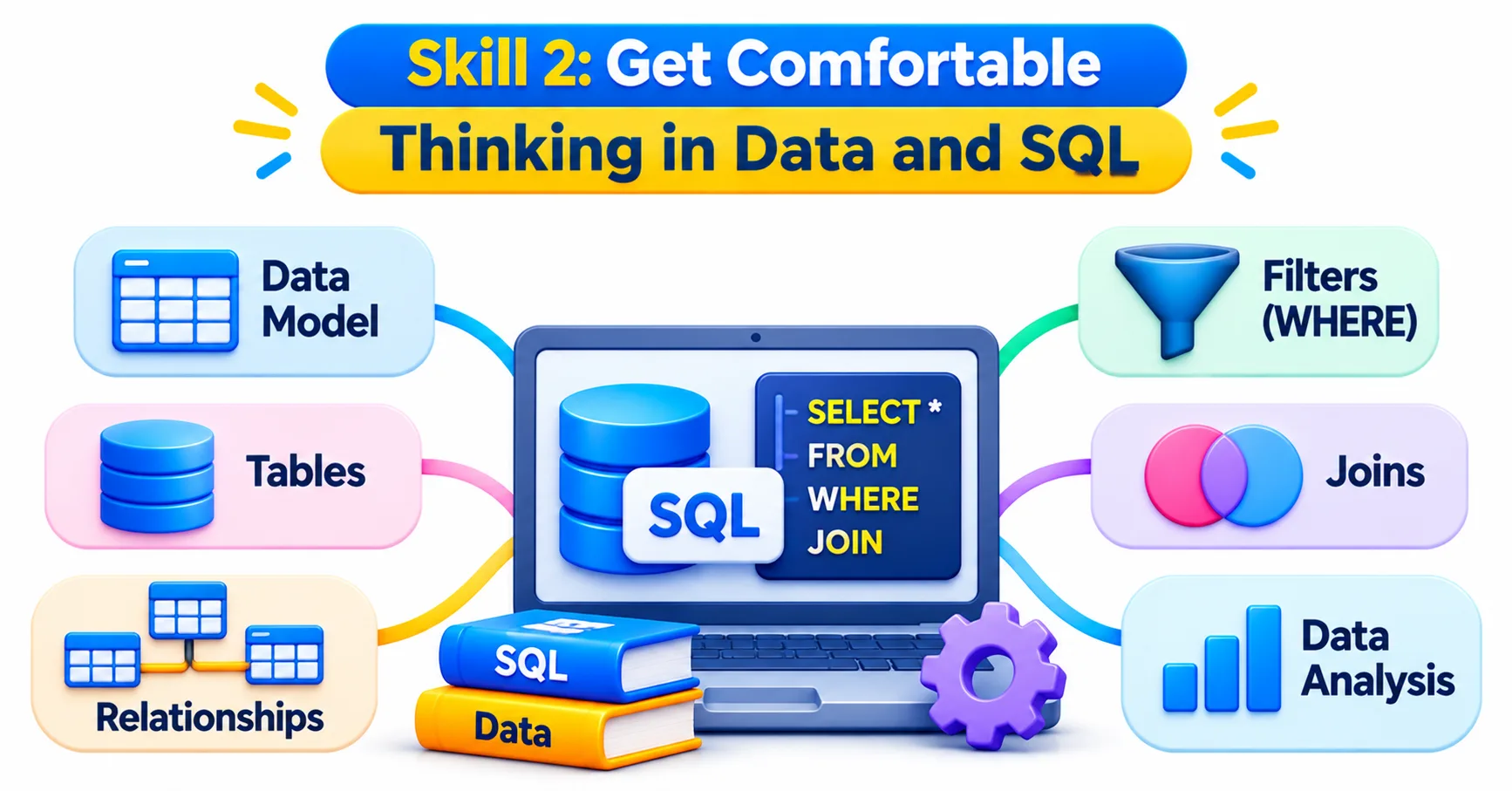
Guidewire applications are data-heavy by design. Nearly everything you will configure, test or integrate comes down to entities, the relationships between them and the rules that govern changes. If that way of thinking is new to you, the software will feel opaque.
SQL is the fastest way to build the habit. Install SQLite or PostgreSQL, both free, and create a small schema: customers, policies, vehicles, claims. Then practice the operations that come up constantly in project work:
Joining policies to claims to see which customers have the most losses
Filtering by date ranges
Grouping and counting, for example claims per month or premium by region
Finding records that should exist but don’t, using left joins and null checks
Next, model something Guidewire developers must understand: data that is valid only for a period of time. A vehicle is on a policy from one date to another. A driver is added in March and removed in September. Add start and end date columns to your tables and write queries that answer “what did this policy look like on 15 June?” Writing that query yourself teaches more about effective-dated data than any definition. Guidewire handles this through its own mechanisms, but the underlying problem is the same one you’ll be solving by hand.
Typelists are the other idea worth seeing in advance. In Guidewire, a typelist is a controlled set of codes, such as the categories of a loss cause or the states a policy can be in. You can imitate this with a lookup table and foreign keys. Then ask yourself what happens to existing records when one of those codes is renamed or removed. This question shows up in real projects, and people who have thought about it ask better questions during design discussions.
You do not need advanced SQL like window functions or query tuning. Reaching a level where a three-table join feels routine is enough to make the data side of training much less intimidating.
Skill 3: Build a Foundation in Java-Style Programming for Gosu
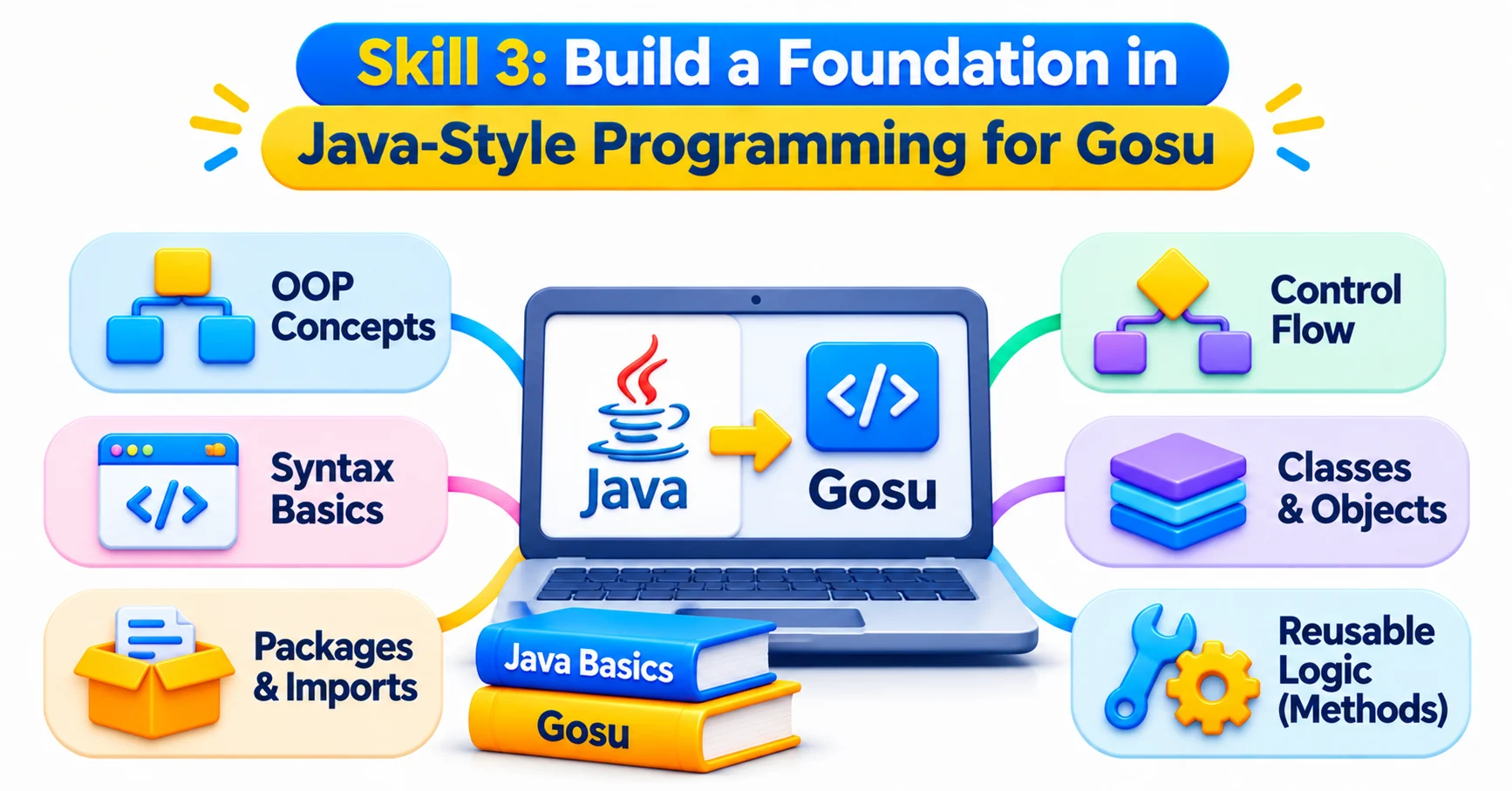
Gosu is the language Guidewire developers use to write rules, validations, plugins and business logic. It runs on the Java Virtual Machine, has a syntax that Java programmers find familiar, and can call Java libraries directly. It is also statically typed and adds conveniences such as type inference, blocks (which behave like closures) and enhancements that let you add methods to existing types.
You can’t practice Gosu itself without the platform, but you can build the skills it rests on. Learning Java, or any comparable object-oriented language, covers most of the distance. Focus on:
Classes, objects, interfaces and inheritance
Collections such as lists, maps and sets, and iterating over them
Conditional logic and loops
Exceptions: how to throw, catch and read them
Handling null values safely
Then write something that resembles real insurance logic. A small premium calculator is a good project. Give it a base rate, adjustments by age band and state, a discount for no claims and a surcharge for a high-risk vehicle category. Add input validation that rejects an invalid date or a missing field with a clear error message. That mirrors the kind of validation rules developers write on Guidewire projects every week.
Learn to read a stack trace, too. Beginners tend to look at the first line, panic and paste the whole thing into a search engine. The habit of reading from the line that points to your own code is worth more than any syntax detail.
Finally, get comfortable with Git. Branching, committing and reading a diff are everyday activities on any enterprise project, and Guidewire work is no different. It’s easier to learn on a throwaway repository now than in front of a team later.
If a Java course feels like too much, aim for one working project rather than complete coverage. A program you wrote and debugged yourself teaches more than ten chapters you only read.
Skill 4: Practice Reading XML, JSON and Simple APIs
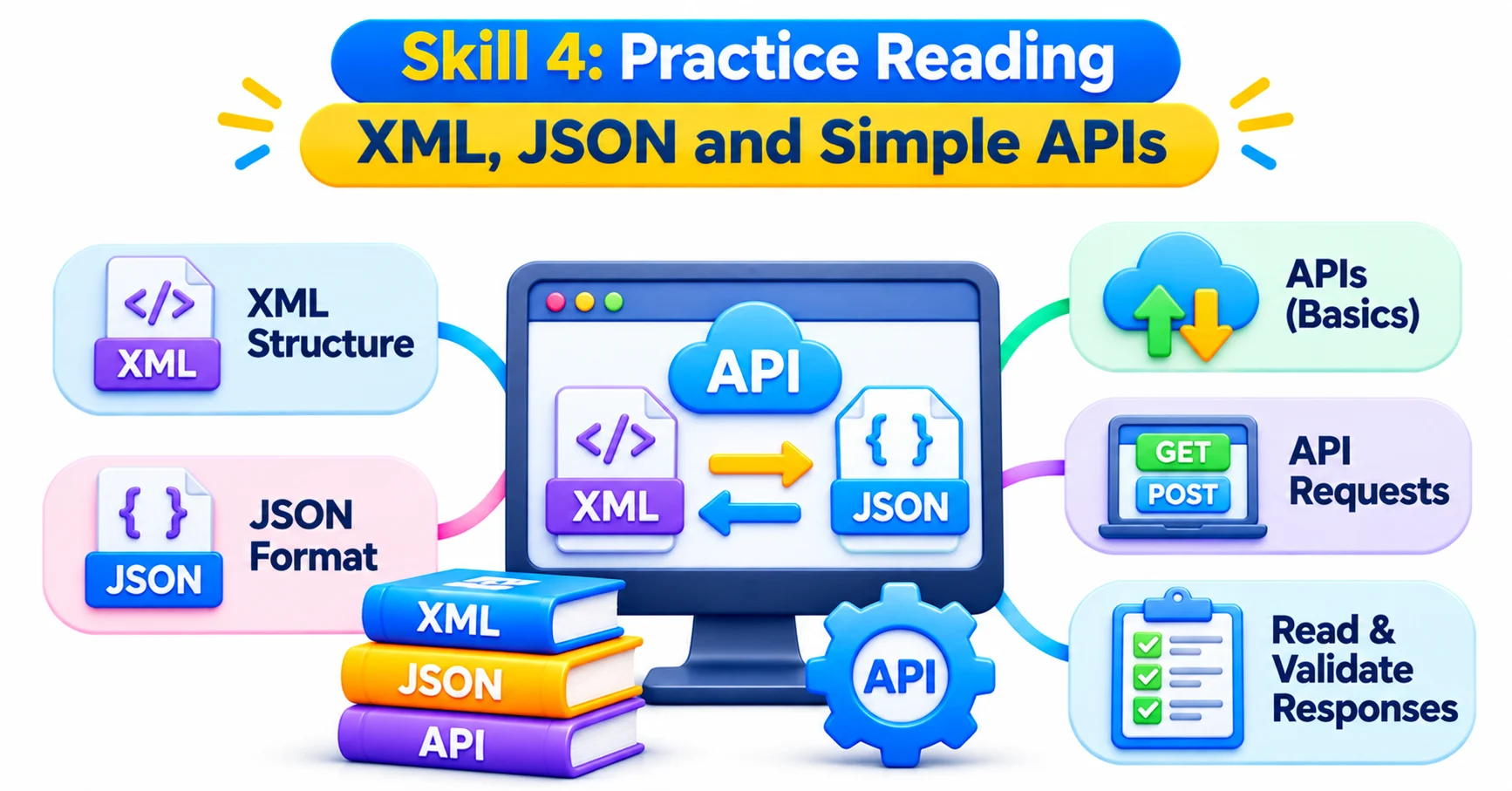
Insurers don’t run Guidewire in isolation. A policy system exchanges data with payment gateways, document generators, rating engines, customer portals and third-party data providers. Much of the real engineering work lies in those connections, and they rely on formats and protocols you can practice with for free.
Begin with the formats. XML and JSON are both ways of describing structured data, and you should be able to read either without squinting. Take a sample claim notification, such as a policy number, a loss date, a location and a short description, and write it in both formats. Then write a simple XSD or JSON schema that declares which fields are required and which are optional.
Next, call a real API. Use Postman, or curl from your terminal, against any free public REST API. Observe what a request looks like, what the status codes mean, and how an error response differs from a success. Then write a short script in Java or Python that sends a request, parses the response and handles a failure gracefully.
Also learn the vocabulary: REST and SOAP, endpoints, authentication, request and response, synchronous and asynchronous. Guidewire projects use both web services and messaging for integration, and the two behave differently. A web service call waits for a reply. A message is queued and sent later, which means you have to think about retries, ordering and what happens if the receiving system is down.
Consider a practical example. A customer reports a loss through a mobile app. The app sends details to the claims system, which must validate the policy number, check that the loss date falls within the policy period and then create the claim. What happens if the policy lookup times out? What if the same request arrives twice? These are the questions integration developers argue about, and you can reason through them before touching any Guidewire tool.
You aren’t trying to become an integration architect. Being able to open a payload, say what it means and spot what’s missing is a solid starting point.
Skill 5: Turn Business Needs Into Clear Requirements
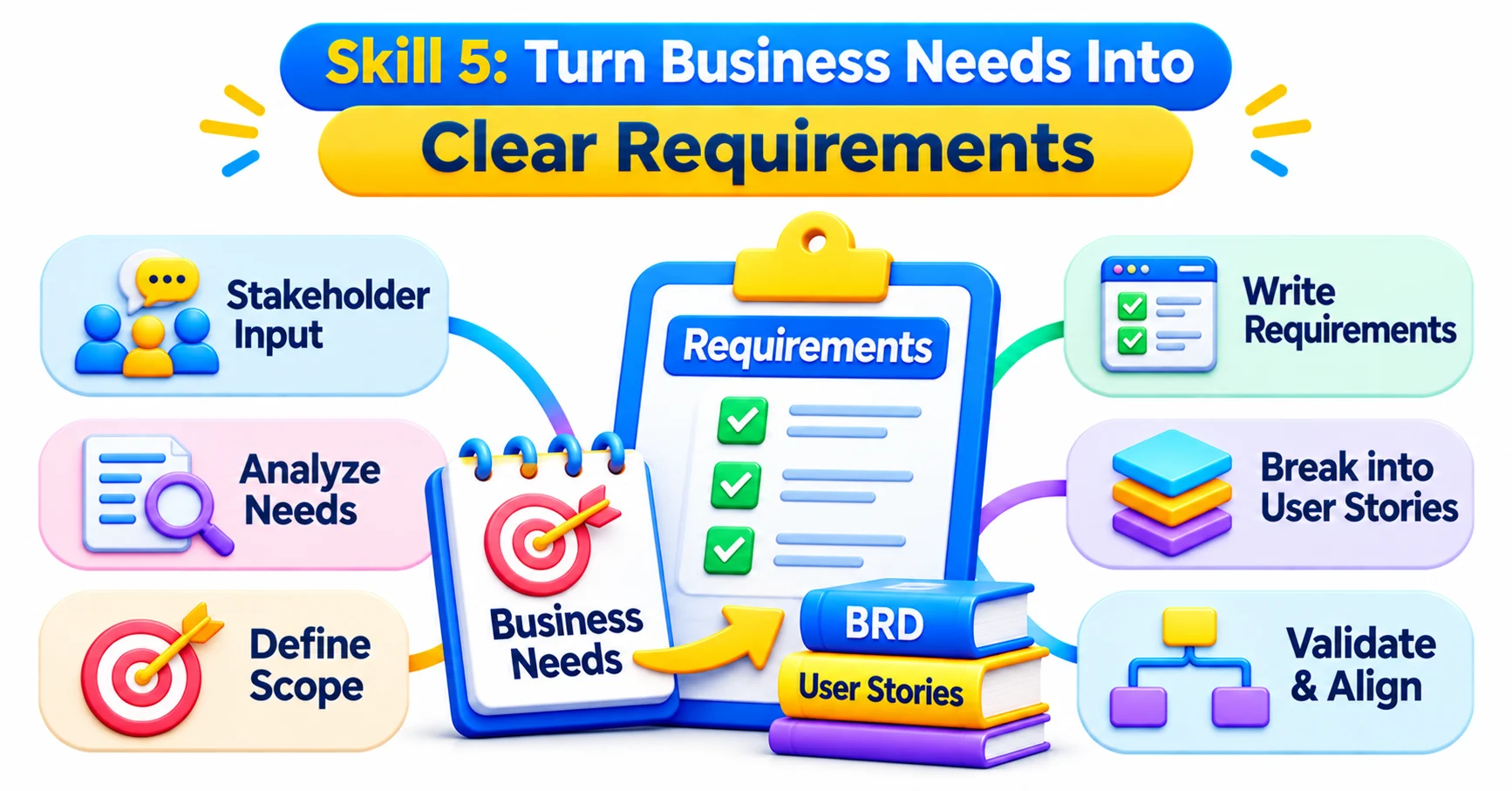
Every configuration and code change in a Guidewire project begins as someone’s description of a business need, and that description is often vague. The ability to turn “we want to let customers add a teenage driver online” into something a developer can build and a tester can verify is valuable in nearly every role.
You can practice this without any software. Take a single scenario and write it up properly:
A short user story that states who needs what and why
Acceptance criteria that can be checked as pass or fail
A simple process flow showing the steps and decisions
A list of edge cases and open questions
Using the teenage driver example, the questions come quickly. From what date does the change take effect? How is the additional premium calculated and when is it billed? Does a driver under a certain age need underwriter approval? What happens if the policy has an open claim? Each of these questions points to a different part of the system, and finding them is the actual skill.
Good requirement writing is also about precision. “The system should update the premium” is not testable. “When a driver aged under 21 is added, the system recalculates the premium from the change’s effective date and shows the difference before the user confirms” is. Practice rewriting your own vague sentences until nobody could misread them.
If this part of the work appeals to you, the role has its own path. Understanding what a business analyst does on an insurance project, and how that role differs from development, is covered in Guidewire business analyst training. Even if you plan to be a developer or tester, the same habit of writing clearly pays off in design reviews and defect reports.
A realistic routine is one skill per week for five weeks, then one small project that combines them. For example, model a policy and claim in SQL, write a premium calculator, define the claim notification payload and document the requirements in a one-page spec. That single project would already put you ahead of most people on day one of training.
Conclusion
A Guidewire career is built on skills that exist well before the software does: understanding insurance, thinking in data, writing sound code, reading integrations and describing needs precisely. Learners who bring those five to the classroom spend training time on the platform itself rather than catching up on basics. Programs such as JastTech’s can then focus on what only the real environment teaches. Preparation doesn’t replace hands-on practice, but it decides how much of it you absorb.