


The Future of Guidewire in India Insurance Innovation AI and Cloud Strategy
Navigate through this article using the table of contents below
Table of Contents
No headings found in this article.
Ask any insurance CIO in Mumbai or Pune what keeps them up at night, and one name keeps surfacing: Guidewire.
Guidewire in India isn't quiet background software anymore — it's becoming the backbone of how insurers price risk, settle claims, and stay competitive in a market that's moving faster than most legacy systems can handle. What's shifting isn't the platform itself, but everything insurers are now building around it: artificial intelligence, cloud infrastructure, and a workforce racing to keep pace.
Why Indian Insurers Are Suddenly Rethinking Their Core Systems

For years, Indian insurers ran on a patchwork of legacy policy administration systems — some built in-house decades ago, others cobbled together after mergers. It worked, until it didn't. Customers now expect claims settled in days, not weeks, and regulators expect airtight compliance trails.
This is where Guidewire entered the picture for many mid-size and large carriers. Its PolicyCenter, ClaimCenter, and BillingCenter modules give insurers a unified core that talks to itself, instead of five disconnected systems requiring manual reconciliation every quarter-end.
What makes the Indian context interesting is scale. A single insurer here might process policies across dozens of regional languages, varied regulatory zones, and wildly different customer segments — from rural crop insurance to urban motor policies. A rigid, outdated system simply can't flex that far without breaking somewhere.
Guidewire's appeal isn't that it's flashy. It's that it's dependable, configurable, and increasingly cloud-ready — three things that matter enormously when you're rebuilding trust with regulators and customers at the same time.
The Cloud Shift: What Guidewire Cloud Platform Actually Changes
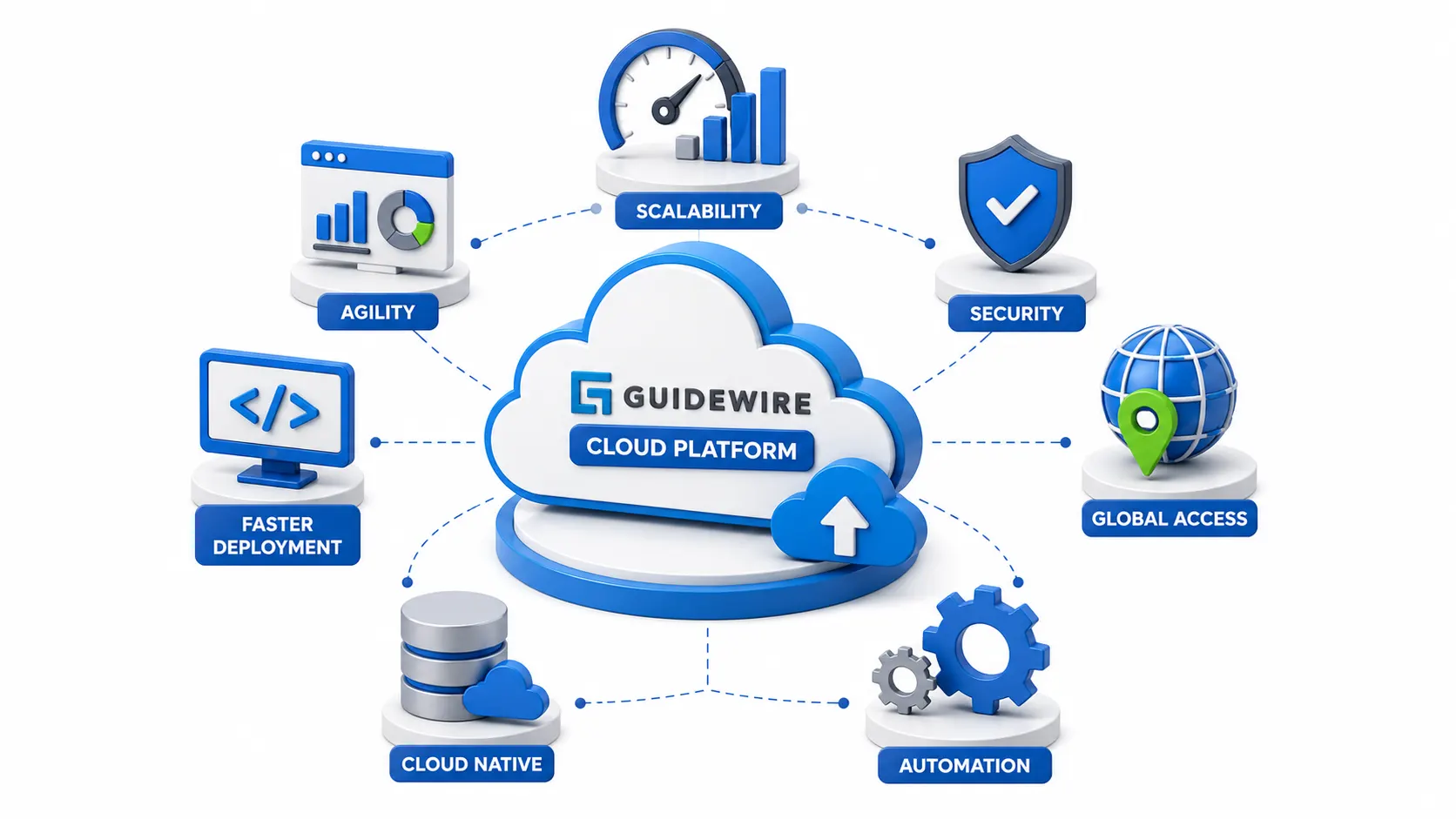
Moving to Guidewire Cloud Platform isn't just swapping servers — it's a different operating philosophy. On-premise deployments meant insurers owned every upgrade cycle, every patch, every infrastructure headache. Cloud shifts that burden onto Guidewire itself, freeing internal IT teams to focus on actual business problems.
For Indian insurers specifically, this matters for a practical reason: elasticity. Insurance demand spikes around festival seasons, monsoon-related claims, and year-end renewals. A cloud-native setup can scale resources up during these surges and back down afterward, instead of insurers permanently over-provisioning hardware they only need twice a year.
There's also a cost argument. Capital expenditure on data centers gets replaced by predictable operating expenses, which finance teams generally prefer. But the bigger shift is speed — cloud deployments cut the time between "we want this feature" and "customers are using this feature" from months to weeks in many cases.
None of this is automatic, though. A rushed cloud migration without proper data mapping or testing can introduce more risk than it removes. The insurers seeing real gains are the ones treating cloud adoption as a strategic redesign, not a lift-and-shift exercise.
Where AI Actually Fits Into the Guidewire Ecosystem
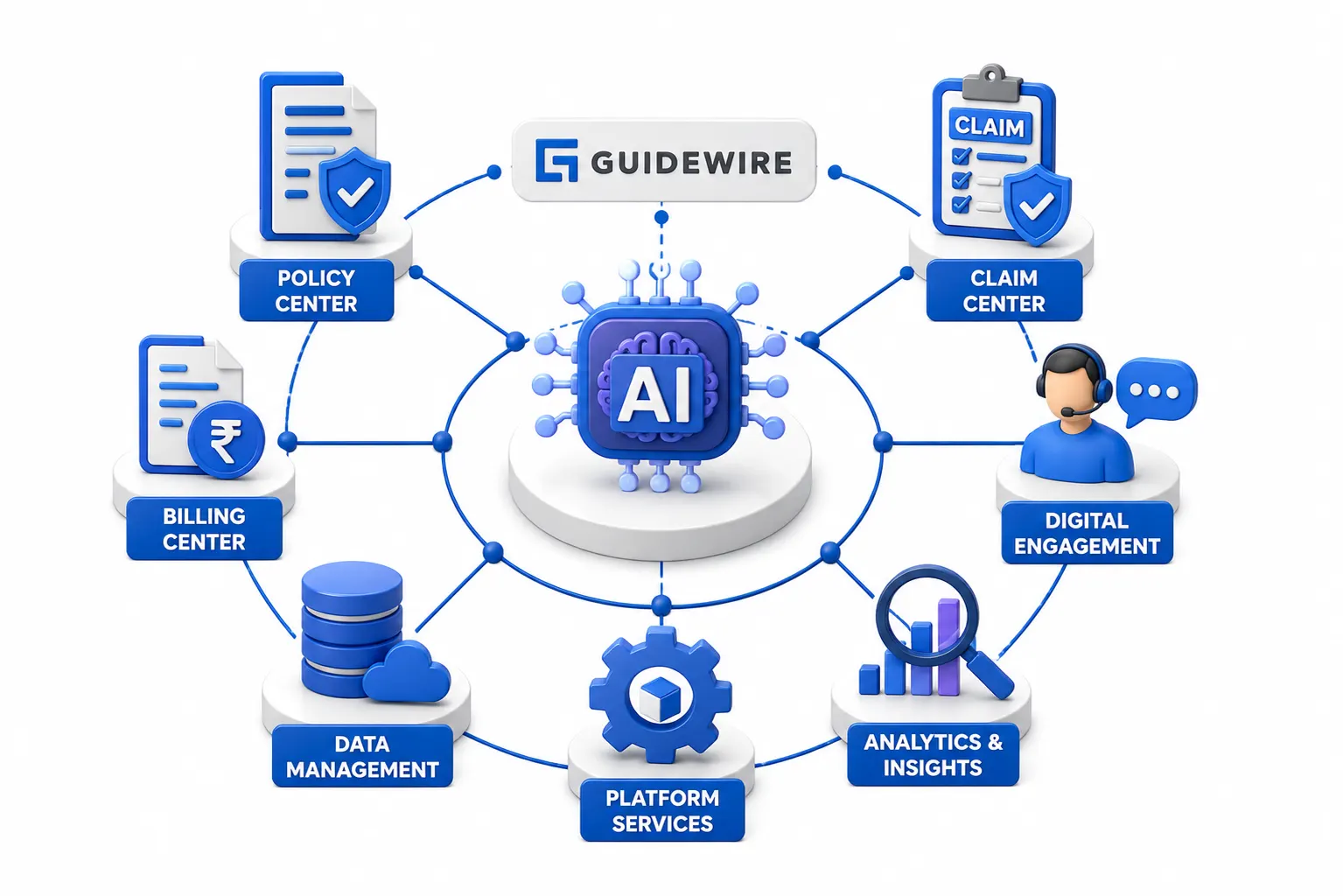
AI in insurance gets thrown around loosely, so it helps to be specific about where it actually adds value inside a Guidewire environment.
Claims triage is the clearest example. Instead of every claim routing through the same manual review queue, machine learning models can flag likely fraud patterns, estimate severity, and fast-track straightforward cases for automatic approval. Adjusters then spend their time on complex claims that genuinely need human judgment — not repetitive paperwork.
Underwriting benefits too. Predictive models built to work alongside PolicyCenter can assess risk using far more granular data than traditional actuarial tables allowed, from geographic risk clusters to behavioral signals in telematics data for motor insurance.
Guidewire has leaned into this through its own Guidewire Predict and integration-friendly architecture, letting insurers plug in third-party AI tools or build proprietary models without ripping out the core system. That flexibility matters in India, where insurers often want to experiment with local data science talent rather than relying solely on vendor-locked AI features.
The honest caveat: AI models are only as good as the data feeding them, and many insurers are still cleaning up decades of inconsistent records before any model delivers reliable results.
The Skills Gap Nobody Talks About

Here's the part that rarely makes it into strategy decks: none of this technology matters without people who know how to configure, customize, and maintain it.
Guidewire implementations are notoriously specialized. It's not a plug-and-play SaaS tool — it requires developers fluent in Gosu (Guidewire's proprietary scripting language), business analysts who understand insurance workflows, and QA teams who know the platform's quirks. India has become one of the largest hubs of Guidewire talent globally, largely because IT services firms here built entire practices around implementation and support work for global insurers.
Even so, demand regularly outpaces supply, especially for professionals who understand both the technical platform and cloud-native deployment patterns. Companies often end up training fresh graduates or developers from adjacent tech stacks rather than waiting for perfectly matched hires to appear.
This is exactly the gap structured programs like Guidewire training in India are designed to close — giving developers, analysts, and QA professionals a practical, hands-on path into the ecosystem instead of learning everything the hard way on a live client project.
Real-World Use Cases Reshaping Claims and Underwriting
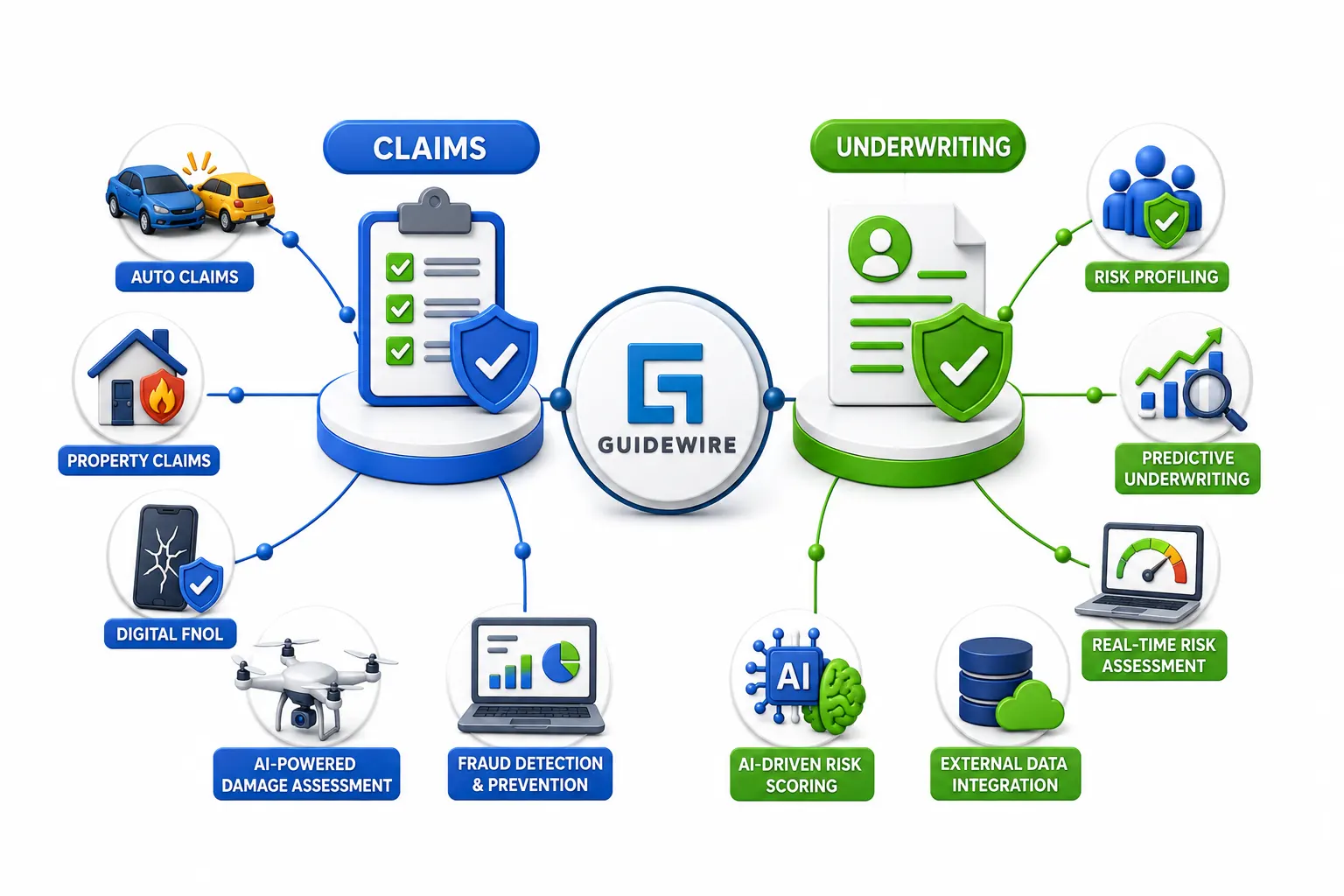
Theory aside, the practical shifts happening on the ground tell the real story.
Take motor insurance claims. A policyholder photographs vehicle damage through a mobile app connected to ClaimCenter, AI models estimate repair costs from the images, and straightforward claims get approved without an adjuster ever visiting the site. What used to take a week now takes hours.
Health insurance shows a different pattern. Insurers integrating Guidewire with hospital networks and third-party administrators can auto-verify cashless claims against pre-approved treatment codes, cutting the back-and-forth that frustrates both patients and hospitals during already stressful moments.
Commercial and crop insurance illustrate the flexibility angle. Satellite imagery and weather data feeding into underwriting models help insurers price agricultural risk more accurately across India's varied climate zones — something a rigid legacy system could never absorb without months of custom development.
What ties these examples together isn't the technology itself, but the fact that Guidewire's modular architecture lets insurers add these capabilities incrementally. Nobody rebuilds their entire core system to test one AI feature; they extend what's already there.
What's Next: Guidewire's Roadmap and India's Growing Role

Guidewire has been steadily pushing every customer toward its cloud platform, and India's insurers are following that curve alongside global peers rather than lagging behind it. That's a notable shift from a decade ago, when Indian carriers often adopted enterprise platforms years after Western markets had already stress-tested them.
Expect deeper AI embedding directly into core workflows rather than as bolted-on add-ons — predictive underwriting and automated claims decisioning becoming default behavior rather than experimental pilots. Expect also tighter integration with India-specific regulatory reporting as the IRDAI continues tightening digital compliance expectations.
On the talent side, India's role is likely to deepen further. Global system integrators already route significant Guidewire implementation and support work through Indian teams, and that trend compounds as more professionals get trained locally instead of insurers importing scarce global expertise at a premium.
The insurers who'll benefit most aren't necessarily the ones with the biggest budgets — they're the ones building internal capability early, pairing cloud migration with genuine AI experimentation, and investing in people who understand the platform deeply rather than treating it as a black box.
Conclusion
Guidewire in India is no longer just an IT decision — it's becoming a competitive strategy shaping how insurers innovate, scale, and compete through AI and cloud technology. The insurers investing in both platform and people today are the ones writing the next chapter of Indian insurance.