

Top VLSI Courses in Pune 2026: Fees, Syllabus & Placement Support
Navigate through this article using the table of contents below
Table of Contents
No headings found in this article.
The semiconductor industry is expanding faster than ever, and companies are actively hiring engineers with practical VLSI design and verification skills. However, not every training program prepares students for real industry requirements, making course selection more important than ever.
If you're planning to enroll in a VLSI course in Pune, understanding what separates an industry-focused program from a theoretical one can save both time and money. This guide explains exactly what to evaluate before joining a course and how to maximize your career opportunities in 2026.
Why Pune Has Become One of India's Best Cities for VLSI Training
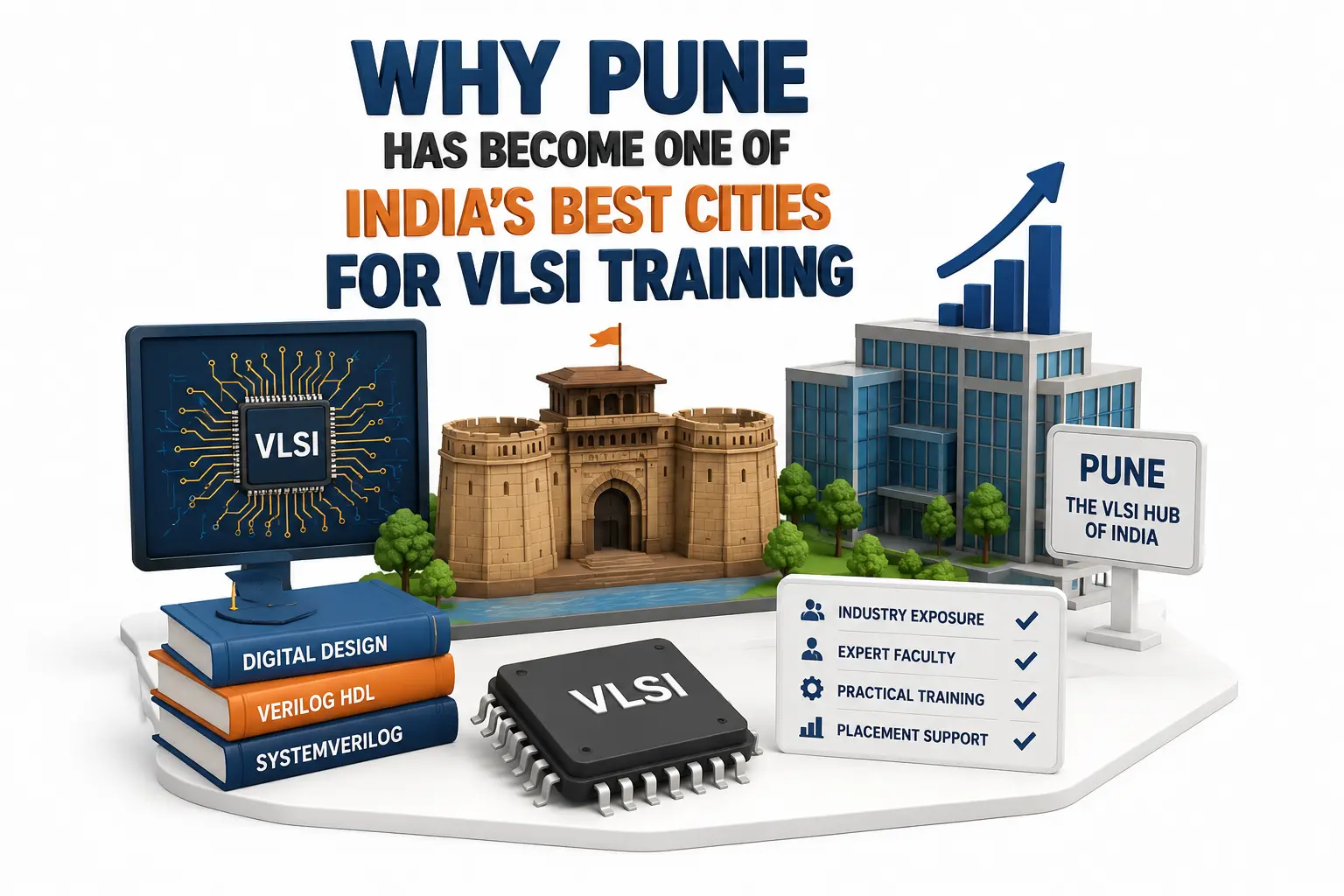
Pune has evolved into a major technology hub with growing opportunities in semiconductor design, embedded systems, automotive electronics, and ASIC development. Along with a strong engineering ecosystem, the city offers access to experienced trainers, industry professionals, and placement-oriented learning programs.
Many students choose a VLSI training institute in Pune because the city provides exposure to companies working in chip design, verification, embedded software, and semiconductor product development. This creates better networking opportunities and improves employability after completing training.
Apart from location advantages, Pune offers:
Access to experienced VLSI professionals as mentors
Strong ecosystem of electronics and semiconductor companies
Practical training environments with industry-standard EDA tools
Better internship and placement opportunities
Growing demand for RTL Design and Verification engineers
Students who cannot relocate also have access to a VLSI online course in Pune, allowing them to learn from industry experts while continuing college or employment.
Understand the Complete Syllabus Before Comparing Course Fees
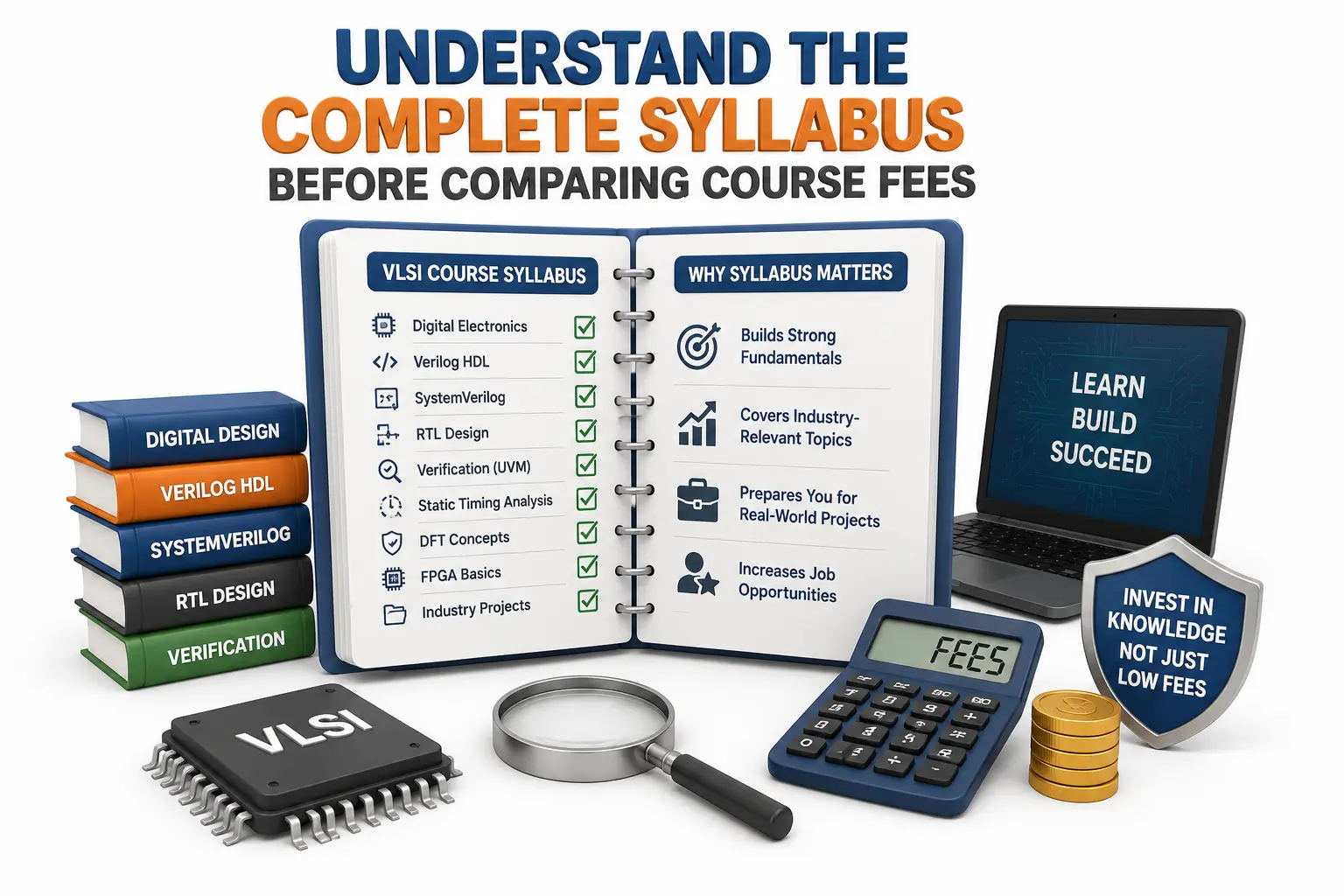
Many students compare only course fees while ignoring what is actually included in the curriculum. A lower-priced course may omit advanced topics that employers expect engineers to understand.
A well-designed VLSI course in Pune should progress from semiconductor fundamentals to complete RTL design and verification workflows rather than focusing on only one programming language.
An ideal syllabus generally includes:
Semiconductor fundamentals
Digital Electronics
CMOS Design Basics
Verilog HDL
SystemVerilog
RTL Design Methodology
FPGA Fundamentals
Functional Verification
UVM Basics
Static Timing Analysis (STA)
Scripting using TCL or Python
ASIC Design Flow
Design-for-Test (DFT) Introduction
Industry Projects
The syllabus should also explain how every topic connects to real chip development instead of teaching concepts in isolation. This approach helps students understand why each skill is valuable in an actual semiconductor company.
Industry Tools and Hands-On Projects Matter More Than Classroom Theory
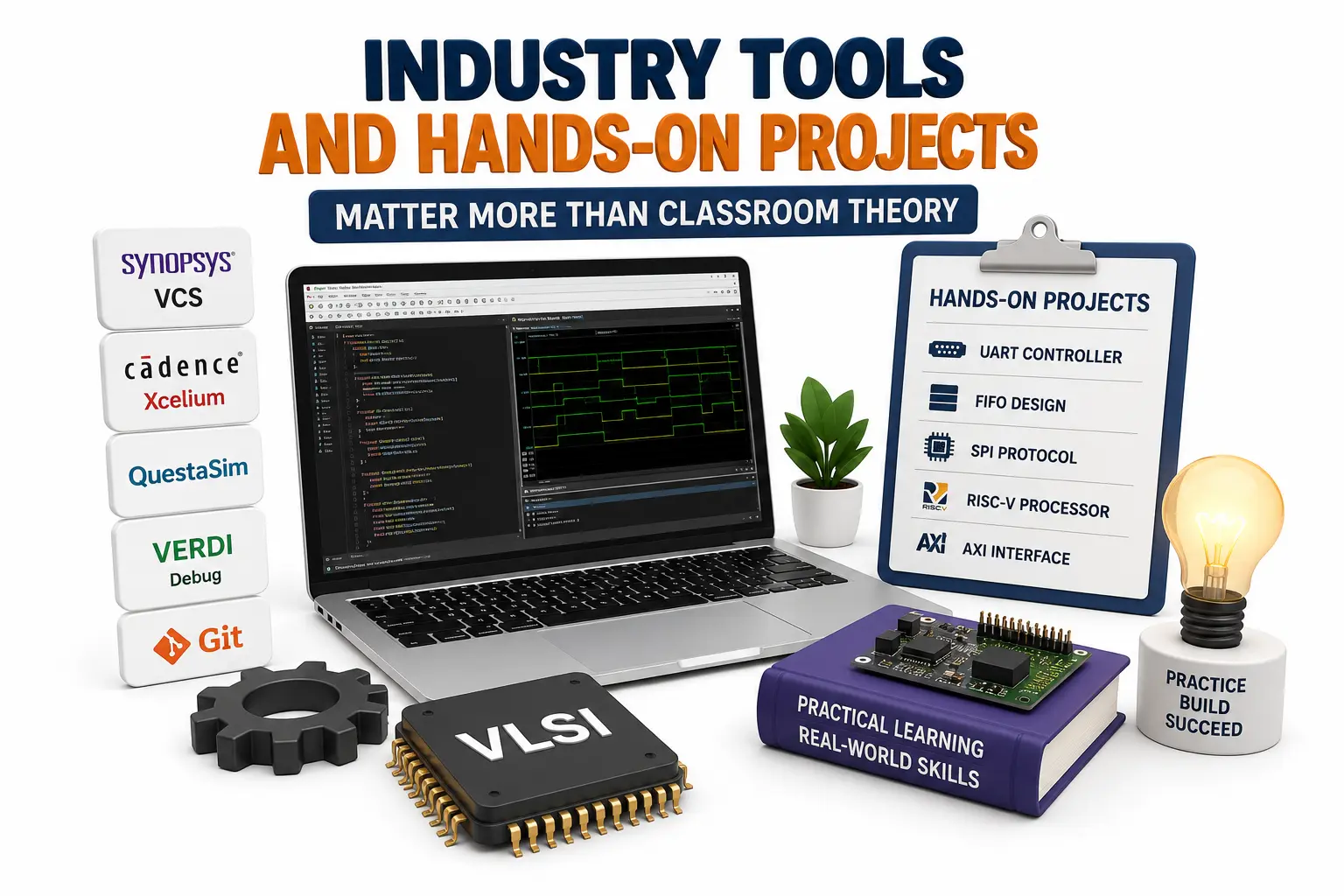
Employers rarely hire candidates based only on theoretical knowledge. Most interviews evaluate whether candidates have worked on RTL coding, debugging, simulation, and verification environments.
Good VLSI training in Pune emphasizes project-based learning using industry tools rather than limiting students to PowerPoint presentations and handwritten notes.
Look for training that provides experience with tools such as:
Synopsys Design Compiler
Synopsys VCS
Cadence Xcelium
Cadence Virtuoso (where applicable)
QuestaSim
Verdi Debugger
Linux Environment
Git Version Control
Projects should gradually increase in complexity. Examples include:
UART Controller
SPI Protocol
FIFO Design
Memory Controller
RISC-V Processor
AXI Interface
ALU Design
Functional Verification Testbenches
Working on complete projects helps students understand coding standards, debugging techniques, verification planning, and documentation practices that companies expect from fresh engineers.
Placement Support Should Include More Than Job Assistance
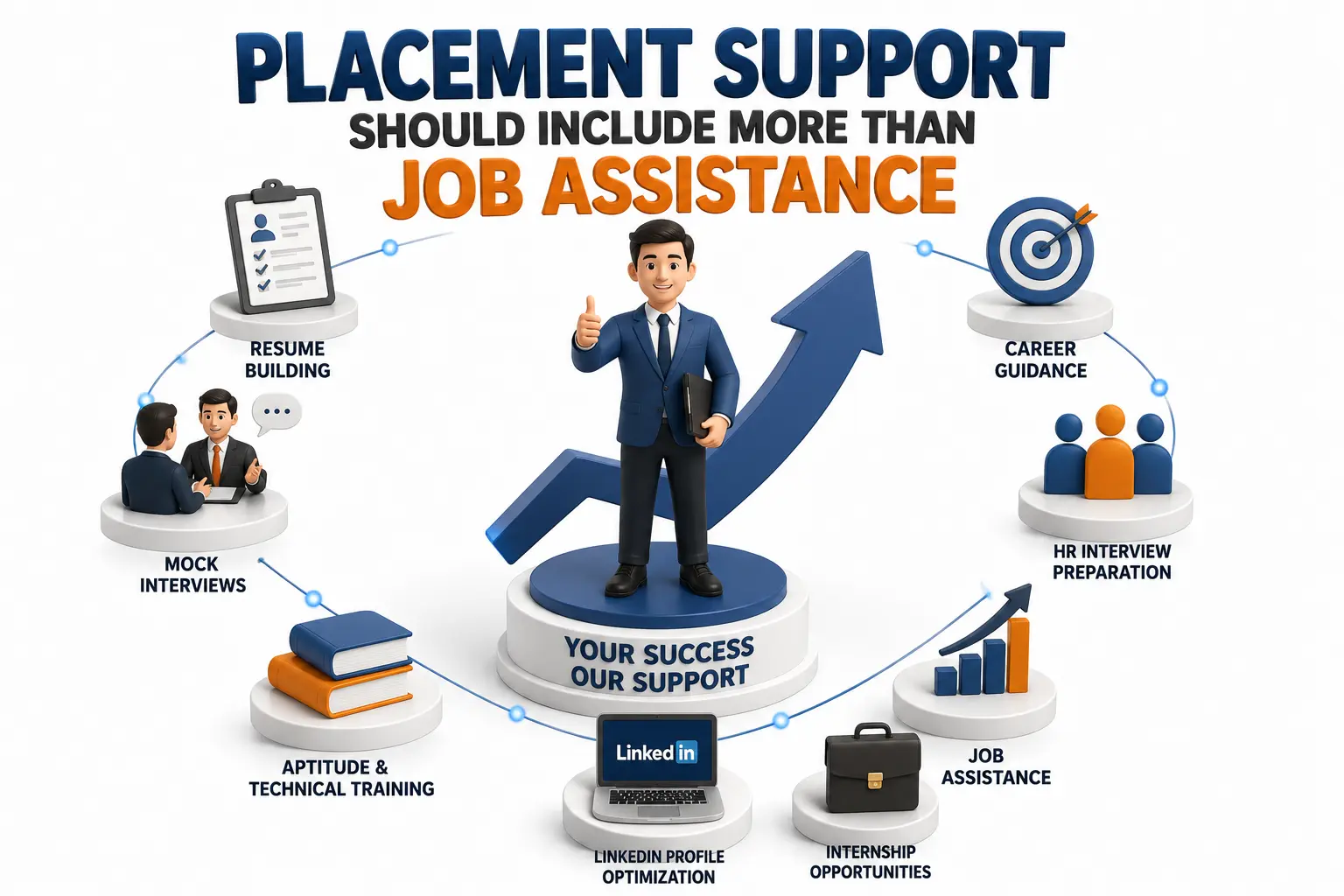
Placement support is often advertised as a major feature, but students should understand what it actually includes. Genuine placement assistance involves continuous career preparation instead of simply forwarding interview opportunities.
A quality VLSI training institute in Pune prepares students throughout the learning journey by improving both technical and professional skills.
Effective placement support should include:
Resume preparation
LinkedIn profile optimization
Mock technical interviews
HR interview preparation
Aptitude training
Communication skill development
Portfolio building
Continuous interview updates
Company-specific preparation sessions
Students should also ask about placement statistics carefully. Instead of focusing only on the highest salary package, understand:
Average salary offered
Number of recruiting companies
Placement process
Internship opportunities
Alumni working in semiconductor companies
This information provides a more realistic picture of career outcomes.
How to Choose Between Classroom and Online VLSI Learning
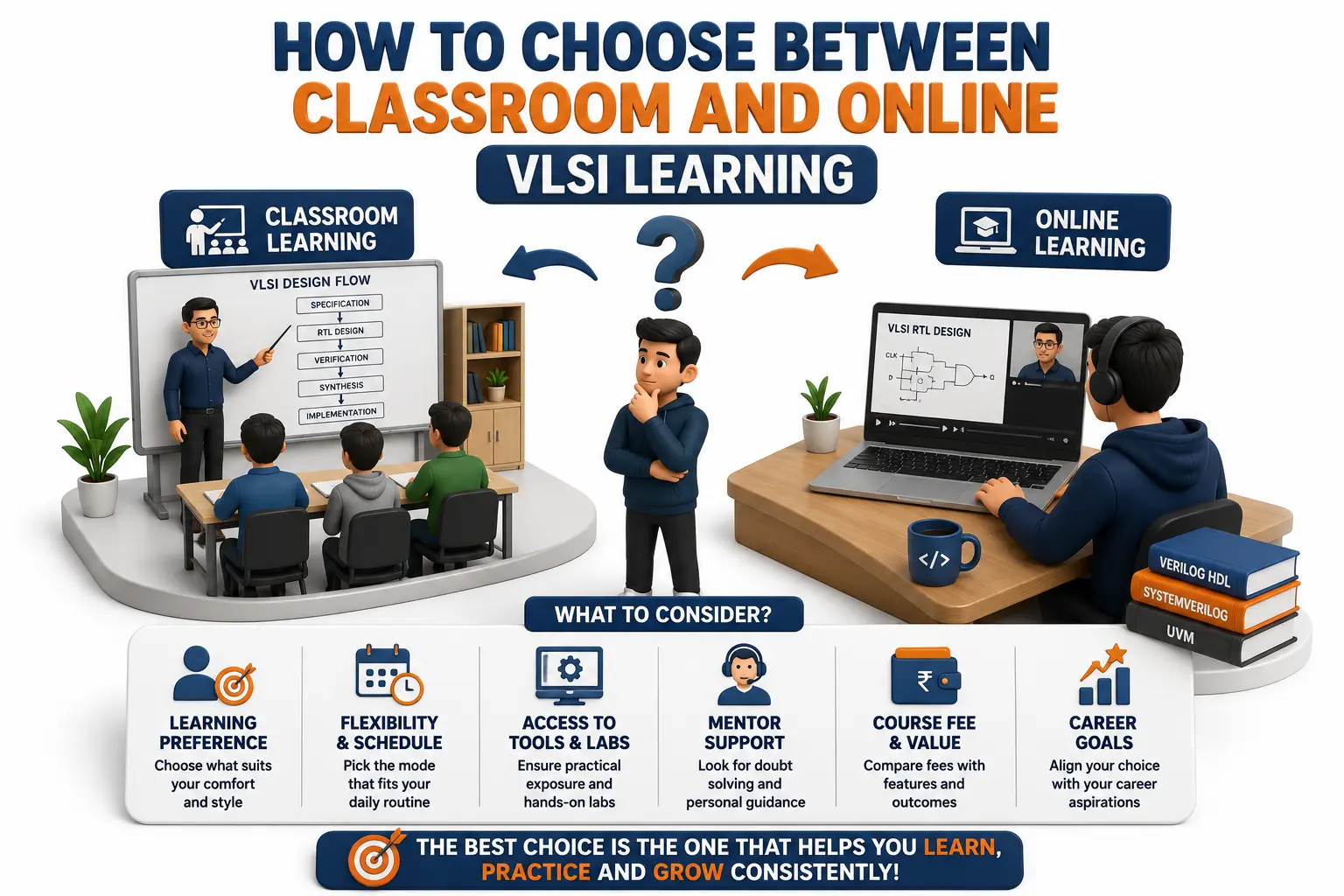
Learning preferences have changed significantly over the last few years. While classroom learning offers face-to-face interaction, many professionals and final-year students now prefer flexible learning options.
A VLSI online course in Pune can provide nearly the same technical exposure if it includes live sessions, practical assignments, recorded lectures, and mentor support.
When comparing learning modes, consider factors such as:
Live instructor-led sessions
Doubt-solving support
Practical lab access
Project reviews
Assignment evaluations
Flexible schedules
Lifetime access to recorded sessions
Community support
Online learning becomes especially valuable for working professionals who cannot attend regular classroom sessions without interrupting their careers.
The best programs combine flexibility with continuous mentor guidance so students remain engaged throughout the training.
Why JastTech Focuses on Industry-Ready VLSI Skills Instead of Just Course Completion
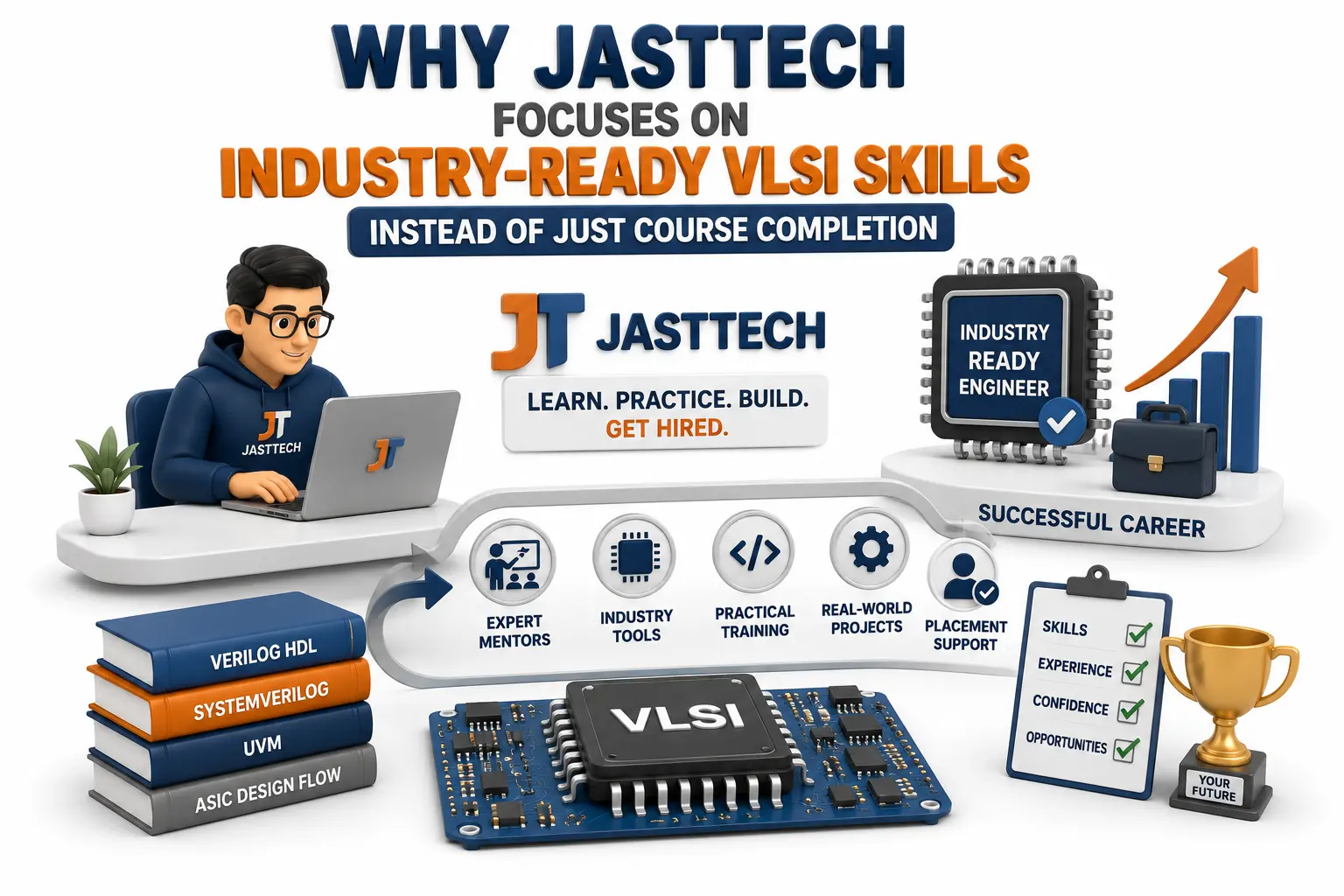
Choosing a training provider should not be based solely on brand recognition. The quality of mentorship, practical exposure, curriculum updates, and career guidance determines how well students perform during interviews.
At JastTech, the learning approach emphasizes practical semiconductor engineering rather than memorizing interview questions. Students work on real-world RTL design, verification concepts, and project implementation while learning the workflows used in the semiconductor industry.
JastTech focuses on helping learners develop:
Strong digital design fundamentals
RTL coding proficiency
Verification methodology knowledge
Debugging skills
Industry-standard tool experience
Project documentation abilities
Interview confidence
Professional portfolio development
The curriculum is regularly updated to reflect current industry expectations, enabling students to build skills that remain relevant as semiconductor technologies continue to evolve.
Whether students choose classroom learning or a VLSI online course in Pune, the emphasis remains on practical learning, mentor support, and long-term career growth rather than simply completing course modules.
Conclusion
The demand for skilled VLSI engineers continues to grow as semiconductor companies expand their design and verification teams across India. Selecting the right VLSI course in Pune requires evaluating far more than course fees. Curriculum quality, hands-on projects, industry tools, experienced mentors, and structured placement preparation all play a significant role in shaping your career.
Before enrolling, compare multiple programs carefully and choose a VLSI training institute in Pune that focuses on practical engineering skills instead of theoretical learning alone. Whether you prefer classroom learning or VLSI training in Pune through flexible online sessions, investing in industry-focused education will significantly improve your chances of building a successful semiconductor career. With practical projects, continuous mentoring, and placement-oriented training from JastTech, aspiring engineers can confidently prepare for the evolving semiconductor opportunities of 2026.