

VLSI Career Opportunities in Mumbai for Freshers
Navigate through this article using the table of contents below
Table of Contents
No headings found in this article.
The semiconductor industry is entering one of its fastest growth phases, and fresh graduates have more opportunities than ever before. While cities like Bengaluru and Hyderabad often dominate discussions, Mumbai is quietly building a strong ecosystem for electronics, semiconductor design, embedded systems, and chip development.
For engineering students and recent graduates, understanding where the opportunities exist—and how to prepare for them—can significantly improve the chances of securing a rewarding career. This guide explains what freshers should know before entering Mumbai's growing VLSI industry.
Why Mumbai Is Becoming an Attractive Destination for VLSI Careers
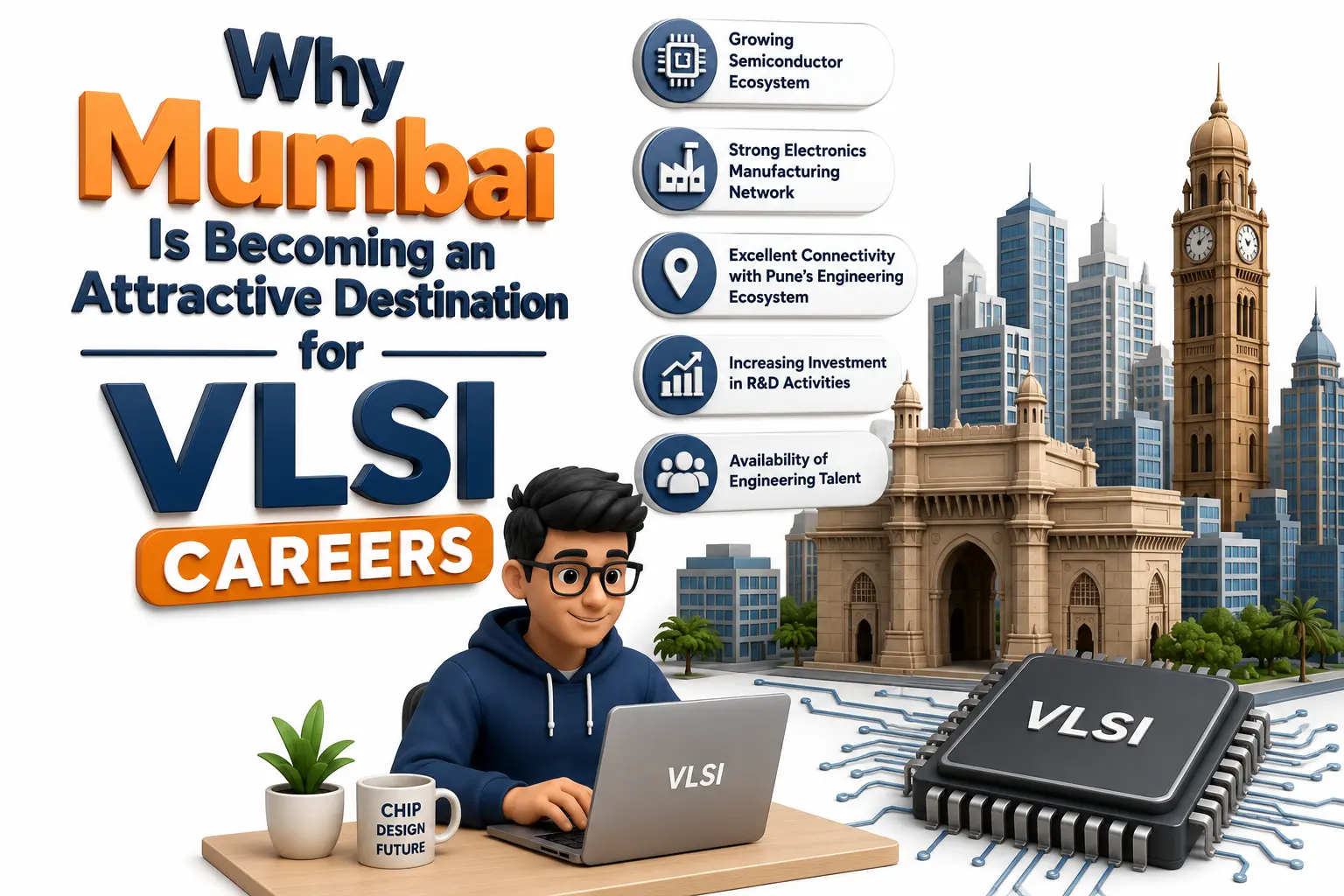
Mumbai has long been known as India's financial capital, but its technology ecosystem has expanded rapidly. Global engineering centers, electronics manufacturers, semiconductor service companies, and design organizations continue to strengthen their presence across Mumbai and nearby regions.
The city's strategic advantages include:
Growing semiconductor design ecosystem
Strong electronics manufacturing network
Excellent connectivity with Pune's engineering ecosystem
Increasing investment in R&D activities
Availability of engineering talent
India's broader semiconductor expansion is also creating new opportunities for design engineers as global companies continue investing in research, product development, and engineering teams. Recent investments by major semiconductor companies further strengthen hiring confidence for engineering graduates.
Most In-Demand VLSI Roles for Freshers
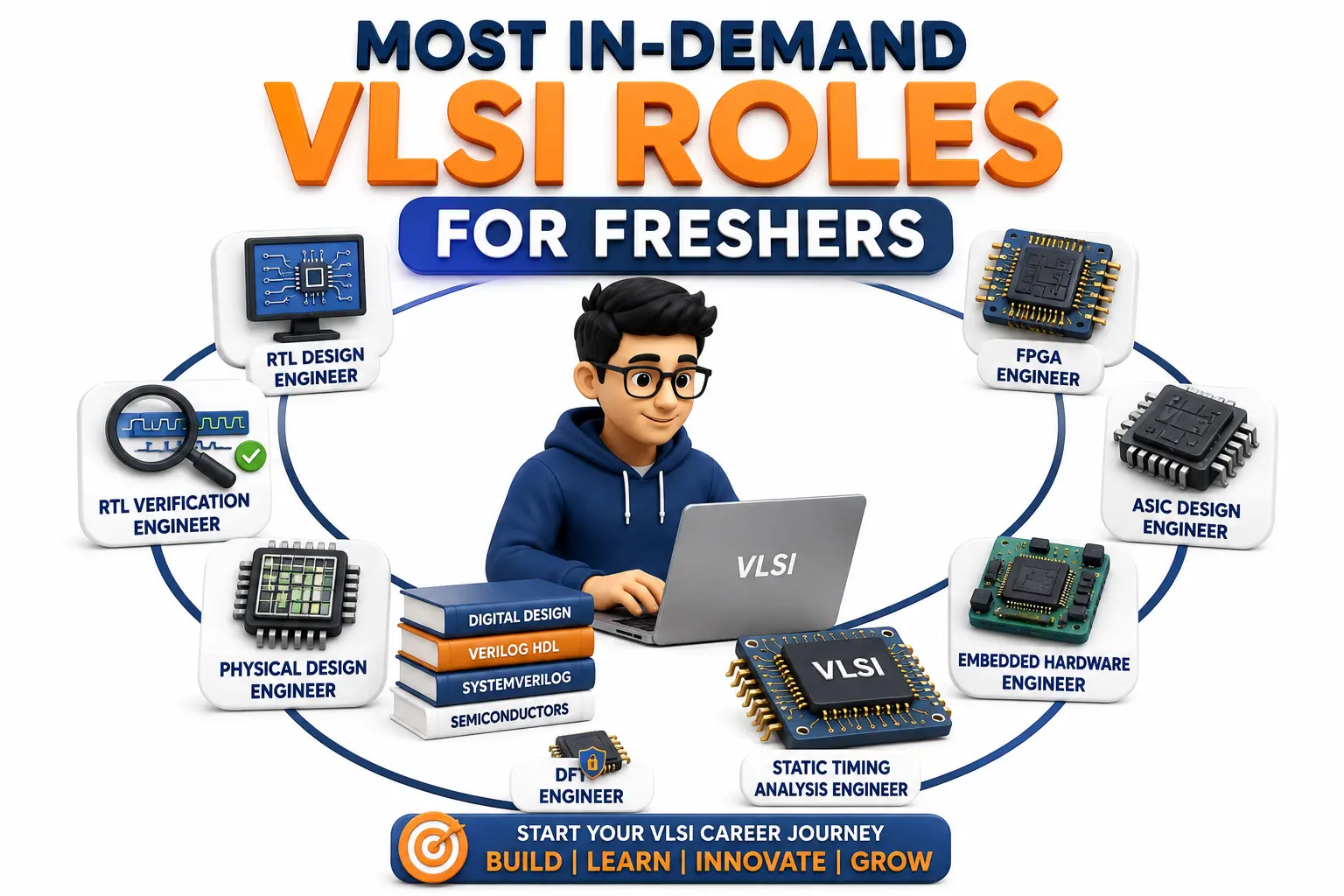
Fresh graduates entering the semiconductor industry have several specialization options depending on their interests and technical strengths.
Popular entry-level roles include:
RTL Design Engineer
RTL Verification Engineer
Physical Design Engineer
FPGA Engineer
DFT Engineer
Static Timing Analysis Engineer
ASIC Design Engineer
Embedded Hardware Engineer
Each specialization requires different technical expertise, but all share a common foundation in digital electronics, computer architecture, and hardware description languages.
Students looking for structured practical learning often consider a vlsi course in mumbai to gain hands-on exposure to industry-standard workflows before applying for interviews.
Instead of choosing a specialization immediately, freshers should first build strong fundamentals and then explore the domain that matches their interests.
Skills That Semiconductor Recruiters Actually Look For
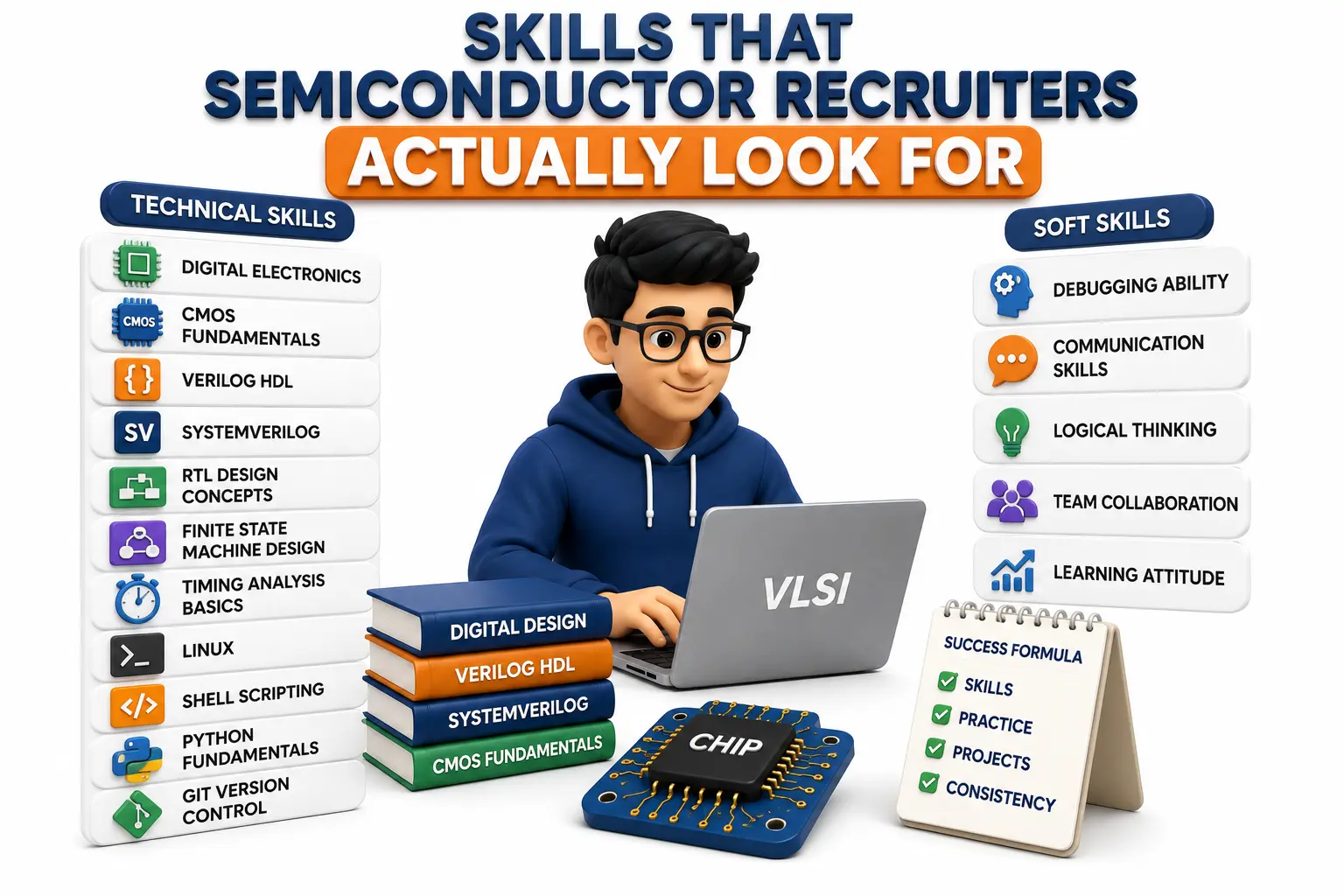
Many graduates assume high academic scores alone are enough to secure interviews. In reality, recruiters prioritize practical engineering skills that demonstrate problem-solving ability.
The most valuable technical skills include:
Digital Electronics
CMOS fundamentals
Verilog
SystemVerilog
RTL Design concepts
Finite State Machine design
Timing analysis basics
Linux
Shell scripting
Python fundamentals
Git version control
Beyond technical knowledge, companies also evaluate:
Debugging ability
Communication skills
Logical thinking
Team collaboration
Learning attitude
Candidates who can confidently explain projects often outperform those with stronger theoretical knowledge but limited practical experience.
How Freshers Can Build an Interview-Ready Profile
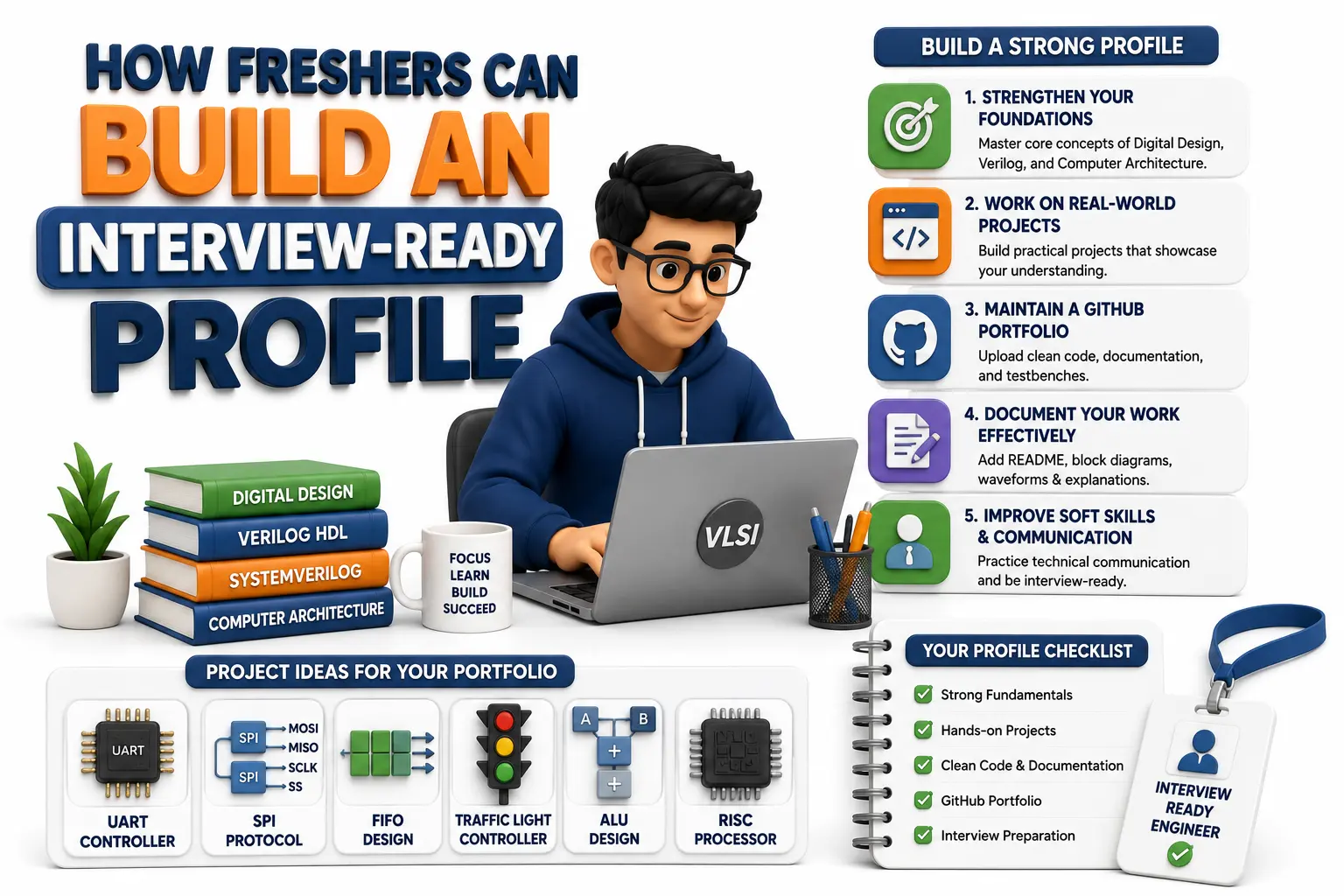
One of the biggest mistakes students make is waiting until graduation to start preparing for interviews.
Instead, build a portfolio that demonstrates practical engineering ability.
Include projects such as:
UART Controller
SPI Protocol
FIFO Design
Traffic Light Controller
ALU Design
RISC Processor
Memory Controller
Your portfolio should include:
Clean Verilog code
Simulation waveforms
Design documentation
Block diagrams
Testbench development
GitHub repository
Practical implementation proves that you understand engineering concepts beyond classroom assignments and helps interviewers evaluate your technical depth more effectively.
Understanding Mumbai's Hiring Process

Most semiconductor companies follow a structured hiring process that evaluates both technical fundamentals and practical application.
A typical recruitment process includes:
Online aptitude assessment
Digital electronics questions
Verilog coding round
Technical interview
Project discussion
Managerial interview
HR discussion
Interviewers commonly ask candidates to:
Explain digital design concepts
Write simple RTL code
Debug existing logic
Design finite state machines
Analyze timing scenarios
Discuss previous academic projects
Preparation should focus on solving problems rather than memorizing definitions. Candidates who can explain design decisions logically usually perform much better during interviews.
Building a Long-Term VLSI Career After Your First Job

Landing the first job is only the beginning of a semiconductor career. Technology evolves continuously, making continuous learning essential.
Successful engineers regularly upgrade their expertise in:
Advanced RTL methodologies
Functional Verification
UVM
Low-power design
AI accelerator architectures
Advanced process nodes
Physical Design optimization
Automation scripting
Participating in technical communities, contributing to open-source hardware projects, and studying new semiconductor technologies can accelerate career growth.
Organizations increasingly value engineers who continuously improve their technical skills rather than relying solely on their academic qualifications.
Conclusion
Mumbai is becoming an increasingly promising destination for engineering graduates who want to build a career in semiconductor design. Combined with India's expanding semiconductor ecosystem, the city offers growing opportunities across RTL Design, Verification, ASIC Design, Embedded Systems, and Physical Design. Freshers who focus on practical skills, real-world projects, and continuous learning can position themselves ahead of the competition.
JastTech helps aspiring VLSI professionals bridge the gap between academic learning and industry expectations through practical training, hands-on projects, and interview-focused preparation. As semiconductor hiring continues to grow across India, students who begin building their technical expertise today will be better prepared to seize tomorrow's opportunities and establish successful long-term careers in the VLSI industry.