


What Is Gosu in Guidewire and Why Is It Important?
Navigate through this article using the table of contents below
Table of Contents
No headings found in this article.
Ask ten insurance IT professionals what runs behind the scenes of their claims system, and most won't have an answer. Yet a quiet, purpose-built language has been doing the heavy lifting for years.
That language is Gosu, and if you work anywhere near Gosu in Guidewire systems, understanding it isn't optional — it's the difference between guessing and actually knowing how the platform behaves.
The Language Insurance Companies Didn't Know They Needed

Back when Guidewire was building its core insurance platforms — PolicyCenter, ClaimCenter, and BillingCenter — the engineering team hit a wall. Java was powerful, but it was also verbose and rigid for the kind of rapid, business-rule-heavy customization insurers needed. So instead of forcing a square peg into a round hole, they built their own language.
That language became Gosu, a statically typed, Java-friendly language designed specifically for the demands of the Guidewire InsuranceSuite. It wasn't created for hype or to compete with mainstream languages. It was built to solve one specific problem: letting developers write, test, and modify complex insurance logic without drowning in boilerplate code.
This matters because insurance isn't a static industry. Rules change with regulations, products evolve, and underwriting logic gets tweaked constantly. A language that lets developers move fast without sacrificing type safety turned out to be exactly what the industry needed, even if nobody had asked for it by name.
Gosu quietly became the backbone of some of the largest insurance software deployments in the world.
Where Gosu Came From (And Why That Story Matters)

Gosu wasn't cobbled together overnight. It emerged from Guidewire's internal need for a language that could sit directly on top of the Java Virtual Machine while feeling far more approachable than raw Java.
The creators borrowed the best parts of Java — its object-oriented structure, its reliability, its massive ecosystem — and stripped away the ceremony. No more excessive type declarations. No more clunky syntax for simple operations. The result was a language that Java developers could pick up within days, not months.
This origin story explains a lot about how Gosu behaves today. Because it runs on the JVM, it can call Java libraries directly and integrate with Java-based enterprise systems without friction. That single design decision saved Guidewire from having to build an entirely separate ecosystem of tools, libraries, and integrations.
It also explains why Gosu never spread far beyond Guidewire's walls. It wasn't designed as a general-purpose language for the world — it was designed as a precision tool for one very specific job. That narrow focus is exactly what makes it so effective inside the platforms it was built for.
What Makes Gosu Different From Java, Really?
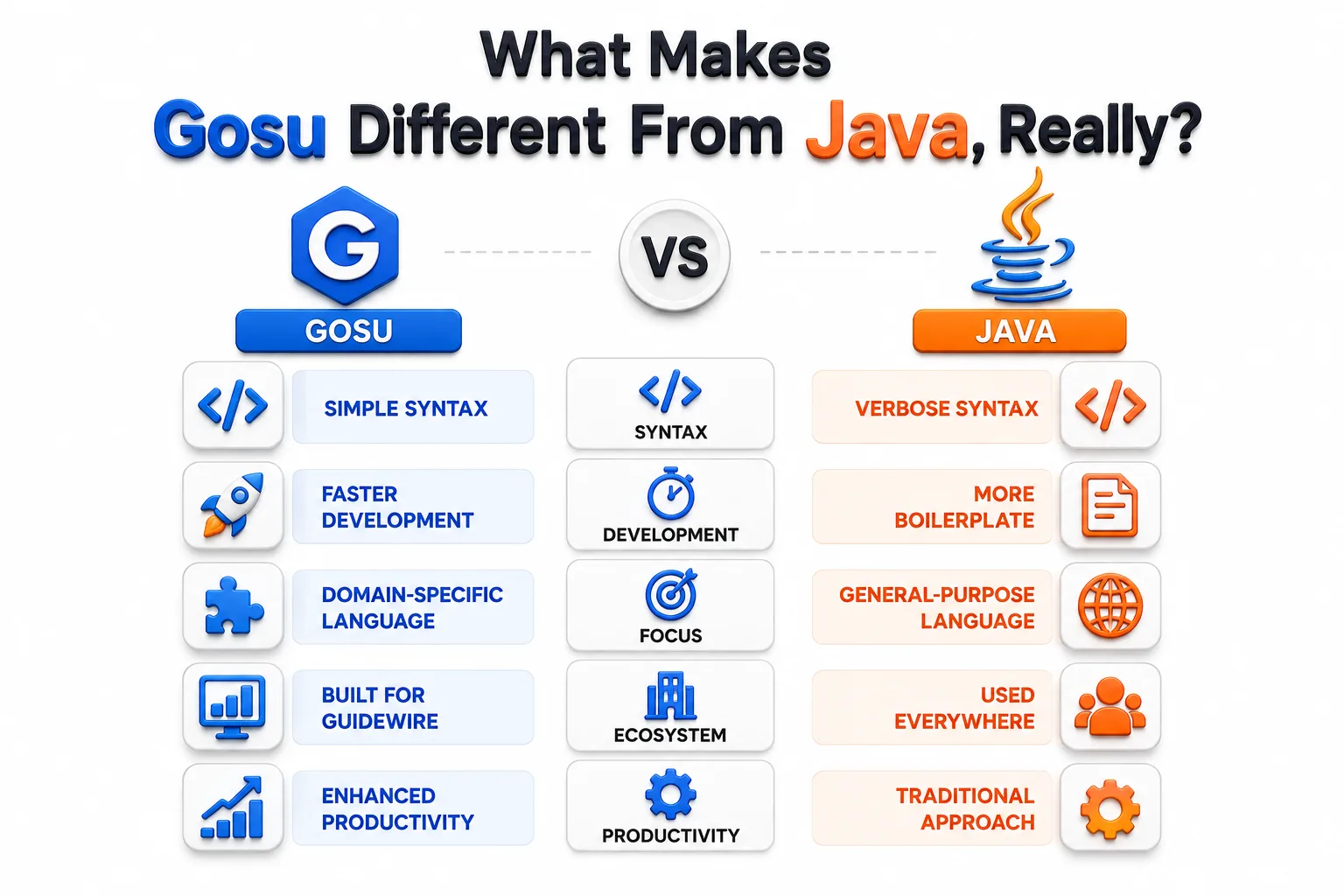
On the surface, Gosu looks a lot like Java. Curly braces, class structures, familiar keywords — a Java developer won't feel lost. But the differences show up the moment you start writing real code.
Gosu supports enhancements, a feature that lets developers add new methods to existing classes, including ones they didn't write themselves, without touching the original source. Java developers often find this almost magical the first time they use it.
Type inference is another quiet advantage. Gosu can often figure out what type a variable should be without the developer spelling it out, which trims down code without sacrificing the safety net that static typing provides.
Here's a quick comparison of the practical differences:
Enhancements: Gosu allows extending existing classes; Java requires inheritance or wrapper classes.
Type inference: Gosu reduces boilerplate; Java traditionally demands explicit typing.
Dynamic-style flexibility: Gosu feels more agile while still compiling to type-safe bytecode.
None of this makes Gosu "better" than Java in a general sense. It makes it better suited to the specific rhythm of insurance software development, where rules change often and developers need to move quickly without breaking things.
How Gosu Powers the Guidewire InsuranceSuite Under the Hood
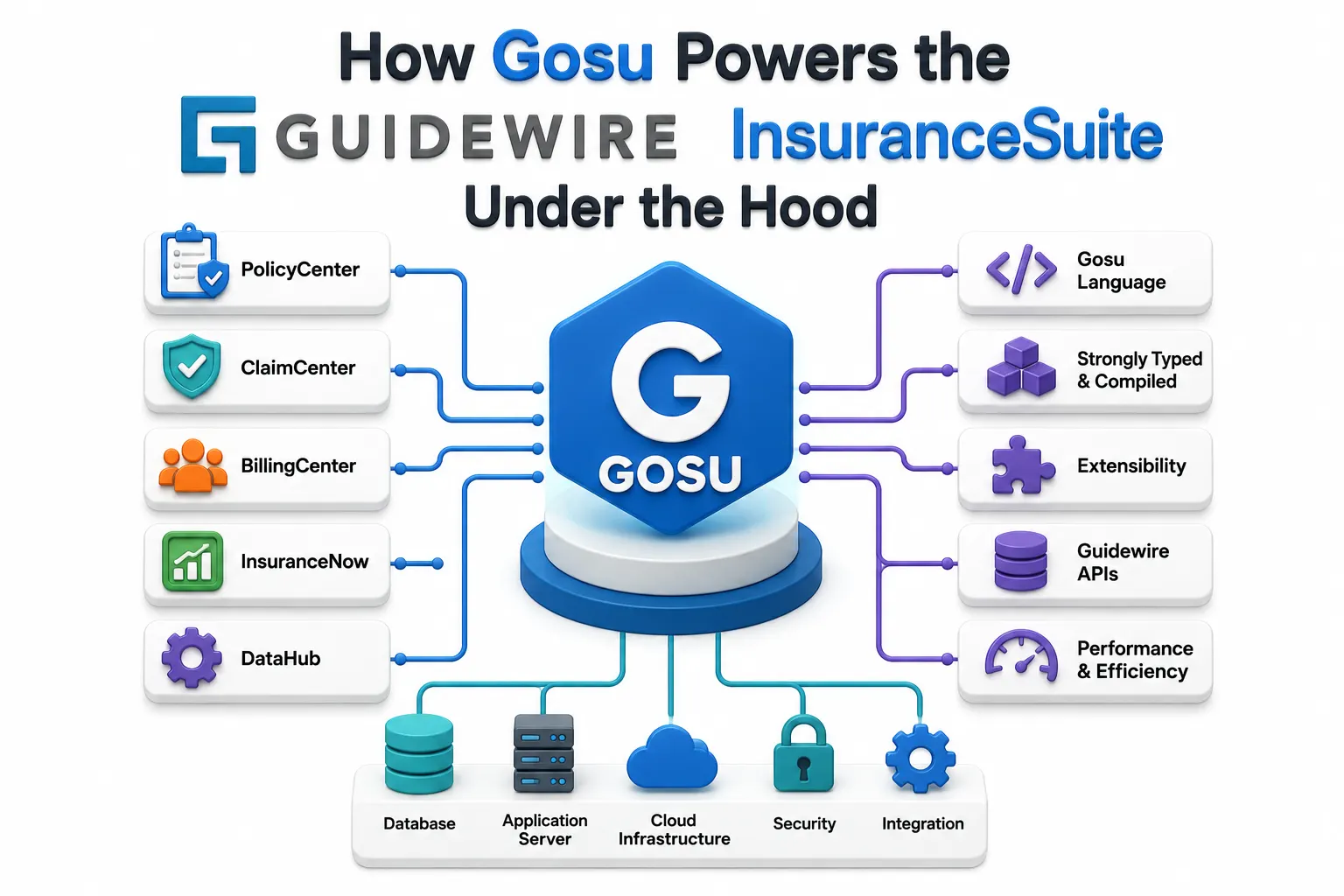
Every time an insurer configures a new policy rule, adjusts a claims workflow, or builds a custom rating algorithm, Gosu is likely doing the work behind the scenes.
Within PolicyCenter, Gosu drives the business rules that determine how policies are priced, issued, and renewed. In ClaimCenter, it powers the logic that routes claims, calculates payouts, and flags potential fraud indicators. In BillingCenter, it handles the intricate math and timing behind invoicing and payment plans.
What makes this arrangement work so well is Guidewire's configuration layer, which relies heavily on Gosu scripts, or "Gosu classes," to customize platform behavior without altering the core product code. This separation is deliberate. It means insurers can tailor the software to their specific business needs while still receiving product updates from Guidewire without massive rework.
Rules engines, PCF (Page Configuration File) logic, entity extensions, batch processes — Gosu threads through nearly every configurable layer of the suite. Developers who understand this connective tissue can troubleshoot issues faster and build more resilient customizations, because they're not just editing surface-level settings. They're working with the actual logic that drives the platform's decisions.
The Skills Every Guidewire Developer Needs to Master Gosu
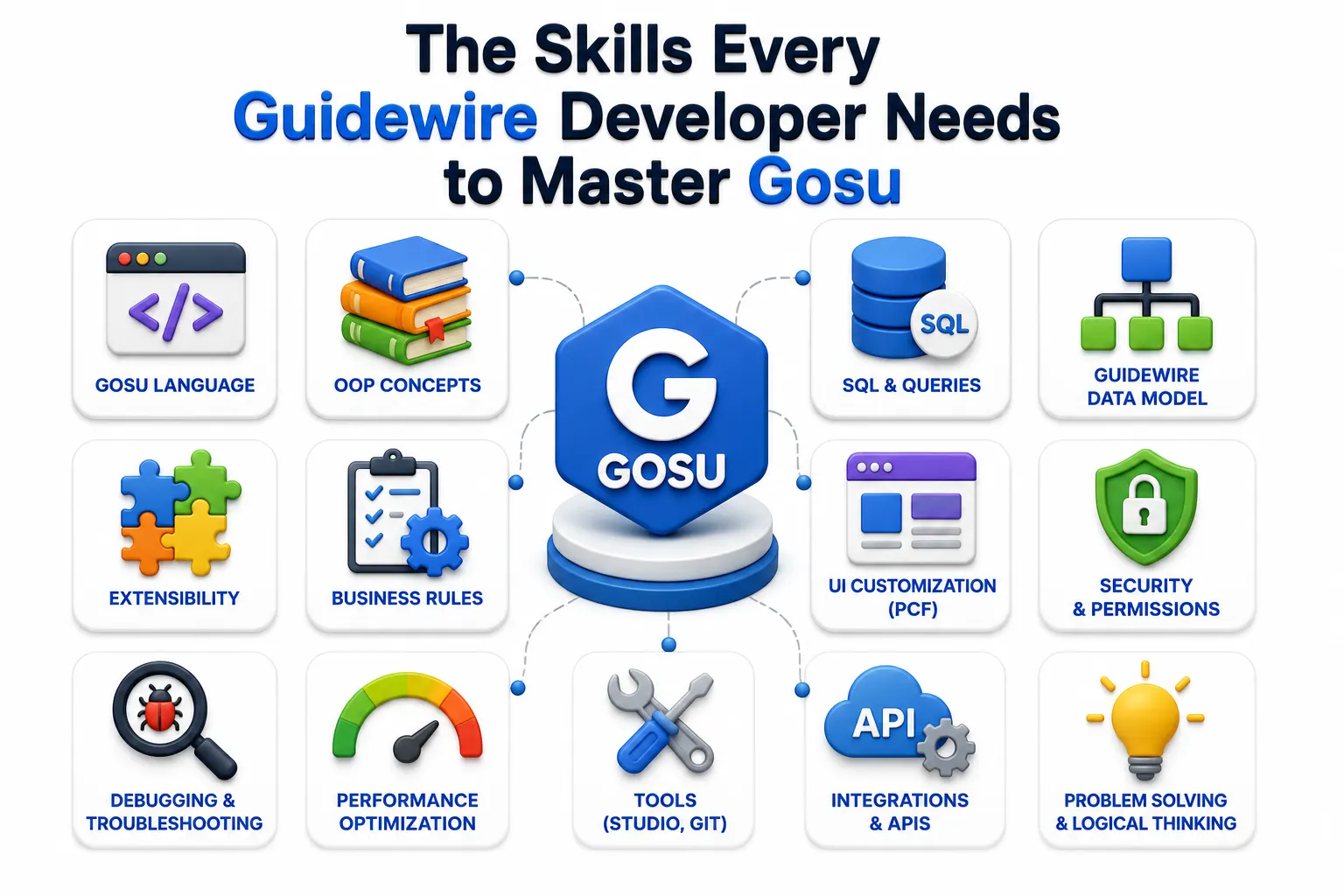
Learning Gosu isn't just about syntax. It's about understanding how the language interacts with Guidewire's broader architecture, because writing isolated Gosu code without that context tends to create fragile customizations.
A solid Guidewire developer typically needs to get comfortable with a handful of core skills:
Reading and writing Gosu classes and enhancements confidently
Understanding the Guidewire data model, since Gosu code constantly interacts with entities and relationships
Navigating PCF files, which often work hand-in-hand with Gosu logic to control UI behavior
Debugging within Guidewire Studio, where Gosu errors can be subtle and context-dependent
Grasping Java fundamentals, since Gosu's syntax and behavior lean heavily on Java conventions
Most developers find the syntax itself approachable within a few weeks. The real learning curve comes from understanding where Gosu fits into the platform's layered architecture — configuration versus core code, rules versus UI logic, and how changes ripple through connected systems.
Experienced Guidewire consultants often say the language itself is the easy part. The hard part is developing the judgment to know when and how to use it well.
Common Challenges (and Why They're Worth Pushing Through)
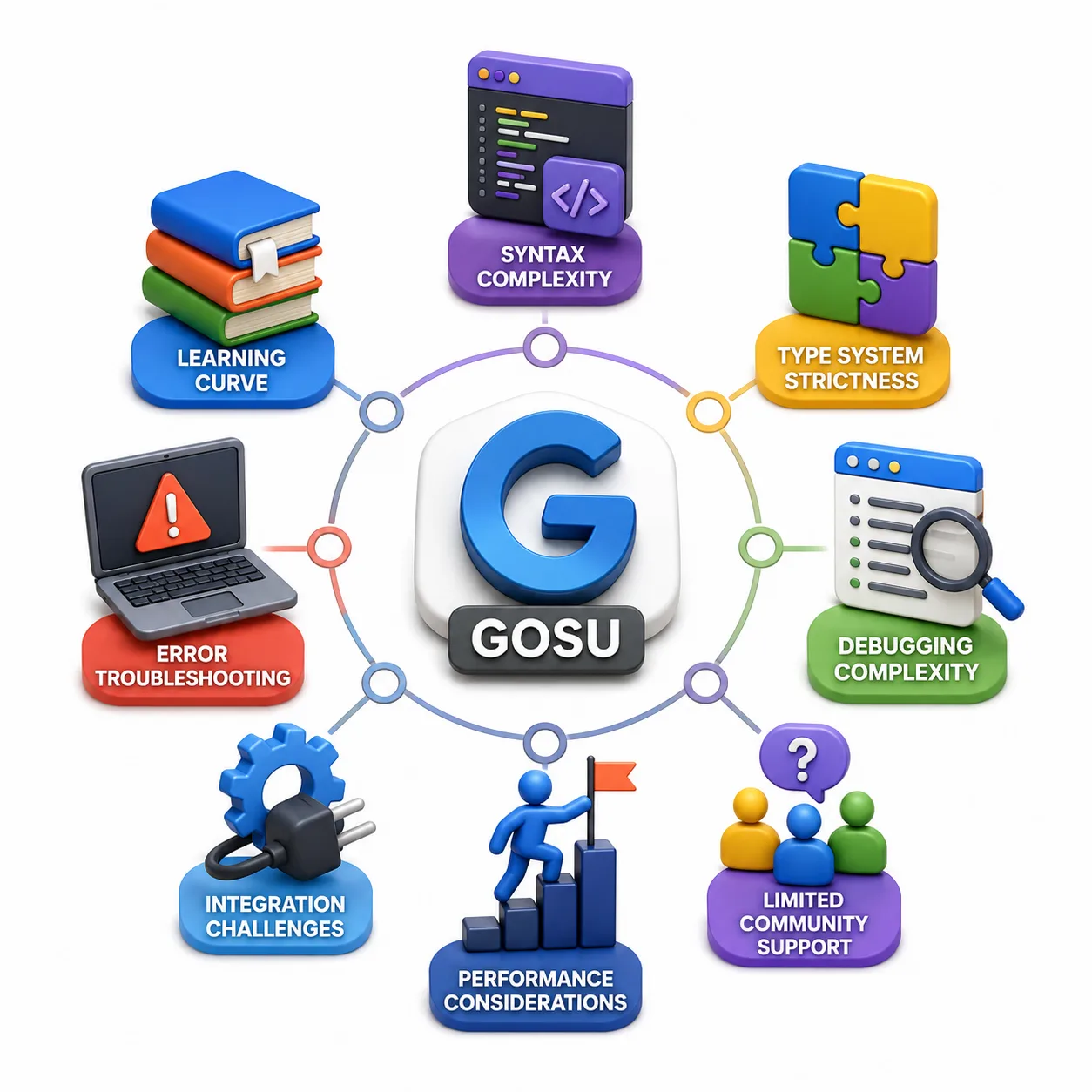
No language is without friction, and Gosu has its quirks. Documentation outside Guidewire's official resources is thinner than what you'd find for mainstream languages like Java or Python, simply because the audience is smaller and more specialized.
Debugging can also feel unfamiliar at first, particularly when Gosu code interacts with generated Java classes behind the scenes. Error messages sometimes point to underlying Java structures rather than the Gosu code a developer actually wrote, which can be confusing for newcomers.
There's also the reality that Gosu skills are largely non-transferable outside the Guidewire ecosystem. Unlike Python or JavaScript, you won't find Gosu roles scattered across unrelated industries. That said, this narrowness cuts both ways — because fewer developers specialize in it, those who do tend to be in strong demand within the insurance technology space.
Despite these hurdles, most developers who stick with Gosu come to appreciate its design. The learning curve is real, but it's shorter than most enterprise languages, and the payoff — genuine fluency in one of the insurance industry's most widely used platforms — tends to be worth the early friction.
Conclusion
Gosu may never become a household name outside insurance technology, but that was never the point. Understanding Gosu in Guidewire means understanding how modern insurance platforms actually think, adapt, and evolve — one configurable rule at a time.