


What Is Guidewire Certification and How Can You Get Certified?
Navigate through this article using the table of contents below
Table of Contents
No headings found in this article.
Guidewire certification is a globally recognized professional credential that validates an individual's expertise in implementing, configuring, and supporting Guidewire's industry-standard software products for the Property and Casualty insurance sector. As insurance carriers worldwide transition from legacy platforms to modern digital architectures, the demand for certified professionals who understand ClaimCenter, PolicyCenter, and BillingCenter has surged exponentially. Achieving this accreditation demonstrates a high level of technical competence, deep understanding of insurance workflows, and the ability to deliver robust enterprise solutions efficiently. For IT professionals, developers, and business analysts, holding an official credential serves as a definitive proof of skill, elevating professional credibility and unlocking high-paying global career opportunities.
Navigating the path to accreditation requires a strategic approach, combining theoretical knowledge of insurance systems with hands-on technical training and dedicated exam preparation. To accelerate this professional journey and ensure comprehensive readiness, aspiring candidates often leverage specialized resources such as a structured Guidewire certification preparation course that covers core configuration, integration principles, and best practices. Understanding the exam structure, mastering study materials, and engaging in practical implementation projects are essential steps for success. By committing to continuous learning and staying updated with the latest Guidewire platform releases, professionals can position themselves at the forefront of the insurance technology domain and secure long-term career growth.
Understanding the Core Components of Guidewire
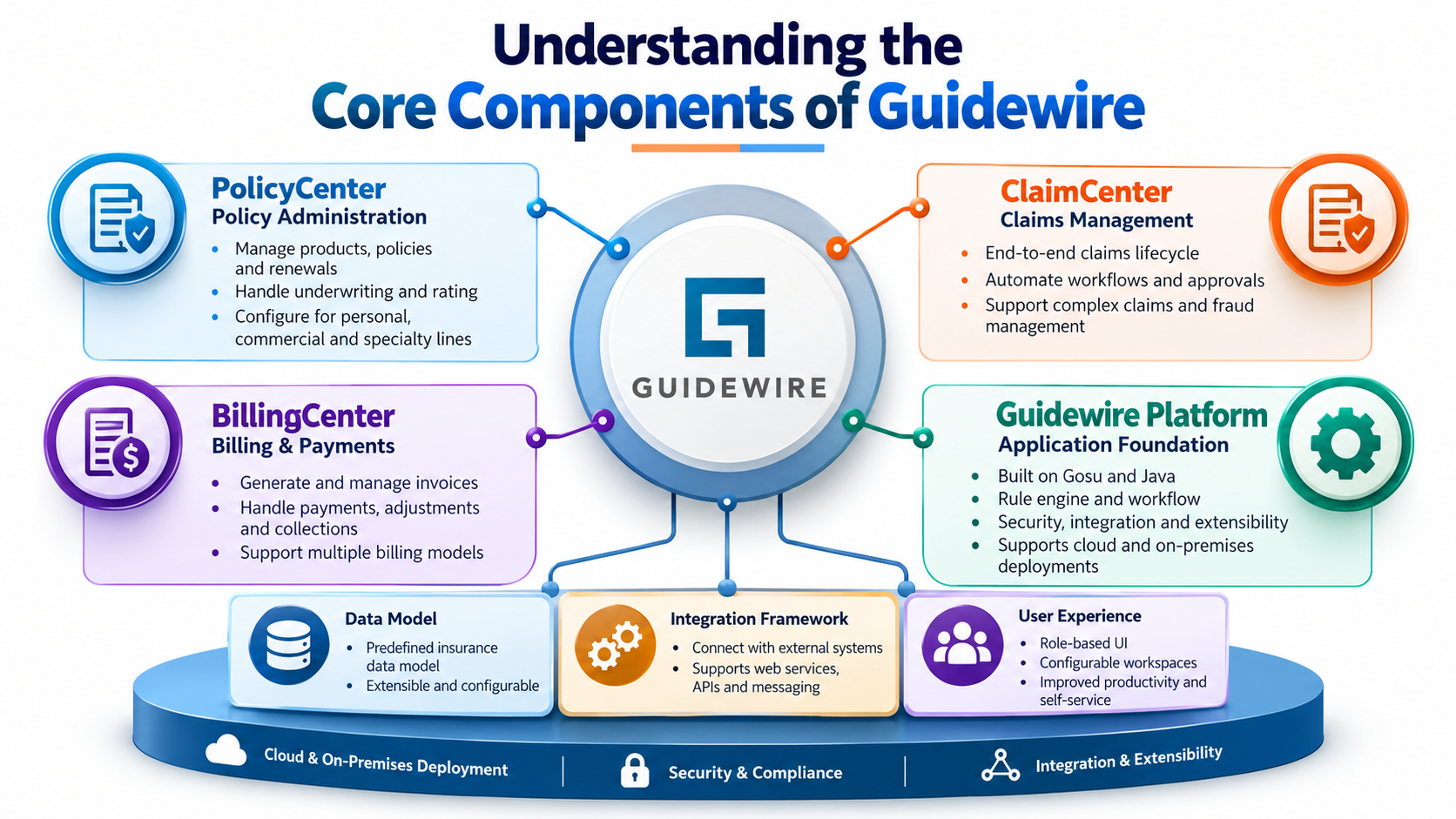
Guidewire software is built on a modular architecture designed specifically to address the complex operational needs of Property and Casualty insurers. At its core, the platform consists of three flagship products: PolicyCenter, ClaimCenter, and BillingCenter. PolicyCenter manages the underwriting, policy issuance, and renewal processes, allowing insurers to introduce new products rapidly. ClaimCenter oversees the entire lifecycle of an insurance claim, from initial FNOL (First Notice of Loss) to final settlement and payment disbursement. BillingCenter handles collections, disbursements, agency communications, and complex billing schedules. Understanding how these distinct modules interact forms the foundational knowledge required for any technical or functional role within the ecosystem.
Beyond the core transactional systems, Guidewire includes digital portals and data analytics tools that enhance customer engagement and reporting capabilities. Developers and business analysts must understand how these systems share data and maintain transactional integrity across enterprise environments. Mastery of these components enables professionals to design scalable solutions that reduce operational friction and improve customer satisfaction for insurance carriers. As insurance firms modernize their IT landscapes, familiarity with these core pillars becomes an indispensable asset for enterprise architects and integration specialists.
The Value and Benefits of Guidewire Certification
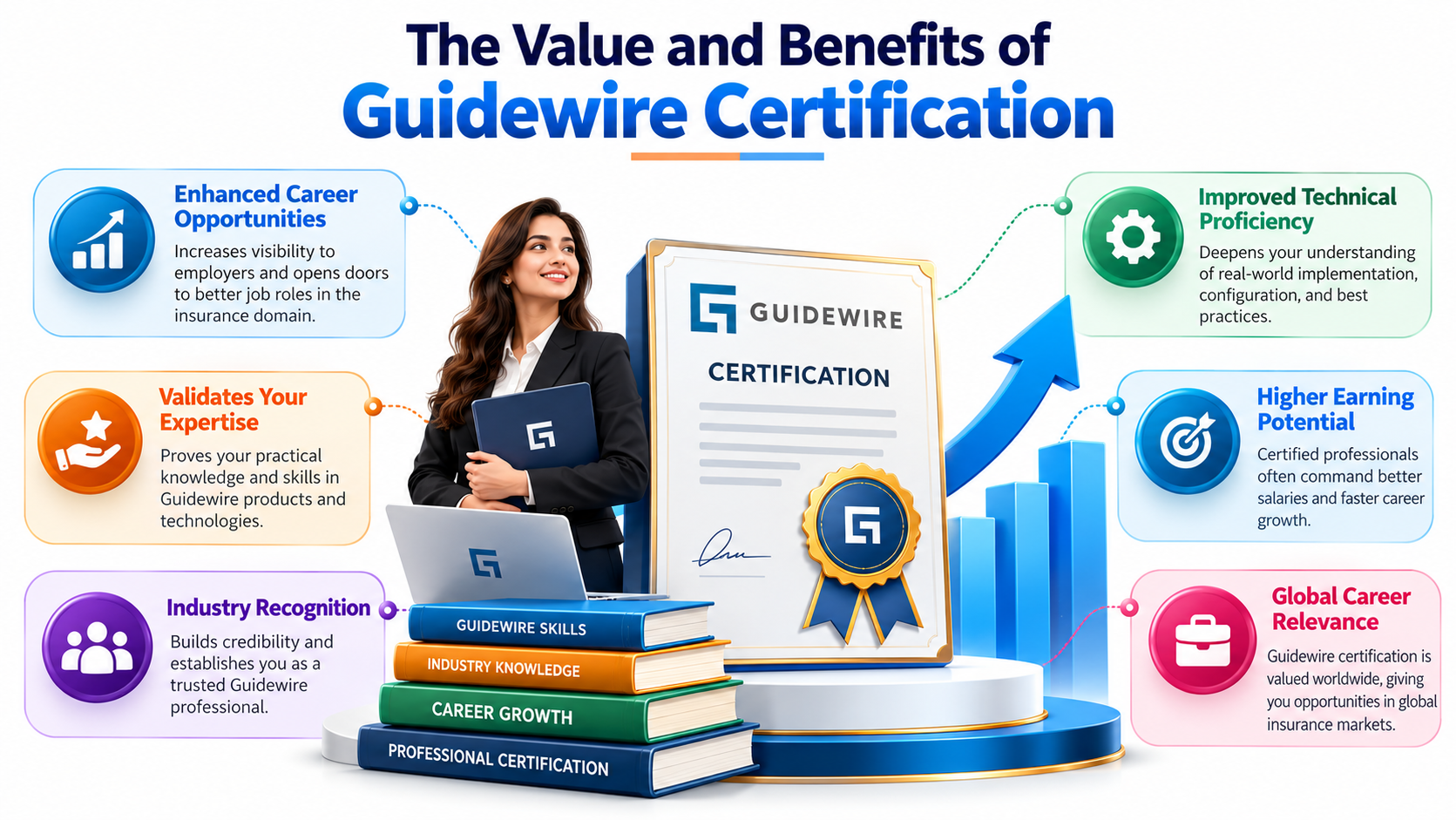
Holding an official Guidewire credential provides significant professional advantages in a competitive job market. Insurance carriers and consulting partners actively seek certified talent to ensure their implementation projects are executed according to industry best practices and vendor standards. Certification validates that a candidate possesses verified technical skills, reducing onboarding time and minimizing project risks for employers. This direct proof of proficiency often translates into higher earning potential, faster career advancement, and greater leadership responsibilities on major enterprise transformation initiatives.
For professionals looking to build localized expertise and engage with thriving technology hubs, specialized programs such as Guidewire Course in India offer targeted pathways to master these complex enterprise skills. Certified individuals also gain exclusive access to specialized community forums, technical documentation, and early updates regarding platform enhancements. This continuous access to resources ensures that certified practitioners remain adaptable and highly relevant as insurance technology evolves. Ultimately, investing time and effort into earning these credentials bridges the gap between basic technical knowledge and elite industry recognition.
Career Opportunities and Market Demand

The rapid digital transformation sweeping across the insurance sector has created an unprecedented demand for skilled Guidewire professionals. Insurance carriers are under immense pressure to replace outdated legacy systems with agile, cloud-ready platforms to improve operational efficiency and customer experience. Consequently, companies are investing heavily in talent acquisition, resulting in a robust job market for developers, integration specialists, quality assurance engineers, and business analysts. Professionals equipped with these specialized skills find themselves courted by top-tier consulting firms, system integrators, and global insurance enterprises.
For regional career expansion and understanding local employment landscapes, insights such as those detailed in Guidewire career opportunities for software professionals in Hyderabad highlight how specific geographic clusters become thriving centers for insurance technology talent. Major metropolitan tech corridors host numerous global capability centers and implementation partners that continually recruit certified experts for large-scale enterprise projects. This high market demand ensures job security, competitive compensation packages, and continuous professional mobility for individuals dedicated to mastering the platform.
Overview of Available Guidewire Exam Tracks
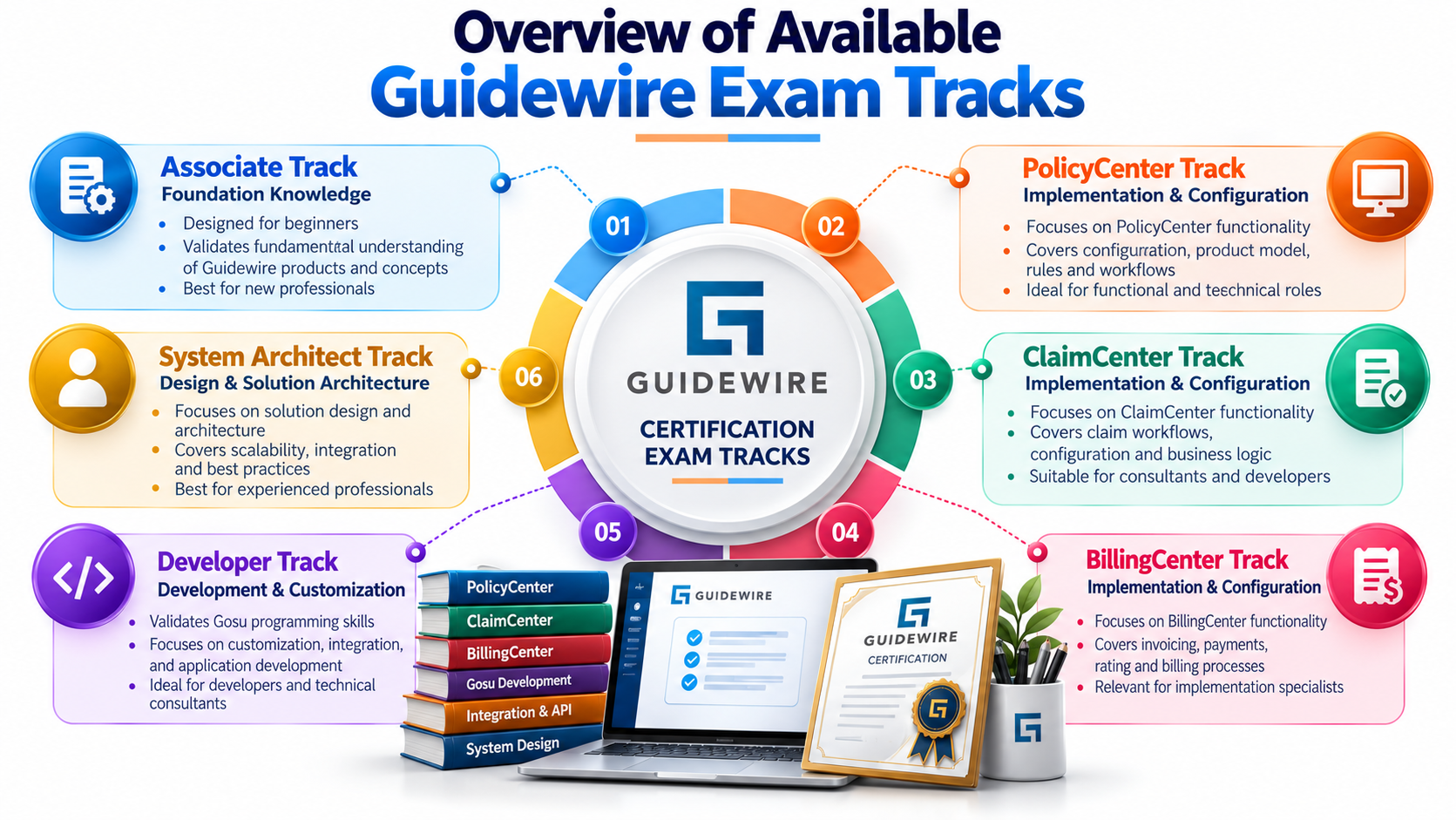
Guidewire offers a structured portfolio of certification exams tailored to specific roles within implementation projects. These tracks typically encompass functional business analyst certifications, developer certifications for specific modules, and integration or administration credentials. Functional exams assess an individual's ability to configure out-of-the-box product features, manage business rules, and align software workflows with insurance operations. Developer exams, on the other hand, test coding proficiency in Gosu—Guidewire's proprietary programming language—along with database management, data model extensions, and plugin development.
Choosing the appropriate exam track depends closely on an individual's background, daily responsibilities, and long-term career aspirations. Developers with a strong programming foundation usually pursue configuration and integration specialist credentials, whereas professionals with insurance domain knowledge often gravitate toward functional analyst roles. Preparing for these distinct tracks requires targeted study plans, familiarity with Gosu syntax, and hands-on practice within simulated development environments. Successfully clearing these rigorous exams solidifies an expert's reputation as a reliable and qualified practitioner in the insurance tech domain.
Essential Preparation Strategies and Study Resources
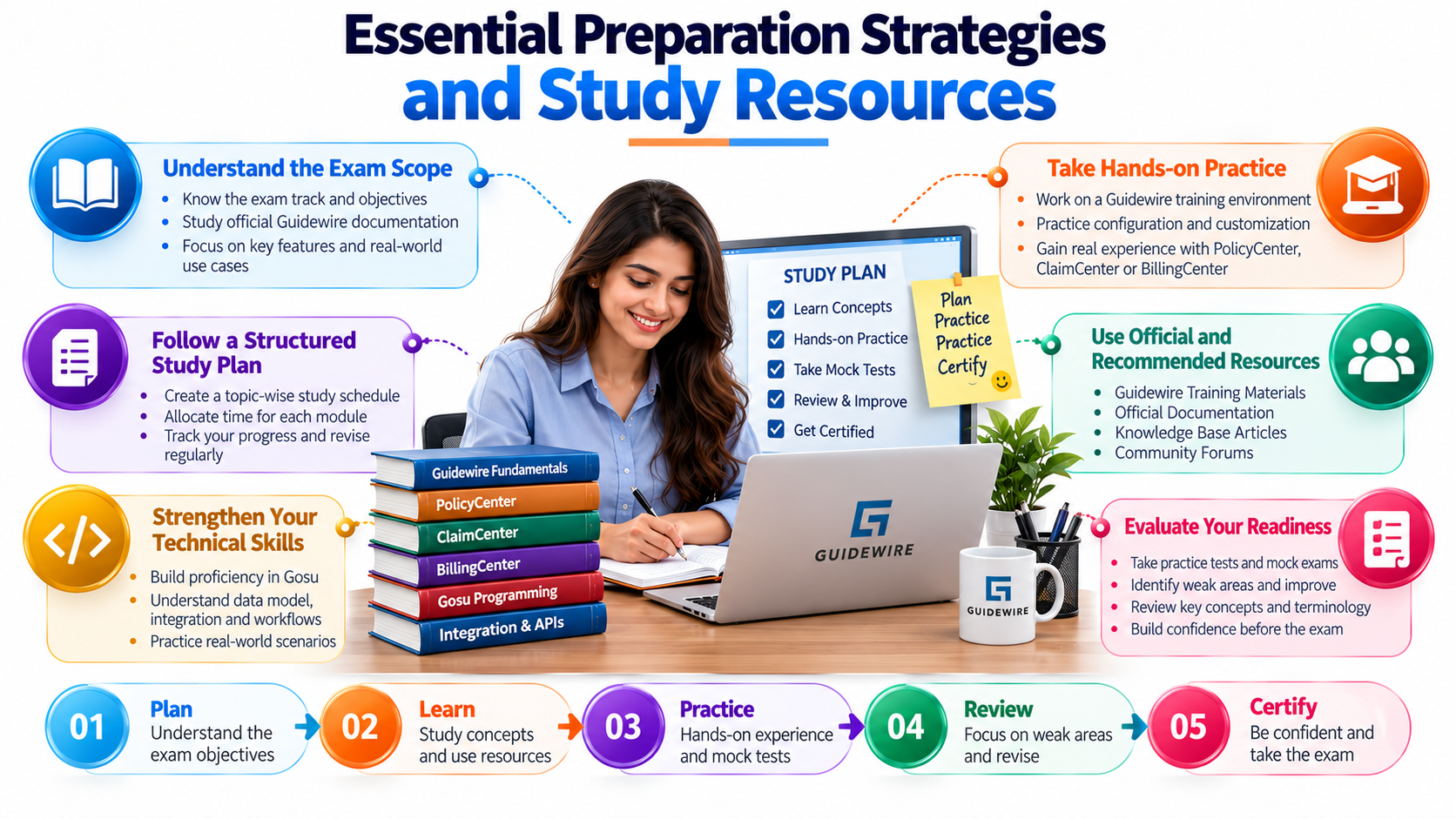
Effective preparation for a Guidewire certification exam requires a disciplined study routine and access to authorized learning materials. Candidates should begin by reviewing the official exam guides and study outlines provided by the vendor, which detail the specific topics, weighting, and competencies tested. Leveraging official training courses, lab exercises, and sample questions helps bridge the gap between theoretical understanding and practical application. Additionally, setting up a local development environment to practice configuration tasks and troubleshoot common errors builds the confidence needed to tackle complex exam scenarios.
Consistency and active problem-solving are crucial when mastering Guidewire's proprietary programming constructs and configuration frameworks. Joining study groups, participating in technical forums, and engaging with experienced mentors can provide valuable tips and clarification on difficult concepts. Candidates should also schedule regular mock exams to evaluate their time management and identify knowledge gaps well before the actual test date. By combining structured learning resources with dedicated practical practice, candidates maximize their chances of passing on the first attempt and retaining vital knowledge for future projects.
Navigating the Exam Registration and Testing Process
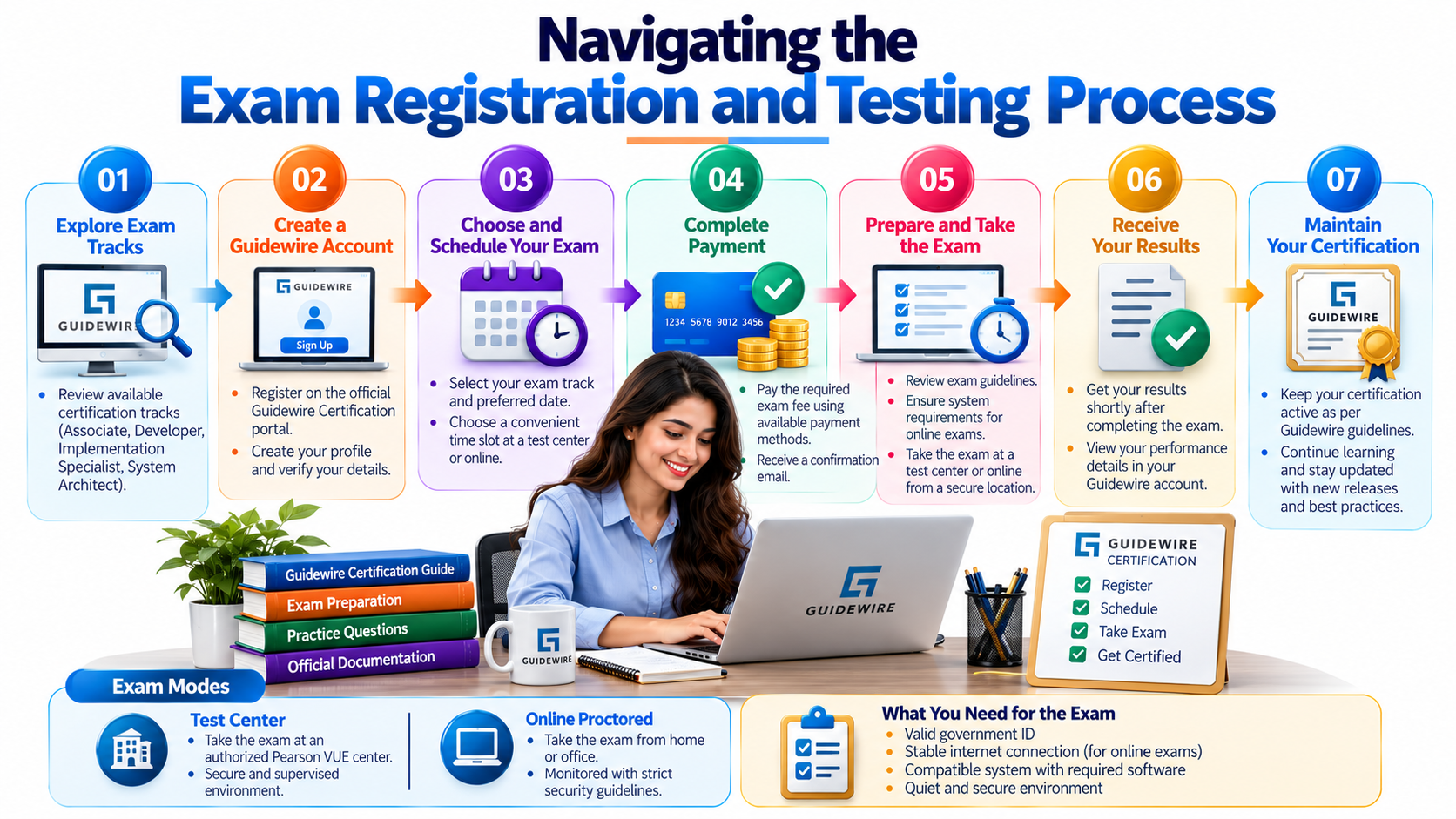
Once preparation is complete, navigating the logistical aspects of exam registration requires careful attention to detail. Candidates must register through the official Guidewire education portal, where they can select their desired exam track and schedule a testing slot. Exams are typically administered through secure online proctoring services or authorized testing centers, ensuring strict compliance and academic integrity. Reviewing technical requirements, identification documents, and testing environment rules beforehand prevents unexpected complications on exam day.
Understanding the scoring methodology and retake policies helps candidates manage expectations and maintain a calm mindset during the assessment. Most exams consist of multiple-choice and scenario-based questions designed to test both theoretical knowledge and practical decision-making skills. After completing the exam, results are usually provided immediately or within a short processing window, detailing performance across various modules. Upon passing, candidates receive digital badges and official credentials that can be showcased on professional networks to highlight their verified expertise.
Maintaining and Leveraging Your Certification
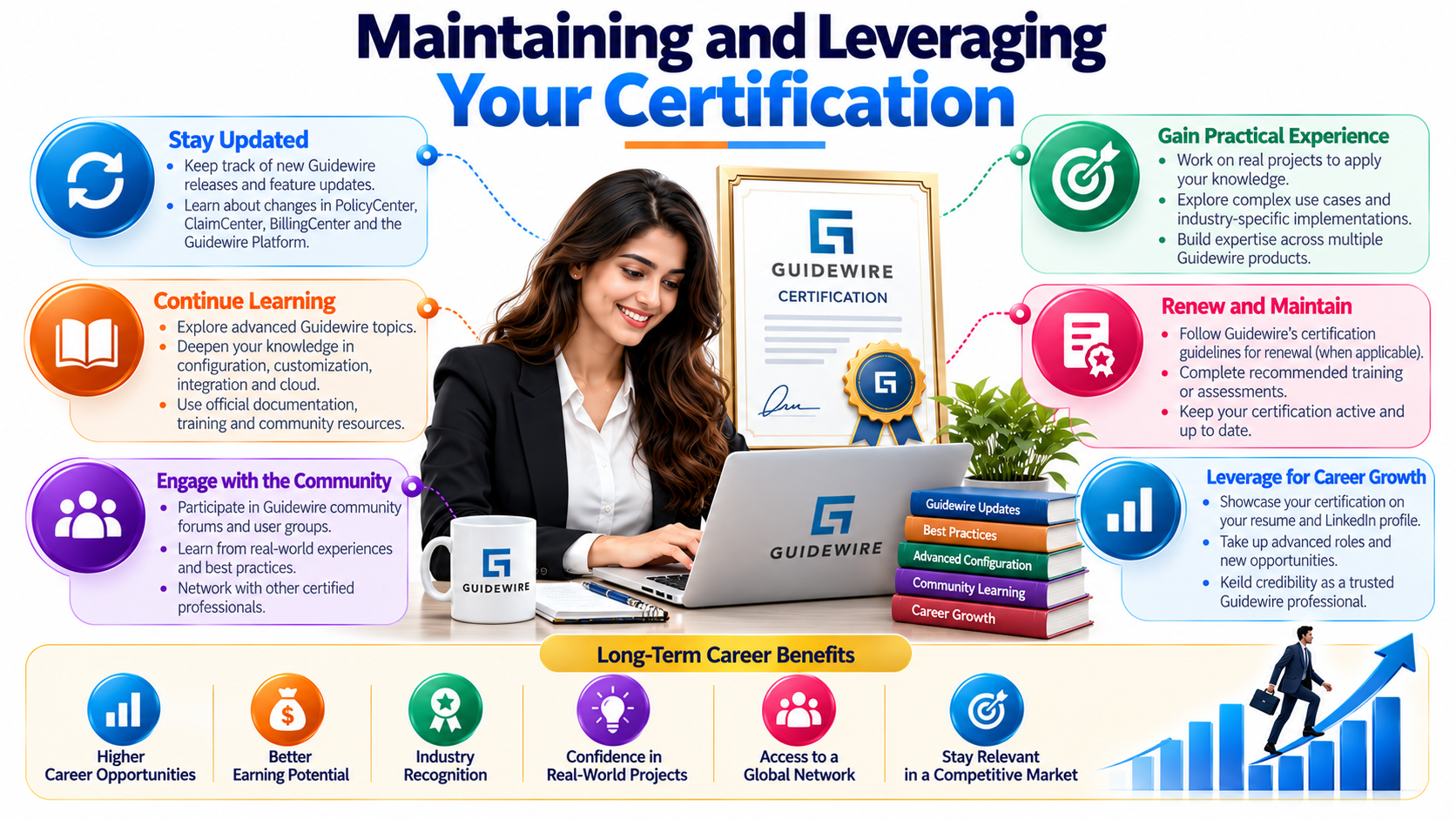
Earning a Guidewire credential is not a one-time event but the beginning of a continuous professional journey. As the platform undergoes regular updates, new product releases, and cloud migrations, certified professionals must complete continuing education requirements or delta exams to keep their credentials active. Staying informed about platform upgrades ensures that practitioners remain aligned with modern implementation standards and utilize the most efficient configuration practices available. Active maintenance of these credentials signals to employers a deep commitment to professional excellence and industry leadership.
Professionals should actively leverage their newly acquired credentials to take on leadership roles within their organizations, mentor junior colleagues, and contribute to complex migration projects. Showcasing certifications on professional profiles enhances visibility among recruiters and opens doors to international assignments and consulting opportunities. By combining certified technical expertise with practical project experience, practitioners can build a resilient, high-growth career at the intersection of insurance and advanced enterprise technology.
Conclusion
Guidewire certification serves as a powerful catalyst for career advancement in the rapidly evolving insurance technology sector. By mastering the core modules, understanding platform architecture, and committing to rigorous exam preparation, professionals position themselves as invaluable assets to enterprise employers. As the global insurance industry accelerates its digital transformation, the demand for certified experts will continue to rise, ensuring robust career stability and growth. Embracing continuous learning and maintaining up-to-date credentials will empower technologists to lead successful modernization initiatives and shape the future of insurance software delivery.