

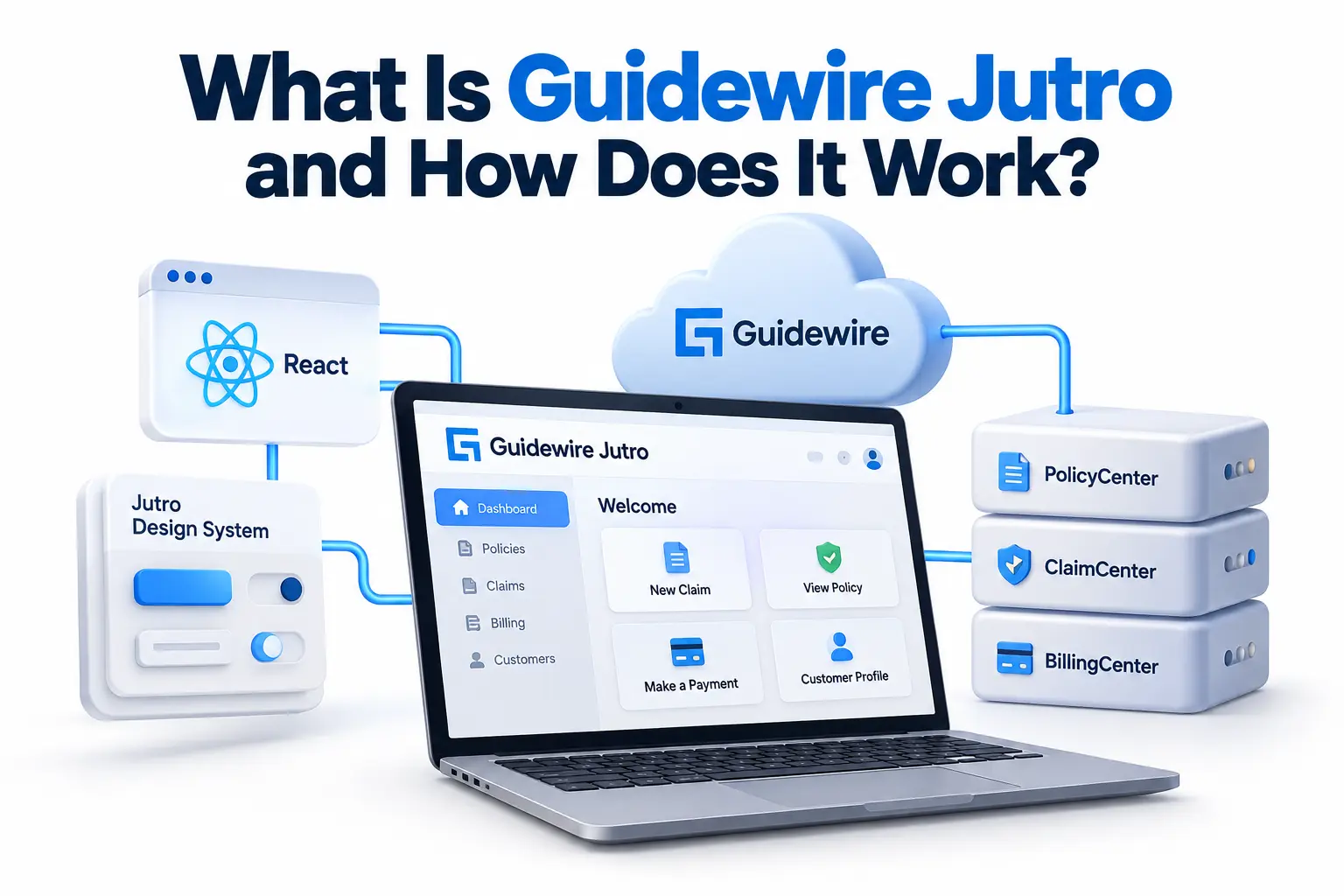
What Is Guidewire Jutro and How Does It Work?
Navigate through this article using the table of contents below
Table of Contents
No headings found in this article.
Insurance companies are moving beyond traditional customer portals, but building modern digital experiences requires more than attractive interfaces. What if developers could create insurance applications faster while connecting directly with core insurance systems? That is where Guidewire Jutro becomes important.
Guidewire Jutro provides a modern approach to building digital insurance experiences using reusable components, React technology, and cloud-connected services. Understanding how it works helps developers see how insurers create customer portals, agent applications, and digital claims experiences.
Understand What Guidewire Jutro Is and Why Insurance Companies Need It
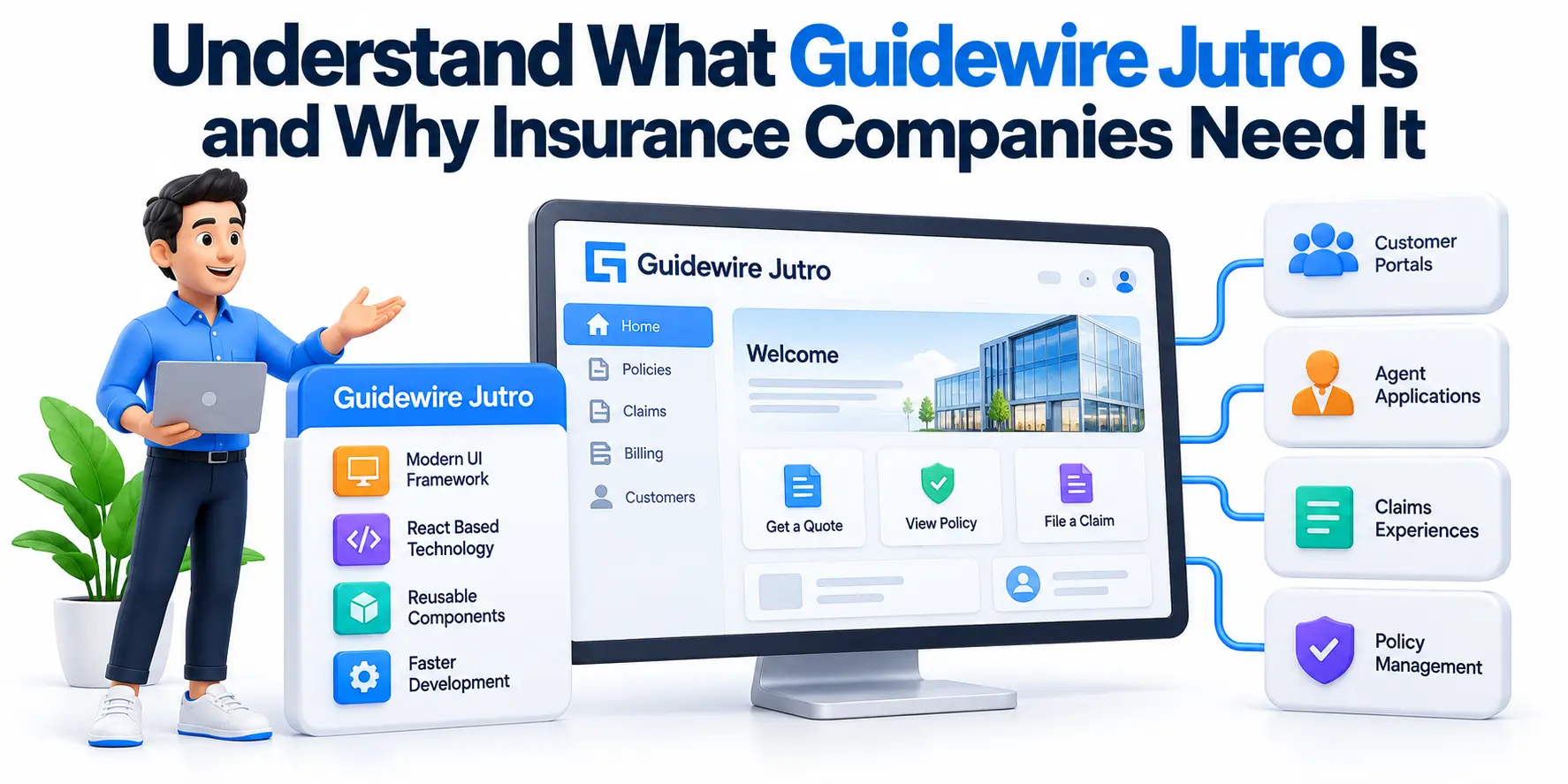
Guidewire Jutro is a digital experience development platform designed for property and casualty (P&C) insurance companies. It helps developers create modern web applications that connect with Guidewire's core insurance systems while delivering consistent, user-friendly digital experiences.
Traditional insurance applications often involve separate frontend systems, complicated integrations, and extensive customization. These challenges can increase development effort and make maintaining digital applications difficult. Jutro addresses these problems through reusable interface components, development tools, and integration capabilities.
The platform supports several important business requirements:
Customer engagement: Create portals for policy purchases, renewals, and claims.
Agent productivity: Develop interfaces for quotations, policy servicing, and customer management.
Consistent design: Maintain common interface standards across insurance applications.
Faster development: Reuse existing components instead of rebuilding common functionality.
Digital flexibility: Support standalone applications and embedded experiences.
Unlike a traditional frontend library, Jutro combines design capabilities with tools for developing, integrating, and managing insurance applications.
This makes it relevant to insurers modernizing their customer-facing technology without replacing their existing core business systems.
Explore the Architecture Behind Guidewire Jutro Digital Platform
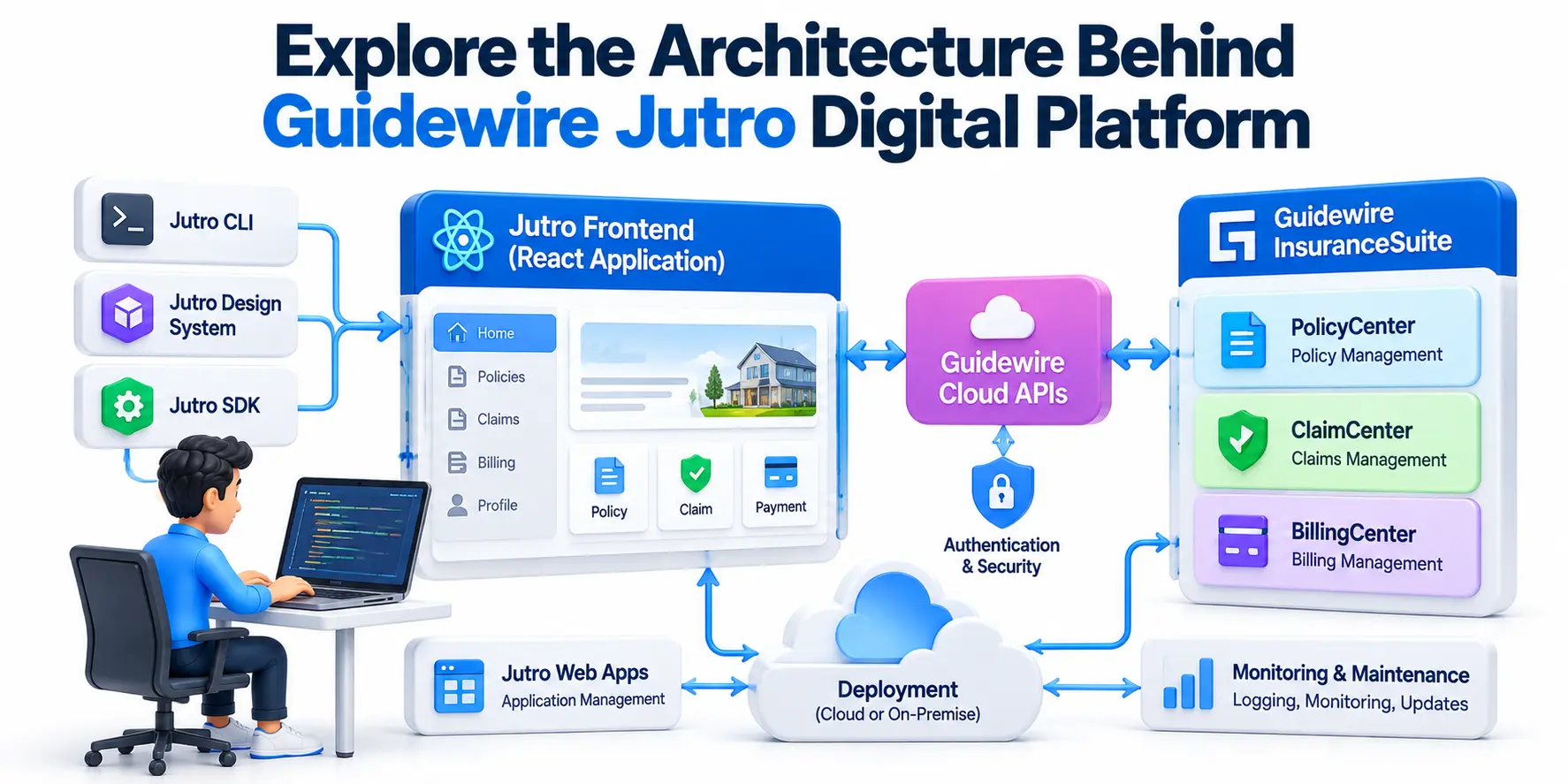
Guidewire Jutro uses a React-based frontend architecture that separates user interaction from core insurance business processing. This separation allows developers to create flexible digital experiences while InsuranceSuite applications continue managing essential insurance operations.
The architecture includes several connected elements:
Jutro Design System: Provides reusable interface components, design patterns, and styling guidelines.
React Framework: Supports interactive web application development.
Digital SDK: Simplifies integration with supported Guidewire Cloud APIs.
Guidewire Cloud APIs: Enable authorized communication with core insurance applications.
Jutro CLI: Supports application creation, validation, and development tasks.
Jutro Web Apps: Helps manage supported application deployment workflows.
Jutro applications can communicate with PolicyCenter, ClaimCenter, and BillingCenter through appropriate APIs. Each application maintains responsibility for its underlying business processes.
For example, a customer might access a Jutro-based insurance portal to submit a claim. The frontend collects information and sends an authenticated request to the appropriate backend service.
ClaimCenter processes the claim according to configured business rules and returns relevant information through its APIs. Jutro then presents the response in a readable interface.
This architecture keeps presentation responsibilities separate from insurance transaction processing, making applications easier to organize, extend, and maintain.
Learn How Guidewire Jutro Works Through a Real Insurance Example
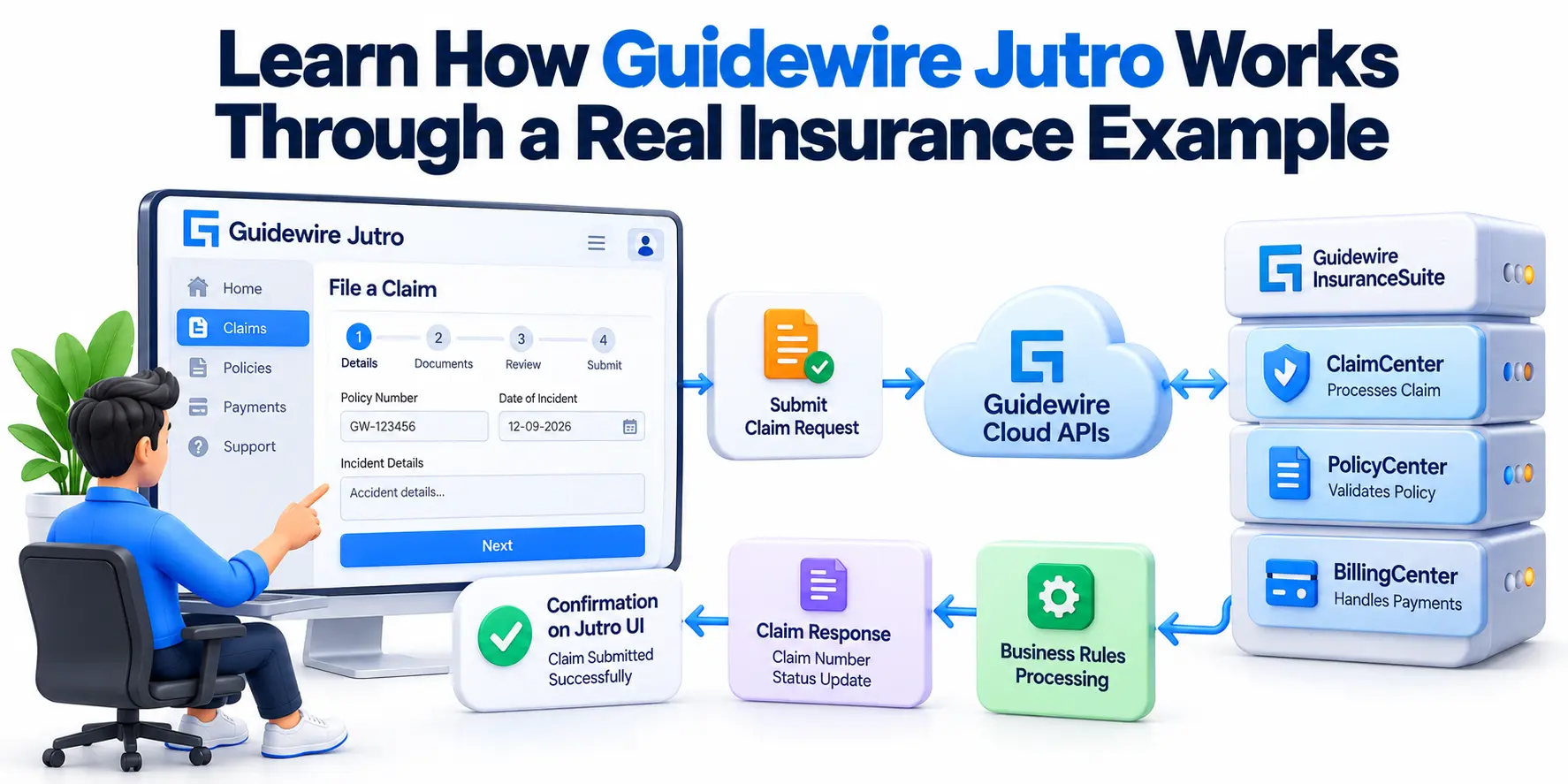
Understanding how Guidewire Jutro works becomes easier when examining a practical insurance workflow.
Consider a motor insurance customer who wants to report an accident through an online claims portal. The insurer needs an interface that collects accident details, validates information, and communicates with its claims management system.
A typical workflow follows these stages:
User interaction: The customer opens a Jutro-based claims application.
Information collection: React components display forms for policy details, accident descriptions, and supporting information.
Frontend validation: The application checks required fields and supported input formats.
API communication: The frontend submits information through authenticated backend API requests.
Business processing: ClaimCenter validates the request and applies relevant insurance rules.
Response handling: The application displays confirmation details or actionable errors.
The Jutro interface does not independently perform every insurance operation. Core business rules, transaction processing, and persistent insurance records remain responsibilities of the appropriate backend systems.
Developers must also handle loading states, authorization failures, network interruptions, and invalid responses.
A well-designed application provides meaningful feedback when something fails rather than simply displaying a technical error.
This practical separation helps insurers deliver convenient digital services while maintaining control over critical insurance operations.
Discover How Developers Build and Deploy Applications Using Jutro
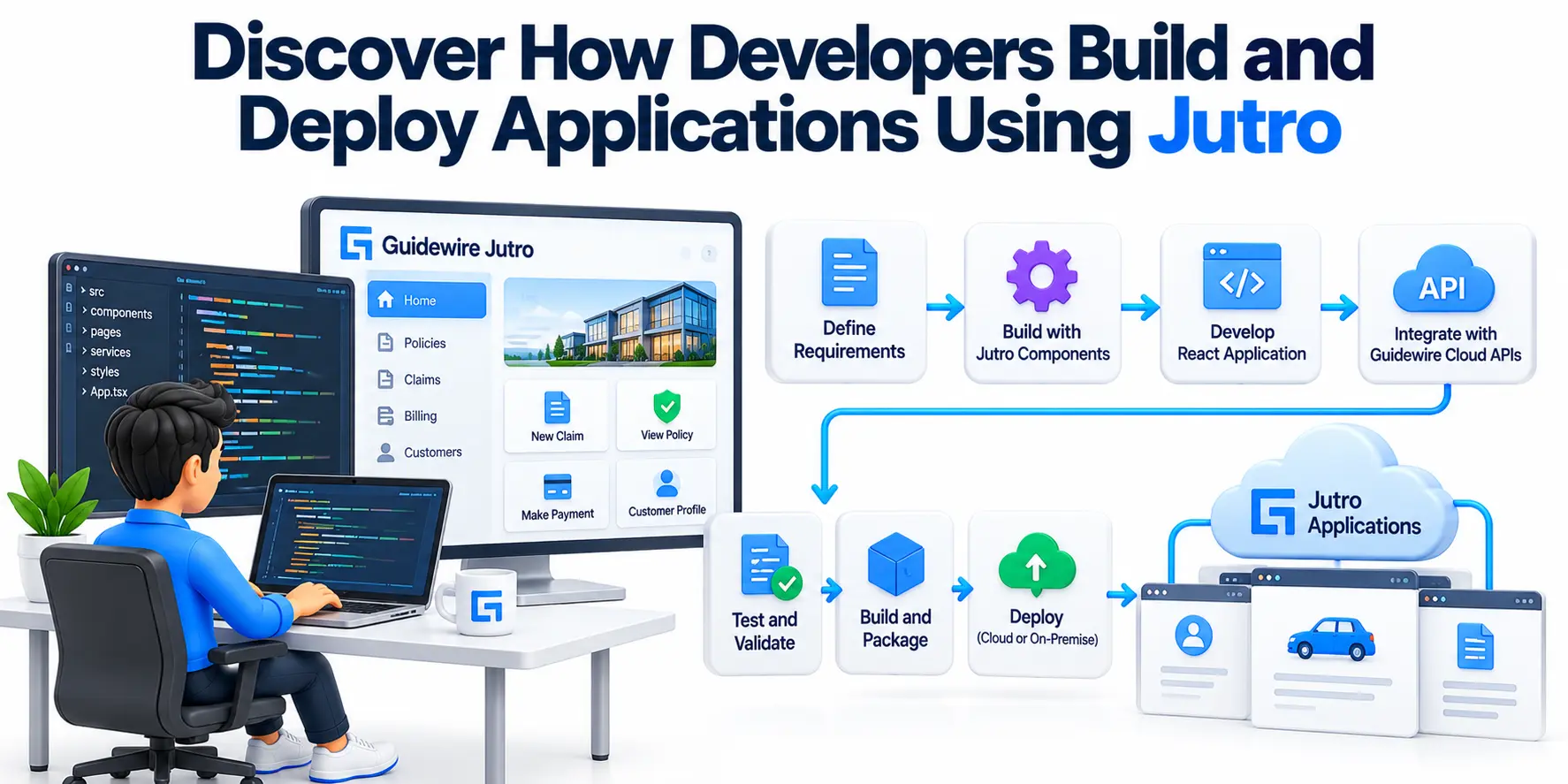
Building a Jutro application involves more than designing screens. Developers must understand the insurance requirement, prepare the frontend, integrate APIs, test functionality, and manage deployment.
A typical development workflow begins by identifying the intended user experience. For example, an insurer may need a self-service portal where policyholders can view coverage details and request policy changes.
The development process generally includes:
Define requirements: Identify users, business processes, and application functionality.
Prepare the application: Use supported Jutro tooling and templates to establish the project.
Build the interface: Create pages using React and Jutro components.
Connect APIs: Integrate frontend functionality with supported insurance services.
Test behavior: Validate forms, navigation, security, responsiveness, and API responses.
Deploy and monitor: Promote the application through supported environments and operational workflows.
Jutro supports standalone web applications and micro frontends that can be embedded within larger digital experiences.
Deployment choices depend on the architecture and services selected. Applications using the full managed Jutro workflow can benefit from Guidewire Cloud deployment capabilities, while other supported approaches allow external hosting.
As organizations evaluate Guidewire Cloud Adoption and Its Impact on Indian Insurance Technology, understanding these development and deployment choices becomes increasingly relevant.
Examine Real-World Guidewire Jutro Features and Business Applications
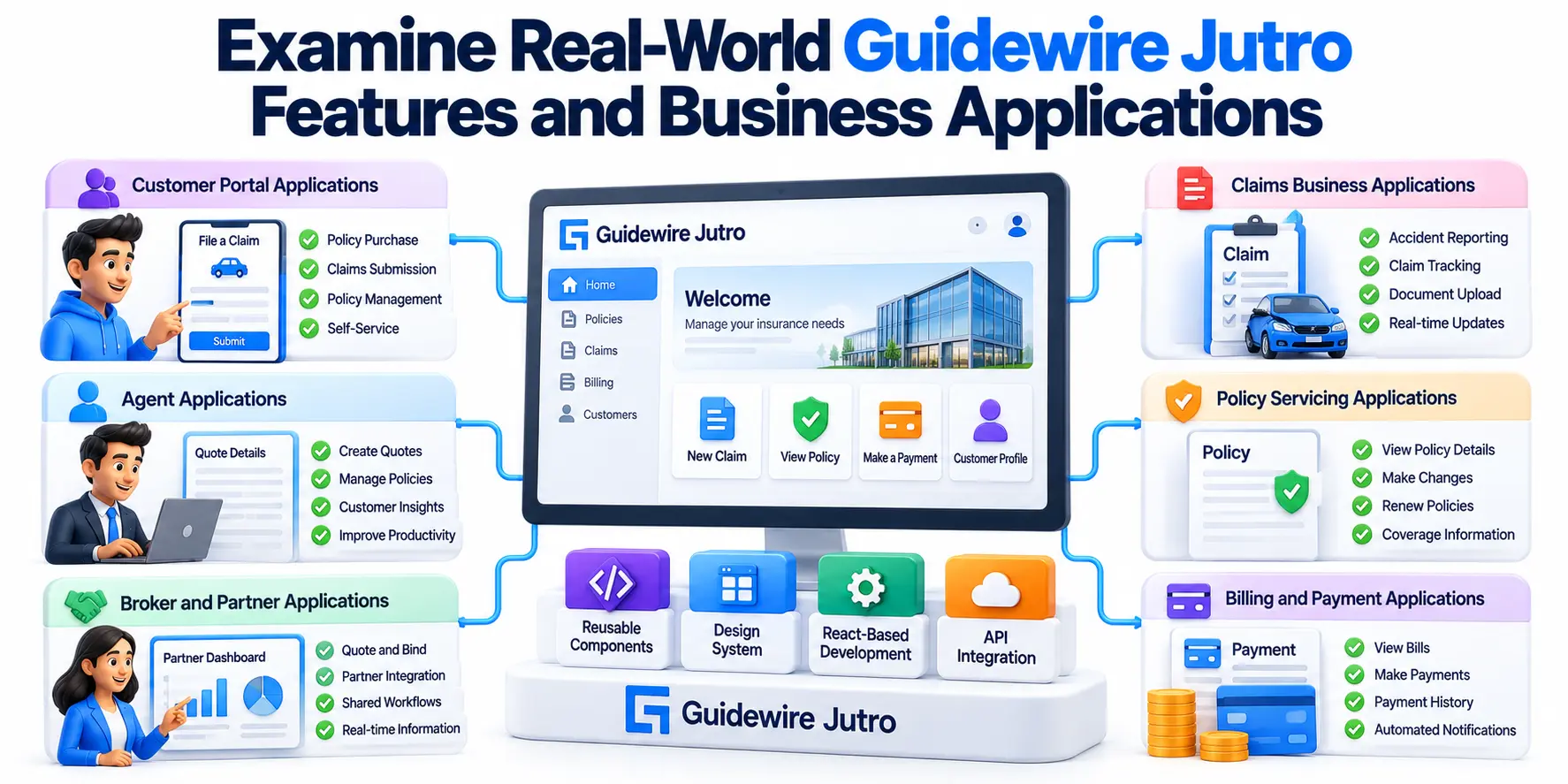
Guidewire Jutro supports digital experiences across multiple insurance business functions. Its reusable design components and integration capabilities help teams create applications for customers, agents, brokers, and internal employees.
One important capability is the Jutro Design System. It provides components such as buttons, input fields, notifications, and navigation elements, along with larger reusable patterns.
Developers can combine these elements to create consistent interfaces while adapting branding and workflows to business requirements.
Common applications include:
Digital policy purchasing: Help customers request quotations and purchase eligible insurance products.
Claims reporting: Provide guided accident reporting and claim submission experiences.
Agent portals: Support quotation management, customer interactions, and policy servicing.
Billing interfaces: Display payment information and support billing-related actions.
Embedded insurance: Integrate selected insurance experiences into partner applications.
Internal dashboards: Present operational information through role-specific interfaces.
Jutro also supports metadata-driven interface construction and reusable layouts, helping developers manage common presentation requirements.
However, successful implementation still requires proper API design, accessibility testing, security controls, and business validation.
The platform accelerates selected development activities, but it does not eliminate the need for thoughtful software engineering.
Build the Technical Skills Required for a Guidewire Jutro Developer Career
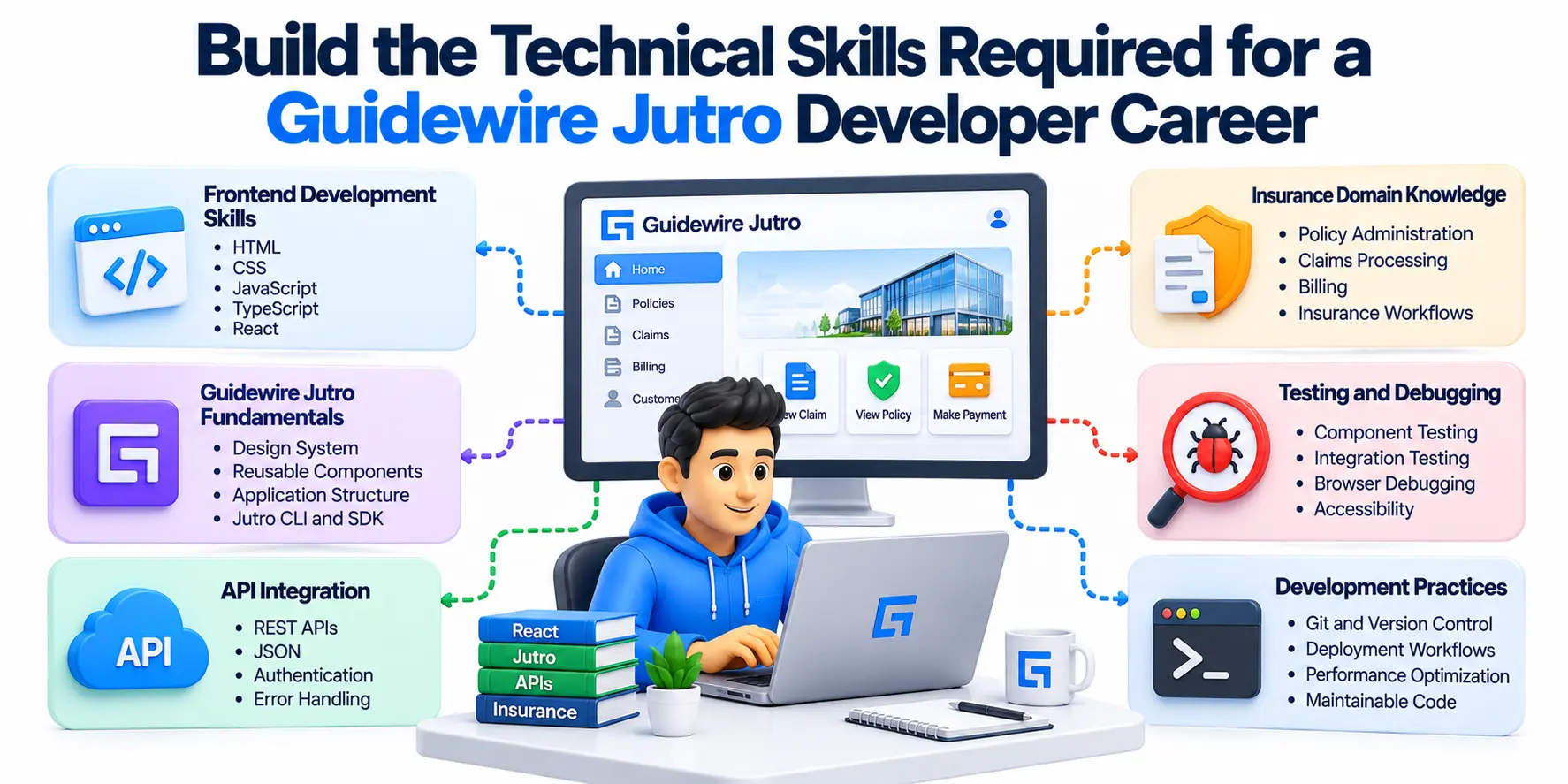
Guidewire Jutro development combines frontend engineering with insurance domain knowledge. Developers must understand how modern web applications communicate with enterprise insurance platforms.
A strong foundation begins with JavaScript, TypeScript, React, HTML, and CSS. These technologies help developers build interactive interfaces, manage application state, and implement reusable components.
Additional skills include:
React development: Components, hooks, routing, and state management.
API integration: REST concepts, JSON, authentication, and error handling.
Jutro fundamentals: Design system, application structure, SDKs, and development tools.
Insurance knowledge: Policy administration, claims processing, and billing workflows.
Testing: Component testing, integration testing, and accessibility validation.
Development practices: Git, debugging, deployment workflows, and maintainable code.
For beginners, Guidewire Jutro Developer Training can provide a structured introduction to frontend architecture and insurance application development.
Learners exploring Guidewire Training in India should prioritize programs that combine practical projects with an understanding of InsuranceSuite integration.
JastTech emphasizes industry-oriented technical learning, making practical application development an important consideration when evaluating training options.
A useful beginner project is a simulated insurance claims portal featuring validated forms, API integration, error handling, and responsive layouts.
Such projects demonstrate technical understanding more effectively than memorizing platform terminology alone.
Conclusion
Guidewire Jutro helps insurance companies develop modern digital experiences by combining React-based frontend development, reusable design components, API integration, and application management capabilities. Its architecture allows insurers to improve customer interactions while keeping critical insurance business processing within appropriate core systems. Understanding these responsibilities is essential for building reliable digital applications.
For developers, learning Jutro creates an opportunity to combine frontend engineering with enterprise insurance technology. The most effective learning approach involves understanding platform architecture, practicing API integration, building realistic insurance workflows, and developing applications that demonstrate practical problem-solving skills. These capabilities provide a foundation for contributing to modern insurance digital transformation projects.